 Pulse Reviews and Analysis
Architecting Revenue Operations for EdTech Platforms: Seat Licensing, Institutional Contracts, and Freemium Funnels
 Curated by Chief Revenue Officer Kory White · CRO Syndicate · 📄 1-Page Resume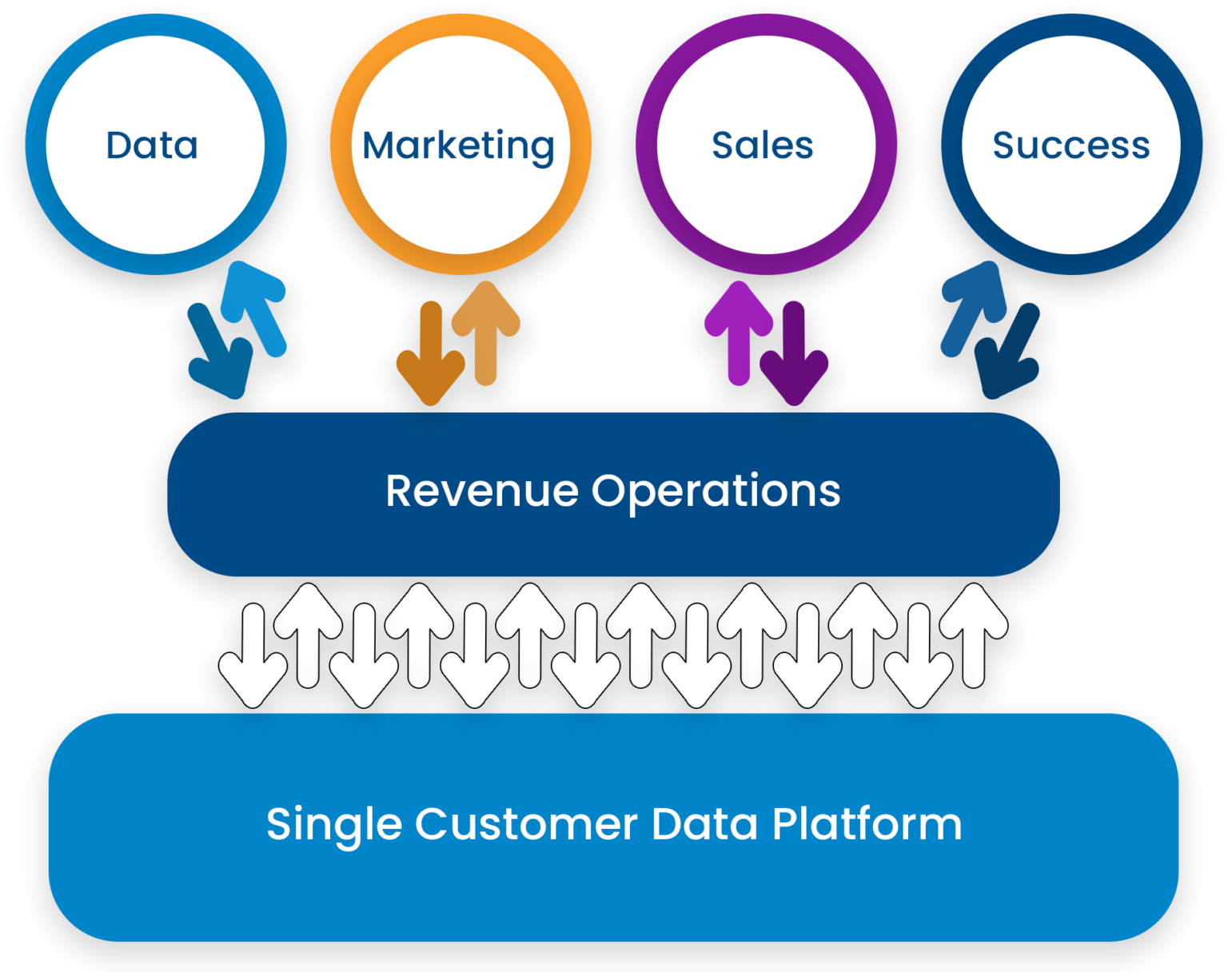
Direct Answer
EdTech revenue operations is a distinct discipline because the product itself is a gateway to learning outcomes, not just a software tool. The core revenue architecture must reconcile three fundamentally different buying motions: seat-based licensing for individual learners or small teams, institutional contracts with multi-year commitments and complex procurement cycles, and freemium funnels that drive top-of-funnel awareness and conversion.
A 2027 EdTech RevOps leader must treat these as three distinct revenue engines, each with its own data model, compensation design, and tech stack, while ensuring they feed a single unified customer 360 in Salesforce. This answer provides the specific architecture, tooling, and metrics to operationalize that model.
1. The Three-Engine Revenue Model for EdTech
The first principle is to stop treating all revenue as one pipeline. EdTech platforms like Coursera, Udemy Business, and Canvas have proven that mixing seat, contract, and freemium data in a single forecast creates chaos. You need three separate Clari forecast categories.
1.1 Seat Licensing Engine
This is the self-serve, transactional motion. Think a teacher buying 30 licenses for a semester or a corporate learner expensing a single course. The key metric is Monthly Recurring Revenue (MRR) per seat and net seat churn.
The tech stack here is Stripe for billing, HubSpot for lead capture, and a product-led growth (PLG) CRM like Pocus to track usage signals. The average seat price for a premium EdTech tool in 2027 is $29–$89 per month, with an annual commitment discount of 15–20%.
The critical RevOps move is to automate dunning and seat re-provisioning via Chargebee to keep gross MRR churn below 3%.
1.2 Institutional Contract Engine
This is the high-ticket, enterprise motion. A university district or a Fortune 500 company signs a 2–3 year contract for 10,000+ seats. The buying group includes procurement, IT, and academic deans.
The median contract value (MCV) for a mid-market EdTech institutional deal in 2027 is $150,000–$500,000 ACV. The sales process follows MEDDPICC (Metrics, Economic Buyer, Decision Criteria, Decision Process, Paper Process, Identify Pain, Champion, Competition). The Challenger Sale methodology is non-negotiable here because you must teach the buyer how their current learning outcomes are failing.
The tech stack is Salesforce Revenue Cloud for CPQ, DocuSign for e-signatures, and Gong for deal coaching. The deal velocity for institutional contracts averages 120–180 days.
1.3 Freemium Funnel Engine
This is the zero-dollar acquisition motion. The freemium tier must be generous enough to drive adoption but limited enough to force upgrade. For example, Canva for Education offers free premium features for verified teachers.
The key metric is Free-to-Paid Conversion Rate (F2P). The 2027 benchmark for top-quartile EdTech platforms is 8–12% within 90 days. The data model must track feature usage, team size, and content consumption to trigger a Salesloft sequence for the free user.
The core tool is Amplitude for product analytics, feeding a Snowflake data warehouse that powers a Tableau dashboard for the RevOps team.
2. Data Architecture: The Unified Customer 360 in Salesforce
You cannot run three engines on three different data models. The Salesforce Data Cloud is the only viable platform for a 2027 EdTech RevOps stack because it can ingest seat usage events from the product, contract terms from the CRM, and freemium behavior from the analytics tool.
2.1 The Object Model
You must create a custom EdTech License object in Salesforce, not just rely on the standard Opportunity or Asset objects. This object must have fields for:
- License Type (Seat, Institutional, Freemium)
- Seat Count (current active seats)
- Contract Start/End Date
- Last Usage Date (synced from product)
- Upgrade Path (e.g., Freemium to Seat)
The Account object must have a Revenue Engine picklist (Seat, Institutional, Both). A university that buys a contract and has 500 individual seat buyers must be flagged as Both to prevent double-counting in the Clari forecast.
2.2 Data Integration Layer
Use Mulesoft (Salesforce’s own iPaaS) to connect the product database (e.g., PostgreSQL or MongoDB) to Salesforce. Every time a freemium user creates a team of 5, that event must create a Lead in Salesforce with a Freemium Score of 85. Every time an institutional contract’s seat utilization drops below 70%, a Gong alert should fire to the Customer Success Manager (CSM).
The latency for this data flow must be under 5 minutes for real-time alerts. The cost for a mid-market Mulesoft license in 2027 is $25,000–$50,000 annually.
3. Funnel Mapping and Conversion Levers
Each engine has a distinct funnel. You must map them separately in Tableau and then overlay the conversion paths.
3.1 Seat Funnel
Visit → Sign Up → Add Payment Method → First Seat Active → Recurring Seat The critical drop-off point is Add Payment Method. A 2027 benchmark from ProfitWell shows that a 1-second increase in payment page load time reduces conversion by 7%. The RevOps fix is to implement Stripe Checkout with a pre-filled coupon code from the marketing email.
The MQL to SQL conversion rate for seat buyers should be 25–30% because the intent is high.
3.2 Institutional Funnel
Inbound Lead → MQL → SAL (Sales Accepted Lead) → SQO (Sales Qualified Opportunity) → Proposal → Negotiation → Closed Won This funnel requires lead scoring that weights job title (Dean, VP of Learning, Head of L&D) at 50 points and company size (5,000+ employees) at 30 points.
The SAL to SQO conversion should be 40–50% if the BDR team is using Outreach with the Challenger cadence. The biggest risk is procurement delays. The RevOps playbook must include a Procurement Package in Salesforce CPQ that auto-generates the RFP response and security questionnaire using Responsive.io (formerly RFPIO).
3.3 Freemium Funnel
Visit → Sign Up → Activate Core Feature → Invite Team → Hit Usage Limit → Upgrade The key lever is feature gating. For example, Slack’s freemium model limits searchable messages to 10,000. In EdTech, you limit advanced analytics or custom content creation.
The Activate Core Feature step must happen within 24 hours. Use Intercom to send a personalized video from the Product Manager to users who haven’t activated. The F2P conversion rate for users who invite 3+ teammates is 22%, compared to 4% for solo users.
4. Compensation Design for a Three-Engine Model
You cannot pay your sales team the same way for a $50 seat deal and a $500,000 institutional contract. The compensation model must be engine-specific with a weighted quota.
4.1 Seat Sales Compensation
The Seat Sales Rep is a high-velocity, inside sales role. They handle inbound leads and outbound calls to small businesses. The quota is $20,000 MRR per month.
The compensation is 60% base, 40% variable. The variable is paid on net new MRR with a 1.5x accelerator for deals closed within 7 days. The on-target earnings (OTE) for this role in 2027 is $90,000–$120,000.
4.2 Institutional Sales Compensation
The Enterprise Account Executive (AE) is a field sales role. The quota is $1.5M ACV per year. The compensation is 50% base, 50% variable.
The variable is paid on closed-won ACV with a MEDDPICC score modifier. If the deal has a Champion and a defined Decision Process, the rep gets a 1.2x multiplier. The OTE is $250,000–$350,000.
The CSM for institutional accounts is compensated on net retention rate (NRR) with a target of 115%.
4.3 Freemium Team Compensation
The Growth Manager is a marketing + product hybrid role. They are compensated on F2P conversion rate and activated accounts. The bonus is paid quarterly if the F2P rate exceeds 10%.
The OTE is $130,000–$160,000. The Product Manager for the freemium tier is also compensated on time-to-value (TTV) — the time from sign-up to first core action. The target is under 24 hours.
5. Tech Stack and Vendor Selection for 2027
The EdTech RevOps stack must be modular but integrated. Here is the reference architecture with real vendor prices.
5.1 CRM and Revenue Platform
Salesforce is the backbone. The Salesforce Revenue Cloud license for 50 users is $150,000 annually (Enterprise Edition). You need Salesforce CPQ for the institutional contracts, which adds $75,000 annually. The Data Cloud ingestion credits for 10 million events per month are $50,000 annually.
5.2 Marketing and Lead Gen
HubSpot for the seat and freemium funnels. The Marketing Hub Enterprise license for 10 users is $50,000 annually. 6sense for account-based marketing on institutional accounts. The 6sense contract for a mid-market EdTech is $40,000–$60,000 annually.
5.3 Sales Engagement and Intelligence
Outreach for the BDR team. The Outreach Enterprise license for 20 users is $60,000 annually. Gong for the enterprise AEs. The Gong Enterprise license for 30 users is $90,000 annually.
5.4 Analytics and Data
Amplitude for product analytics. The Amplitude Growth plan for 1 million monthly tracked users is $50,000 annually. Tableau for RevOps dashboards. The Tableau Creator license for 5 users is $15,000 annually.
5.5 Payment and Billing
Stripe for seat and freemium billing. The standard fee is 2.9% + $0.30 per transaction. For a platform with $10M in annual seat revenue, that’s $320,000 in fees. Chargebee for subscription management. The Chargebee Enterprise plan is $20,000 annually.
6. Metrics and Benchmarks for the 2027 EdTech RevOps Leader
You need a single source of truth for metrics. The RevOps dashboard in Tableau must show these three categories.
6.1 Seat Engine Metrics
- Net MRR Churn: Target < 3% monthly. Benchmark: 5–7% for underperforming EdTechs.
- Average Revenue Per User (ARPU): Target $45/month. Benchmark: $29–$89.
- Customer Acquisition Cost (CAC): Target $150. Benchmark: $200–$400.
- LTV:CAC Ratio: Target 5:1. Benchmark: 3:1.
6.2 Institutional Engine Metrics
- Average Contract Value (ACV): Target $250,000. Benchmark: $150,000–$500,000.
- Sales Cycle Length: Target 90 days. Benchmark: 120–180 days.
- Win Rate: Target 35%. Benchmark: 20–25%.
- Net Revenue Retention (NRR): Target 115%. Benchmark: 100–110%.
6.3 Freemium Engine Metrics
- Free-to-Paid (F2P) Conversion: Target 12% in 90 days. Benchmark: 8–12%.
- Activation Rate: Target 60% within 24 hours. Benchmark: 40–50%.
- Viral Coefficient (K-factor): Target 1.2. Benchmark: 0.8–1.0.
7. The 2027 RevOps Playbook for EdTech
The playbook is a living document in Notion or Guru. It must be updated monthly based on Gong call analysis and Amplitude product data.
7.1 Weekly RevOps Cadence
- Monday: Review Clari forecast for all three engines. Check seat churn alerts from Chargebee.
- Tuesday: Run Gong deal reviews for the top 5 institutional opportunities. Update MEDDPICC scores.
- Wednesday: Analyze Amplitude freemium funnel. Identify the feature gating that has the highest F2P conversion.
- Thursday: Sync with Product on new feature releases that impact the freemium tier.
- Friday: Update Tableau dashboards. Send a Slack summary to the CRO.
7.2 Quarterly Business Review (QBR) Template
The QBR must cover:
- Seat Engine: Net MRR growth, churn reasons, CAC trends.
- Institutional Engine: ACV trends, sales cycle changes, win/loss analysis using Gong.
- Freemium Engine: F2P conversion, activation rate, viral coefficient.
- Tech Stack ROI: Cost per tool, usage rates, renewal decisions.
7.3 The Single Most Important RevOps Move
In 2027, the unified customer 360 in Salesforce Data Cloud is the highest ROI project. It eliminates the data silos that cause forecast errors. The second most important move is to automate the freemium-to-seat handoff using Salesloft triggers.
A freemium user who invites 5 teammates in one week should get a call from a Seat Sales Rep within 2 hours.
FAQ
1. How do I prevent cannibalization between the freemium and seat engines?
- The key is feature differentiation. Freemium users should not have access to advanced analytics, custom branding, or priority support. The seat tier must offer a clear value-add that justifies the price. Use Amplitude to track which features are most used by freemium users who convert, and gate those features aggressively.
2. What is the best way to handle institutional contracts that include seat licenses?
- You need a contract-level SKU in Salesforce CPQ that includes a license pool. The institutional contract buys 10,000 seats, but the actual usage is tracked via the product. The CSM must monitor seat utilization monthly. If utilization drops below 70%, the Gong alert fires to the Account Executive for a renewal conversation about rightsizing the contract.
3. How do I forecast revenue when the sales cycle is 180 days?
- Use Clari with AI-based forecasting that ingests Gong conversation data and Salesforce activity. The model should weight deals with a Champion and a defined Decision Process at 80% probability, and deals without a MEDDPICC score above 60 at 20% probability. The forecast accuracy target for institutional deals is 75% at 90 days out.
4. What is the ideal compensation split for a Seat Sales Rep vs. An Enterprise AE?
- The Seat Sales Rep should be 60/40 (base/variable) with a monthly quota of $20,000 MRR. The Enterprise AE should be 50/50 with an annual quota of $1.5M ACV. The variable for the Seat Rep is paid on net new MRR, while the Enterprise AE is paid on closed-won ACV with a MEDDPICC multiplier.
5. How do I measure the ROI of my freemium funnel?
- The primary metric is F2P conversion rate and cost per free-to-paid conversion. Calculate the CAC for freemium by dividing the total cost of the freemium program (product, marketing, growth team) by the number of paid conversions. The target freemium CAC should be 50–70% lower than the seat CAC. Also track viral coefficient (K-factor) — a K-factor above 1.0 means the freemium funnel is self-sustaining.
6. What is the biggest mistake EdTech companies make in RevOps?
- Treating all revenue as one pipeline. The seat, institutional, and freemium engines have completely different data models, sales cycles, and compensation structures. Trying to force them into a single Salesforce opportunity object leads to forecast errors and misaligned incentives. You must have three separate Clari forecast categories and three separate Tableau dashboards.
Bottom Line
Architecting revenue operations for an EdTech platform in 2027 means accepting that you are running three separate businesses under one roof. The seat licensing engine is a high-volume, low-touch subscription business that demands Stripe, HubSpot, and a PLG CRM like Pocus.
The institutional contract engine is a high-value, long-cycle enterprise business that requires Salesforce Revenue Cloud, MEDDPICC, and Gong. The freemium funnel engine is a product-led growth machine that lives in Amplitude and Snowflake. The single point of integration is the Salesforce Data Cloud, which unifies the customer 360.
The RevOps leader who masters this three-engine model will drive a 30–50% improvement in forecast accuracy and a 20% increase in net revenue retention. The cost of not doing this is a fragmented data model, a confused sales team, and a churning customer base.