


How do you use *Never Split the Difference* to negotiate a contract renewal in 2027?
Quality
Certified

Apply Voss's tactical empathy to a renewal: run an accusation audit before the call, label the buyer's real fear, mirror their pushback to surface hidden constraints, then use calibrated "how" questions so procurement solves its own budget problem. Anchor on value, trade concessions for term or scope, and never split the difference.
The outcome you should expect
The honest outcome of running a renewal this way is not a magic price increase. It is a materially different conversation, and a measurably different set of second-order results. When you replace "here is our renewal quote, can you approve it" with a structured empathy-first sequence, four things tend to shift.
First, the conversation starts earlier. Teams that adopt this approach almost always discover that the technique only works when there is time to use it — you cannot run an accusation audit and a discovery arc in a fourteen-day window while legal is already redlining. So the practical outcome is that renewal motions move upstream, typically to a 90-to-120-day pre-renewal window for enterprise agreements and 45-to-60 days for mid-market. That timing change alone often does more for outcomes than any specific verbal tactic.
Second, you get fewer flat, unexplained "we need 15% off" demands and more explained constraints. The demand does not disappear. What changes is that you learn *why* it exists: a board-mandated vendor-spend reduction, a new CFO establishing credibility, a departmental reorg that stranded your champion, a competitive bake-off someone upstairs insisted on. Once the constraint is named, you can negotiate against the constraint rather than against the number. A vendor-consolidation mandate is a very different problem than a cash-flow problem, and each has a different trade to offer.
Third, the shape of the deal changes more than the price does. Practitioners who work this way report renewals that land at or near list on price but with movement elsewhere: a 24- or 36-month term instead of 12, quarterly rather than monthly billing, a usage floor with a growth ramp, a named reference commitment, a case study, a co-marketing clause, an expansion module bundled at a discount that doesn't reset the base rate. Voss's core insight — that a compromise on the single visible axis makes both parties feel they lost — pushes you to add axes rather than slide along one.

Fourth, and least discussed, you should expect to lose some renewals faster. That is a feature. Calibrated questions surface dead deals early. If the answer to "what would need to be true for us to keep working together?" is a long silence followed by "honestly, the platform decision was made above me," you have saved a quarter of pipeline theater. Voss's insistence that "no" is a safe word cuts both directions: it gives them permission to tell you the truth, and the truth is sometimes that it's over.
What you should *not* expect: that these techniques override commercial reality. If your product has genuinely underdelivered, if your uptime was poor, if the champion who bought you left and nobody else has logged in, no amount of mirroring will rescue the number. Tactical empathy is a way of getting to the real conversation faster. It is not a substitute for having something worth renewing. The book itself is explicit that negotiation is a discovery process, not a persuasion trick — treat it that way and the outcomes hold up; treat it as a script and buyers will smell it instantly.
There's also an adjacent outcome worth naming. Teams that train renewal reps on this material tend to see the same skills leak into adjacent motions: escalation calls, QBRs, scoping conversations with services, and internal negotiations with product about roadmap commitments. Labeling and calibrated questions are general-purpose tools for eliciting constraints. The renewal desk is just where the pressure is highest and the practice shows up first.
What drives that outcome
The mechanism is not persuasion. It is information asymmetry reversal. In a standard renewal, the buyer knows their budget ceiling, their internal politics, their competitive alternatives, and their real deadline. You know your cost floor, your discount authority, and your churn forecast. Both sides bluff. The negotiation is a slow, expensive process of guessing.

Every technique in *Never Split the Difference* is, functionally, a device for making the other side volunteer information they had no intention of giving you — and feel good doing it.
The accusation audit works because unspoken objections are load-bearing. A buyer holding a private grievance about last year's support response times will route every part of the conversation around defending that grievance without ever stating it. When you say it out loud first — "you're probably thinking our support got slower after the reorg, and that renewing now locks you into that" — the grievance loses its charge. It has been acknowledged by the only person whose acknowledgment matters. Now it can be discussed instead of leveraged.
Mirroring works because of a conversational reflex most people cannot suppress. Repeating the last one to three words of what someone said, with an upward inflection, creates a small silence the other person feels compelled to fill. They fill it by elaborating. Elaboration is where the constraint lives. "We're under pressure to cut costs" → "Under pressure?" → "Yeah, the new CFO has every department at flat spend through Q3, and honestly your line item is the biggest one on my sheet." You just learned the deadline, the mandate, the scope, and your relative position, in one sentence you did not have to ask for.
Labeling — "it sounds like…", "it seems like…", "it looks like…" — works because naming an emotion reduces its intensity. Voss's framing is that labels defuse negatives and reinforce positives. The deliberate use of "it sounds like" rather than "I think" matters: the impersonal construction lets them correct you without a confrontation, and a correction is itself information.
Calibrated questions work because "how" and "what" questions hand the other side the illusion of control while quietly transferring the problem to them. "How am I supposed to hold service levels flat if the budget drops 15%?" is not a refusal. It is a request for help solving a shared problem. The buyer either produces a creative answer — reduce seat count, drop the premium tier, extend term for the discount — or admits the constraint is softer than stated. Both outcomes are wins. Note that "why" is excluded: why questions read as accusatory in nearly every language and put people on defense.

Never splitting the difference works because the midpoint is not a solution, it is an abdication. Two parties who split arrive at a number neither justified. Voss's alternative is to make each concession earned and each concession paired: you move on price only when something moves back — term, scope, timing, reference, payment schedule.
Black swans — the unknown unknowns — drive the biggest swings. A pending acquisition, a compliance deadline, a competitor's failed implementation, an internal champion up for promotion. These are almost never disclosed in response to direct questions. They surface in the hesitation before an answer, the offhand remark at minute fifty-two, the thing said while packing up.
Benchmarks and realistic ranges
Be careful with benchmarks here — the negotiation-training industry is full of numbers with no methodology behind them. What follows are operating ranges that experienced renewal teams use as planning assumptions, not published research findings. Treat them as calibration for your own baseline, then replace them with your own measured data as soon as you have two quarters of it.
Timeline. Enterprise renewals (six figures and up) need a 90-to-120-day runway to run this properly: 30 days of internal prep and account research, 30-45 days of discovery conversations, 30 days of commercial negotiation and legal. Mid-market runs 45-60 days. SMB and self-serve renewals do not justify this at all — the technique costs more in rep hours than the contract is worth. A useful rule of thumb: if the annual contract value divided by the hours this will take is below your fully loaded rep cost per hour by a comfortable multiple, automate the renewal and save the empathy for accounts where it pays.
Preparation ratio. Voss's own emphasis on preparation suggests something like one hour of prep per hour of expected negotiation for meaningful deals. In practice, teams that do this well spend more: usage data pull, support ticket history, champion and detractor mapping, org chart changes since last renewal, a written accusation audit of 5-8 items, and 8-12 pre-drafted calibrated questions. Two to three hours of prep for a one-hour first call is normal on a large account.

Accusation audit length. Five to eight items is the working range. Fewer than four and you'll miss the one that matters. More than ten and you sound like you're reading a confession, which flips the dynamic from disarming to alarming. Deliver three to four at the top of the call and hold the rest in reserve for when a matching objection appears.
Ackerman increments. Voss's model uses a fixed pattern: set your target, open at 65% of it, then move to 85%, 95%, and 100%, with the final number made precise and non-round, plus a small non-monetary throw-in. For renewals the model needs inversion, because you are usually defending a price rather than buying down to one. The inverted version: open above your target increase, then concede in shrinking steps — say a 12% ask, then 9%, then 7.5%, then 7.2% with a bundled add-on. The shrinking increments signal you are approaching a floor without you having to claim one. The non-round final number does real work; 7.2% reads as calculated, 7% reads as arbitrary and therefore negotiable.
Concession pairing. A defensible internal rule: no price movement without a paired non-price gain. Common trade rates that renewal teams use — a multi-year term commitment justifying somewhere in the mid-single-digit to low-teens percentage range off annual rate, annual prepay justifying a smaller discount than a multi-year term, a public reference or case study worth a token amount, and auto-renewal with a shortened notice period worth something modest. Your actual rates depend on your cost of capital, churn rates, and how badly finance wants predictable revenue. Set them before the call, in writing, with your CFO's sign-off. Improvised trade rates are how margin leaks.
Silence. After a calibrated question, the discipline is to stop talking. Four to eight seconds of silence feels enormous to the person who asked the question and merely thoughtful to the person answering it. Most reps break at two. This is the single most trainable, highest-leverage habit in the entire toolkit, and it costs nothing.

Rule of three. Get agreement three different ways — a direct yes, a summary they confirm, and a calibrated question about implementation ("how will you roll this out internally?"). Someone who is bluffing rarely survives the third pass, because the implementation question requires details a bluffer has not invented yet.
Where to expect variance. Public sector and heavily regulated buyers have genuinely rigid procurement rules; empathy will not create budget authority that does not exist, though it will help you find the exception process. Buyers using formal reverse-auction platforms have deliberately removed the human channel, and your play there is to move the conversation off the platform before the auction opens, not to fight it inside. And any counterpart trained in the same material will recognize your labels — which is fine. Voss's techniques are not tricks that break when detected; a well-run accusation audit still defuses the objection even when the other side knows exactly what you are doing.
Risks, edge cases, and failure modes
Sounding like a script. The most common failure. A rep who has just finished the audiobook will deploy "it sounds like…" nine times in twenty minutes and mirror every third sentence. Buyers notice, and the response is not anger but withdrawal — they stop volunteering anything. The fix is to use one technique per exchange, not all of them, and to vary the label constructions. "It seems like the timing is the harder part here" and "I'm getting the sense the budget calendar is the real blocker" do the same work with different music.
Mirroring into a dead end. Mirroring only produces elaboration when there is something to elaborate. Mirror a factual statement — "the contract ends March 31" → "March 31?" — and you get a confused pause. Mirror emotional or evaluative language, not logistics.
Accusation audits that read as fishing for reassurance. Delivered with the wrong tone, "you probably think we've been overcharging you" invites "yes, actually." The audit works when it is flat and matter-of-fact, not apologetic and not fishing. Say it, pause, let them respond. If you soften it with "but of course that's not true," you have converted a disarming move into a defensive one.

Using tactical empathy to paper over a product problem. If the renewal is at risk because the product failed, the techniques will surface that clearly and then be useless against it. The correct response is to stop negotiating and start remediating: a written service plan, an executive sponsor, a credit for the failed period. Buyers can tell the difference between being heard and being handled, and the second one is a churn accelerant. This is the most serious ethical and practical risk in the whole approach.
Anchoring high on a weak account. The book's advice to anchor above your target assumes a defensible value story. On an account with declining usage, a departed champion, and open escalations, a high anchor reads as tone-deaf and can trigger an immediate competitive process. Match your anchor to your actual position: healthy usage and expansion signals justify an aggressive open; a shrinking footprint justifies leading with a stability offer instead.
Multithreading failures. You can run a flawless negotiation with a procurement manager who has no authority. Every technique here elicits constraints from the person in front of you; none of them tell you whether that person can sign. Map the decision structure first — economic buyer, technical evaluator, procurement gatekeeper, legal, and whoever owns the budget line — and confirm authority explicitly with a calibrated question: "how does this get approved once we agree on terms?"
Written-channel degradation. Much renewal negotiation now happens in email and shared documents, where mirroring is impossible and silence is invisible. Labels survive the transition; mirroring does not. In writing, replace mirroring with a restatement-and-check: "So the constraint is flat spend through Q3, and the seat count is what's driving the overage — is that right?" It performs the same function of prompting elaboration.
Reverse-auction and RFP-forced renewals. When procurement converts a renewal into a competitive RFP, the human channel is closed by design. The counter is upstream: work the relationship in the 120 days before the RFP window so that the requirements document reflects capabilities you uniquely have. Once the auction opens, empathy has no surface to act on.

Champion departure. The single most common structural risk in renewals. When the person who bought you leaves, the institutional memory of why goes with them. The successor inherits a line item with no story attached. Treat this as a fresh sale, not a renewal, and rebuild the case from usage evidence rather than assuming goodwill transfers.
Over-rotating on the black swan. Hunting for a hidden game-changer can turn into a distraction. Most renewals have no black swan. They have an ordinary budget constraint and an ordinary calendar. Listen for the anomaly; don't manufacture one.
Internal misalignment. If your own leadership will approve a 20% discount the moment the buyer escalates, your careful shrinking-increment discipline is theater and the buyer will learn it within one cycle. Get discount authority and trade rates agreed internally before the first call. The negotiation you lose is usually the internal one.
A practical rollout plan
Rolling this out across a renewal team is an enablement problem, not a reading-assignment problem. Handing everyone the book produces exactly the scripted-sounding failure described above. Here is a sequence that works.
Weeks 1-2 — segment and instrument. Decide which renewals get the full treatment. Sort the book of business by annual contract value, strategic importance, and risk score. The top tier gets full preparation; the middle tier gets a lightweight version — accusation audit plus three calibrated questions, no full discovery arc; the long tail gets automated. Simultaneously, instrument your baseline: current net revenue retention, gross retention, average discount at renewal, average days-to-close, and the percentage of renewals that end in a price-only conversation. Without this baseline you will never know whether the change worked.
Weeks 3-4 — build shared assets. Write a standing accusation audit library organized by objection theme: price increase, service quality, competitive alternative, budget freeze, consolidation mandate, champion change, contract complexity. Write a calibrated-question bank of 20-30 questions mapped to those themes. Draft your trade-rate card with finance — what a 24-month term is worth, what annual prepay is worth, what a reference is worth — and get it signed off. Define an explicit walk-away floor per segment. These assets are the reason individual reps do not have to improvise.

Weeks 5-6 — train narrowly. Do not teach all nine techniques at once. Teach two: labeling and calibrated questions. Run live role-play with a colleague playing a hostile procurement lead, recorded and reviewed. Score on two things only — did the rep label before arguing, and did they tolerate silence after asking. Add mirroring in week six once the first two are habitual.
Weeks 7-10 — pilot on real accounts. Pick 10-15 renewals across segments. Require a written pre-call plan for each: the audit items, the questions, the anchor, the target, the walk-away, and the paired-concession menu. Debrief every call within 24 hours while memory is fresh, capturing what constraint surfaced and which technique surfaced it. This debrief log becomes your training corpus.
Weeks 11-12 — measure and correct. Compare the pilot cohort against the baseline on discount depth, term length, days-to-close, and win rate. Expect noisy data at this sample size — look at direction, not significance. Look specifically for the failure modes: reps who scripted, reps who anchored high on weak accounts, reps whose internal escalation undercut their own increments.
Ongoing — institutionalize. Fold the pre-call plan into the CRM as a required field on renewal opportunities above a threshold. Add the debrief to the weekly forecast call: not "what's the number" but "what constraint did you surface." Rotate the accusation-audit library quarterly as objection themes shift. And extend the same skills sideways — the escalation desk, the QBR motion, and the professional-services scoping conversation all benefit from the same two habits of labeling before arguing and shutting up after asking.
One caution on tooling. It is tempting to wire this into conversation-intelligence software and score reps on label counts. Don't. Counting labels produces label-stuffing, which is the exact scripted failure you are trying to avoid. Score on outcomes — constraint surfaced, paired concession achieved, term extended — and let the technique be a means.
Related questions
Does this work if the buyer has read the same book?

Yes. These are not tricks that break on detection. A named objection is still defused; a calibrated question still transfers the problem. A trained counterpart may name what you're doing — acknowledge it, laugh, and continue. What fails on detection is scripted delivery, not the underlying mechanics.
How is this different from principled negotiation?
Harvard's principled-negotiation approach separates people from the problem and focuses on interests over positions. Voss argues the people *are* the problem — emotion drives the position. In practice they combine well: use tactical empathy to surface interests, then trade against those interests rather than splitting a number.
What if procurement refuses to talk and only sends forms?
Work upstream. The form is the end of a process, not the start. Build the relationship with the business owner and the economic buyer in the 90 days before procurement engages, so the requirements reflect your strengths. Once you are inside a scored form, the human channel is closed.
Can any of this be automated?
Preparation can — usage pulls, org-change detection, ticket history, renewal-risk scoring. The conversation cannot. The value of a label is that a person chose to say it. Automating the empathy layer produces exactly the templated tone that makes buyers stop volunteering information.
Should I use these techniques on internal negotiations?
Yes, and it is often where they pay off fastest. Getting discount authority from finance, roadmap commitments from product, or resourcing from services are all constraint-elicitation problems. Label the pressure the other person is under, ask how you're supposed to hit your number under their constraint, and wait.
FAQ

What is the single highest-leverage technique for a renewal call?
The accusation audit, delivered in the first three minutes. Renewal conversations are overwhelmingly shaped by grievances the buyer has decided not to state — a support failure, a feature that never shipped, a surprise invoice. Naming those first removes them as hidden leverage and converts the rest of the call into an actual discussion of terms rather than a proxy war.
How do I anchor without damaging the relationship?
Anchor on value, not on the number. State what changed since the last renewal — usage growth, new capabilities shipped, workflows now dependent on the platform — before you state the ask. An anchor with an evidence trail reads as a position; an anchor without one reads as opportunism. And match the anchor to account health: a declining account justifies a stability offer, not an aggressive open.
What do I say when they demand we meet in the middle?
Decline the midpoint and add an axis. Something like: "I'd rather not land somewhere neither of us can defend internally. What if we hold the rate and I extend the term so your annual number improves?" You are not refusing to move — you are refusing to move on the only axis they've offered.
Is any of this manipulative?
The techniques are ethically neutral instruments; the intent decides. Used to surface a genuine constraint so you can solve it, they make deals better for both sides. Used to extract a price the buyer would regret, they are manipulation and they poison the next renewal. The practical test: would you be comfortable if the buyer watched a recording of your prep session?
How much of this survives in email and shared docs?
Labeling survives fully. Mirroring does not — it needs vocal inflection and a pause. Replace it with a restatement-and-check that invites correction. Silence has a written analogue too: send the calibrated question alone, without three paragraphs of context, and let the empty reply field do the work.
What should I measure to know if this is working?
Not label counts. Measure discount depth at renewal, average term length, days from first renewal touch to signature, gross and net retention, and the share of renewals where a non-price concession was traded. If term length is rising and discount depth is flat or falling, the approach is working even if headline price is unchanged.
Sources
- https://www.blackswanltd.com/
- https://hbr.org/2003/04/negotiating-without-a-net-a-conversation-with-the-nypds-dominick-j-misino
- https://www.pon.harvard.edu/daily/negotiation-skills-daily/
- https://www.fbi.gov/
- https://hbr.org/topic/subject/negotiations
- https://www.mckinsey.com/capabilities/growth-marketing-and-sales/our-insights
- https://sloanreview.mit.edu/
- https://www.gartner.com/en/sales
Related on PULSE
- How do you reframe a budget objection using *Never Split the Difference* in 2027?
- Never Split the Difference by Chris Voss: Summary, Key Lessons, and RevOps Takeaways
- Never Split the Difference — Cliff Notes Summary
- What's the biggest emotional trigger *Gap Selling* says you should never ignore in a buyer conversation?
- What's the difference between a solution seller and a challenger seller according to *The Challenger Sale*?
This page will be disappearing soon. Save it to your device for $1 — or read it free while it is here.
@Kory-White- · if Venmo asks, the last 4 of my number are 2012
This page is gone.
This one is off the shelf now. $1 keeps it on your phone for good — the whole page, pictures and diagrams included.
 bsWhat’s the most persuasive principle from *Influence: The Psychology of Persuasion* for social media in 2027?
 bsWhat’s the key insight from *The Challenger Sale* about teaching customers something they don’t know?
 bsHow do you build a sales pipeline when your entire market is brand new and no one is searching for your category in 2027?
 bsWhat’s the biggest mistake reps make during discovery calls that *Gap Selling* explicitly warns against?
 bsWhat’s the key difference between a situational and a problem question in *SPIN Selling* for discovery calls in 2027?
 pulse-booksTop 10 best Book Summaries options in 2027
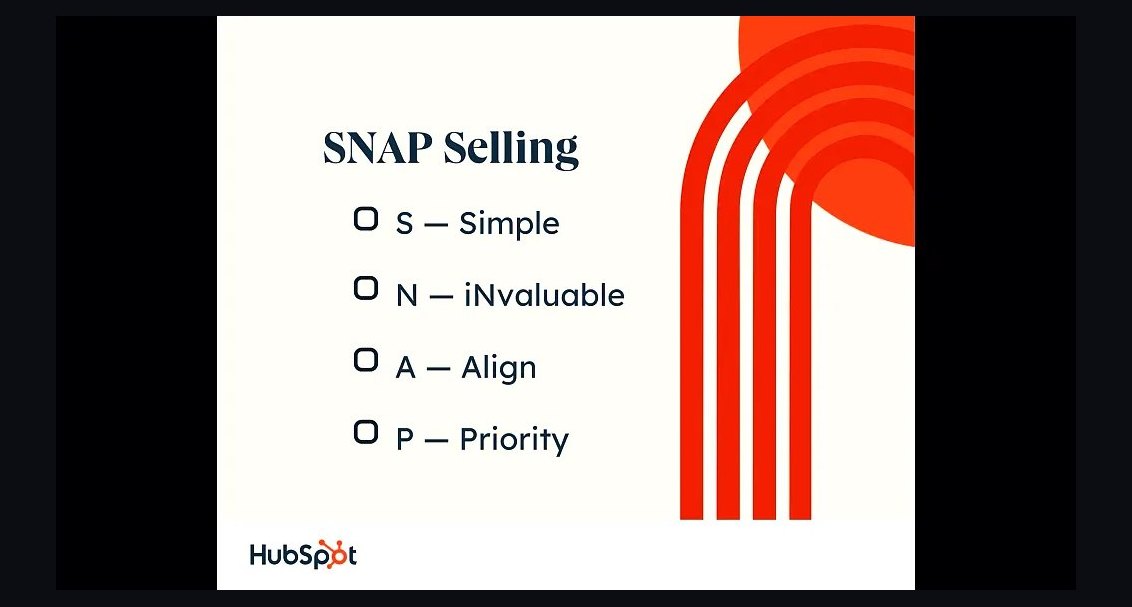 bsHow does *SNAP Selling* help you shorten a six-month sales cycle into three months in 2027?
 bsHow can *Fanatical Prospecting* change your approach to social selling and LinkedIn outreach in 2027?
 bsWhat’s the main strategy in *Pitch Anything* for holding attention in 2027?
 bsWhat's the right way to structure a compensation plan so quota-carrying reps trust the commission math in 2027?