


How do you build a sales pipeline when your entire market is brand new and no one is searching for your category in 2027?
Quality
Certified

Building a pipeline in a category nobody is searching for means abandoning demand capture and running demand creation instead: you identify the small set of buyers who feel the pain acutely, teach them the language for it, and manufacture urgency through provocation rather than waiting on inbound. The work is outbound-led, education-heavy, and measured on conversations started, not leads collected.
What it is and why it matters
When a market is genuinely new, the traditional pipeline engine is dead on arrival. There is no search volume to harvest, no comparison pages ranking, no "best [category] software" queries to intercept, and no analyst report your buyers are already reading. Every dollar you spend on Google Ads against a term nobody types returns zero. Every blog post optimized for a keyword with no volume sits unread. The funnel metaphor itself breaks, because a funnel assumes demand already exists upstream and your job is to filter it down. In a brand-new category, you are not filtering demand — you are creating it, one conversation at a time, and that is a fundamentally different motion with different economics, different metrics, and a different calendar.
The reason this matters so much is that most go-to-market teams are structurally incapable of running a demand-creation motion, because their entire operating system — the CRM stages, the SDR quotas, the marketing attribution model, the board deck — was built for demand capture. An SDR team measured on meetings booked from inbound leads will starve when inbound is zero. A marketing team measured on MQLs will look like it is failing for six to nine months while it is actually doing the most valuable work in the company. The companies that win new categories are the ones that rebuild the measurement system before they rebuild the pipeline, because the old scoreboard actively punishes the right behavior.

There is also a timing asymmetry that makes this worth doing properly. Categories do not stay new. The window where you can define the language, own the framing, and become the default answer lasts somewhere between eighteen and thirty-six months in most enterprise software markets, sometimes shorter in fast-moving infrastructure or AI-adjacent spaces. Once a category has a name that buyers recognize, the game shifts to competition on that name — and the company that named it usually wins the comparison by default. So the pipeline you build in year one is not just revenue; it is the asset that makes year three cheap. A pipeline built on education compounds because every educated buyer teaches their peers. A pipeline built on discounting does not.
Practically, this means your early pipeline looks nothing like a mature one. Deals are smaller in count but larger in effort. Sales cycles run long because you are often selling the problem before you sell the solution. Champions have to build internal business cases from scratch because there is no precedent to point at. Win rates on qualified opportunities can actually be higher than in mature categories, because there is no incumbent to displace and no shortlist to lose — but the qualification bar is brutal, because most of your "leads" do not yet believe they have the problem. The teams that succeed treat this as a research-and-teaching phase with revenue attached, not a quota phase with marketing attached.
The step-by-step process

The process has five stages, and they run roughly in sequence but overlap heavily. Skipping ahead is the most common failure mode.
Stage one: find the acute pain, not the market. You cannot sell to a market that does not know it exists. You can sell to a person whose Tuesday is ruined by a specific problem. Start by interviewing twenty to forty people who plausibly have the pain — not prospects, just practitioners — and ask what they do today instead of buying your category. What workaround exists? What spreadsheet, what contractor, what manual process? The workaround is your real competitor, and its cost is your business case. Document the exact language they use for the pain. You will reuse their words for the next two years.
Stage two: name the problem before you name the product. Buyers cannot search for a category they cannot name, so you give them the name. This is not branding; it is a functional act of market infrastructure. Write the definition, the boundary (what it is not), and the three symptoms that indicate someone has it. Publish it where your buyers already read — trade publications, industry Slack communities, conference talks, podcasts. The goal is that when two of your buyers meet at a conference, they use your term to describe their shared problem.
.jpg)
Stage three: build a narrow, high-signal target list. In a new category, list quality beats list quantity by an order of magnitude. A list of 300 accounts where you have a specific, defensible hypothesis about the pain will outperform a list of 30,000 generic contacts every time. Build the list from trigger events: a funding round, a regulatory deadline, a leadership hire, a public incident, a job posting that reveals the pain. Trigger-based lists convert three to five times better than firmographic lists in new categories because the trigger is evidence the pain is currently acute.
Stage four: run education-first outbound. Your first touch should not ask for a meeting. It should deliver a point of view. A short, specific note that names the problem, describes the workaround cost, and offers a fifteen-minute conversation about how peers are handling it. Expect reply rates in the 3-8% range for well-targeted, well-written outbound in a new category — lower than mature-category benchmarks if your list is broad, higher if your triggers are sharp. The metric that matters early is not meetings booked; it is conversations where the buyer says "yes, that is exactly our problem." That sentence is the leading indicator of a category forming.
Stage five: convert teaching into pipeline. Once a buyer recognizes the problem, you move to a diagnostic sale. You are not demoing features; you are quantifying the cost of the status quo and co-building the internal case. This is where you generate the artifacts your champion needs: a one-page problem definition, a cost-of-inaction model, a phased implementation plan, a reference call with a peer. Deals close when the champion can explain the problem to their CFO in language the CFO accepts — which is usually your language, borrowed.
The loop at the end is the part most teams miss. Every closed deal should produce a public, teachable artifact — a case study, a conference talk, a benchmark — that goes back into stage two and makes the next cohort of buyers easier to reach. In a new category, your pipeline is a flywheel, and the proof you generate is the fuel.
Costs, timelines, and typical ranges

The honest answer is that new-category pipeline building costs more and takes longer than any mature-category forecast will admit, and the ranges vary enormously by deal size and buyer seniority. But there are usable benchmarks.
Timeline to first repeatable pipeline. Expect six to twelve months before you have a repeatable motion, and twelve to twenty-four months before the pipeline is predictable enough to forecast against. The first three months are almost pure research and language development. Months three to nine are outbound experimentation with high variance. Months nine to eighteen are where patterns emerge and you can start hiring against them. If someone promises a predictable new-category pipeline in one quarter, they are either selling into existing demand or guessing.
Cost per qualified opportunity. In a new category, expect cost per qualified opportunity to run two to four times higher than in a mature category — often in the range of $3,000 to $15,000 per qualified opportunity for mid-market enterprise deals, and higher for large enterprise. This is not inefficiency; it is the cost of education. You are paying for the buyer's learning, not just your own reach. The good news is that customer acquisition cost often falls sharply after the first cohort, because educated buyers refer and because your content starts doing the teaching for free.

Team shape. A workable early team is two to four people: one or two founding sellers who can run consultative conversations and write well, one content or market-education person who can produce the category-defining material, and one person who owns the target list and the research. Do not hire a large SDR team early. In a new category, a bad first touch burns a scarce, high-value account permanently. Small and senior beats large and junior until the language is proven.
Marketing spend split. Early on, put roughly 60-70% of your budget into outbound and direct education (events, podcasts, executive roundtables, analyst briefings) and 30-40% into content and category assets. Paid search should be near zero until you can see search volume emerging — and you should monitor for that emergence monthly, because the day your category term starts getting typed is the day your economics change. When you see consistent monthly search volume for your category term, shift budget toward capture immediately.
The metric set. Track four things weekly: conversations where the buyer articulates the problem in your language, qualified opportunities created from those conversations, cost per qualified opportunity, and the percentage of closed deals that came from a champion who could independently explain the problem. That last metric is the single best predictor of whether your category is forming or whether you are just selling one-off deals.
Where teams get it wrong

They run demand capture against zero demand. The most expensive mistake is spending on channels that assume existing intent. Paid search against a nonexistent keyword, gated content optimized for no-volume terms, and webinar programs promoted to a list that has never heard the problem named — all of these burn budget and produce nothing. If your channel strategy requires the buyer to already be looking, it does not work in a new category.
They hire SDRs before they have language. Volume-based outbound with a generic pitch fails in new categories because the pitch assumes the buyer knows what you do. Hiring ten SDRs to blast a message nobody understands produces ten SDRs who quit in four months and a burned list you cannot reuse. Prove the message with two senior sellers first.
They measure the wrong leading indicator. MQLs, meetings booked, and pipeline created are all lagging or misleading in a new category. The leading indicator is problem recognition — the buyer saying "yes, that is us." Teams that optimize for meetings booked get meetings with people who do not have the pain, and those meetings poison the forecast.
They broaden the list to hit a number. When pipeline is thin, the instinct is to add more names. In a new category this is exactly backwards. A broader list means more touches to people without the pain, which means more rejection, which means the team loses conviction in the message right when the message is starting to work. Narrow the list and go deeper.
They discount to create urgency. Discounting in a new category teaches the market that your category is a nice-to-have you can afford to give away. It also destroys your ability to price on value later. Urgency in a new category comes from the cost of the status quo, not from a limited-time offer.

They treat the first ten customers as revenue instead of research. Your first ten customers are your category's founding documents. If you treat them as transactions and do not extract the language, the proof, and the reference, you have wasted the most valuable cohort you will ever have.
They quit at month five. New-category pipeline building has a valley between months four and nine where outbound is running, content is published, and pipeline is still thin. Teams that quit here never see the compounding. Teams that hold the line and keep refining the message hit inflection somewhere in months nine to fifteen.
Decision framework: when to choose what
Not every new-category situation calls for the same motion. The right approach depends on deal size, buyer seniority, and how acute the pain is. Use the framework below to pick your primary motion, then layer the others in as the category matures.
The practical read: if your ACV is low, you cannot afford human-led education per deal, so you build self-serve teaching assets and let the product demonstrate the value. If your ACV is high, you can afford executive time, and executive time is the most effective category-creation tool there is — a single roundtable with eight practitioners who all have the pain will generate more qualified pipeline than a thousand cold emails. If the pain is acute, move fast and diagnose. If it is latent, you are in a teaching business for a while, and you should staff and budget accordingly.
One more decision matters: when to shift from creation to capture. The signal is search volume. The moment your category term shows consistent monthly search volume — even a few hundred searches — you should redirect budget toward owning that term, because capture is dramatically cheaper than creation and the window closes fast once competitors notice.
Related questions
How long before a new category generates inbound demand?
Typically twelve to thirty-six months from the start of deliberate category education, depending on deal size and how acute the pain is. You will see early signals — buyers using your language unprompted, conference mentions, a few monthly searches — well before inbound becomes a meaningful pipeline source. Do not wait for it; build outbound to carry you until it arrives.
Should we run paid ads in a category with no search volume?
No, not for demand capture. There is nothing to capture. You can run paid social or sponsored content as a distribution channel for your education assets, but treat it as awareness spend with awareness metrics, not as a pipeline channel. Monitor search volume monthly and switch on capture the moment it appears.
How do we forecast pipeline we cannot yet predict?
Forecast on activity and problem recognition, not on revenue. Track conversations where the buyer articulates the problem, qualified opportunities from those conversations, and the conversion rate between them. Once you have three to four quarters of that data, you can build a bottom-up model. Until then, give your board ranges and the leading indicators, not a single number.
What is the best first hire for a new-category pipeline?

A senior seller who can write, run consultative conversations, and tolerate ambiguity. Not an SDR manager, not a demand-gen lead. The first hire's job is to prove the message with real buyers. Everything else — the list, the content, the process — is built around what that person learns in the first ninety days.
How do we know when the category has formed?
Three signals together: buyers use your category term without prompting, search volume for the term is consistent month over month, and analysts or trade publications start writing about the space using language close to yours. When all three are true, you are in a category and should shift from creation to capture and competition.
FAQ
What if nobody has the pain we are solving for? Then you do not have a category, you have a hypothesis. Go back to the twenty-to-forty practitioner interviews and look for a pain people already spend money or time on. The best new categories are usually a sharper name for a problem people are already solving badly with spreadsheets, agencies, or internal headcount. If nobody is solving it at all, the pain is probably not acute enough to fund.
How do we get our first ten customers without any brand or references? Sell the problem, not the product. Find buyers with a visible trigger — a funding round, a compliance deadline, a new executive — and offer a diagnostic conversation with no pitch. Bring a cost-of-status-quo model they can take to their boss. Your first ten customers buy because you understood their problem better than anyone else, not because you had a logo wall.

Is outbound really the answer, or should we just do content and wait? Content alone is too slow in a new category because nobody is searching for it yet. Content is the teaching asset; outbound is the distribution. You need both, but outbound carries the pipeline while content builds the compounding asset. Expect content to become a primary pipeline source somewhere in year two.
How do we handle a buyer who says "we have never heard of this category"? That is a buying signal, not an objection. It means you get to define the frame. Slow down, teach the problem, quantify the cost of the workaround, and offer a low-risk first step — a pilot, a diagnostic, a paid assessment. Do not rush to a demo; the demo is meaningless until they believe the problem is real.
What metrics should we put in front of the board during this phase? Problem-recognition conversations, qualified opportunities, cost per qualified opportunity, and the percentage of closed deals where the champion independently explained the problem. Add category-search-volume trend as a strategic indicator. Avoid presenting MQLs or raw pipeline value as if they were predictive; they are not yet.
When should we stop creating and start competing? When search volume for your category term is consistent and competitors are publishing against it. At that point the cost of capture is lower than the cost of creation, and the company that defined the term usually wins the comparison. Shift budget to SEO, comparison content, and paid capture, but keep a small creation budget running to defend the frame.
Sources
- Harvard Business Review — "The B2B Elements of Value" and related go-to-market research: https://hbr.org
- Harvard Business Review — "Advertising's New Medium: Human Experience" and category-creation writing: https://hbr.org
- Gartner — B2B buying journey research and sales research: https://www.gartner.com/en/sales
- McKinsey & Company — B2B growth and go-to-market insights: https://www.mckinsey.com/capabilities/growth-marketing-and-sales/our-insights
- Bain & Company — B2B commercial excellence research: https://www.bain.com/insights/
- Corporate Visions — B2B messaging and sales research: https://corporatevisions.com
- LinkedIn Sales Solutions — B2B sales benchmarks and State of Sales reporting: https://business.linkedin.com/sales-solutions
- Google Search Central — documentation on search demand and keyword research fundamentals: https://developers.google.com/search/docs
- Forrester — B2B marketing and revenue research: https://www.forrester.com
Related on PULSE
- How do you build a sales pipeline when your market is emerging but not yet named?
- What is category design and how does it change go-to-market in 2027?
- How do you measure pipeline quality when inbound demand does not exist yet?
- What outbound motions work best for brand-new categories with no search volume?
- How do you price a product in a category buyers cannot yet compare?
- When should a company shift from category creation to category capture?
This page will be disappearing soon. Save it to your device for $1 — or read it free while it is here.
@Kory-White- · if Venmo asks, the last 4 of my number are 2012
This page is gone.
This one is off the shelf now. $1 keeps it on your phone for good — the whole page, pictures and diagrams included.
 pulse-booksWhat is the single most counterintuitive piece of advice from Think and Grow Rich for achieving financial goals in 2027?
 bsWhat’s the core strategy in *Fanatic Prospecting* for building a pipeline from scratch in 2027?
 bsHow does *SNAP Selling* help you break through the noise in a crowded market?
 bsWhat’s the key difference between a situational and a problem question in *SPIN Selling* for discovery calls in 2027?
 bsWhat’s the most underrated chapter in *How to Win Friends and Influence People* for building executive relationships?
 bsCan *How to Win Friends and Influence People* still make you more likeable in 2027?
 bsWhat’s the key insight from *The Challenger Sale* about teaching customers something they don’t know?
 bsHow do you use *Never Split the Difference* to handle difficult conversations with customers in 2027?
 bsWhat’s the most actionable chapter in *How to Win Friends and Influence People* for networking in 2027?
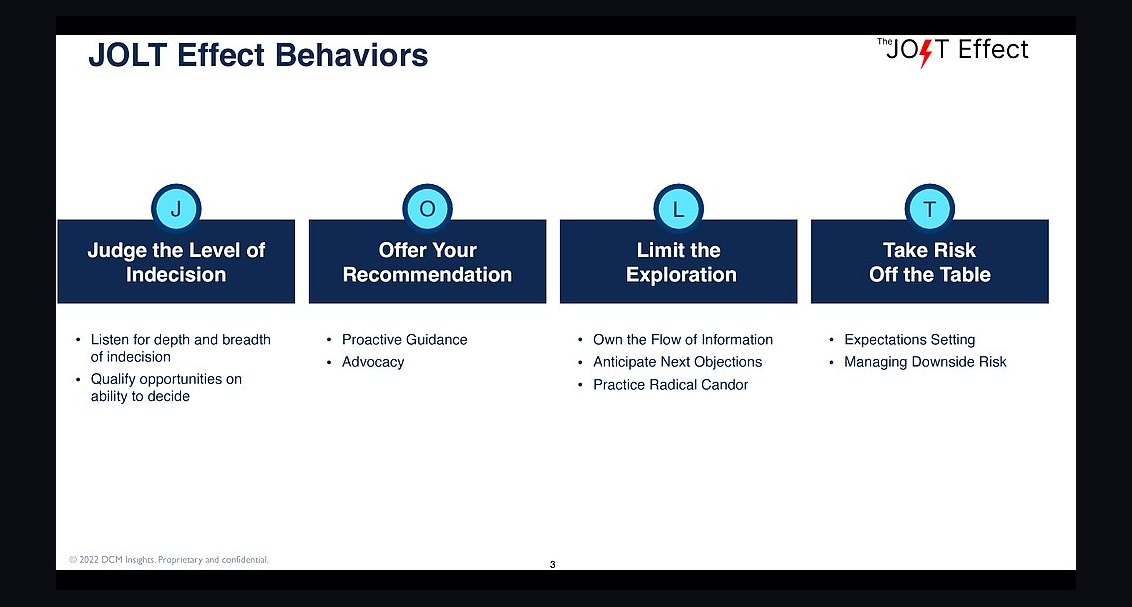 bsHow do you apply *The JOLT Effect* to reduce buyer hesitation in enterprise sales?