


What's the right way to structure a compensation plan so quota-carrying reps trust the commission math in 2027?
Quality
Certified

Structure a compensation plan around three things reps can verify themselves: a clear quota-to-OTE ratio (commission as a fixed percentage of closed revenue, not a sliding scale), a written commission strategy showing exactly how each deal type pays, and a calculator reps can run before closing. Trust in the commission math comes from transparency and consistency, not generosity — reps who can predict their own paycheck within a few dollars stop questioning the structure and start selling against it.
What it is and why it matters
A trusted compensation plan is not the plan with the highest payout — it's the plan a rep can recalculate independently and arrive at the same number the payroll system produces. Distrust in commission math is almost never about the dollar amount; it's about the gap between what a rep expected to be paid and what actually landed, and how long it takes to get an answer about why. When quota-carrying reps stop trusting the structure, the damage shows up in behavior long before it shows up in an engagement survey: reps start negotiating deal terms to game accelerators instead of serving the customer, they stop bringing edge cases (multi-year deals, bundled discounts, reassigned accounts) to their manager because they assume they'll be shorted, and top performers — the ones with the most leverage to leave — quietly start interviewing.
The core design principle for 2027 comp plans is simplicity over cleverness. A plan with more than two or three variables (base commission rate, one accelerator tier, one specific SPIF) is a plan most reps cannot mentally model. If a rep needs a spreadsheet built by finance to know what a deal is worth, the plan has already failed the trust test, regardless of whether the math is technically correct. The commission structure should be explainable on a single page, in under two minutes, by the rep's manager — not just by the compensation analyst who built it.

The second principle is quota-carrying reps need a stable target for the full measurement period. Mid-year quota changes, retroactive rate adjustments, or "temporary" plan tweaks that never get reverted are the single fastest way to destroy commission trust, because they convert a contract reps believed was fixed into one they now assume can move under them at any time. Even when a change objectively benefits reps (a lower quota, a richer rate), an unannounced or unexplained mid-cycle change teaches reps that the plan is negotiable after the fact — which means every future plan gets read with suspicion.
Third, the plan has to survive contact with real deal structure: multi-year contracts, usage-based pricing, expansion revenue, and reseller or partner-sourced deals all break naive "percent of closed revenue" logic if the compensation strategy doesn't define them up front. A plan that only works for the simple, single-year, direct-sold deal will produce disputes on every deal that doesn't fit that mold — and those disputed deals are disproportionately the largest ones, which means the reps with the most on the line are the ones most likely to distrust the math.
The step-by-step process

Building a plan reps will trust follows a sequence, not a single design meeting. Skipping steps — particularly the validation and communication steps — is the most common reason a technically sound plan still gets rejected by the field.

- Set the on-target earnings (OTE) split first. Decide the base-to-variable ratio before touching mechanics — a common range for closing reps is 50/50 to 60/40 base-to-variable; more base-heavy roles (like enterprise reps with long cycles) often run 60/40 or 70/30 to reduce income volatility, while transactional or SMB roles skew toward 50/50 to keep urgency high.
- Set quota using historical capacity, not a top-down revenue target. Quota should trace back to a rep's actual territory, pipeline coverage ratio (commonly 3x–4x quota in pipeline), and ramp time — a quota that was reverse-engineered from the company's revenue goal, with no connection to what an individual rep's book can produce, is the single most common root cause of reps feeling the math is rigged against them.
- Define the commission rate and cap policy in writing before the fiscal year starts, including exactly how accelerators trigger (e.g., 1.0x rate up to 100% of quota, 1.5x from 100–150%, 2.0x above 150%) and whether the plan has a cap. Uncapped plans generally build more trust than capped ones, because a cap creates a moment late in the year where a rep's incentive to keep selling drops to zero — precisely when the company wants continued effort.
- Model the plan against last year's actual closed-won deals, not hypothetical ones. Run every real deal from the prior 12 months through the new structure and compare the payout to what reps actually received. Any deal type that produces a materially different (especially lower) payout under the new plan is a preview of a future dispute — resolve it in the definition before launch, not in an appeal after a rep's paycheck comes in short.
- Build a self-serve commission calculator tied to the CRM opportunity object, so a rep can see, before they close, exactly what a given deal configuration pays. This single step does more for commission trust than any communication effort, because it lets reps verify the math themselves instead of taking finance's word for it.
- Communicate the plan in a live session with Q&A, not a PDF sent by email. Reps need the chance to ask "what happens if..." questions about their specific accounts before the plan goes live, and sales leadership needs to hear which edge cases are actually going to occur in the field.
- Require written sign-off from every quota-carrying rep, confirming they've read and understood their individual plan — this isn't a legal formality, it's the step that forces both sides to surface disagreements before the first commission check is calculated rather than after.
- Run a mid-year checkpoint to review disputed payouts, edge cases that emerged, and whether the quota still matches territory reality — and commit in advance to only changing the plan at that checkpoint or at year-end, never ad hoc.
Costs, timelines, and typical ranges

Designing and rolling out a trustworthy compensation structure takes real lead time, and compressing that timeline is one of the most common causes of a plan that looks fine on paper but breaks trust in practice. A full cycle — from OTE-split decision through backtesting, calculator build, and live rollout — typically runs 8 to 12 weeks before the new fiscal or plan year begins. Compensation and sales operations teams that start this process inside 30 days of go-live are almost always forced to skip the backtesting step, which is exactly the step that catches the edge cases reps will find first.
On OTE ranges: total on-target earnings vary heavily by role and segment, but the internal ratio matters more than the absolute number for trust purposes. A closing AE on a 50/50 split with $150,000 OTE has $75,000 in base and $75,000 in variable tied to a defined quota; the trust question isn't whether $150,000 is competitive externally, it's whether the rep can compute their own commission on a $40,000 deal without asking finance. Quota-to-pipeline coverage of roughly 3x to 4x is a widely used planning range — a rep carrying $1M in annual quota should be working roughly $3M–$4M in qualified pipeline at any given time for the quota to be achievable rather than aspirational.
Accelerator tiers commonly run in three bands: a base rate up to 100% of quota, a 1.3x–1.5x accelerator from 100%–150% of quota, and a 2x (or uncapped) rate above 150%. Decelerators — a reduced rate below a minimum threshold, often 50%–70% of quota — exist in some structures to protect against paying full commission on deals that required outsized discounting or deal support, but decelerators are also one of the fastest ways to erode trust if reps don't see the threshold coming; they should be modeled and disclosed with the same rigor as accelerators, never introduced quietly.

Calculator and tooling costs vary by whether the build sits inside an existing CRM (lower incremental cost, faster timeline, roughly 2–4 weeks of configuration) or requires a dedicated incentive compensation management (ICM) tool (longer procurement and implementation timeline, but better audit trail and dispute resolution at scale — commonly a multi-month implementation for a first deployment). For teams under roughly 50 quota-carrying reps, a well-built spreadsheet or CRM-native calculator is usually sufficient; above that headcount, the volume of edge cases and disputes typically justifies dedicated ICM software because manual reconciliation becomes the trust-breaking bottleneck itself — reps waiting three or four weeks for a commission dispute to resolve lose faith in the structure regardless of whether the eventual number is correct.
Clawback and true-up timelines should also be fixed and disclosed up front — commonly a 90-day or 6-month clawback window on commission paid for deals that later churn or get heavily discounted retroactively — because an open-ended clawback policy, where a rep can have commission reversed a year later with no defined limit, is one of the most trust-corrosive terms a plan can contain, even when it's rarely invoked.
Where teams get it wrong
The most common failure is treating the compensation plan as a finance document rather than a sales strategy document. When comp design happens entirely inside finance or HR with sales leadership consulted only for sign-off, the resulting structure optimizes for controllable cost rather than for the behavior the company actually wants reps to exhibit — and reps can tell the difference immediately, because the plan rewards actions (like heavy early-quarter discounting to hit a threshold) that no sales leader would actually endorse.

A second recurring mistake is plan complexity that outpaces what a manager can explain from memory. Multiple overlapping SPIFs, tiered accelerators that reset quarterly, different rates for new-logo versus expansion versus renewal revenue, and bonus multipliers for specific product lines are each individually defensible, but stacked together they produce a structure where two reps with identical results can be paid noticeably differently and neither one — nor their manager — can say exactly why without escalating to compensation. Every added variable should be weighed against this test: can a first-line manager compute a rep's commission on a specific deal, from memory, in under a minute? If not, simplify before launch.
A third failure is skipping the backtest against real historical deals. Teams that model a new plan only against hypothetical "average" deals routinely discover, only after go-live, that their most common real-world deal shape — say, a multi-year contract with a discount in year one — pays out worse under the new commission structure than the old one. Reps notice this within the first commission cycle, and because it affects the deals they're most likely to be closing right now, it becomes the story the whole team tells about the new plan regardless of how well-designed the rest of it is.
A fourth failure is retroactive or silent changes to the rules mid-period — adjusting a rate, tightening a definition of what counts as a "new logo," or moving a deal from one rep's territory to another's after it's already in the pipeline. Even a single retroactive change, applied to a single rep, spreads through a sales team faster than almost any other kind of news, because it confirms every rep's underlying fear: that the commission math is whatever the company decides after the fact, not a fixed contract they can plan around.

A fifth failure is no visible dispute process. When reps have no defined channel to flag a commission discrepancy, or when disputes take months to resolve with no interim communication, reps stop trusting the plan even if every individual calculation turns out to be correct — because trust requires not just correct math, but a system that visibly corrects itself quickly when something looks wrong.
Decision framework: when to choose what
Not every quota-carrying role should use the same commission architecture, and forcing one structure across fundamentally different sales motions is itself a source of distrust — reps compare notes across teams, and a structure that clearly doesn't fit their motion reads as either laziness or indifference from leadership.
For transactional, high-velocity sales (short cycles, low average deal size, high volume), a flat commission rate with a single accelerator tier keeps the math simple enough for reps to track mentally across many deals per week — added complexity here creates more disputes per rep than it's worth, since the sheer volume of transactions multiplies any ambiguity.
For enterprise, long-cycle sales, a higher base-to-variable ratio (60/40 or 70/30) with milestone-based partial credit (e.g., partial commission on contract signature, remainder on go-live or first invoice) better matches how enterprise deals actually close in stages, and protects rep income during the long stretches between closings — a pure percent-of-closed-revenue model on a 9-month sales cycle creates income volatility that erodes trust even when the eventual math is fair.

For expansion and renewal-focused roles (customer success or account management with a quota component), commission tied to net revenue retention or upsell/cross-sell revenue, with a separate and lower rate than new-logo commission, keeps the incentive structure honest about which behavior is being rewarded — blending renewal and new-business commission into one rate tends to either overpay easy renewals or underpay hard-won new logos, and reps in mixed books notice the mismatch immediately.
For teams selling through partners or channels, the commission strategy needs an explicit, published split definition between direct and partner-sourced or partner-assisted revenue before the year starts — this is one of the highest-dispute categories in comp because attribution is inherently ambiguous, and an undefined split gets resolved deal-by-deal in a way that feels arbitrary to whichever rep loses the argument.
The unifying decision rule across all of these: choose the simplest structure that still matches how revenue is actually generated in that specific motion, publish the rules before the measurement period starts, and never let post-hoc negotiation substitute for a rule that should have been written down in advance.
Related questions
What's the ideal base-to-variable pay mix for a quota-carrying rep?
It depends on cycle length and deal predictability: transactional roles often run 50/50 to keep urgency high, while long-cycle enterprise roles skew toward 60/40 or 70/30 base to reduce income volatility across a multi-month sales cycle.
How often should a sales compensation plan change?

Ideally once per measurement period (annually or, at most, with a defined mid-year checkpoint) — frequent or retroactive changes are the fastest way to erode a rep's trust in the underlying math.
Should commission be uncapped?
Most trust-focused designs favor uncapped plans, since a cap removes incentive to keep selling once a rep crosses the threshold, right when continued effort has the most value to the business.
How do you handle commission on multi-year contracts?
Define upfront whether commission pays on total contract value, first-year value only, or is spread across the contract term with milestone triggers — and backtest that rule against real multi-year deals before launch, since this is one of the highest-dispute deal types.
What causes reps to distrust a compensation structure even when the math is correct?
Complexity they can't verify themselves, mid-cycle changes, slow or invisible dispute resolution, and a mismatch between the published quota and their actual territory capacity — trust is built by transparency and consistency, not just correctness.
FAQ

What's the single biggest driver of commission trust? A self-serve calculator reps can run before closing a deal — the ability to verify the math independently matters more than the generosity of the rate itself.
How many variables should a commission structure have? As few as possible — ideally a base rate and one accelerator tier. If a first-line manager can't compute a rep's payout from memory in under a minute, the structure is too complex.
Is quota the same thing as compensation strategy? No — quota sets the target; the compensation strategy defines how revenue against that target converts into pay, including rate, accelerators, caps, and how edge-case deals (multi-year, partner-sourced, expansion) are treated.
Should reps sign off on their individual comp plan? Yes — written sign-off, collected after a live Q&A session, surfaces disagreements before the first commission cycle runs instead of after a rep sees a paycheck that doesn't match their expectation.
What's a reasonable quota-to-pipeline coverage ratio? Roughly 3x to 4x quota in qualified pipeline is a common planning range — well below that, the quota is aspirational rather than achievable, which itself undermines trust in the whole plan.
How should clawbacks be handled? Define a fixed, disclosed window (commonly 90 days to 6 months) rather than an open-ended right to reverse commission — an undefined clawback policy is one of the more trust-corrosive terms even when rarely enforced.
Sources
- https://hbr.org
- https://www.gartner.com/en/sales
- https://www.forrester.com
- https://www.worldatwork.org
- https://www.shrm.org
- https://www.xactlycorp.com
- https://www.salesglobe.com
- https://www.mckinsey.com
Related on PULSE
- How should quota be set for a rep's first ramp period?
- What's the right pipeline-to-quota coverage ratio for enterprise reps?
- How do accelerators and decelerators affect rep behavior late in a quarter?
- When should a company move from a spreadsheet to dedicated incentive compensation software?
- How should commission be split between direct and partner-sourced revenue?
This page will be disappearing soon. Save it to your device for $1 — or read it free while it is here.
@Kory-White- · if Venmo asks, the last 4 of my number are 2012
This page is gone.
This one is off the shelf now. $1 keeps it on your phone for good — the whole page, pictures and diagrams included.
 pulse-booksWhat is the single most counterintuitive piece of advice from Think and Grow Rich for achieving financial goals in 2027?
 bsWhat’s the main strategy in *Pitch Anything* for holding attention in 2027?
 bsHow does *Gap Selling* help you compete against a lower-priced competitor without discounting in 2027?
 pulse-booksWhat should you know before investing in Book Summaries in 2027?
 bsHow does *SNAP Selling* help you break through the noise in a crowded market?
 bsHow do you use *Never Split the Difference* to handle difficult conversations with customers in 2027?
 bsHow do sales leaders build a repeatable outbound prospecting motion without a big SDR team in 2027?
 bsWhat’s the most actionable chapter in *How to Win Friends and Influence People* for networking in 2027?
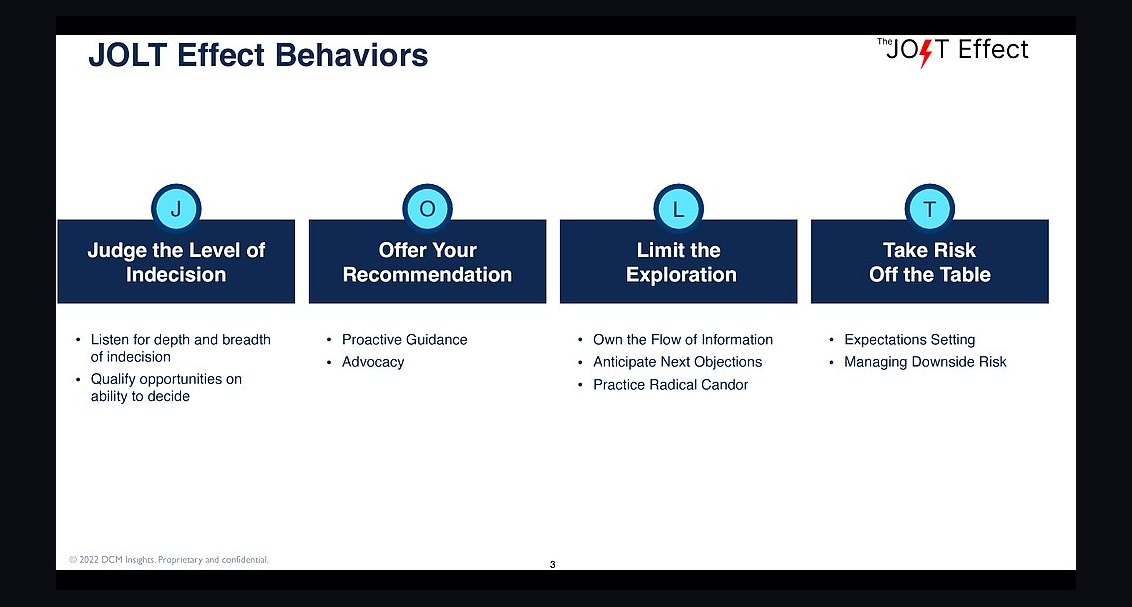 bsHow do you apply *The JOLT Effect* to reduce buyer hesitation in enterprise sales?
 bsHow can *Fanatical Prospecting* change your approach to social selling and LinkedIn outreach in 2027?