


Blue Ocean Strategy by W. Chan Kim and Renee Mauborgne — Top 10 Key Takeaways for Sales Leaders in 2027
Quality
Certified
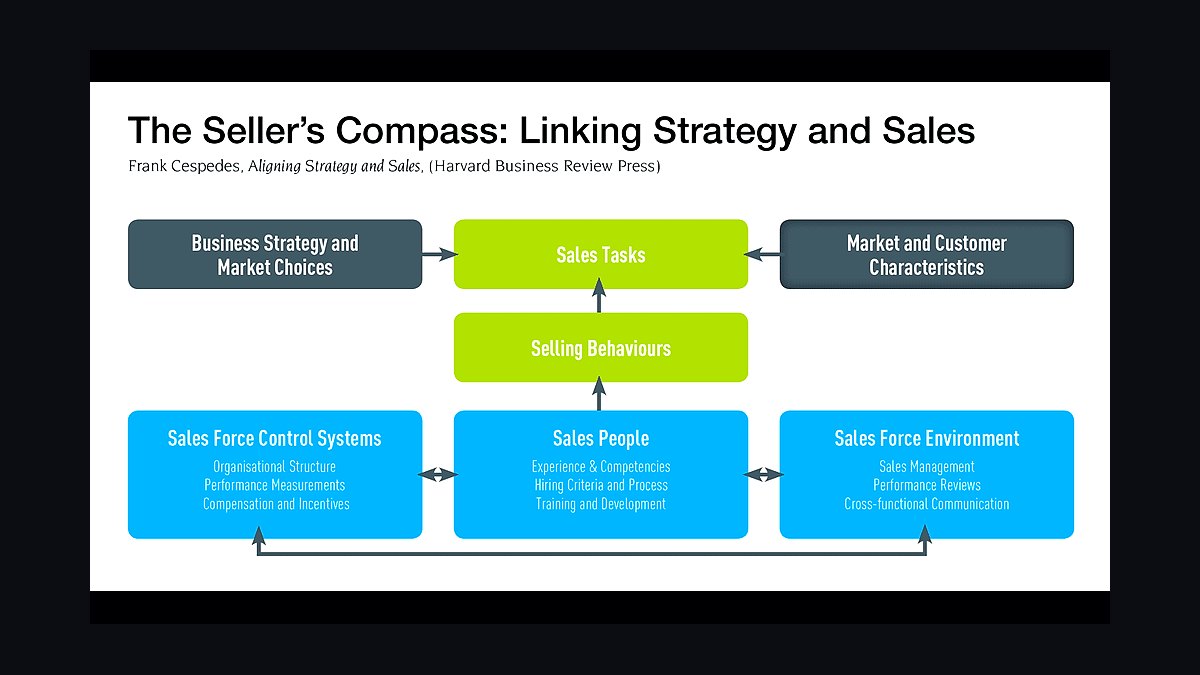
Blue Ocean Strategy, by W. Chan Kim and Renee Mauborgne, argues that lasting growth comes from creating uncontested market space rather than beating rivals. For sales Leaders in 2027, the practical Takeaways are to stop benchmarking competitors, reconstruct market boundaries, target noncustomers, and sell a leap in buyer value that makes the old comparison irrelevant.
The outcome you should expect
The outcome of applying Blue Ocean Strategy to a sales organization is not a marginally better win rate against the same shortlist of competitors. It is a different pipeline shape entirely. Instead of fighting for 20-25% of a contested deal against three named rivals, you aim to create demand where no credible alternative exists, so your team competes against inertia, spreadsheets, and "we'll do nothing" rather than against a mirror-image vendor.
Concretely, sales Leaders who internalize the Takeaways from Kim and Mauborgne should expect four observable shifts within two to four quarters. First, a rising share of pipeline sourced from buyers who were not in the market when you first contacted them — often 30-50% of new logos in a mature blue-ocean motion, versus 10-15% in a pure competitive-displacement motion. Second, longer early-cycle education and shorter late-cycle negotiation, because you are teaching a new category rather than defending a feature grid. Third, a different competitive-loss pattern: losses concentrate on "no decision" and budget inertia rather than on a named competitor's price. Fourth, pricing power that holds, because the buyer's reference point is the cost of the problem, not a rival's quote.
The trade-off is real. Blue ocean selling is slower to ramp, harder to forecast with traditional stage models, and uncomfortable for reps trained on battlecards. A rep who wins by out-arguing a competitor has a clear script; a rep who must help a buyer reframe what they are even buying needs discovery skill, executive presence, and patience. Expect 6-12 months before the motion produces reliable repeatable revenue, and expect your best competitive-displacement reps to be the slowest adopters — they have the most invested in the red-ocean playbook.

What you should not expect is that the framework replaces sales fundamentals. Kim and Mauborgne's work is a Strategy framework, not a sales methodology. It tells you where to play and what value to build; it does not tell you how to run a discovery call. The sales Leaders who get the most from it pair the strategic reframe with disciplined execution: clean CRM hygiene, consistent qualification, and a value hypothesis that is tested with real buyers before it is scaled.
Finally, expect the outcome to be uneven across segments. Blue ocean moves tend to work best where buyers have a genuinely painful, poorly served job to be done and where the incumbent alternatives are fragmented or over-served. In commoditized segments with three strong incumbents and price-transparent buyers, a blue ocean pitch can read as marketing noise. Part of the discipline is knowing which segments to apply it to and which to run as straightforward red-ocean coverage.
What drives that outcome
The mechanism behind Blue Ocean Strategy is value innovation: the simultaneous pursuit of differentiation and low cost. Kim and Mauborgne's central claim is that most companies assume a trade-off between value and cost, and that this assumption traps them into incremental moves. Value innovation breaks the trade-off by eliminating and reducing factors an industry takes for granted while raising and creating factors it has never offered.

For sales Leaders, this translates into a set of drivers you can actually manage. The first driver is the strategy canvas — a visual mapping of how your offering and competitors' offerings score on the factors the industry competes on, from price and features to service, contract terms, and buying experience. When every player scores similarly on the same factors, you have a red ocean. The canvas makes that visible and forces the question: which factors could we eliminate entirely, which could we reduce well below industry standard, which should we raise well above, and which could we create that no one currently offers?
The second driver is the four-actions framework (eliminate, reduce, raise, create). This is the operational heart of the framework and the part most directly usable by a sales organization. Eliminate means removing factors the industry has long competed on but that buyers no longer value — for example, a lengthy implementation project, a mandatory services bundle, or a feature set that only power users touch. Reduce means dialing a factor below industry standard — for instance, offering a deliberately narrow product that does one job extremely well rather than a broad suite. Raise means pushing a factor well above the norm — response time, transparency, integration depth, or outcome guarantees. Create means inventing a factor the industry has never offered — a shared-risk pricing model, a buyer-accessible data layer, or a co-development program.
The third driver is the noncustomer lens. Kim and Mauborgne distinguish three tiers of noncustomers: those about to leave your market, those who have consciously chosen against it, and those in distant or unexplored markets who have never considered it. Sales Leaders typically over-index on the first tier, because those buyers are easiest to find in CRM. The bigger blue ocean opportunities usually sit in tiers two and three, and reaching them requires different prospecting — not more of the same.

The fourth driver is the sequence of strategic moves: buyer utility, price, cost, adoption. Kim and Mauborgne argue that a blue ocean idea must pass through these gates in order. Buyer utility asks whether the offering unlocks a compelling leap in productivity or simplicity for the buyer. Price asks whether it is set to attract the mass of target buyers, not just early adopters. Cost asks whether you can hit that price at a healthy margin. Adoption asks whether employees, partners, and the public will accept it. For sales Leaders, the utility gate is the one most often skipped: teams launch a differentiated pitch without confirming that buyers experience it as a leap rather than a nicety.
The fifth driver is fair process. Kim and Mauborgne emphasize that Strategy execution depends on people understanding and buying into the logic, not just being told the conclusion. In sales, this shows up as whether reps can articulate why the company is deliberately walking away from certain deals, certain features, and certain segments. If they cannot, they will quietly revert to red-ocean behavior the moment a quarter gets tight. Fair process — engagement, explanation, and expectation clarity — is what keeps the motion from decaying into a slide deck that nobody believes.
Together these drivers explain why blue ocean outcomes are lumpy. You are not optimizing an existing funnel; you are trying to change what the buyer compares you to. That is a messaging, product, and pricing problem as much as a selling problem, which is why sales Leaders who attempt it without product and finance alignment usually stall at the pilot stage.
Benchmarks and realistic ranges
Because Blue Ocean Strategy is a framework rather than a metric set, the useful benchmarks are the operational indicators that tell you whether the motion is working. Treat these as planning ranges, not guarantees, and calibrate against your own historical data.

Pipeline composition is the first indicator. In a mature blue-ocean motion, a healthy target is 30-50% of new-logo pipeline coming from buyers who were not actively evaluating a category solution when first contacted. If that number sits below 15%, you are still running a displacement motion with blue-ocean language layered on top. If it exceeds 60%, check whether your qualification has gone soft — high "unaware" pipeline can mask poor fit.
Sales cycle shape is the second. Expect the education phase to lengthen and the negotiation phase to shorten. A reasonable pattern is a 20-40% increase in time from first meeting to validated business case, offset by a 15-30% reduction from business case to signature. Net cycle length often stays flat or improves slightly, but the shape changes, which breaks stage-conversion benchmarks built on the old motion. Rebuild your stage definitions before you judge rep performance.
Win rate against named competitors should rise, but total competitive-deal volume should fall. A common pattern is competitive win rate moving from roughly 25-35% to 45-60% while the absolute number of head-to-head deals drops by a third or more. If competitive deal volume is not falling, your positioning is not actually differentiating — buyers still see you as one of the options.
No-decision rate is the fourth indicator and the most counterintuitive. In red-ocean selling, "no decision" is often the largest single loss category at 30-50% of late-stage losses. In a working blue-ocean motion, no-decision should fall, because you are selling against the cost of the problem rather than asking buyers to choose between similar vendors. If no-decision stays high while competitive win rate rises, your value story is landing with evaluators but not with economic buyers.
Pricing is the fifth. Blue ocean positioning should reduce discount depth. A realistic target is average discount moving from 20-30% toward 10-20%, with fewer deals requiring exception approval. If discounting does not improve, the market does not yet perceive the leap in value, and the framework has been applied to messaging only.

Adoption and ramp are the sixth. Plan for a 6-12 month ramp before the motion is repeatable, and expect the first two quarters to show lower productivity per rep as they unlearn competitive scripts. A reasonable target is that by month nine, new hires trained natively in the blue-ocean motion outperform tenured reps who were retrained, which is a signal that the playbook is genuinely different rather than a rebrand.
Segment-level benchmarks matter too. Apply the motion where the addressable segment is large enough to matter — often a minimum of several hundred qualified accounts — and where the incumbent alternatives are fragmented or visibly over-serving buyers. In segments with three entrenched incumbents and price-transparent buyers, expect the blue-ocean motion to underperform straightforward competitive coverage, and staff accordingly.
Risks, edge cases, and failure modes
The most common failure mode is blue-ocean theater: adopting the vocabulary without changing the offer. Teams rebrand a feature as a "new market space," rewrite battlecards to avoid naming competitors, and continue selling the same product to the same buyers. Buyers detect this quickly, and the result is worse than a straightforward competitive pitch because it signals evasiveness. The test is whether anything in the four-actions framework actually changed — if nothing was eliminated, reduced, raised, or created, you have a messaging exercise.
The second failure mode is confusing a niche for a blue ocean. A small, underserved segment can be profitable, but it is not automatically uncontested market space. Kim and Mauborgne's framework requires a leap in buyer value that attracts the mass of target buyers, not a defensible corner. Sales Leaders who chase niches often find the segment too small to hit growth targets, then over-invest in customization to expand it, which destroys the cost side of value innovation.

The third is pricing the leap too high. A genuine value innovation is supposed to be accessible to the mass of buyers, which usually means pricing strategically rather than skimming. If your blue-ocean offer is priced at a premium that only early adopters will pay, you have created a differentiated product, not a new market. Watch the ratio of deals lost to price in the new segment; if it climbs above roughly 25-30%, revisit price before adding headcount.
The fourth is organizational resistance from the red-ocean stars. Your top competitive-displacement reps have status, income, and identity tied to winning head-to-head. They will often be the loudest critics of a motion that makes their hard-won skills less central. Handling this badly — mandating the new playbook without fair process — produces quiet noncompliance. Handling it well means involving them in designing the new motion, explaining the strategic rationale, and being explicit about what changes in compensation and territory.
The fifth is measurement mismatch. Traditional funnel metrics reward late-stage conversion and punish long education phases. If you apply old benchmarks to a new motion, you will conclude it is failing at exactly the point it is working. Rebuild stage definitions, add leading indicators for noncustomer engagement, and separate the blue-ocean pipeline from the core pipeline so neither distorts the other.
The sixth is imitation. A successful blue ocean attracts imitators, and Kim and Mauborgne are explicit that the advantage erodes. The defense is not secrecy but continuous value innovation — treating the new market space as a starting point rather than a destination. Sales Leaders should build a standing cadence, at least twice a year, to re-run the strategy canvas and ask what has become table stakes.
Finally, watch for internal cannibalization. A blue-ocean offer frequently competes with your own legacy product. If sales compensation does not address this, reps will steer buyers to the familiar offering. Decide deliberately whether the new offer replaces or complements the old, and align incentives to that decision before launch rather than after the first quarter of conflicted selling.
A practical rollout plan

A workable rollout runs across four quarters and treats the framework as a strategic change program, not a training event. The sequence matters: utility before price, price before cost, cost before adoption, and adoption before scale.
Quarter one is diagnosis and design. Assemble a small cross-functional team — sales, product, finance, and customer success — and build the strategy canvas for your category. Plot your offering and the two or three most relevant alternatives on the factors buyers actually weigh. Then run the four-actions framework and force at least one genuine eliminate and one genuine create. In parallel, interview 20-30 noncustomers across the three tiers, focusing on tier two and tier three. The output is a one-page value hypothesis: the leap in buyer value, the target segment, and the reference point you intend to displace.
Quarter two is validation. Take the hypothesis to 15-25 real buyers, including at least five noncustomers, and test whether they experience the leap as a leap. Do not test messaging; test the offer. This is where most programs discover that the "create" factor is a nice-to-have rather than a must-have. Adjust the offer, then set a strategic price and confirm the cost structure supports it at that price. Define the adoption plan: what changes for reps, partners, and existing customers.
Quarter three is pilot. Run the motion with a deliberately small group — 4-8 reps in one or two segments — with modified stage definitions and separate reporting. Give them air cover on quota during the learning phase. Instrument everything: pipeline composition, cycle shape, no-decision rate, discount depth. Hold weekly reviews focused on what buyers actually said, not on forecast.

Quarter four is scale and institutionalize. Expand to the full segment only if the pilot cleared two gates: noncustomers confirmed the leap in value, and discount depth improved. Then realign compensation, territories, and quota to the new motion, and retire the old battlecards rather than leaving them available as a fallback. Train new hires natively in the blue-ocean playbook so the motion has a generation of reps who never learned the red-ocean script.
Beyond quarter four, institutionalize a twice-yearly strategy canvas review. Imitation is inevitable, and the discipline that created the advantage is the discipline that sustains it. Assign a named owner for the motion — typically a senior sales leader with product and finance counterparts — and give them authority to kill factors that have become table stakes.
Two governance rules keep the program honest. First, no metric changes without a documented reason; changing benchmarks mid-flight is how programs get declared successful without evidence. Second, no expansion without a gate review. The temptation to scale a promising pilot before it is validated is the single most reliable way to burn the credibility you will need for the next attempt.
Related questions
What is the core idea of Blue Ocean Strategy in one sentence?
Kim and Mauborgne argue that durable growth comes from creating uncontested market space through value innovation — pursuing differentiation and low cost simultaneously — rather than from outperforming rivals in existing markets.
How is Blue Ocean Strategy different from competitive selling?

Competitive selling accepts the existing market and tries to win a larger share of it. Blue Ocean Strategy changes what buyers compare you to, so the competitive set becomes irrelevant rather than merely beatable.
Which sales metrics change first when you apply it?
Pipeline composition and no-decision rate typically move before win rate does. Expect more noncustomer-sourced pipeline and fewer late-stage losses to inertia within two to three quarters.
Can a small sales team use Blue Ocean Strategy?
Yes, and often more easily than a large one, because there is less legacy process to unwind. The constraint is segment size — the target market must be large enough to support the team's quota.
Does Blue Ocean Strategy replace a sales methodology?
No. It is a Strategy framework that tells you where to play and what value to build. You still need a disciplined execution methodology for discovery, qualification, and forecasting.
FAQ
What are the main Takeaways from Blue Ocean Strategy for sales Leaders?
The core Takeaways are: stop benchmarking competitors and start reconstructing market boundaries; use the strategy canvas and four-actions framework to redesign the offer; target the three tiers of noncustomers rather than fighting for the same buyers; sequence moves through buyer utility, price, cost, and adoption; and use fair process so the organization actually executes the change. For sales Leaders in 2027, the practical translation is a pipeline that competes against inertia instead of against mirror-image vendors.
Who are W. Chan Kim and Renee Mauborgne?

They are the authors of Blue Ocean Strategy and professors at INSEAD, where they co-direct the INSEAD Blue Ocean Strategy Institute. Their related book, Blue Ocean Shift, extends the framework with a process for making the shift in practice. Their work is among the most widely cited in management Strategy.
Is Blue Ocean Strategy still relevant in 2027?
The framework remains relevant because its core problem — how to escape price-based competition — has not gone away. What has changed is the speed of imitation and the volume of buyer information, which makes continuous value innovation more important than a one-time repositioning. Sales Leaders should treat it as an ongoing discipline rather than a single launch.
What is the four-actions framework?
It is a tool for reconstructing buyer value along four questions: which factors the industry takes for granted should be eliminated, which should be reduced below industry standard, which should be raised well above it, and which should be created that the industry has never offered. Answering all four forces you to break the value-cost trade-off rather than optimize within it.
How do you measure whether a blue ocean motion is working?
Track pipeline composition, cycle shape, competitive-deal volume, no-decision rate, discount depth, and rep ramp. The clearest early signals are a rising share of noncustomer-sourced pipeline and improving discount depth. If discounting does not improve, the market does not yet perceive a leap in value.
What is the biggest risk when applying this in sales?
Blue-ocean theater — adopting the language without changing the offer. If nothing was genuinely eliminated, reduced, raised, or created, buyers will see through it and the motion will underperform a straightforward competitive pitch. Validate the leap with real noncustomers before scaling.
Sources
- https://www.blueoceanstrategy.com/
- https://www.insead.edu/faculty-research/faculty/w-chan-kim
- https://www.insead.edu/faculty-research/faculty/renee-mauborgne
- https://hbr.org/2004/10/blue-ocean-strategy
- https://store.hbr.org/product/blue-ocean-strategy/
- https://www.blueoceanstrategy.com/tools/strategy-canvas/
- https://www.blueoceanstrategy.com/tools/four-actions-framework/
- https://hbr.org/2005/02/blue-ocean-strategy-a-conversation-with-w-chan-kim-and-renee-mauborgne
Related on PULSE
- How sales Leaders build a differentiated value hypothesis
- Territory design when your pipeline includes noncustomers
- Rebuilding stage definitions for longer education cycles
- Aligning compensation when a new offer cannibalizes the old
- Running a strategy canvas review twice a year
- Qualifying deals that compete against buyer inertia
This page will be disappearing soon. Save it to your device for $1 — or read it free while it is here.
@Kory-White- · if Venmo asks, the last 4 of my number are 2012
This page is gone.
This one is off the shelf now. $1 keeps it on your phone for good — the whole page, pictures and diagrams included.
 pulse-recentSell or Be Sold by Grant Cardone — Top 10 Key Takeaways for Sales Leaders in 2027
 pulse-recentWhat is the most actionable step in The Sandler Rules for Sales Leaders by David Mattson to improve discovery in 2027?
 pulse-recentWhat is the first concrete step in Sandler Rule #4 for a sales leader to implement in 2027?
 pulse-recentFanatical Prospecting by Jeb Blount — Top 10 Key Takeaways for Sales Leaders in 2027
 pulse-recentHow does *The New Strategic Selling* define the first step in qualifying an opportunity in 2027?
 pulse-recentThe Transparency Sale by Todd Caponi — Top 10 Key Takeaways for Sales Leaders in 2027
 pulse-recentCoaching Salespeople into Sales Champions by Keith Rosen — Top 10 Key Takeaways for Sales Leaders in 2027
 pulse-recentThe Sandler Rules by David Sandler — Top 10 Key Takeaways for Sales Leaders in 2027
 pulse-recentHow to Apply Strategic Selling — Step-by-Step Playbook in 2027
 pulse-recent$100M Offers by Alex Hormozi — Top 10 Key Takeaways for Sales Leaders in 2027