


Optometry Eyewear and Lens Upsell — 60-Min Training
Quality
Certified

Optometry Eyewear and Lens Upsell Training is a 60-minute session that teaches opticians to turn a finished eye exam into the right eyewear order — not a bigger one. Using a pre-dispense brief built from the Rx and the patient's lifestyle, a needs-first product conversation, and a purposeful second-pair script, staff learn to recommend lenses and frames that solve a problem the patient actually named, maximize the vision benefit first, and let genuine fit — not sales pressure — close the order.
A Dispensary That Loses the Sale It Already Earned
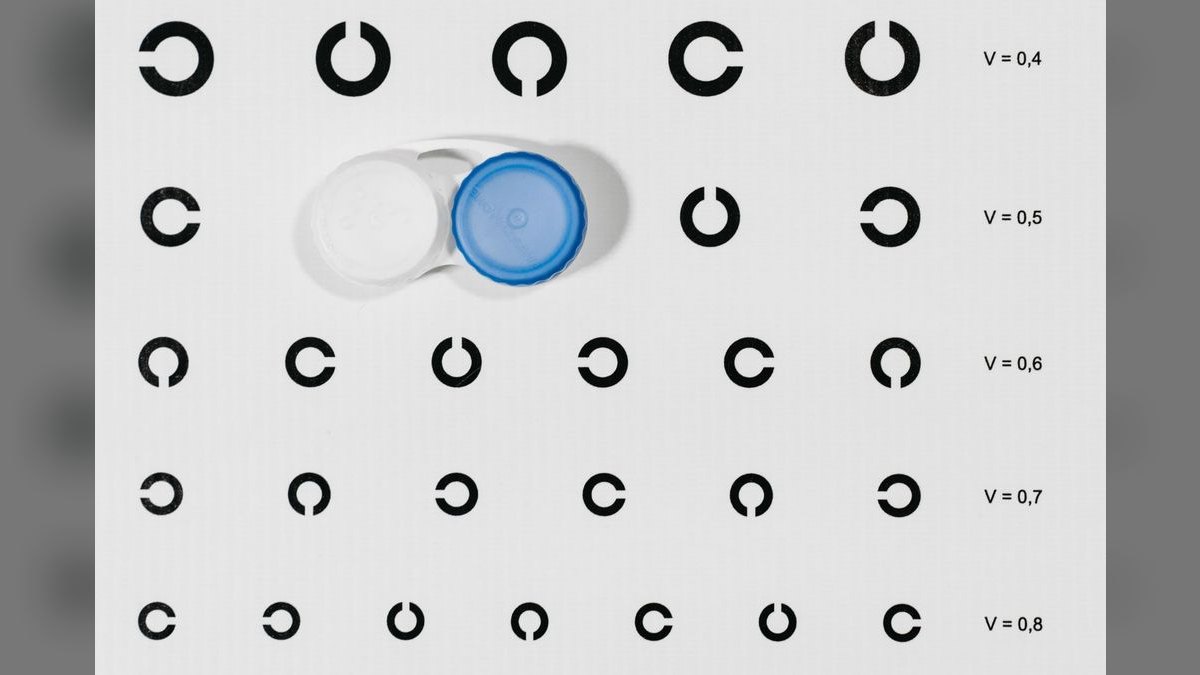
Picture a mid-size practice: four doctors, roughly 500 comprehensive exams a month, and an optical counter staffed by two opticians who are excellent at adjusting frames and terrible at finishing what the exam started. A patient named Carla comes out of a refraction with a new astigmatism correction and a note from the doctor that her night-driving glare has gotten worse. She walks to the dispensary. The optician on duty says, "Go ahead and pick a frame, I'll get you priced out," and turns back to the computer. Carla spends four minutes staring at a wall of frames with no idea what she's choosing between, picks the cheapest pair near eye level, declines the anti-reflective coating because nobody explained what it does, and leaves. Three weeks later she's back with a headache complaint that anti-reflective lenses would have solved on day one, and a coworker mentions she "just orders online now, it's easier."
That fifteen minutes is the entire training in miniature. The exam produced a correct, medically sound prescription. The dispensing conversation that should have converted that prescription into eyewear matched to Carla's actual life — night driving, new astigmatism, glare sensitivity — never happened. Nothing dishonest occurred. Nothing was oversold. The failure was silence: no one connected the Rx to a lens technology, no one asked how she spends her day, and no one mentioned that her vision plan likely covered most of the anti-reflective coating she needed. This is the scenario every optometry Training session should open with, because it reframes the 60 minutes. This isn't a session about pushing lens upgrades. It's about making sure a patient like Carla never leaves with eyewear that ignores what the exam and her own daily life just told the practice about her.
The scenario also explains why "just be friendly and helpful" isn't a strategy. Friendliness didn't fail Carla — structure did. Nobody had a repeatable habit for turning an Rx and a five-minute conversation into a specific recommendation. That's a process gap, and process gaps get fixed with a script, a checklist, and repetition — exactly what a focused Training block is built to install in an hour.
How the Pre-Dispense-to-Order Mechanism Works
The fix is a repeatable sequence that starts the moment the doctor hands off the patient and ends when an order is placed or a clear follow-up is scheduled. It has four moving parts: read the Rx and lifestyle notes, identify the one vision problem the patient can name in their own words, match that problem to a specific lens recommendation, and check whether a second pair serves a distinct purpose in the patient's life. Skipping any one of these steps is what produces the "pick a frame and I'll price it" failure mode.

The mechanism only works because each step depends on the one before it. You cannot recommend a lens technology credibly until you know the vision problem. You cannot identify the vision problem reliably from the chart alone — you often have to ask, in the patient's own words, what bothers them day to day. And you cannot decide whether a second pair is a genuine purpose-based add or a padded upsell until you understand the shape of their day: how many screen hours, whether they drive at night, whether they have an outdoor hobby or a job with distinct visual demands.
Notice what the flow deliberately excludes: there is no branch for "offer the premium lens because it has a higher margin" and no step where price is introduced before purpose. That ordering is the entire mechanism. Practices that struggle with capture rate almost always have the sequence backwards — price and inventory drive the conversation, and the Rx and lifestyle notes sit unused in the chart. Reordering the sequence so that clinical need comes first, benefit-maximization comes second, and price comes last is what separates a completed dispense from an abandoned one. It is also, not incidentally, the same sequence that keeps the sales conversation ethically clean: every recommendation is traceable back to something specific about this patient, which means an optician can always answer "why are you recommending this" with a real reason instead of a script.
The second half of the mechanism — the second-pair decision — deserves its own emphasis because it's where dispensaries either build trust or burn it. A second pair pitched as "want a backup too?" reads as padding, and patients can feel padding from across the counter. A second pair introduced as "a dedicated computer pair so your eyes aren't straining for eight hours a day" is a different offer entirely, even though the transaction looks identical on the receipt. The distinguishing test opticians should apply, every time: can I name the specific activity this second pair is for? If the honest answer is "no, I just think they should buy two," the second pair does not get presented.
Real Numbers: Capture Rate, Attach Rate, and the Revenue at Stake
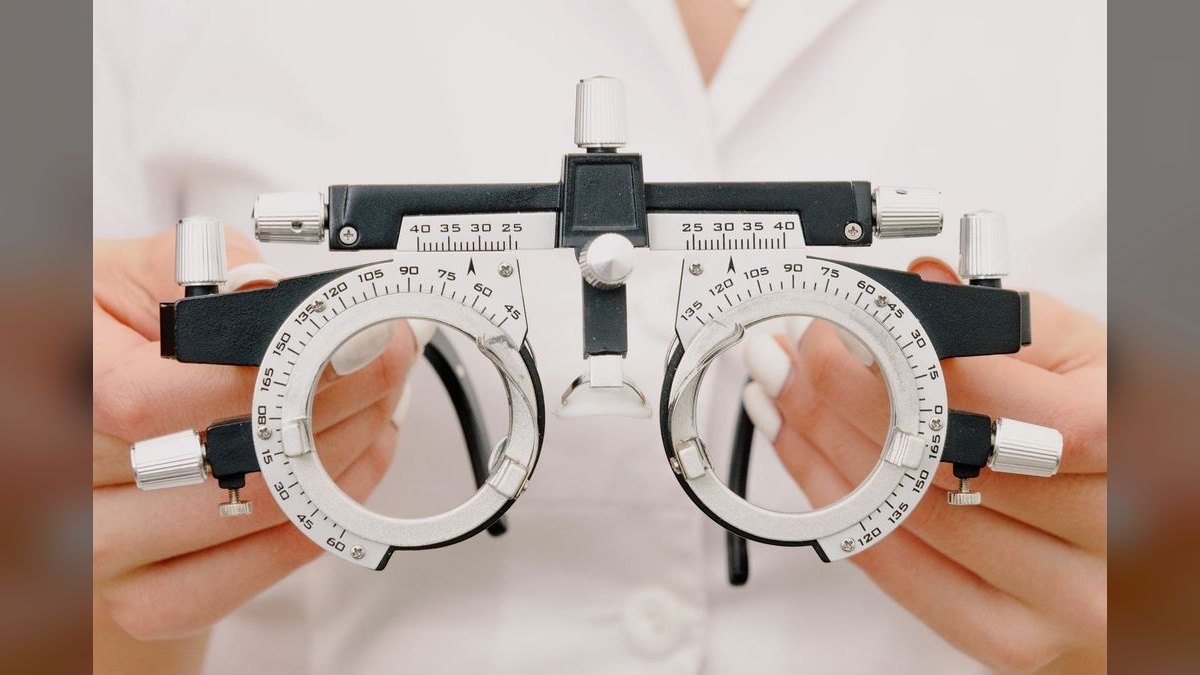
The controllable lever in an optical dispensary is capture rate — the percentage of exam patients who buy their eyewear in-house rather than filling the prescription elsewhere. Industry benchmarking consistently shows this is a conversation-quality metric far more than a price metric, and the gap between an average dispensary and a strong one is almost entirely about whether the handoff described above happens.
Run the math on a practice seeing 500 exam patients a month:

- At a 55% capture rate (common for a practice with an unstructured handoff), that's 275 in-house eyewear sales a month.
- At a 70% capture rate (a realistic target once the pre-dispense brief and needs-first script are habitual), that's 350 sales — 75 additional in-house orders every month that would otherwise have walked out the door or gone online.
- Layer in a purposeful second pair on roughly 25% of those patients, at an average net of $180 per second pair, and that's another ~$15,750 a month.
- At a blended average ticket around $320, the combined capture-rate lift and second-pair attach can add well over $250,000–$300,000 a year in dispensary revenue — none of it from discounting, all of it from care the patient already needed and would otherwise have sourced somewhere else.
These numbers matter for the Training session specifically because they reframe what opticians are being asked to do. This is not a quota conversation. The upside comes entirely from closing a gap between what the exam identified and what the patient walked out wearing. A patient who needed anti-reflective lenses for night driving and didn't get them isn't a missed upsell — they're an incomplete episode of care that will likely resurface as a complaint, a return visit, or a lost patient.
Time-in-training numbers matter too. A 60-minute block divides roughly as: 5 minutes framing the problem with real capture-rate data, 15 minutes building the pre-dispense brief from a live patient case, 10 minutes drilling the prescription-to-product habit and the phrases to eliminate, 10 minutes running the verbatim second-pair script live, 15 minutes building the shop's capture-rate cadence and objection responses, and 5 minutes for written commitments. That pacing is deliberate — the majority of the hour is spent in guided practice, not lecture, because the skill being trained is a live conversation habit, not a set of facts to memorize.
Trade-Offs: Scripted Language Versus Judgment, and the Limits of the Second-Pair Push
Every Training program built around verbatim language has a trade-off, and it's worth naming out loud rather than pretending the script solves everything. A tightly scripted second-pair conversation is easy to teach, easy to coach against, and easy to audit — a manager can listen for the specific phrases and know instantly whether the habit is being followed. The cost is that a script executed woodenly, without genuine attention to what the patient just said, sounds exactly like the menu-board pitch it was designed to replace. The mechanism only works if the optician is actually listening for the vision problem the patient names, not just reciting the next line because it's next.
The alternative — training principles instead of scripts and trusting opticians to improvise — has the opposite trade-off. It scales better with experienced staff who already have strong instincts, and it avoids the robotic-delivery risk entirely. But it's much harder to coach, much harder to audit, and it fails badly with newer staff who haven't yet built the pattern-matching skill of connecting an Rx line to a lens technology on the fly. Most practices land on a middle path: teach the verbatim script as a scaffold for the first several weeks, then explicitly grant permission to deviate from it once the underlying logic — problem first, benefit second, price third — is visibly internalized.
There's a second trade-off specific to the second-pair conversation: attach-rate pressure versus patient trust. A dispensary that pushes second pairs aggressively, without the purpose test, will see a short-term bump in average ticket and a longer-term erosion of the exact trust that makes capture rate durable. Patients who feel upsold once become the patients who fill prescriptions online from then on. The training deliberately trades some short-term attach-rate upside for a rule — no second pair without a nameable, distinct purpose — because the whole model depends on repeat and referral behavior, not single-visit ticket size. A practice optimizing purely for one-visit revenue would tune the script differently; a practice optimizing for capture rate over years should not.
Finally, there's a trade-off in how much the training leans on the vision benefit. Applying the benefit fully before discussing out-of-pocket cost is unambiguously good for the patient and for close rates — but it takes more time per patient than a flat "here's your total," and a busy dispensary during peak hours may be tempted to shortcut it. The training treats this as non-negotiable rather than optional, on the logic that a rushed benefit explanation is where most price objections actually originate.
Common Pitfalls and How to Correct Them
The single most common pitfall is skipping the lifestyle question because the chart looks complete enough. An Rx alone tells an optician the correction, not the context — two patients with an identical prescription can need completely different lens technology if one drives for a living at night and the other works entirely indoors under fluorescent lighting. The correction: make "how do you spend your day" a mandatory line on the pre-dispense brief, not an optional icebreaker, and treat a blank answer as a brief that isn't finished yet.

A close second is leading with price. "This is our most expensive lens" or "the upgrade is $80 more" anchors the entire conversation on cost before the patient has any reason to care about the feature being described. It also, subtly, repositions the optician from clinical advisor to retail salesperson in the patient's mind — a shift that's hard to undo for the rest of the visit. The fix is mechanical: no dollar figure gets said until after the problem-to-solution connection has been made and, ideally, after the patient has looked through a demo lens.
A third pitfall is presenting options instead of a recommendation. Handing a patient a laminated menu of six lens coatings and letting them guess feels neutral, but it actually increases decision fatigue and pushes patients toward either the cheapest option or no decision at all. A single, well-reasoned recommendation — "for you, I'd put you in this" — closes faster and is received as more trustworthy, not less, because it signals the optician actually formed a judgment rather than outsourcing the decision.
A fourth pitfall, more subtle, is overriding the doctor's clinical recommendation to preempt a price objection — telling a patient they "probably don't need progressives yet" to avoid an uncomfortable cost conversation. This undercuts the exam itself and is explicitly off-limits: the clinical prescription stands, and the optician's job is to help the patient afford and choose within it, never to quietly downgrade it. Related is the pitfall of presenting a second pair as a generic add-on ("want a backup pair too?") rather than tying it to a distinct purpose — patients read the difference immediately, and an untethered second-pair pitch is the fastest way to convert a completed dispense into a defensive one.

Finally, watch for the silent walkout: a patient who leaves without either an order placed or a specific, dated follow-up scheduled. An ambiguous "let me think about it" with no next step is functionally a lost sale and a paused episode of care. The correction is procedural — every patient interaction ends with either an order or a named follow-up date, no exceptions, tracked the same way a missed callback would be tracked anywhere else in the practice.
Related questions
How is optometry dispensing different from general retail upselling?
Optical dispensing starts from a medical prescription, not a discretionary want. The optician's recommendation has to trace back to the Rx and the patient's stated vision problem — pushing a coating or index with no clinical or lifestyle justification isn't advocacy, it's just Training-resistant habit that erodes the trust the whole model depends on.
What if a patient says they'll just order glasses online?
Explain what they lose — precise Rx fitting, warranty, and in-person adjustment — then apply their vision benefit so the in-house price is directly comparable. Most patients stay once they see how much of the cost their plan already covers; the objection is usually about price, not preference.
Should an optician ever talk a patient out of a lens upgrade?

Never override the clinical Rx to save money. It's fine to skip a purely optional, non-medical add-on if it doesn't fit the patient's lifestyle — but the prescription itself is not up for negotiation at the dispensing counter.
How do you present a second pair without it feeling like a pitch?
Tie it to a specific, different purpose — a computer pair for eight hours of screen strain, not a spare. If an optician can't name the distinct use case in one sentence, the second pair shouldn't be offered at all.
FAQ
Isn't recommending premium lenses just upselling with extra steps? Not when the recommendation traces directly to something in the Rx or the patient's own description of their day. Anti-reflective lenses for a night driver, or a dedicated screen pair for someone doing eight hours of computer work, are completing the clinical picture. A coating recommended with no stated reason is the pattern this training exists to eliminate.
What's the fastest way to know if the pre-dispense brief actually worked? Check whether the optician can state the patient's specific vision problem in one sentence before walking to the frame board. If they can't, the brief is incomplete and the recommendation that follows will default to generic feature-selling instead of needs-based Eyewear matching.

How much does the vision benefit actually matter to close rate? Substantially — patients who see their frame allowance and lens coverage applied before hearing an out-of-pocket number are far less likely to raise a price objection, because the number they're reacting to is already smaller and clearly explained.
Does this training apply the same way to a solo-doctor practice as a large multi-location group? The mechanism doesn't change, but the cadence-building portion does — a solo practice can track every patient by name, while a larger group needs a simple shared tracking sheet or dashboard so the capture-rate math stays visible across shifts and locations.
What's the single biggest habit change this training is trying to install? Sequencing: clinical problem first, vision benefit second, price third. Almost every dispensing failure — the menu-board pitch, the price-anchored opener, the untethered second-pair offer — comes from that order being scrambled or skipped.
How does this connect to broader Upsell and sales training in the practice? It's the same underlying discipline used in any well-run Upsell conversation across industries: identify a real, stated need before recommending anything, size the offer to that need, and let demonstrated value — not pressure — carry the close. The optical counter is simply where that discipline meets a clinical prescription instead of a generic want.
Sources
- American Optometric Association (AOA), *Standards of Care and Optical Dispensing Guidelines*, aoa.org
- Robert Cialdini, *Influence: The Psychology of Persuasion*, Harper Business
- The Vision Council, *VisionWatch: Capture Rate and Eyewear Attach Benchmarks*, thevisioncouncil.org
- Opticians Association of America (OAA), *Lifestyle Dispensing and Patient Communication Resources*, oaa.org
- Robert Cialdini, *Pre-Suasion: A Revolutionary Way to Influence and Persuade*, Simon & Schuster
- American Board of Opticianry (ABO), *Optician Certification and Ethics Standards*, abo-ncle.org
- Vision Monday / Jobson Optical Group, *Optical Retail Industry Data Report*
- American Optometric Association, *Comprehensive Eye Exam and Eyewear Care Continuum*, aoa.org
Related on PULSE
- 60-Min Sales Training: Deal Inspection from the Manager Lens
- Upsell and Cross-Sell Scenarios: Roleplay for Existing Customer Growth
- Top 10 Upsell and Cross-Sell Templates for Team Training
- The Value-Add Upsell: Template for Identifying Cross-Sell Opportunities in Accounts
- 60-Min Sales Training: Upsell Conversations
- Appliance Retail Upsell Selling — 60-Min Training
This page will be disappearing soon. Save it to your device for $1 — or read it free while it is here.
@Kory-White- · if Venmo asks, the last 4 of my number are 2012
This page is gone.
This one is off the shelf now. $1 keeps it on your phone for good — the whole page, pictures and diagrams included.
 sales-trainingAesthetics Laser Package Selling — 60-Min Training
 sales-trainingHair Salon Retail and Rebooking Selling — 60-Min Training
 sales-trainingMattress Retail Selling — 60-Min Training
 sales-trainingFurniture Showroom Selling — 60-Min Training
 sales-trainingFlooring and Carpet In-Home Sales — 60-Min Training
 sales-trainingAppliance Retail Upsell Selling — 60-Min Training
 sales-trainingTop 10 mid-market AE deal review drills in 2027
 sales-trainingHow do you train a sales team in Agriculture in 2027?
 sales-trainingTop 10 sales training budget planning templates in 2027
 sales-training60-Min Sales Training: How to Write a Winning Executive Summary