


Mattress Retail Selling — 60-Min Training
Quality
Certified
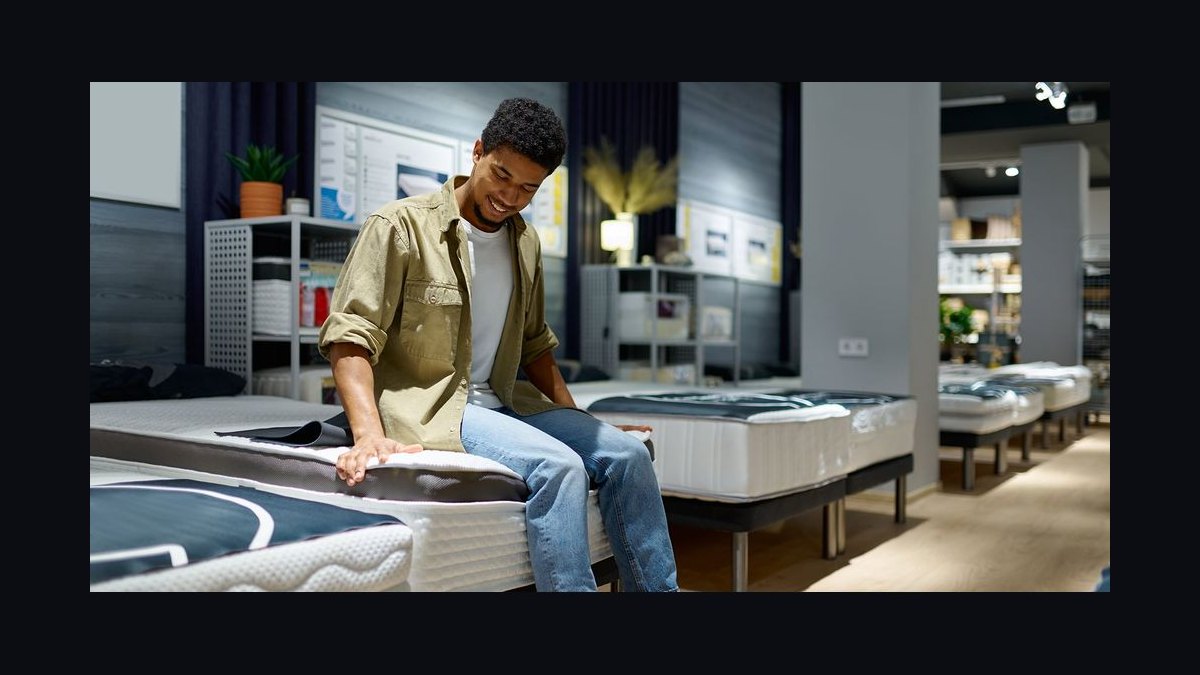
A 60-minute mattress retail selling training runs four blocks: a five-minute stakes frame, fifteen minutes of sleep-needs discovery (position, pain, partner, temperature, budget), ten minutes of guided comfort testing on three matched beds, ten minutes of honest good-better-best, and fifteen minutes on accessories, financing, and objections. Diagnose before demo.
A Saturday afternoon on the floor, two versions of the same customer
Picture a Saturday at 2:40 p.m. in a 6,000-square-foot mattress showroom. A woman in her late forties walks in alone, keys still in hand, and says the sentence every associate hears forty times a week: "I'm just looking." What happens in the next ninety seconds decides whether the store books an $800 ticket, a $2,500 ticket, or nothing at all.
In version one, the associate says "Sure, take your time — go ahead and lie on anything you like, and holler if you have questions." The customer wanders. She lies on a firm innerspring for eight seconds, sits on the edge of a hybrid, presses a memory foam with her palm the way people press bread at the grocery store. She reads a price tag, flinches, and drifts toward the door. The associate intercepts near the front with "Did anything feel good?" She says "I need to think about it," which is retail for goodbye. She has been in the building for eleven minutes and has told the associate nothing about herself. The store never learns that she is a side sleeper with a rotator-cuff issue, that her husband runs hot and thrashes, or that they already agreed at the kitchen table to spend up to $3,000 because the current bed is twelve years old and sagging in the middle. All of that information walked back out the door untouched.
In version two, the associate greets her, then says: "Happy to let you look — can I ask two quick questions first so I don't waste your time on beds that are wrong for you? Are you a back, side, or stomach sleeper, and do you wake up sore anywhere?" She answers: side, left shoulder, every morning. Ninety seconds later the associate knows about the husband, the heat, the sag, and the ten-year-old warranty she never used because she never bought a protector. The associate walks her past thirty beds without stopping and puts her on three. She spends twenty-five minutes in the store instead of eleven, buys the middle tier with a cooling layer, adds a protector and two pillows, and books delivery for Thursday with haul-away of the old set.
Same customer. Same inventory. Same prices. The only variable is whether the associate ran a diagnostic or ran a guessing game. That gap is what the 60-minute training closes, and it is why the session is structured as a rehearsal rather than a lecture. Nobody improves at discovery by hearing that discovery matters. They improve by saying the words out loud, badly, in front of a peer, and then saying them again. Budget at least half the hour for reps talking, not the manager talking.

The training also has to survive contact with a retail floor's actual constraints. You are pulling associates off the sales floor for an hour, usually on a Tuesday or Wednesday morning before the door traffic builds. Two people may get pulled away mid-session for a walk-in. The room will include a twenty-two-year-old on week three and a veteran who has sold beds since before adjustable bases were common. Design the hour so it still works if it gets interrupted: short blocks, one behavior per block, and a written commitment at the end that survives the interruption.
How the diagnose-before-demo motion actually works
The mechanism is simple to describe and hard to execute: information gathering precedes product demonstration, always, without exception, even when the customer explicitly asks to skip it. Customers ask to skip it constantly — "I just want to see what you've got in a king" — and the associate's job is to answer that request with one qualifying question rather than a tour.
The discovery has six inputs. Teach them as a fixed sequence so it becomes muscle memory, then let experienced associates conversationally reorder them once the sequence is automatic.
Sleep position. Back, side, stomach, or a combination. Side sleepers concentrate body weight on the shoulder and hip, which is why they usually need more pressure relief and a softer comfort layer over a supportive core. Stomach sleepers need enough support to keep the hips from sinking into a hammock shape that arches the lower back. Back sleepers land in the middle and tolerate the widest range of firmness. Combination sleepers who roll several times a night often do better on responsive materials that do not trap them in a divot.

Pain points and their exact location. "Do you wake up sore, and where?" A shoulder answer, a lower-back answer, and a hip answer point in different directions. This is the single highest-value question in the discovery because it converts an abstract preference into a physical problem the associate can solve on the floor and prove by hand.
Partner profile. Does a partner share the bed? Do they move a lot, get up at night, run hot, or weigh substantially more or less? Motion isolation and split-firmness options exist for exactly these answers, and the partner's needs frequently determine the tier that wins.
Current bed and its specific failure. "What's wrong with what you have now?" Too soft, too hot, sagging, too small, or simply old. This is the customer telling you the acceptance criteria for the purchase in their own words. Write it down and repeat it back at close.
Temperature. Hot sleepers are a distinct segment with a distinct product answer, and heat complaints are among the most common reasons people replace a foam mattress early.
Budget, framed as a term investment. Never the opening question. Late in discovery, framed as "a quality bed typically lasts you the better part of a decade — are we investing in the best sleep we can find, or working inside a set number?" Both answers are fine. The framing prevents the customer from anchoring on the lowest tag before they understand what separates the tiers.
Once discovery is complete, the demo stops being a tour and becomes a proof. The associate narrows thirty-plus beds to exactly three and says why each one is on the list. Narrowing is not a sales trick; it is the entire service. A customer standing in front of three beds chosen for her shoulder can decide. A customer standing in front of a whole showroom cannot, and undecided customers leave.

The guided comfort test has its own mechanics worth drilling. Position the customer the way she actually sleeps, with a pillow, knees up if she is a side sleeper, not flat on her back with her arms crossed like a museum exhibit. Give each bed a real five minutes; a ten-second bounce measures nothing about sleep. Slide a hand under the lumbar curve on the firmer option and let her feel the gap, then repeat it on the medium and let her feel it filled — that single tactile demonstration does more persuasive work than any spec sheet. If there is a partner, have both people lie down at once and have one roll over so the other can feel the motion transfer. Silence is a tool here: after positioning someone, stop talking for thirty seconds and let the bed do the work.
Real numbers, ranges, and what the hour actually produces
Run the training against arithmetic the room can check, because sales associates discount claims they cannot verify and believe numbers they can compute themselves.
The time budget. Sixty minutes splits cleanly: 5 minutes on stakes and framing, 15 on discovery and its rehearsal, 10 on the guided comfort test with a live demo on an actual floor model, 10 on good-better-best scripting, 15 on accessories, financing, and objection drills, and 5 on written commitments. If you have eight associates in the room, 15 minutes of discovery rehearsal in pairs gives each person roughly seven minutes of talk time — thin, but enough for two full run-throughs of the six questions.
Ticket math. Take a mid-tier mattress at $1,500. The unattached sale is $1,500 and the customer drives home with a bed and no protection. The attached sale looks different: mattress at $1,500, protector at roughly $150, two pillows at roughly $200, adjustable base at roughly $700 — about $2,550 total, or roughly 1.7× the base ticket. The point to make in the room is not the multiplier; it is that every line item on that list answers something the customer already said out loud during discovery. The pillow answers the shoulder. The base answers the reading-in-bed and reflux comments. The protector answers the twelve-year-old stained mattress she just told you she is replacing.

Warranty economics. A mattress protector in the $100–$200 range preserves the manufacturer's warranty on a bed worth ten to twenty times that. Most manufacturer warranties exclude stained or soiled mattresses, which means one spilled glass of wine can end a warranty claim on a $1,500 purchase. Teach associates to present the protector as warranty protection with a real consequence attached, not as a bolt-on upsell. Frame the cost per week if it helps: about a dollar a week over the life of the bed.
Purchase cycle. Mattresses turn over on a multi-year cycle — most guidance in the industry and from sleep-health organizations lands somewhere in the seven-to-ten-year range depending on materials and use. That long cycle drives three consequences the training should name. First, the customer in front of you will not be back next month, so there is no second chance at this sale. Second, the cost-per-night framing is genuinely honest math rather than a gimmick: a $600 step-up spread across a decade is small per night, and the customer can do that division themselves. Third, referrals and reviews matter disproportionately because repeat purchase frequency is so low — the person who wakes up rested for eight years tells people.
Time on the floor. Track two internal numbers if your point-of-sale or traffic counter allows it: average minutes with a customer, and the percentage of write-ups where a discovery sheet was completed. Stores that measure the first number usually find the diagnostic associates spend meaningfully longer per customer and convert at a higher rate, while the guessing associates burn short interactions at volume. If you cannot measure it electronically, have managers spot-check five interactions a week by walking the floor and asking one question afterward: "What's her sleep position?" An associate who cannot answer did not run a discovery.

Category context. Industry bodies such as the International Sleep Products Association publish periodic shipment and forecast data for the mattress category, and Better Sleep Council research covers consumer buying behavior. Use those as directional context in the training rather than as precise quotas. The narrative that matters for the room is stable regardless of any single year's figure: demand exists, foot traffic exists, and the leakage happens between the greeting and the write-up.
Adjacent retail comparison. The same structure produces results in neighboring big-ticket categories, which is useful for managers who run multi-department training. Appliance floors run a nearly identical motion — diagnose the kitchen layout, cooking habits, and household size before demonstrating a range — and furniture floors diagnose room dimensions and traffic patterns before showing a sectional. If your company operates more than one category, write the discovery sheet once with category-specific question sets and reuse the training skeleton verbatim.
Trade-offs, alternatives, and where this method costs you something
Every method has a bill. Name the costs in the room so associates do not discover them alone on the floor and quietly abandon the process.
Longer interactions on a busy Saturday. A five-minute-per-bed comfort test on three beds plus discovery consumes twenty-five to thirty-five minutes. On a holiday weekend with six parties in the building and two associates working, that math breaks. The alternative is a triage version: run the six-question discovery in ninety seconds, narrow to three beds, get the customer positioned and testing, and then rotate to greet the next party while the first is still lying down. Teach the handoff language explicitly — "Take five minutes on this one, really settle in like it's bedtime, I'll be right back" — because associates who are not given permission to leave a testing customer will either rush the test or ignore new traffic.

Some customers genuinely resist discovery. A minority will say "I don't want to answer questions, just show me the queens under a thousand." Fighting that is a losing move. The fallback is to honor the request and embed discovery inside the demo: put them on a bed in the requested range and ask the position and pain questions while they are lying there. You lose the narrowing benefit but keep the diagnostic.
The script can go stale. A verbatim discovery template is the fastest way to get a new hire competent and the fastest way to make a veteran sound robotic. Handle this by tiering expectations: new associates run the template word for word for their first sixty to ninety days; experienced associates hit the same six inputs in whatever order the conversation gives them, and the manager audits for inputs collected rather than words spoken.
Good-better-best can slide into pressure selling. The honest version explains what each step-up does for a need the customer already stated, then lets the body pick. The dishonest version disparages the entry model to force the top tier. That second version produces short-term ticket lift, higher return rates, and worse reviews, and it is the fastest way to lose a customer who came in trusting you.
Alternatives worth knowing. Some stores run a pure comfort-first model — get them horizontal within sixty seconds and diagnose from reactions rather than questions. It works for highly experienced associates with good read on people and fails badly for new hires, who need the structure. Others run a sleep-test-technology model using pressure-mapping or in-store scanning equipment; it produces an impressive artifact and a recommendation, but it can substitute a machine's opinion for a conversation and does not by itself teach the associate anything. A third alternative is straight price-led selling, which is fast, requires no training, converts on the cheapest tag, and produces the lowest average ticket and the highest return rate of the three.
Common pitfalls and how to coach them out

Opening with budget. "What's your price range?" as question one collapses a decade-long purchase into a number before the customer has any basis for judging value. It also invites a defensive low answer that the customer then feels obligated to defend. Coach the replacement line and drill it until it is reflex: ask about sleep first, money fifth or sixth.
The wander. "Go ahead and lie on a few and see what feels good" is the single most expensive sentence on a mattress floor. It transfers the diagnostic work to a customer who lacks the vocabulary and the product knowledge to do it, produces ten-second tests that prove nothing, and ends in "I need to think about it." Post it on the break-room wall as the sentence nobody says.
Dismissing a stated pain point. If a customer says her hip hurts, that hip is the entire sale. Associates who nod and move on to talking about coil counts have thrown away the one piece of information that would have closed the deal. Coach the reflex: when you hear a pain point, stop, repeat it back, and make it the organizing principle of everything you show.
Manufactured urgency. "This price is only good today" on a considered, once-a-decade purchase reads as pressure and damages trust. Real deadlines exist — a promotional period, a floor model, a delivery window — and those can be stated plainly. Invented ones cost you the sale and the review.
Skipping the step-up explanation. A customer who does not understand what a cooling layer or a zoned support core actually does will default to the lowest price, because price is the only variable they can evaluate. The explanation is not a pitch; it is the customer's only path to informed choice.
Ten-second comfort tests. Associates rush the test because standing silently next to a lying-down stranger feels awkward. Name the awkwardness in the training and rehearse it: have associates stand quietly next to a colleague on a floor model for a full two minutes so they feel how long it actually is. The discomfort is the associate's problem to manage, not a reason to shorten the test.

Forgetting the partner. Half of mattress purchases involve two sleepers with different needs, and the partner who was not diagnosed becomes the objection that kills the deal in the parking lot. Get both people horizontal, on the same bed, at the same time.
Treating the protector as an upsell. Associates who feel sleazy about accessories will mumble the protector at the register and lose the attach. Reframe it in training as a warranty-protection step in the write-up sequence rather than an optional add-on, and rehearse the exact sentence.
No follow-up on a walkout. Customers who leave to think about it are not lost, they are unscheduled. Capture the name, write the matched model on a card with the quote, and follow up the next day referencing the specific bed and the specific problem it solved. Most stores skip this entirely, which makes it one of the cheapest wins available.
Manager reverts to lecturing. The most common failure of the training itself is a manager who talks for fifty of the sixty minutes. Structure the hour so associates are speaking during discovery rehearsal, the comfort-test demo, and the objection drills — roughly half the session. Then collect three written commitments per associate, tape them at their station, and audit against them the following week. A training with no next-week audit is entertainment.
Related questions
How do you train discovery when new hires are terrified of asking personal questions?
Give them the exact words on a laminated card and make the first two questions non-negotiable. Pair them with a veteran for three shifts. Fear drops once they hear customers answer willingly — most people enjoy talking about their own sleep problems.
Should the same training run for part-time weekend associates?
Yes, but compress it. Run the full sixty minutes at hire, then a fifteen-minute version monthly covering discovery and one objection drill. Part-timers see fewer customers, so the reps decay faster and need refreshing more often, not less.
Does this method work for online-to-store or appointment traffic?

It works better. An appointment customer has already declared intent, so the discovery can happen by phone or text before arrival, and the three matched beds are staged when they walk in. That preparation shortens the in-store visit while raising close rate.
How do you handle a customer who already researched a specific model online?
Honor the research, then diagnose anyway. Ask position, pain, and partner, and put them on the model they named plus two alternates. If their pick matches, you confirmed it and earned trust. If it does not, you have physical evidence rather than an argument.
What should the manager audit the week after the training?
Three things: whether a discovery sheet exists for each write-up, whether the associate can name the customer's sleep position from memory, and the accessory attach rate. Those three proxies cover the whole motion without requiring the manager to shadow every interaction.
FAQ
How long should a comfort test actually take?
Five minutes per bed minimum, in the customer's real sleeping position with a pillow. Sleep quality is decided in stillness, and a ten-second bounce measures nothing except how the surface feels to a standing person's hand. Narrowing to three matched beds is what makes the longer test feel focused rather than tedious — a customer testing three beds for five minutes each spends fifteen minutes and feels well served, while a customer testing fifteen beds for twenty seconds each spends five minutes and leaves confused.
When should budget come up in the conversation?
Fifth or sixth, after position, pain, partner, current bed, and temperature, and framed as a multi-year investment rather than a price range. Opening with budget anchors the customer on the cheapest tag before they have any way to evaluate what separates the tiers, and it frequently produces a defensive low number that the customer then feels committed to defending for the rest of the interaction.
Is good-better-best just a polite name for upselling?
Only when the tiers are not tied to diagnosed needs. If the customer said she sleeps hot and the better tier adds a cooling layer, presenting that step-up is service. If she said nothing about heat and you push the cooling model anyway, that is upselling. The test is whether every step-up you explain answers something the customer said out loud during discovery.
Why does the mattress protector matter so much?
Most manufacturer warranties exclude stained or soiled mattresses, so a single spill can end a warranty claim on a bed worth many times the protector's price. That makes the protector a genuine risk-transfer purchase rather than a bolt-on. Train associates to present it inside the write-up as a warranty step, state the exclusion plainly, and let the customer decline if they want to.
How does an in-store associate compete with box-in-the-mail brands?
On diagnosis and service, never on price. A customer cannot test comfort through a screen, cannot have someone press a hand under their lumbar curve to prove a support gap, and cannot get delivery, setup, and old-mattress haul-away from a shipping box. Lead with the guided test and the physical proof, and let the convenience services close the gap the price comparison opens.
What is the single highest-leverage habit to install in one hour?
Diagnose before demo. If associates change nothing else, refusing to let a customer touch a bed before position, pain, and partner are known will move close rate and average ticket more than any script, promotion, or product knowledge module. Everything else in the hour is scaffolding around that one behavior.
Sources
- International Sleep Products Association — https://www.sleepproducts.org/
- Better Sleep Council — https://bettersleep.org/
- Sleep Foundation, mattress buying and sleep position guidance — https://www.sleepfoundation.org/mattress-information
- National Retail Federation — https://nrf.com/
- Consumer Reports mattress buying guide — https://www.consumerreports.org/appliances/mattresses/
- U.S. Federal Trade Commission, consumer guidance on warranties — https://consumer.ftc.gov/
- American Academy of Sleep Medicine — https://aasm.org/
- Sleep Savvy Magazine — https://www.sleepsavvymagazine.com/
Related on PULSE
- Appliance Retail Upsell Selling — 60-Min Training
- Hair Salon Retail and Rebooking Selling — 60-Min Training
- The Sandler Selling System: Ready-to-Run Mini-Training for New Hires
- Selling with Stories: Narrative Structure Template for a 45-Minute Sales Workshop
- The Consultative Selling Blueprint: Facilitator's Guide for a 45-Minute Workshop
This page will be disappearing soon. Save it to your device for $1 — or read it free while it is here.
@Kory-White- · if Venmo asks, the last 4 of my number are 2012
This page is gone.
This one is off the shelf now. $1 keeps it on your phone for good — the whole page, pictures and diagrams included.
 sales-trainingFurniture Showroom Selling — 60-Min Training
 sales-trainingAppliance Retail Upsell Selling — 60-Min Training
 sales-trainingBoat and Marine Sales — 60-Min Training
 sales-trainingRV Sales Floor Closing — 60-Min Training
 sales-trainingPowersports Motorcycle and ATV Selling — 60-Min Training
 sales-trainingFlooring and Carpet In-Home Sales — 60-Min Training
 sales-trainingHair Salon Retail and Rebooking Selling — 60-Min Training
 sales-trainingOptometry Eyewear and Lens Upsell — 60-Min Training
 sales-trainingAg Equipment Dealer Selling — 60-Min Training
 sales-trainingHow do you train a sales team in Cleaning & Facilities in 2027?