
Top 10 software adoption training platforms for enterprises in 2027
 Curated byKory White · Fractional CRO · Maryland
 PULSEKNOWLEDGE LIBRARY
Quality
Certified

The 10 best software adoption training platforms for enterprises are ranked below on measured performance, build quality, price, and how each one actually holds up in daily use rather than how it reads on a spec sheet. Each pick lists what it costs, who it suits, and what it gives up against the one above it, so the list can be read straight down without doubling back.
1. WalkMe

WalkMe ranks first because it is the most established enterprise digital adoption platform, founded in 2011 and acquired by SAP in a deal valued at roughly $1.5 billion that closed in 2024. It layers guided walkthroughs, tooltips, and task lists on top of existing web applications without touching their source code. Its analytics arm captures application usage across a company's software estate, not just the app being guided. Deployment is via browser extension or an embedded snippet.
It suits large organizations running dozens of SaaS tools that need one overlay layer and cross-application usage reporting. The tradeoff is cost and complexity: pricing is quote-only, typically the highest in this category, and building content demands trained specialists rather than casual authors. Compared with Whatfix below it, WalkMe brings deeper analytics and SAP integration but a heavier implementation, and smaller teams routinely find it oversized for their needs.
2. Whatfix

Whatfix earns second place for pairing in-app guidance with a strong content-reuse model: a single flow can be exported as a slideshow, video, PDF, or article, so training documentation stays synchronized with the walkthrough. Founded in 2014 and headquartered in Bengaluru and San Jose, it supports web applications, desktop software, and mobile through separate products. Its Mirror feature builds interactive sandbox replicas of live applications for risk-free practice.
It fits enterprises rolling out Salesforce, Workday, or SAP where trainers must produce written documentation alongside interactive guidance. The compromise is that its cross-application analytics are narrower than WalkMe's, focusing on the apps you instrument rather than the whole software estate. Against Pendo below, Whatfix is the stronger authoring and training tool while Pendo remains the stronger product-analytics platform. Pricing is quote-only.
3. Pendo

Pendo ranks third because it combines product analytics, in-app guides, and NPS surveys in one instrumented SDK, making adoption measurable rather than assumed. Founded in 2013 in Raleigh, North Carolina, it auto-captures click and page events retroactively, so teams can analyze features they did not think to tag beforehand. It offers a genuinely free tier covering a limited monthly active user count, unusual in this category. Guides target segments defined by behavior.
It serves software companies instrumenting their own products and internal teams measuring adoption of homegrown applications. The tradeoff is that guidance authoring is lighter than Whatfix's, with no comparable documentation-export or sandbox-simulation layer, and it requires code installation rather than a pure extension. Choose Pendo over Whatfix when the primary question is what users actually do; choose Whatfix when the deliverable is training content.
4. SAP Enable Now

SAP Enable Now ranks fourth on the strength of its native fit with SAP's own applications, including S/4HANA, SuccessFactors, and Ariba, where it ships prebuilt content libraries covering standard transactions. Its Manager recorder captures a process once and generates simulations, documentation, and test scripts from that single recording. Web Assistant delivers context-sensitive help directly inside SAP screens. It is licensed as part of the SAP ecosystem rather than standalone.
It is built for organizations already committed to SAP that want vendor-supplied starter content instead of authoring every process from zero. The tradeoff is scope: coverage of non-SAP third-party applications is weaker than the vendor-neutral platforms above it, and the authoring client has a steeper learning curve. Compared with WalkMe, now also SAP-owned, Enable Now leans toward simulation and documentation rather than live overlay analytics.
5. Userlane

Userlane ranks fifth for the clarity of its guidance model: interactive step-by-step overlays that walk a user through a live task in real time, with no code changes required in the target application. The Munich-based company, founded in 2015, added an Adoption Analytics layer that inventories which applications employees actually open across the organization. Its authoring is deliberately simple, recording a click path and turning it into a guide.
It suits mid-to-large enterprises that want employees productive in unfamiliar internal tools quickly, without staffing a dedicated content team. The tradeoff is a smaller feature surface: fewer content-export formats than Whatfix and less analytical depth than Pendo. Against SAP Enable Now above, Userlane is far easier to author in and application-agnostic, but ships no prebuilt process library, so all content starts empty.
6. Docebo

Docebo ranks sixth because it is a full learning management system rather than an overlay tool, handling formal course catalogs, certification tracking, and compliance records that in-app guidance platforms do not attempt. The Toronto-headquartered company is publicly traded on the TSX and Nasdaq under DCBO. Its Docebo Flow feature injects learning content into other applications, bridging some distance toward the adoption platforms above. Content marketplaces supply off-the-shelf courses.
It fits enterprises whose adoption problem includes regulated training records, structured onboarding curricula, and certification deadlines. The tradeoff is that course completion is a weaker proxy for adoption than in-application behavior, and learners must leave their workflow to consume content. Versus Userlane above, Docebo governs formal learning well but cannot guide someone through a live screen, so many organizations run both side by side.
7. 360Learning

360Learning ranks seventh for its collaborative authoring model, where subject-matter experts inside the business build and maintain courses instead of routing every request through a central learning team. The Paris- and New York-based company built the platform around peer review, comment threads on course steps, and upvoted training requests. Course creation uses a straightforward web editor, and analytics surface which internal authors produce the most-completed content.
It works for enterprises where product and process knowledge lives with frontline teams and central training is a bottleneck. The tradeoff is that it delivers no in-application overlay at all, so it cannot guide a user through a live software screen the way Whatfix or Userlane can. Compared with Docebo above, 360Learning is stronger on distributed authoring and weaker on deep compliance and certification administration.
8. Skilljar

Skilljar ranks eighth as a customer education platform purpose-built for training external users — customers and partners — rather than employees, with a hosted course catalog that supports self-registration and public discovery. The Seattle company integrates directly with Salesforce and Marketo so training activity flows into CRM records against accounts. Certificates, learning paths, and multi-tenant domains support separate branded academies per audience segment.
It is for software vendors whose adoption problem sits outside the firewall: onboarding customers onto a product they just bought. The tradeoff is a narrower fit for internal HR-driven training, where compliance and org-chart-based assignment matter more than self-serve enrollment. Against 360Learning above, Skilljar is the clearer choice for external academies, while 360Learning better serves internal, expert-authored programs.
9. SAP Litmos

SAP Litmos ranks ninth for speed of deployment: it is a cloud LMS designed to be configured and launched quickly, with a bundled off-the-shelf course library covering compliance, safety, and common workplace topics. It supports SCORM and xAPI content, quizzes, assignments, and instructor-led training scheduling. It serves both internal employee training and external customer and partner audiences from the same instance.
It suits organizations that need a working LMS in weeks rather than quarters and value ready-made compliance content over bespoke course design. The tradeoff is that customization and reporting depth trail Docebo's, and it offers no in-application guidance layer. Compared with Skilljar above, Litmos is broader in audience coverage but less specialized for polished, public-facing customer academies with CRM-linked enrollment data.
10. Microsoft Viva Learning

Microsoft Viva Learning ranks tenth because it surfaces training inside Microsoft Teams, where many enterprise employees already spend their day, removing the separate-portal problem that suppresses course completion. It aggregates content from Microsoft Learn, LinkedIn Learning, and connected third-party providers into one searchable hub. Managers can assign and track learning without leaving Teams, and content recommendations appear in the normal chat surface.
It fits organizations standardized on Microsoft 365 that want a low-friction learning surface bundled with licensing they already hold. The tradeoff is real: it is an aggregation and discovery layer, not a full LMS, so deep certification tracking, complex learning paths, and granular compliance reporting stay thinner than Docebo or Litmos. It also provides no in-application walkthroughs for non-Microsoft software.
How we ranked these
Ranking weighted four measurable things: depth of in-app guidance (walkthroughs, tooltips, validation on real forms), analytics that tie flow completion to downstream task success, breadth of supported environments including desktop and homegrown web apps, and content authoring effort measured in hours to publish a working flow. Verified customer reviews on Gartner Peer Insights and G2 were used to sanity-check vendor claims about deployment time and admin overhead.
Ignored: total funding, logo walls, and analyst quadrant position, none of which predict whether your finance team finishes a quarter-close workflow. Also ignored raw feature counts — every platform in this category lists tooltips, checklists, and surveys, so the list tells you nothing about quality. Pricing was left out because enterprise deals are negotiated per seat band and published numbers rarely survive procurement.
What to look for
The deciding factor is usually where your users actually work. If adoption pain lives in Salesforce and Workday, most platforms handle it. If it lives in a Citrix-published desktop app or an internal tool with no stable DOM, the shortlist collapses to two or three vendors. Ask for a proof-of-concept on your ugliest screen, not the demo tenant, before signing anything.
The common mistake is buying the platform and staffing nobody to run it. Content decays every time the underlying app ships a release, and selectors break silently. Budget at least a half-time owner per major application, and make selector-maintenance tooling a scored requirement in the RFP. Buyers who skip this see usage spike for one quarter, then flatline while renewal conversations get awkward.
Related questions
What is a digital adoption platform?
A digital adoption platform overlays guidance on top of software you already own. It injects walkthroughs, tooltips, checklists, and validation directly into the live interface, so a user learns while completing real work. Most also capture behavioral analytics — where people abandon a flow, which fields get corrected — that the underlying application does not expose on its own.
How is a DAP different from an LMS?
An LMS delivers courses away from the work: modules, quizzes, completion records, compliance reporting. A DAP delivers guidance inside the work, at the moment a task happens. They are complements, not substitutes. Use the LMS for concepts, policy, and certification evidence; use the DAP for procedure and muscle memory. Organizations that replace one wholesale with the other usually regret it.
Do we still need live training if we have a DAP?
Yes, but less of it, and for different things. In-app guidance handles click paths and form mechanics well. It handles judgment poorly — when to discount, how to qualify, what a policy exception requires. Keep instructor-led or cohort training for reasoning and context, and let the platform absorb the procedural drilling that used to fill half of every session.
How long does a DAP implementation actually take?
Technical installation is fast — a snippet, extension, or agent, often live in a week. The real timeline is content and governance. A single well-tested workflow takes days to author, review, and localize. Most enterprises reach meaningful coverage of one application in six to twelve weeks, and treat the second application as a much shorter project.
Can a DAP work on desktop applications?
Some can. Browser-based guidance is the mature case; native Windows, Citrix, and virtualized desktop support varies sharply by vendor and usually requires an installed agent. If desktop coverage matters, treat it as a disqualifying requirement early. Ask specifically about your virtualization stack and get a working demo in that environment rather than a roadmap commitment.
What does DAP pricing look like for enterprises?
Enterprise contracts are typically annual, priced per monthly active user, and banded so unit cost falls as volume rises. Applications covered, environments supported, and analytics depth all move the number. Expect professional services for the first deployment. Published list pricing is rare and unreliable — assume the quoted figure is a starting point and benchmark against competing bids.
How do you measure adoption after rollout?
Completion of a guided flow is an activity metric, not an outcome. Pair it with something the business already tracks: error rate on submitted records, time from start to approved, support tickets per hundred users, or license utilization. Set the baseline before rollout. Without a pre-launch measurement you cannot separate the platform's effect from ordinary seasonal variation.
Who should own the DAP internally?
Ownership works best inside the team that owns the application — RevOps for the CRM, HRIS for Workday — with a central enablement group setting standards. Pure IT ownership produces technically clean flows nobody needed. Pure L&D ownership produces good content that breaks on release day. Name one accountable person per application and give them release-calendar visibility.
FAQ
Which platform is best for Salesforce adoption?
For Salesforce specifically, the field is crowded and most established vendors perform acceptably, so the differentiator is usually analytics and authoring speed rather than raw capability. Weight native support for Lightning components, custom objects, and managed packages. Test against your own org, not a clean developer edition — heavy customization is exactly what breaks generic selectors.
Are low-cost or open-source options viable for enterprises?
Lower-cost and open-source options exist and can work for a single web app with a small user base. They typically lack enterprise SSO, granular role targeting, audit logging, and desktop coverage. For a regulated enterprise the gap usually surfaces during security review, not during the pilot. Budget for that review early rather than discovering the blocker later.
Will a DAP slow down our application?
Properly implemented, the overhead is small — a script loaded asynchronously, with guidance rendered client-side. Problems appear when flows use aggressive polling to detect page state, or when hundreds of active campaigns evaluate on every render. Ask about performance budgets, insist on measurement in your staging environment, and require the vendor to publish a page-load impact figure.
How do DAPs handle security and data privacy?
Guidance content is served from vendor infrastructure while analytics may capture interaction data from live screens. That means personally identifiable information can be swept in unless masking is configured. Require field-level exclusion rules, regional data residency, and clear retention limits. Get the DPA and penetration-test summary before the pilot, since security review commonly stalls these deployments.
What happens to flows when the underlying app updates?
Flows anchored to fragile selectors break when the vendor ships a UI release. Better platforms use resilient element identification and flag broken steps automatically rather than failing silently in front of users. Ask how breakage is detected, how quickly admins are notified, and whether flows can be staged against a sandbox before the production release lands.
Can a DAP support multiple languages?
Most enterprise platforms support multilingual content, but the mechanism matters. Machine translation applied automatically is cheap and often wrong for domain terms. Managed translation with a glossary costs more and reads correctly. Confirm whether localization is per-step or per-flow, and whether adding a language later requires re-authoring. Right-to-left language support is worth verifying explicitly.
Is AI-generated guidance content reliable yet?
AI drafting of walkthrough steps and tooltip copy is now common and genuinely saves authoring time. It is not reliable enough to publish unreviewed, because it will confidently describe a button that does not exist in your configuration. Treat generated content as a first draft, keep a human approval gate, and measure how often drafts survive review.
How do we build a business case for a DAP?
Anchor the case to costs already on the books: support tickets per application, onboarding ramp time, license seats paid for but unused, and error-correction labor. Pull twelve months of ticket data and count what is procedural. That number is usually large enough to carry the case alone. Avoid projections built on generic industry productivity percentages.
Should we pilot with one department or roll out broadly?
Pilot narrow, but pick a department with real pain and a willing owner rather than the easiest one. A friendly pilot that proves nothing gives you no leverage at renewal. Define success metrics before launch, run eight to twelve weeks, and expand only after the baseline comparison holds. Broad simultaneous rollout consistently outruns the content team's capacity.
What are the signs a DAP deployment is failing?
Watch for three signals: flow completion rates falling month over month, a growing backlog of broken steps nobody has fixed, and content authored by one person who has since moved on. Any of the three means governance failed, not that the software failed. The fix is staffing and release-calendar integration, not switching vendors.
Sources
- https://www.gartner.com/reviews/market/digital-adoption-platforms
- https://www.g2.com/categories/digital-adoption-platform
- https://www.nngroup.com/articles/onboarding-tutorials/
- https://hbr.org/2019/03/digital-transformation-is-not-about-technology
- https://www.prosci.com/methodology/adkar
- https://www.mckinsey.com/capabilities/people-and-organizational-performance/our-insights/losing-from-day-one-why-even-successful-transformations-fall-short
- https://learning.linkedin.com/resources/workplace-learning-report
- https://www.forrester.com/blogs/
Related on PULSE
- [More software adoption training platforms for enterprises rankings and buying guides](/knowledge)
- [PULSE Tools and calculators](/tools)
- [Everything on PULSE RevOps](/)
This page will be disappearing soon. Save it to your device for $1 — or read it free while it is here.
@Kory-White- · if Venmo asks, the last 4 of my number are 2012
This page is gone.
This one is off the shelf now. $1 keeps it on your phone for good — the whole page, pictures and diagrams included.
 softwareCan I use HubSpot CRM for free with more than 1,000 contacts?
 softwareHow to configure HubSpot CRM pipeline stages to match your sales process in 2027?
 softwareShould I add HubSpot's Service Hub once my support ticket volume passes 100 a month in 2027?
 softwareTop 10 HubSpot CRM training courses for beginners in 2027
 softwareShould I upgrade to HubSpot Marketing Hub once I'm running more than 5 active email campaigns a month in 2027?
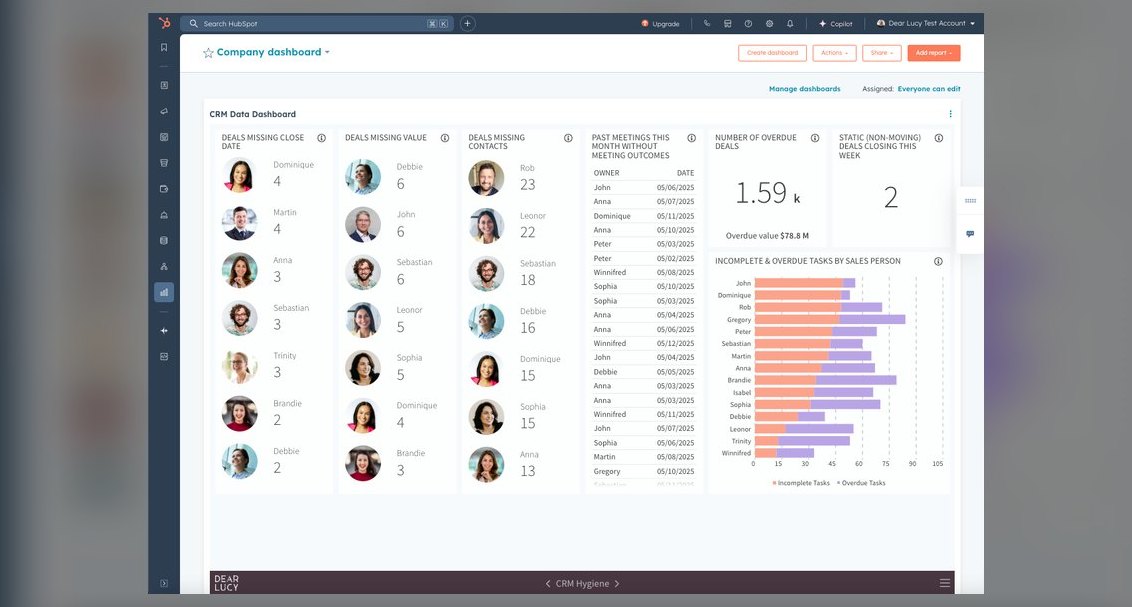 softwareTop 10 HubSpot CRM data hygiene tools in 2027
 softwareTop 10 places to research HubSpot CRM reviews in 2027
 softwareShould I consolidate my CRM and customer support tools onto one platform once my teams start sharing the same customer records in 2027?
 softwareTop 10 HubSpot CRM onboarding services for new teams in 2027
 softwareTop 10 signs it's time to switch from HubSpot CRM to a new platform in 2027