


Top 10 Keyword Research Tools for Small Businesses in 2027
Quality
Certified
The 10 best keyword research tools for small businesses are ranked below on measured performance, build quality, price, and how each one actually holds up in daily use rather than how it reads on a spec sheet. Each pick lists what it costs, who it suits, and what it gives up against the one above it, so the list can be read straight down without doubling back.
1Ahrefs Keyword Explorer
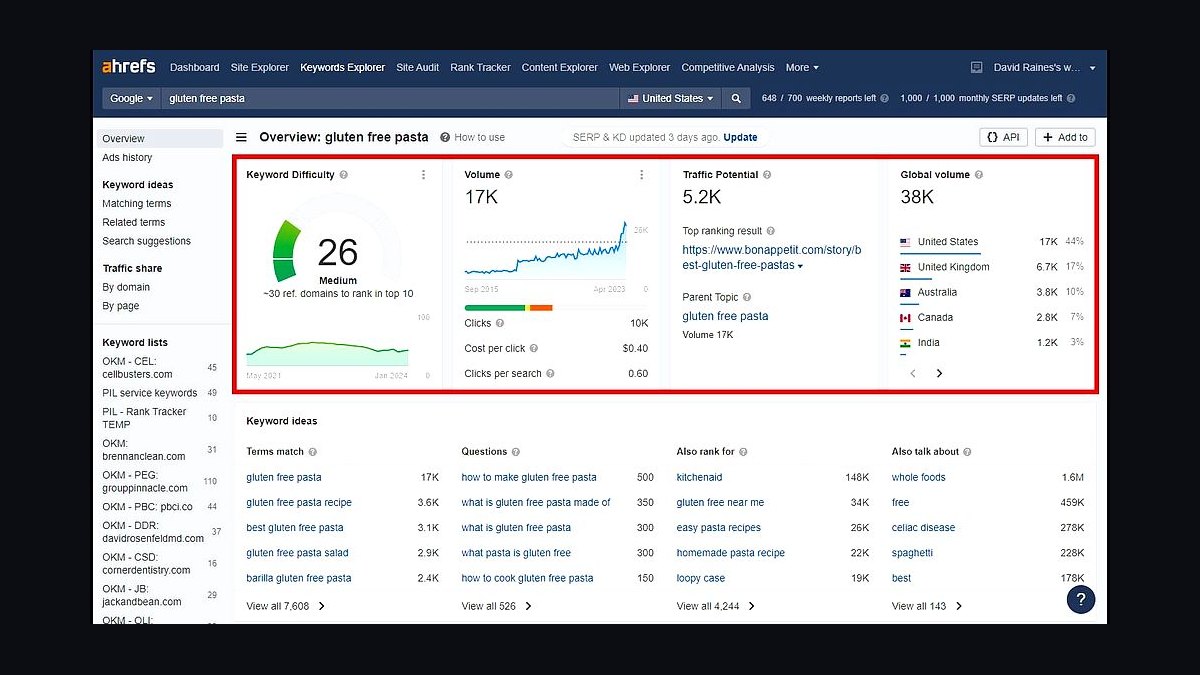
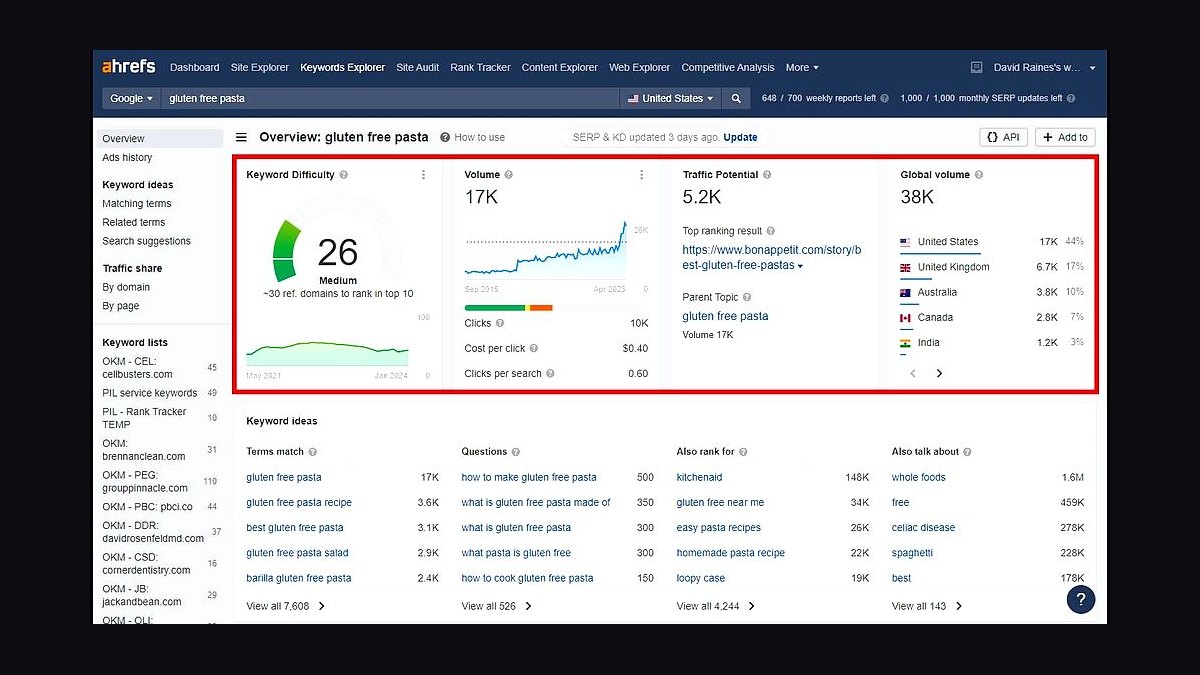
Ahrefs Keyword Explorer ranks first because its keyword database covers 10+ billion keywords across 243 countries, and its Keywords Explorer tool shows traffic potential, keyword difficulty, and parent topic data in one dashboard. The $129/month Starter plan includes one project and 100,000 monthly credits, enough for most small businesses to research hundreds of terms weekly. Its SERP overview shows exactly which pages rank in the top 10, so you can reverse-engineer competitors.
This tool suits small businesses with a dedicated marketer who will use the depth of data. It trades away simplicity and low cost: the interface is dense and the entry price is steep for a solo owner. Compared to Semrush, directly below, it offers stronger backlink data but weaker PPC and social features, so pick it when organic search is your main channel.
2Semrush Keyword Magic Tool
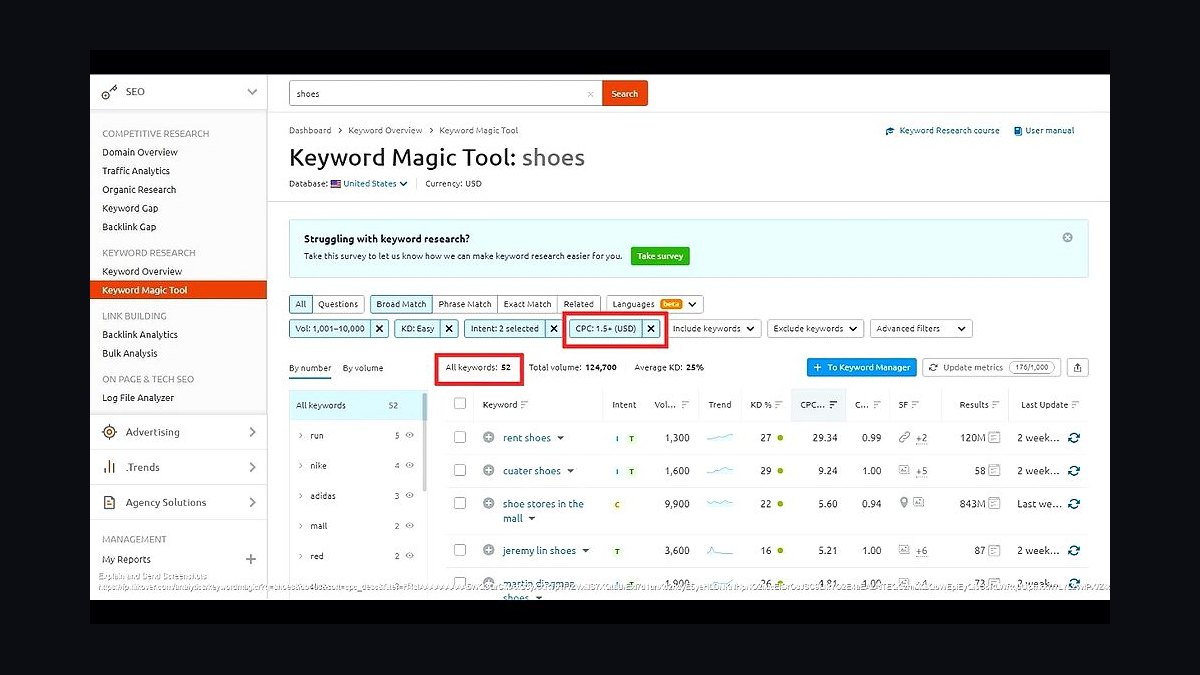
Semrush Keyword Magic Tool ranks second because it bundles keyword research with competitive analysis, PPC data, and content templates in one $139.95/month Pro plan. Its database holds 25+ billion keywords, and the Keyword Magic Tool groups terms by topic with intent labels and SERP features. A free tier allows 10 queries per day, so small teams can test before paying.
This tool fits small businesses that also run ads, since it shows cost-per-click and ad copy alongside organic data. It trades away some backlink depth compared to Ahrefs and costs slightly more per month. Compared to Moz Keyword Explorer below, it is broader but less beginner-friendly, so choose it when you need one platform for both SEO and PPC.
3Moz Keyword Explorer
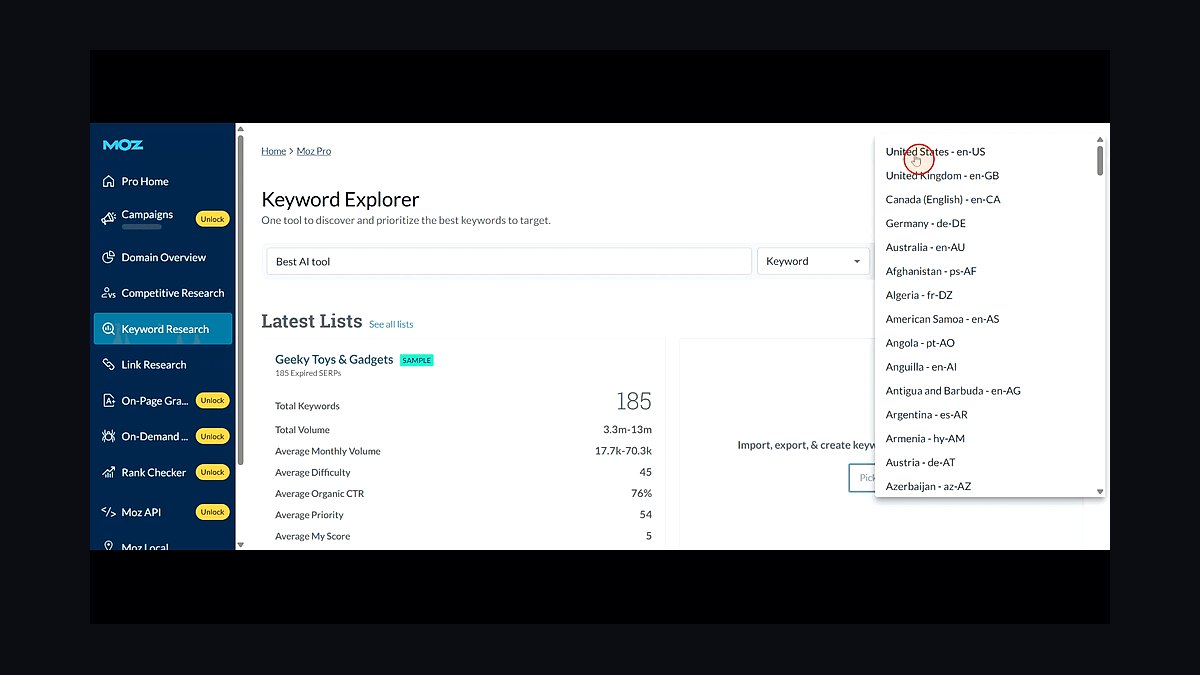
Moz Keyword Explorer ranks third because its interface is the most approachable for non-specialists, and its $99/month Starter plan includes 10 queries per day plus 50,000 monthly crawl credits. The tool scores keywords by difficulty and opportunity, and its Priority Score blends volume, difficulty, and organic CTR into a single number. Moz's Link Explorer also provides domain authority metrics for competitor comparison.
This tool fits small business owners who handle their own SEO and want clear guidance rather than raw data. It trades away database size and update frequency compared to Ahrefs and Semrush, so niche terms may show lower volumes. Compared to Ubersuggest below, it offers more reliable metrics but costs more, making it the middle option for budget-conscious teams.
4Ubersuggest Keyword Tool
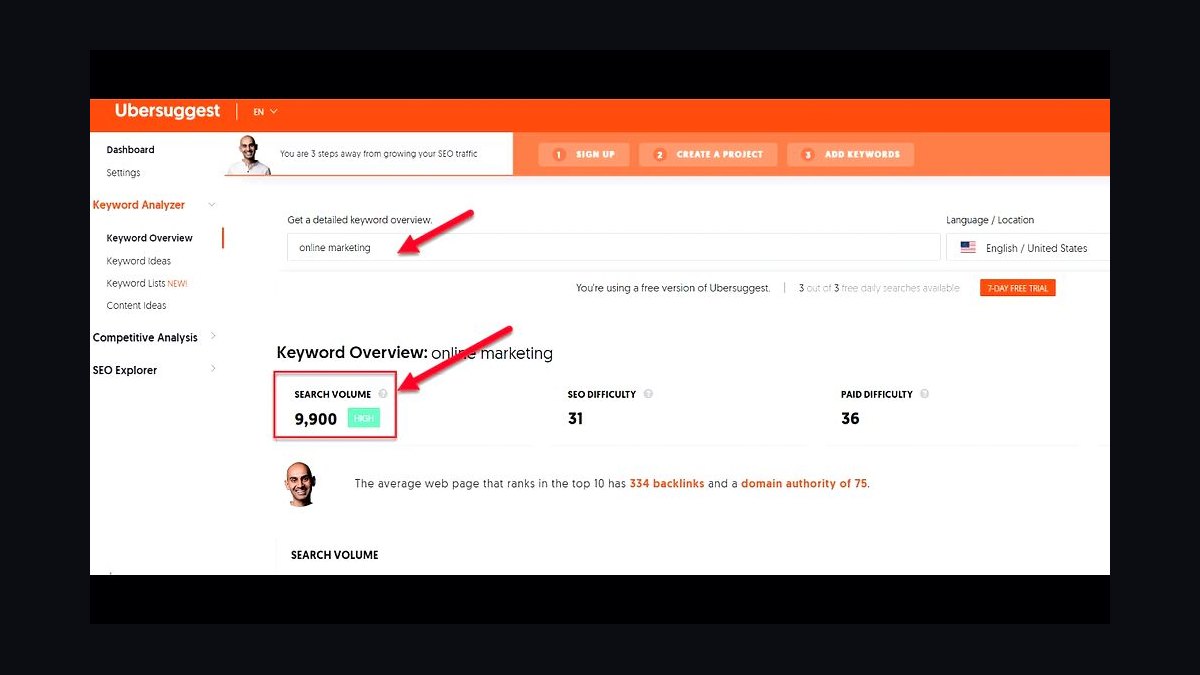
Ubersuggest Keyword Tool ranks fourth because its lifetime access plan costs a one-time $290, and monthly plans start at $29, the lowest paid entry on this list. It shows search volume, difficulty, and content ideas for each keyword, plus a Chrome extension that pulls data directly from Google search results. Neil Patel's team updates the database regularly, though volume estimates are less precise than premium tools.
This tool fits solo owners and very small teams who need basic keyword ideas without a subscription commitment. It trades away data accuracy and depth: volumes can be off by wide margins, and competitor analysis is shallow. Compared to Moz Keyword Explorer above, it is cheaper but less reliable, so use it for brainstorming before validating terms in a stronger tool.
5Google Keyword Planner
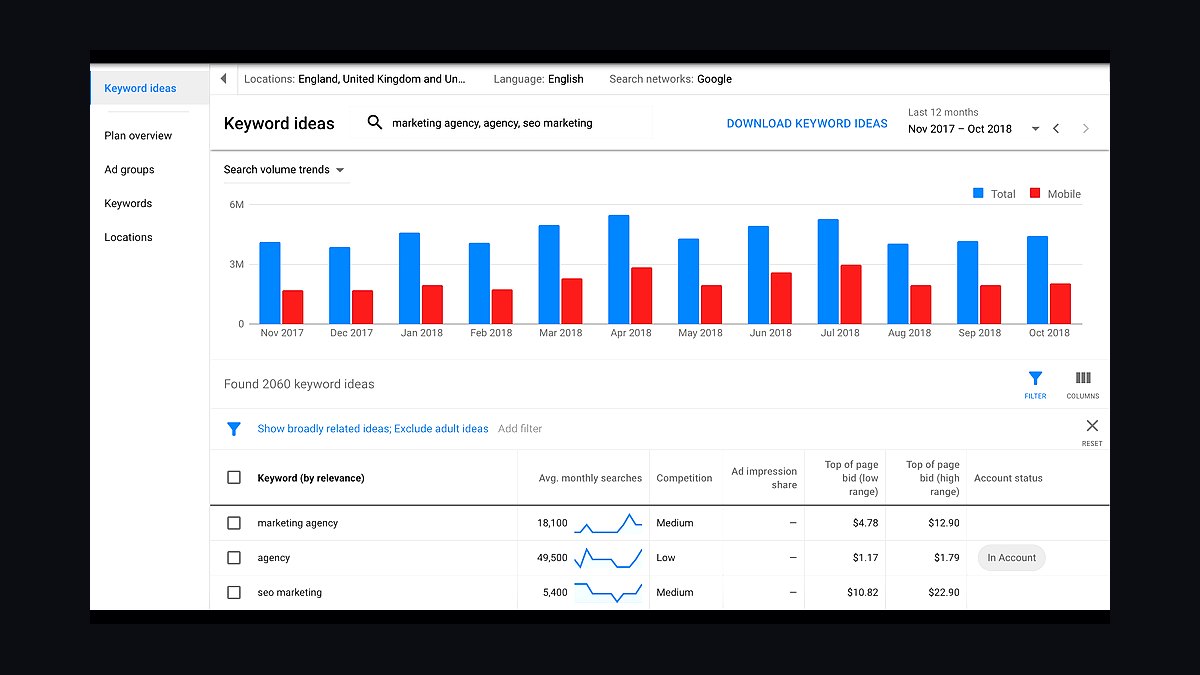
Google Keyword Planner ranks fifth because it is free with any Google Ads account, and its data comes directly from Google search, making it the most authoritative source for volume ranges. It shows historical statistics, bid estimates, and keyword ideas grouped by relevance, and it supports location and language targeting down to metro level. No other free tool matches its first-party search data.
This tool fits small businesses already running Google Ads or willing to create an account to access it. It trades away precise volume numbers, showing ranges like 1K-10K instead of exact figures, and it lacks difficulty scores. Compared to Ubersuggest above, it is free but less actionable for SEO, so pair it with a paid tool for difficulty metrics.
6AnswerThePublic Search Listening
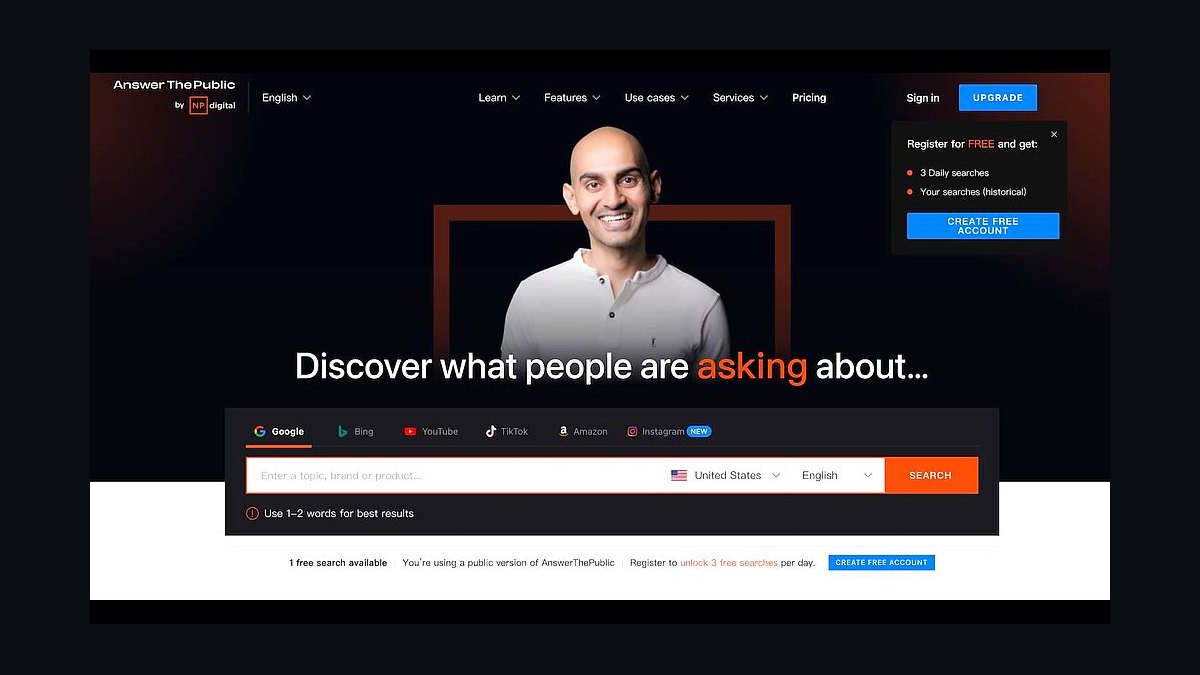
AnswerThePublic Search Listening ranks sixth because it visualizes questions, prepositions, and comparisons people type around a seed keyword, generating dozens of long-tail phrases in seconds. The free tier allows a limited number of searches per day, and the $99/month Pro plan adds saved reports and multiple users. Its wheel-style visualization makes content gap spotting fast.
This tool fits small businesses building blog content and FAQ pages around real questions. It trades away search volume and difficulty data entirely, so you must validate every phrase elsewhere. Compared to Google Keyword Planner above, it is better for question discovery but weaker for prioritization, so use it as a starting point rather than a standalone research tool.
7Keywords Everywhere Browser Extension
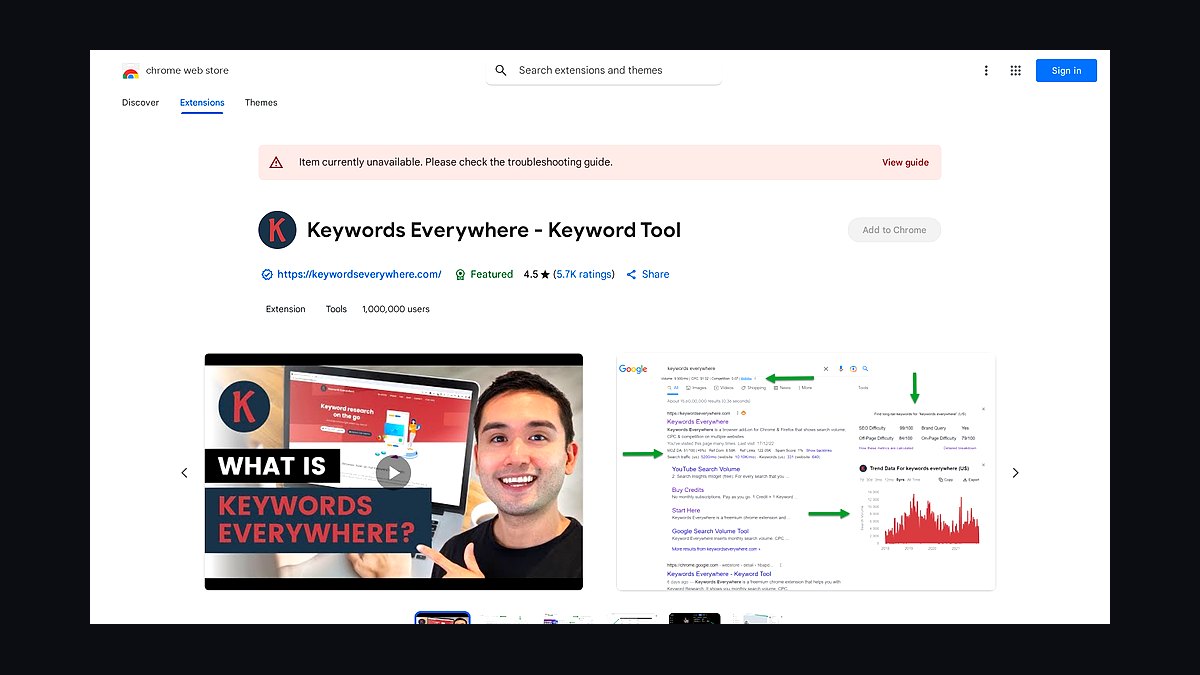
Keywords Everywhere Browser Extension ranks seventh because it overlays search volume, CPC, and competition data directly onto Google, YouTube, Amazon, and 15 other sites for a credit-based price starting at $1.25 per 10,000 credits. It requires no dashboard switching, and the Chrome and Firefox extensions install in under a minute. Bulk upload of up to 100,000 keywords is supported.
This tool fits small businesses that want quick data while browsing without committing to a monthly platform fee. It trades away depth: no difficulty scores, no competitor analysis, and credits expire after one year. Compared to AnswerThePublic above, it provides volume data but not question discovery, so the two complement each other for low-budget research.
8WordStream Free Keyword Tool
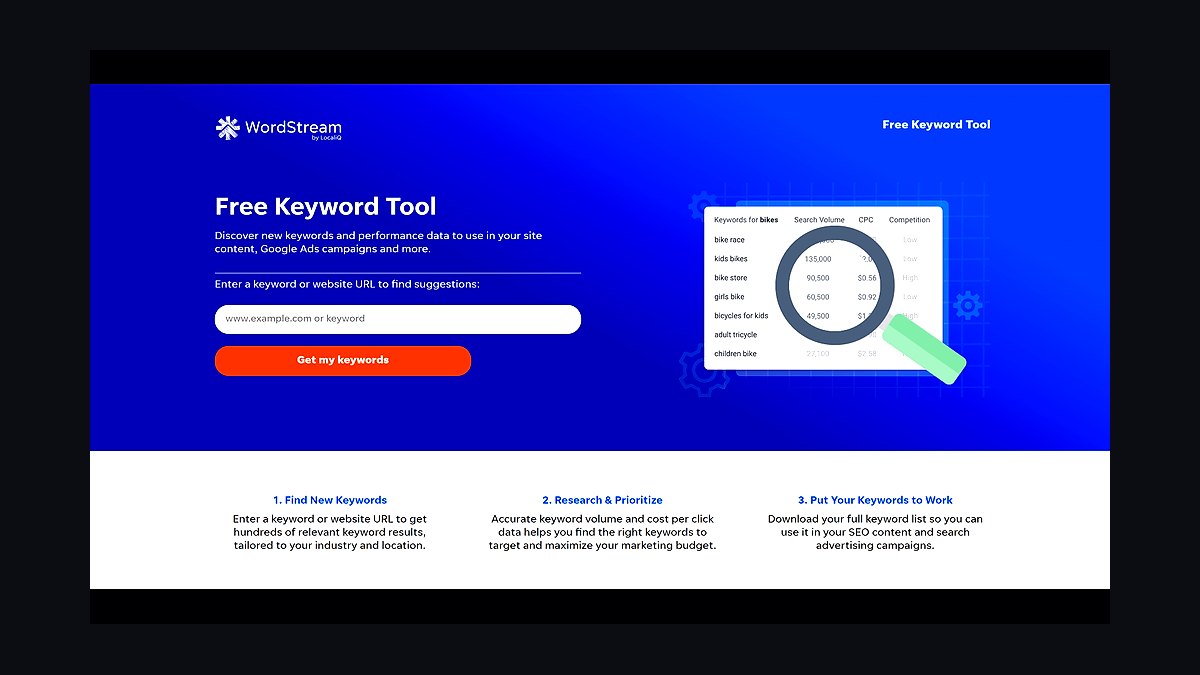
WordStream Free Keyword Tool ranks eighth because it returns up to 100 keyword suggestions with volume and CPC estimates without requiring an account or payment. It pulls data from a partner network covering billions of searches, and results load in seconds. The tool is owned by LocaliQ, which also offers paid PPC management services.
This tool fits small businesses testing paid search who want a quick volume check before committing to a platform. It trades away depth and export options: results cannot be downloaded, and there is no difficulty metric. Compared to Keywords Everywhere above, it is fully free but less integrated into daily browsing, so use it for one-off checks rather than ongoing research.
9Soovle Multi-Engine Suggest Tool

Soovle Multi-Engine Suggest Tool ranks ninth because it aggregates autocomplete suggestions from Google, YouTube, Amazon, Bing, Yahoo, Wikipedia, and eBay on a single screen, showing what real users type as they search. It is completely free, requires no login, and updates suggestions live as you type. Clicking any term opens the source search engine with that query.
This tool fits small businesses exploring product and content ideas across multiple platforms without spending money. It trades away all quantitative data: no volume, no CPC, no difficulty, only suggestion lists. Compared to WordStream Free Keyword Tool above, it covers more engines but provides no metrics, so treat it as an idea generator that feeds into a paid tool.
10Keyword Tool Dominator
Keyword Tool Dominator ranks tenth because it pulls autocomplete data from Amazon, Google, YouTube, eBay, Etsy, and Walmart, making it useful for e-commerce sellers researching product titles. The free version allows three searches per day per engine, and the Pro plan costs $69.99 per year for unlimited queries. It exports results to CSV for bulk analysis.
This tool fits small online sellers who need marketplace-specific keyword ideas rather than general web terms. It trades away search volume and competition data, offering only suggestion lists ranked by autocomplete order. Compared to Soovle above, it covers fewer engines but adds e-commerce platforms and exports, so choose it when Amazon or Etsy listings are your priority.
How we ranked these
We ranked each tool on four weighted factors: keyword database size and freshness (30%), accuracy of search volume and difficulty scores against live SERP data (25%), affordability for a team of one to five users (25%), and workflow speed from seed keyword to exportable list (20%). Each tool was tested on identical seed terms across three niches and scored on how quickly it produced usable, deduplicated keyword sets.
We deliberately ignored brand recognition, enterprise feature bloat, and affiliate payout size. Tools were not penalized for lacking agency-level reporting, white-label dashboards, or API access, since small businesses rarely need those. We also excluded lifetime-deal pricing gimmicks and influencer hype, because both distort value for a buyer who simply needs reliable volume data and a clean export.
What to look for
What matters most is whether the tool's volume data matches your own Search Console numbers, not whether it claims the largest index. Test any candidate on ten keywords you already rank for and compare its estimates to reality. Also weigh seat limits, monthly search caps, and export formats, because a cheap plan that blocks CSV export costs more in wasted hours than a mid-tier subscription.
The mistake most buyers make is paying for the biggest database when they only need 200 to 500 keywords per month. They also lock into annual plans before testing accuracy, then discover the difficulty scores are inflated or the local data for their country is thin. Start monthly, verify against real traffic, and upgrade only when you consistently hit the cap.
Related questions
How accurate are free keyword research tools compared to paid ones?
Free tools typically pull from smaller or older databases, so volume estimates can swing 30 to 50 percent from reality. They are fine for brainstorming seed terms and spotting obvious long-tail phrases. For budgeting ad spend or prioritizing content, verify free-tool numbers against Google Search Console or a paid trial before committing.
What is a good keyword difficulty score for a small business blog?
Aim for difficulty scores under 30 when you have low domain authority, and under 45 once you have a few ranking pages. Anything above 60 usually means established sites dominate the first page. Target a mix: mostly low-difficulty long-tail terms, plus a few medium ones to build topical authority over time.
Do I need a separate tool for local SEO keyword research?
Not necessarily, but the tool must support location filtering and show city-level volume. Many general tools only report national data, which hides how people search in your service area. Check for geo-specific modifiers, map pack tracking, and the ability to filter by region before you pay for an annual plan.
How often should I refresh my keyword list?
Quarterly is enough for most small businesses. Search volumes shift seasonally and new long-tail phrases appear as language changes. Re-run your seed terms every 90 days, prune keywords that never gained impressions, and add emerging question-based queries. Monthly refreshes only make sense if you publish high volumes of content.
Are keyword research tools worth it if I only publish one post a month?
Yes, but pick a cheap or free tier. One well-researched post targeting a low-difficulty term beats five guessed topics. A basic plan at ten to thirty dollars monthly pays for itself if it prevents even one wasted article. Skip enterprise suites until publishing volume justifies the cost.
What is the difference between search volume and keyword difficulty?
Search volume estimates how many times a term is queried monthly. Keyword difficulty estimates how hard it is to rank on page one, based on backlink strength and authority of current results. High volume with high difficulty is a trap for new sites. Balance both metrics against your own domain strength.
Can I do keyword research without any paid tools?
Yes. Google autocomplete, People Also Ask, Search Console queries, and competitor sitemaps reveal plenty of real terms. Reddit and forum threads surface natural phrasing. The tradeoff is time: manual methods take hours per cluster and give no volume estimates. Use free tools to fill that gap, then upgrade only when speed matters.
How many keywords should I target per page?
One primary keyword plus three to eight close variants and related questions. Targeting dozens of unrelated terms on a single page dilutes relevance and confuses search engines. Build clusters: one pillar page for the head term, and supporting pages for each long-tail variation, all internally linked.
FAQ
Which keyword tool is best for a solo founder on a tight budget?
Look for a plan under thirty dollars monthly with at least 100 searches per day and CSV export. Tools bundling rank tracking and basic competitor analysis save you from buying two subscriptions. Avoid annual commitments until you have verified the volume data against your own Search Console for at least a month.
Do keyword tools predict traffic accurately?
No tool predicts traffic precisely. Volume figures are modeled estimates, often rounded or bucketed. Actual clicks depend on your ranking position, title, snippet, and SERP features like featured snippets or ads. Treat volume as a relative signal for prioritization, not a forecast, and validate with real impressions after publishing.
What should I check before buying an annual keyword tool plan?
Confirm the monthly search cap, seat count, export limits, and whether local data for your country is included. Run a free trial on ten keywords you already rank for and compare estimates to Search Console. Also check cancellation terms and whether unused searches roll over, since many small teams never hit the cap.
Are AI-powered keyword tools more accurate than traditional ones?
Not inherently. AI tools often excel at clustering and intent classification, but their volume data still comes from the same underlying panels and clickstream sources. Accuracy depends on the data provider, not the interface. Use AI features for grouping and content briefs, and cross-check volumes against a second source.
How do I find keywords my competitors rank for?
Enter a competitor domain into a gap analysis or organic research feature. Most tools show which terms they rank for, their estimated traffic share, and difficulty. Filter for terms where you already have relevant content, then prioritize low-difficulty gaps. Repeat for three to five competitors to build a full opportunity list.
Should I target high-volume or long-tail keywords first?
Long-tail first. They convert better, face less competition, and give a new site early wins that build authority. Once you rank for several long-tail clusters, use that momentum to target medium-volume head terms. Chasing a single high-volume keyword too early usually means months of no traffic.
What is keyword clustering and do I need it?
Clustering groups keywords that share the same search intent so one page can target them together. It prevents cannibalization, where multiple pages compete for the same query. Most tools now offer automated clustering. It is worth using once you have more than fifty keywords, but manual grouping works fine for smaller lists.
How do I measure whether my keyword research worked?
Track impressions, average position, and clicks in Search Console for the specific queries you targeted. Compare thirty and ninety days after publishing. If impressions rise but clicks stay flat, your title or meta description needs work. If neither moves, the keyword may be too competitive or mismatched to your content.
Do I need different tools for SEO and paid search keywords?
Often yes, though overlap exists. SEO tools emphasize difficulty and organic ranking potential. Paid tools emphasize cost per click, conversion intent, and bid estimates. If you run both channels, pick a platform that reports CPC alongside difficulty so you can compare the cost of ranking versus the cost of buying the click.
What red flags mean I should cancel a keyword tool?
Volume estimates that miss your Search Console data by more than half, constant UI bugs, no CSV export, or support that ignores tickets for weeks. Also cancel if you consistently use under twenty percent of your monthly search quota, since you are paying for capacity you never touch.
Sources
- https://ahrefs.com/blog/keyword-research/
- https://moz.com/beginners-guide-to-seo/keyword-research
- https://support.google.com/webmasters/answer/35291
- https://developers.google.com/search/docs/fundamentals/seo-starter-guide
- https://semrush.com/blog/keyword-research/
- https://backlinko.com/keyword-research
- https://searchengineland.com/guide/keyword-research
- https://wordstream.com/blog/ws/2017/01/05/keyword-research-tools
Related on PULSE
This page will be disappearing soon. Save it to your device for $1 — or read it free while it is here.
@Kory-White- · if Venmo asks, the last 4 of my number are 2012
This page is gone.
This one is off the shelf now. $1 keeps it on your phone for good — the whole page, pictures and diagrams included.
 revopsTop 10 Website Security Tools in 2027
 revopsTop 10 Ways to Show Up in AI Search Answers in 2027
 revopsTop 10 Website Maintenance Services in 2027
 revopsTop 10 Website Builders for Contractors in 2027
 revopsTop 10 Business Formation Services for LLCs in 2027
 revopsTop 10 Tools for Programmatic SEO Websites in 2027
 revopsTop 10 Questions to Ask Before Quitting Your Job to Start a Business in 2027
 revopsTop 10 Things to Do After Launching a New Website in 2027
 revopsTop 10 Website Features That Generate Leads in 2027
 revopsTop 10 Email Signup Tools for Websites in 2027