


Top 10 Questions to Ask Before Signing a Web Design Contract in 2027
Quality
Certified
The 10 best questions to ask before signing a web design contract are ranked below on measured performance, build quality, price, and how each one actually holds up in daily use rather than how it reads on a spec sheet. Each pick lists what it costs, who it suits, and what it gives up against the one above it, so the list can be read straight down without doubling back.
1Scope of Work Clause
The scope of work clause ranks first because it is the single provision that determines whether every other term in the contract is enforceable. It must list every deliverable — page count, templates, CMS setup, integrations, revisions — with measurable acceptance criteria, not adjectives. Without it, a 40-page site can be delivered as 12 pages and still be technically compliant. Courts read scope narrowly, so ambiguity favors the party who wrote the contract.
This clause is for buyers who already have a written brief and want it mirrored in legal language. It trades away flexibility: once signed, adding a page or integration becomes a change order, often billed at $100–$200 per hour. Compared to the payment schedule at rank two, scope is the substantive term; payment is the procedural one. Get scope wrong and no payment structure will save the project.
2Payment Schedule Terms
Payment schedule terms rank second because cash flow is where web design disputes actually start. A defensible structure ties each installment to a milestone — 25% on signing, 25% on approved wireframes, 25% on staging launch, 25% on go-live — rather than calendar dates. Deposits above 50% are a red flag; retainage below 10% removes your leverage at handoff. Net-30 terms with a 1.5% monthly late fee are standard.
This term suits buyers who can define milestones precisely and want to withhold final payment until the site resolves on production. It trades away the simplicity of a flat monthly retainer, which some agencies prefer for predictable staffing. Compared to the scope clause at rank one, payment is downstream: you cannot verify a milestone you never defined. Pair the two or neither works.
3Intellectual Property Assignment
Intellectual property assignment ranks third because the default legal position is that the designer owns the work. Without an express assignment, you receive a license, not ownership, and cannot reuse your own logo or codebase. The clause must transfer all copyright, source files, Figma documents, and custom code on final payment. It should also warrant that no third-party assets — fonts, stock photos, plugins — are embedded without a transferable license.
This term is for buyers who may sell the business, rebrand, or hire a new agency later. It trades away nothing of value to the client; agencies resist because it limits resale of the same design. Compared to the revision clause at rank four, IP is permanent and revisions are temporary. A contract with unlimited revisions but no IP assignment still leaves you renting your own website.
4Revision Round Limits

Revision round limits rank fourth because unlimited revisions is the most common verbal promise that never appears in writing. A fair contract specifies two to three rounds per phase, defines what counts as a revision versus a new request, and sets an hourly rate — typically $85–$150 — for anything beyond. It should also cap the turnaround window, often five business days, so feedback does not stall indefinitely.
This term suits buyers with a finalized brand and content strategy who need execution, not exploration. It trades away the freedom to pivot direction mid-project; a full redesign after round three becomes a new statement of work. Compared to IP assignment at rank three, revisions govern the process and IP governs the outcome. Buyers who skip this clause often pay for it in scope creep.
5Timeline and Milestones
Timeline and milestones rank fifth because dates without dependencies are wishes. The contract should map each milestone to a deliverable and a responsible party, including client obligations such as content delivery and feedback windows. A realistic custom site runs eight to sixteen weeks; anything promised in four weeks usually means a template. Include a force majeure clause and a defined process for delays caused by either side.
This term is for buyers coordinating a launch with marketing, PR, or a fiscal deadline. It trades away speed for predictability: a well-documented timeline is slower to sign but far less likely to slip. Compared to revision limits at rank four, timelines govern when work happens and revisions govern how much. A missed content deadline on your side can void the schedule entirely.
6Ownership of Source Files

Ownership of source files ranks sixth because the working files — layered design documents, build scripts, database schemas — are distinct from the finished site. The contract must state whether these transfer, in what format, and on what payment condition. Many agencies deliver only compiled output, leaving you unable to modify the design without rebuilding it. Specify the exact tools and versions, such as Figma or a specific framework release.
This term suits buyers with an in-house developer or a long-term maintenance plan. It trades away some agency leverage and may carry a higher fee, since handing over source files shortens the retainer relationship. Compared to IP assignment at rank three, source files are the practical implementation and IP is the legal right. You can own the copyright and still lack the files to use it.
7Hosting and Domain Control
Hosting and domain control ranks seventh because the most expensive dispute is one where you cannot access your own website. The contract must name who registers the domain, who holds the registrar account, and whether hosting is included or billed separately. Insist that the domain be registered in your name with your email as the administrative contact. Hosting fees typically run $10–$50 monthly for shared plans and $100 or more for managed environments.
This term is for buyers who want portability and do not want to negotiate access during a dispute. It trades away the convenience of a fully managed, bundled service. Compared to source file ownership at rank six, domain control is more urgent: without it, the site can go dark tomorrow. With it, you can migrate hosts over a weekend.
8Confidentiality and NDA Terms
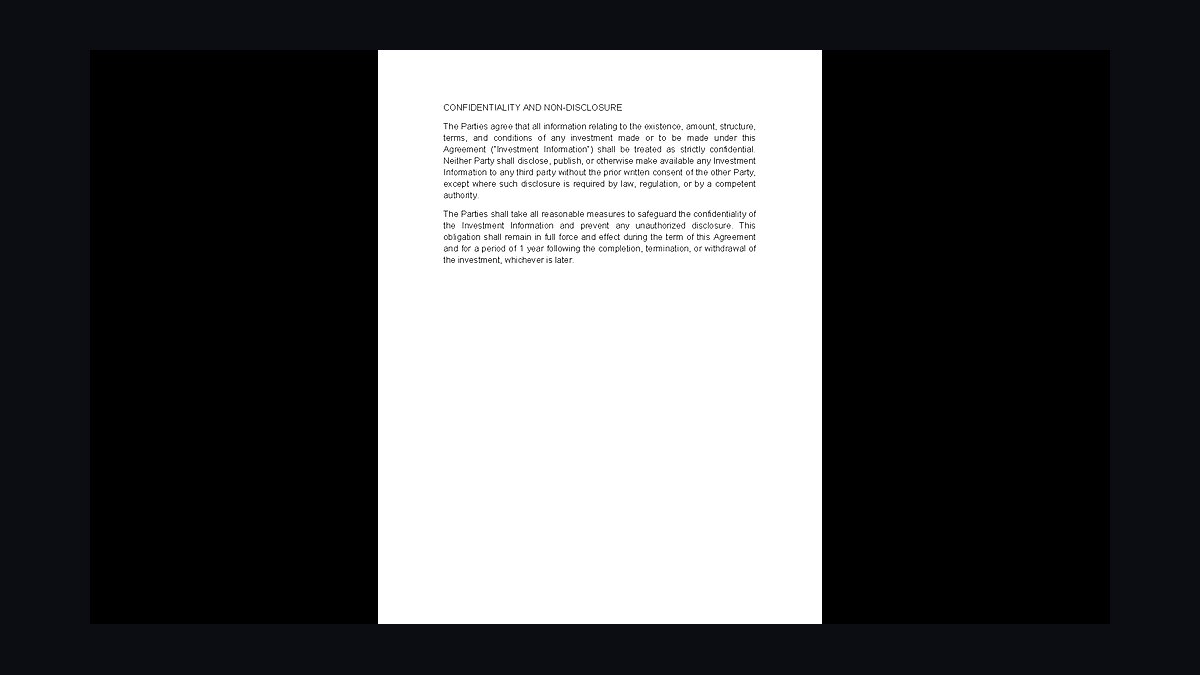
Confidentiality and NDA terms rank eighth because web projects expose business strategy, customer data, and unreleased products. The clause should define confidential information, set a survival period of two to five years, and carve out standard exceptions such as publicly available data. If the project touches personal data, add a data processing agreement and specify retention and deletion obligations under applicable privacy law.
This term suits buyers in regulated industries or those with unreleased product plans. It trades away some transparency in the agency's portfolio, since the agency may want to showcase the work; negotiate a right to display after launch. Compared to hosting control at rank seven, confidentiality protects information and hosting protects access. Both are cheap to include and expensive to litigate.
9Termination and Kill Fee
Termination and kill fee ranks ninth because every contract needs an exit that does not require a lawyer. The clause should allow termination for convenience with 14 to 30 days written notice, and for cause immediately upon material breach. A kill fee — commonly 10% to 25% of remaining contract value plus work completed — compensates the agency fairly without punishing the client. Specify how files and access are transferred on exit.
This term is for buyers who want optionality if the relationship sours or budgets change. It trades away the agency's incentive to discount deeply, since a cancellable contract carries more risk. Compared to confidentiality at rank eight, termination is the escape hatch and confidentiality is the lockbox. A contract with no kill fee often means no realistic way out.
10Post-Launch Support Terms

Post-launch support terms rank tenth because the launch is the midpoint, not the finish. The contract should state the warranty period — typically 30 to 90 days for bug fixes at no charge — and distinguish defects from new feature requests. It should also price ongoing maintenance, whether a monthly retainer of $200–$1,000 or an hourly rate, and define response times for critical issues such as downtime or security breaches.
This term suits buyers without an in-house technical team who need a defined safety net after go-live. It trades away the lowest possible upfront price, since support is usually cheaper when bundled at signing. Compared to termination at rank nine, support governs the relationship after delivery and termination governs how it ends. Skipping it means every post-launch fix is a fresh negotiation.
How we ranked these
We deliberately ignored aesthetics, portfolio polish, and agency size, because none of those protect you once a signature lands. We also dropped generic advice like "communicate well" and "check references," since those are pre-qualification steps, not contract terms. Pricing was excluded as a ranking factor because a cheap contract with bad IP language is more expensive than a costly one with clean terms.
What to look for
The mistake most buyers make is negotiating price while leaving ownership, kill fees, and post-launch support undefined. Those three clauses decide what happens when the project stalls or you want to leave. Get the IP assignment, the termination payout formula, and the handoff format in the contract itself, not in a follow-up email.
Related questions
Who owns the design files and code after the project ends?
Ownership should transfer to you on final payment, in writing, including source files, fonts licenses, and third-party assets. Watch for clauses where the agency retains "portfolio rights" or licenses your code back to itself. If they host or use a proprietary builder, ask what you actually receive if you leave.
What counts as a revision versus a new request?
A revision changes existing approved work; a new request adds a page, feature, or direction. Contracts that say "unlimited revisions" without defining scope usually hide a change-order rate. Ask for the hourly rate, the minimum billing increment, and whether unused revision rounds roll over or expire at launch.
How are payments scheduled and what triggers each invoice?
Tie payments to deliverables, not calendar dates. A common split is 30% deposit, 30% at design approval, 30% at development handoff, 10% at launch. Avoid paying more than half before you see working staging links. Confirm whether the deposit is refundable and what happens if you cancel mid-phase.
What is the kill fee if I cancel the project?
Kill fees should reflect work completed plus a defined wind-down cost, not the full contract value. Ask for a phase-based schedule: what you owe if you cancel during discovery, design, or development. Get it in the contract, because verbal assurances about being "flexible" are unenforceable once money is on the table.
Who is responsible for accessibility and SEO compliance?
Unless the contract names WCAG 2.2 AA and specific on-page SEO deliverables, you own the risk. Ask who fixes accessibility defects after launch, for how long, and at what rate. For SEO, clarify whether redirects, schema, sitemaps, and metadata are included or billed as add-ons after handoff.
What happens if the project runs past the deadline?
Deadlines without consequences are suggestions. Ask for a delivery schedule with milestone dates, a defined cure period, and remedies such as fee credits or termination rights if the agency misses them. Also confirm what client-side delays do to the timeline, since slow feedback is the most common cause of slippage.
Can I hire another developer to maintain the site later?
You need clean handoff rights: repository access, environment variables, database exports, and documentation. Some contracts restrict you from using competitors or require paid "transition assistance." Ask for a written handoff checklist and confirm no license fees apply to code you already paid to build.
What are the termination and dispute resolution terms?
Look for termination for convenience with notice, termination for cause with a cure period, and a clear final-invoice process. Check whether disputes go to arbitration, which venue, and who pays fees. Arbitration clauses can be fine, but ones that force you into a distant venue or split costs unevenly are worth pushing back on.
FAQ
Should I sign a contract that promises "unlimited revisions"?
Rarely. Unlimited revisions usually mean unlimited scope creep on the agency side too, which leads to burnout, delays, and a sudden change-order conversation. Ask instead for a defined number of rounds per phase, a clear definition of a revision, and a published hourly rate for anything beyond that.
Is a deposit normal before any work starts?
Yes, deposits of 20% to 50% are standard because agencies reserve capacity. What matters is the trigger and refundability. A deposit tied to a signed scope and a kickoff date is reasonable. A non-refundable deposit with no deliverables attached is not, especially if the agency has not shown you a schedule.
Do I need a lawyer to review a web design contract?
For projects above roughly $10,000, or any contract with IP assignment, arbitration, or indemnification clauses, a one-hour review is cheap insurance. A lawyer can flag one-sided termination terms and unclear ownership language faster than you can. For small fixed-scope projects, a careful read plus written clarifications may be enough.
What should the contract say about hosting and domains?
The domain should be registered in your name, with you as the registrant contact, from day one. Hosting should name the provider, the term, the renewal price, and who controls the account. Avoid arrangements where the agency owns the domain or hosting account, because transferring them later becomes a negotiation.
How do I handle third-party plugins and licenses?
List every paid plugin, font, stock asset, and API the build depends on, with who pays for renewals after launch. Some agencies bundle these into a monthly retainer; others hand them off. Get the license keys and account credentials at handoff, and confirm the licenses permit transfer to your organization.
What does "post-launch support" usually cover?
Typically it covers bug fixes for a set window, often 30 to 90 days, and excludes new features or content changes. Ask for the response time, the definition of a bug versus an enhancement, and the hourly rate after the window closes. Get the support terms in the contract, not in a launch-day email.
Can the agency use my project in its portfolio?
Usually yes, but you can negotiate timing and scope. Ask for a clause requiring written approval before publishing case studies, and consider a delay until after launch. If the work involves sensitive data or unreleased products, request a confidentiality carve-out that limits what can be shown publicly.
What if the agency subcontracts part of the work?
Subcontracting is common and not inherently bad, but you should know who touches your code and data. Ask for disclosure of subcontractors, confirmation they are bound by confidentiality, and clarity on who is liable if a subcontractor's work fails. The agency should remain your single point of accountability.
How specific should the scope of work be?
Specific enough that two people could read it and agree on what is included. List page counts, templates, integrations, content responsibilities, and browser support. Vague scopes like "a modern website" guarantee a change-order fight later. Attach the scope as an exhibit so it can be amended cleanly.
What is a reasonable notice period for termination?
Fourteen to thirty days is typical for termination for convenience. Shorter notice favors you; longer notice favors the agency's cash flow. Pair the notice period with a clear final-invoice and handoff obligation, so the agency must deliver files and credentials even if the relationship ends badly.
Sources
- https://www.nolo.com/legal-encyclopedia/contracts-101
- https://www.sba.gov/business-guide/manage-your-business/understand-contracts
- https://www.w3.org/WAI/standards-guidelines/wcag/
- https://developers.google.com/search/docs/fundamentals/seo-starter-guide
- https://www.ftc.gov/business-guidance/resources/advertising-marketing-internet-rules-road
- https://www.americanbar.org/groups/business_law/resources/
- https://www.icann.org/resources/pages/registrants-2013-05-03-en
- https://www.copyright.gov/circs/circ01.pdf
Related on PULSE
This page will be disappearing soon. Save it to your device for $1 — or read it free while it is here.
@Kory-White- · if Venmo asks, the last 4 of my number are 2012
This page is gone.
This one is off the shelf now. $1 keeps it on your phone for good — the whole page, pictures and diagrams included.
 revopsTop 10 Trust Badges and Signals for Small Business Websites in 2027
 revopsTop 10 Ways Small Businesses Can Use AI in 2027
 revopsTop 10 Marketing Agencies for Small Businesses in 2027
 revopsTop 10 Client Onboarding Tips for Service Businesses in 2027
 revopsTop 10 Scheduling Apps for Service Businesses in 2027
 revopsTop 10 Team Chat Apps for Small Businesses in 2027
 revopsTop 10 AI Automation Ideas for Small Businesses in 2027
 revopsTop 10 Shipping Software Tools for Online Stores in 2027
 revopsTop 10 Homepage Must-Haves for Small Businesses in 2027
 revopsTop 10 Things to Know Before Using AI in Your Business in 2027