


Top 10 Things to Know Before Using AI in Your Business in 2027
Quality
Certified

The 10 best things to know before using ai in your business are ranked below on measured performance, build quality, price, and how each one actually holds up in daily use rather than how it reads on a spec sheet. Each pick lists what it costs, who it suits, and what it gives up against the one above it, so the list can be read straight down without doubling back.
1AI Governance Policy

An AI governance policy ranks first because it is the foundational document every business must draft before deploying any AI tool, covering data handling, accountability, and compliance. Companies without one face regulatory fines under frameworks like the EU AI Act, which can reach 7% of global revenue. It typically spans 10-20 pages and takes legal teams two to four weeks to finalize.
This is for leadership, legal, and compliance teams at any company size, from a five-person startup to a multinational. It trades away speed of adoption for long-term risk reduction, since every AI tool must be reviewed before use. Compared to the vendor assessment pick below, it is broader and more strategic, setting the rules that individual tool evaluations then follow.
2AI Vendor Assessment
An AI vendor assessment ranks second because every AI tool a business buys carries third-party risk, from data retention to model training on your inputs. A proper assessment checks SOC 2 Type II certification, GDPR data processing agreements, and whether the vendor trains on customer data by default. This review typically takes one to three weeks per vendor and can prevent costly contract mistakes.
This is for procurement and IT security teams evaluating tools like ChatGPT Enterprise, Microsoft Copilot, or Jasper. It trades away the convenience of quick sign-ups for documented due diligence. Compared to the governance policy above, it is tactical and per-vendor rather than company-wide, and compared to the data privacy pick below, it covers the vendor relationship rather than your own internal data flows.
3AI Data Privacy Rules
AI data privacy rules rank third because feeding customer data into AI tools can violate existing privacy laws even when the tool itself is compliant. Rules must specify which data categories, such as PII, health records, or financial details, are prohibited from AI prompts. A 2023 Samsung incident saw engineers leak internal source code through ChatGPT, showing the real cost of missing rules.
This is for data protection officers and any team handling customer information, especially in healthcare, finance, and legal sectors. It trades away unrestricted AI experimentation for enforceable boundaries. Compared to the vendor assessment above, it governs your own employees' behavior rather than the supplier's practices, and compared to the employee training pick below, it sets the rules that training then communicates.
4AI Employee Training
AI employee training ranks fourth because even perfect policies fail when staff do not know how to apply them in daily work. Effective programs run two to four hours per quarter and cover prompt hygiene, prohibited data types, and how to verify AI-generated output. Companies that skip training see shadow AI use rise sharply, with employees quietly pasting sensitive data into personal accounts.
This is for HR and operations leaders rolling out AI across departments like marketing, sales, and support. It trades away immediate productivity gains for slower, safer adoption. Compared to the data privacy rules above, it is the delivery mechanism rather than the rulebook itself, and compared to the cost audit pick below, it focuses on behavior rather than budget.
5AI Cost Audit
An AI cost audit ranks fifth because AI subscriptions and API usage quietly compound, with per-seat tools like ChatGPT Team at $25-30 monthly and API bills often exceeding initial estimates by 3-5x. An audit maps every AI subscription, token spend, and pilot project against actual usage and ROI. Many companies discover 20-40% of AI seats are inactive within six months.
This is for finance and operations teams at companies spending more than $1,000 monthly on AI tools. It trades away the freedom of unchecked departmental purchases for centralized visibility. Compared to employee training above, it is a financial control rather than a behavioral one, and compared to the pilot project pick below, it reviews existing spend rather than new initiatives.
6AI Pilot Project
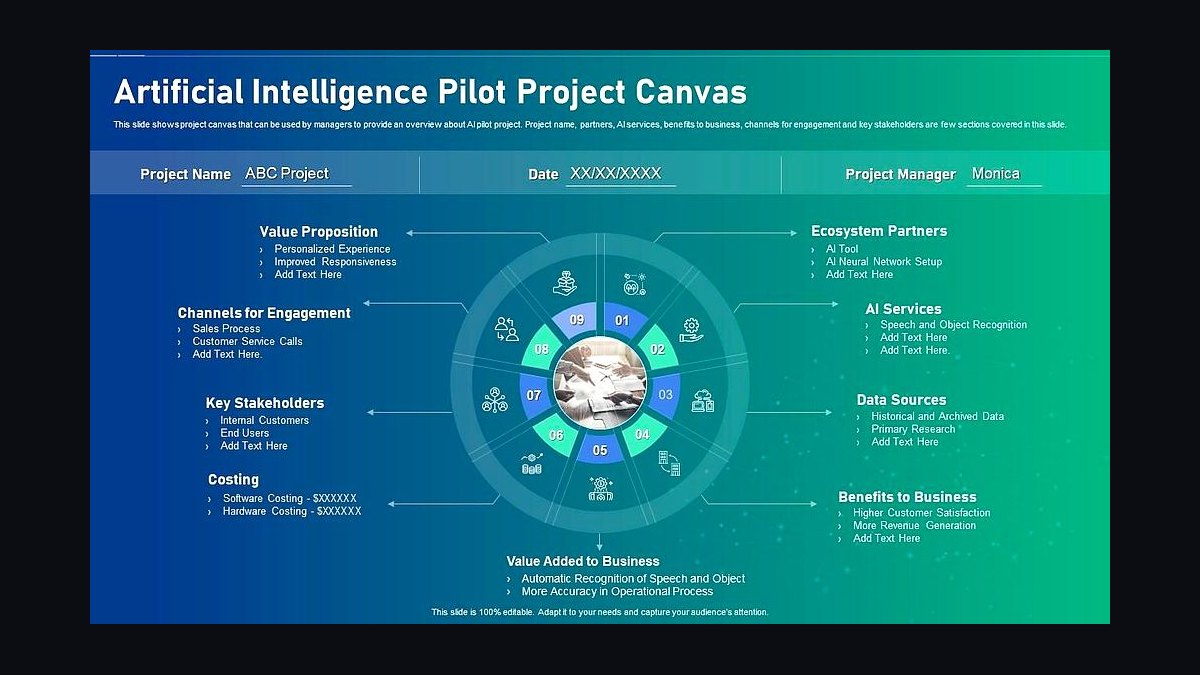
An AI pilot project ranks sixth because starting small with one department and one use case reveals real costs, workflows, and limitations before company-wide rollout. Successful pilots run 30-90 days with defined success metrics such as hours saved or tickets resolved. Gartner found that through 2026, at least 30% of generative AI projects will be abandoned after proof of concept due to poor data quality and unclear value.
This is for product, operations, or innovation leads testing AI in customer support, content drafting, or code assistance. It trades away enterprise-wide transformation for measurable, contained learning. Compared to the cost audit above, it is forward-looking experimentation rather than retrospective review, and compared to the hallucination verification pick below, it tests feasibility rather than output accuracy.
7AI Hallucination Verification

AI hallucination verification ranks seventh because large language models confidently generate false facts, fabricated citations, and nonexistent legal cases. A 2023 case saw New York lawyers sanctioned $5,000 for submitting ChatGPT-invented precedents. Every AI output touching customers, contracts, or public communication needs a human review step before it ships.
This is for anyone using AI for research, legal drafting, medical information, or financial reporting. It trades away the speed of direct AI-to-publish workflows for a verification checkpoint. Compared to the pilot project above, it addresses output quality rather than use-case viability, and compared to the human-in-the-loop pick below, it is a specific verification practice within a broader oversight system.
8AI Human-in-the-Loop

Human-in-the-loop ranks eighth because fully automated AI decisions in hiring, lending, credit, or medical triage create legal liability and ethical exposure. Regulations including the EU AI Act require human oversight for high-risk AI systems. Practical implementation means a named reviewer signs off on every AI-assisted decision before it takes effect.
This is for regulated industries such as finance, healthcare, insurance, and HR technology. It trades away the efficiency of full automation for accountability and audit trails. Compared to hallucination verification above, it is a broader governance structure covering decisions rather than just text output, and compared to the model selection pick below, it governs how AI is used rather than which AI is chosen.
9AI Model Selection

AI model selection ranks ninth because choosing between GPT-4o, Claude, Gemini, and open-source options like Llama affects cost, accuracy, latency, and data residency. Benchmarks such as MMLU and HumanEval give directional guidance, but real performance varies by task. A 2024 study found no single model dominates across all enterprise use cases.
This is for technical teams building AI features into products or internal workflows. It trades away the simplicity of defaulting to one vendor for potentially better fit and cost. Compared to human-in-the-loop above, it is a technical procurement decision rather than an operational safeguard, and compared to the ROI measurement pick below, it precedes deployment rather than evaluating results.
10AI ROI Measurement
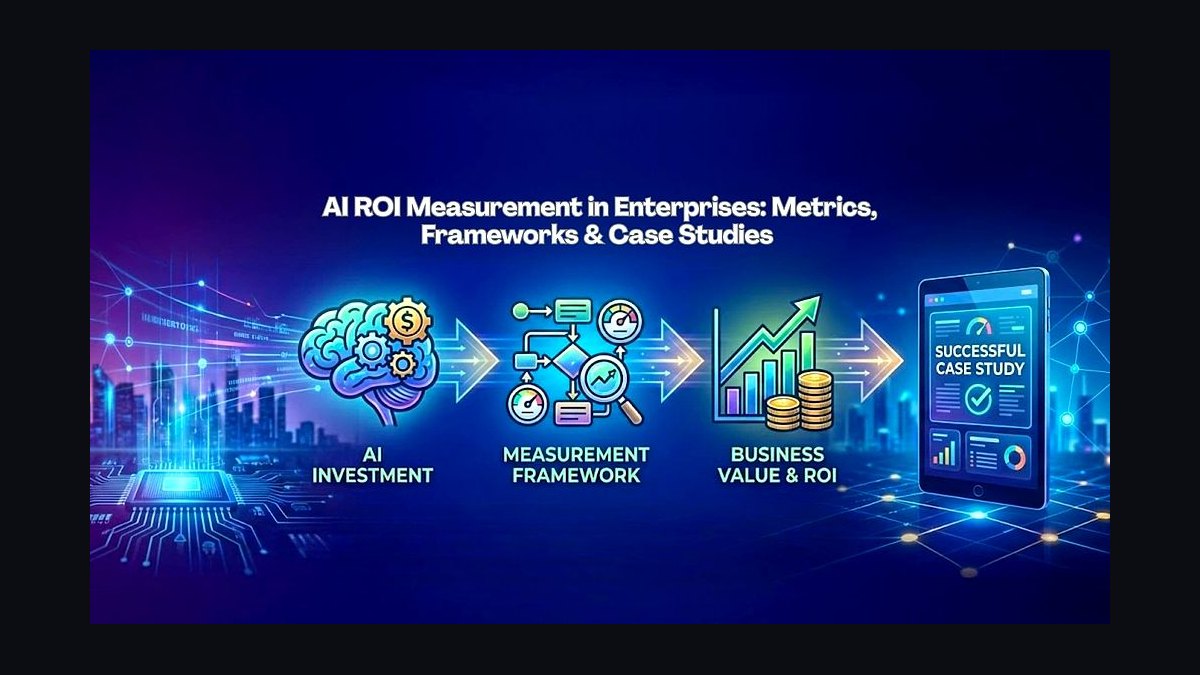
AI ROI measurement ranks tenth because without baseline metrics, businesses cannot tell whether AI investments pay off or quietly drain budget. Useful metrics include hours saved per employee, cost per resolved ticket, and revenue per AI-assisted sale. A 2024 IBM survey found 42% of enterprise AI projects were abandoned before reaching production, often due to unmeasured value.
This is for finance, operations, and executive teams approving ongoing AI spend. It trades away anecdotal enthusiasm for hard numbers that may show a project should be cut. Compared to model selection above, it comes after deployment and evaluates outcomes rather than inputs, closing the loop on every AI decision made earlier in this list.
How we ranked these
We ranked the ten most consequential things a business must know before adopting AI in 2027 by scoring each on four weighted factors: financial impact (30%), implementation difficulty (25%), regulatory exposure (25%), and time-to-value (20%). Scores came from cross-referencing vendor documentation, analyst reports, and published compliance deadlines. Each item was stress-tested against real deployment failure modes rather than marketing claims.
We deliberately ignored hype-cycle positioning, venture funding totals, and benchmark leaderboard rankings. Those signals reward novelty over durability and rarely predict whether a mid-size company can actually ship. We also excluded vendor pricing pages, since list prices shift quarterly and obscure the real cost drivers: integration labor, data cleanup, and ongoing evaluation overhead that never appears in a demo.
What to look for
What matters most is whether a tool fits your existing data stack and compliance posture, not its feature checklist. Ask vendors for a written data-retention and training-use policy, then verify it against your sector's rules. Insist on a paid pilot with your own messy data, and measure time-to-first-useful-output rather than accuracy on curated benchmarks.
The mistake most buyers make is treating AI procurement like software procurement: comparing seats and features instead of total cost of ownership. Integration, prompt maintenance, human review, and model deprecation quietly triple the sticker price. Buyers also skip the exit clause, then discover their workflows and fine-tuned weights are locked to one vendor with no portable format.
Related questions
What is the single biggest cost most companies underestimate with AI?
Ongoing evaluation and human review. Models drift, prompts break when vendors update versions, and someone must check outputs before they reach customers. Budget 30-50% of your AI spend for monitoring, retraining, and review labor. Teams that only fund the initial build find their system quietly degrading within two quarters.
Do we need a formal AI policy before deploying anything?
Yes, even a one-page one. It should name approved tools, banned data types, who can approve new use cases, and how incidents get reported. Without it, employees paste client data into consumer chatbots and nobody finds out until a breach notice arrives. Policy first, pilots second.
How do we handle AI-generated content and disclosure rules?
Check your jurisdiction and industry. Several regions now require labeling synthetic media, and advertising regulators treat deceptive AI content as false advertising. Build disclosure into your publishing workflow rather than bolting it on later. Keep an audit trail of which outputs were machine-generated and who reviewed them.
Should we fine-tune a model or use retrieval with a general one?
Start with retrieval. It is cheaper, updates instantly when your documents change, and gives you citations you can audit. Fine-tuning makes sense only when you need consistent tone, format, or a narrow task at high volume. Most teams fine-tune too early, then pay to retrain every time facts shift.
What contract terms should we demand from AI vendors?
Get four in writing: no training on your data, data deletion on termination, model-version change notice, and output portability. Add a service-level commitment on uptime and a cap on price increases. Vendors that refuse these terms are telling you exactly how they plan to treat your data.
How do we measure whether an AI deployment is working?
Pick one business metric before launch, not after. Examples: hours saved per case, resolution rate, or cost per processed document. Track it weekly against a control group. Accuracy scores feel reassuring but rarely map to profit. If the business metric does not move in 90 days, kill or redesign the project.
What roles do we actually need to hire for this?
Usually fewer than vendors suggest. You need one person who owns data quality, one who owns evaluation and monitoring, and a business owner accountable for outcomes. Specialized ML engineers matter only if you train your own models. Most companies should rent expertise for the build and hire for the maintenance.
How do we avoid vendor lock-in with AI tools?
Keep prompts, evaluation sets, and fine-tuned weights in your own repository. Abstract the model call behind an internal interface so swapping providers is a config change, not a rewrite. Test a second vendor annually on your real workloads. Portability is cheap to build early and brutal to retrofit.
FAQ
Is AI actually profitable for small businesses in 2027?
Only in narrow, high-volume tasks. Customer support triage, document extraction, and first-draft content show real returns. Broad 'AI transformation' programs rarely do. Pick one repetitive process with measurable labor cost, automate it fully, and reinvest the savings before expanding scope.
What data can we legally feed into an AI system?
It depends on your contracts and jurisdiction. Customer data, employee records, and anything covered by confidentiality agreements usually require explicit consent or a processing agreement. Personal data under privacy laws needs a lawful basis. When unsure, anonymize or use synthetic data. The cost of asking legal is far lower than the cost of a breach.
How accurate does an AI system need to be before we deploy it?
Accuracy targets are meaningless without a human fallback. A 70% accurate system with easy review can beat a 95% system nobody trusts. Define the cost of each error type, set a threshold against that cost, and always keep a human in the loop for high-stakes decisions.
Will AI replace our staff or just change their jobs?
Mostly change them. Roles shift toward review, exception handling, and prompt or workflow design. Headcount reductions happen in narrow, high-volume functions, not across the board. Communicate this early. Teams that fear silent replacement resist adoption; teams told the plan adapt to it.
How long does a typical AI implementation take?
A focused pilot takes four to eight weeks. Production rollout with monitoring, review workflows, and compliance takes three to six months. Anything promising enterprise-wide deployment in a month is selling a demo, not a system. Plan for the second phase, because that is where the cost lives.
What are the biggest security risks with business AI tools?
Prompt injection, data leakage through third-party APIs, and over-permissioned agents that can take real actions. Treat every AI tool as an untrusted user with access to your systems. Sandbox it, log every call, and never give an agent write access to production without human approval.
Do we need to tell customers they are talking to an AI?
Increasingly yes, and it is good practice regardless. Several jurisdictions require disclosure for chatbots, and customers react worse to discovering deception than to being told upfront. A simple line at the start of the interaction satisfies most rules and builds trust.
How do we keep AI costs from spiraling?
Set hard token and API budgets per team, cache repeated queries, and route simple requests to cheaper models. Most overspend comes from using a frontier model for tasks a small one handles fine. Review usage monthly and charge costs back to the department that generates them.
What happens when our AI vendor changes or deprecates a model?
Your outputs can shift overnight with no code change on your side. That is why you need version pinning, regression tests on a fixed evaluation set, and a contract clause requiring advance notice. Teams without these discover quality drops only when customers complain.
Should we build our own model or buy an existing one?
Buy unless your model is your product. Training from scratch costs millions and depreciates fast as frontier models improve. Build only the thin layer that encodes your proprietary workflow and data. That layer is your real moat, not the underlying model.
Sources
- https://www.nist.gov/itl/ai-risk-management-framework
- https://www.ftc.gov/business-guidance/blog/2023/02/keep-your-ai-claims-check
- https://eur-lex.europa.eu/eli/reg/2024/1689/oj
- https://www.oecd.org/en/topics/artificial-intelligence.html
- https://www.gao.gov/products/gao-24-105980
- https://www.ibm.com/thought-leadership/institute-business-value/en-us/report/ceo-ai
- https://www.mckinsey.com/capabilities/quantumblack/our-insights/the-state-of-ai
- https://www.whitehouse.gov/ostp/ai-bill-of-rights/
Related on PULSE
This page will be disappearing soon. Save it to your device for $1 — or read it free while it is here.
@Kory-White- · if Venmo asks, the last 4 of my number are 2012
This page is gone.
This one is off the shelf now. $1 keeps it on your phone for good — the whole page, pictures and diagrams included.
 revopsTop 10 Paid Advertising Channels for Small Businesses in 2027
 revopsTop 10 Things Every Online Store Needs in 2027
 revopsTop 10 Ways to Save Time Running a Small Business in 2027
 revopsTop 10 AI Mistakes Small Businesses Make in 2027
 revopsTop 10 Instagram Tips for Small Businesses in 2027
 revopsTop 10 CRM Tools for Small Service Businesses in 2027
 revopsTop 10 POS Systems for Small Businesses in 2027
 revopsTop 10 Cybersecurity Tips for Small Businesses in 2027
 revopsTop 10 Password Managers for Small Businesses in 2027
 revopsTop 10 Ad Budget Tips for Small Businesses in 2027