 Pulse Reviews and Analysis
JFK’s Inaugural Address (1961) — Text, Context, and Why It Endures
 Curated by Kory White · Fractional CRO, CRO Syndicate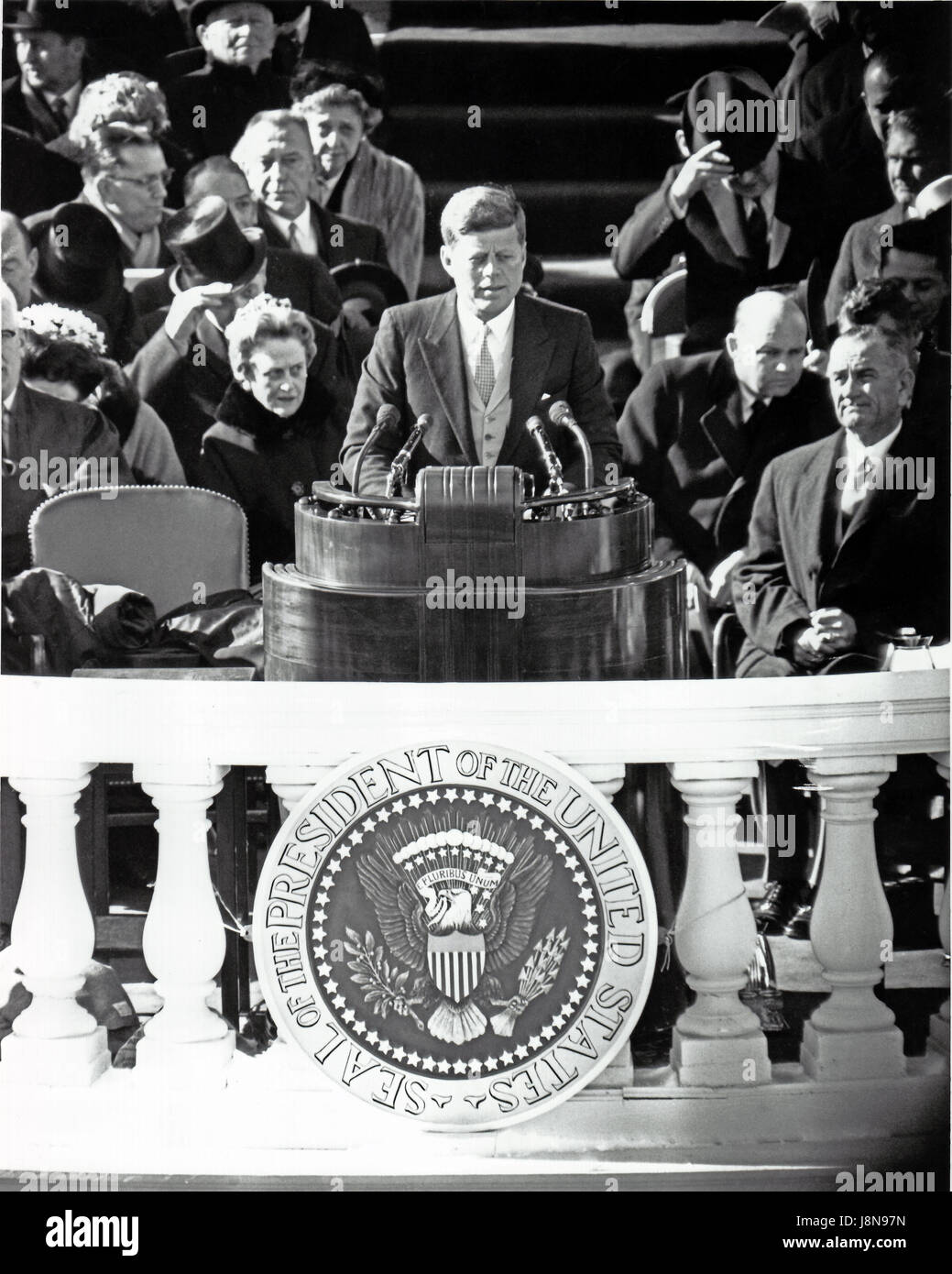
JFK’s Inaugural Address (1961) — Full Text and Why It Endures
Context
John F. Kennedy delivered his inaugural address on January 20, 1961, on the east front of the U.S. Capitol, minutes after taking the oath as the 35th president.
The day was bitterly cold, with snow on the ground and bright sun glaring off it. The stakes were enormous. The Cold War was at a dangerous pitch — the Berlin crisis was building, the Soviet Union had the bomb and a head start in space, and the threat of nuclear war hung over every foreign-policy decision.
At 43, Kennedy was the youngest man ever elected to the office and the first Catholic, and he wanted his first words as president to reach past Washington to allies, adversaries, and the world. The speech ran a tight 14 minutes — short by inaugural standards — and almost every line was built to be quoted.
About the Speaker
Kennedy was a Massachusetts senator, a Navy combat veteran of the Pacific war, and a Pulitzer-winning author with a sharp ear for cadence. He drafted the address with adviser Ted Sorensen, trading lines back and forth until the rhythm was airtight. Kennedy delivered it bareheaded in the cold, jaw set, in the clipped New England accent that a generation would come to know.
Key Passages
Full speech: ~14 minutes (~1,366 words). A few of the most enduring moments:
[Opening — he frames the moment as a generational handoff, not a partisan victory.]
Let the word go forth from this time and place, to friend and foe alike, that the torch has been passed to a new generation of Americans.
[To allies and adversaries — a pledge of resolve paired with restraint.]
Let every nation know, whether it wishes us well or ill, that we shall pay any price, bear any burden, meet any hardship, support any friend, oppose any foe, to assure the survival and the success of liberty.
[On negotiating with the Soviets — the famous balanced antithesis.]
Let us never negotiate out of fear. But let us never fear to negotiate.
[The turn — he pivots from what government promises to what citizens owe.]
And so, my fellow Americans: ask not what your country can do for you — ask what you can do for your country.
[The close — he widens the appeal to the whole world.]
My fellow citizens of the world: ask not what America will do for you, but what together we can do for the freedom of man.
Why It Endures
The address is a master class in compression. At under 1,400 words it is one of the shortest inaugurals on record, and its brevity is the point — Kennedy stripped away policy detail and left only commitments and cadence.
The engine of the speech is antithesis: the deliberate balancing of opposites in a single line. "Ask not what your country can do for you — ask what you can do for your country" is the most quoted, but the technique runs throughout. "Never negotiate out of fear, but never fear to negotiate" flips the same words to flip the meaning.
"United there is little we cannot do; divided there is little we can do safely." The structure does the persuading — the symmetry makes each idea sound inevitable, almost like a law of nature rather than one man's opinion.
Kennedy also leans hard on anaphora, the repetition of an opening phrase. A long central passage begins clause after clause with "Let both sides" — let both sides explore problems, formulate proposals, seek out science. The repetition builds a drumbeat and signals that the offer of peace is genuine and many-sided, not a single throwaway gesture.
Then there is the framing. The opening line — "the torch has been passed to a new generation" — reframes a routine transfer of power as a historic generational shift, and casts Kennedy's youth, his biggest political liability, as the nation's greatest asset. The speech never asks for comfort or ease.
It asks for sacrifice, burden, and price, and it trusts the audience to rise to that demand rather than flinch from it. That confidence in the listener is a large part of why people still feel addressed by it sixty-five years later.
What You Can Borrow
You do not need a Cold War to use Kennedy's tools. Several transfer directly to a wedding toast, a retirement tribute, a commencement, or a town-hall pitch.
- Build one line on a flipped pair. Take your central idea and reverse its halves: "We did not come here to be comfortable; we came here to be useful." The mirror structure makes a sentence land and stick.
- Repeat an opening phrase to build momentum. Start three or four consecutive sentences the same way — "Let us…", "We will…", "I have seen…" The repetition creates rhythm and tells the audience the point matters enough to say more than once.
- Reframe your weakness as the asset. Kennedy turned "too young" into "a new generation." Name the obvious objection and flip it before anyone else can.
- Ask for something, don't just thank. The most memorable speeches give the audience a job. End on a request — a call to act, to remember, to carry something forward — not just a pleasantry.
- Cut until only the strong lines are left. Brevity forced Kennedy to keep only his best material. Write long, then delete everything that is merely fine.
- End by widening the circle. Kennedy closed by addressing not just Americans but "citizens of the world." Lifting your final appeal to a bigger frame leaves the audience feeling part of something larger than the room.
Bottom Line
JFK’s inaugural endures because it does so much with so little — a short, balanced, demanding speech that hands the audience a job instead of a comfort. Steal its antithesis, its repetition, and its closing call to action, and almost any speech you give will hit harder.