
A Speech for a Gender Reveal Party in 2027
 Curated byKory White · Fractional CRO · Maryland
 PULSEKNOWLEDGE LIBRARY
A gender reveal speech in 2027 should run 60 to 90 seconds: thank the people who traveled, name the two people whose lives are changing, say something honest about the waiting, then hand off to the reveal itself. Keep the moment short so the crowd's reaction — not your paragraph — is the memory.
The outcome you should expect
The realistic outcome of a well-built gender reveal speech is not applause for the speech. It is a room that turns toward the couple at the right second, with phones already up, and no confused pause between "and so we're finally going to find out" and whatever mechanism does the revealing. That is the whole job. If you measure it that way, you will make better cuts.
Expect the following in practice. A crowd at a backyard party has an attention half-life of roughly two to three minutes once food is out and drinks are poured. Kids are circulating. Someone's dog is loose. Two people are on the phone with a relative who couldn't fly in. You are not delivering a wedding toast to a seated, plated, focused audience — you are grabbing a distracted group for about a minute and a half and giving it back. A speech built for a seated audience will die in a backyard, and a speech built for a backyard will feel thin in a rented hall. Match the room.
Expect the emotional register to be lighter than a wedding and heavier than a birthday. Nobody is crying about vows. But people are genuinely happy, and a fair number of them know some part of the story that got the couple here — a long try, a loss, a move, a job change, a stretch where things were not certain. Aim for warm and specific rather than sentimental and general. One true detail beats three paragraphs of "we are all so blessed to be here today."
Expect to be interrupted. Somebody will shout. Someone will pop the confetti cannon early. A toddler will announce that they already know. This is normal and it is not a failure — build the speech so it survives an interruption at any point. That means short self-contained beats rather than one long arc that collapses if you lose the thread. If the balloon goes early, you should be able to abandon your last two lines and land on "well — there it is, congratulations you two," and have that feel like the plan.

Expect the video to outlive the party. Somebody is recording, and that recording gets sent to grandparents, posted, and rewatched years later by the kid in question. That is a real constraint on content: anything that reads as a joke at the couple's expense, anything about how the pregnancy happened, anything about which outcome anyone was hoping for, anything about a previous partner — all of it ages badly. The test is simple. Would you be comfortable if the child watched this at fifteen? If no, cut it.
Finally, expect that in 2027 the cultural conversation around these parties is more complicated than it was a decade ago. Some guests will be fully on board. Some will find the whole premise a little dated, and a smaller group will have private feelings about gender being announced at all. You do not need to resolve that debate at a party. You resolve it by keeping the language about the baby and the parents rather than about destiny — "we're finding out one more thing about this kid" lands cleanly with everyone, where "we're finding out whether it's a little quarterback or a little princess" does not.
What drives that outcome
Four things drive whether a gender reveal speech works, and only one of them is the writing.

Duration. This is the biggest single lever. Under 60 seconds and you feel like you skipped the moment; over roughly two minutes and you are actively holding a crowd hostage before the thing they came for. The sweet spot is 60 to 90 seconds, which at a normal speaking pace of about 130 words per minute is roughly 130 to 195 words. That is short. Most first drafts run three to four times that length. Write long, then cut to fit — do not try to hit the number on the first pass.
Position in the run of show. A speech given while people are still arriving gets ignored. A speech given after the reveal is an anticlimax. The speech belongs in the 90-second window immediately before the reveal mechanism fires, once the crowd has physically gathered. If you have more than one speaker, that window does not expand — it splits.
Number of speakers. One speaker is clean. Two is manageable if you have actually agreed who says what. Three or more is where these things fall apart, because each additional speaker adds their own preamble, their own thank-yous, and their own instinct to top the previous person. If four people want to speak, the right structure is one 90-second speech and three people who each get a 15-second toast later, away from the reveal.
Whether the mechanism is ready. More speeches are ruined by logistics than by content. The person holding the smoke cannon isn't in position. The cake knife is in the kitchen. The drone operator is waiting on a hand signal nobody assigned. If the mechanism isn't cued, the speaker keeps talking to fill dead air, and that filler is where the speech goes off the rails.

There is a fifth driver worth naming because it is invisible until it bites: who knows the answer. If the speaker knows, every word gets scanned for a tell, and the speaker will over-correct into stiffness. If the speaker does not know, the speech is easier to deliver honestly but you lose the ability to plant a small callback that lands after the reveal. Neither is wrong. Decide deliberately, and if the speaker does know, have someone else read the draft specifically hunting for accidental hints — pronoun slips are the classic one.
Benchmarks and realistic ranges
Useful numbers, drawn from how these events actually run rather than from any single published standard.
Speech length: 60–90 seconds. Hard ceiling of two minutes. If two people speak, 45 seconds each. If the party is a seated dinner rather than a backyard gathering, you can stretch to two and a half minutes because the audience is captive and facing you — but that is the only setting where longer is better.
Word count: 130–195 words for a 60–90 second delivery at a conversational pace. Under stress most people speed up by 10 to 20 percent, so write to the top of the range and expect to land near the bottom. If you time your rehearsal at exactly 90 seconds, the live version will probably come in around 75.
Thank-yous: three named parties, maximum. The hosts, the person who traveled farthest, and one more if there's a genuine reason. Beyond three, the list reads as an obligation checklist and the crowd tunes out. Everyone else gets covered by a single sweeping line.
Guest count and format. Most of these parties land somewhere between 15 and 60 people. Under about 20, you can speak conversationally without amplification and it feels intimate. Between 20 and 40, you need to physically raise your voice and gather people into a tighter half-circle. Over 40, outdoors, you genuinely need a small speaker or a microphone — a handheld Bluetooth speaker with a mic input is enough. Speeches at 50-person outdoor parties fail on audibility far more often than on content.
Rehearsal: three passes minimum, out loud. Reading silently does not count — it undercounts your delivery time and hides the sentences that are unsayable. Pass one finds the tongue-twisters. Pass two finds the length problem. Pass three is where it starts sounding like you.
Notes: use them. There is a persistent belief that reading from a card is worse than going off the cuff. At a gender reveal it is not. Nobody grades you. A folded index card with four bullet phrases — not full sentences — is the right artifact. Full sentences on a card make you read; bullets make you talk.
Timing across the day. For an afternoon party, the reveal typically sits 45 to 75 minutes after the stated start time. Earlier than 45 minutes and late-arriving guests miss it. Later than 90 minutes and you have lost the kids, the light is changing on your photos, and someone has already left for a soccer game.
Adjacent case — the same shape at other milestones. These numbers transfer with small adjustments. A pregnancy announcement at a family dinner runs shorter, 30 to 45 seconds, because there is no mechanism to build toward. An adoption-finalization announcement runs longer, two to three minutes, because the story genuinely is the event. A baby shower's opening remarks sit around 60 seconds but appear at the start rather than the middle. The structural lesson holds across all of them: the speech is scaffolding for a moment, and it should be sized to the moment rather than to the speaker's feelings.
One more comparable. If you have ever sat through a corporate all-hands where a leader spent six minutes framing a number that took ten seconds to show, you know this failure mode exactly. The reveal moment at a party and the reveal of a quarterly figure obey the same rule: the setup earns attention, the payoff spends it, and a setup longer than the payoff feels like the speaker prioritizing themselves. The same instinct that makes someone over-narrate a revenue chart makes them over-narrate a balloon. Cut the setup.
Risks, edge cases, and failure modes
The fertility landmine. A meaningful share of guests at any gathering of adults have some private history with pregnancy loss, infertility, or a complicated path to parenthood. You do not know who, and you will not be told. This does not mean avoiding joy — it means avoiding the phrasing that implies ease. "They decided it was time and boom, here we are" reads as a small cruelty to someone four years into treatment. "They've wanted this for a long time" is warm and costs you nothing.
The disappointment tell. Everyone has seen the videos where a parent's face falls. If there is any known preference in the family, the speech is not the place to reference it, and you should not build a joke that only works if one outcome lands. Write lines that are outcome-neutral. Test every sentence against both results.
Overlong speaker chain. The most common structural failure: the host speaks, then the grandmother wants to say something, then the sibling, then the best friend. Fifteen minutes later the crowd is checked out and the reveal has lost all its charge. Fix this in advance by telling people the plan rather than by cutting them off live. "We're doing one short thing before the reveal and then open mic after" gives everyone a slot without stacking them.
The mechanism failing. Smoke cannons get damp. Balloons pop early in the sun. The cake gets cut at the wrong angle and shows nothing. The rule: the speaker never turns to watch. Keep facing the crowd, and if nothing happens, say the outcome out loud. "Okay, the machine has failed us — it's a girl." Recovering fast is the whole skill, and a speaker who is already looking at the audience recovers three seconds faster than one who is staring at a dud cannon.

Safety. This deserves plain language rather than euphemism. Some reveal mechanisms have caused real harm — pyrotechnic and incendiary devices have started large wildfires and caused deaths in multiple documented incidents over the past decade. If the plan involves anything that burns, explodes, or is fired from a vehicle, the correct move is to change the plan, not to write a better speech around it. Confetti, powder, balloons, cake, a colored drink, a painted canvas, a book with a colored insert — plenty of options carry no fire risk at all.
The recording problem. Assume a live stream. Someone will be on video call with family overseas. That means a joke that works in the room may land badly for someone watching on a phone with no context, and it means anything said about people not present is effectively said to them.
Language and framing. In 2027 you can safely assume at least one guest holds the view that assigning a gender before birth is worth thinking twice about. You are not obligated to agree, and the party is not a debate. But you can defuse it entirely by keeping the frame on information rather than destiny — you are sharing a fact about the baby, not issuing a script for their life. It costs nothing and it keeps the room together.
Alcohol. Obvious but frequently ignored: the speaker should be at most one drink in. The speech is early enough in the party that this is easy to control, and a slightly loose speaker turns a 90-second plan into a four-minute ramble every time.

Cultural and family fault lines. Blended families, estranged relatives, a parent's new partner, in-laws who are not close — a naming decision in the thank-yous can become the thing people discuss on the drive home. Safest approach: name the hosts and the couple, sweep everyone else with a single generous line, and do not attempt to referee family standing in a 90-second speech.
A practical rollout plan
Work backward from the reveal moment.
Two weeks out. Confirm who speaks and for how long. Get explicit agreement — not a vibe, an actual sentence, "you've got 90 seconds and you go right before the cannon." Confirm the mechanism and, critically, confirm it is not a fire hazard. Ask the couple two questions: is there anything you want mentioned, and is there anything you do not want mentioned. That second question prevents most disasters.
One week out. Write the long draft, whatever length it wants to be. Do not cut yet. Then pull out the three or four true details worth keeping — the drive someone made, the thing the couple said when they found out, the year they spent waiting. Those details are the speech. Everything else is connective tissue.
Three days out. Cut to 150 words. Read it aloud on a timer. Cut again. Move the strongest single line to the end, right before the handoff, because that is the line people remember. Transfer to bullets on an index card.
Day before. Send the couple your handoff line so nobody is surprised. Confirm with whoever operates the mechanism what the cue is — a spoken word, a hand raise, a countdown. Ambiguous cues are the number one cause of dead air. Pick a literal trigger phrase and say it out loud to that person.
Day of, 30 minutes before. Find the operator, re-confirm the cue, and check the physical space: where the crowd will stand, where the sun is, whether you can be heard. If it is outdoors and over 40 people, test the speaker.
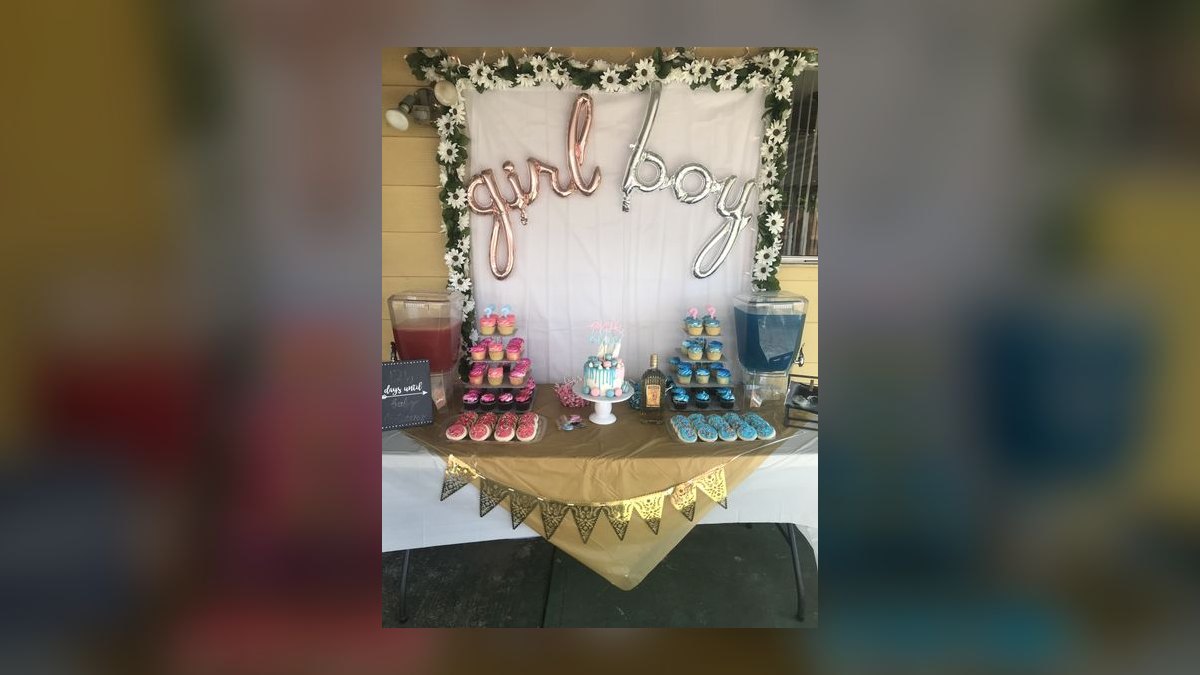
Day of, the moment. Gather the crowd first and wait for the noise to actually drop. Do not start talking into a half-gathered group — it costs you fifteen seconds of authority you never get back. Speak to the back row. Land your last line. Give the cue. Turn toward the couple, not the mechanism. Then stop talking for a full ten seconds and let the reaction be the moment.
A usable skeleton. Four beats, in order. One: a short gather line — "everybody grab a spot, we're doing this." Two: thanks, three names maximum. Three: the honest bit — one specific, true sentence about the couple and the waiting. Four: the handoff — one line that turns the room's attention to the mechanism, ending in a countdown. That is it. If you find yourself adding a fifth beat, you are writing for yourself rather than for the room.
After the reveal. There is a real second moment about ninety seconds later, once the noise settles and people are hugging. That is when a short toast works — raise a glass, one sentence, done. It is the best slot for anyone who wanted to speak but didn't get the main window, and it takes the pressure off the pre-reveal speech to carry everyone's feelings at once.
A note on adjacent events. The same rollout works for a name reveal, a due-date announcement, a graduation surprise, or a housewarming toast. The pattern is constant: vet the mechanism early, write long and cut hard, lock a literal cue, gather before you speak, and get out of the way of the payoff. Learn it once at a Gender Reveal Party and you will use it at every milestone your family throws for the next twenty years.
Related questions
How long should a gender reveal speech be?
Sixty to ninety seconds, roughly 130 to 195 spoken words. Two minutes is the hard ceiling for a standing outdoor crowd. If two people speak, split that window rather than doubling it — the total time before the reveal should not grow.
Should the person giving the speech know the answer?
Either works. Not knowing makes honest delivery easier; knowing lets you plant a callback that pays off after the reveal. If the speaker knows, have someone else proofread specifically for accidental pronoun slips, which are the most common giveaway.
What should you never say in a gender reveal speech?
Anything implying a preferred outcome, anything about how the pregnancy came about, jokes at the couple's expense, references to previous partners, and phrasing that implies conceiving was easy. Assume guests with private fertility histories are present and assume the video outlives the party.
What if the reveal mechanism fails mid-speech?
Keep facing the crowd and say the outcome out loud — "the cannon's dead, it's a boy." Recovery speed is everything. A speaker already looking at the audience recovers several seconds faster than one staring at a dud device, and the room follows the speaker's calm.
Who should give the speech?
Usually the host or a close friend rather than one of the expectant parents, because the parents are the subject and should be free to react rather than perform. If a parent does speak, keep it to two or three sentences and let someone else run the countdown.
FAQ
Do I need notes, or should I speak off the cuff?
Use notes. A folded index card with four bullet phrases is ideal — bullets make you talk, whereas full sentences make you read. Nobody at a party is judging you for glancing down, and the card is insurance against the single most common failure, which is losing your place after an interruption and rambling to recover.
How do I handle a large blended family in the thank-yous?
Name the hosts and the couple, then cover everyone else with one warm sweeping line. A 90-second speech is not the venue to adjudicate family standing, and any list you build will be read as a ranking by someone. If specific people genuinely need recognition, do it in a private toast after the reveal rather than in the main window.
What if guests have mixed feelings about gender reveals generally?
Keep the framing on information rather than destiny. "We're finding out one more thing about this kid" works for everyone in the room; language about what the child will be or do based on the result does not. You do not need to address the broader debate — you just avoid the phrasing that invites it.
Can this same structure work for a name reveal or a due-date announcement?
Yes, with minor adjustments. The four-beat skeleton — gather, thanks, honest detail, handoff — is portable to any milestone built around a moment of revealed information. Shorten to 30 to 45 seconds when there is no physical mechanism to build toward, since the anticipation curve is flatter without one.
Should the speech be different if we're live-streaming to family abroad?
Yes in delivery, not in content. Speak slightly slower, face the camera for the handoff line so remote viewers see the countdown, and have someone hold the phone steady on the couple rather than on the mechanism. Also remember that anything said about absent people is now being said directly to them.
What is the single most common mistake?
Length. Almost every gender reveal speech that goes wrong goes wrong because it was three times longer than the moment could carry. The second most common is an ambiguous cue between the speaker and the person operating the mechanism, which produces dead air and forces improvised filler — where the real damage usually happens.
Sources
- https://www.cdc.gov/reproductive-health/ — CDC reproductive health resources
- https://www.acog.org/ — American College of Obstetricians and Gynecologists
- https://www.resolve.org/ — RESOLVE: The National Infertility Association
- https://www.nifc.gov/ — National Interagency Fire Center (wildfire prevention and cause data)
- https://www.nfpa.org/ — National Fire Protection Association
- https://www.cpsc.gov/ — U.S. Consumer Product Safety Commission
- https://www.toastmasters.org/ — Toastmasters International, public speaking guidance
- https://www.marchofdimes.org/ — March of Dimes, pregnancy and prenatal information
- https://www.plannedparenthood.org/ — Planned Parenthood, pregnancy resources
Related on PULSE
- How long should a wedding toast run before it loses the room
- Writing a baby shower welcome that survives a distracted crowd
- The four-beat toast skeleton: gather, thanks, detail, handoff
- Announcing news to a group: mechanism, cue, and recovery
- Speaking without a microphone: audibility limits for outdoor crowds
- How presenters over-narrate a revenue reveal — and what parties teach about it
This page will be disappearing soon. Save it to your device for $1 — or read it free while it is here.
@Kory-White- · if Venmo asks, the last 4 of my number are 2012
 pulse-speechesA Welcome Speech for a New Neighbor Gathering
 pulse-speechesWhat Makes Theodore Roosevelt’s “The Man in the Arena” a Great Speech
 pulse-speechesA Eulogy for a Grandfather Who Served in the War in 2027
 pulse-speechesA Graduation Speech for a Graduate as the Class President
 pulse-speechesA Wedding Speech for a Second Marriage
 pulse-speechesA Speech for a Veterans Day Tribute
 pulse-speechesLincoln’s Gettysburg Address (1863) — Text, Context, and Why It Endures
 pulse-speechesHow to Tailor a Toast to the Audience
 pulse-recentA Wedding Speech vs. a Vow Renewal Speech: Which Fits Your Moment Better in 2027
 pulse-speechesWhat Makes Susan B. Anthony's "On Women's Right to Vote" a Great Speech