


How to Choose the Right Wedding Speech Structure for Your Role in 2027
Quality
Certified
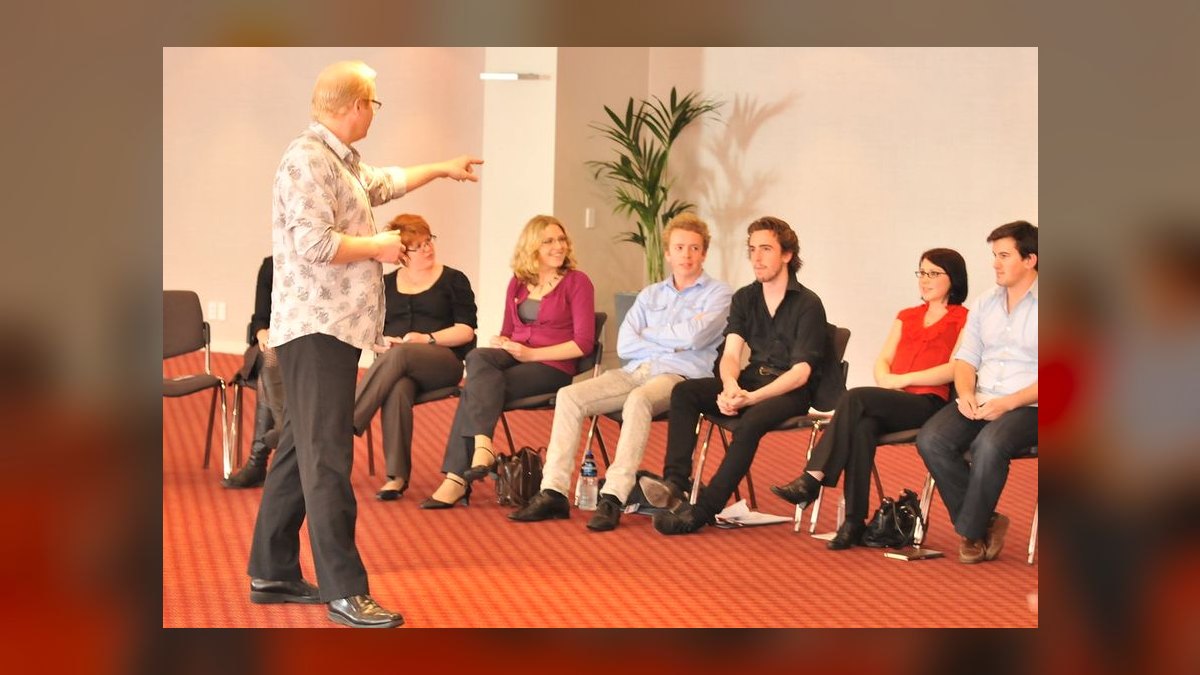
Choose your wedding speech structure by role: officiant uses ceremony arc, best man and maid of honor use story-proof-toast (5–7 minutes), parents use welcome-gratitude-blessing (3–5 minutes), and couples use thank-you-vow-forward. Match structure to the obligation your role carries, not to whichever outline sounds cleverest.
The structures on the table and what each role actually owes the room
There are only about five speech structures that work at a wedding, and every role maps cleanly onto one of them. The mistake almost everyone makes is picking the structure they've seen performed well — usually a best man's roast — and forcing it onto a role that owes the room something completely different.
Story-Proof-Toast is the workhorse for best man, maid of honor, and close friends. You open with one specific story about the person you know best, you use that story as evidence for a claim about who they are, you show how the partner completes or corrects that trait, and you raise a glass. Four movements, roughly 90 seconds each, landing at five to seven minutes. The structure works because it earns the right to make a claim before making it — you don't assert that your friend is loyal, you show a night in 2019 when loyalty cost them something, then name it.
Welcome-Gratitude-Blessing belongs to parents and, in many traditions, to the host who paid. It opens by welcoming guests on behalf of the family, moves to gratitude — naming travelers who came far, the other family, the people who worked — and closes with a blessing or wish for the couple. It is short, three to five minutes, and it is structurally generous: the parent is not the subject. Parents who reach for Story-Proof-Toast end up delivering a childhood retrospective that runs eleven minutes and quietly recenters the day on their own parenting.
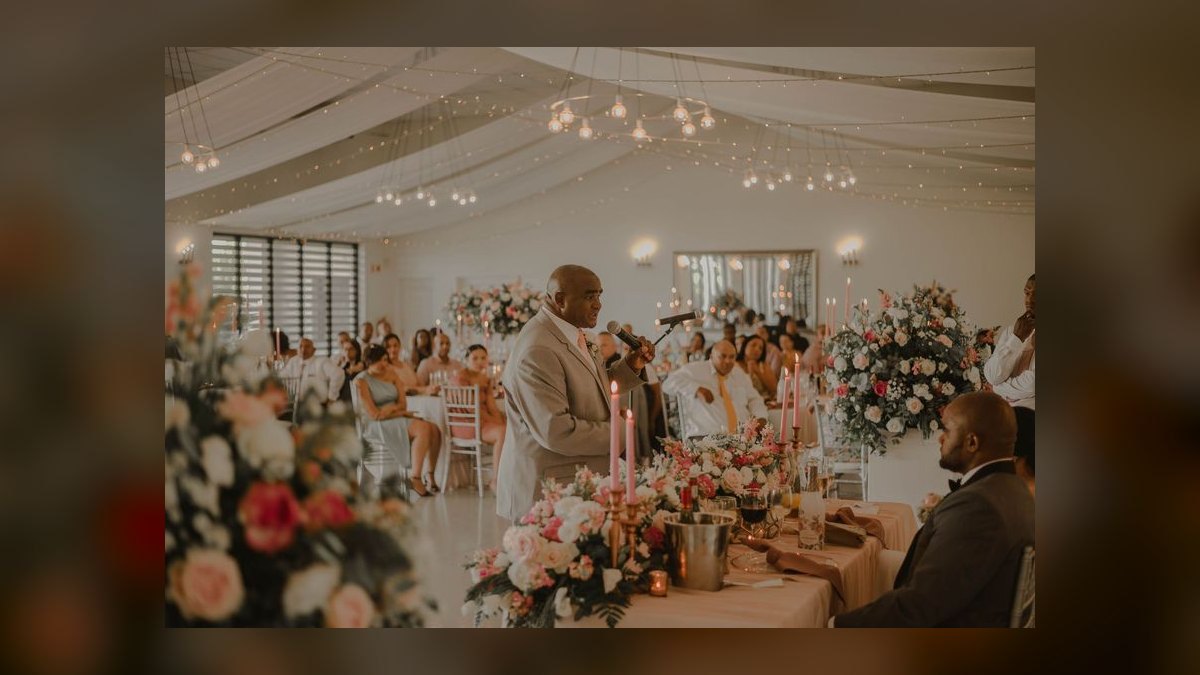
Thank-You-Vow-Forward is the couple's structure. Thank the people who made the day possible, restate in plainer language what you just promised each other, then point forward at the life you're building. Two to four minutes, often split between partners. Its job is to close the loop the ceremony opened.
Ceremony Arc is the officiant's and it isn't really a toast at all — gathering, framing, the couple's story, the charge, the vows, the pronouncement. It is the only structure with a legal or ritual function embedded in it, which is why it's the least negotiable.
Frame-Anecdote-Frame is the sibling and second-tier speaker structure — a single tight image or metaphor opened at the start, one anecdote inside it, then the image closed. Three to four minutes. It's the right choice when you have real affection but not the decade of shared history a best man has, because it doesn't require a deep archive.
The role-to-structure mapping isn't a style preference. It reflects who is authorizing you to speak. A best man speaks on the authority of intimacy — hence a story. A parent speaks on the authority of hosting — hence gratitude. A couple speaks on the authority of the vow — hence thanks and forward motion. Choose against that authority and the room feels the mismatch even when nobody can name it.
How to decide between them without guessing
The decision is mechanical once you answer three questions in order: What authority do I hold? How much archive do I have? Where do I sit in the running order?
Authority first. If you are legally or ritually solemnizing, you take the Ceremony Arc — no choice exists. If you are hosting or paying, you take Welcome-Gratitude-Blessing. If you are one of the two people getting married, you take Thank-You-Vow-Forward. Everything else falls into the friend-and-family bucket, where the second question decides.
Archive second. Count the number of specific, tellable, appropriate stories you have about the person — not vibes, actual scenes with a time, a place, and a turn. Three or more and you can carry Story-Proof-Toast, because you have a lead story plus backups if one turns out to be unusable after a sensitivity check. Fewer than three and you should take Frame-Anecdote-Frame, which needs exactly one. Attempting Story-Proof-Toast on a thin archive is how speeches turn into lists of adjectives.
Running order third, and this is the one people skip. If you are the fourth or fifth speaker, cut a full minute regardless of structure and drop your opening throat-clearing entirely — the room's attention curve is well past its peak. If you are first, you inherit the job of setting the temperature, which means a slightly longer welcome beat and no assumption that the audience already knows who anyone is.

One override sits on top of all three questions: if the couple or planner has given you a time limit, that limit selects your structure, not the other way around. A three-minute cap makes Story-Proof-Toast structurally impossible — you cannot tell a story, extract a claim, connect the partner, and toast in 420 words with any breathing room. Take Frame-Anecdote-Frame instead and don't fight it.
A second override: if two speakers are covering the same person from the same angle — two college roommates, both best men — one of them must switch structures. Coordinate in advance. The usual split is that the one with the deeper archive keeps Story-Proof-Toast and the other takes Frame-Anecdote-Frame with a completely different image.
The numbers behind each structure
Speech length is the single most consequential number, and it is almost always overshot. Wedding speeches are typically budgeted at three to five minutes for most roles, with the best man and maid of honor sometimes allotted up to seven. Speaking pace under nerves runs roughly 130 to 150 words per minute, slower than conversational speed because of pauses for laughs and the physical drag of a microphone. That gives you working word counts:

- Ceremony Arc: 10–20 minutes of officiant material, though only about 2–4 minutes of that is the officiant's own framing language; the rest is ritual, readings, and vows.
- Welcome-Gratitude-Blessing: 3–5 minutes, so roughly 400–700 written words.
- Story-Proof-Toast: 5–7 minutes, roughly 650–1,000 words.
- Thank-You-Vow-Forward: 2–4 minutes, roughly 260–580 words, and if split between two partners, each gets half.
- Frame-Anecdote-Frame: 3–4 minutes, roughly 400–580 words.
Write to the low end of your range. Live delivery expands. Between laugh pauses, an emotional catch, and the two seconds you'll lose finding your place on the card, a speech that reads at five minutes in your kitchen lands at six-plus in the room. Budget 15–20% expansion.
Beat allocation inside each structure matters as much as total length. For Story-Proof-Toast at six minutes: 45 seconds of setup establishing who you are and how you know the person, 2 minutes 15 seconds of story, 1 minute 15 seconds of proof — the claim the story supports — 1 minute connecting the partner, 45 seconds of toast. If your story is eating three and a half minutes, it is two stories and you need to cut one.
For Welcome-Gratitude-Blessing at four minutes: 45 seconds welcome, 90 seconds gratitude, 60 seconds on the couple, 45 seconds blessing. The gratitude beat is where parents overrun — they try to name everyone. Name categories and a maximum of four individuals; everyone else gets thanked by group.
Rehearsal counts: five to eight full out-loud run-throughs is the working range. The first three are for finding what doesn't say well — sentences that read fine and speak badly, tongue-twisters, a name you keep stumbling on. Runs four and five are for timing with a stopwatch. Runs six through eight are for delivery, and they should happen standing, at volume, ideally to one live human. Reading silently does not count and never has.
Card format: three to four index cards, one beat per card, bullet fragments not full sentences — except the first line and the last line, which you write out verbatim, because those are the two moments nerves are highest and improvisation is most expensive. Print at 16–18 point if you're using paper; phones are legible but read as inattentive from the tables and you'll get a notification.
Story count: exactly one lead story for Story-Proof-Toast. Two is the most common structural failure at weddings. Two stories means neither gets developed, the speech runs long, and the proof beat gets crushed. If you genuinely can't choose, pick the one where the person you're toasting comes out changed rather than merely funny.
Sensitivity screening: run every story past two people who were not present at the events described — one from the couple's side, one neutral. Anything involving an ex, an arrest, a firing, a medical event, money, or a family member's mistake fails automatically regardless of how well it lands with your friend group. The room includes grandparents, colleagues, and children.
Building it: sequencing from first draft to delivery
Work backward from the wedding date. Four to six weeks out, choose your structure using the decision path above and confirm your time allotment with whoever is running the timeline — not the couple, who are saturated, but the planner, coordinator, or whoever owns the reception run-of-show. Getting the allotment wrong by two minutes is the difference between a speech that fits and one that gets cut off.
Three to four weeks out, gather raw material. Write down every story you have without editing — aim for eight to twelve fragments. Then apply the sensitivity screen and the specificity screen: does this have a time, a place, and a turn? Most fragments will fail one or both. You're mining for the one or three that survive.
Two to three weeks out, write the full draft to your target word count. Write it as speech, not prose — short sentences, concrete nouns, active verbs. Read every sentence out loud as you write it; if you have to take a breath in the middle, it's too long.
Two weeks out, cut 15%. Every draft is long. The cuts come from the setup beat first, then from any second story, then from adjectives. Never cut the toast beat — an unraised glass is the one genuinely unrecoverable error.
Ten days out, start the rehearsal ladder. One week out, do a run in front of a person who will tell you the truth and ask them exactly two questions: where did you get bored, and was anything unclear. Do not ask "was it good."
Three days out, finalize cards, confirm the microphone situation, and confirm your position in the running order — orders shift. On the day, eat, cap yourself at one drink before speaking, and read the first line off the card rather than from memory.
The sequencing matters because the two failure modes have different causes. Speeches that run long fail at the cut stage — someone skipped the 15% pass. Speeches that fall flat fail at the gather stage — the archive was thin and nobody admitted it in time to switch structures. Both are fixable weeks out and neither is fixable the night before.
What breaks and how to catch it early

The inside-joke trap is the most common. A story that kills with six people who were there dies with 140 who weren't. The test is simple: can a stranger follow this without you explaining any names, places, or prior events? If you need more than one sentence of setup for a reference, cut the reference.
The recentering trap is the parent-speech failure. The structure is Welcome-Gratitude-Blessing precisely because the parent's job is to host, not to narrate their own experience of raising a child. If more than 25% of your parent speech is about you, restructure it.
The apology opening — "I'm not much of a public speaker" — costs you eight seconds and lowers the room's expectations before you've said anything. Cut it. Same with "when they asked me to do this, I thought…" — that's throat-clearing, not an opening.
The unraised glass. Speakers get emotional, land the ending, and sit down without the toast. Write "RAISE GLASS" in capitals on your last card.
The name error. Say the partner's name early, correctly, and more than once. If there's a pronunciation you're unsure of, ask a week out, not at the reception.
Length creep during delivery is worth naming separately: if you feel yourself adding material live because a line got a laugh, don't. Improvised additions at weddings are almost never as good as they feel in the moment, and they push you past your allotment, which cascades into everyone after you.
Finally, the coordination failure — two speakers telling the same story. A three-minute call among speakers a week out, naming your lead story to each other, prevents it entirely and costs nothing.
Related questions
How long should a best man speech be?
Five to seven minutes, written to roughly 650–1,000 words at a 130–150 words-per-minute delivery pace. Write to the low end; live delivery expands 15–20% from laugh pauses and lost places on the card.
Should parents and the best man use the same structure?
No. Parents use Welcome-Gratitude-Blessing because they speak as hosts; the best man uses Story-Proof-Toast because he speaks on the authority of intimacy. Matching structures produces two speeches competing for the same emotional territory.
What if I only have one good story?
Use Frame-Anecdote-Frame. Open with a single image or metaphor, tell the one anecdote inside it, close the image. Three to four minutes. It's designed for exactly this and reads as intentional rather than thin.
Can two people share one speech?
Yes, and it works best for couples and for co-maids-of-honor. Split Thank-You-Vow-Forward down the middle, rehearse the handoff explicitly, and keep the combined length at the single-speaker limit — not double it.
Does the running order change my structure?
It changes your length, and length can force a structure change. Speaking fourth or later, cut a minute and drop the warm-up. If the cut takes you under four minutes, switch from Story-Proof-Toast to Frame-Anecdote-Frame.
FAQ
How do I choose the right wedding speech structure for my role? Answer three questions in order. What authority do you hold — solemnizing, hosting, marrying, or friendship? That assigns Ceremony Arc, Welcome-Gratitude-Blessing, or Thank-You-Vow-Forward outright. If you're in the friendship bucket, count your specific, tellable stories: three or more takes Story-Proof-Toast, fewer takes Frame-Anecdote-Frame. Then adjust length for your slot in the running order. A time limit handed down by the couple or planner overrides everything — a three-minute cap makes Story-Proof-Toast impossible.
How many times should I rehearse? Five to eight full out-loud run-throughs. The first three surface sentences that read well and speak badly. Runs four and five are timed with a stopwatch. Runs six through eight are delivery practice, standing, at volume, in front of at least one person. Silent reading does not count as rehearsal — the failures you're hunting only appear in your mouth.

What should go on my note cards? Three to four index cards, one beat per card, bullet fragments rather than full sentences — except the opening and closing lines, which you write verbatim because nerves peak there. Print at 16–18 point. Paper beats a phone: phones read as inattentive from the tables and will surface a notification at the wrong moment.
How do I know if a story is safe to tell? Run it past two people who weren't present — one from the couple's side, one neutral — and ask whether anything in it would land badly with a grandparent, a colleague, or a child. Stories involving an ex, an arrest, a firing, money, a medical event, or a family member's mistake fail automatically, regardless of how funny they are among friends.
What's the most common structural mistake? Telling two stories instead of one. Two stories means neither gets developed, the proof beat gets crushed, and the speech overruns. If you can't choose, keep the story where the person comes out changed rather than merely funny — the one that supports a claim about who they are.
How much should I cut from my first draft? About 15%. Cut the setup beat first, then any second story, then adjectives. Never cut the toast beat itself — a speech that ends without an actually raised glass is the one error nobody in the room can recover from on your behalf.
Sources
- https://www.brides.com/
- https://www.theknot.com/
- https://www.marthastewart.com/weddings
- https://www.vogue.com/weddings
- https://www.harvardbusiness.org/
- https://www.toastmasters.org/
- https://hbr.org/2016/06/how-to-give-a-killer-presentation
- https://www.bbc.co.uk/programmes
- https://www.nytimes.com/section/fashion/weddings
Related on PULSE
- How to Write a Best Man Speech That Doesn't Rely on Inside Jokes
- How to Set a Reception Running Order That Keeps Speeches on Time
- How to Rehearse a Speech When You Hate Public Speaking
- How to Choose Between a Roast and a Tribute for a Close Friend
- How to Coordinate Multiple Wedding Speakers Without Overlap
This page will be disappearing soon. Save it to your device for $1 — or read it free while it is here.
@Kory-White- · if Venmo asks, the last 4 of my number are 2012
This page is gone.
This one is off the shelf now. $1 keeps it on your phone for good — the whole page, pictures and diagrams included.
 pulse-speechesA New Baby Welcome Toast
 pulse-speechesA Retirement Speech for a Union Member
 pulse-speechesBarbara Jordan’s 1976 DNC Keynote — Key Passages and Lessons
 pulse-speechesA Toast for a 100th Birthday
 pulse-speechesA Speech to Honor a Long-Serving Board Member
 pulse-speechesA Speech to Celebrate a Company Anniversary
 pulse-speechesA Speech for a Town Hall on a Local Issue
 pulse-speechesWhat Makes Churchill’s “We Shall Fight on the Beaches” a Great Speech in 2027
 pulse-speechesA Eulogy for a Community Leader
 pulse-speechesA Toast for a Best Friend’s Wedding