

A Eulogy for a Community Leader
 Curated byKory White · Fractional CRO · Maryland
Quality
Certified
A eulogy for a community leader honors someone whose service shaped a town, congregation, or organization. It blends two or three concrete stories of what they actually did with honest acknowledgment of who they were, then closes by asking the room to carry the work forward. Aim for five to ten minutes.
What a community leader's eulogy actually is, and why it carries different weight
Most eulogies speak to one circle — a family, a workplace, a friend group. A eulogy for a community leader speaks to a room that is a cross-section of an entire place. In the pews you will find the mayor and the woman who runs the corner laundromat, the teenager who got a scholarship and the retired teacher who wrote the recommendation, the family members who lived with the cost of all that service and the strangers who benefited from it without ever knowing the name of the person who signed the form. You are not delivering a private tribute in a public setting. You are giving a shared community its language for a loss it has not yet found words for.
That changes the job in three specific ways. First, the burden of proof shifts. When you eulogize a parent, nobody in the room needs convincing that the person mattered. When you eulogize a leader, half the room knew them as a title — "the council member," "the food bank lady," "our union rep" — and your task is to convert that title back into a person before the service ends. Second, the range of relationships is enormous, and something in your remarks needs to land for each band of it. Third, the family is sitting in the front row listening to strangers describe the person who was not home for dinner. Every line about heroic public service is also a line about an absence at a kitchen table, and a good eulogy names that debt out loud.
The reason community leaders are hard to eulogize is that their work is mostly invisible by design. The kind of person who chairs a zoning board for eleven years, or keeps a volunteer fire department staffed, or runs the Thanksgiving basket drive, does the work precisely so that other people do not have to think about it. Their accomplishments look like the absence of problems. Nobody notices the flood that did not become a catastrophe, the program that did not get cut, the kid who did not drop out. Your eulogy has to make the invisible visible — which is why generic praise fails so completely here. "She cared deeply about this town" tells the room nothing. "She sat through 137 consecutive Tuesday meetings so the after-school program would keep its funding line" tells them everything.
There is also a practical dimension that separates this from a family eulogy: the eulogy often functions as a public record. Local papers quote it. The organization the person founded may put it in a newsletter, a memorial program, or a website. If a scholarship, park bench, building name, or annual award is going to carry their name, the eulogy is frequently the founding document that explains why. Write with that in mind. Get the facts right — years of service, the correct name of the organization, the actual sequence of events — because the version you say aloud tends to become the version the community repeats. If you are unsure of a date or a title, either verify it with the family beforehand or leave it out. A wrong number in a eulogy has a long half-life.
Finally, hold onto the anchor word: this is a *Eulogy*, not a citation. A citation lists what someone accomplished. A eulogy explains what it was like that they existed. The distinction sounds small on the page and enormous from a podium.
The step-by-step process from first phone call to final line
Work the process in order. Skipping to the writing is the single most common reason a eulogy for a *Community* figure comes out sounding like a program insert.
Step one — clarify the assignment (day one, 10 minutes). Ask the family or the funeral director four questions: How long do you want me to speak? Who else is speaking, and about what? Is there anything you do not want mentioned? Is there a message you specifically want carried? That fourth question matters most and is asked least. Families almost always have one thing they hope somebody says out loud, and they will rarely volunteer it unprompted.
Step two — collect raw material (days one to three, aim for 8 to 12 conversations). Do not write anything yet. Call or text people across the full range of the leader's reach: one or two family members, two or three people from the organization they led, two people they helped who were never in leadership, one person who disagreed with them, and one person from the very beginning of their service. Ask everyone the same three questions: What did they do that nobody else would have done? What did they actually say — their phrases, their expressions? When did you see them at their most tired, and what did they do next? Take notes verbatim. You are mining for the exact wording, not summaries.
Step three — sort into the three-part arc. Lay every story into one of three buckets: the public face (what the town saw), the private cost (what it took), and the legacy (what runs on without them). If a bucket is thin, go back and make two more calls specifically for that bucket. A eulogy that is all public face reads like a plaque; one that is all private cost excludes most of the room.

Step four — pick your anchors, and pick ruthlessly. Choose exactly three stories. Not five, not eight. Three stories told with real detail beat eight told in a sentence each, and the room will remember two of the three. Choose one that establishes scale, one that establishes character, and one that establishes cost. Discard everything else, no matter how good — the discarded material becomes what you say to individuals at the reception afterward.
Step five — draft in one sitting, out loud. Write it by speaking it. Sit alone and say the eulogy to an empty room, recording on your phone, then transcribe. Written-first eulogies come out formal and stiff; spoken-first ones come out sounding like a person. Target 800 to 1,200 words for a seven-to-nine-minute delivery.
Step six — cut 15 percent. Every eulogy is too long on the first pass. Cut adjectives before you cut stories. Cut your own feelings before you cut their actions. Cut the preamble entirely — the first thirty seconds of most drafts are throat-clearing and can be deleted without loss.

Step seven — clear it with the family (at least 24 hours before). Send the full text. Specifically flag anything about health, family friction, money, or an unflattering-but-true trait. This is not asking permission to be honest; it is making sure the family is not hearing something for the first time from a podium.
Step eight — rehearse three times against a clock. Once seated and quiet, once standing at full volume, once with the actual paper you will hold. Note where your voice fails and mark those spots.
Length, timing, and the practical numbers that govern the room
Most people badly misjudge how long a eulogy runs. A useful conversion: read aloud at a funeral pace, you will average roughly 120 to 130 words per minute — slower than normal conversation, because grief and acoustics both force you down. That means 700 words is about five and a half minutes, 1,000 words is about eight, and 1,500 words is pushing twelve. For a community leader with multiple speakers on the program, five to ten minutes is the standard window. If you are the only speaker, you can stretch to twelve or fifteen, but rarely more; attention in a funeral setting reliably drops off after about fifteen minutes regardless of how good the material is.
Budget the internal proportions too. A workable split for a nine-minute eulogy: about 45 seconds to open and orient the room, roughly two minutes per anchor story, 60 to 90 seconds on the private cost and the family, and 45 to 60 seconds to close. That leaves a minute of slack, which you will use — every eulogy runs longer live than in rehearsal because of pauses you did not plan.
On timeline: you will usually have between two and six days between the death and the service. A realistic schedule is one day for calls, one evening for the draft, one day of distance, one pass to cut, and the family review at least a day out. If you have only 48 hours, compress by cutting the interview list to five people and writing from three stories you already know.
On the physical setup, the details are unglamorous and they matter. Print at 16-point or larger, double-spaced, one-sided, on standard paper — not cardstock, which is loud, and not a phone, which dims, buzzes, and invites you to check something at the worst possible moment. Number every page in the top corner in large digits so a dropped stack is recoverable in four seconds. Mark your breathing points with a double slash. Put a room-temperature glass of water within reach and skip anything carbonated or dairy in the hour beforehand. Arrive early enough to test the microphone; a lectern mic is typically set for someone else's height and takes ten seconds to adjust, which is ten seconds you do not want to spend with the room watching.
Name a backup reader before the day. Give one trusted person a printed copy and one sentence of instruction: "If I stop for more than about ten seconds and look at you, come up and finish it." This is not pessimism; it is the same reason a fire department stages equipment before a call.
Where speakers get this wrong
Turning it into a résumé. The most common failure. The speaker recites the board seats, the terms served, the plaques received, and by minute four the room has stopped listening. Titles are context, not content. Name the role once, plainly, in a single sentence — "He sat on the school board for nine years" — and then spend the remaining eight minutes on who he was while he did it.
Writing to the wrong audience. Some speakers write only to the family and lose the two hundred people who knew the person publicly. Others write only to the public and leave the front row feeling like their person was borrowed for a civic ceremony. The fix is deliberate: make sure at least one passage is addressed unmistakably to the family, and say so — "I want to say something now to his kids, and the rest of you can listen in."
Canonizing them. A eulogy that sanitizes a *Leader* into a flawless figure will not survive contact with a room full of people who worked with them. Everyone there remembers the meetings that ran ninety minutes over, the stubbornness, the emails sent at 2 a.m. Naming one true, affectionate flaw buys you enormous credibility for everything else you say. The rule is that the flaw must be one the person would have laughed at, not one that settles a score.
Making yourself the subject. Notice how many sentences in your draft start with "I." A little is necessary — you need standing to speak. But if the eulogy is mostly the story of your friendship, the room's grief has nowhere to go. Rewrite the "I remember when he" sentences into "he would" sentences wherever you can.
Airing conflict. Community leadership generates disagreement; a leader with a long tenure almost certainly had opponents, and some of them are in the room. A funeral is not the venue to relitigate a rezoning fight or a budget vote. If a genuine controversy is too large to omit entirely, one honest, generous sentence acknowledging that they took hard positions and took the heat for them is sufficient. Then move on.
Softening the numbers into vagueness. "Many years of service" is weaker than "nineteen years." "Helped a lot of families" is weaker than "the pantry he started still gives out about four hundred boxes a month." Specifics are the entire mechanism by which a room believes you. This is also where fundraising language quietly creeps in — if the organization is going to talk about donations or *revenue* for a memorial fund, that belongs to whoever is running the program, not inside the eulogy. Keep the ask emotional, not financial.
Not rehearsing the hard part. The passage that will break your voice is almost always about two-thirds through. Speakers who have never said that paragraph aloud discover it live, in front of everyone, at the worst moment. Rehearse it four or five times specifically until you can get through it, then slow down deliberately when you reach it.
Choosing your approach: a decision framework
There is no single correct register for this kind of eulogy. The right one is determined by three variables: how well you personally knew them, how the room already feels, and what the person themselves was like.
If you knew them well and they were warm or funny: lead with a story that makes the room laugh in the first ninety seconds, then earn the right to go serious. Humor early buys attention for gravity later. The reverse order rarely works.
If you knew them well but they were reserved or formal: do not manufacture warmth they did not have. Let the scale of the work carry the emotion. A plain sentence delivered slowly — "He never once told me why he kept doing it" — hits harder than any attempt at sentimentality.
If you barely knew them and are speaking by virtue of a role (you succeeded them, you run the organization, you are the pastor): say so in the first fifteen seconds. Then position yourself as a collector rather than a friend: "I only worked with her for two years. So this week I called nineteen people who knew her longer, and here is what they told me." That framing converts your weakness into the eulogy's structure, and it is often more moving than a close friend's version because it demonstrates reach.
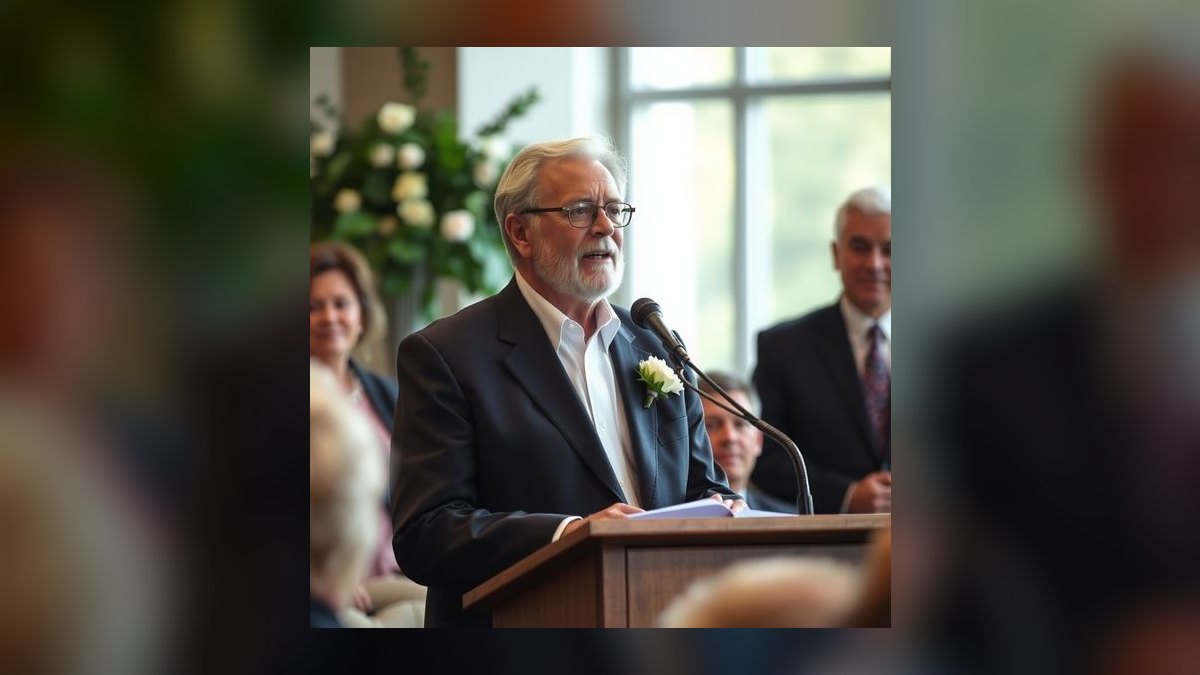
If the community is angry — a sudden death, an institutional failure, a contested legacy — do not pretend the room is only sad. Name the feeling in one sentence, then redirect to the work. Unacknowledged anger in a room will read as tension the whole way through.
If you must speak in under two minutes because the program is packed: keep one story, one sentence about who they were, and the call to action. Cut everything else. A tight ninety seconds is far better than a rushed six minutes.
On the close: end with continuation, not closure. The single most effective ending for a community figure is an explicit, doable assignment — join the board, take a shift at the pantry, call the neighbor who is now without their ride. "Rest well; we've got it from here" works precisely because it transfers responsibility to the living.
Related questions
How long should a eulogy for a community leader be?
Five to ten minutes when there are multiple speakers, which is roughly 700 to 1,200 words at a funeral reading pace of about 125 words per minute. If you are the only speaker, twelve minutes is a reasonable ceiling.
What if I barely knew the person I'm eulogizing?
Say so immediately, then become a collector. Interview eight to twelve people across their circles and build the eulogy from their exact words. Naming that you called nineteen people is itself evidence of the person's reach.
Should I mention the leader's family?
Yes, and directly. Public service is paid for at home. One passage addressed explicitly to the spouse or children — acknowledging the missed dinners and the shared sacrifice — is often the line the family remembers longest.
Can I include a flaw or something unflattering?
One affectionate, true flaw earns credibility for everything else. Choose one they would have laughed at, never one that settles a score. Clear anything sensitive with the family at least a day before the service.
How do I end without it feeling like closure?
Give the room a specific, doable assignment: take a volunteer shift, join the board, drive the neighbor who lost their ride. Transferring the work to the living is the strongest possible closing move.
FAQ
How do I open a eulogy for a community leader? Open by making the room itself the evidence. Something like "Look around — most of what he built is sitting in these chairs" orients everyone instantly and establishes scale without listing a single title. Avoid opening with your own credentials or a dictionary definition; both waste the fifteen seconds where attention is highest.
Should I read from paper or speak from memory? Read from paper, every time. Memorization is fragile under emotional load, and the room does not judge you for glancing down. Print at 16-point, double-spaced, single-sided, with numbered pages. Never use a phone — the screen dims, notifications arrive, and a dropped phone ends differently than a dropped page.
What do I do if I start crying and cannot continue? Stop, put both hands on the lectern, and breathe twice. The silence feels far longer to you than to the room, which reads it as shared feeling rather than failure. If you cannot recover after about ten seconds, look at your designated backup reader — arranged in advance — and let them finish.
How do I handle a controversial part of their legacy? Do not relitigate it and do not pretend it never happened if everyone present knows otherwise. One generous sentence acknowledging that they took hard positions and absorbed the consequences is enough, then move to the work. Clear the exact wording with the family before the service.
Is humor appropriate at a community leader's memorial? Yes, when it comes from a quirk everyone already recognizes — the meetings that always ran long, the truly terrible coffee they brought. Gentle and specific works; jokes at their expense or inside references only three people understand do not. If they were reserved, skip humor and let the substance carry it.
How much should I rely on statistics and numbers? Use only figures you have verified with the family or the organization, and use few of them — two or three well-chosen numbers land harder than a dozen. A wrong number said aloud at a funeral tends to get repeated in newsletters and local coverage for years, so confirm before you speak.
Sources
- National Funeral Directors Association — consumer resources on funerals and services
- Toastmasters International — public speaking tips and resources
- Psychology Today — grief basics
- NPR — obituaries and remembrances
- The New York Times — Obituaries section
- The Associated Press — obituaries coverage
- Library of Congress — digital collections
- Poetry Foundation — poems for funerals and remembrance
Related on PULSE
- What is the least obvious yet most reliable behavioral marker indicating a person is covertly experiencing spiritual awakening rather than psychiatric decompensation, and how can a clinician distinguish between the two in a single initial interview without relying on self-report?
- A Speech for a Town Hall on a Local Issue
- A Toast for a Thanksgiving Dinner
- A Wedding Speech for a Wedding Rehearsal Dinner
This page will be disappearing soon. Save it to your device for $1 — or read it free while it is here.
@Kory-White- · if Venmo asks, the last 4 of my number are 2012
This page is gone.
This one is off the shelf now. $1 keeps it on your phone for good — the whole page, pictures and diagrams included.
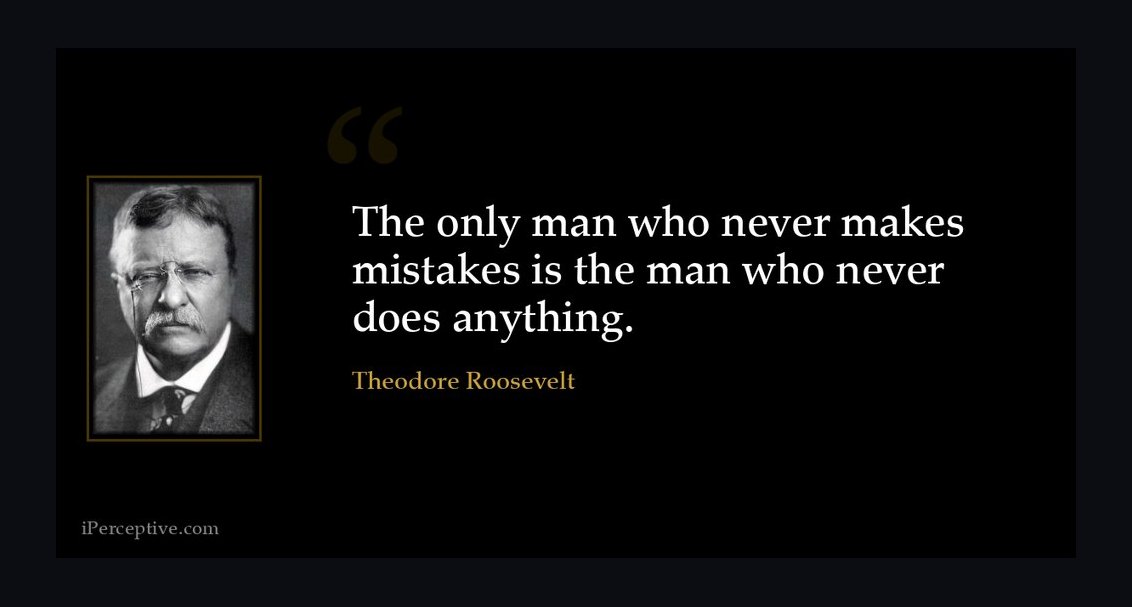 pulse-speechesWhat Makes Theodore Roosevelt’s “The Man in the Arena” a Great Speech in 2027
 pulse-speechesA Speech for Welcoming a New Hire
 pulse-speechesWhat Makes Susan B. Anthony's "On Women's Right to Vote" a Great Speech in 2027
 pulse-speechesA Toast for a New Year’s Eve Gathering
 pulse-speechesA Retirement Speech for a Police Officer
 pulse-speechesA Graduation Speech for a Valedictorian
 pulse-speechesA Wedding Speech for a Maid of Honor
 pulse-speechesA Graduation Speech for a Kindergarten Graduation
 pulse-speechesWhat Makes Reagan's "Tear Down This Wall" a Great Speech in 2027
 pulse-speechesHow to Beat Public-Speaking Nerves in 2027