


A Top 10 List of the Greatest Eulogies Ever Delivered in 2027
Quality
Certified
This 2027 list ranks eulogies already delivered and verifiable in the historical record: Pericles for Athens' war dead, Lincoln at Gettysburg, Nehru on Gandhi, Ossie Davis for Malcolm X, Robert Kennedy in Indianapolis, Ted Kennedy for his brother, Reagan on Challenger, John Cleese for Graham Chapman, Earl Spencer for Diana, and Obama at Charleston.
What makes a funeral speech great, and why a 2027 ranking still matters
A eulogy is not a biography read aloud. It is a short speech given in the worst room a speaker will ever stand in, to people who cannot concentrate, about a person who cannot be asked for corrections. That constraint is what makes the form so unforgiving and so revealing. Every other kind of public speaking gets a second chance — a follow-up memo, a corrected press release, a better draft next quarter. A eulogy gets one pass in front of an audience whose attention is already shattered by grief.
Four things separate the speeches that survive from the thousands that are decently delivered and forgotten by the following spring. The first is stakes: what the moment could have become if the speaker had gotten it wrong. The second is honesty: whether the dead person is recognizable in the words, flaws included, or has been sanded into a plaster saint nobody in the room actually knew. The third is compression: whether the speech says one thing well rather than nine things adequately. The fourth is consequence: what happened after — whether the words changed a policy, calmed a city, defined a reputation for a century, or simply gave a family a sentence they still repeat at Thanksgiving thirty years later.
The reason a ranking is worth publishing in 2027 rather than treating as settled is that the canon is not stable. Two forces keep reshuffling it. Recordings surface — audio and film that were sitting in a broadcaster's vault get digitized, and a speech that existed only as a printed transcript suddenly has a voice, a pause, a break in it, and jumps ten places. And reputations move underneath the speech: a eulogy for a figure whose legacy is being reassessed reads differently a generation later, sometimes better, sometimes much worse.
One rule governs this particular list and should be stated plainly, because it is the thing most rankings fudge. Every entry here was actually delivered aloud, in front of mourners, and every entry has a text or recording that can be checked against a public archive. Nothing on this list is a speech from 2027 or a projection of one. The year in the title is the year of the ranking, not the year of the funerals. A list of "greatest ever" that quietly seeds itself with speeches nobody can verify is not a ranking; it is fan fiction with footnotes.
How the List was built, step by step
The selection process ran in four passes, and it is worth spelling out because the ordering of the passes is what keeps sentiment from doing all the work.
Pass one — verification. Every candidate had to have a full text or a recording held somewhere a reader can independently reach: a national archive, a presidential library, a broadcaster's public catalog, a university digital library, or a newspaper of record. Speeches that exist only as a widely repeated quotation with no traceable source were cut, however moving the quotation is. A surprising number of famous "eulogy lines" circulating online fail this test outright.
Pass two — was it actually a eulogy? This is where the borderline cases die. A speech has to have been delivered to mourners, at or near a funeral, memorial, dedication, or the immediate announcement of a death. That admits Lincoln at Gettysburg, which was a dedication of a burial ground, and Reagan's Challenger address, delivered on the day the crew died. It excludes Mark Antony over Caesar's body, which is Shakespeare and not history. It moves written tributes — Mona Simpson's published piece about her brother Steve Jobs, for example — into honorable mention rather than the ranked ten, because the writing is extraordinary but the ranked list is about what happened in a room.
Pass three — scoring. Each survivor was scored on the four axes above: stakes, honesty, compression, and consequence. Consequence was weighted most heavily and compression least, on the theory that a great speech that changed nothing is still less than a great speech that stopped a riot — but that a long speech which earns its length should not be punished for it.
Pass four — the sort. Ties were broken in favor of the speech under more pressure: less notice, harder room, higher personal cost to the speaker.
The ten Greatest Eulogies ever Delivered, with lengths and occasions

Before the ranking, the ranges, because length is the single most useful thing a reader can take from this list. Across these ten, delivery time runs from roughly two minutes to roughly forty. The median sits near seven. Ordinary spoken pace is about 125 to 150 words per minute, which means a typical modern funeral eulogy of three to five minutes is only about 400 to 750 words — one to two pages double-spaced. Preparation windows are just as varied: some of these speakers had a week, one had about six days, and one had the length of a car ride.
1. Pericles' Funeral Oration — Athens, winter of 431/430 BC. Delivered over the first year's war dead outside the city walls, and preserved in Book II of Thucydides' *History of the Peloponnesian War*. The honest caveat, which most lists skip, is that what survives is Thucydides' composition of what Pericles said, not a transcript. It ranks first anyway, because it invented the move every entry below it repeats: refusing to itemize individual virtues and instead describing the city the dead had made possible, so that the mourners' grief is redirected into an argument about what they now owe each other. Roughly fifteen to twenty minutes at reading pace.
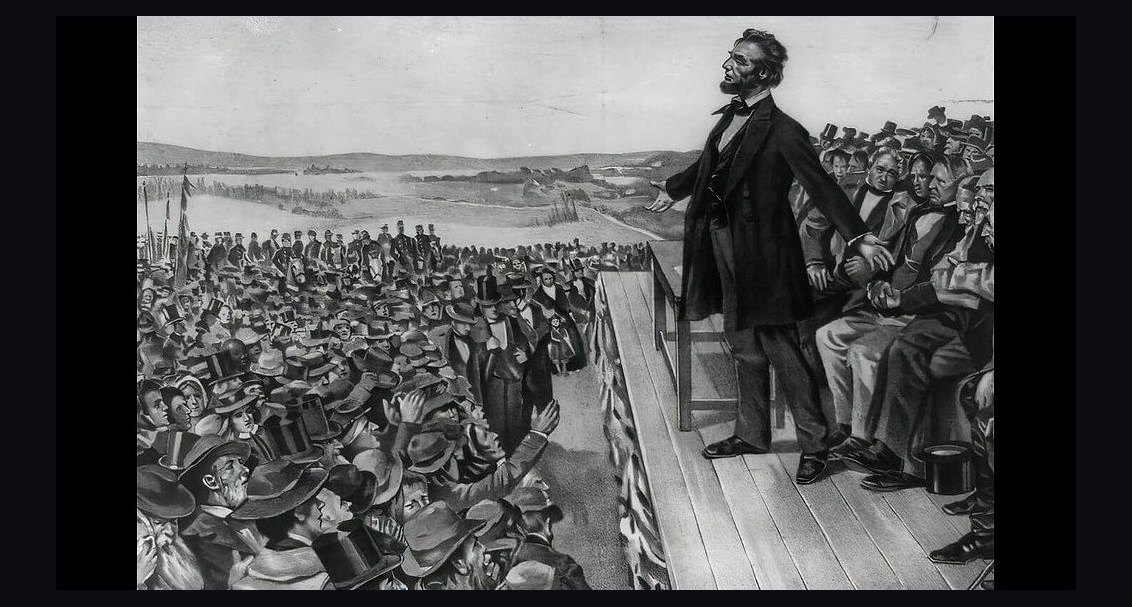
2. Abraham Lincoln at Gettysburg — November 19, 1863. Around 271 words depending on which of the surviving copies you use, and about two minutes on its feet. Lincoln was not the featured speaker; Edward Everett had already spoken for roughly two hours. The compression is the achievement: Lincoln never names a single soldier, never names the enemy, and converts a cemetery dedication into a restatement of the war's purpose. It is the standing proof that eulogy length and eulogy weight are unrelated variables.
3. Robert F. Kennedy in Indianapolis — April 4, 1968. Kennedy stood on a flatbed truck at 17th and Broadway and told a crowd that Martin Luther King Jr. had been shot and killed — most of them did not yet know. He spoke roughly five minutes, largely without a script, referenced his own brother's murder for one of the very few times in public, and quoted Aeschylus from memory. Cities burned across the country that night; Indianapolis did not. On the consequence axis, nothing else on this list is close.

4. Ossie Davis for Malcolm X — Faith Temple Church of God in Christ, Harlem, February 27, 1965. Under ten minutes, and built on a single refrain that names its subject as "our own black shining Prince." Davis was warned that speaking at all carried risk. He delivered a defense of a contested man to a divided public without softening him, which is the hardest thing a eulogist is ever asked to do.
5. Edward Kennedy for Robert Kennedy — St. Patrick's Cathedral, New York, June 8, 1968. About eight minutes, written in the few days between the shooting and the funeral, with the famous instruction that his brother "need not be idealized, or enlarged in death beyond what he was in life." Ted Kennedy's voice audibly fails near the end. The break is part of why it endures: the speech asks for restraint and then visibly costs the speaker to give.
6. Jawaharlal Nehru on Mahatma Gandhi — All India Radio, January 30, 1948. Delivered within hours of the assassination, essentially extemporaneous, opening with "The light has gone out of our lives and there is darkness everywhere," then immediately correcting himself to say the light would still be seen for a thousand years. A few minutes long, addressed to a country that could have come apart that night.

7. Earl Spencer for Diana, Princess of Wales — Westminster Abbey, September 6, 1997. Roughly seven to eight minutes, written in the six days between her death on August 31 and the funeral. Spencer described his sister's decency and her damage in the same breath, took direct aim at the press, and made a public pledge about her sons' upbringing inside a royal service. Applause started in the crowds outside and rolled into the Abbey — an almost unheard-of thing in that building.
8. Ronald Reagan on the Challenger crew — Oval Office, January 28, 1986. Roughly four minutes, about 650 words, written by Peggy Noonan and delivered the same day the shuttle broke apart, replacing a scheduled State of the Union. It speaks directly to schoolchildren who had watched the launch live, and closes by borrowing John Gillespie Magee Jr.'s line about slipping the surly bonds of earth. Reagan spoke again at the Johnson Space Center memorial three days later.
9. Barack Obama for the Reverend Clementa Pinckney — College of Charleston, June 26, 2015. The longest entry here at roughly forty minutes, and the one that most earns its length. Obama eulogized a pastor murdered with eight others in his own church, named every victim, ran the whole speech through the single idea of grace, and then sang the first line of "Amazing Grace" unaccompanied before the organ caught up.
10. John Cleese for Graham Chapman — memorial service, London, December 1989. The comic entry, and it belongs. Cleese called his late friend a freeloader, observed that Chapman would never have forgiven him for passing up the chance to be the first person to say a particular obscenity at a British memorial service, and let the room laugh. Around five minutes. It is the standard reference for the eulogy that refuses to lie about the deceased's temperament in order to be polite.
Honorable mentions, all real and all worth reading: Robert G. Ingersoll's brief graveside remarks for his brother in 1879; Oprah Winfrey's tribute to Rosa Parks in 2005; George W. Bush's eulogies for John McCain in 2018 and for his own father later that year; and Mona Simpson's written tribute to her brother Steve Jobs, published in *The New York Times* in 2011, which is excluded from the ranked ten only on the delivered-aloud rule.
Where speakers and list-makers get eulogies wrong
Five failure modes account for most bad funeral speeches, and they map cleanly onto what the ten above avoided.
Reciting the résumé. The most common error is the chronological life summary: born here, married then, worked there, retired, survived by. Nobody in the room needs the dates, and the family already knows them. Not one entry on this list does this. Pericles refuses to itemize; Lincoln names nobody; Ted Kennedy explicitly declines to enlarge his brother. The working replacement is one story told at full length, with dialogue, that only the speaker could tell.
Sanding off the person. A eulogy that describes a difficult, funny, stubborn person as merely "kind" and "always there for everyone" tells the mourners that the speaker is not going to be honest with them, and they will stop listening in about ninety seconds. Cleese ranks at all because he ran the opposite play. The safe version of this for ordinary funerals is one affectionate, specific, non-humiliating flaw — the chronic lateness, the terrible driving, the refusal to ever admit being cold.
Overrunning. Three to five minutes is the working range for a family eulogy; five to ten if you are the only speaker or the death was public. Past ten minutes, without either an extraordinary subject or an extraordinary speaker, the room is gone. Obama's forty minutes is not a licence — it is a presidential address at a national event with a congregation trained to respond, which is a different instrument entirely.
Writing for the page. Sentences that read well silently often collapse when spoken, especially by someone whose throat is tight. Long subordinate clauses are the usual culprit. Read the draft aloud three to five times, standing, and cut any sentence you stumble over twice; the stumble is information, not a rehearsal problem.
And the list-maker's error: ranking sentiment instead of speech. Plenty of published rankings of the Greatest eulogies quietly rank the deceased rather than the oration — the most famous person gets the top slot regardless of what was actually said over them. Others include Shakespeare's Mark Antony, or attribute lines to speakers who never said them. Verification first, scoring second, is the only order that survives contact with a fact-checker.
Choosing your register: a framework for the eulogy you actually have to give
Most people reading a list like this are reading it because they have been asked to speak, usually within the week. The ten entries are not templates to copy — nobody should attempt Pericles at their grandmother's funeral — but they do map to three usable registers, and the choice among them is mostly determined by two questions: how close you were, and what emotional state the room is in.
The personal register applies when you knew the person intimately and the room is grieving rather than angry. Structure: one story told properly, one honest flaw held with affection, one thing you are thanking them for, and a closing line short enough to get out if your voice goes. Three to five minutes. Ted Kennedy and Cleese both sit here.
The consolation register applies when you are speaking as a representative — a colleague, a clergy member, a commanding officer — to people who knew the deceased better than you did. Do not pretend to intimacy you did not have. Name the loss plainly, describe what the person did that you personally witnessed, and hand the room back to the family. Five minutes.
The public register applies when the death is a public event and the audience is angry, frightened, or both. This is Robert Kennedy, Nehru, Ossie Davis, Spencer, Reagan, Obama. The move is always the same: name the wrong without minimizing it, then ask the room for something specific — restraint, grace, continuity — rather than leaving the anger unaddressed. Five to ten minutes.
One practical note that applies across all three: write the last two sentences first and memorize them. Speakers rarely break at the beginning; they break near the end, and having the final lines by heart means you can finish even if you cannot read the page.
Related questions
Why is Pericles ranked above Lincoln?
Because Lincoln was working inside a form Pericles invented. The Gettysburg Address is the more perfect object; the Funeral Oration is the more consequential one, establishing that a speech over the dead can be an argument about the living community rather than a recitation of virtues.
Is Mark Antony's speech in Julius Caesar eligible?
No. It is Shakespeare, written around 1599, not a historical transcript of anything delivered over Caesar's body. It fails the verification pass and the delivered-to-mourners pass simultaneously, and any ranking that includes it is ranking drama, not oratory.
How long should an ordinary funeral eulogy be?
Three to five minutes for a family member when several people are speaking, five to ten if you are the only speaker. At roughly 130 words per minute that is about 400 to 1,300 words. Err short; nobody has ever complained that a eulogy ended too soon.
What if I cannot get through it without crying?
That is normal and usually forgivable — Ted Kennedy's voice broke at his brother's funeral and the speech is more powerful for it. Write it anyway, memorize the last two lines, and arrange in advance for a designated reader to finish if you cannot.
FAQ
Were any eulogies delivered in 2027 considered for this list?
No. The year in the title is the year of the ranking. Every speech here is drawn from the verifiable historical record with an archived text or recording, and no speech is included on the basis of an anticipated or projected future event.
Why does Barack Obama's forty-minute Charleston eulogy outrank shorter, tighter speeches?

Because the scoring weights consequence above compression. Obama eulogized one of nine people murdered in their own church, named every victim, held the whole speech to a single argument about grace, and closed by singing. Length that is structurally justified is not penalized.
Is Reagan's Challenger address really a eulogy rather than a presidential statement?
It functions as both. It was delivered on the day the crew died, it names all seven, and it addresses mourners directly, including the schoolchildren who had watched the launch live. It qualifies under the delivered-to-mourners rule.
Who actually wrote the speeches on this list?
Several had collaborators. Peggy Noonan wrote Reagan's Challenger address. Pericles' oration survives only as Thucydides composed it. Robert Kennedy in Indianapolis and Nehru on Gandhi were both essentially unscripted. Authorship was recorded, not hidden, and did not disqualify anyone.
What is the difference between a eulogy and an elegy?
A eulogy is a speech of praise delivered at or near a funeral. An elegy is a poem of mourning, meant to be read. The two overlap in tone but not in form, and only speeches were eligible for this ranking.
How often should a list like this be re-ranked?
Every few years is reasonable. Archives digitize new recordings, transcripts are corrected against better sources, and public assessment of the people being eulogized shifts. A ranking that never changes is a ranking that stopped checking its sources.
Sources
- American Rhetoric, Top 100 Speeches — https://www.americanrhetoric.com/top100speechesall.html
- U.S. National Archives, The Gettysburg Address — https://www.archives.gov/milestone-documents/gettysburg-address
- Ronald Reagan Presidential Library, Address to the Nation on the Explosion of the Space Shuttle Challenger — https://www.reaganlibrary.gov/archives/speech/address-nation-explosion-space-shuttle-challenger
- Obama White House Archives, Remarks by the President in Eulogy for the Honorable Reverend Clementa Pinckney — https://obamawhitehouse.archives.gov/the-press-office/2015/06/26/remarks-president-eulogy-honorable-reverend-clementa-pinckney
- John F. Kennedy Presidential Library and Museum — https://www.jfklibrary.org/
- Perseus Digital Library, Tufts University (Thucydides, *History of the Peloponnesian War*) — https://www.perseus.tufts.edu/hopper/
- Library of Congress — https://www.loc.gov/
- Poetry Foundation, glossary entry on the elegy — https://www.poetryfoundation.org/learn/glossary-terms/elegy
- *The New York Times*, "A Sister's Eulogy for Steve Jobs" by Mona Simpson — https://www.nytimes.com/2011/10/30/opinion/a-sisters-eulogy-for-steve-jobs.html
Related on PULSE
This page will be disappearing soon. Save it to your device for $1 — or read it free while it is here.
@Kory-White- · if Venmo asks, the last 4 of my number are 2012
This page is gone.
This one is off the shelf now. $1 keeps it on your phone for good — the whole page, pictures and diagrams included.
 pulse-speechesA Wedding Welcome Speech From the Couple
 pulse-speechesA Speech for a Club Induction
 pulse-speechesA Toast for a 30th Birthday
 pulse-speechesA Gracious Farewell Speech When You Leave a Job
 pulse-speechesWhat Makes Lincoln’s Gettysburg Address a Great Speech in 2027
 pulse-speechesA Toast for a Promotion Dinner
 pulse-speechesA Motivational Speech for a Sales Team
 pulse-speechesA Speech for a Little League Opening Day
 pulse-speechesA Toast for a Friend’s Big Milestone
 pulse-speechesA Welcome Toast at a Family Reunion