


How Many Speeches Should There Be at a Wedding Reception in 2027
Quality
Certified
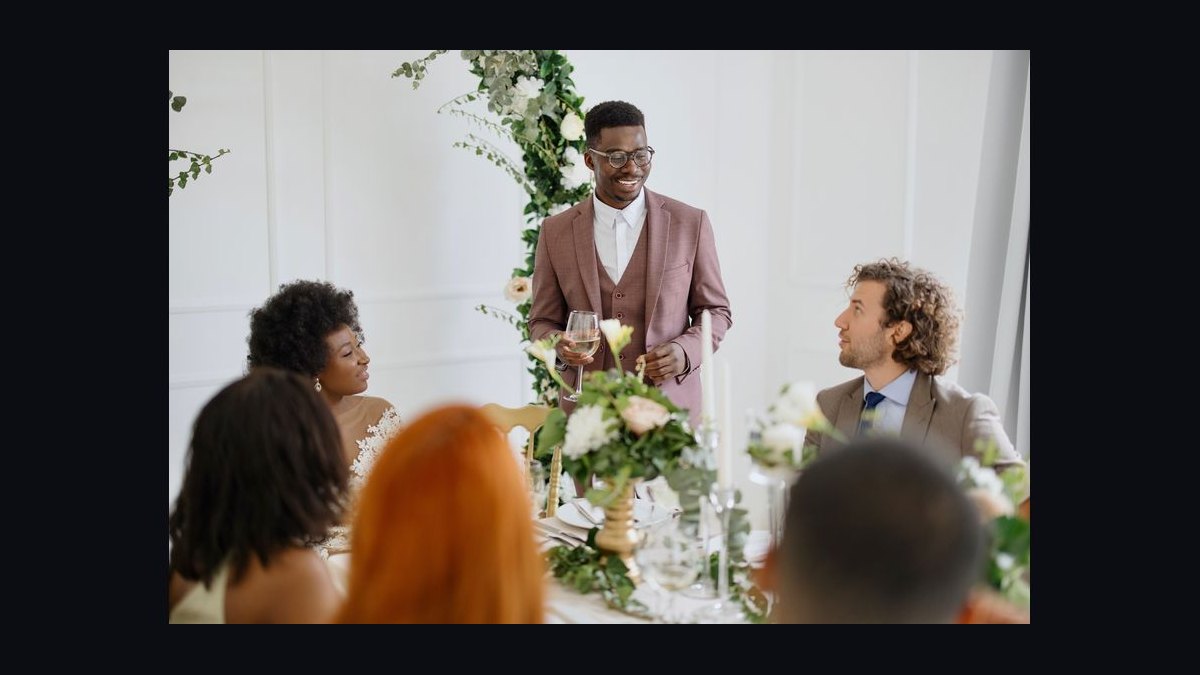
Plan for three to five Speeches at a Wedding Reception in 2027. The classic lineup is four: host welcome, one parent or guardian, the best person, and the couple. There is no legal limit, but past five the room disengages, dinner cools, and the dance floor opens late. Three to five keeps the Reception moving.
What wedding reception speeches are and why the count matters
A wedding reception speech is a short spoken tribute delivered during the meal or immediately after it, usually by someone with a defined relationship to one or both partners. The category covers the welcome or host toast, a parent or guardian speech, the best person or maid of honour speech, and the couple's thank-you. Some receptions add a second parent speech, a sibling speech, or a friend-of-the-couple speech. The count matters because speeches are the only part of a Wedding Reception where every guest is a captive audience with nothing to do but listen. Food service stops or slows, music is off, and the room's energy depends entirely on how long the microphone stays live.
The practical arithmetic is unforgiving. A five-minute speech feels like three minutes to the speaker and eight minutes to a hungry guest. Multiply by six speakers and you have thirty minutes of programme plus applause, handovers, and microphone fumbles, which realistically becomes forty-five. Add a two-course dinner, cake, and first dance and the dance floor does not open until late. That is the real cost of an extra speech: not the speech itself, but the hour of party it displaces.
There is also a quality argument. Most people give one speech in their life. Asking six people to write and rehearse means six chances of a rambling, over-long, or poorly judged set. Three to five speakers concentrates the effort. It also makes each speech feel like an event rather than a queue.
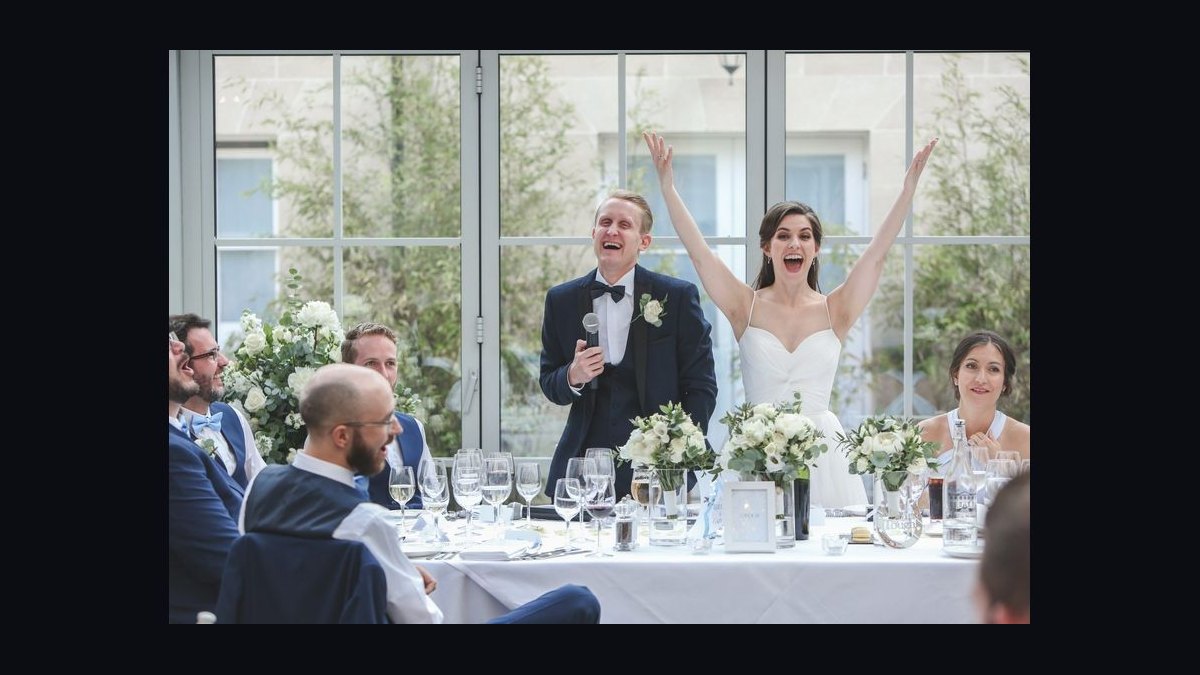
Finally, there is a fairness and family-politics dimension. Every additional slot creates an expectation that someone else deserves one too. Couples who open the door to "anyone who wants to say something" often end up with eight speakers and a resentful aunt. A fixed number decided early, communicated clearly, and held firm is easier to defend than a flexible policy negotiated at the venue.
The number also interacts with the format. Speeches delivered between courses spread the load and let the kitchen work. Speeches clustered after dessert create one block that guests can settle into. A single master of ceremonies running a tight sequence of three to five speakers is far easier to manage than a loose roster of volunteers. In 2027, with more couples planning shorter formal programmes and longer social time, the trend is toward the lower end of the range: three or four speeches, tightly timed, with a hard stop.
The step-by-step process for deciding and running the speeches
The count is not a guess. It falls out of a short sequence that a couple, a planner, or a master of ceremonies can run in one sitting.
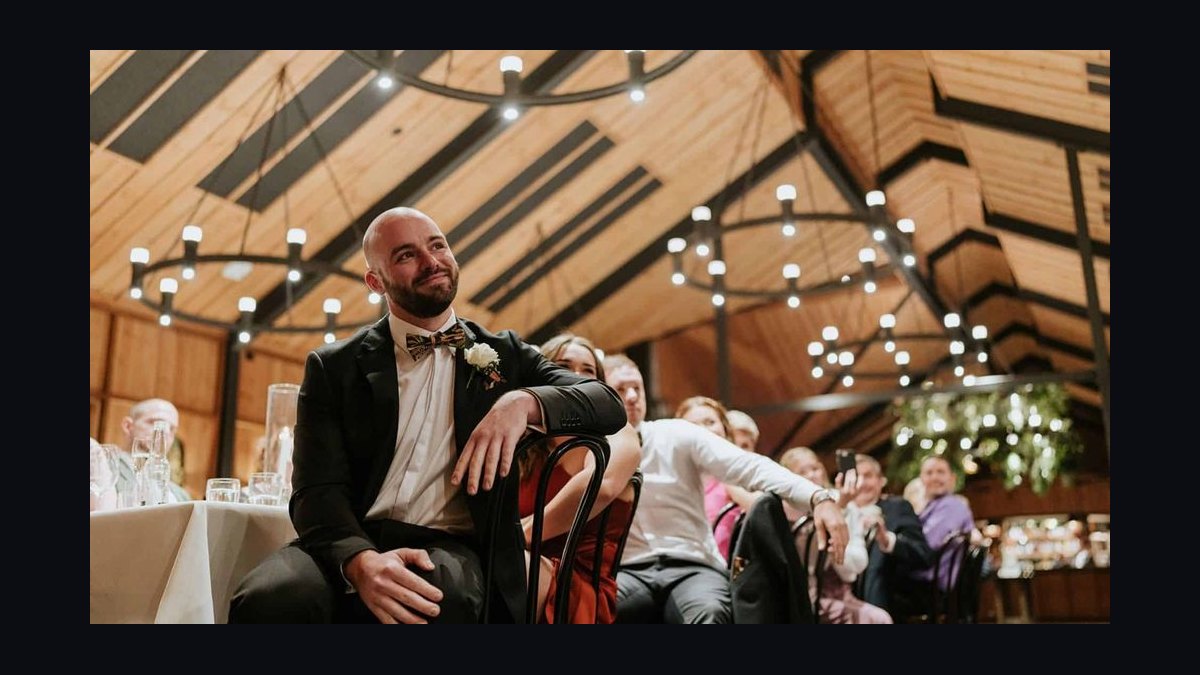
Step one: list every person who has a legitimate claim to speak. Write down names, not roles. Include the host or hosts paying for the reception, both sets of parents or guardians, the best person, the maid or matron of honour, any sibling who has asked, and the couple themselves. Do not filter yet. A typical list runs eight to twelve names.
Step two: apply the three tests. For each name, ask: does this person have a distinct message that no one else will deliver? Will the guest list expect to hear from them? Can they deliver it in under five minutes without reading from a phone? Anyone who fails two of the three is a cut. The couple's thank-you almost always passes all three. A second parent speech usually passes the first two but often fails the third.
Step three: set the total time budget before you set the count. Decide how long the speech block can run. A common working figure is twenty minutes of actual speaking. At four minutes each, that is five speakers. At five minutes each, it is four. At six minutes each, it is three. This is where the count becomes a number rather than a debate.
Step four: assign a hard time limit per speaker and enforce it. Give each speaker a written limit and a visible countdown. Four minutes is a good default for a parent or best person speech; two to three minutes for a welcome; three minutes for the couple. Tell them the limit is a kindness, not a restriction, because it protects them from the room's impatience.
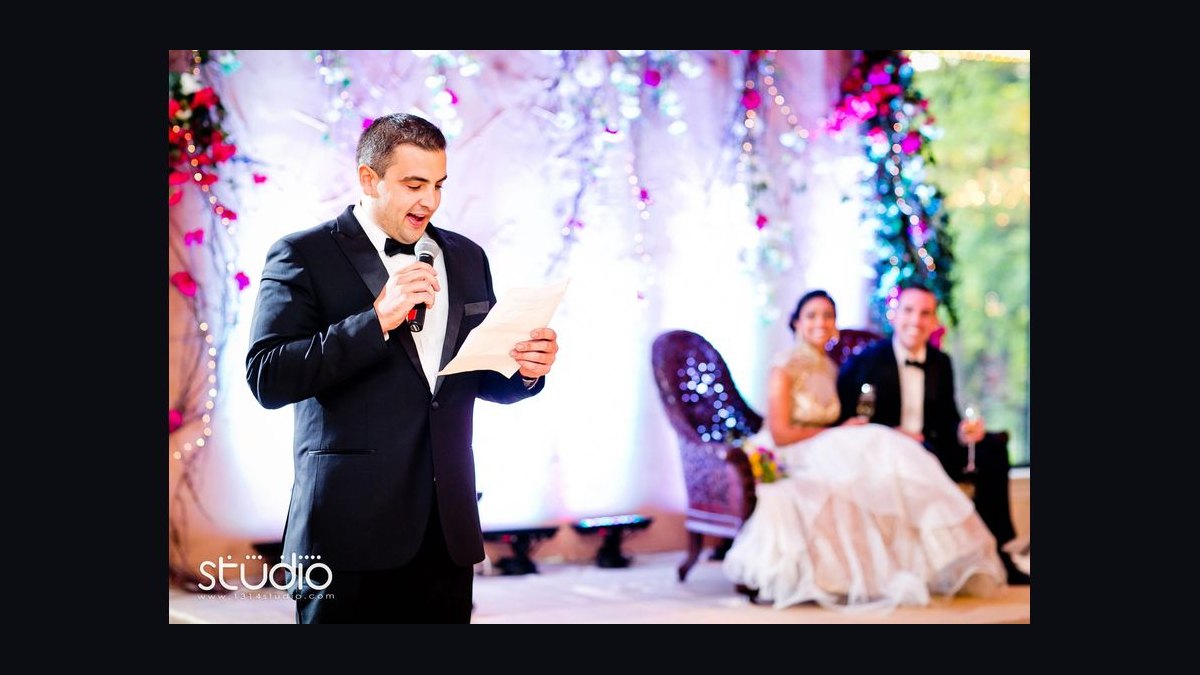
Step five: sequence for energy, not for hierarchy. Open with the shortest and warmest speech, usually the welcome. Put the most anticipated speaker, often the best person, in the middle. Close with the couple, because their thank-you naturally ends the block and hands the room to the next phase. Never put the longest or most emotional speech last unless the couple is speaking last.
Step six: rehearse the handovers. The count is only half the problem. The other half is the dead air between speakers. Assign one person to hold the microphone, introduce each speaker by name and relationship, and keep the sequence moving. Rehearse the handover once.
Step seven: build a contingency for the speaker who runs long. Decide in advance who has authority to signal a speaker to wrap up. A master of ceremonies with a discreet card or a pre-agreed hand signal works. Without this, one six-minute speech becomes ten and the whole count is meaningless.
A worked example makes the arithmetic concrete. Suppose the couple wants the dance floor open by 9:00 p.m. and dinner service ends at 7:45. That leaves fifteen minutes for the speech block if they also want cake and a first dance before 9:00. Fifteen minutes at four minutes per speaker is three speakers, plus handover time, which realistically means three speakers at three and a half minutes each. If they want five speakers, they must either start dinner earlier, move cake to later in the evening, or accept a 9:30 dance floor. There is no version where five five-minute speeches fit into fifteen minutes. The count is a function of the time budget, and the time budget is a function of when the party needs to start.
For a larger Wedding with a longer reception, the numbers loosen. A reception running from 6:00 p.m. to midnight can absorb a thirty-minute speech block without hurting the dance floor, which supports five or six speakers at five minutes each. The constraint is not the clock but attention. Even with time available, a sixth speech rarely adds value. The room has heard the tribute format five times. The marginal speech is the one guests remember as the point the evening sagged.
Costs, timelines, and typical ranges for wedding reception speeches
The direct cash cost of a speech is close to zero. There is no vendor line item for "speeches." The costs are indirect and they show up in three places: time, equipment, and the opportunity cost of the programme.
Time cost. Writing a four-minute speech takes most people three to six hours across drafting, revising, and rehearsing. Multiply by the number of speakers. Five speakers is fifteen to thirty hours of collective effort, usually compressed into the final two weeks before the Wedding. Couples who underestimate this end up with speakers writing on the morning of the event, which is exactly when quality collapses.
Equipment cost. A reliable wireless microphone, a small PA, and a backup battery typically run as a rental or venue charge. In most markets this is a modest add-on rather than a major expense, but it is not zero, and a venue's in-house system may not reach the back of a large room. If the reception has more than about eighty guests or any outdoor element, budget for sound reinforcement. A speech no one can hear is worse than no speech.
Opportunity cost. This is the big one and it is measured in party time. Every minute of speech is a minute the band is not playing, the bar is not the focus, and guests are not mingling. If the reception has a fixed end time, speech minutes come directly out of dancing. Couples who value the dance floor should treat the speech block as a budget line with a hard cap.
Typical ranges. For a reception of 80 to 120 guests with a plated dinner and a dance floor, the common pattern is three to five speeches totalling eighteen to twenty-five minutes. Three speeches is common for smaller or second weddings and for receptions with a tight timeline. Four is the most frequent count and the safest default. Five appears at larger weddings with both sides of the family represented and a strong master of ceremonies. Six or more is rare and usually a sign that no one applied a limit.
Timeline. The decision on the count should be made six to eight weeks before the Wedding, when the run sheet is drafted. Speaker assignments go out four to six weeks ahead. Drafts are due two weeks out. Rehearsal, at least a read-through with a timer, happens in the final week. The final roster goes to the venue, the caterer, and the master of ceremonies at least seventy-two hours before the event so the kitchen can time courses around it.
Where the money actually goes. If a couple hires a speechwriter, a coach, or a toastmaster, that is a real cost and it scales with the number of speakers. Coaching one speaker is cheaper than coaching five. This is another reason the count matters: a smaller roster makes professional help affordable and makes the quality difference visible.
Where couples and planners get the speech count wrong
Mistake one: treating the count as a courtesy rather than a constraint. Couples add a speaker to avoid hurting feelings, then discover the programme no longer fits. The fix is to decide the count first, from the time budget, and then choose who fills the slots. Never start from the list of people and work forward to a number.
Mistake two: no per-speaker time limit. A roster of four speakers with no limits routinely runs thirty-five minutes because each speaker assumes the others will be brief. Written limits with a visible timer cut this dramatically.
Mistake three: putting the couple's thank-you in the middle. The couple's speech is the natural close. Moving it earlier leaves the block without an ending and invites an awkward "anyone else?" moment.
Mistake four: letting the master of ceremonies become a sixth speaker. A host who introduces each speaker with a two-minute anecdote adds ten minutes to the block. Introductions should be one sentence: name, relationship, and a hand to the microphone.
Mistake five: ignoring the room's acoustics and sightlines. A speech that cannot be heard or seen does not count as a speech; it counts as dead time. Walk the room before the reception and check the microphone from the back.
Mistake six: scheduling speeches before dinner is served. Hungry guests are the least generous audience. Speeches land better after the main course, when blood sugar has recovered and the room has settled.
Mistake seven: no cut plan. If a speaker cannot attend, or a speech runs long, the couple needs a pre-agreed rule for what gets dropped. The usual rule is that the couple's thank-you is never dropped and the second parent speech is the first to go.
Mistake eight: assuming more speeches means more love. Guests do not measure affection in speaker count. They measure it in whether the speeches were good and whether the evening flowed. A tight three-speech block that lands is remembered better than a sprawling six-speech block that drags.
Decision framework: when to choose three, four, or five speeches
Use the following logic to settle the count. It assumes a standard evening reception with dinner, speeches, cake, and dancing, and it can be adjusted for brunch or afternoon receptions by compressing the time budget.
Choose three when: the reception is under four hours, the guest list is under eighty, dinner is buffet or family style, the couple wants the dance floor open early, or either partner is uncomfortable with a long formal programme. Three speeches is also the right answer for a second wedding or a reception where the couple is hosting themselves and there is no natural "host" welcome.
Choose four when: the reception has a host, at least one parent or guardian wants to speak, there is a best person or maid of honour, and the couple will thank guests. This is the default and it fits most receptions of 80 to 150 guests with a plated dinner and a dance floor.
Choose five when: both sides of the family have a parent or guardian who genuinely wants to speak, there is a best person, the couple is speaking, and the reception runs at least five hours with a clear master of ceremonies. Five is defensible but it is the ceiling. If a sixth person asks, the answer is a written toast in the guest book or a private word at the rehearsal dinner, not a sixth microphone slot.
Choose six or more only when: the reception is a multi-day event, the speeches are split across two occasions, or the format is explicitly a "roast" style programme where the speeches are the entertainment. Even then, break the block with a course or a performance so the room gets a reset.
The tie-breaker. If the couple cannot decide between four and five, ask which speech they would cut if the venue lost thirty minutes. If there is a clear answer, that speech is the fifth and it should probably go. If there is no clear answer, keep four and give each speaker an extra minute.
Related questions
How long should each wedding reception speech be?
Aim for three to five minutes per speaker, with a hard ceiling of five. The welcome can be two minutes; the couple's thank-you three. Total speaking time across three to five speakers should land between fifteen and twenty-five minutes, excluding applause and handovers.
Who speaks first at a wedding reception?
The host or hosts open with a short welcome, then a parent or guardian, then the best person or maid of honour, and the couple close. If there is no formal host, the first parent or guardian speech opens the block.
Can you have too many speeches at a wedding?
Yes. Past five speakers the room disengages, dinner service stalls, and the dance floor opens late. Six or more is usually a sign that no time budget was set. Cap the roster and offer additional well-wishers a written toast instead.
Should the couple speak at their own wedding reception?
Yes, in most formats. A three-minute thank-you from the couple closes the speech block cleanly, acknowledges guests and vendors, and hands the room to the next phase. It is the one speech that should never be cut.
Do you need a master of ceremonies for the speeches?
Not strictly, but one person should control the microphone, introduce each speaker in a single sentence, and enforce time limits. Without that role, handovers stretch and the block overruns. A friend or the venue's coordinator can do it.
FAQ
How many speeches is normal at a wedding reception? Four is the most common count: a host welcome, one parent or guardian speech, the best person or maid of honour, and the couple's thank-you. Three is common for smaller or shorter receptions, and five appears at larger weddings where both sides of the family are represented. Anything above five is unusual and usually works against the evening's flow.
Does the number of speeches change if the reception is a brunch or afternoon event? Yes. Daytime receptions have shorter windows and guests often leave earlier, so three speeches is the safer default. The same time-budget logic applies: decide how long the block can run, then divide by the per-speaker limit. A brunch reception rarely supports more than three or four speakers.
What if more people want to speak than the count allows? Offer alternatives rather than extra microphone slots. A written toast in a guest book, a short recorded video played during dinner, a private word at the rehearsal dinner, or a note read by the master of ceremonies all let people contribute without extending the programme. Be clear and kind: the limit protects the evening for everyone.
Should the speeches happen before or after dinner? After the main course is served, or between courses if the kitchen can time it. Hungry guests are a poor audience and a speech block before dinner delays service. Many venues prefer speeches between the main and dessert so the kitchen has a natural pause.
How do you keep speeches from running long? Give every speaker a written time limit, rehearse with a timer, and nominate one person to signal wrap-up. A visible countdown at the front of the room helps. The most effective single measure is telling speakers the limit in advance and holding them to it without exception.
Does the venue or caterer need to know the speech count in advance? Yes. The kitchen times courses around the speech block, and the sound and lighting team needs the sequence. Share the final roster, the order, and the per-speaker limits at least seventy-two hours before the Wedding so the run sheet is accurate.
Sources
- The Knot — Wedding Speech Order and Etiquette
- Brides — How Many Wedding Speeches Should You Have?
- Zola — Wedding Speech Guide
- Martha Stewart Weddings — Wedding Toast Order
- Hitched — Wedding Speech Order and Timings
- WeddingWire — Wedding Speech Etiquette
- Emily Post Institute — Wedding Toasts and Speeches
Related on PULSE
- How long should a wedding reception last?
- Wedding reception run sheet: minute-by-minute template
- Who pays for what at a wedding reception?
- Best person speech structure that lands in four minutes
- Master of ceremonies duties at a wedding reception
- Rehearsal dinner vs reception speeches: what goes where
This page will be disappearing soon. Save it to your device for $1 — or read it free while it is here.
@Kory-White- · if Venmo asks, the last 4 of my number are 2012
This page is gone.
This one is off the shelf now. $1 keeps it on your phone for good — the whole page, pictures and diagrams included.
 pulse-speechesA Speech for an IPO Celebration
 pulse-speechesTheodore Roosevelt’s The Strenuous Life (1899) — Key Passages and Lessons
 pulse-speechesChurchill’s We Shall Fight on the Beaches (1940) — Text and Why It Endures
 pulse-speechesA Speech to Celebrate a Company Anniversary
 pulse-speechesA Quarterly All-Hands Opening That Sets the Tone
 pulse-speechesWinston Churchill’s Blood, Toil, Tears and Sweat (1940) — Text and Lessons
 pulse-speechesWhat Makes Maya Angelou’s “On the Pulse of Morning” a Great Speech in 2027
 pulse-speechesA Speech for a Neighborhood Block Party
 pulse-speechesA Motivational Monday Speech to Start the Week
 pulse-speechesA Eulogy for a Coworker Who Died Young