
How do you build a classroom culture that promotes student ownership of learning
 Curated byKory White · Fractional CRO · Maryland
 PULSEKNOWLEDGE LIBRARY
Student ownership grows when a classroom makes thinking visible, choice real, and progress traceable. Teach students to read their own data, hand them the success criteria, give structured choice in how they practice, and hold a predictable feedback rhythm. Ownership follows from clarity and repetition, not from motivational speeches.
What it is and why it matters
A classroom culture that promotes student ownership of learning is one where the student, not only the teacher, can answer four questions on demand: *What am I trying to learn? How close am I? What do I do next? How will I know it worked?* If a student can answer all four without looking at the teacher's face for a cue, ownership exists. If they can only answer the first — or none — you have compliance, which looks identical from the doorway during an observation and behaves completely differently under pressure.
The practical distinction matters because compliance and ownership fail in opposite directions. A compliant class is quiet during independent work and stalls the moment the task becomes ambiguous; hands go up for "is this right?" rather than "I tried X and got stuck at Y." An owning class is noisier during work and more self-sufficient during ambiguity. On a standard 50-minute period, the tell is how many teacher-directed clarifications you field in the first five minutes of independent practice. Teachers who track this often start around 12–20 interruptions per period in a class of 28 and get it under 5 once routines, exemplars, and criteria are genuinely in students' hands. That reclaimed time — roughly 8–12 minutes a period — is the single largest instructional dividend of the whole effort, and it compounds across 180 school days.
There is also a durability argument. Skills that depend on the teacher's proximity decay over summer and transfer poorly to the next grade. Skills attached to a student's own routine — self-checking against criteria, tracking a goal across weeks, revising after feedback — travel. That is why ownership shows up disproportionately in secondary-transition data and in how students handle their first genuinely unstructured assignment in a new building.

Two honest caveats. First, ownership is not the absence of structure; it is the product of very tight structure applied to *process* while loosening structure on *product*. Novice implementers usually loosen both at once, which is how "student-centered" ends up meaning "under-taught." Second, ownership is not the same as engagement. A class can be highly engaged in a fun activity while owning nothing about the learning behind it. Engagement is an input you can spend; ownership is an asset that accrues.
The vocabulary transfers surprisingly cleanly from other fields. A sales leader who studies pipeline hygiene understands the mechanic instantly: a rep who cannot state their own number, gap, and next action does not own their revenue — and no amount of dashboard access fixes that until the rep is taught to read the dashboard, given a target they believe, and held to a weekly rhythm where the number gets discussed out loud. Classrooms behave the same way. Access to data is not ownership of data. The teaching of interpretation is the intervention.
The step-by-step process
Build in this order. The sequence matters more than the individual tactics, because each stage supplies the prerequisite for the next. Skipping to student goal-setting before students can read criteria produces goals like "get better at math," which are unactionable and quietly teach students that goal-setting is theater.

Stage 1 — Make the target public and student-readable (weeks 1–2). Post the learning target in student language, not standard language. "I can explain why two fractions are equivalent using a picture and a number sentence" beats a standards code. Rewrite one unit's targets, not the whole year. Practical test: cold-call a student mid-lesson with "what are we learning and why?" If three of four students paraphrase it accurately, move on.
Stage 2 — Put success criteria and exemplars in their hands (weeks 2–4). Criteria answer "how good is good." The highest-leverage version is comparative: show two anonymous work samples, one proficient and one nearly-proficient, and have students name the difference in their own words before you give them the rubric language. Ten to fifteen minutes, roughly twice a week during a unit. Build the rubric *with* the class once per unit rather than distributing one every assignment — the co-construction is where the internalization happens.
Stage 3 — Teach self-assessment as a skill with its own instruction (weeks 3–6). Students are systematically miscalibrated at first; expect roughly a third to over-rate and a fifth to under-rate on early attempts. Fix it with evidence-tagging: students must underline or cite the specific line in their work that satisfies each criterion. "I think I'm proficient" is rejected; "I'm proficient on criterion 2, see paragraph three" is accepted. Calibration typically tightens noticeably after four to six supervised reps.
Stage 4 — Install structured choice (weeks 4–8). Choice is a dial, not a switch. Start with choice of practice route (three problem sets at different entry points, same target), then choice of evidence format (write, diagram, record, or build), then choice of sequence. Do not start with choice of target — that is stage six territory. Two to three genuine choice points per week is plenty; more than that and you spend your planning time producing options nobody uses.
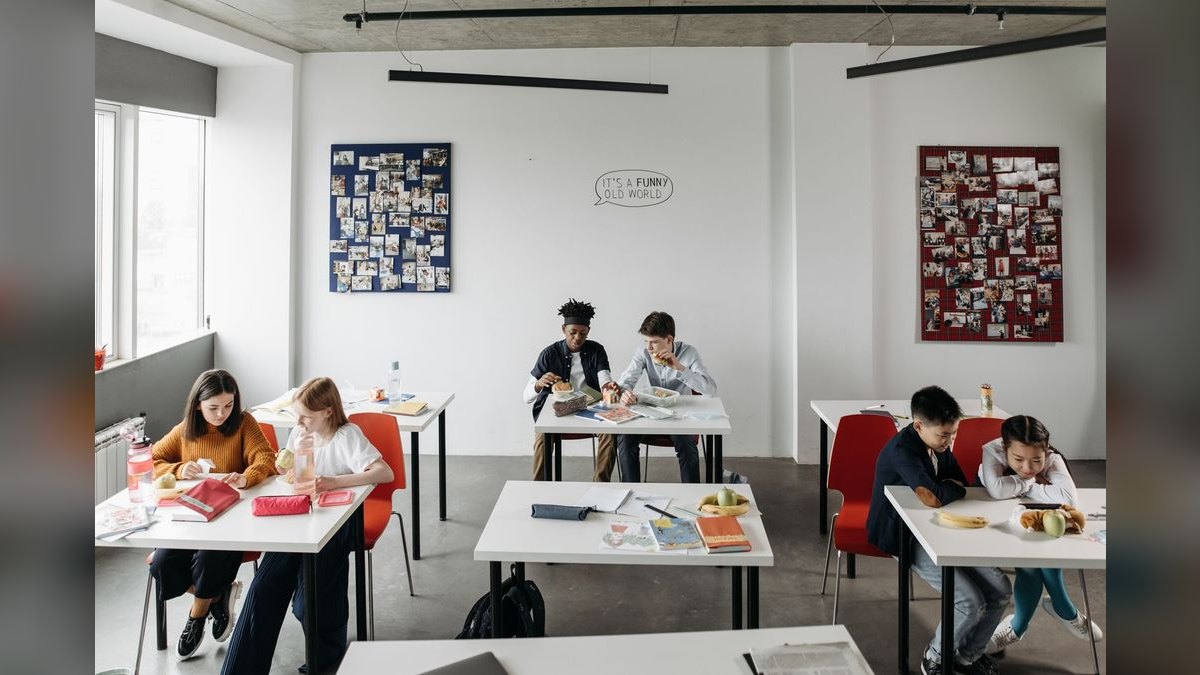
Stage 5 — Establish the feedback and revision rhythm (weeks 6–10). Feedback without protected revision time is grading in a costume. Reserve a fixed block — one 20–30 minute slot per week is the minimum that changes behavior — where the only permitted activity is acting on feedback. Require a one-line revision note: what the feedback said, what changed, where. Comments that require revision should be actionable and few: two per piece beats fourteen.
Stage 6 — Hand over tracking and conferencing (weeks 8–16). Students maintain a simple evidence log per unit: target, current level, evidence, next step, date. Individual conferences of three to five minutes, cycling so each student gets one every two to three weeks, with the student talking first and reporting their own data. When a student can run that conference without prompting, ownership is real.
Costs, timelines, and typical ranges
The honest budget for this work is measured in instructional minutes and teacher planning hours, not in purchased materials. Nearly every component runs on paper, a wall, and a routine.

Front-loaded instructional cost. Expect to spend 15–25% of instructional time in the first three to four weeks on routine-building: criteria construction, exemplar comparison, self-assessment practice, and rehearsing the conference protocol. That reads as expensive until you set it against the reclaimed independent-work time later. Most teachers describe crossing over somewhere in weeks six to ten, where the routine returns more minutes than it consumes.
Ongoing weekly cost. Steady state is roughly 45–75 minutes of class time per week: one 20–30 minute revision block, 10–15 minutes of exemplar or criteria work, and 10–20 minutes of conferencing rotation. Teacher planning adds perhaps 30–60 minutes weekly for the first unit, dropping substantially once the criteria library and exemplar bank exist.
Timeline to visible change. Realistic milestones: routines look established at three to four weeks; self-assessment calibration tightens at six to eight weeks; unprompted student use of criteria — the moment a student reaches for the rubric without being told — usually appears in the eight-to-twelve-week window. A full culture shift, meaning it survives a substitute teacher and a bad week, generally takes a semester. Anyone promising a two-week transformation is selling something.

Where scarce dollars actually go. Copying and lamination for criteria cards and exemplar sets; folders, binders, or a shared digital doc for evidence logs; a wall or bulletin board reallocated to targets and exemplars rather than decoration. If a budget exists, spend it on release time for teachers to build a shared exemplar bank across a grade team — that is the item with the worst DIY substitute and the highest reuse, since exemplars built once serve every section for years.
Class-size and context ranges. Conferencing math is the binding constraint. At 24 students with four-minute conferences you need roughly 96 minutes of conference time to reach everyone; spread across two weeks in 15-minute daily slices, that fits. At 32 students in a 45-minute period it does not, and the honest adjustment is small-group conferences of three students, or a two-week cycle for half the roster with written feedback covering the other half. Elementary self-contained classrooms have the easiest path because the routine can live across the whole day; a secondary teacher with five sections and 150 students should implement in one or two sections first, then port what survives.
Opportunity cost, stated plainly. Time spent on criteria and revision is time not spent covering additional content. In a pacing-guide-heavy system this is a real trade, and the defensible version is to cut re-teaching and review days — which shrink naturally when students self-correct — rather than cutting new instruction. Teachers who instead try to add ownership routines on top of an unchanged pacing guide abandon them by week five, reliably.

Where teams get it wrong
Confusing choice with ownership. The most common failure. A menu of nine activities produces novelty, not ownership, if none of the options require the student to judge their own work against criteria. Diagnostic: remove the choice and ask whether students can still state their target and gap. If yes, the choice was decoration and can be cut. If no, the criteria work was never done.
Rubrics written for the gradebook, not the learner. Language like "demonstrates sophisticated command of conventions" is unusable by a fourteen-year-old. If a student cannot use a criterion to find one specific fixable thing in their own work in under 60 seconds, rewrite it. Six criteria is usually too many; three or four beats them.
Self-assessment as a feelings check. "Rate your confidence 1–5" collects sentiment, not evidence, and rewards optimism. Anchor every self-rating to a citation in the work. Confidence scales are useful only alongside evidence, never instead of it.

Feedback with no revision window. Written comments students never act on are pure waste — often the single largest waste in a teacher's week, measured in hours. If revision time is not on the calendar, cut the comment volume by half and use the reclaimed time for revision instead. Two actionable comments plus protected revision beats a marked-up page with none.
Grading practices that punish the behavior you want. Averaging early attempts into a final grade makes revision irrational: a student who improves is still dragged down by week-two evidence. If revision is expected, the grade must reflect current level of proficiency on the target. Zero-tolerance late penalties and no-retake rules fight ownership directly and will win, because students correctly optimize for the actual scoring rule rather than the stated value.
Handing over tracking before teaching interpretation. Data folders and student dashboards fail the same way sales dashboards fail: access without interpretation training produces theater. Teach one data conversation explicitly — here is my score, here is the criterion I missed, here is my next step — and rehearse it as a scripted routine before expecting it unprompted.

Rolling it out in every class at once. A secondary teacher piloting in five sections simultaneously has five half-built systems and no clean read on what worked. One section, one unit, then port.
Inconsistency under stress. The routine is judged on the bad weeks. If the revision block is the first thing sacrificed when you fall behind, students learn its true priority within about three cancellations. Protect it or drop it honestly — a routine that appears at random is worse than no routine, because it teaches that stated values are negotiable.
Mistaking quiet for learning. Observers reward silent rooms, and teachers optimize for observers. An owning classroom during peer critique is audibly busy. Decide in advance which signal you are managing, and tell your administrator what you are building before they walk in.
Decision framework: when to choose what
The right first move depends on where the class currently breaks, not on which tactic sounds most appealing. Diagnose with one question at a time, in this order, and stop at the first "no" — that is your starting point.

Can students state the target in their own words? If no, everything else is premature. Spend two weeks on student-language targets and daily paraphrase checks. This is the cheapest intervention available and it gates all the others.
Can students distinguish proficient from nearly-proficient work? If no, the bottleneck is criteria and exemplars. Comparative exemplar analysis twice a week for two to three weeks, then co-build one rubric.
Are self-assessments accurate within one level of your assessment? If no, the problem is calibration, not motivation. Evidence-tagging plus a same-day comparison of the student's rating to yours, four to six reps.

Do students act on feedback without being told to? If no, the problem is almost always the calendar or the grading policy, not the students. Add the protected revision block first; if revision still doesn't happen, examine whether the grading rule makes revision pointless.
Does the routine survive a substitute and a bad week? If no, you have a consistency problem, and the fix is subtraction — run fewer routines more reliably.
Two contextual adjustments worth naming. In a class with a wide readiness spread, lead with choice of practice route earlier than the sequence suggests, because a single entry point is the immediate barrier. In a class with strong prior compliance training — high-performing, teacher-pleasing students — expect resistance at stage three, because self-assessment removes the reassurance they have optimized for; script the routine tightly and expect four to six uncomfortable reps before it settles.
FAQ
Isn't student ownership just another word for less teaching?
No — it usually means more explicit teaching, concentrated on process. Self-assessment, criteria use, and revision are skills that require modeling, guided practice, and correction like any other. The looseness is on the product; the structure on the process tightens considerably.
How do I know the difference between compliance and ownership in my own room?
Count teacher-directed clarifications in the first five minutes of independent work, and cold-call for target and next step. A compliant class asks "is this right?"; an owning class reports what they tried and where they stalled. Compliance also collapses the moment a task turns ambiguous.
What if my school's pacing guide leaves no room for revision time?
Take the time from re-teaching and review days rather than new instruction, since those shrink as students self-correct. Adding these routines on top of an unchanged pacing guide is the most reliable way to abandon them by week five.
How many criteria should a rubric have?
Three or four for most tasks. If a student cannot use a criterion to locate one specific fixable thing in their own work in under a minute, the criterion is written for the gradebook rather than the learner and needs rewriting.
Do digital data trackers help?
Only after interpretation is taught. Access to a dashboard is not ownership of it — the same failure mode appears in sales teams, where a rep with full pipeline visibility still cannot state their gap. Teach and rehearse the data conversation first; the tool is optional.
What should I do first if I only have two weeks?
Rewrite one unit's learning targets in student language, post them, and check paraphrase daily. Add one comparative exemplar activity per week. That is a genuine start and it makes the next stage possible.
Sources
- https://www.edutopia.org/article/building-student-ownership-learning
- https://www.ascd.org/el/articles/moving-from-compliance-to-agency
- https://ies.ed.gov/ncee/wwc/PracticeGuide/19
- https://www.oecd.org/en/publications/education-at-a-glance-2023_e13bef63-en.html
- https://www.learningforward.org/journal/assessing-what-matters/student-ownership-of-learning-through-formative-assessment/
- https://www.nctm.org/Publications/Teaching-Children-Mathematics/Blog/Developing-Student-Ownership-of-Mathematical-Learning/
- https://www.readingrockets.org/classroom/classroom-strategies/self-assessment
- https://www.carnegiefoundation.org/blog/five-strategies-for-building-student-ownership-of-learning/
Related on PULSE
- [What are the best methods for providing accommodations during a whole-class assessment in 2027](/knowledge/tr20)
- [How do you structure a math block to include direct instruction, guided practice, and independent work](/knowledge/tr19)
- [What are the best tools for tracking student behavior data without a complicated system in 2027](/knowledge/tr18)
- [How do you design a unit plan that naturally incorporates spiral review](/knowledge/tr17)
@Kory-White- · if Venmo asks, the last 4 of my number are 2012
 pulse-teacher-resourcesWhat are the top 10 concrete steps to create a parent-teacher communication calendar that stays on track in 2027
 pulse-teacher-resourcesWhat are the top 10 concrete steps to create a grading scale that is fair across all assignment types in 2027
 pulse-teacher-resourcesWhat are the top 10 ways to make your lesson plans more engaging for reluctant learners in 2027
 pulse-teacher-resourcesWhat are the top 10 ways to create a differentiated homework policy that respects all learners in 2027
 pulse-teacher-resourcesWhat are the top 10 ways to create a weekly parent communication log that is easy to maintain in 2027
 pulse-teacher-resourcesWhat are the top 10 ways to create a lesson plan that meets 504 plan requirements in 2027
 pulse-teacher-resourcesWhat are the top 10 ways to use formative assessment data to adjust your lesson plan mid-class in 2027
 pulse-teacher-resourcesWhat are the top 10 ways to create a classroom management plan that works for a new teacher in 2027
 pulse-teacher-resourcesWhat are the top 10 concrete steps to create a differentiated lesson plan for mixed-ability classrooms in 2027
 pulse-teacher-resourcesHow do you design a unit plan that naturally incorporates spiral review