


Top 10 Best Tech Stack Tools for Public Relations Agencies in 2027
Quality
Certified
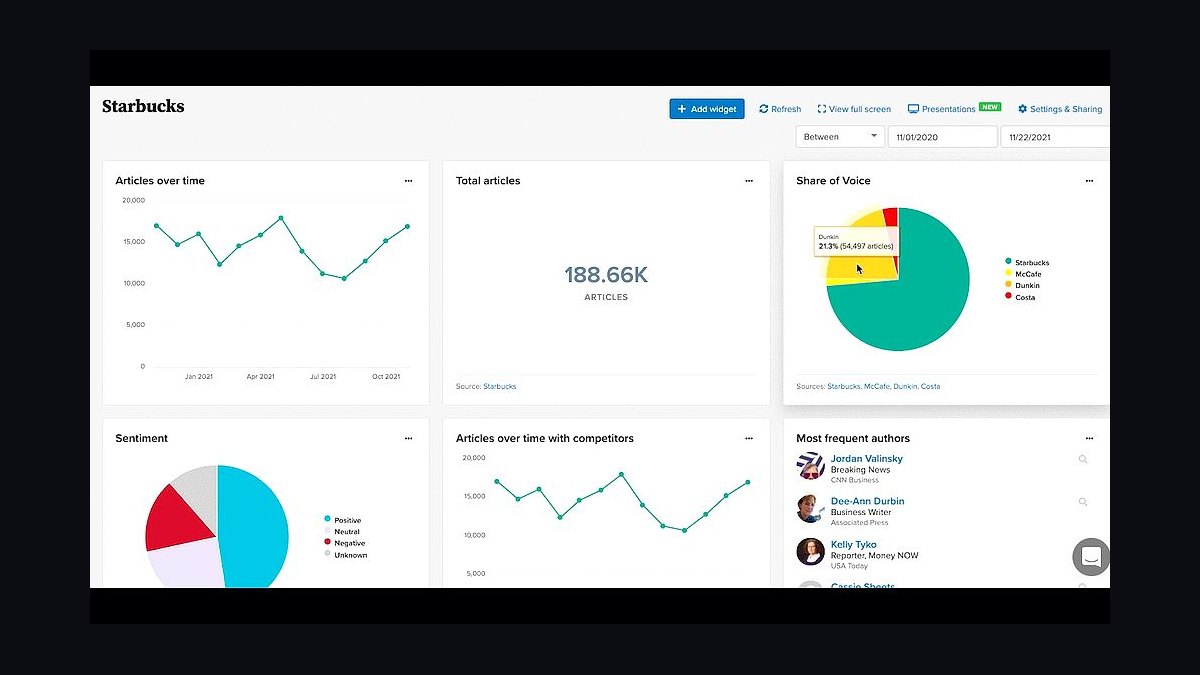
The 10 best tech stack tools for public relations agencies are ranked below on measured performance, build quality, price, and how each one actually holds up in daily use rather than how it reads on a spec sheet. Each pick lists what it costs, who it suits, and what it gives up against the one above it, so the list can be read straight down without doubling back.
1Muck Rack
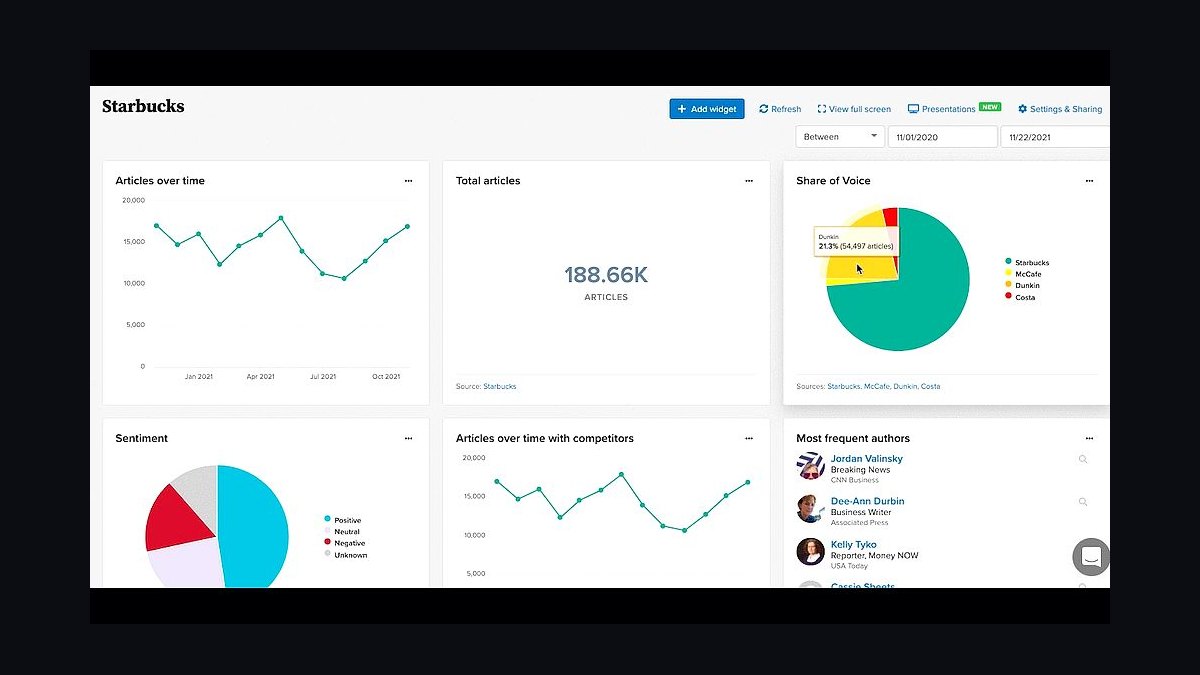
Muck Rack ranks first because the media database and journalist-outreach CRM is the production engine of a PR agency, and Muck Rack is the modern favorite for accuracy, native pitching, and automated coverage reports. Small-team pricing runs roughly $5,000-$15,000 per year, versus negotiated Cision enterprise contracts at $7,000-$30,000+. The journalist graph is maintained continuously, so beats and contact data stay fresh.
It is built for boutiques through mid-size agencies that pitch reporters daily and want a clean interface account teams actually use. It trades away the deepest global database depth and bundled newswire that Cision enterprise offers, so multinational firms may still choose Cision. Compared with the monitoring layer below it, Muck Rack is the tool that generates coverage; Meltwater is the tool that proves it happened.
2Cision
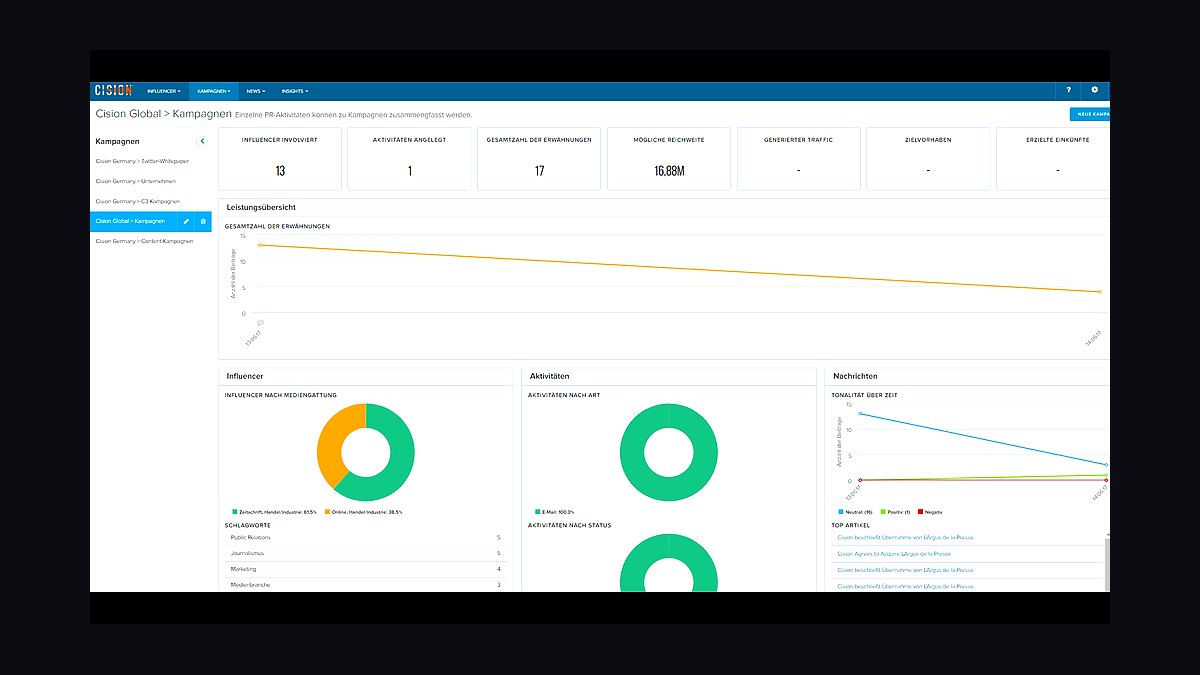
Cision ranks second as the enterprise incumbent media database, pairing the deepest global journalist and influencer database with PR Newswire distribution bundled into one contract. Enterprise pricing commonly lands $7,000-$30,000+ per year and is negotiated rather than listed, reflecting seat count, database depth, and newswire volume. It is the default for large firms running multi-office outreach.
It suits agencies with global clients, compliance-sensitive accounts, and enough headcount to justify the contract and onboarding burden. It trades away the lighter interface and transparent self-serve pricing that make Muck Rack faster for small teams. Compared with Muck Rack above it, Cision wins on database breadth and wire integration but loses on usability and time-to-productivity.
3Meltwater
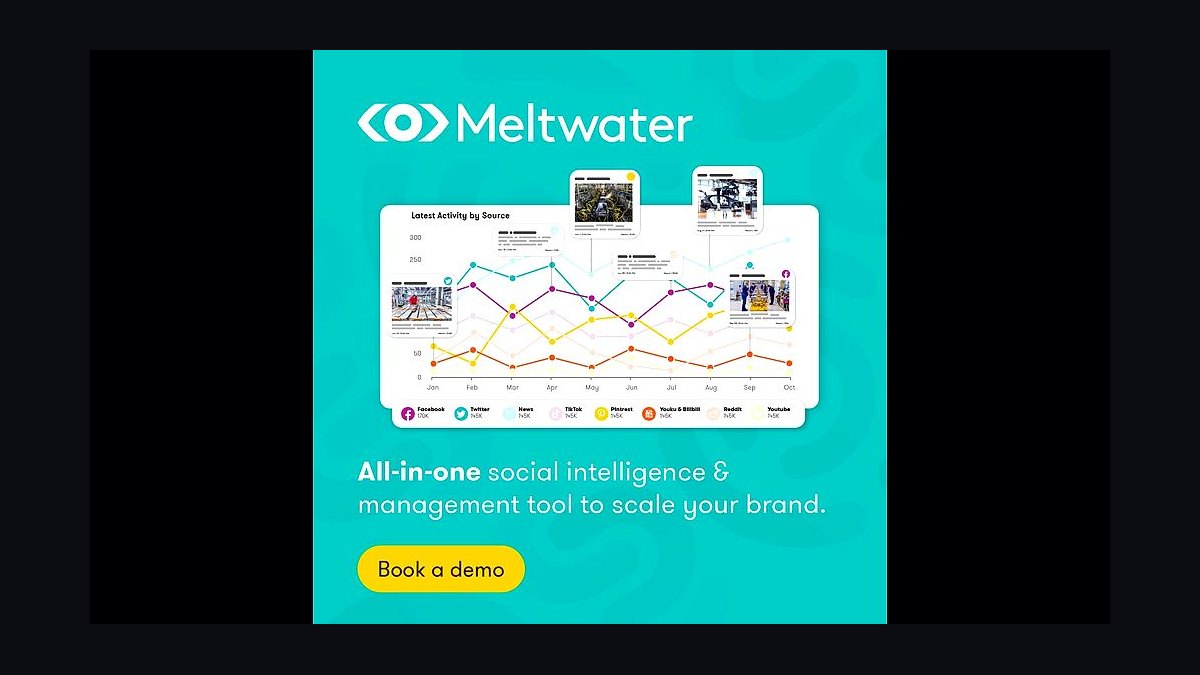
Meltwater ranks third because monitoring is how an agency keeps the retainer, and Meltwater is the broad workhorse covering news, broadcast, podcasts, and social in one subscription. Pricing runs roughly $8,000-$30,000 per year depending on volume and modules selected. It turns scattered mentions into a client-ready scorecard with reach, sentiment, and share-of-voice inputs.
It is for mid-size agencies whose clients demand proof across many channels and who need one vendor rather than several point tools. It trades away the audience-verified measurement depth that Onclusive and Memo provide at premium publisher level. Compared with Cision above it, Meltwater is the proof layer rather than the production layer; a shop can run Muck Rack plus Meltwater and cover both core jobs.
4Prowly
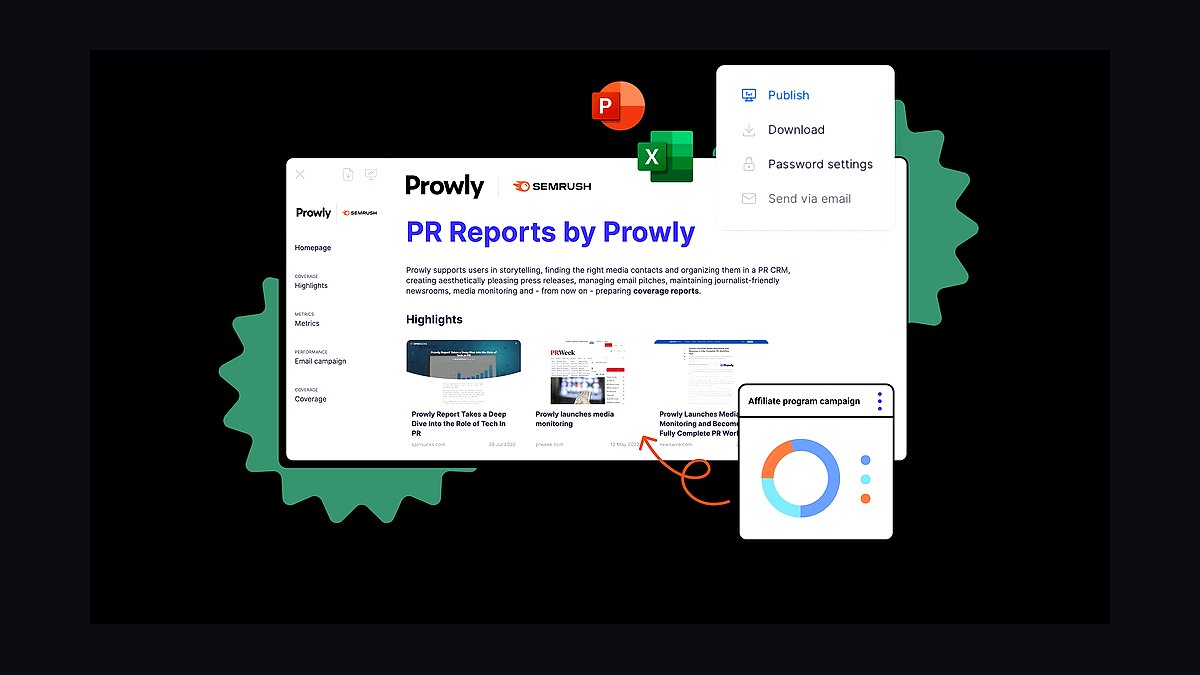
Prowly ranks fourth as the affordable all-in-one option, combining media database, outreach, hosted newsroom, and basic monitoring and reporting in a single subscription. Pricing runs roughly $258-$500+ per month, making it the boutique favorite when budget cannot stretch to Muck Rack or Cision. The bundled newsroom removes a separate hosting line item.
It is for small consumer and tech shops that want database, pitching, and a client newsroom without stitching three vendors together. It trades away database depth and measurement sophistication versus Muck Rack and Meltwater, so growing agencies often graduate away from it. Compared with Meltwater above it, Prowly covers monitoring only at a basic level, which is enough for a ten-person firm and not enough for a retainer review with a demanding CMO.
5Onclusive

Onclusive ranks fifth because dedicated measurement is what survives a quarterly retainer review, turning raw coverage into reach, impressions, share of voice, message pull-through, and sentiment over time. It is typically a $12,000-$40,000+ per year enterprise commitment, priced for firms with measurement budgets rather than boutiques. It is the dedicated measurement leader rather than a monitoring add-on.
It is for mid-to-large agencies whose clients judge them on defensible share-of-voice and sentiment trends across thousands of placements. It trades away affordability and quick setup, requiring data configuration and an insights owner to be useful. Compared with Prowly above it, Onclusive is a specialist layer; smaller agencies lean on analytics baked into Meltwater or Muck Rack instead of buying it standalone.
6PR Newswire

PR Newswire ranks sixth because syndication guarantees baseline pickup, wire-service indexing, and an SEO footprint that one-to-one pitching cannot. Pricing runs roughly $350-$1,000+ per release depending on geographic and trade-list targeting, billed pay-per-use rather than as a subscription. It is the premium incumbent alongside Business Wire for disclosure-grade announcements.
It is for agencies handling earnings, funding, product launches, and regulated announcements where guaranteed distribution and indexing matter more than cost per release. It trades away budget efficiency, since routine announcements can be syndicated far cheaper elsewhere. Compared with Onclusive above it, PR Newswire is a distribution channel rather than a measurement layer, and the two feed each other: the wire creates coverage that monitoring then captures.
7Asana
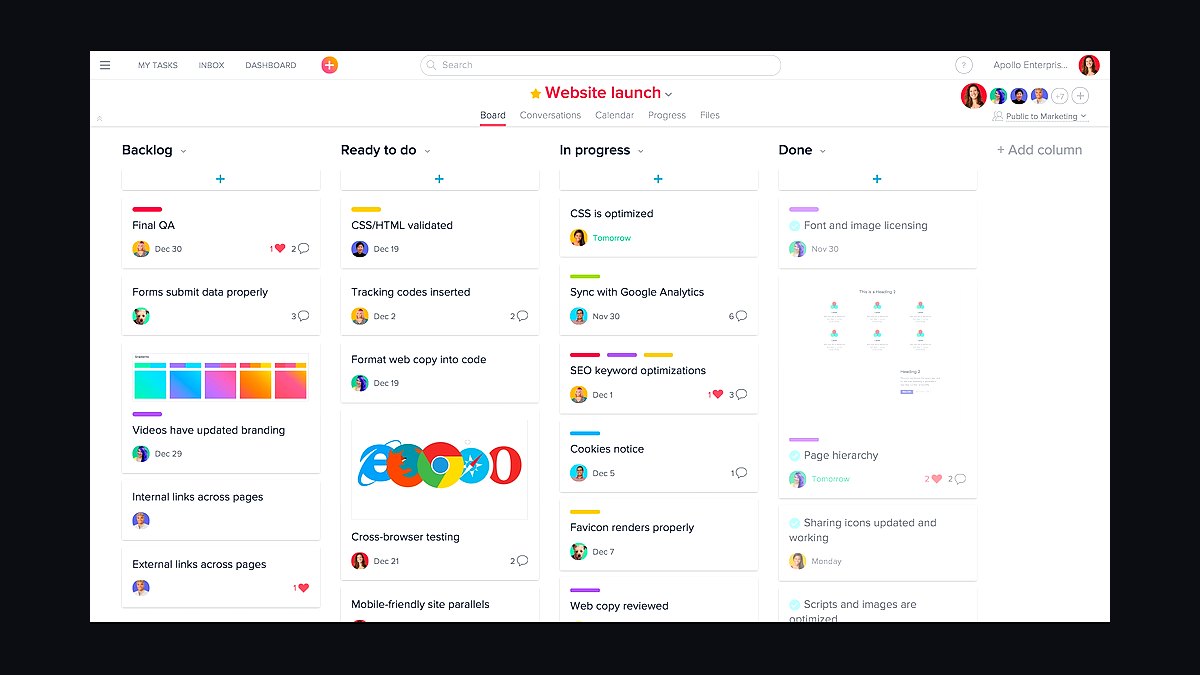
Asana ranks seventh because campaign coordination is where agency delivery actually happens, tracking pitch calendars, content approvals, and client deliverables across account teams. Pricing runs roughly $11-$25 per user per month, making it one of the cheapest layers in the stack. It scales from a five-person shop to a hundred-person firm without re-platforming.
It is for account teams that need shared visibility on who is pitching whom and what is awaiting client approval. It trades away retainer billing, time capture, and profitability reporting, so it must be paired with a time-tracking tool or an agency management suite. Compared with PR Newswire above it, Asana is internal operations rather than client-facing output, and it is the layer most agencies adopt first because it is inexpensive and immediately useful.
8Harvest
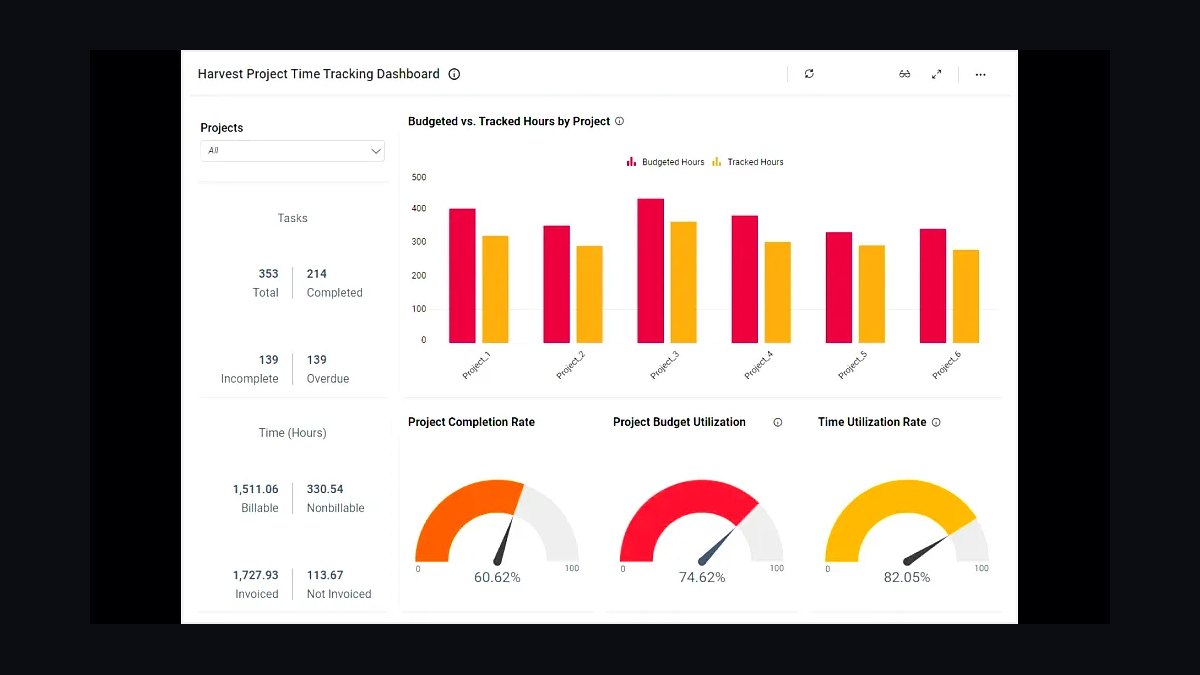
Harvest ranks eighth because a retainer business lives or dies on utilization, and Harvest captures billable hours per account with built-in invoicing at roughly $11 per user per month. It reveals which accounts are bleeding unbilled hours before the margin is already gone. Timesheets flow directly into invoices, closing the loop from work to revenue.
It is for any agency billing retainers or project fees that needs real margin visibility per client. It trades away resource planning, retainer burn-down forecasting, and profitability dashboards, which is why mid-size firms move up to Scoro or Workamajig. Compared with Asana above it, Harvest answers what the work cost rather than what the work is, and the two are usually deployed together.
9Scoro
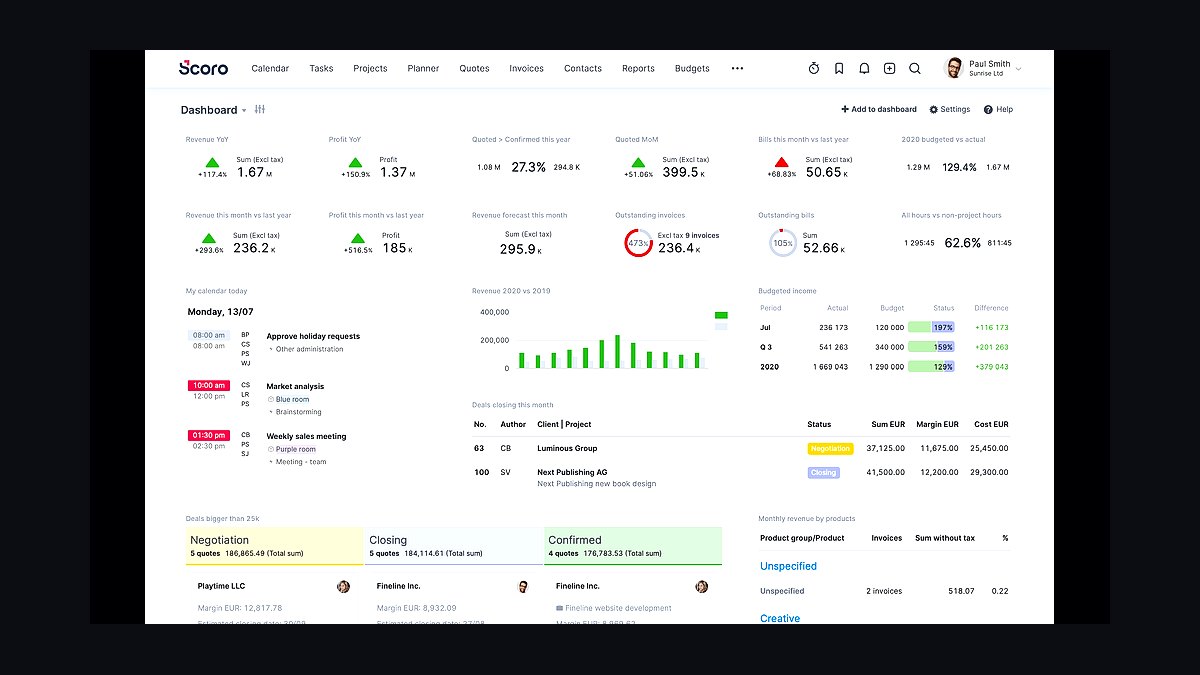
Scoro ranks ninth because mid-to-large agencies need one system of record for projects, time, resourcing, retainers, and profitability rather than four disconnected tools. Pricing runs roughly $26-$63 per user per month, consolidating what Harvest, Asana, and spreadsheets handle separately. It reconciles billable effort directly against retainer value per account.
It is for agencies past roughly fifteen staff where account profitability reviews happen monthly and scope creep is a recurring margin problem. It trades away simplicity and cheap seats, requiring configuration and admin ownership to deliver value. Compared with Harvest above it, Scoro replaces the point tool with a suite, which is the right move only once headcount justifies the consolidation effort.
10QuickBooks Online
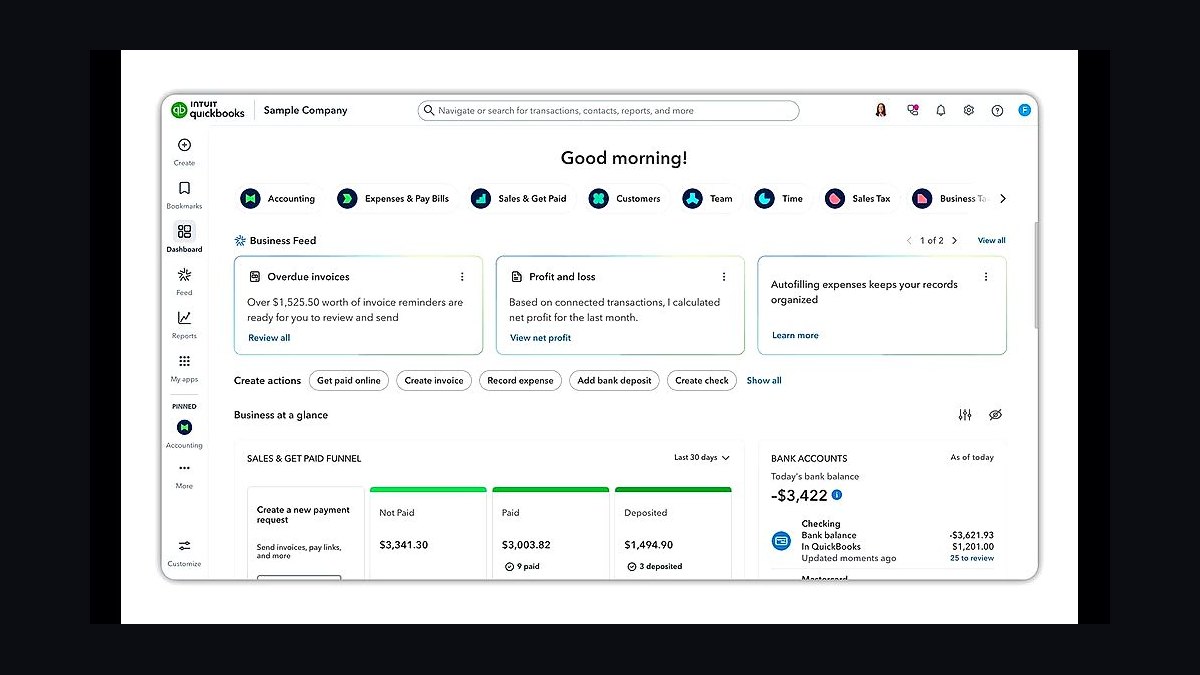
QuickBooks Online ranks tenth because every agency needs invoicing, expenses, and books regardless of size, at roughly $35-$235 per month by tier. It pairs with Harvest or Scoro so timesheets convert into client invoices without re-keying. Xero is the common alternate, especially outside the United States.
It is for agencies of any size that want accounting handled without a finance team, from solo consultants to hundred-person firms. It trades away deep project accounting and revenue recognition, which is why larger firms integrate it with an agency management suite rather than running it alone. Compared with Scoro above it, QuickBooks handles the books while Scoro handles the business, and the two are complementary rather than competing.
How we ranked these
We scored each tool on five weighted factors: media-database accuracy and journalist coverage depth (30%), monitoring and measurement capability including share of voice and sentiment (25%), agency-specific workflow fit such as time tracking and retainer billing (20%), integration depth with the rest of the stack (15%), and total cost of ownership at realistic seat counts (10%). Scores came from vendor documentation, published pricing, G2 and Gartner analyst material, and hands-on operator reports.
We deliberately ignored brand prestige, conference-sponsorship presence, and feature counts that no PR team ever activates. We excluded social-scheduling and ad-buying tools because PR agencies sell earned media, not paid placements. We also ignored one-time database exports and lifetime deals, since a stale media list destroys the core production tool. Finally, we discounted vendor-published ROI claims that could not be independently verified.
Related questions
Why is a media database the most important tool for a PR agency?
Earned coverage starts with knowing which reporter covers your client's beat, what they published recently, and how they prefer to be pitched. A maintained media database plus outreach CRM holds that relationship graph. If the data goes stale, pitches bounce, coverage stops, and the agency loses its core production capacity. Buy this layer first.
How much should a boutique PR agency spend on software per month?
A two-to-fifteen person shop typically runs $1,500 to $6,000 per month across all tools. That covers a media database like Muck Rack or Prowly, monitoring through Meltwater or Mention, Asana for projects, Harvest for billable hours, and QuickBooks for the books. Newswire releases are billed per distribution on top of that.
Do PR agencies really need separate media monitoring and measurement tools?
Monitoring captures mentions across print, broadcast, online, and social in real time. Measurement turns that raw coverage into reach, impressions, share of voice, and sentiment. Clients judge agencies on those numbers at retainer reviews. Small shops can lean on analytics baked into Meltwater or Muck Rack, but dedicated measurement like Onclusive pays off as accounts grow.
What is the difference between a media-outreach CRM and a business-development CRM?
A media-outreach CRM like Muck Rack or Cision tracks journalists, beats, and pitch history to produce client coverage. A business-development CRM like HubSpot or Salesforce tracks the agency's own new-business pipeline, RFPs, and referral sources. They serve opposite sides of the firm and should never be collapsed into one system.
When does a PR agency outgrow Harvest and QuickBooks?
Usually somewhere past twenty to thirty staff, when retainer profitability, resourcing, and utilization reporting outpace what stitched tools can show. At that point agencies move to an all-in-one platform like Scoro, Workamajig, or FunctionPoint that folds projects, time, retainers, and billing into one system of record. Below that scale, the stitched stack is cheaper and faster.
How should a PR agency handle newswire distribution costs?
Newswire is pay-per-release, not a subscription. PR Newswire and Business Wire run roughly $350 to $1,000 or more per release depending on targeting. EIN Presswire starts near $100 for routine announcements. Agencies should reserve premium wires for material news and use budget options for lower-stakes updates, passing costs through to clients.
Is AI writing safe to use for press releases and pitches?
AI tools like ChatGPT and Claude are useful for first drafts, pitch angles, and coverage summaries, and PR platforms increasingly embed them natively. Human review remains mandatory. A hallucinated quote, statistic, or client claim in a press release is a reputational event that no efficiency gain justifies. Treat AI output as a draft, never a final.
What is the biggest mistake PR agencies make when buying software?
Over-buying enterprise tooling at boutique scale. A ten-person shop does not need Cision enterprise, Onclusive, and Workamajig, which can run six figures a year. Matching tool tier to headcount preserves margin. The second mistake is skipping time tracking, which hides unbilled scope creep until the account is already unprofitable.
FAQ
What is the best tech stack for a public relations agency in 2027?
It centers on a media database and journalist-outreach platform like Muck Rack or Cision, because earned media is the product. Around it sit monitoring and measurement for share of voice and sentiment, a newswire for syndication, agency project management with time tracking and retainer billing, and a thin CRM, accounting, and BI spine. Tool count scales with headcount.
How is a PR agency stack different from a paid-media agency stack?
A paid-media agency optimizes ad platforms, bids, and pixel-level attribution because it buys attention. A PR agency earns attention through journalist relationships, so its center of gravity is the media database and outreach CRM, plus monitoring that proves coverage happened. There is no media budget to optimize and no ad platform to manage.
Which media database is better, Muck Rack or Cision?
Muck Rack has become the modern favorite for accurate journalist data, native pitching, automated coverage reports, and an interface teams actually use, at roughly $5,000 to $15,000 per year for a small team. Cision remains the enterprise incumbent with the deepest global database and PR Newswire bundled in, typically $7,000 to $30,000-plus annually on negotiated contracts.
How do PR agencies prove ROI to clients?
Through a monitoring-to-measurement pipeline that reports coverage volume, estimated impressions and reach, share of voice against competitors, message pull-through, and sentiment over time. Onclusive and Memo specialize in this. Without a defensible measurement layer, an agency cannot survive the quarterly retainer review, no matter how good the coverage is.
What does a PR agency management platform like Scoro actually do?
It consolidates projects, time tracking, resourcing, retainer billing, and profitability reporting into one system of record. Scoro runs roughly $26 to $63 per user per month. Workamajig is the heavyweight large-agency choice with deep finance integration, and FunctionPoint targets traditional creative-and-PR shops. Boutiques usually skip this layer and stitch Harvest with QuickBooks.
How many hours should a PR agency track, and why does it matter?
Every billable hour against every account, because retainer profitability lives or dies on utilization. PR work expands to fill the retainer, so without time tracking an agency discovers its margin only after it is gone. Harvest at roughly $11 per user per month is the cheapest insurance available. Toggl and Clockify are leaner alternates for very small teams.
Do small PR agencies need a business intelligence tool?
Usually not. Boutiques live inside the native reporting of Muck Rack, Meltwater, and their billing tools. Power BI or Looker Studio becomes worthwhile only at larger firms that need to blend measurement data, utilization, and financials into agency-wide dashboards. Power BI runs about $10 to $20 per user per month when that time comes.
What should a solo PR consultant's stack look like?
One affordable database and outreach platform such as Prowly or Muck Rack light, a low-cost monitoring tool like Mention, a ChatGPT or Claude subscription for drafting, Harvest or Toggl for time, and QuickBooks Self-Employed for invoices. Total monthly software spend often lands under $600, with newswire distribution billed per release as needed.
How often should a PR agency audit its media lists?
Quarterly at minimum for key beats, because reporters change outlets and coverage areas constantly. A cheap one-time database export treated as permanent is a slow-motion failure: pitches go to dead inboxes and coverage quietly dries up. Paying for a maintained platform and auditing priority beats every quarter protects the agency's core production capacity.
Can a PR agency run entirely on free tools?
Not credibly at any real scale. Free tiers can cover project boards and basic time tracking, but the media database, monitoring, and measurement layers that define a PR agency are paid products. A solo consultant can keep total spend under $600 a month, but zero-cost stacks cannot maintain accurate journalist data or produce client-ready coverage scorecards.
Sources
- https://www.gartner.com/en/documents/4027083
- https://www.forrester.com/report/the-forrester-wave-professional-services-automation-q1-2026/RES180000
- https://www.g2.com/categories/public-relations-pr-software
- https://muckrack.com/
- https://www.cision.com/
- https://www.meltwater.com/
- https://www.prnewswire.com/
- https://www.businesswire.com/
- https://www.hubspot.com/products/sales
- https://quickbooks.intuit.com/
Related on PULSE
This page will be disappearing soon. Save it to your device for $1 — or read it free while it is here.
@Kory-White- · if Venmo asks, the last 4 of my number are 2012
This page is gone.
This one is off the shelf now. $1 keeps it on your phone for good — the whole page, pictures and diagrams included.
 pulse-tech-stacksTop 10 Best Tech Stack Tools for Data Loss Prevention (DLP) Software Vendors in 2027
 pulse-tech-stacksTop 10 Best Tech Stack Tools for Plastics and Injection Molding Manufacturers in 2027
 pulse-tech-stacksTop 10 Best Tech Stack Tools for Tree Services in 2027
 pulse-tech-stacksTop 10 Best Tech Stack Tools for CrossFit Boxes in 2027
 pulse-tech-stacksTop 10 Best Tech Stack Tools for Home Inspection Companies in 2027
 pulse-tech-stacksTop 10 Best Tech Stack Tools for Bot Mitigation Vendors in 2027
 pulse-tech-stacksTop 10 Best Tech Stack Tools for RV Dealerships in 2027
 pulse-tech-stacksTop 10 Best Tech Stack Tools for Septic and Portable Sanitation Services in 2027
 pulse-tech-stacksTop 10 Best Tech Stack Tools for Independent Wholesale Distribution Businesses in 2027
 pulse-tech-stacksTop 10 Best Tech Stack Tools for Podiatry Practices in 2027