


Top 10 Best Tech Stack Tools for Thrift and Consignment Stores in 2027
Quality
Certified
The 10 best tech stack tools for thrift and consignment stores are ranked below on measured performance, build quality, price, and how each one actually holds up in daily use rather than how it reads on a spec sheet. Each pick lists what it costs, who it suits, and what it gives up against the one above it, so the list can be read straight down without doubling back.
1SimpleConsign Resale POS
SimpleConsign ranks first because it treats the consignor ledger as a first-class object, the exact gap that causes most resale back-office failures. It runs roughly $129-$309 per month, carries the largest install base in resale-specific POS, and ships the most mature consignor self-service portal, so dozens of consignors can check balances without calling the shop. Its aging rules automate 30/60/90-day markdowns that operators otherwise track on sticky notes.
It is built for single-location consignment boutiques with one to four staff and a few dozen active consignor accounts, where commission splits and payout runs are the core daily job. It trades away the buy-outright flexibility and cleaner interface that Ricochet offers, and high-volume shops with thousands of consignor accounts eventually outgrow its standard tier for Liberty. For pure consignment, it is the safer default.
2Ricochet Consignment Software
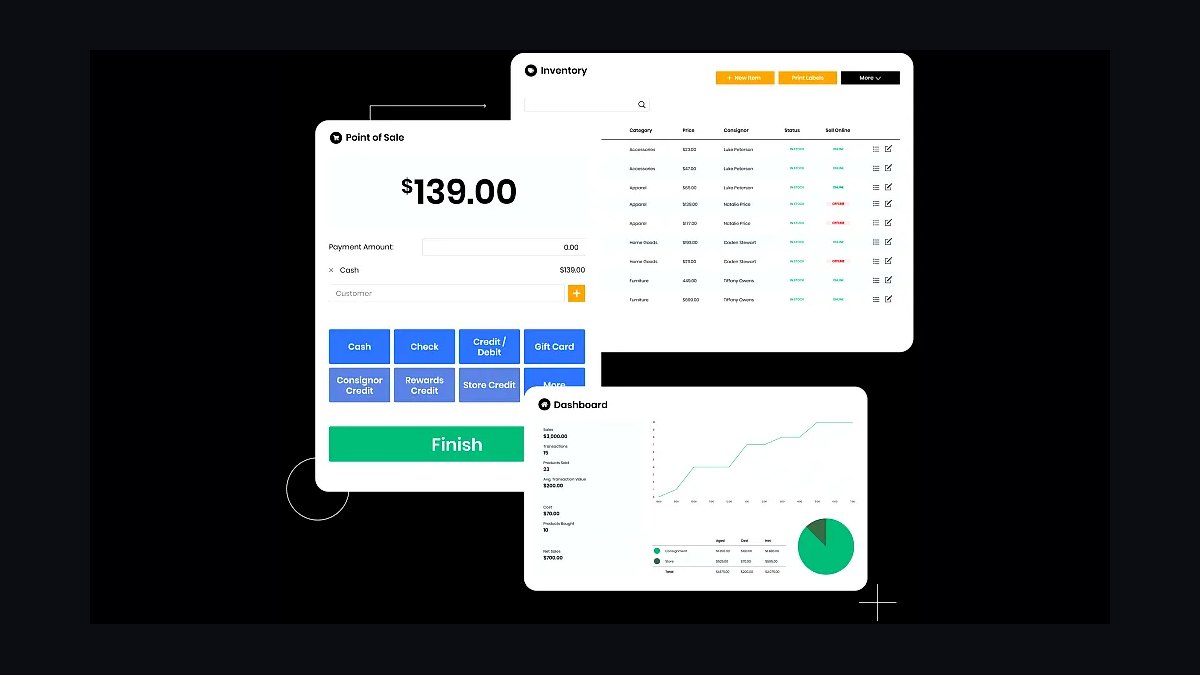
Ricochet ranks second because it matches SimpleConsign on price band and cloud maturity while fitting hybrid buy/consign models better. It runs in the same $129-$309 per month range, handles items the store owns outright alongside consigned goods in one inventory flow, and presents a cleaner interface that shortens staff training. For shops where buy-outright dominates and consignment is secondary, that model fit beats raw portal depth.
It suits owners whose inventory mix leans toward purchased goods rather than pure consignment, and who value interface clarity over the largest consignor self-service network. It trades away some of SimpleConsign's install-base familiarity and portal maturity, so shops with dozens of consignors wanting self-service may prefer the pick above. Demo both with real inventory before committing.
3Liberty Consignment Resaleworld
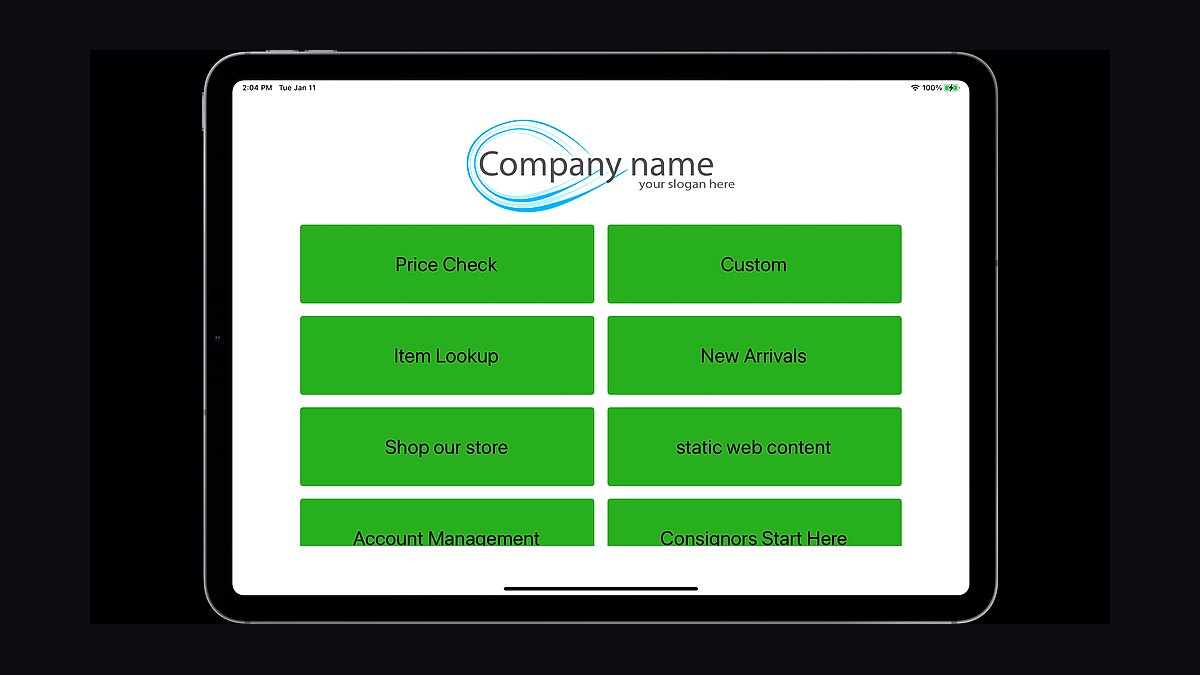
Liberty ranks third because it handles payout complexity and consignor-account volume that outgrow SimpleConsign's standard tier. Priced around $200-$400+ per month plus setup fees, it targets shops managing thousands of consignor accounts or franchise-grade payout structures, with reporting depth that single-location operators will never exhaust. That depth is the reason high-volume resellers move to it rather than staying on cheaper platforms.
It is for multi-account, high-throughput consignment operations where payout accuracy across large consignor rosters justifies the cost and setup. It trades away ease of onboarding and low monthly spend, carrying a steeper learning curve than SimpleConsign or Ricochet. A single-location shop with forty consignors pays for reporting it will not use; those shops should stay on the picks above.
4Vendoo Cross-Listing Tool
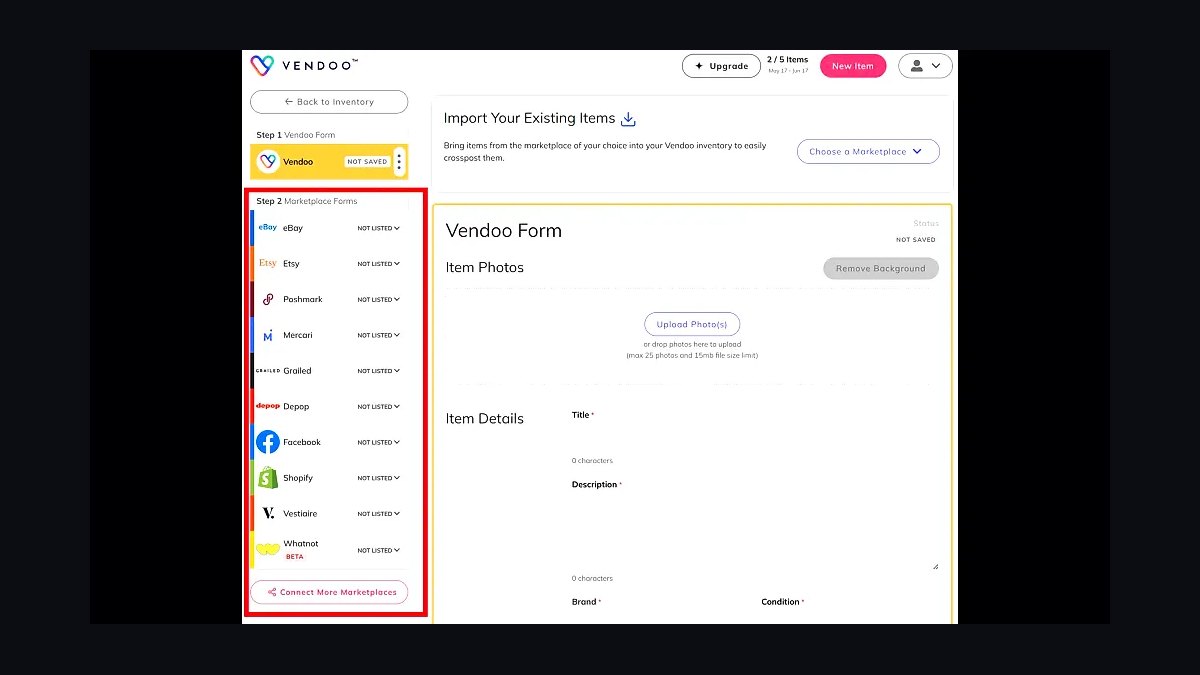
Vendoo ranks fourth because automatic de-listing is the feature that prevents double-sales across eBay, Poshmark, and the storefront. It runs $30-$90 per month depending on listing volume, posts a unique item to every marketplace at once, and removes the listing everywhere the instant one channel sells it. Without that de-listing, cross-listing is worse than not cross-listing at all, since cancellations damage seller ratings.
It is for shops just starting to sell online, where approachability and lower cost matter more than bulk-editing depth. It trades away the deeper bulk tools that high-volume power resellers need, which is where List Perfectly wins. Compared with the POS picks above, it solves a different job entirely, so most shops run it alongside SimpleConsign or Ricochet rather than instead of them.
5List Perfectly
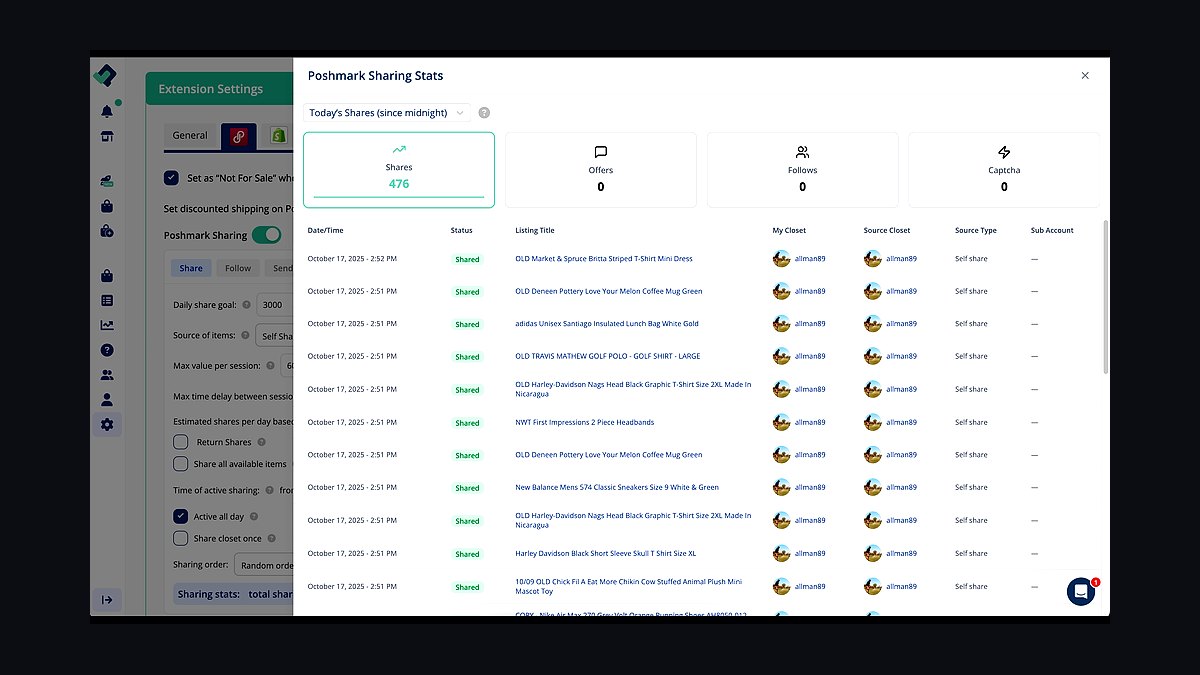
List Perfectly ranks fifth because it gives high-volume resellers the bulk-editing depth Vendoo trades away. It sits in the same $30-$90 per month band as Vendoo, supports automatic de-listing across eBay, Poshmark, and other channels, and adds the bulk-editing tools sellers need when listing volume climbs into the hundreds per week. Power resellers tolerate its steeper interface for that throughput.
It is for shops already selling online at volume, where editing hundreds of listings by hand is the bottleneck. It trades away the approachability that makes Vendoo the better on-ramp for a shop posting its first twenty items. A store doing a few dozen listings a month should start on Vendoo and graduate here only when bulk editing becomes the limiting factor.
6Rose for Square
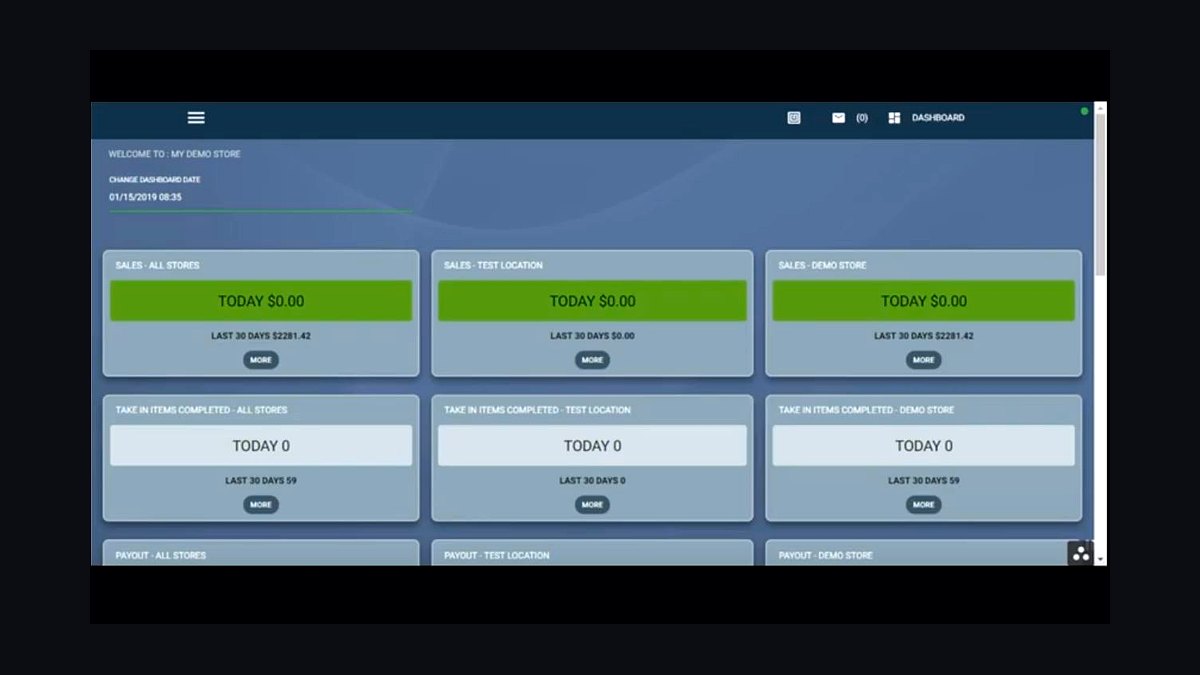
Rose ranks sixth because it lets a brand-new shop already running Square hardware add consignment accounting for roughly $50-$100 per month plus standard Square processing. It layers consignor accounts onto existing Square terminals, avoiding a full POS migration for a very small operation. That low entry cost is why it functions as a stopgap rather than a destination.
It is for shops under a few dozen active consignor accounts that already own Square hardware and want to test consignment before committing to resale-specific software. It trades away consignor-accounting depth and real markdown automation, so most shops graduate off it once account counts climb. Compared with SimpleConsign above, it is cheaper but ceilings out fast.
7QuickBooks Online
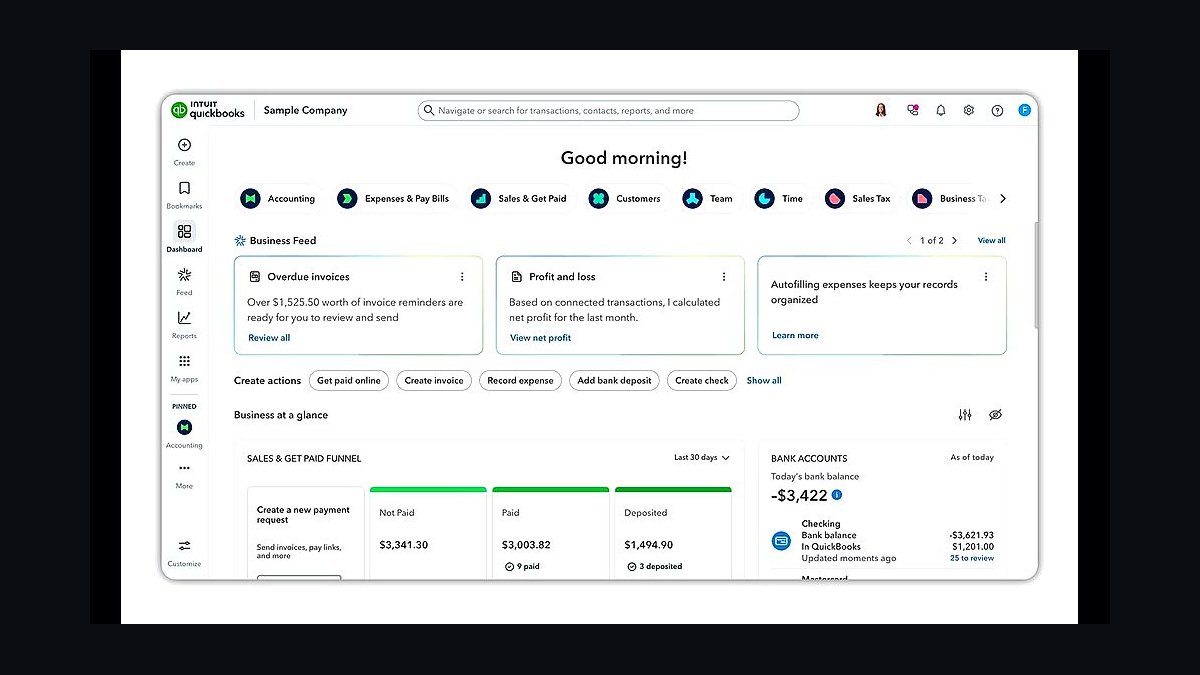
QuickBooks Online ranks seventh because consignor balances are a real liability that must reach the books or the drawer's cash picture is wrong. It runs $35-$90 per month, receives the POS-to-QuickBooks export, and separates store revenue from consignor payouts owed. Store credit issued instead of a check must post as a liability, and QuickBooks is where that lands.
It is for every for-profit resale shop, from one location to a chain, because no resale POS replaces general accounting. It trades away nothing in its lane, but it cannot track consignor splits or item aging, so it never substitutes for the POS picks above. Verify the POS export works before committing to a platform, not after.
8DonorPerfect
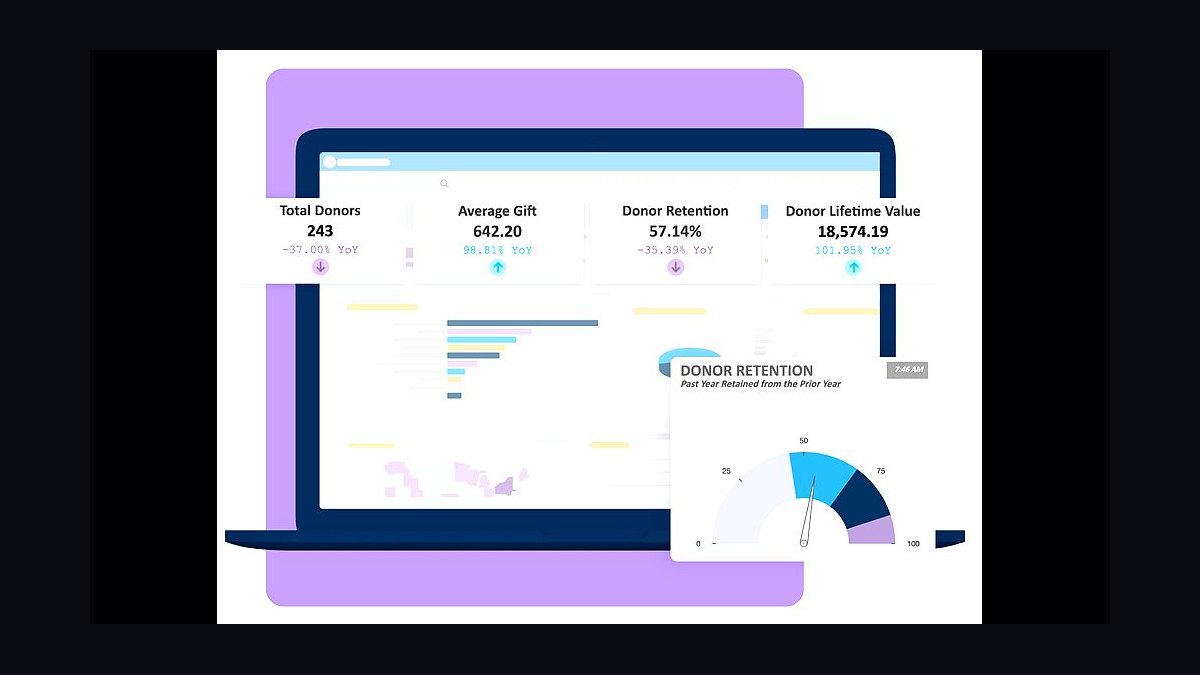
DonorPerfect ranks eighth because nonprofit thrift replaces the consignor ledger with donation intake and compliant tax receipts. It runs $99-$300+ per month depending on database size, logs donations, issues tax-deductible receipts, and supports the donor stewardship and 501(c)(3) reporting that for-profit resale software ignores. That structural swap is the biggest difference between nonprofit and for-profit resale stacks.
It is for Goodwill or Habitat ReStore-style operations with high donation volume and grant reporting needs, not for consignment boutiques. It trades away consignor payout and commission-split functionality entirely, since donors expect receipts rather than checks. Unique-SKU tagging and markdown automation stay identical to the for-profit picks above; only the ledger node changes.
9Zebra Thermal Label Printer
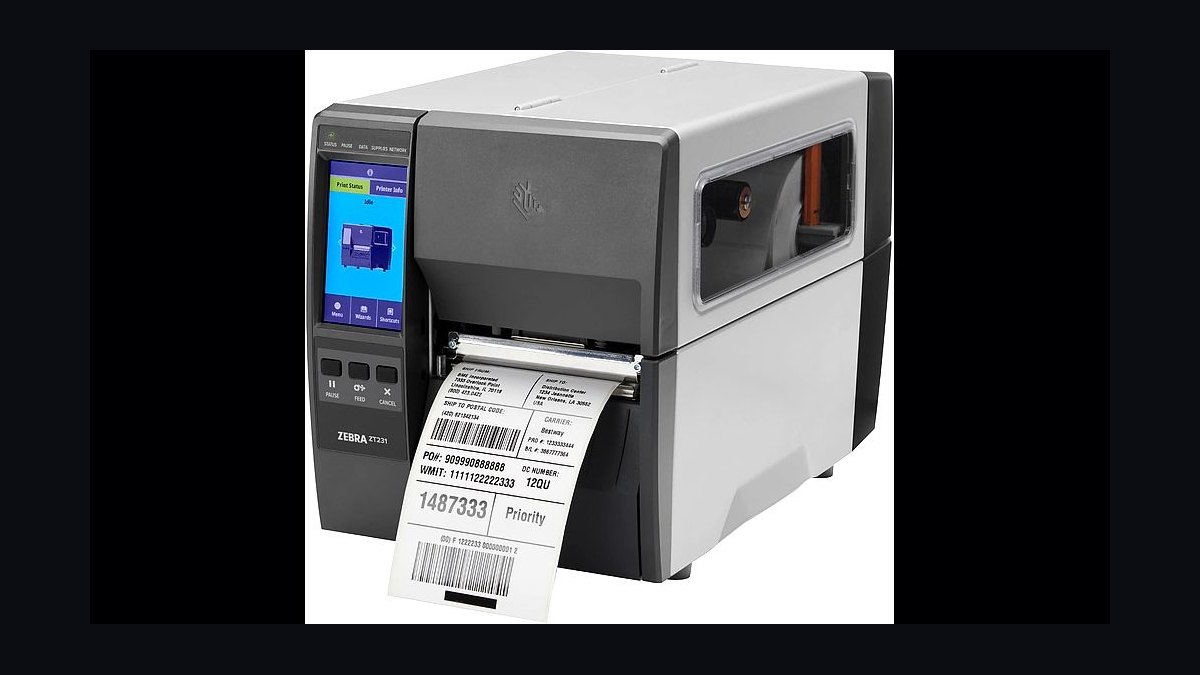
Zebra ranks ninth because every resale item needs a unique barcode linking the physical tag to its POS record. It costs roughly $150-$400 one-time, prints thermal labels that survive handling, and encodes the item's identity for its entire life in the store, tying tag to consignor, split, intake date, and markdown schedule. Without that barcode, the intake-to-payout chain has no anchor.
It is for any shop creating a new SKU for nearly every item that walks in, which is every thrift and consignment operation. It trades away nothing operationally but is a hardware purchase rather than software, so it sits outside the monthly budget lines above. Dymo offers a comparable alternative at the same price band; the requirement is a thermal printer, not a specific brand.
10Mailchimp Email Marketing
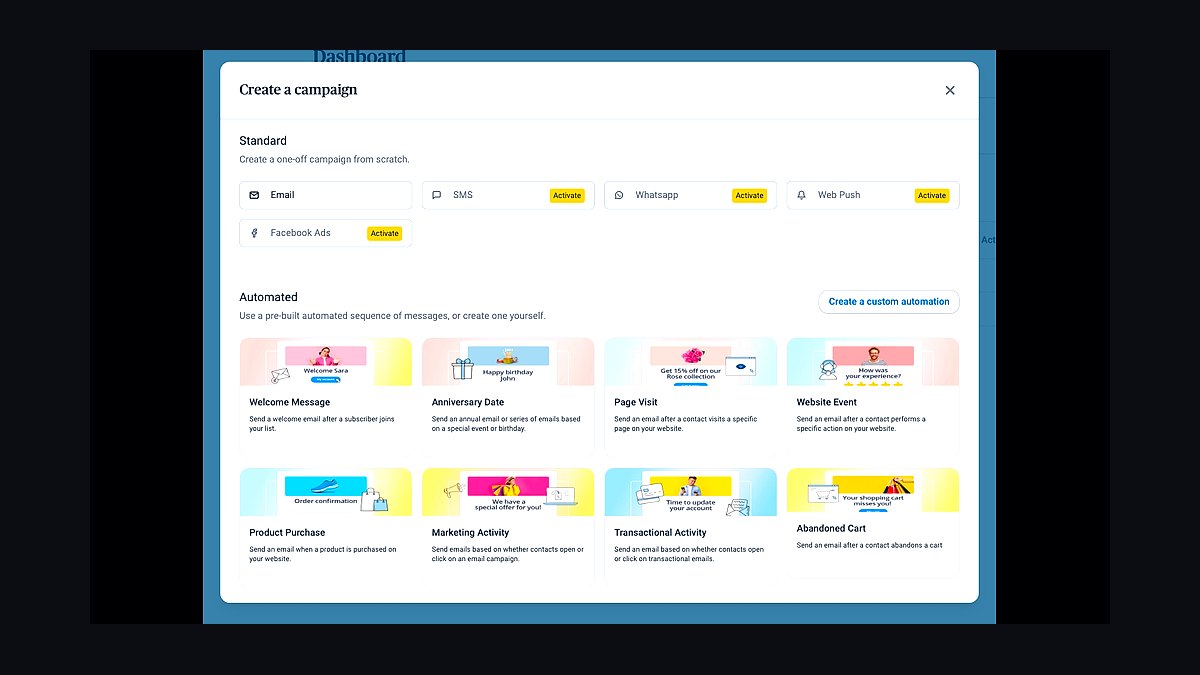
Mailchimp ranks tenth because repeat consignor and shopper traffic is what keeps a resale floor moving, and it is free up to about 500 contacts. It scales to $13+ per month beyond that, sending new-arrival and markdown announcements to the list a shop builds at intake. For a single-location boutique, that free tier covers the first year or two of list growth.
It is for shops that have already fixed consignor accounting and want to drive repeat visits, not for operations still tracking splits in spreadsheets. It trades away the texting and review-management reach that Podium or Birdeye provide at $249-$400 per month for multi-location chains. It is the lowest-priority line item here because inventory accuracy outranks marketing spend.
How we ranked these
We ranked tools by five weighted criteria: consignor-ledger depth (30%), unique-SKU intake and barcode tagging (20%), aging and markdown automation (15%), marketplace cross-listing with auto-delisting (15%), and POS-to-QuickBooks export reliability (20%). Each platform was scored against real consignment workflows — split calculation, payout runs, store credit issuance — not generic retail feature lists. Pricing, install base, and nonprofit donation-intake capability were tracked as secondary signals.
We deliberately ignored generic retail POS features like restaurant tableside ordering, complex loyalty tiers, and enterprise ERP modules, because they don't map to one-of-a-kind resale inventory. We also excluded vendor marketing claims about AI pricing and ignored hardware aesthetics. Marketplace commission rates were noted but not weighted, since they scale with revenue rather than reflecting software quality. Nonprofit donor-management depth was scored separately rather than blended into the main ranking.
What to look for
What actually matters is whether the platform treats the consignor ledger as a first-class object: every item has an owner, every sale triggers a calculated split, and every payout run is traceable. Verify POS-to-QuickBooks export works before signing, confirm markdown rules can be configured at 30/60/90 days, and check that cross-listing includes automatic de-listing. Demo with your own inventory, not a vendor sandbox.
The mistake most buyers make is choosing a generic retail POS because it's cheaper or already owned, then tracking consignor balances in spreadsheets. That gap compounds quietly until a consignor disputes a payout. A close second mistake: adopting cross-listing without auto-delisting, which guarantees an eventual double-sale, order cancellation, and marketplace rating damage. Buy for the back office, not the checkout screen.
Related questions
Do I need a consignment-specific POS if I only buy inventory outright?
Less urgently — without consignor obligations, a general retail POS is more defensible. But you'll still want unique-SKU handling and aging/markdown automation, since inventory turnover problems exist regardless of ownership model. Buy-outright shops can often run Square or Shopify POS longer before hitting a ceiling.
How do I avoid overselling the same item across marketplaces?
Use a cross-listing tool with automatic de-listing, such as Vendoo or List Perfectly. It posts to every marketplace at once and removes the listing everywhere the instant one channel sells it. Cross-listing without auto-delisting is worse than not cross-listing at all, because cancellations damage seller ratings.
What changes for a nonprofit thrift store specifically?
Consignor accounting is replaced by donation intake and donor receipts, typically through a system like DonorPerfect. Unique-SKU tagging and markdown automation stay identical to for-profit resale. The structural difference is that spend tilts toward donor stewardship and 501(c)(3) compliance rather than consignor payout runs.
When should a single shop add a Shopify webstore?
Once there's a clear reason — a marketing push, SEO goals, or demand for local pickup and shipping. Most single-location shops delay it; multi-location resale operations should add it earlier. Shopify runs roughly $39-$105/month depending on tier, and pairs with cross-listing tools rather than replacing them.
How much does cross-listing software actually save versus manual posting?
Beyond time savings, the real value is preventing oversells — manually posting the same unique item to multiple marketplaces without auto-delisting is how sellers end up canceling orders and damaging marketplace standing. Vendoo and List Perfectly typically run $30-$90/month depending on listing volume and bulk-editing needs.
What's the realistic monthly software cost for a brand-new single-location shop?
Roughly $200-$500/month all-in, covering the resale POS at $129-$309, QuickBooks at $35-$90, email marketing, and a one-time label printer purchase around $150-$400. Marketplace fees are commission-based rather than fixed, so they scale with how much you actually sell online.
Does a nonprofit thrift store need the same unique-SKU and markdown discipline as for-profit consignment?
Yes — the inventory and floor mechanics are identical. The only structural difference is what replaces the consignor ledger: donation intake and donor receipts instead of commission splits and consignor payouts. Aging rules and barcode tagging still drive sell-through and floor turnover the same way.
What's the biggest red flag that a shop has outgrown its current POS?
Needing to track anything about consignor balances, payout schedules, or item aging in a spreadsheet alongside the POS. That's a sign the software isn't doing its core job, and the gap tends to widen rather than stay manageable. Migrating early is cheaper than auditing disputed payouts later.
FAQ
Can I start with Square or Shopify POS instead of a resale-specific system?
Only if you never take items on consignment. The moment you owe a consignor a split of a sale, you need consignor accounts, commission tracking, and payout runs — none of which Square or Shopify POS natively support. A Square-native layer like Rose works for very small shops, but it's a stopgap, not a long-term answer.
Is SimpleConsign or Ricochet the safer default for a first-time owner?
SimpleConsign is generally the safer default because of its larger install base and more mature consignor self-service portal. Ricochet is a strong alternative if your model leans toward buy-outright rather than pure consignment. Demo both with real inventory before committing, since interface preference matters more than spec sheets at this tier.
How much does cross-listing software actually save versus manual posting?
Beyond time savings, the real value is preventing oversells — manually posting the same unique item to multiple marketplaces without auto-delisting is how sellers end up canceling orders and damaging their marketplace standing. Vendoo and List Perfectly typically run $30-$90/month depending on listing volume and how much bulk editing you need.
What's the realistic monthly software cost for a brand-new single-location shop?
Roughly $200-$500/month all-in, covering the resale POS, QuickBooks, email marketing, and a one-time label printer purchase. Marketplace fees are commission-based rather than a fixed monthly cost, so they scale with how much you actually sell online rather than hitting a predictable line item.
Does a nonprofit thrift store need the same unique-SKU and markdown discipline as for-profit consignment?
Yes — the inventory and floor mechanics are identical. The only structural difference is what replaces the consignor ledger: donation intake and donor receipts instead of commission splits and consignor payouts. Aging rules and barcode tagging still drive sell-through and floor turnover the same way.
What's the biggest red flag that a shop has outgrown its current POS?
Needing to track anything about consignor balances, payout schedules, or item aging in a spreadsheet alongside the POS. That's a sign the software isn't doing its core job, and the gap tends to widen rather than stay manageable. Migrating early is cheaper than auditing disputed payouts later.
How long does it take to migrate consignor accounts to a resale-specific POS?
A single-location shop with roughly 40 active consignor accounts can typically re-enter them over a weekend. Larger operations with hundreds of accounts should plan a staged migration, exporting balances first and reconciling against the old system before cutting over. Budget two to four weeks for multi-location moves.
Do I need a label printer, or can I use adhesive tags and a pen?
A thermal label printer like Zebra or Dymo runs roughly $150-$400 one-time and is effectively required once you're creating a unique barcode per item. Handwritten tags break the link between the physical item and its POS record, which is exactly the gap that causes consignor payout disputes and missed markdowns.
What commission split should I configure in the POS?
Most consignment shops run 40-60% to the store, with the consignor taking the remainder. The POS should let you set splits per consignor or per category, since some shops pay differently on furniture versus clothing. Configure it once at intake rather than recalculating manually at payout.
Should store credit payouts be tracked differently from cash payouts?
Yes — store credit issued as a consignor payout is a real liability that sits on the books until redeemed, and it needs to flow into QuickBooks just like an unpaid balance. Credit keeps cash inside the building, but only if the ledger reflects it accurately. Verify the export handles both payout types before committing.
Sources
- https://www.simpleconsign.com/
- https://www.ricochetpos.com/
- https://www.resaleworld.com/
- https://www.vendoo.co/
- https://www.listperfectly.com/
- https://www.ebay.com/help/selling/fees-credits-invoices/selling-fees
- https://www.poshmark.com/
- https://www.donorperfect.com/
- https://www.winmarkcorporation.com/
Related on PULSE
This page will be disappearing soon. Save it to your device for $1 — or read it free while it is here.
@Kory-White- · if Venmo asks, the last 4 of my number are 2012
This page is gone.
This one is off the shelf now. $1 keeps it on your phone for good — the whole page, pictures and diagrams included.
 pulse-tech-stacksTop 10 Best Tech Stack Tools for Septic and Portable Sanitation Services in 2027
 pulse-tech-stacksTop 10 Best Tech Stack Tools for Plastics and Injection Molding Manufacturers in 2027
 pulse-tech-stacksTop 10 Best Tech Stack Tools for AI Music Generation Companies in 2027
 pulse-tech-stacksTop 10 Best Tech Stack Tools for Appliance Repair Services in 2027
 pulse-tech-stacksTop 10 Best Tech Stack Tools for Hair Salons in 2027
 pulse-tech-stacksTop 10 Best Tech Stack Tools for Movie Theaters in 2027
 pulse-tech-stacksTop 10 Best Tech Stack Tools for AI Customer Support Companies in 2027
 pulse-tech-stacksTop 10 Best Tech Stack Tools for Vulnerability Management Software Vendors in 2027
 pulse-tech-stacksTop 10 Best Tech Stack Tools for Pressure Washing Companies in 2027
 pulse-tech-stacksTop 10 Best Tech Stack Tools for Staffing Agencies in 2027