
Tech Stack Consolidation: Cutting SaaS Spend by 40% in 2027
 Curated byKory White · Fractional CRO · Maryland
 PULSEKNOWLEDGE LIBRARY
Quality
Certified

Cutting SaaS Spend by 40% in 2027 is achievable through functional Consolidation, not across-the-board discount hunting. Audit every tool against a unique-data test, collapse overlapping categories into a three-layer Stack, and renegotiate or cut the rest. Most mid-market teams hit the target by removing redundant AI copilots, duplicate enrichment, and point forecasting tools now covered natively by their CRM.
The two consolidation paths compared: hard cut versus phased contraction
There are two credible ways to take 40% out of a SaaS budget, and they behave very differently. The first is a hard cut: you pick a single date, terminate every tool that fails the unique-data test, and force the organization onto the surviving Stack within one or two renewal cycles. The second is phased contraction: you sequence the removals over two to three quarters, migrating one functional category at a time and renegotiating contracts as each comes up for renewal. Both reach the same destination, but they carry different risk profiles, different cash timing, and different change-management demands.
The hard cut is the faster path to the number. If your fiscal year starts in January and you need the savings to land inside 2027, a hard cut executed in Q1 captures nearly the full annualized reduction. The typical mid-market company running 40 to 60 SaaS tools with roughly $1.5M to $4M in annual software spend can realistically remove 12 to 20 tools in a single pass. That is where the 40% figure usually comes from: not from squeezing 40% off each invoice, but from eliminating entire line items whose function has been absorbed elsewhere. A $180k forecasting platform that duplicates CRM-native AI forecasting disappears entirely, and that single deletion can represent 5 to 8% of the total software budget on its own.

Phased contraction trades speed for safety. You might remove enrichment duplication in Q1, collapse sales engagement to one vendor in Q2, and retire standalone conversation intelligence in Q3 once the CRM's native call summarization has proven itself in production. The advantage is that you never run two migrations simultaneously, so the operational blast radius stays small. The disadvantage is that you leave savings on the table early in the year, and you risk the classic phased-consolidation failure: the plan loses momentum after the first wave, the second wave gets deprioritized, and you finish the year at 18% instead of 40%.
The honest trade-off is this. Hard cuts produce the number but generate a visible productivity dip, typically 20 to 30 days of disruption as reps relearn workflows and administrators rebuild integrations. Phased contraction protects productivity but requires executive sponsorship that survives three or four quarters, which is harder to maintain than a single decisive mandate. Most teams that actually hit 40% use a hybrid: a hard cut on the clearly redundant categories (duplicate enrichment, duplicate copilots, point forecasting) and a phased approach on the categories where migration risk is genuinely high, such as CPQ or the CRM itself.
How to decide between the two paths
The decision hinges on three variables: how much of your spend sits in clearly redundant categories, how much executive air cover you have, and whether your fiscal calendar rewards early savings. If more than a third of your spend is in overlapping categories and you have a CFO-backed mandate, take the hard cut. If your overlap is concentrated in one or two risky categories, or if your leadership team changes priorities quarterly, phase it.
The practical test is a single question: if the consolidation program lost its executive sponsor tomorrow, would the cuts already be done? If the answer is no, you are on a phased path and you should front-load the easiest, highest-dollar removals so that even a stalled program delivers most of the savings. If the answer is yes, cut hard and cut early, because every month of delay is a month of full-price spend you never recover.
One more decision input that teams routinely ignore: renewal dates. Your real leverage is concentrated in the 60 to 90 days before each contract auto-renews. A hard cut that ignores renewal timing leaves you paying for tools you have already decided to remove. Pull your renewal calendar first, then sequence the cuts so that each removal lands just before its renewal window. This single discipline often accounts for 5 to 10 percentage points of the total savings, because it eliminates the dead zone where you have mentally cut a tool but are still contractually obligated to pay for it.
Concrete numbers behind each option
Numbers make the choice defensible to a CFO, so build the model before you build the plan. Start with your fully loaded software spend, not just the subscription line. For a typical mid-market B2B company with 150 to 400 employees, direct SaaS subscriptions run $1.5M to $4M annually, and the hidden layer adds another 15 to 25% on top. That hidden layer includes integration maintenance, data engineering time, export fees, and the productivity cost of context-switching between tools.
Here is a representative breakdown for a company at $2.4M in direct SaaS spend, which is a common profile for a 250-person revenue organization running 45 tools. The CRM plus data warehouse layer typically consumes 25 to 35% of that, or roughly $600k to $840k. The execution layer, meaning sales engagement and CPQ, consumes 15 to 20%, or $360k to $480k. The intelligence layer, meaning conversation intelligence and forecasting, consumes 12 to 18%, or about $290k to $430k. The remaining 30 to 45% is spread across enrichment, intent data, scheduling, document tools, analytics, and a long tail of point solutions, many of which overlap.
The 40% target on $2.4M is $960k. Where does it come from? In a well-executed program, the savings typically distribute like this. Duplicate enrichment consolidation delivers $80k to $150k, because most companies run two or three enrichment vendors and one primary tool plus CRM-native fallback covers the need. Redundant AI copilot removal delivers $100k to $250k, since standalone lead scoring, email assistants, and call summarizers are now native features in major CRMs. Point forecasting tool retirement delivers $120k to $220k when the CRM's native forecasting is good enough for the segment. Sales engagement collapse from two vendors to one delivers $90k to $180k. CPQ and billing rationalization delivers $60k to $150k. The long tail of small tools, cut 15 to 25 of them, delivers another $150k to $300k.

Notice what is not on that list: a blanket 40% discount from every vendor. Discounts help, and in a buyer's market you can often negotiate 20 to 35% off list at renewal, but discount-only programs rarely exceed 15% total savings because vendors protect their installed base and because you cannot discount a tool you should have deleted. The math only reaches 40% when deletion and renegotiation are combined. A useful rule of thumb: aim for roughly two-thirds of the savings from elimination and one-third from renegotiation of the survivors.
On the cost side of the program itself, budget for the transition. Migration labor, integration rebuilds, and temporary dual-running of tools typically cost 8 to 15% of the first-year savings. On a $960k target, that is $75k to $145k in one-time cost, which still leaves a strong net number. Teams that skip this line item are the ones that quietly abandon the program in month three when the migration overruns.
Implementation details and sequencing
Sequence matters more than intensity. The order below is designed so that each step funds and de-risks the next, and so that the highest-dollar, lowest-risk removals happen first.
Step one is the inventory and unique-data audit. List every tool, its annual contract value, its renewal date, its primary owner, and the single data point it generates that nothing else produces. Rate overlap on a 1 to 5 scale. Anything scoring 4 or 5 is a deletion candidate. This step takes two to three weeks and produces the ranked cut list that drives everything else.
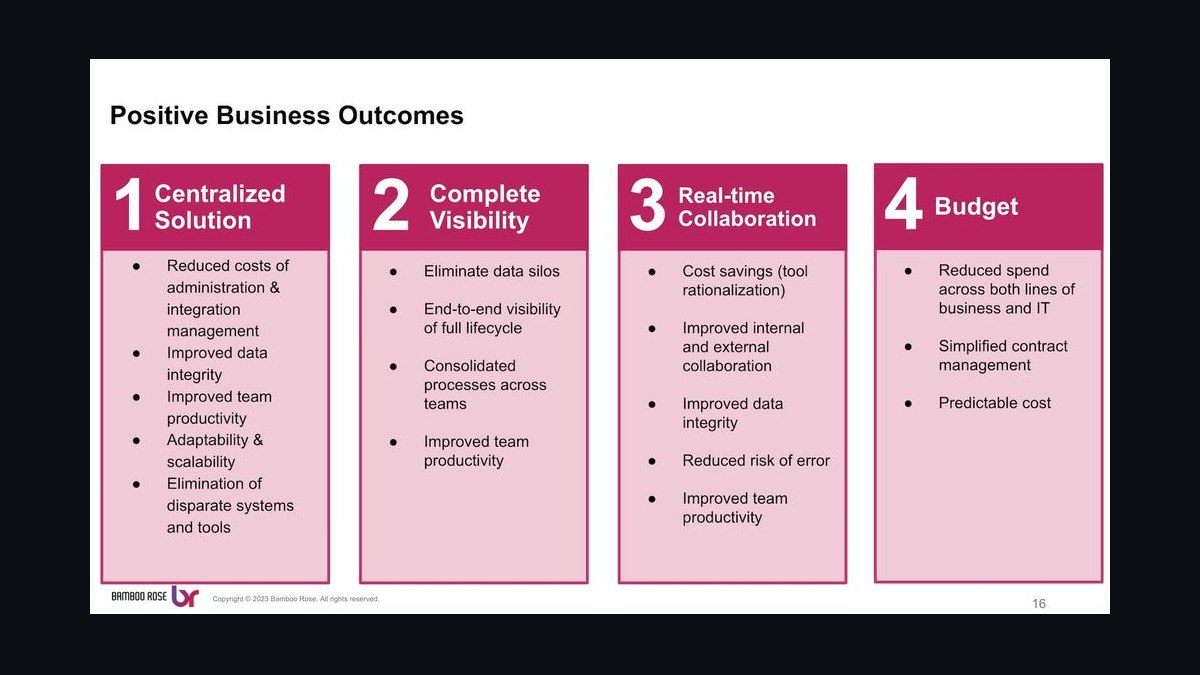
Step two is the AI copilot audit. In 2027 most major platforms ship native AI for lead scoring, email drafting, call summarization, and basic forecasting. Map each standalone copilot against the native capability in your CRM. If the native feature covers 80% of the use case, the standalone tool goes. Keep exactly one copilot per workflow, never two.
Step three is enrichment consolidation. Collapse to one primary enrichment vendor plus CRM-native fallback. Running three enrichment sources creates conflicting records, and conflicting records create cleaning cost that usually exceeds the subscription savings of the extra vendors.

Step four is the renegotiation wave. For every surviving tool above $50k in annual spend, benchmark the market rate, build a cut-versus-keep scenario, and open the renewal conversation 90 days early with a specific ask. Be prepared to walk away; the credible threat is the entire lever.
Step five is the migration and decommission. Run dual systems for no more than 30 days per category, then hard-stop the old tool. Soft decommissioning, where the old tool stays available "just in case," is the single most common reason savings fail to materialize.

Step six is measurement and reinvestment. Track SaaS spend as a percentage of revenue, targeting under 5% for most mid-market B2B companies. Track tool count per rep, targeting under three. Track time-to-close, which should improve 10 to 15% as data silos disappear. Then reinvest a slice of the savings into the data foundation layer, because clean data is what makes the consolidated Stack actually faster than the sprawl it replaced.
Two implementation traps deserve explicit warning. The first is the "strategic exception" trap, where a favorite tool gets exempted from the audit because a senior leader likes it. Every exception costs you roughly 2 to 4 percentage points of the target, and three exceptions can sink the program. The second is the shadow-tool trap, where teams quietly re-subscribe to cut tools on departmental credit cards. Audit your expense data, not just your procurement records, or you will find the spend reappearing under a different cost center.

Related questions
How long does a 40% SaaS reduction take to execute?
A hard cut lands in one quarter, with a 20 to 30 day productivity dip. Phased contraction takes two to three quarters. Most teams blend the two, cutting redundant categories immediately and phasing risky migrations.
Which tools should be cut first?
Start with duplicate enrichment vendors, redundant AI copilots, and point forecasting tools now covered natively by your CRM. These carry the highest savings and the lowest migration risk.
Can discount negotiation alone reach 40%?
Rarely. Discount-only programs typically top out around 15%. Reaching 40% requires eliminating redundant tools entirely, then renegotiating the survivors from a position of credible walk-away leverage.
How do you prevent savings from creeping back?
Audit expense data quarterly, not just procurement records, to catch shadow re-subscriptions. Require a unique-data justification for every new tool and cap the total tool count per function.
What metric proves the program worked?
SaaS spend as a percentage of revenue, targeting under 5%, plus tool count per rep under three and a 10 to 15% improvement in time-to-close.
FAQ
What is the unique-data test and why does it matter? It asks whether a tool generates a data point nothing else in your Stack produces. If the answer is no, the tool is redundant and should be cut. This test prevents the common mistake of cutting cheap tools while leaving expensive overlapping platforms intact.
How much of the 40% should come from deletion versus renegotiation? Aim for roughly two-thirds from deletion and one-third from renegotiation. Deletion is more durable because it removes the line item permanently, while discounts expire at the next renewal.
What if my team resists the consolidation? Show usage data. Most teams find that a large share of users touch only a small fraction of features in any given tool. Reframe the change as more selling time and less tool-switching, and give people the consolidated workflow before you remove the old one.
How do I handle vendor lock-in during consolidation? Negotiate a data exit clause guaranteeing export within 30 days of cancellation, and confirm open API access before you sign. Major CRM platforms support standard export paths, so lock-in is usually a contract problem, not a technical one.
Can cutting only small tools reach 40%? No. Removing twenty $10k tools saves $200k, which on a $2.4M budget is under 10%. The number comes from eliminating large redundant platforms, especially forecasting and conversation intelligence that duplicate native CRM capability.
What hidden costs should the audit include? Integration maintenance hours, data export fees from nominally free tools, enrichment conflicts that drive data cleaning cost, and the productivity cost of context-switching. These typically add 15 to 25% on top of direct subscription spend.
Sources
- Gartner: Magic Quadrant for Sales Force Automation Platforms
- McKinsey: The Future of B2B Sales
- Forrester: Total Economic Impact Research
- Salesforce: Agentforce
- HubSpot: Breeze AI
- Gong Labs: Revenue Intelligence Research
- SaaStr: SaaS Benchmarks and Operating Metrics
- Bessemer Venture Partners: Cloud Index and Reports
- Clari: Revenue Platform
Related on PULSE
This page will be disappearing soon. Save it to your device for $1 — or read it free while it is here.
@Kory-White- · if Venmo asks, the last 4 of my number are 2012
This page is gone.
This one is off the shelf now. $1 keeps it on your phone for good — the whole page, pictures and diagrams included.
 pulse-tech-stacksTop 10 Testing Tools for QA Engineers in Gaming in 2027
 pulse-tech-stacksThe Quant Trading Stack: Backtesting and Execution with R, QuantLib, and AWS Lambda
 pulse-tech-stacksA Legal Tech Toolkit: Document Automation and Contract Analysis Using Python, Docassemble, and TextBlob
 pulse-tech-stacksTop 10 Fleet Management Software for Logistics Startups in 2027
 pulse-tech-stacksA Flutter and Firebase Stack for Rapid Prototyping of Social Apps
 pulse-tech-stacksTop 10 CI/CD Tools for Blockchain Development Teams in 2027
 pulse-tech-stacksTop 10 Database Management Systems for IoT Applications in 2027
 pulse-tech-stacksTop 10 Cross-Platform Tools for EdTech Mobile Apps in 2027
 pulse-tech-stacksHow much does Tech Stacks cost in 2027?
 pulse-tech-stacksTop 10 Stack for Legal Document Automation Platforms in 2027