

Best Cellular and Wireless Carrier in Kansas in 2027
 Curated byKory White · Fractional CRO · Maryland
Quality
Certified
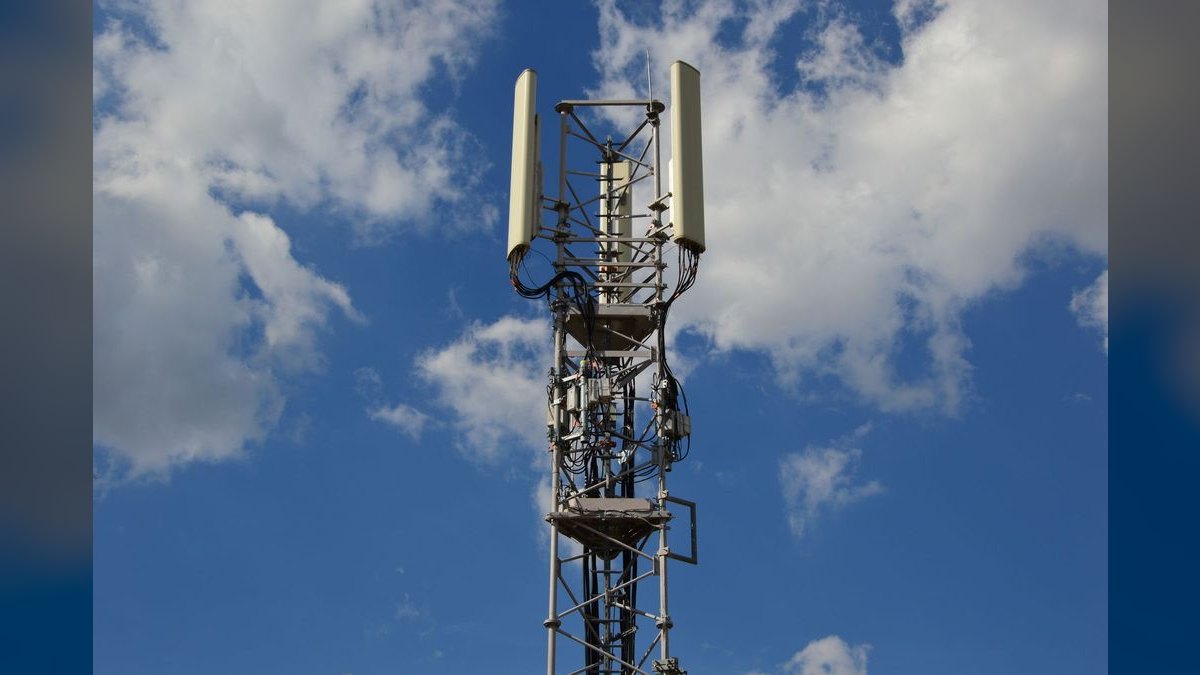
T-Mobile is the strongest overall cellular and wireless carrier in Kansas for 2027, pairing 600 MHz Extended Range 5G for rural counties with 2.5 GHz Ultra Capacity in metros. Verizon wins dense Overland Park and Wichita blocks on reliability, while Visible delivers Verizon's network at prepaid pricing for budget-first households.
The farm-to-Overland-Park problem that breaks most carrier picks
Picture a Kansas operations manager who lives outside Hays, drives I-70 east twice a month for client meetings in Topeka and Overland Park, and runs a home office that hosts three video calls a day. She switched carriers in 2024 based on a national coverage map that showed her county shaded solid, and spent the next eighteen months dropping calls in her own kitchen while paying for a plan built around speeds she never saw.
That scenario is the actual decision problem in Kansas, and it is why national "best carrier" rankings mislead here. Kansas is roughly 82,000 square miles with about 2.9 million people, and the population is stacked into a narrow eastern band — Johnson County, Wyandotte County, Sedgwick County, Shawnee County, and Douglas County hold the majority of the state's residents. Everything west of Salina thins out fast. A carrier can truthfully advertise coverage of "over 98% of the population" while leaving a third of the land area on 4G LTE or nothing at all, because population coverage and land coverage are two entirely different metrics.
The practical consequence: your carrier decision in Kansas is really three separate decisions stacked on top of each other. First, does the network work at your primary address — not your county, your address. Second, does it hold along the specific corridors you drive, which for most working Kansans means I-70, I-35, US-54, US-56, or US-81. Third, does it deprioritize you into uselessness during the hours you actually need it. A plan that tests at 180 Mbps at 10 a.m. on a Tuesday and collapses to 4 Mbps at 5 p.m. in downtown Topeka is not a 180 Mbps plan.
The failure mode is almost always the same. Someone picks on headline price or a national speed award, discovers the gap two weeks in, and then eats an early termination fee or a device payoff to escape. The fix is boring and effective: treat carrier selection as a small procurement exercise with a test period, not as a purchase. Every major carrier now offers some form of eSIM trial precisely because they know address-level variance is the deciding factor, and using that trial is free.

For a business owner, the stakes scale. A field service company running eight trucks across central Kansas is buying dispatch reliability, not phone plans — a dead zone that costs one missed job per truck per month is a direct hit to revenue that dwarfs the $10/line difference between carriers. Price the network against what downtime costs you, not against the competitor's promo.
How coverage, spectrum, and deprioritization actually work
Three technical mechanisms explain nearly every Kansas coverage complaint, and understanding them lets you predict performance before you sign anything.
Spectrum band determines reach versus speed. Low-band spectrum around 600 MHz and 850 MHz travels far and penetrates buildings, but carries less data — think 30 to 150 Mbps depending on load. Mid-band, roughly 2.5 GHz for T-Mobile and C-Band around 3.7 GHz for Verizon and AT&T, is the sweet spot: several hundred Mbps with a usable radius of a mile or two per site. High-band mmWave delivers gigabit speeds over a few hundred feet with essentially no wall penetration, which is why it exists in stadiums and airports and effectively nowhere in western Kansas. When a carrier says "5G," ask which band. A 600 MHz 5G signal in Greeley County and a 2.5 GHz 5G signal in Wichita are the same marketing word describing a ten-times performance difference.
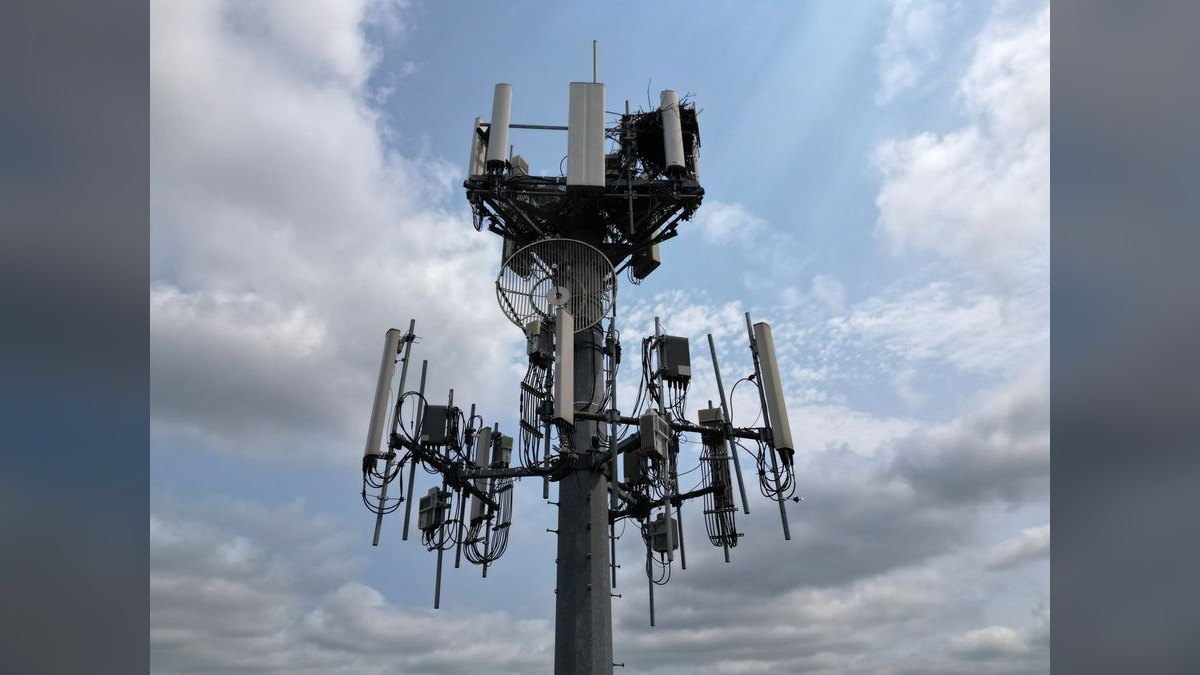
Tower density is the hidden variable. Rural Kansas coverage is a function of how many sites a carrier built along a highway corridor and how far apart they sit. In sparse counties, sites may be spaced far enough that you get a usable signal on the road and nothing a mile off it. This is why address-level checking beats county-level checking every single time, and why two neighbors on opposite sides of a hill can have completely different experiences on the same carrier.
Deprioritization is a contractual mechanism, not a bug. Every unlimited plan defines a premium data threshold — commonly in the 50 GB range on flagship postpaid plans, lower on prepaid brands. Past that threshold, your traffic drops behind other users' when a tower is congested. Prepaid and MVNO customers typically sit below postpaid customers in that queue permanently, regardless of usage. That is the single biggest reason a prepaid plan running on the same physical towers performs worse than the postpaid parent plan during peak hours.

The takeaway is that "best carrier" is really "best band-plus-priority combination for your specific location and usage pattern." A heavy-data user in a congested metro should weight priority tier heavily. A light user in a rural county should weight low-band reach and ignore peak speed entirely.
Real numbers, ranges, and what they mean in practice
Independent measurement in Kansas generally shows T-Mobile leading on median download speed statewide, with Verizon and AT&T clustered behind it and regional or prepaid brands trailing further. Treat any specific figure you read — including the ones in older drafts of this page — as a snapshot that needs re-verification against current Ookla and FCC data before you act on it. What holds steady is the shape of the numbers, and that shape is what you plan around.
Speed tiers you can realistically expect. In Kansas metros on mid-band 5G, median downloads typically land in the 100–300 Mbps range, with peaks well above that on lightly loaded sites. On low-band 5G in rural counties, expect roughly 30–100 Mbps. On 4G LTE fallback in the far west, 10–40 Mbps is common. Upload speeds run far lower across the board — often 5–20 Mbps — which matters more than most people realize if you push video, run backups, or host calls from a home office.
What speed you actually need. A single HD video call consumes roughly 2–4 Mbps. A 4K stream runs about 25 Mbps. A household with two remote workers and streaming kids rarely needs more than 50–100 Mbps of real throughput. This is the most useful reframe available: past a certain point, more Mbps buys nothing, and the money is better spent on coverage consistency and priority tier. A stable 60 Mbps beats a nominal 400 Mbps that vanishes at 5 p.m.
Price bands as of 2027. Flagship postpaid single-line unlimited plans from the big three generally sit in the $50–$85/month range before taxes, with autopay and paperless discounts of $5–$10/line typically baked into the advertised number. Prepaid brands from the same parent networks — Visible on Verizon, Metro and Mint on T-Mobile, Cricket on AT&T — cluster in the $25–$60 range. Deep-discount tiers with hard data buckets run $15–$30. Multi-line postpaid drops per-line cost substantially; four lines often lands near $25–$40 per line. Always confirm current pricing on the carrier's own page, since promotional structures change quarterly.

Latency. 5G standalone cores push round-trip latency into the 20–40 ms range, versus 50–80 ms typical on LTE. For video calls, cloud CRM work, and navigation, that difference is perceptible. For streaming, it is irrelevant.
Hotspot allowances are where plans quietly differ. Entry unlimited plans often include 5 GB or less of high-speed hotspot; mid-tier plans include 15–30 GB; premium tiers go to 50 GB or more. If you tether a laptop for work from a truck or a job site, hotspot allowance is likely a more important spec than the headline speed.
Total cost of ownership math. Run a 24-month number, not a monthly one. Take the monthly rate times 24, add activation fees, add device financing net of trade-in credit, and subtract any switching credits. A $65/month plan with a $500 trade-in credit beats a $50/month plan with none over two years: $1,560 minus $500 is $1,060 against $1,200. Carriers structure promotions knowing most buyers compare only the monthly line item.
Trade-offs, alternatives, and who each option actually fits
There is no single winner, only a best fit per profile. Here is how the real trade space breaks down.

Postpaid flagship (T-Mobile, Verizon, AT&T). You are buying network priority, physical retail support, device financing, and family-plan economics. You pay a premium for it, and you are typically locked into a device payment plan for 24–36 months even if the plan itself has no contract. Best for households with multiple lines, anyone who needs guaranteed performance during congestion, and business users where downtime has a cost.
Prepaid brands on the same networks (Visible, Cricket, Metro, Boost). Same towers, lower priority, thinner support. You save meaningfully — often 40–50% versus the parent postpaid plan — and you give up peak-hour consistency plus, in some cases, physical store access. Best for light-to-moderate data users, single lines, and anyone whose usage sits outside peak congestion windows.
MVNOs with prepay-the-year models (Mint and similar). The lowest effective monthly cost available, achieved by paying 12 months upfront. The catch is the upfront outlay and aggressive deprioritization once you pass the plan's threshold. Best for disciplined light users, students, and second lines.
Regional carriers (UScellular). Historically strong in parts of rural Kansas where national carriers built out later, with local retail presence and priority programs for first responders. Trade-offs are a narrower phone lineup and weaker performance in metros. Worth checking specifically if you live in a county where the national maps look thin.
Multi-network aggregators (Google Fi). These switch between partner networks based on signal, which is genuinely useful when you cross between strong and weak areas on a regular route. Trade-offs are device compatibility requirements and, on some plans, throttling thresholds.
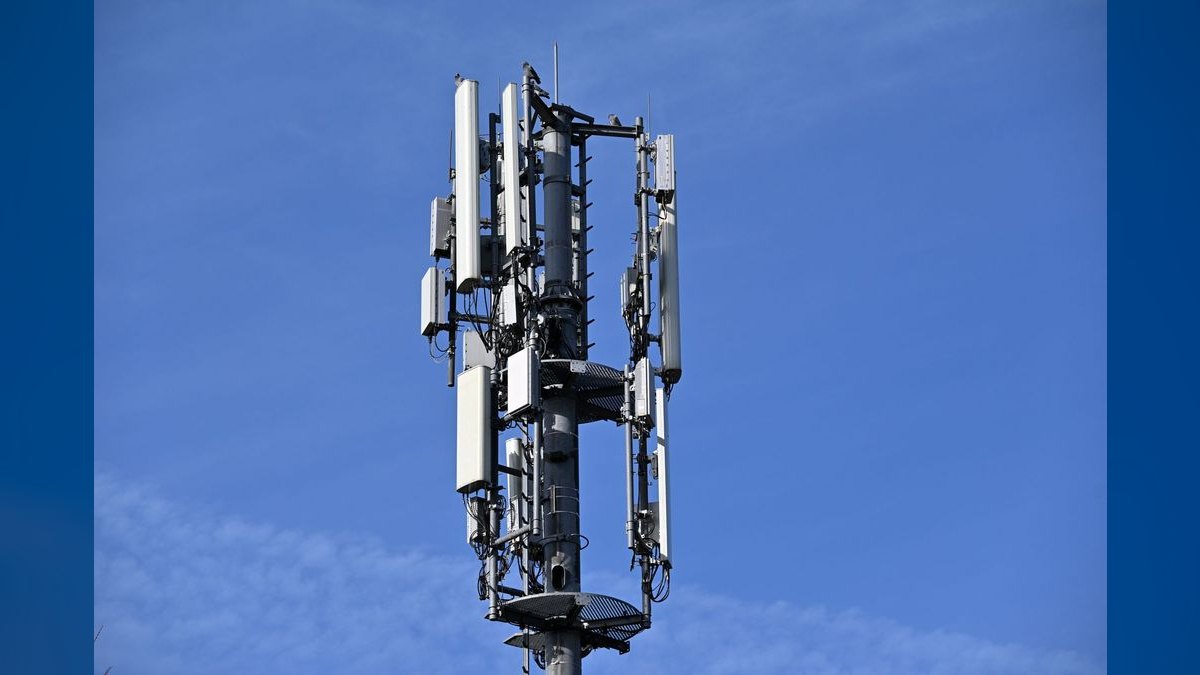
Fixed wireless home internet is the adjacent decision most Kansans should evaluate at the same time. T-Mobile and Verizon both sell 5G home internet in Kansas markets, often bundled at a discount with a mobile line. In areas where the alternative is DSL or expensive satellite, fixed wireless is frequently the better product — but its performance depends on the same tower congestion dynamics described above, so it is worth testing during the hours you actually work.
Common pitfalls and how to avoid them
Trusting the coverage map instead of testing. Carrier maps are predictive models, not measurements. They are directionally useful and locally wrong all the time — especially in terrain with hills, metal buildings, or dense tree cover. Fix: use the eSIM trial. Every major network offers some form of no-port trial, and it costs nothing but a few minutes of setup. Run it at your home, your office, and at least one point on your regular drive.
Testing only at convenient hours. A 9 a.m. Saturday test tells you almost nothing about a 5 p.m. Wednesday reality. Fix: run at least three speed tests at your primary location — morning, evening peak, and late night — and one during whatever your worst-case scenario is, like a stadium event or a busy retail corridor.
Confusing population coverage with land coverage. "98% of Kansans covered" and "you have signal on your land" are unrelated claims. Fix: check the FCC's broadband map, which reflects reported and challenged availability data rather than pure carrier marketing, and cross-reference with crowd-sourced measurement.
Ignoring upload speed. Buyers optimize downloads and then wonder why video calls look bad on their end and cloud backups crawl. Fix: test upload explicitly, and weight it heavily if you work from home or push media.
Missing the deprioritization threshold. People buy "unlimited" and get throttled, then blame coverage. Fix: read the plan's premium data number and compare it against your actual usage, which every carrier app reports. If you use 60 GB and the plan includes 50 GB of premium data, you are buying a bad fit.
Getting trapped by device financing. The plan may be contract-free while the phone is not. Leaving early means paying off the remaining device balance immediately, which can be several hundred dollars. Fix: know the payoff number before you switch, and check whether the new carrier's switching credit covers it. Many do, but the credit usually arrives as bill credits spread across 24–36 months, meaning you have to stay to collect it.
Forgetting taxes and fees. Advertised prices frequently exclude them. Some carriers include them; most do not. Fix: ask for the all-in monthly total in writing before porting, and multiply by 24.
Porting incorrectly. Never cancel your old line before the port completes — canceling first releases the number and can lose it permanently. Fix: keep the old account active, request the account number and transfer PIN from the old carrier, initiate the port from the new carrier, and let the old line cancel automatically when the number moves.
Overlooking the business angle. For a company operating across Kansas, carrier choice touches dispatch, field data capture, mobile point of sale, and anything else that turns activity into revenue. Evaluate business plans on priority tier, pooled data, device management, and support escalation paths — not on the consumer promo. A single account manager and a documented escalation path are worth more than $5/line when a truck is stranded outside Liberal with no signal and a customer waiting.
Related questions
Does T-Mobile really cover western Kansas?
T-Mobile's 600 MHz Extended Range 5G reaches far more land area than its mid-band, so most western Kansas coverage is low-band — usable for calls, maps, and moderate data, but not metro-grade speeds. Verify at your exact address with the eSIM trial rather than trusting the county-level map.
Is prepaid worth it if it runs on the same towers?
Often yes. You get the same physical network at 40–50% less, trading peak-hour priority and retail support. If your heavy usage falls outside congestion windows and you are comfortable with app-based support, the savings are real and the coverage is identical.
Should I get 5G home internet instead of cable in Kansas?
Where the alternative is DSL or satellite, usually yes. Where cable or fiber is available, compare consistency, not headline speed — fixed wireless shares tower capacity, so evening performance is the number that matters. Test during your actual work hours before canceling anything.
How long should a carrier trial run before I commit?
At least a full week, covering weekday peak, weekend, and your regular driving route. Two weeks is better because it captures more variance. Keep your existing line active for the entire trial so you have a working phone and a clean fallback.
Do first-responder or business priority programs matter?
Yes, in congestion. Priority programs put your traffic ahead of general consumer traffic on loaded towers, which is the difference between a working dispatch and a stalled one during an event or emergency. Check eligibility — many small businesses and public agencies qualify.
FAQ
Which carrier has the best rural coverage in Kansas?
T-Mobile's low-band 5G footprint gives it the widest rural reach among national carriers, with AT&T's 850 MHz build competitive along many corridors. In specific south-central and western counties, regional carriers like UScellular can outperform both. There is no universal answer — the honest method is to check your address on the FCC broadband map, then confirm with an eSIM trial.
What is the cheapest way to get good coverage in Kansas?
A prepaid brand riding a major network is the cheapest path to genuinely usable coverage — typically $25–$40/month for unlimited, versus $50–$85 postpaid. Annual-prepay MVNOs go lower still if you can commit twelve months upfront. You trade peak-hour priority for the savings, which is a good trade for light and moderate users.
How do I test a network before switching?
Use an eSIM trial on a compatible phone. Install the trial line alongside your existing service, then run speed tests and place calls at your home, workplace, and along your commute at several times of day. Your existing number stays untouched, so there is zero risk and no port to unwind if the network disappoints.
Will 5G cover all of Kansas by 2027?
No. 5G reaches the large majority of Kansans by population, but land-area coverage is substantially lower because western counties are sparsely populated and expensive to build out. Expect low-band 5G or 4G LTE fallback across much of the west, with mid-band concentrated in metros and along major interstate corridors.
Do I lose my phone number if a switch goes wrong?
Only if you cancel the old line before the port finishes. Keep the original account active, get the account number and transfer PIN from your current carrier, and start the port from the new one. The old line closes automatically once the number transfers. If a port stalls, your number is still safe as long as that old account remains open.
Is it worth switching for a device promotion?
Sometimes, but run the 24-month math first. Switching credits typically arrive as monthly bill credits over 24–36 months, so you have to stay the full term to collect the full value. Add up total plan cost plus device payments minus credits across the term, and compare that to your current all-in cost.
Sources
- FCC National Broadband Map
- Ookla Speedtest — United States market reports
- T-Mobile coverage map
- Verizon coverage map
- AT&T wireless coverage map
- UScellular coverage map
- Visible plans
- Mint Mobile coverage
- Google Fi coverage
- FCC consumer guide: wireless number portability
Related on PULSE
This page will be disappearing soon. Save it to your device for $1 — or read it free while it is here.
@Kory-White- · if Venmo asks, the last 4 of my number are 2012
This page is gone.
This one is off the shelf now. $1 keeps it on your phone for good — the whole page, pictures and diagrams included.
 telcoBest Cell Phone Plans for Heavy Data Users in 2027
 telcoIs Telco worth it in 2027?
 telcoStraight Talk vs Total Wireless: which is better in 2027?
 telcoIs carrier phone insurance worth it in 2027?
 telcoWhy are taxes and fees so high on my phone bill in 2027?
 telcoIs Mint Mobile worth it in 2027?
 telcoHow long does it take to port a phone number in 2027?
 telcoBest Cellular and Wireless Carrier in Boise in 2027
 telcoHow does international roaming work and how do I avoid huge bills in 2027?
 telcoHow much data do I actually need for streaming music in 2027?