


Will Starlink become a real cell phone carrier in 2027?
Quality
Certified
Starlink is actively moving toward becoming a real cell carrier, but 2027 is a plausible target, not a guaranteed one. SpaceX's October 2026 purchase of Grain Management's 800 MHz spectrum and the FCC's approval of 15,000 next-generation satellites remove the two biggest legal and technical obstacles. No launch date, pricing, or plan name has been announced, so treat 2027 as an informed guess rather than a confirmed carrier debut.
The two (or more) options compared
There are really two distinct paths Starlink could take to put a phone-reachable signal in your pocket, and they are easy to conflate because both get described loosely as "Starlink becoming a carrier." The first path is the one that just became dramatically more credible: Starlink as a standalone mobile network operator, using spectrum it actually owns, broadcasting from its own satellites directly into unmodified phones with no terrestrial carrier in the loop at all. The second path is the one that is already live today in a much narrower form: Starlink as a supplemental coverage partner riding inside an existing carrier's network, where T-Mobile (and a handful of international partners) lease Starlink's satellite capacity to fill dead zones on their own licensed spectrum, under their own brand, for their own subscribers.
The acquisition of Grain Management's nationwide 800 MHz portfolio is what tips the balance toward the first path. Until that deal, Starlink's direct-to-device ambitions depended entirely on borrowed spectrum — T-Mobile's PCS band, used under a commercial agreement, with Starlink as an infrastructure vendor rather than a carrier of record. Owning up to 14 MHz of paired low-band spectrum (817-824 MHz paired with 862-869 MHz) changes the legal and commercial structure completely. SpaceX itself has said the deal will "pave the way for Starlink to become a major mobile carrier in the US," which is a very different statement than "we will keep selling satellite capacity to carriers."
The partnership path is lower-risk and already proven at small scale: T-Mobile's direct-to-cell service, built on Starlink satellites, already delivers texting and limited data to standard phones in remote parts of the US without any new app or hardware. The trade-off is that Starlink never becomes the carrier in that model — it's a satellite subcontractor, and T-Mobile sets price, plan structure, and the subscriber relationship. The standalone path is higher-risk and higher-reward: it requires Starlink to build out a full mobile network business — billing, customer service, device compatibility testing, state and federal regulatory filings as an actual carrier — but it lets SpaceX capture the entire revenue stream and set its own terms for coverage, pricing, and expansion pace.
A third, hybrid possibility sits between these two: Starlink could continue honoring existing carrier partnerships for backup/emergency coverage while simultaneously standing up its own "Starlink Mobile" brand as a primary service in areas with no existing carrier agreement, essentially running both models at once. Nothing announced so far rules this out, and it would let SpaceX monetize the Grain spectrum fastest without immediately cannibalizing the T-Mobile relationship.
How to decide between them
The decision tree above is really a checklist for judging how close Starlink is to carrier status at any given moment, and it maps directly onto what has and has not happened as of October 2026. Spectrum ownership is the first gate, and it has now been cleared on paper — the Grain Management acquisition gives SpaceX a nationwide, paired, low-band license rather than a lease. Satellite capacity is the second gate, and the FCC's approval of 15,000 next-generation Starlink satellites for the direct-to-device Starlink Mobile service clears that one too, at least on the regulatory side; actual launch cadence and in-orbit capacity still have to catch up to that approval.
The third gate — a named consumer brand, published pricing, and a committed launch window — is the one still wide open, and it's the gate that actually determines whether an ordinary person can walk into a store or open an app and sign up. Regulatory and spectrum clearance are necessary but not sufficient: a company can hold every license and every satellite slot it needs and still be a year or more from taking a customer's money. Anyone trying to decide whether to expect Starlink-as-carrier by a specific date should watch for three concrete signals rather than guessing: an FCC filing or SEC disclosure naming a commercial launch timeline, a public pricing page or app listing under a "Starlink Mobile" brand, and confirmation of which markets get coverage first (rural/unserved areas are the far more likely starting point than dense urban markets, since that's where the economics and the regulatory pressure both point).
Concrete numbers behind each option
The scale of what changed on October 9, 2026 is worth sitting with, because it's large by any carrier-spectrum-transaction standard. SpaceX agreed to acquire 100% of Grain Management's nationwide 800 MHz portfolio — up to 14 MHz of paired spectrum across the 817-824 MHz and 862-869 MHz bands. That's a meaningful, usable block of low-band spectrum, the kind traditionally prized by terrestrial carriers precisely because of its propagation characteristics: low-band frequencies like 800 MHz travel farther per watt of transmit power and penetrate buildings, walls, and roofs far better than the high-band and mid-band spectrum used for most 5G capacity. That propagation behavior matters enormously for a satellite-to-phone service, because the signal is coming from orbit rather than from a tower a few hundred meters away — every bit of extra penetration and range helps close what is otherwise an extremely difficult link budget.
Just as important: because this spectrum sits in a band already supported by the vast majority of phones sold in the US over the last decade, customers would not need to buy new handsets to use a Starlink Mobile service built on it. That's a sharp contrast with earlier satellite-phone efforts, which historically required bulky dedicated hardware or specialized antennas. The same week as the spectrum deal, the FCC approved SpaceX's application to deploy and operate 15,000 next-generation Starlink satellites for its direct-to-device Starlink Mobile service — an enormous expansion from the direct-to-cell satellite counts SpaceX had been flying under its existing T-Mobile partnership, and a fleet size clearly built for a standalone nationwide network rather than a supplemental backup service.
The market's reaction to the spectrum news is itself a useful number: on October 9, 2026, AT&T shares fell 6.6% to roughly $23, Verizon fell 7.23% to around $43, and T-Mobile fell 6.79% to about $159.70. Single-day moves of six to seven percent across all three major wireless carriers on the same news tells you that institutional investors read the Grain Management deal as a credible threat to the existing carrier oligopoly, not as a minor infrastructure footnote. That reaction is itself evidence worth weighing — markets don't move seven percent on announcements that look purely symbolic. At the same time, no number exists yet for a launch date, a subscription price, a plan name, or a subscriber target. Any article or forecast citing a specific Starlink Mobile price point or a hard 2027 ship date is speculating past the available facts; the honest position is that the inputs (spectrum, satellites, regulatory clearance) are now largely in place, while the output (an actual commercial product) has not been scheduled publicly.
Implementation details and sequencing
.jpg)
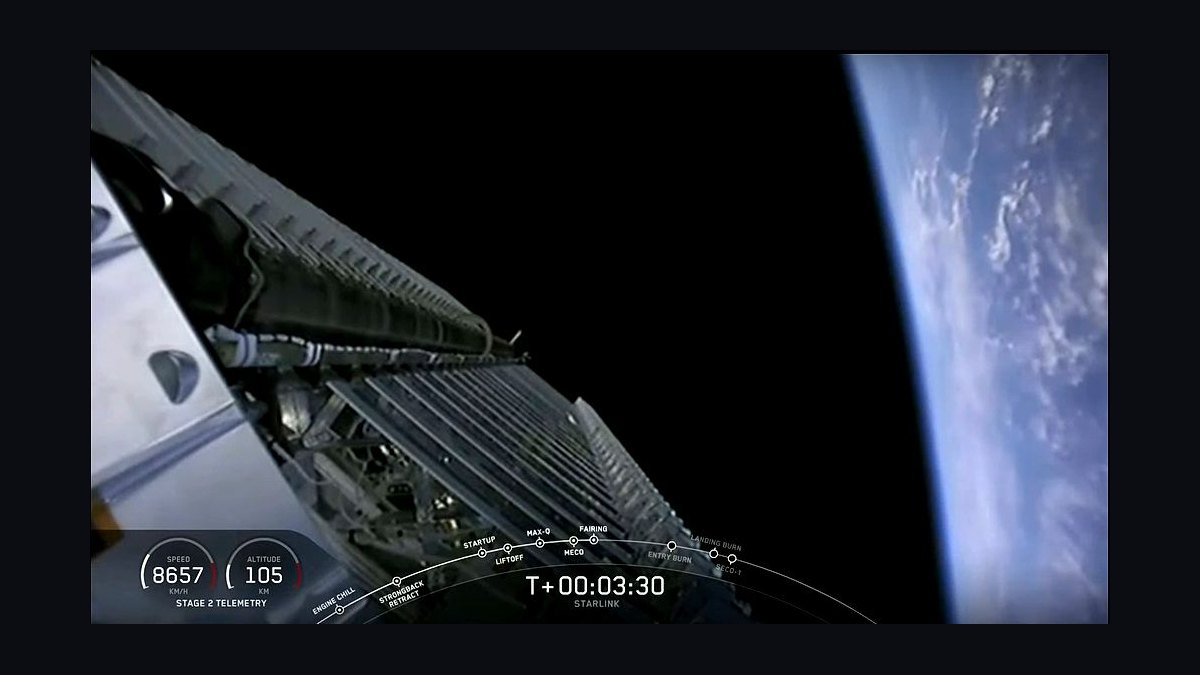
Turning regulatory clearance into an actual working carrier is a sequencing problem, and each step in the chain above carries its own realistic timeline. The spectrum transfer itself — closing the Grain Management acquisition — requires its own regulatory sign-off, since spectrum license transfers go through FCC review for competitive and public-interest concerns; that review process alone commonly takes months rather than weeks, even for a straightforward transaction. The satellite buildout is the longest pole in the tent: 15,000 satellites is roughly triple the existing Starlink direct-to-cell fleet scale, and even with SpaceX's unmatched launch cadence, deploying, testing, and bringing a constellation of that size to operational readiness happens in waves over multiple years, not in a single push.
Device compatibility testing sounds like the easy step given that the spectrum sits in an already-supported band, but it still has to happen across the long tail of phone models, chipsets, and carrier-specific software locks that exist in the US market — a phone "supporting 800 MHz" in principle doesn't guarantee every carrier-locked or software-restricted device will actually connect to a new network on that band without a firmware update. Becoming a licensed carrier of record is a separate administrative track from the spectrum and satellite work: it means filing as a facilities-based or MVNO-style carrier, securing interconnection agreements, building out billing and customer service infrastructure, and satisfying state-level telecom requirements in addition to federal ones.
The most realistic rollout sequencing, based on how direct-to-cell technology behaves today, starts in rural and unserved areas rather than cities. That's both a regulatory story and a physics story: the FCC's interest in supplemental coverage has centered on closing the "dead zone" problem in places terrestrial towers don't reach economically, and the satellite link budget is far easier to close when there's no competing terrestrial signal and no dense urban multipath interference to fight through. A national, full-service Starlink Mobile offering competing head-to-head with AT&T, Verizon, and T-Mobile in cities is a later-stage outcome, likely to lag well behind an initial rural/emergency-coverage launch under the Starlink Mobile name. Given the deal closed in October 2026 and the satellite fleet still has to be built out in phases, a 2027 commercial debut is technically achievable for an early, limited version of the service, but a full-scale carrier rollout matching incumbent coverage maps is a multi-year project that could easily extend past 2027.
Related questions
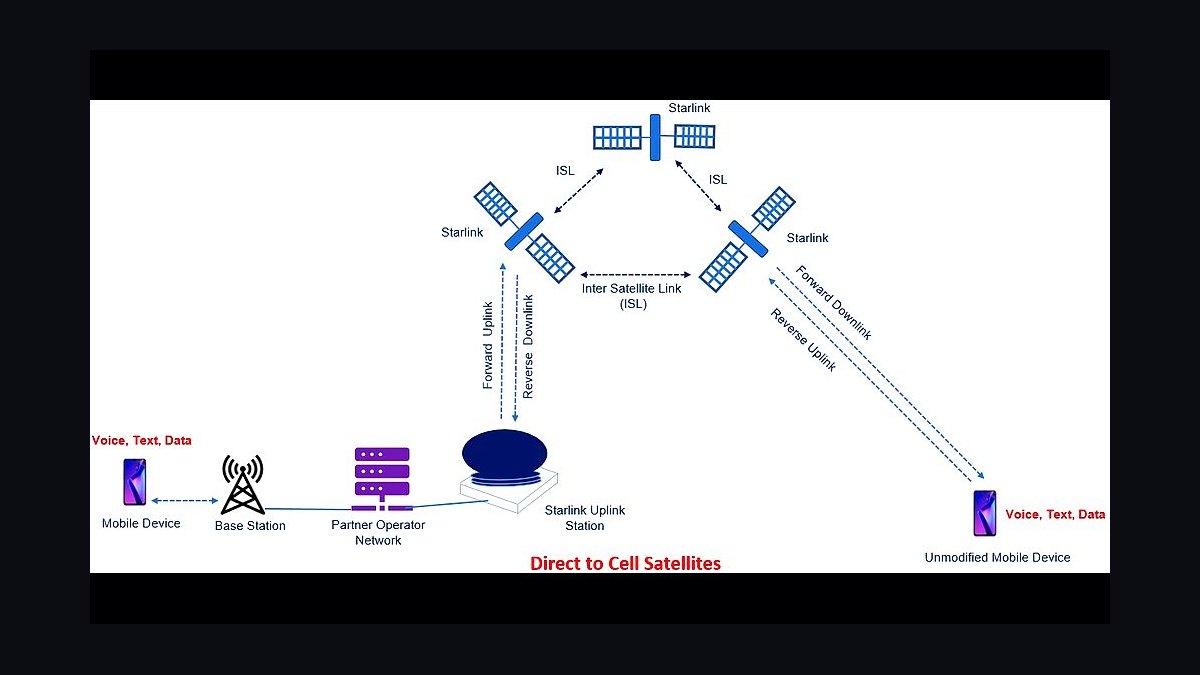
Does Starlink already offer any phone service today?
Yes, in a limited form. Starlink satellites currently support T-Mobile's direct-to-cell service, delivering texting and some data to standard phones in coverage gaps — but that's a wholesale arrangement under T-Mobile's brand, not Starlink operating as its own carrier.
Will existing phones work with Starlink Mobile, or will new hardware be required?
Because the acquired 800 MHz spectrum is already supported by most phones sold in the US in recent years, customers would likely not need new devices — a meaningful difference from earlier satellite-phone technology that required specialized hardware.
Why did AT&T, Verizon, and T-Mobile stock drop on the spectrum news?
Investors read SpaceX's acquisition of nationwide low-band spectrum, paired with FCC approval for 15,000 satellites, as a credible step toward Starlink becoming a direct competitor rather than just an infrastructure supplier, and priced in that competitive risk immediately.
What's the difference between "direct-to-cell" and "Starlink becoming a carrier"?
Direct-to-cell describes the satellite technology connecting to ordinary phones; "becoming a carrier" describes the business and regulatory status of owning the spectrum, billing the customer, and operating under your own brand rather than a partner's.
Could Starlink end its T-Mobile partnership once it has its own spectrum?
It's possible but unconfirmed. SpaceX could run both models in parallel — honoring existing carrier agreements for supplemental coverage while building a separate standalone Starlink Mobile brand — since nothing announced so far forces an either/or choice.
FAQ
Is Starlink legally allowed to operate as a cell phone carrier now? The Grain Management spectrum acquisition and the FCC's satellite approval remove the two largest regulatory obstacles, but SpaceX still needs to complete carrier-of-record filings and the spectrum license transfer itself needs FCC sign-off before full carrier operations can begin.
What spectrum band did Starlink just acquire, and why does it matter? Up to 14 MHz of paired 800 MHz spectrum (817-824 MHz and 862-869 MHz), a low-band frequency range valued for traveling farther and penetrating buildings and terrain far better than higher-frequency spectrum, which matters enormously for a satellite-to-phone link.
How many satellites has the FCC approved for Starlink's phone service? 15,000 next-generation satellites, approved the same week as the spectrum deal, specifically for the direct-to-device Starlink Mobile service — a fleet scale consistent with building a standalone national network rather than a narrow backup service.
Has Starlink announced pricing or a launch date for a phone plan? No. As of October 2026, no pricing, plan name, subscriber target, or firm launch date has been publicly announced; any specific figures circulating for a "Starlink Mobile" plan should be treated as speculation.
Will I need a new phone to use Starlink's cell service? Likely not. The acquired spectrum sits in a band already supported by the large majority of phones sold in the US over the past several years, which is a key reason the deal is seen as commercially significant rather than purely technical.
Did this news actually hurt the big carriers' stock prices? Yes. On October 9, 2026, AT&T fell 6.6% to about $23, Verizon fell 7.23% to about $43, and T-Mobile fell 6.79% to about $159.70, all on the same day the spectrum deal and satellite approval were disclosed.
Sources
- https://www.fcc.gov
- https://www.spacex.com/starlink
- https://www.reuters.com
- https://www.bloomberg.com
- https://www.cnbc.com
- https://www.t-mobile.com/coverage/direct-to-cell
- https://www.sec.gov
- https://www.wsj.com
Related on PULSE
- How does satellite direct-to-cell technology actually work on an unmodified phone?
- What is T-Mobile's Starlink partnership and how is it different from a full carrier launch?
- How do telecom spectrum acquisitions get approved by the FCC?
- Why do low-band frequencies matter more for rural wireless coverage?
- How did AT&T, Verizon, and T-Mobile stock react to past satellite-industry announcements?
- What does it take for a new company to become a licensed US mobile carrier?
This page will be disappearing soon. Save it to your device for $1 — or read it free while it is here.
@Kory-White- · if Venmo asks, the last 4 of my number are 2012
This page is gone.
This one is off the shelf now. $1 keeps it on your phone for good — the whole page, pictures and diagrams included.
 telcoBest Cellular and Wireless Carrier in North Dakota in 2027
 telcoBest Cellular and Wireless Carrier in Salt Lake City in 2027
 telcoBest Cellular and Wireless Carrier in Washington in 2027
 telcoBest Cellular and Wireless Carrier in Tulsa in 2027
 telcoBest Cellular and Wireless Carrier in Dayton in 2027
 telcoBest Cellular and Wireless Carrier in Columbus in 2027
 telcoBest Home Internet for Rural Areas in 2027
 telcoBest Cellular and Wireless Carrier in Pittsburgh in 2027
 telcoBest Cellular and Wireless Carrier in Charleston in 2027
 telcoBest Cellular and Wireless Carrier in Louisiana in 2027