

Best Cellular and Wireless Carrier in Montana in 2027
 Curated byKory White · Fractional CRO · Maryland
Quality
Certified

For most Montanans in 2027, AT&T is the strongest overall cellular and wireless carrier because its FirstNet-backed rural footprint reaches highways and small towns other networks miss. Verizon wins on 5G speed in Billings, Bozeman, and Missoula, while regional cooperatives like Nemont and Triangle deliver better value in their home counties.
What actually separates the contenders in Montana
Montana breaks the usual carrier comparison. In a dense metro, all three national networks work well enough that the decision collapses to price. Here, the state is roughly 147,000 square miles holding just over a million people, and the mountain-and-plains split means coverage is decided by tower siting economics, not marketing. A carrier that looks identical to its competitors in Denver can be unusable forty minutes outside Havre.
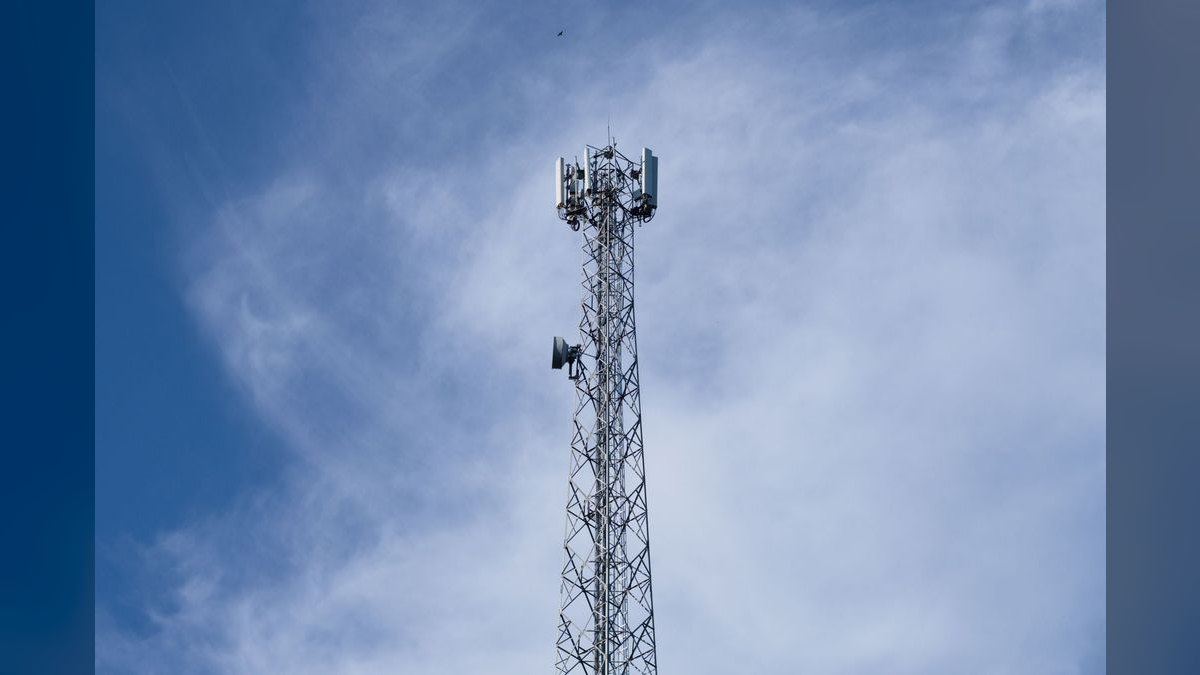
AT&T's advantage is structural rather than promotional. The FirstNet build — the nationwide public-safety network AT&T operates under a federal contract using 700 MHz Band 14 spectrum — required buildout in places where a purely commercial business case would never have justified a tower. Montana benefited disproportionately: sparse counties got sites that serve first responders during wildfire season and, incidentally, serve ranchers and travelers the other eleven months of the year. Low-band 700 MHz also propagates further and penetrates terrain better than mid-band, which matters when the nearest tower is twenty miles away across a river break. The practical result is that AT&T tends to hold a usable LTE bar in eastern and north-central Montana where competitors drop to nothing.
Verizon's advantage is different in kind. Its network historically prioritized interstate corridors and population centers, and its mid-band C-band 5G deployment concentrated on the same towns. If your Montana life happens on I-90 between Missoula and Billings, in Bozeman's downtown, or around Great Falls, Verizon typically delivers the fastest sustained throughput and the most consistent 5G indicator. Verizon also invested in fixed wireless home internet across Montana's larger towns, which matters if you want one vendor for phone and house.
T-Mobile's position improved substantially after the Sprint merger consolidated 600 MHz holdings, and its low-band 5G now reaches a large share of Montana's *population* — but population share and land share are very different numbers in this state. T-Mobile's coverage tracks towns and highways well and degrades quickly off-pavement. That is fine for a Bozeman software worker and a genuine problem for someone running cattle in the Big Hole.
Then there are the regional carriers, which most out-of-state comparison articles ignore entirely. Nemont in the northeast and Triangle Communications in central Montana are member-owned cooperatives operating their own licensed spectrum and their own towers, with roaming agreements that let their subscribers use a national network elsewhere in the state. Their coverage inside their footprint is often better than any national carrier's, their support is local, and their pricing tends to undercut national postpaid. Their weakness is everything outside the footprint, where you are dependent on the roaming partner's map and, sometimes, on roaming data caps.
The MVNO layer adds a fourth category. Cricket rides AT&T, Visible and Total ride Verizon, Metro rides T-Mobile. Each gives you the host network's *coverage* but not the host network's *priority*. In a congested cell, the postpaid customer's packets go first. In rural Montana, congestion is rarely the binding constraint — the tower is empty — so an MVNO on the right host network can be an unusually good deal. In Bozeman during a summer Saturday, deprioritization is very real.
The honest summary: coverage is the only variable that matters until it stops mattering, and then price takes over. Decide which regime you live in before you compare plans.
Choosing the right carrier for where you actually live
The decision is sequential, not a scoring matrix. Work through it in this order, because an early answer makes later questions irrelevant.
Step one — map your actual week, not your address. Write down every place you regularly need a working phone: home, the shop, the school pickup, the two highways you drive weekly, the hunting camp, the parents' place three counties over. Carrier maps are optimized for the address query, and an address that shows green can sit ten miles from a stretch of road that shows nothing.
Step two — check whether a cooperative serves you. If your home county is inside Nemont's or Triangle's footprint, run that comparison first. A member-owned carrier with local towers and a local call center is frequently the right answer for people who spend most of their time within one or two counties, and the roaming agreement covers occasional trips.
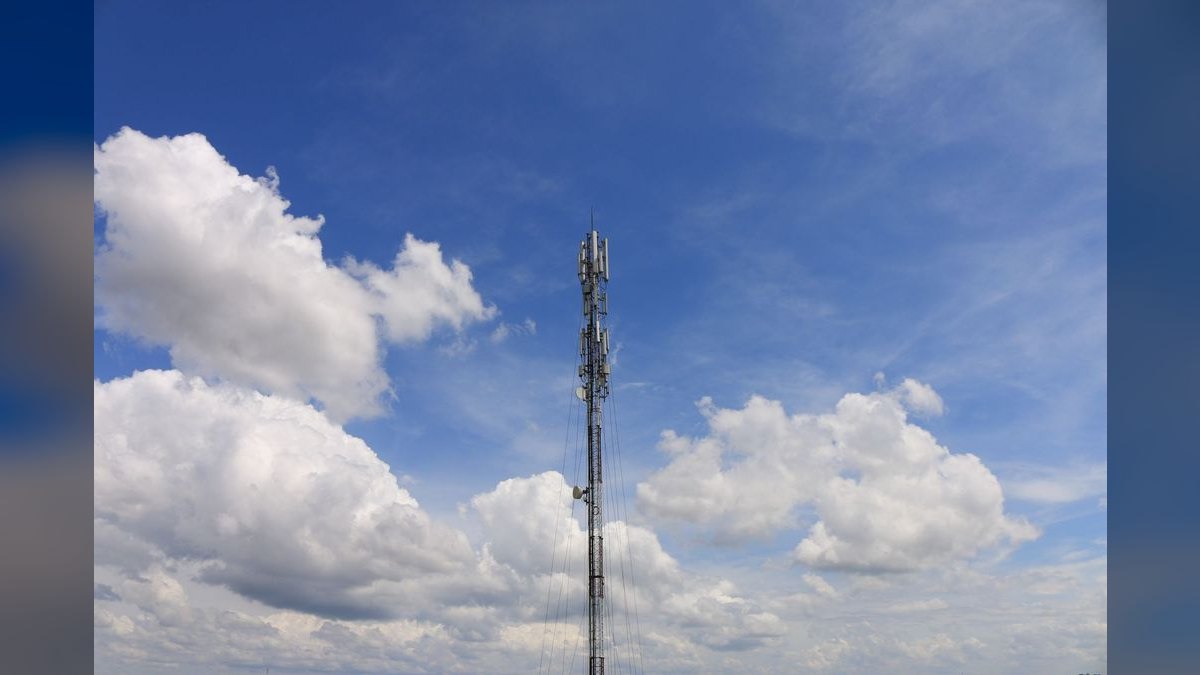
Step three — decide whether you need speed or reach. These pull in opposite directions. Mid-band 5G gives you high throughput over a small radius; low-band gives you a bar over a large one. You cannot optimize both, and most Montana buyers who think they want speed actually want reach.
Step four — only now compare price. Once one or two networks survive the coverage test, plan pricing is a straightforward comparison of premium-data allotment, hotspot allotment, and per-line family math.
Step five — test before you commit. Every national carrier sells prepaid or eSIM trials. Buy one month, drive your actual week, and watch the signal. This is the single highest-value step in the whole process and almost nobody does it.
A note on how to read that chart: the "test one month first" box applies to every branch, not just the last one. Coverage maps are modeled predictions, and the federal broadband map's own methodology allows carriers to report coverage based on propagation modeling rather than measured signal. The gap between modeled and measured is largest exactly where Montana buyers care most.
The numbers that actually drive the decision
Carrier pricing changes frequently, so treat any specific figure you read — here or anywhere — as a starting point to verify on the carrier's own page. What is stable is the *structure* of the pricing, and that structure is what you should be comparing.
Premium data versus unlimited data. Nearly every "unlimited" plan has a premium-data threshold, typically somewhere in the 50 GB range on flagship postpaid plans and much lower on entry tiers. Past that threshold you are not cut off; you are deprioritized, meaning your packets yield to other customers when the cell is busy. In an empty rural cell this is invisible. In Bozeman at 6 p.m. it can mean the difference between 80 Mbps and 3 Mbps. If your monthly usage sits under 20 GB, paying for a 50 GB premium tier buys you nothing.
Hotspot allotment is the hidden variable for remote workers. Flagship postpaid plans generally include a meaningful hotspot bucket — often in the 30–50 GB range — while prepaid and MVNO plans frequently cap hotspot at 5–15 GB or throttle it to a few Mbps regardless of volume. If you work from a truck or a cabin and your phone is your office connection, hotspot allotment matters more than the headline data number, and a $15/month premium for a real hotspot bucket is trivially worth it.
The per-line curve is steeply nonlinear. National postpaid pricing is built to punish single lines and reward four. A single line on a flagship plan often costs close to double the effective per-line rate of the same plan at four lines. If you have a family, run the four-line math before concluding a national carrier is expensive. If you are a single line, that same math is why MVNOs and cooperatives look so much better.
Autopay and paperless discounts are not optional. Nearly every advertised price assumes both. If you will not enroll in autopay, add roughly $5–10 per line per month to every national carrier figure you see.
Taxes and fees differ by brand type. Postpaid plans typically add taxes and regulatory fees on top of the advertised price. Many prepaid brands advertise tax-inclusive pricing. A $60 postpaid plan and a $60 prepaid plan are not the same monthly outlay, and the gap can run 10–15%.
Device financing is a 24–36 month lock. Carrier phone promotions are structured as monthly bill credits over the financing term. Leave early and the remaining device balance comes due immediately. If there is any chance you will need to switch carriers after testing real-world coverage, bring your own device or buy the phone outright for the first year. The freedom to leave is worth more in Montana than the promotional credit.
Fixed wireless home internet changes the total-cost picture. All three national carriers sell 5G home internet in Montana's larger towns, and the cooperatives sell fixed wireless in their footprints, often with a bundle discount against the mobile line. If wired broadband at your address is slow or absent, evaluating carriers on mobile plan price alone misses the larger number. A household replacing a $90 satellite or DSL bill with bundled fixed wireless changes the ranking entirely.

What this means for a small business. If you are buying lines for a crew, the calculation shifts from price to downtime. A field tech who cannot pull up a work order, take a payment, or reach dispatch is a direct hit to revenue, and one lost service call typically exceeds a full year of the price delta between the cheapest and the most reliable carrier. Buy coverage for the crew, buy price for the office.
Switching without breaking anything
Sequencing matters more than most people expect, because the failure modes are all timing-related.
Before you start, confirm device compatibility. A phone bought from one carrier may lack the specific bands another carrier depends on — particularly the low-band frequencies that make rural Montana work. An unlocked phone is not automatically a fully compatible phone. Check the model against the target carrier's compatibility checker before anything else, and confirm the device supports VoLTE on that network, since legacy voice fallback no longer exists.
Never cancel the old line yourself. Number porting is initiated by the *new* carrier and requires the old account to still be active. Cancel first and you lose the number permanently. Order the new service, complete the port, verify calls and texts land on the new line, and only then confirm the old account has closed on its own.
Collect your port-out credentials in advance. You will need the account number and a port-out PIN or transfer PIN from the current carrier — most now require generating one in the app or via a support request. Also verify that the account holder name and billing address on file match exactly what you give the new carrier; mismatches are the single most common cause of a stalled port.
Use eSIM to overlap coverage. Modern phones support a physical SIM and an eSIM simultaneously. Provision the new carrier as an eSIM while the old line stays on the physical SIM, and you can drive your actual routes comparing both networks side by side on the same handset before committing the number. This is the cleanest way to run the real-world test.

Time the port to your billing cycle. Porting out mid-cycle generally does not produce a prorated refund on prepaid, and postpaid final bills can include partial-month charges. Port near the end of a paid period.
Re-point anything tied to the number. Two-factor authentication, banking alerts, and business voicemail all follow the number, but carrier-specific services do not. Visual voicemail, carrier Wi-Fi calling settings, and any carrier-hosted business features need to be reconfigured. For a business line, check that your CRM, dispatch, or answering service integrations still route correctly — a silent break here costs revenue before anyone notices.
Keep a written coverage log during the trial month. Note location, time, bars, and whether data actually worked, because "shows 5G but nothing loads" is a real and common state. A two-week log beats any published map.
Coverage traps specific to Montana terrain
A few failure patterns show up repeatedly here and nowhere else, and knowing them prevents most bad purchases.
Mountain shadowing is binary, not gradual. In the Bitterroot, Big Hole, and the drainages off the Beartooth, you can have four bars at a trailhead and nothing 500 feet up the canyon. Low-band helps but does not defeat a ridge. Anyone spending real time in the backcountry should treat every carrier as unreliable there and plan accordingly with a satellite messenger or the satellite SOS features now built into recent iPhone and Android handsets — those work independent of carrier and are the correct answer for genuine backcountry safety, not a coverage upgrade.

River breaks and coulees swallow signal. The Missouri River Breaks country is the classic case: rolling terrain that looks open on a map but drops you below the horizon line to every tower. Coverage maps model this poorly.
Winter changes propagation and changes stakes. Cold does not meaningfully change RF, but it changes consequences — a dead zone in July is an inconvenience and in January is a safety issue. Weight your coverage requirements to the worst-case month, not the average one.
National park coverage is deliberately uneven. Coverage inside Yellowstone and Glacier is constrained by park policy and infrastructure agreements, and it is concentrated at developed areas rather than distributed. Expect signal at major visitor facilities and nothing in between, on every carrier.
Roaming is not the same as coverage. When a national carrier shows coverage in a far corner of the state, check whether that is native or partner roaming. Roaming often carries a data cap even on unlimited plans, and once you exceed it you are down to voice and text. Cooperative subscribers should read the roaming terms carefully for the same reason.
Wi-Fi calling is the cheapest fix available. If your problem is your house rather than your county, Wi-Fi calling over home broadband or a satellite connection solves it for free on every major carrier. Buying a different carrier to fix an indoor dead spot is usually the wrong purchase. A femtocell or network extender, where the carrier offers one, is the next step up.
Verify with the federal map, then distrust it a little. The FCC's National Broadband Map at broadbandmap.fcc.gov aggregates carrier-submitted coverage and accepts consumer challenges when reported coverage does not match reality. It is the best neutral starting point available and it is still, by construction, largely a model. Use it to eliminate carriers, not to select one.
Related questions
Does a cooperative carrier work outside its home counties?
Yes, through roaming agreements with a national partner, so your phone works statewide. But roaming data is often capped even on unlimited plans, and speeds may be lower. If you leave the footprint weekly, verify the specific roaming terms before signing.
Is an MVNO safe for rural Montana?
It depends entirely on the host network, not the MVNO brand. An AT&T-based MVNO gives you AT&T's rural footprint; a T-Mobile-based one gives you T-Mobile's. You lose network priority during congestion — rarely an issue in empty rural cells, very real in busy towns.
Should I buy 5G at all if I live rurally?
Low-band 5G is worth having since it rides the same wide-reaching spectrum as rural LTE. Mid-band and millimeter-wave 5G are town technologies with small radii. Do not pay a premium for 5G capability you will only see on trips.
What about satellite texting as a backup?
Recent iPhone and Android models include satellite emergency messaging that works with no carrier signal at all. It is a genuine safety layer for backcountry Montana, but it is not a substitute for coverage — throughput is minimal and it is designed for emergencies, not daily use.
How long should I test before switching my number?
Two to four weeks minimum, covering a normal work week plus at least one longer drive. Use an eSIM trial so your existing number stays live. Log location, time, and whether data actually loaded — bars alone are misleading.
FAQ
Which carrier has the best rural coverage in Montana?
AT&T generally holds the widest usable footprint outside towns, largely because the FirstNet public-safety buildout put low-band 700 MHz sites in sparse counties that would not otherwise justify the investment. In the northeast and central parts of the state, the local cooperatives frequently match or beat it inside their own service areas.
Is Verizon or AT&T better for driving across Montana?
Verizon is strong along the interstate corridors and in the larger towns, and typically delivers faster mid-band 5G there. AT&T is more dependable once you leave the interstates for state and county highways. If your driving is I-90 and I-15, either works; if it is US-2 or the county road network, AT&T is the safer choice.
Are the regional cooperatives actually cheaper?
Usually yes for a single line, because they are member-owned and not built to subsidize national marketing and device promotions. The savings shrink at four lines, where national family pricing gets aggressive. Run both numbers for your actual line count rather than assuming.
Do I need a special phone for rural Montana?
You need a phone that supports your carrier's low-band frequencies and VoLTE. Most current flagship and mid-range handsets do, but older or import models sometimes lack specific bands. Check the carrier's compatibility tool with your exact model number before buying service.
Can I use fixed wireless home internet instead of satellite?
In Montana's larger towns and inside cooperative footprints, often yes — and it is typically cheaper with lower latency than satellite. Availability is address-specific and capacity-limited, so check the exact address. Outside those areas, satellite remains the realistic option.
How do I file a complaint if coverage is worse than advertised?
Start with the carrier, then submit a challenge on the FCC's National Broadband Map if the reported coverage at your location is wrong. Consumer challenges feed back into the federal dataset. For billing or service disputes, the FCC consumer complaint center and the Montana Department of Justice consumer protection office both accept filings.
Sources
- FCC National Broadband Map
- FirstNet Authority
- FCC Consumer Guide: Wireless Coverage
- FCC Consumer Complaint Center
- Ookla Speedtest Insights
- RootMetrics Reports
- Montana Department of Justice — Office of Consumer Protection
- CTIA — Wireless Industry Resources
Related on PULSE
This page will be disappearing soon. Save it to your device for $1 — or read it free while it is here.
@Kory-White- · if Venmo asks, the last 4 of my number are 2012
This page is gone.
This one is off the shelf now. $1 keeps it on your phone for good — the whole page, pictures and diagrams included.
 telcoShould I finance a new phone or buy it outright in 2027?
 telcoBest Cellular and Wireless Carrier in Los Angeles in 2027
 telcoIs Mint Mobile worth it in 2027?
 telcoCan I use one carrier for phone and another for home internet in 2027?
 telcoHow do I switch carriers without changing my phone number in 2027?
 telcoWhat is the best two-line cell phone plan in 2027?
 telcoHow do I avoid an early termination fee when switching in 2027?
 telcoBest Cellular and Wireless Carrier in San Jose in 2027
 telcoBest Cellular and Wireless Carrier in Montgomery in 2027
 telcoWhat is the catch with cheap MVNO carriers in 2027?