

Best Cellular and Wireless Carrier in Nebraska in 2027
 Curated byKory White · Fractional CRO · Maryland
Quality
Certified
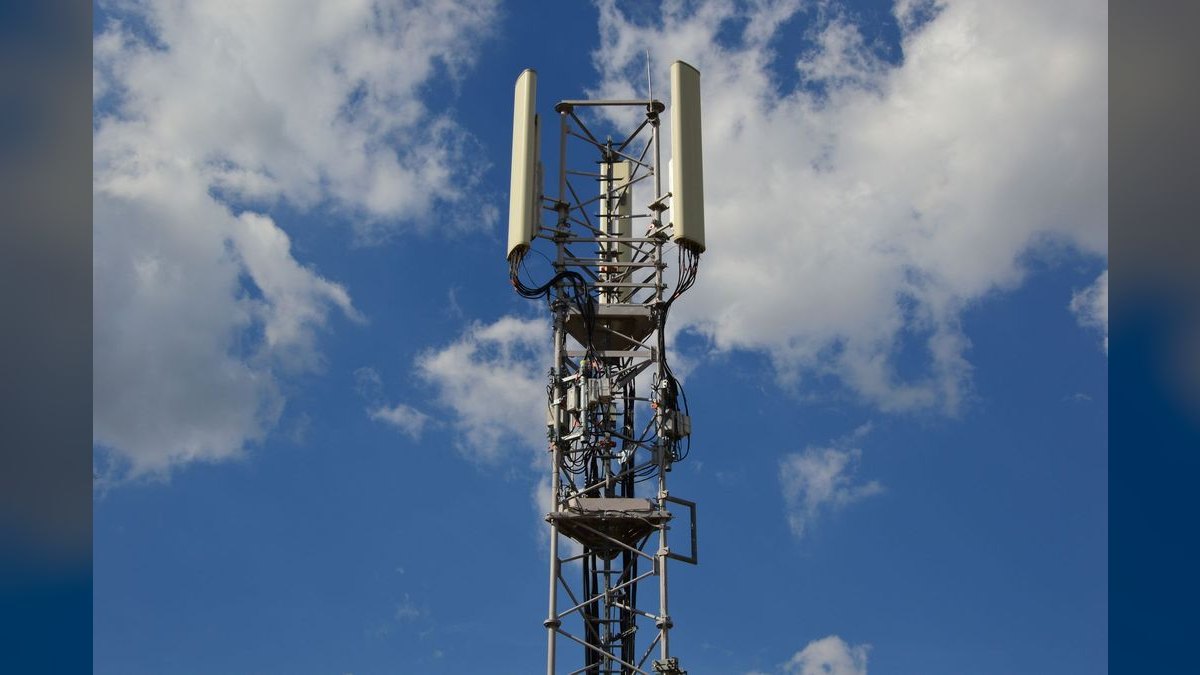
Verizon is the best cellular and wireless carrier in Nebraska for 2027, combining the broadest statewide coverage with strong 5G in Omaha and Lincoln. UScellular is the value runner-up for eastern and central towns, T-Mobile wins on urban speed, and Viaero Wireless serves the western panhandle where national coverage thins.
The outcome you should expect
Switching carriers in Nebraska is not a uniform upgrade — the outcome depends almost entirely on where your device sits during the workday. If your routes run Omaha → Lincoln → Grand Island along Interstate 80, essentially every national carrier will feel fine, and the differences collapse into price and plan perks. If your work takes you into the Sandhills, the panhandle, or the ranch counties north of the Platte, the differences stop being cosmetic and start being the difference between a call that connects and a call that does not.
The realistic outcome for a professional or operator who moves to Verizon from a weaker network is fewer dropped-call incidents on rural highways and more consistent hotspot performance when a laptop is tethered in a truck or a field office. Expect the improvement to show up in edge scenarios rather than in the speed test you run at your desk — a speed test in downtown Omaha will look impressive on nearly any modern network, which is exactly why speed tests are a poor way to choose.
For a household or a small team that mostly stays in the metro, the honest outcome of switching is savings, not signal. Moving from a premium postpaid line in the $80–$90/month range to a prepaid or MVNO line in the $30–$50/month range routinely cuts the per-line bill roughly in half. Across a four-line business account, that is a few thousand dollars a year that stays in the operating budget instead of leaving as recurring telecom cost — a small but genuinely visible line item when you are managing revenue against expense.
The outcome you should *not* expect is a single carrier that wins everywhere in the state. Nebraska is roughly 77,000 square miles with a population heavily concentrated in a handful of eastern counties, and no carrier has built uniformly across that spread. The practical answer for most multi-person operations is a primary carrier plus a deliberate exception: one or two lines on a regional carrier for the people who work west of North Platte.

What drives that outcome
Three technical factors explain nearly all of the coverage variation you will experience across Nebraska, and understanding them lets you predict performance before you sign anything.
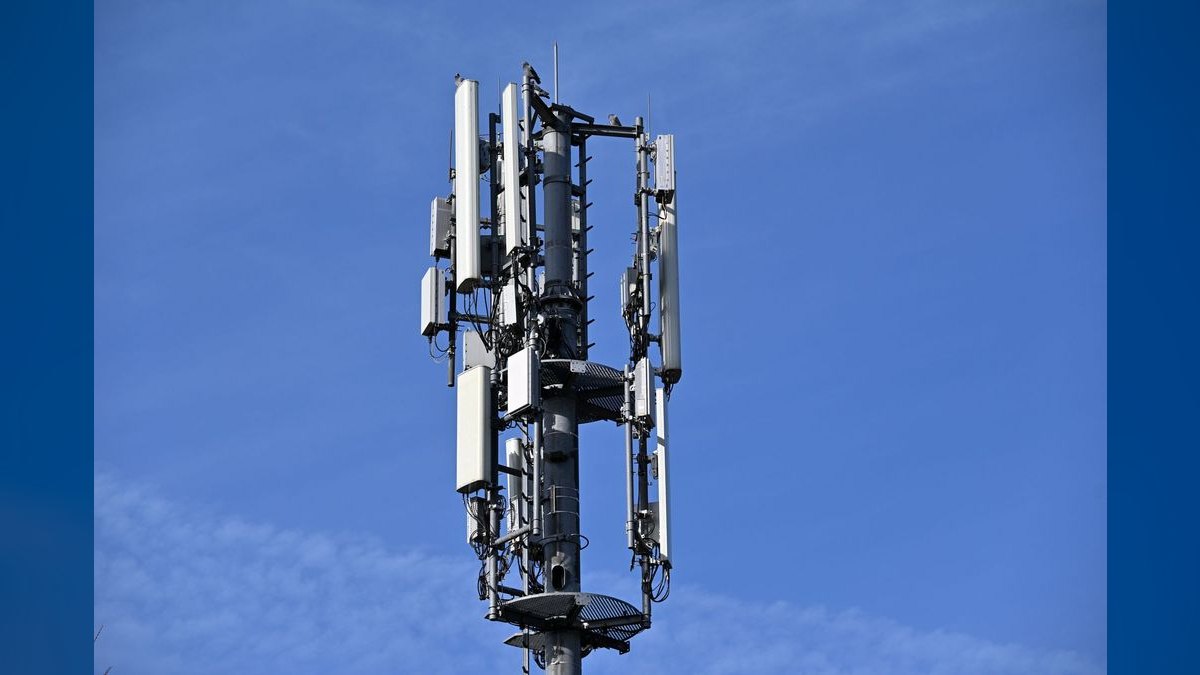
Spectrum band matters more than carrier branding. Low-band spectrum — the 600 MHz and 850 MHz layers — propagates far and penetrates buildings and terrain well, but carries less capacity, so speeds typically land in the tens of megabits rather than the hundreds. Mid-band (C-band and similar) is the sweet spot: meaningfully faster while still covering useful distances, and it is what powers most of the "real" 5G experience in Omaha and Lincoln. High-band mmWave delivers the headline gigabit numbers but only over very short distances with clear line of sight, which in practice means a few dense blocks of a downtown core, a stadium, or an airport concourse. A carrier that markets aggressive 5G speeds is usually describing its mid-band and mmWave footprint, which may not extend to where you actually live.
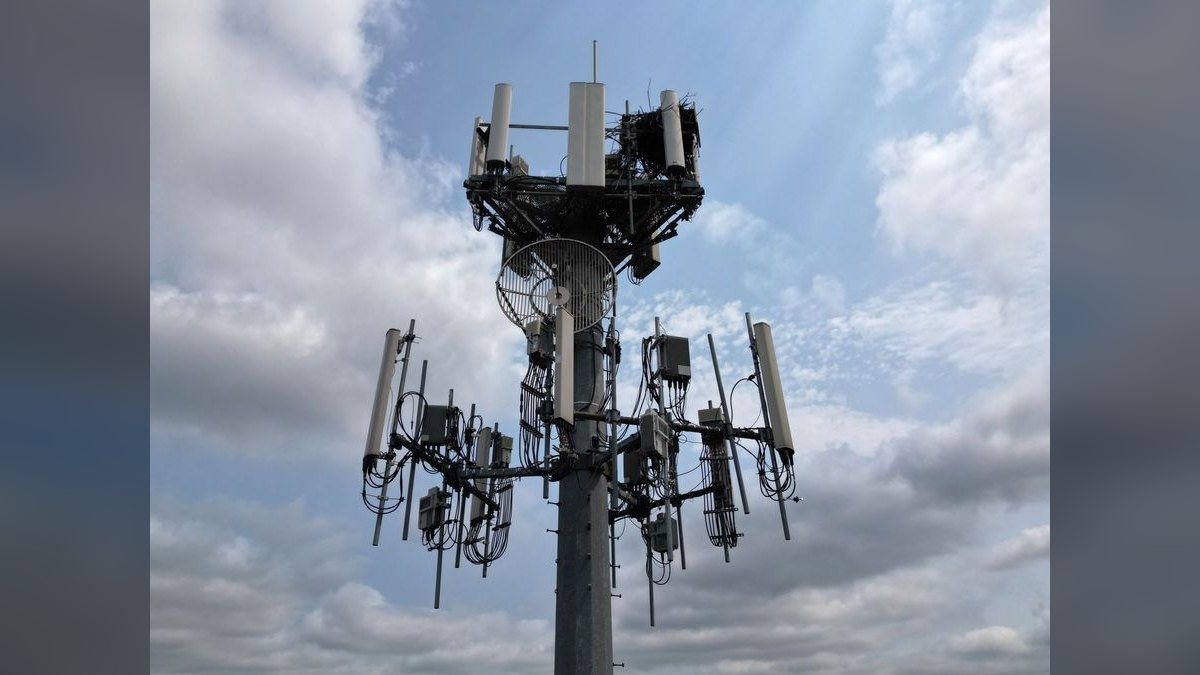
Tower density follows population, not geography. Carriers build where subscribers are. Eastern Nebraska has the density to justify dense buildouts; the western third does not, which is precisely the gap regional carriers like Viaero Wireless were built to fill. Roaming and rural partnership agreements paper over some of that gap, but roaming coverage often comes with reduced data priority or throttled speeds compared to native coverage — read the fine print rather than assuming the map color means the same thing everywhere.

Network prioritization determines what you actually get during congestion. Prepaid and MVNO lines are commonly deprioritized behind postpaid customers on the same towers. On an empty rural tower at 2 p.m. this is invisible. At a packed event in Omaha, a College World Series crowd, or a football Saturday in Lincoln, deprioritized lines can slow dramatically while postpaid lines on the identical network stay usable. Plans also typically include a premium-data allotment — often somewhere in the 30–50 GB range on mid-tier and upper plans — after which the line drops to deprioritized status for the rest of the billing cycle.
The fourth driver is less technical but just as decisive: support model. A national postpaid carrier gives you priority network access and a large retail footprint in the metro. A regional carrier gives you a staffed counter in a town where the nearest national store is an hour away. For an operator whose crew loses or breaks phones in the field, same-day in-person replacement can matter more than a 200 Mbps difference in peak throughput.
Benchmarks and realistic ranges
Use these ranges as sanity checks rather than promises — pricing and network conditions move, and every number below should be confirmed against the carrier's current rate card and the FCC's coverage data for your specific address before you commit.
Single-line unlimited postpaid on a national carrier in Nebraska generally lands in the $70–$95/month range before taxes, autopay discounts, and multi-line pricing. That tier typically bundles a premium-data allotment in the 30–60 GB range, a hotspot allowance somewhere between 15 GB and 60 GB, and a streaming perk. Regional carrier unlimited plans typically undercut that, landing closer to $60–$70/month for a comparable single line.
Multi-line pricing is where the real leverage sits. Per-line cost commonly drops to roughly $30–$40/month at three or four lines on both national and regional carriers. If you are running four or more lines, comparing single-line list prices is actively misleading — always build the quote at your actual line count.

Prepaid and MVNO options run $25–$60/month per line, with the cheapest tiers usually requiring annual prepayment and carrying hard deprioritization. Verizon-network and T-Mobile-network MVNOs both exist and give you the underlying coverage footprint at a discount, with the trade-offs being app-only support, limited device financing, and lower network priority.
Realistic throughput expectations: in Omaha and Lincoln on mid-band 5G, download speeds in the 100–700 Mbps range are a reasonable expectation on a good postpaid line, with mmWave pockets in dense downtown blocks going considerably higher. Along the I-80 corridor and in mid-sized cities, expect a broad 50–200 Mbps. In rural western counties on low-band LTE or low-band 5G, plan around 20–60 Mbps — which is entirely sufficient for calls, email, CRM access, dispatch apps, and video conferencing, and insufficient for large file transfers.
Latency, which matters more than raw speed for voice, video calls, and interactive dashboards, generally sits in the 20–50 ms range on modern 5G and 40–90 ms on rural LTE. If your team's complaint is "video calls freeze," latency and uplink capacity — not download speed — are usually the culprit.
Total cost of ownership benchmark: for a four-line small business, budget roughly $140–$200/month all-in on a national postpaid plan with taxes and fees, versus $100–$160/month on regional or prepaid alternatives. Device financing adds $15–$35/month per line for a flagship handset spread over 24–36 months, and trade-in credits — frequently promoted in the several-hundred-dollar range — are typically applied as monthly bill credits over that same term, meaning they evaporate if you leave early.
Risks, edge cases, and failure modes
The coverage map is marketing, not measurement. Carrier maps are predictive propagation models, not drive-test results. They routinely show coverage in areas where a phone indoors, in a metal building, or in a river valley gets nothing. The failure mode is signing a family or a fleet onto a plan based on a green map and discovering dead zones at the shop, the barn, or the home office. Mitigation: cross-check the carrier map against the FCC's Broadband Data Collection map, which aggregates reported coverage across providers, and then run a real device on the actual property during a trial window.
Trial windows and early termination are the real contract. Postpaid carriers generally offer a short return window — often around two weeks — during which you can cancel cleanly. Miss it while carrying device financing and you owe the remaining handset balance plus you lose any promotional bill credits. The failure mode is a fleet migration where devices are distributed slowly and the window closes before half the team has tested coverage at their actual worksites. Mitigation: activate a small pilot group first, test hard within the return window, and only then move the rest.
Deprioritization surprises during peak events. A prepaid line that tests at 200 Mbps on a Tuesday morning can crawl during a stadium event or a county fair. If your business depends on connectivity precisely when crowds gather — events, catering, security, on-site services — deprioritized plans are the wrong tool regardless of price.
eSIM and device-lock friction. Devices financed through one carrier are usually locked until the balance is paid or a minimum service period elapses. Attempting a switch with locked hardware stalls the migration. Modern eSIM provisioning makes activation faster but also makes it easier to strand a line mid-transfer if the port-out PIN or account number is wrong. Mitigation: collect account numbers and transfer PINs from the outgoing carrier before starting any port, and verify unlock status on every device first.
Roaming is not equivalent to native coverage. A rural partnership or roaming agreement may show as covered while delivering reduced speeds, capped data, or no 5G at all. Some agreements also carry roaming-usage limits that can trigger warnings or service restrictions on a heavy user. Read what the carrier says about off-network usage limits if a meaningful share of your team works outside the native footprint.
Emergency and priority access is a distinct product. First responders and public-safety-adjacent operations can qualify for a dedicated priority-access service that keeps capacity available during disasters — relevant in a state with an active severe-weather season. If your organization has any emergency response role, evaluate that separately rather than assuming a standard business plan gives you priority.
Business plans and consumer plans are not interchangeable. Business accounts typically add device-management tooling, pooled data, and different support tiers; consumer accounts are often cheaper per line for small counts. The failure mode is a growing operator on consumer plans discovering they cannot centrally manage or wipe a departed employee's device.
Fixed wireless as the hidden variable. In rural Nebraska, home and office internet is often the harder problem than the phone. Fixed wireless broadband delivered over the same cellular networks — commonly in the 25–100 Mbps range depending on the tower and distance — is sometimes the actual reason to pick a carrier, since bundling the office connection and the handsets on one provider simplifies both billing and troubleshooting.
A practical rollout plan
Run the switch as a staged migration rather than a single cutover. The sequence below takes about four to six weeks for a small team and prevents nearly every failure mode above.
Week 1 — inventory and mapping. List every line, every device, its financing status, its unlock status, and the primary daily location of the person carrying it. Plot those locations against candidate carriers' coverage maps and the FCC map. You are looking for the exceptions: which two or three people work somewhere that only one carrier serves well? Those exceptions, not the majority case, determine whether you need a split-carrier strategy.
Week 2 — pilot. Activate two to four lines on your leading candidate, deliberately choosing the hardest coverage cases plus one metro user as a control. Test at the actual addresses: inside the building, in the shop, in the truck, at the customer site. Record signal strength, a speed test, and — most importantly — whether a fifteen-minute video call holds. Do this at the times of day the work actually happens.
Week 3 — decide and negotiate. With pilot data in hand, request a written quote at your real line count, including taxes and fees, device financing, and trade-in terms. Ask explicitly: what is the premium-data allotment, what happens after it, what is the hotspot cap, what are the off-network roaming limits, and what is the return window. Get the answers in writing. This is also the moment to ask about business-account terms if you need device management.
Week 4 — port the rest in waves. Move lines in groups of three or four, never all at once. Keep the old account active until every ported line is confirmed working — porting a number closes it on the old carrier, and a failed port with a closed account is far harder to recover. Retain account numbers and transfer PINs until the last port completes.
Weeks 5–6 — verify and close out. Re-test the hard-coverage users after they have lived on the network for a full week. Confirm the old accounts are fully closed and final bills are settled, including any device balances. File the new rate card and contract terms somewhere you will find them in eleven months, because promotional pricing frequently steps up at the one- or two-year mark and the renewal conversation is where a chunk of your telecom spend is either saved or quietly lost.
A final operational note: whoever owns this decision should also own the annual review. Telecom is one of the few recurring costs that silently drifts upward through plan changes, added lines, and expiring promotions, and a thirty-minute audit once a year typically recovers more than the time it costs.
Related questions
Which carrier is strongest in western Nebraska?
Native coverage in the panhandle and Sandhills is thinner for every national carrier. Regional providers like Viaero Wireless built specifically for that footprint, and Verizon's rural partnerships extend reach there. Test on-site before committing — this is the region where maps and reality diverge most.
Is a prepaid plan good enough for a small business?
Often yes, if your team works in metro areas and does not need priority during crowded events. Prepaid saves roughly half the per-line cost. It is a poor fit when connectivity is mission-critical during congestion, or when you need centralized device management.
Does 5G actually matter in Nebraska?
In Omaha and Lincoln, mid-band 5G is a real, noticeable improvement. Outside those markets, most of the state runs on low-band 5G or LTE, where the practical difference is modest. Prioritize coverage breadth over 5G branding if you work rurally.
How much can switching carriers save a four-line account?
Moving from premium postpaid to a well-chosen prepaid or regional plan commonly cuts per-line cost from the $70–$90 range toward $30–$50, saving roughly $1,000–$2,000 annually on four lines — before accounting for device financing differences.
Should I split my team across two carriers?
If two or more people work in a region your primary carrier serves poorly, yes. Split-carrier setups add billing complexity but eliminate the dead-zone problem. Keep the majority on one account for volume pricing and put the exceptions on the regional specialist.
FAQ
How do I verify coverage at my specific address rather than trusting the map?
Check the carrier's own map for your ZIP code, then cross-reference the FCC Broadband Data Collection map, which aggregates reported coverage from all providers. Finally, activate a single line during the return window and test at the address — indoors, outdoors, and in any metal building — before migrating the rest.
What is the difference between a premium data allotment and truly unlimited data?
Most "unlimited" plans include a set amount of high-priority data — commonly in the 30–60 GB range per month. Past that threshold the line is deprioritized behind other traffic, so speeds can drop sharply during congestion while remaining usable when towers are quiet. The data does not stop; its priority does.
Do MVNOs get the same coverage as the parent network?
Generally yes for coverage footprint, since they use the same towers. What differs is priority during congestion and, sometimes, access to the fastest 5G tiers. An MVNO on a given network reaches the same places; it may just be slower there when the tower is busy.
How long should I keep my old account open during a port?
Until every number has successfully transferred and been tested with an inbound and outbound call. Porting a number automatically closes that line on the old carrier, but keeping the account itself open until all ports complete preserves your ability to recover a failed transfer.
Are trade-in credits worth building a decision around?
Treat them as a discount spread across 24–36 months of bill credits, not cash. If you leave before the term ends, remaining credits typically stop. Compare total cost over the full term rather than the headline trade-in figure, and never let a promotion override a coverage failure.
Is fixed wireless internet a reason to choose a particular carrier?
In rural areas, often yes. If a carrier's fixed wireless service reaches your office or shop with usable throughput, consolidating the office connection and the handsets on one carrier simplifies support and can improve negotiating leverage on the overall account.
Sources
- FCC National Broadband Map
- Verizon Coverage Map
- T-Mobile Coverage Map
- AT&T Wireless Coverage Map
- UScellular Coverage Map
- Viaero Wireless
- Ookla Speedtest
- J.D. Power Wireless Studies
- FCC Consumer Guide: Wireless Number Portability
- Nebraska Public Service Commission
Related on PULSE
This page will be disappearing soon. Save it to your device for $1 — or read it free while it is here.
@Kory-White- · if Venmo asks, the last 4 of my number are 2012
This page is gone.
This one is off the shelf now. $1 keeps it on your phone for good — the whole page, pictures and diagrams included.
 telcoIs a prepaid carrier as good as Verizon, AT&T, or T-Mobile in 2027?
 telcoCan I bring my own phone to a new carrier (BYOD) in 2027?
 telcoHow much data do I actually need for streaming music in 2027?
 telcoAT&T vs T-Mobile: which is better in 2027?
 telcoIs Telco worth it in 2027?
 telcoHow do I check if my phone is compatible with a new carrier in 2027?
 telcoHow do I add a tablet to my cell phone plan in 2027?
 telcoHow much mobile data does a family of four actually need in 2027?
 telcoBest Cellular and Wireless Carrier in Florida in 2027
 telcoBest Cellular and Wireless Carrier in Idaho in 2027