

Best Cellular and Wireless Carrier in New Jersey in 2027
 Curated byKory White · Fractional CRO · Maryland
Quality
Certified

For most New Jersey residents in 2027, T-Mobile is the best cellular and wireless carrier, pairing the state's widest mid-band 5G footprint with a $60/month unlimited plan. Verizon is the better pick if you need maximum reliability in packed venues or the rural Skylands fringe, and it costs roughly $20 more per line.
The two carriers that actually compete for New Jersey
New Jersey is the densest state in the country, and that single fact shapes every carrier decision made inside its borders. Roughly nine million people live across 21 counties packed into about 8,700 square miles, which means a carrier's problem here is almost never "is there a tower?" — it is "is the tower already saturated by the 400 other people standing near it?" Capacity, not raw coverage, is the deciding variable, and that is why the ranking in New Jersey often differs from the ranking in Montana or Wyoming.
T-Mobile's advantage comes from spectrum depth. Its 2.5 GHz mid-band layer — marketed as Ultra Capacity 5G — carries far more simultaneous users per cell site than the low-band 5G that everyone deployed first, and T-Mobile acquired that spectrum position through the Sprint merger years before its rivals finished bidding on comparable C-band airwaves. In practical terms, a New Jersey user on T-Mobile is more likely to be sitting on a wide mid-band channel in Newark, Trenton, Camden, and along most of the Route 1 and Route 9 corridors. Independent crowd-sourced speed testing has repeatedly placed T-Mobile at the top of the New York–Newark–Jersey City metro area for median 5G download speed, and the practical experience matches: fast enough that video calls hold on a moving NJ Transit train, and consistent enough that you stop thinking about it.
Verizon's advantage is a different shape. Verizon has historically built for signal quality and consistency rather than peak throughput, and that shows up in two specific New Jersey situations. The first is the high-density event: a sold-out arena in Newark, a concert or football game at the Meadowlands complex, the Jersey Shore boardwalks on a July Saturday. Verizon has invested heavily in in-venue small-cell and millimeter-wave deployments at large stadiums and arenas, and mmWave is genuinely excellent at exactly one thing — dumping enormous capacity into a small, crowded footprint. The second situation is the rural fringe: the Skylands region in Hunterdon, Warren, and Sussex counties, the ridgelines near High Point, and the far reaches of the Pine Barrens. Verizon's legacy low-band footprint in those areas is dense and mature.
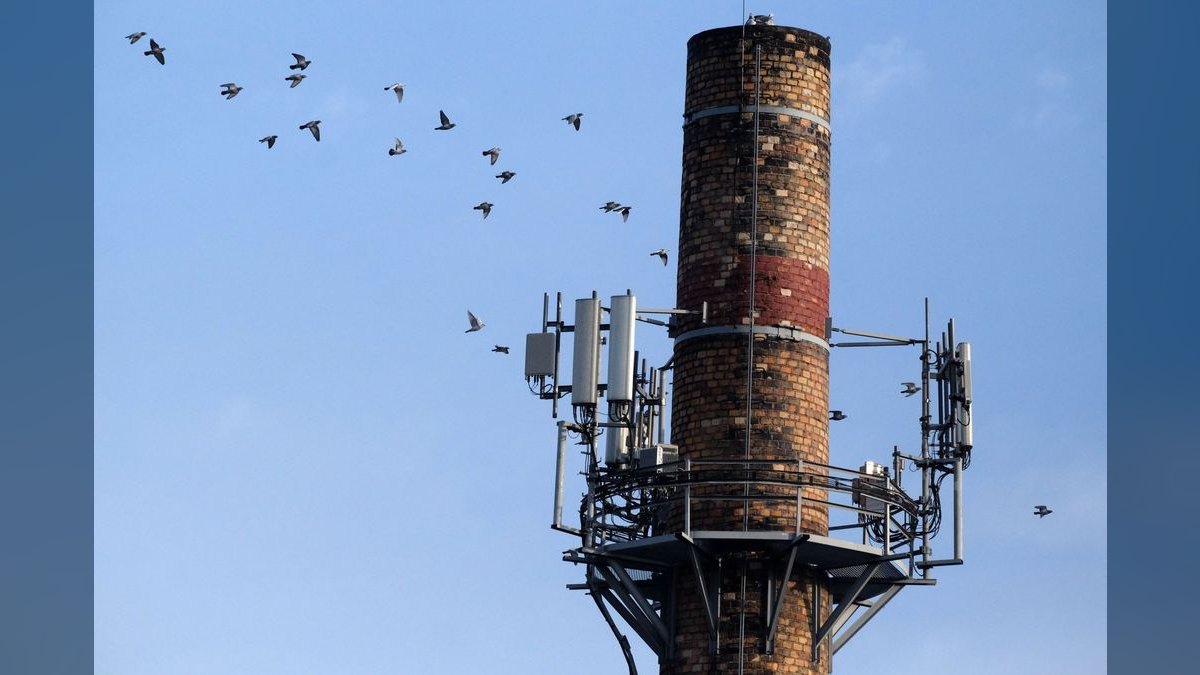
AT&T sits a clear third in New Jersey. Its C-band and mmWave deployment covers the major population centers and the Turnpike/Parkway corridors well, but it carries less mid-band depth in the state than T-Mobile, which shows up as lower median speeds during busy hours. AT&T's genuine differentiator is FirstNet, the dedicated public-safety network built on AT&T's infrastructure with priority and preemption for first responders. If you are a paramedic, firefighter, or police officer in New Jersey, that is not a marketing feature — it is the reason to choose AT&T over anything else, because priority access during a mass-casualty or storm event is the whole product.
The honest summary is that all three national carriers work fine for the overwhelming majority of New Jersey addresses. The differences that matter are concentrated in a small number of specific places: basements, older masonry buildings in Bergen and Hudson counties, rail tunnels, stadium bowls, and a handful of rural pockets. Those are where a carrier choice becomes visible, and they should drive your decision far more than a statewide coverage percentage does.
How to decide between them
The decision is not "which carrier is best" — it is "which carrier is best at the four or five locations where I actually spend my time." A commuter who sleeps in Montclair, works in Manhattan, and rides the Midtown Direct line has an entirely different requirement profile than a contractor driving between job sites in Ocean and Burlington counties, or a remote worker whose home office is a finished basement in Ridgewood.
Start by writing down your five highest-value locations. That usually means: home, workplace, the commute route between them, the place you spend weekends, and wherever you travel most often for family. Then check each carrier's official coverage map at those exact addresses, not at the ZIP-code level. ZIP codes in New Jersey routinely span both a downtown and a wooded township, and a map that looks solid at the ZIP level can be honest about a gap two streets over.
The second decision layer is postpaid versus MVNO. An MVNO — mobile virtual network operator — resells capacity on one of the three national networks. Mint Mobile and Boost ride primarily on T-Mobile, Visible is owned by Verizon and rides Verizon, Xfinity Mobile and Spectrum Mobile are cable-company MVNOs on Verizon, Cricket is AT&T's own prepaid brand, and US Mobile lets you pick between multiple host networks via eSIM. The coverage footprint is identical to the host network. What differs is priority: when a cell site is congested, the host network's own postpaid subscribers get served first and the MVNO traffic gets deprioritized.

In most of the country that distinction is theoretical. In New Jersey it is not. Deprioritization is felt precisely where density is highest — Newark Penn Station at 5:45pm, the Hoboken PATH platform, the Turnpike between exits 13 and 14 during a Friday getaway, the boardwalk in Wildwood in August. If your five locations include any of those, the price gap between a $25 MVNO plan and a $60 postpaid plan is buying you something real. If your five locations are a quiet suburb, a home office, and a school pickup line, the MVNO is close to free money.
The third layer is device financing. Carriers subsidize phones through 24- or 36-month bill credits that vanish if you leave early, which effectively converts a "no contract" plan into a multi-year commitment. Decide whether you want the phone subsidy or the freedom to switch, because you generally cannot have both. Buying a phone outright and running an MVNO is almost always the cheapest total cost of ownership over three years; taking the flagship trade-in promotion locks you to one carrier for the life of the credits.
The concrete numbers behind each option
Pricing in the wireless market moves constantly, so treat every figure below as a checkpoint to verify on the carrier's own site rather than a quote. That said, the structure of the market has been stable enough that the ranges are reliable.
Postpaid single line. T-Mobile's flagship unlimited tier lands around $60 per month with autopay for one line, and includes a large bucket of premium (non-deprioritized) data — typically in the 50 GB range — plus unlimited talk and text and a modest high-speed hotspot allowance. Verizon's comparable top tier runs roughly $80 per month single-line with a similar premium-data bucket, a larger hotspot allowance, and bundled streaming subscriptions. AT&T's premium tier sits between them near $75. The $20/month gap between T-Mobile and Verizon on a single line is $240 a year, and $720 over a three-year device cycle — enough to matter, not enough to override a genuine coverage problem at your home address.
Postpaid family lines. Per-line pricing drops sharply with volume across all three carriers. Four lines on a flagship tier typically land somewhere in the $35–$50 per line range depending on promotions, which is where the national carriers become genuinely competitive with MVNOs. A four-line family paying $180 total is at $45 per line — meaningfully more than Mint or Boost, but with full network priority and retail support included. Entry-level unlimited tiers (Verizon's cheapest unlimited, T-Mobile's Essentials tier) drop the per-line price further but explicitly deprioritize you at all times, which puts them functionally in MVNO territory while still costing more.
MVNO pricing. Mint Mobile's model is prepaying in three-, six-, or twelve-month blocks; the effective monthly rate falls as the block gets longer, with introductory rates in the mid-teens and steady-state rates for a large data bucket landing around $30. Visible offers a genuinely unlimited plan on Verizon in the $25 range, with a higher tier near $45 that adds premium-network priority and 5G Ultra Wideband access — that priority upgrade is the single most important upsell in the MVNO market for a New Jersey user. Boost competes at the very bottom of the price ladder. Xfinity Mobile and Spectrum Mobile both anchor around $30–$40 per unlimited line and are only worth evaluating if you already buy home internet from Comcast or Charter, because the discount is contingent on that bundle. US Mobile prices annual-payment unlimited plans in the $40s and uniquely lets you switch host networks by swapping eSIM profiles.
Cost per GB is the wrong metric. Almost every plan on the market is nominally unlimited, so the number that actually differentiates them is the premium-data bucket — how much data you can use before the network starts deprioritizing you at congested sites. A $60 plan with 50 GB of premium data and a $30 plan with 20 GB are not 2x apart in price for 2.5x the data; they are different products. If you use 8 GB a month, the premium bucket is irrelevant and you should optimize purely on price. If you tether a laptop and burn 60 GB, the bucket is the entire decision.
The hidden line items. New Jersey wireless bills carry state and federal surcharges, 911 fees, and regulatory recovery charges that typically add somewhere between 5% and 15% on top of the advertised rate depending on carrier and plan structure. Some carriers advertise taxes-included pricing and some do not, which makes headline comparisons misleading. Ask for the all-in monthly total, not the plan price. Autopay discounts — usually $5 to $10 per line — are frequently conditioned on paying from a bank account or debit card rather than a credit card, which quietly costs you credit-card rewards.
Home internet as a bundle lever. Both T-Mobile and Verizon sell fixed wireless home internet in New Jersey, typically in the $35–$60 per month range, and both discount it substantially when bundled with a mobile line. In parts of the state where the wireline options are a single cable incumbent, fixed wireless is a legitimate competitive alternative — and the bundled discount can effectively erase the price gap between T-Mobile and Verizon mobile plans. If you are shopping both services at once, price them together, because evaluating the mobile plan in isolation will lead you to the wrong answer.
Where New Jersey geography breaks the coverage map
Statewide population-coverage percentages are close to useless for choosing a carrier here, because every national carrier reports something in the high nineties. Coverage maps model outdoor signal at street level; they do not model the buildings you actually stand inside. Four New Jersey-specific situations account for most real complaints.
Basements and older housing stock. Bergen, Essex, Hudson, and Union counties have large amounts of pre-war construction with thick masonry, plaster-and-lath walls, and finished basements. Higher-frequency 5G — C-band at 3.7 GHz, and especially mmWave — penetrates those materials poorly. If you work from a finished basement, the frequency band that reaches you is low-band, and low-band 5G speeds are closer to good LTE than to the headline numbers. The fix is not a different carrier; it is Wi-Fi calling over your home broadband, which every major carrier supports and which turns your router into a personal cell site. Enable it before you conclude a carrier is bad.
Rail and tunnel corridors. The Northeast Corridor, the Morris & Essex lines, the North Jersey Coast Line, and the PATH tunnels each behave differently. Above-ground segments generally get good mid-band service; tunnels and deep cuts depend on distributed antenna systems installed specifically for that stretch, and coverage inside them varies by carrier and by which segment you are in. A commuter's real test is riding the actual line with a signal-logging app and watching where it drops — not reading a map.
The Pine Barrens and southern rural stretches. The Pinelands National Reserve covers over a million acres across seven counties, much of it deliberately undeveloped. Tower density there is genuinely low, and the honest expectation is low-band coverage with occasional dead zones on the smaller state-forest roads. All three carriers have gaps here; none of them has a solution beyond low-band. If you regularly work in that area, satellite messaging on a modern smartphone is a more meaningful feature than any carrier difference.

The Skylands and the northwest ridges. Hunterdon, Warren, and Sussex counties have real topography — ridges, valleys, and state parkland — and terrain shadowing creates pockets where one carrier works and another does not, sometimes within a mile. This is the part of New Jersey where a carrier recommendation is least transferable between neighbors. Verizon's legacy density is the conventional pick, but the only reliable method is testing at your specific address.
The shore in season. Cape May, Atlantic, Ocean, and Monmouth counties experience an enormous seasonal population swing. Infrastructure built for the off-season population gets loaded by summer visitors, and network performance in Wildwood, Seaside Heights, or Point Pleasant in mid-July is a different network than the one you tested in March. If you own or rent down the shore, test in season or ask a year-round resident, because that is where MVNO deprioritization becomes most visible.
Implementation details and sequencing
Switching carriers is straightforward if you sequence it correctly and painful if you do not. The single most common failure is cancelling the old line before the new one is verified, which strands your phone number and breaks every two-factor authentication code tied to it.
Step one: confirm the phone is unlocked and band-compatible. A financed phone is usually locked until it is paid off or a carrier-specific unlock window passes. Separately, band support matters — a phone sold for one carrier may lack the specific 5G bands another uses heavily, which turns a supposedly identical device into a noticeably worse experience. Check the model number against the carrier's compatibility tool before anything else.
Step two: use eSIM to test before committing. This is the most valuable change of the last several years. Modern phones support a physical SIM plus one or more eSIM profiles simultaneously, so you can activate a prospective carrier as a second line while your existing number keeps working. Run it for a full billing cycle. Ride the commute. Sit in the basement. Go to the weekend place. This one habit eliminates almost all switching regret, and it costs one month of the cheapest plan on the target network.

Step three: gather port-out credentials before you start. To port a number you need the account number and a port-out PIN from your current carrier — not your login password. Most carriers now require you to generate a port-out PIN explicitly, often in the app under account security, as an anti-SIM-swap protection. Get both before initiating anything, because retrieving them mid-port while your service is in flux is miserable.
Step four: initiate the port from the new carrier, never cancel the old one. The receiving carrier pulls the number. Cancelling the old account first releases the number back into the pool and you may lose it permanently. Number ports between wireless carriers typically complete within a few hours, occasionally up to a business day if account details mismatch. The most common cause of a stuck port is a name or address on the port request that does not exactly match the old account.
Step five: audit the first two bills. Promotional device credits, autopay discounts, and bundle discounts frequently do not appear on the first statement and sometimes require a call to apply retroactively. Confirm the line count, the per-line rate, the credits, and the surcharges. Carriers rarely fix billing errors you do not report, and the revenue impact of an unnoticed $15/month error across a four-line family account is $720 over four years.
Step six: keep a fallback. Leave the old carrier's eSIM profile on the phone for a week after the port. If something is wrong with the new network at a location you did not test, you have a documented recent comparison rather than a vague impression, and reversing course is far easier within the first 14 to 30 days when most carriers still honor a satisfaction return window.
Related questions
Does 5G Ultra Wideband or Ultra Capacity actually matter in New Jersey?
Yes, more than in most states. Mid-band 5G is what delivers real capacity in dense areas, and New Jersey is dense nearly everywhere. Confirm your plan tier actually includes the high-speed layer — some budget and MVNO tiers restrict access to it entirely.
Is an MVNO a bad idea for a daily NJ Transit commuter?
Not automatically, but test it first. Deprioritization hits hardest at packed transit hubs during rush hour, which is exactly where a commuter needs service. Visible's higher tier and US Mobile's premium plans include priority upgrades that largely address this.
How much does home internet bundling change the math?
Substantially. Both T-Mobile and Verizon discount fixed wireless home internet heavily when bundled with mobile, and cable MVNOs like Xfinity Mobile and Spectrum Mobile only make sense with the matching home internet subscription. Price the bundle, not the line.
What should a small business in New Jersey optimize for?
Predictable coverage at fixed locations plus pooled data across lines. Business plans typically add device management, priority support, and consolidated billing. For field crews covering both North and South Jersey, test the actual route rather than trusting a statewide map.
Do I need to worry about losing my number during a switch?
Only if you cancel the old line first. Always initiate the port from the new carrier while the old account stays active, and keep the port-out PIN and account number handy. Done in that order, ports are routine.
FAQ
Which carrier has the best 5G coverage across New Jersey?
T-Mobile generally leads on mid-band 5G footprint and median download speed across New Jersey's population centers, thanks to its deep 2.5 GHz spectrum position. Verizon is close behind and often better in the rural northwest and inside large venues. AT&T covers the state well but with less mid-band depth. All three exceed the high nineties in reported population coverage, so the differences show up in specific buildings and specific hours rather than on the map.
What is the cheapest way to get unlimited data in New Jersey?
MVNOs on the T-Mobile and Verizon networks — Mint, Boost, and Visible among them — sell unlimited plans well below the national carriers' postpaid rates, often in the $25 to $30 range. The trade-off is network priority: at congested sites you get served after the host carrier's own subscribers. That trade-off is invisible in a quiet suburb and very visible at Newark Penn Station at 5:45pm.
Is Verizon worth the extra money over T-Mobile in New Jersey?
It depends entirely on your locations. If you regularly attend events at large venues, live in the Skylands or Pine Barrens fringe, or have a home address where Verizon's legacy low-band is stronger, the roughly $20 per line premium buys real reliability. If your week is spent in dense northern and central New Jersey, T-Mobile's mid-band capacity usually delivers a better day-to-day experience for less.
Why is my signal terrible in my basement even though the coverage map is green?
Coverage maps model outdoor signal, and the higher-frequency bands that carry most 5G capacity do not penetrate masonry, foundations, or plaster-and-lath walls well. This is common in older Bergen, Essex, and Hudson county housing. Enable Wi-Fi calling so your phone routes voice and text over your home broadband — it solves the problem for essentially every carrier without changing plans.
Can I test a carrier without giving up my current number?
Yes. If your phone supports eSIM, activate the prospective carrier as a second line and run both simultaneously for a full billing cycle. Test at home, at work, on your commute, and wherever you spend weekends. This is the single most effective way to avoid switching regret, and it costs one month of the cheapest plan on that network.
Do prepaid plans get the same towers as postpaid?
Yes — same towers, same bands, same footprint. The difference is priority during congestion, not coverage. A prepaid or MVNO line on the Verizon network reaches every place a Verizon postpaid line reaches; it simply yields bandwidth first when a specific cell site is oversubscribed.
Sources
- FCC National Broadband Map
- T-Mobile Coverage Map
- Verizon Coverage Map
- AT&T Wireless Coverage Map
- Ookla Speedtest Performance — United States
- FirstNet Authority
- J.D. Power U.S. Wireless Studies
- FCC Wireless Number Portability Consumer Guide
- New Jersey Board of Public Utilities
- Visible — Verizon-owned prepaid
Related on PULSE
- Best Cellular and Wireless Carrier in New York City in 2027
- Best Cellular and Wireless Carrier in New Orleans in 2027
- How do I port my phone number to a new carrier in 2027?
- Can I bring my own phone to a new carrier (BYOD) in 2027?
- How do I check if my phone is compatible with a new carrier in 2027?
- Should I finance a new phone or buy it outright in 2027?
This page will be disappearing soon. Save it to your device for $1 — or read it free while it is here.
@Kory-White- · if Venmo asks, the last 4 of my number are 2012
This page is gone.
This one is off the shelf now. $1 keeps it on your phone for good — the whole page, pictures and diagrams included.
 telcoHow do I avoid an early termination fee when switching in 2027?
 telcoBest Cellular and Wireless Carrier in Montgomery in 2027
 telcoHow much data do I actually need for streaming music in 2027?
 telcoIs Visible worth it in 2027?
 telcoDo I really get free streaming (Netflix, Apple TV) with my plan in 2027?
 telcoIs Telco worth it in 2027?
 telcoBest Cell Phone Plans for Heavy Data Users in 2027
 telcoHow does international roaming work and how do I avoid huge bills in 2027?
 telcoWhat is the best two-line cell phone plan in 2027?
 telcoHow much mobile data does a family of four actually need in 2027?