
Should I Hire a Fractional CRO If I Am Bootstrapped and Cannot Afford a Full-Time CRO?
 Curated byKory White · Fractional CRO · Maryland
 PULSEKNOWLEDGE LIBRARY
Quality
Certified
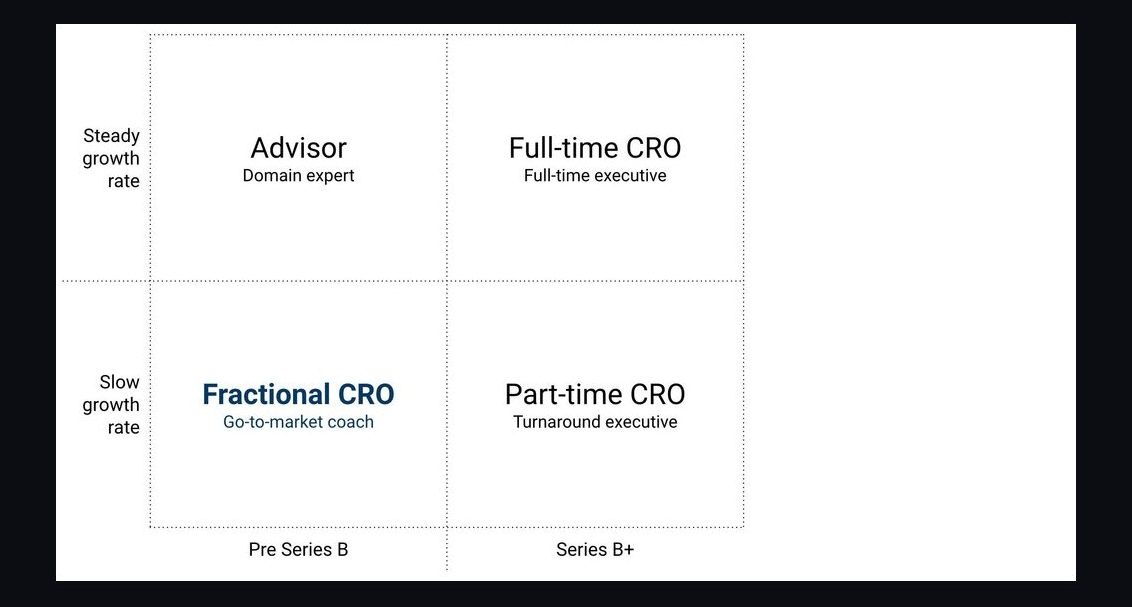
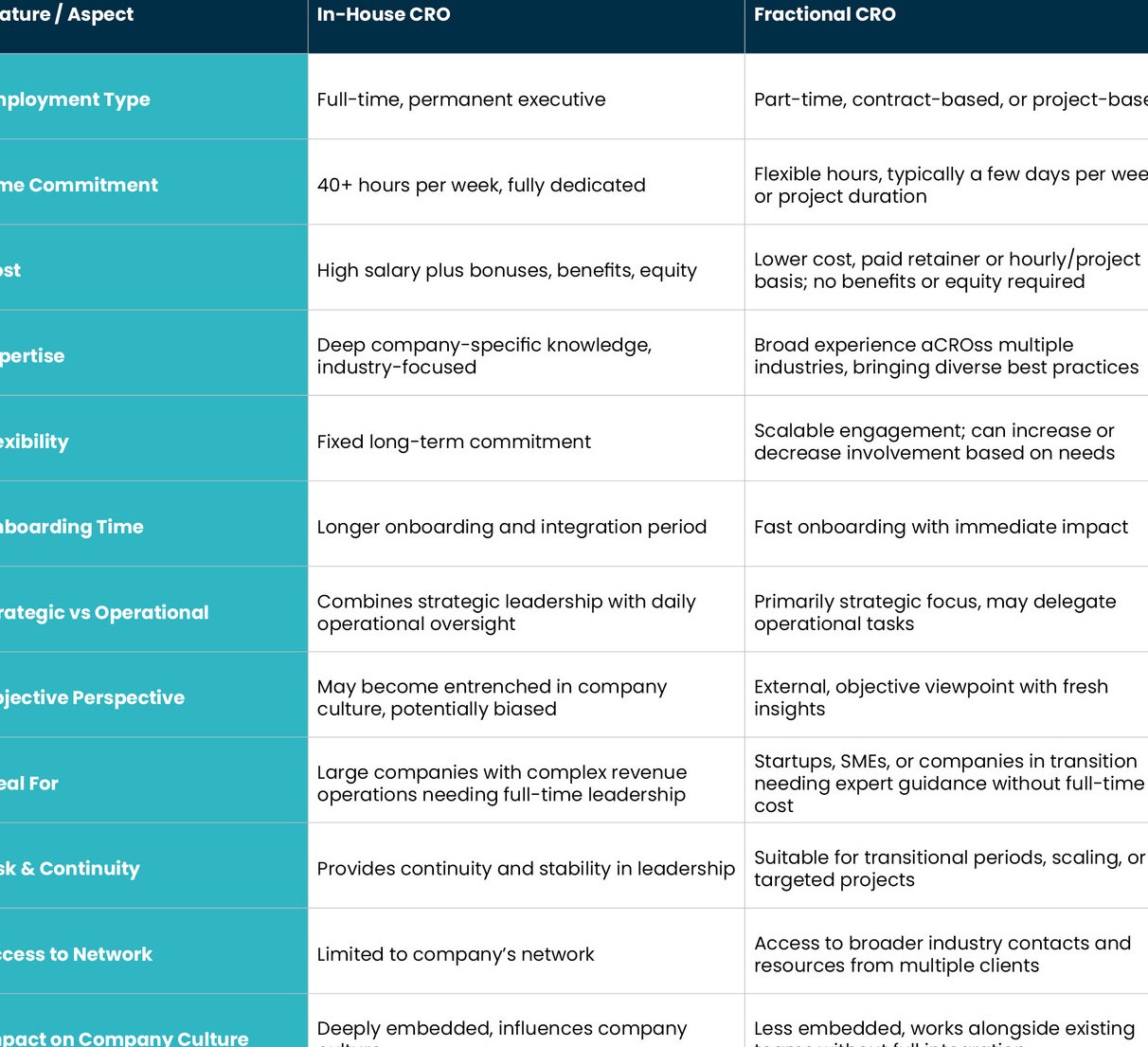
For most bootstrapped companies with a working product and at least a handful of paying customers, a fractional CRO is worth it precisely because you cannot afford a full-time one — you get senior revenue architecture at roughly a fifth of the loaded cost of a full-time hire. Bring one in when your problem is *how you sell*, not *whether people will buy*; skip it if you have not yet found repeatable product-market fit, because no operator can architect a revenue engine that has nothing to compound. The honest version of this decision is not "CRO: yes or no." It is a sequence: prove that money changes hands for a repeatable reason, then decide whether the bottleneck is strategy (a fractional CRO's job) or simply doing more of what already works (a rep or a RevOps contractor's job). Bootstrapped founders get burned when they hire the title before they have the traction the title is designed to scale. Below is the full framework — when it pays off, when it torches cash you can't replace, what it actually costs in 2026, and how to structure the engagement so you're buying leverage instead of a résumé. ## What does a fractional CRO actually do for a bootstrapped company? A Chief Revenue Officer owns the entire revenue engine — marketing-to-sales handoff, sales process, pricing, packaging, partnerships, customer success, and the forecasting that ties them together. A *fractional* CRO does the same job on a part-time, multi-client basis, typically one to three days a week per company. The word "fractional" is not "junior" or "cheaper version of the same person doing less thinking." It is a genuinely senior operator — usually someone who has already scaled revenue from single-digit to eight-figure ARR at least once — renting you the top 20% of their calendar. For a bootstrapped company specifically, the value is almost never "make more calls." It is architectural. A good fractional CRO walks in and, within the first month, tells you things you cannot see from inside: that your close rate looks fine but your win rate on inbound is masking a broken outbound motion; that you are discounting 22% on average because you have no packaging discipline; that your two best customers came from a channel you are not funding; that your "sales problem" is actually a positioning problem that no amount of activity will fix. That diagnosis — and the ninety-day plan that follows it — is the product. The day-to-day execution is something they design and then hand to cheaper resources (an SDR, a RevOps contractor, you). If you find yourself paying a fractional CRO to personally send follow-up emails, you have mis-scoped the engagement and are burning your most expensive hour on your cheapest task. See how this maps against a full build-out in pulserevops.com/knowledge/revops-org-design. The second thing they do — and this matters disproportionately when you're bootstrapped — is impose forecasting discipline. Venture-backed companies can survive a fuzzy pipeline because the next round covers the gap. You cannot. When every dollar of runway is your own or your customers', a forecast that is wrong by 30% is not an inconvenience, it is an existential mis-allocation. A fractional CRO's forecasting rigor is often the single feature that pays for the entire engagement, because it stops you from hiring a second rep or signing a lease against revenue that was never going to land. ## When is it the right move versus a waste of runway?
The cleanest decision rule is a readiness test, not a revenue threshold. Ask three questions. First: do you have repeatable, non-founder-dependent evidence that customers buy? If every deal so far closed because the founder personally charmed the buyer, you do not have product-market fit — you have founder-market fit, and a CRO cannot systematize charisma. Second: is your bottleneck strategy or capacity? If you know exactly what works and simply need more hands doing it, hire a rep or a RevOps ops contractor; that is a capacity problem, and a CRO is overqualified and overpriced for it. Third: can you fund the engagement for at least six months without it working? A fractional CRO needs two to three months just to diagnose and re-architect before results compound. If you'll run out of cash before the plan pays off, you're buying a Ferrari to drive it off a cliff. ```mermaid flowchart TD A[Bootstrapped, considering a CRO] --> B{Repeatable, non-founder sales evidence?} B -->|No| C[Not yet — keep founder-selling - until PMF is clear] B -->|Yes| D{Bottleneck: strategy or capacity?} D -->|Capacity only| E[Hire a rep or RevOps contractor, - not a CRO] D -->|Strategy / architecture| F{6+ months runway to fund it?} F -->|No| G[Wait or raise a small bridge first — - don't start a clock you can't finish] F -->|Yes| H[Fractional CRO is the right move] H --> I[Scope 90-day diagnosis + build, - define exit criteria up front]
Fractional CRO engagements are typically priced as a monthly retainer tied to a committed number of days per week, sometimes with an equity or performance component layered on. In the current market, most bootstrapped-appropriate engagements land somewhere in the range of a few thousand to low-five-figures per month depending on the operator's pedigree, the number of days committed, and whether equity offsets cash. Rather than anchor on a single number that will drift, do the comparison the way a CFO would: compute the *loaded* cost of the full-time alternative. A full-time CRO's total cost is not their base salary. It is base + variable/bonus + equity + payroll taxes + benefits + the fully-burdened overhead of a senior executive (recruiting cost to hire them, ramp time before they produce, and severance risk if it doesn't work). For an experienced CRO that loaded annual figure runs well into the multiple-six-figures. The fractional version gives you the same seniority for a fraction of that, with three structural advantages that matter specifically to a bootstrapped balance sheet: no long-term liability (you can end most engagements on 30 days' notice), no ramp (a fractional operator who's done this before is productive in week one, not month four), and no dilution if you structure it as cash-only. Model it out before you commit — the framework in pulserevops.com/knowledge/cost-of-sales-leadership walks through the full loaded-cost comparison line by line. ```mermaid flowchart LR subgraph FT[Full-Time CRO — Annual Loaded Cost] A1[Base salary] --> A5[Total] A2[Bonus / variable] --> A5 A3[Equity dilution] --> A5 A4[Benefits + payroll tax + overhead] --> A5 A6[Ramp: months before productive] --> A5 A7[Severance / mis-hire risk] --> A5 end subgraph FR[Fractional CRO — Annual Cost] B1[Monthly retainer × 12] --> B5[Total] B2[No benefits / overhead] --> B5 B3[Productive week 1] --> B5 B4[30-day exit, no severance] --> B5 end FT -->|Typically 3-5x| C[Cost multiple] FR -->|Baseline| C The three real risks are misalignment of incentives, divided attention, and the handoff cliff. Misalignment shows up when a fractional CRO is compensated in a way that rewards activity over outcomes — retainer-only with no tie to the metrics you actually care about. Divided attention is structural: a fractional operator has other clients by definition, and if your engagement is their smallest, you get their leftover hours. The handoff cliff is the sneaky one — a fractional CRO builds a beautiful revenue architecture, then leaves, and nobody internal owns it, so it quietly decays within two quarters. You de-risk all three at the contracting stage, not after. Define exit criteria up front: what specific state must exist for the engagement to be considered "done"? Usually it's a documented, repeatable revenue process plus a hired-and-ramped internal owner (a sales lead or head of sales) who inherits the machine. Structure at least part of the compensation around outcomes you both agree are the point — pipeline created, win-rate improvement, a hired successor — not just hours logged. And insist on a knowledge-transfer deliverable: the playbook, the CRM configuration, the forecast model, all documented so the value survives their departure. The best fractional CROs *want* this framing, because "I built a self-sustaining engine and worked myself out of a job" is their strongest reference. If a candidate resists exit criteria and documentation, that is diagnostic — they are selling you dependency, not leverage. More on structuring accountable engagements at pulserevops.com/knowledge/fractional-exec-contracts. There is also a quieter risk unique to bootstrapped companies: over-building. A senior CRO's reflex is to install the machine they ran at their last, larger company — a full RevOps stack, a formal sales methodology, a multi-stage pipeline with rigorous gates. For a five-person company doing seven-figure ARR, that apparatus is weight you cannot yet carry. A great fractional CRO right-sizes ruthlessly; a mediocre one gives you enterprise scaffolding for a startup body. Judge candidates on their stories of *subtraction* — what they chose not to build — as much as on what they scaled. ## What should you do instead if you're not ready for one? If you fail the readiness test, the answer is not "do nothing" — it's to buy the specific piece you actually need. If your problem is that founder-led sales works but doesn't scale, the next hire is often a strong individual-contributor rep or a "player-coach" head of sales who sells *and* builds process, at a fraction of a CRO's strategic scope. If your problem is that your data is a mess and you can't see what's working, a RevOps contractor for a few weeks — cleaning your CRM, instrumenting your funnel, building a real forecast — delivers 80% of a CRO's diagnostic value for a small fraction of the cost. If your problem is pure positioning and messaging, a positioning consultant or a fractional CMO may be the actual bottleneck, and a CRO would just inherit the same broken message. Many bootstrapped founders also underrate the option of a *fractional CRO for a fixed diagnostic sprint* rather than an open-ended retainer — a defined four-to-six week engagement to audit the revenue engine and hand you a prioritized plan, which you then execute yourself. This caps your downside, buys you the senior judgment where it matters most (the diagnosis), and lets you spend your limited cash on execution rather than on paying a strategist to watch you execute. It's the highest-ROI way to get CRO-grade thinking into a company that can't yet justify an ongoing CRO relationship. ## Related questions

What's the difference between a fractional CRO and a sales consultant?
A consultant advises and leaves; a fractional CRO owns the number and operates inside your business, carrying accountability for revenue outcomes rather than just recommendations. Consultants produce decks; fractional CROs produce a working, staffed engine. ### At what revenue should a bootstrapped company consider a fractional CRO? There's no universal number — readiness matters more than revenue. Practically, most fit the profile once they have repeatable, non-founder sales and roughly seven-figure ARR with a scaling bottleneck they can't diagnose from inside. ### Can a fractional CRO also do hands-on selling?
Some will, but paying a strategic operator's rate for individual-contributor selling is a mis-allocation. Use them to architect and to close a few reference deals, then hand routine selling to cheaper reps they help you hire. ### How long should a fractional CRO engagement last? Typically six to eighteen months — long enough to diagnose, rebuild, and hire an internal successor, short enough that you're not renting strategy forever. Define exit criteria (a documented engine plus a ramped internal owner) at the start. ### Is a fractional CRO or a fractional CMO the right first hire?
It depends on your bottleneck: if you can generate demand but can't convert or scale sales, hire the CRO; if you can convert everything but can't fill the top of the funnel, the CMO problem comes first. Diagnose before you title-shop. ## FAQ Will investors take a fractional CRO seriously? Sophisticated investors care about the revenue results and the quality of the operator, not the employment structure. A fractional CRO who demonstrably built a repeatable engine is a positive diligence signal; a full-time title masking no traction is not. Do fractional CROs take equity instead of cash? Many will accept a blend — reduced cash retainer plus a modest equity or performance component — which can be attractive when you're conserving runway. Keep equity grants small and milestone-based; you're renting a service, not adding a co-founder. How many clients does a typical fractional CRO have at once? Usually two to four. Ask directly, and ask how many days per week you're committing versus how many they've sold across all clients — over-subscribed operators give you their distracted margins. Your engagement should be large enough to command real attention. Can a fractional CRO help me hire my first full-time sales leader? Yes, and this is one of their highest-value functions. A good one defines the role, screens candidates, and ramps your eventual full-time hire — then hands off the engine and exits, which is exactly how the engagement should end. What metrics should I hold a fractional CRO accountable to? Pipeline created and pipeline coverage, win rate, sales cycle length, average deal size, and forecast accuracy — plus the leading indicator of a successful engagement: a documented, repeatable process and a hired internal owner. Tie at least part of comp to a subset you both agree defines success. How fast should I expect results from a fractional CRO? Expect diagnosis and a plan within 30 days, process changes shipping in 60, and compounding revenue effects by month three to six. Anyone promising a step-change in weeks is selling activity, not architecture — real revenue engines take a quarter to turn. What happens to the revenue engine after the engagement ends? If scoped correctly, it survives because the CRO documented the playbook, configured your systems, and trained an internal owner before leaving. If the engine decays after they go, the engagement was mis-structured — knowledge transfer and successor hiring were the deliverables, not extras. Is a fractional CRO cost-effective for a company under seven figures? Often not as an ongoing retainer — the fixed cost is heavy relative to the revenue base. A fixed-scope diagnostic sprint or a RevOps contractor usually delivers better ROI until you have the repeatable traction a CRO is built to scale. ## Sources
- Harvard Business Review — Aligning Sales and Strategy
- First Round Review — Scaling Sales
- SaaStr — When to Hire a VP of Sales
- Bessemer Venture Partners — State of the Cloud
- OpenView Partners — SaaS Benchmarks
- Chief Outsiders — Fractional Executive Research
- Pavilion — Revenue Leadership Community
- Gartner — Chief Sales Officer Research ## Related on PULSE
- [Should I Hire a Fractional CRO If I Cannot Hire a Great Full-Time CRO in My Market in 2027?](/knowledge/tl0556)
- [Fractional CRO vs full-time CRO — which should I hire in 2027?](/knowledge/tl9205)
- [Fractional CRO vs full-time CRO for a bootstrapped business in 2027?](/knowledge/tl9107)
- [Fractional CRO vs full-time CRO for a bootstrapped business in 2027?](/knowledge/tl9305)
- [Fractional CRO vs full-time CRO for a PE-backed company in 2027?](/knowledge/tl9302)
- [Fractional CRO vs full-time CRO: which does a B2B SaaS startup need in 2027?](/knowledge/tl21224)
This page will be disappearing soon. Save it to your device for $1 — or read it free while it is here.
@Kory-White- · if Venmo asks, the last 4 of my number are 2012
 pulse-toolsHow do I find a fractional CRO in Minneapolis in 2027?
 pulse-toolsHow do I find a fractional CRO in Austin in 2027?
 pulse-toolsWhere do I find a fractional head of revenue in Pasadena in 2027?
 pulse-toolsWhere do I find an interim CRO in Jersey City in 2027?
 pulse-toolsShould I Hire a Fractional CRO If I Need to Build a Partner Channel in 2027?
 pulse-toolsWhat does a fractional CRO cost in Dagsboro in 2027?
 pulse-toolsWhere do I find a fractional head of revenue in Bellevue in 2027?
 pulse-toolsHow much does a part-time CRO cost in Baton Rouge in 2027?
 pulse-toolsWhere do I find a fractional VP of Sales in New Jersey?
 pulse-toolsHow do I evaluate a fractional CRO in San Diego in 2027?