

What KPIs should a fractional CRO own at a clean energy company in 2027?
 Curated byKory White · Fractional CRO · Maryland
Quality
Certified

A fractional CRO at a clean energy company should own contracted value signed (TCV or net new ARR), weighted pipeline coverage of at least 3x next quarter, segmented sales cycle length, CAC payback or CAC ratio, gross revenue retention above 90%, stage-to-stage deal velocity, and quota attainment rate. Those seven tie directly to cash.
The job a fractional CRO is actually hired to do
The mistake most clean energy founders make is hiring a fractional CRO to "help with sales." That framing produces a well-paid advisor who reviews decks. The actual job is narrower and harder: take an existing revenue motion that is producing inconsistent results, instrument it so the inconsistency becomes visible, and then own a small number of numbers that move as a result.
That distinction matters enormously in this sector because clean energy revenue is *lumpy by construction*. A residential solar installer might close forty deals a month at $22,000 each. A community solar developer might close three subscriptions a year, each worth eight figures over twenty years. A battery storage integrator selling into a utility's capacity procurement might spend fourteen months on one RFP and win or lose the entire fiscal year on a single decision by a procurement committee. A blended "revenue growth" metric across those motions is meaningless — the average of a residential funnel and a utility funnel describes neither.
So the first thing a competent fractional CRO does is refuse to own a blended number. They segment the business into distinct revenue motions — typically residential, commercial and industrial (C&I), utility-scale, and recurring services (O&M contracts, monitoring subscriptions, performance guarantees) — and instrument each independently. Only then do they commit to targets.

The second part of the job is owning the *decision rights* that make the KPIs actionable. A fractional CRO who reports numbers but cannot approve a discount, kill a segment, reassign a territory, or fire a rep is a reporting function, not a revenue owner. Before an engagement starts, the scope should specify which of these decisions the fractional CRO makes unilaterally, which they recommend, and which the CEO retains. Without that, the KPI ownership is nominal. When pipeline coverage falls to 1.8x and the fix is to stop chasing utility deals for a quarter and load up on C&I, someone has to be able to make that call inside a week — not raise it at the next board meeting.
The third piece — often underestimated — is that the fractional CRO owns the *definitions*, not just the values. In practice, the first thirty days of most engagements are spent discovering that nobody agrees on what a qualified opportunity is, that "closed won" fires when a letter of intent is signed rather than when a notice to proceed is issued, and that three different spreadsheets report three different pipeline figures. Fixing that is unglamorous and it is the highest-leverage work available. A KPI framework built on top of dirty definitions produces confident wrong answers, which are worse than no answers.
Why clean energy metrics diverge from generic SaaS benchmarks
Almost every published revenue benchmark a founder will find online — the 3x pipeline rule, the 12-month CAC payback target, the 110% net revenue retention floor — comes from software companies with monthly or annual subscriptions, near-zero marginal delivery cost, and sales cycles measured in weeks. Applying those numbers unmodified to a clean energy business produces bad decisions.

Cycle length breaks the math. Utility-scale deals commonly run 6 to 18 months from first qualified conversation to signature, and longer if an interconnection queue position is a prerequisite. C&I typically runs 3 to 9 months, gated by the customer's capital planning cycle and internal sustainability approvals. Residential runs 1 to 3 months, gated mostly by financing and roof inspection. A pipeline coverage ratio calculated against a quarterly target is nearly useless for the utility segment — by the time a quarter starts, the deals that will close in it were sourced a year ago. For long-cycle segments, coverage should be calculated on a rolling four-quarter basis, and the leading indicator becomes *sourced pipeline by vintage*: how much new qualified opportunity entered the funnel this quarter, regardless of when it will close.
Deal probability is gated by external milestones, not rep sentiment. In software, a stage-based probability weighting roughly tracks reality because the obstacles are internal to the buyer. In clean energy, a deal's real probability is dominated by things no salesperson controls: permitting approval, interconnection study results, utility tariff decisions, tax credit qualification and transferability, offtaker creditworthiness, and equipment lead times. A deal that has cleared interconnection and permitting is materially more likely to close than an identical-size deal that has not, even if the rep is equally confident in both. Any weighted pipeline model worth trusting should therefore weight on *milestone attainment* rather than, or in addition to, sales stage. A workable approach: multiply the sales-stage probability by a milestone factor (for example, 0.4 pre-permit, 0.7 permit filed, 1.0 permit granted and interconnection study complete). Reps hate this because it deflates their forecast. That is the point.
Contracted value and recognized revenue diverge by years. A 20-year power purchase agreement signed in Q1 might contribute almost nothing to recognized revenue that year while representing the single largest commercial event in company history. The fractional CRO should own total contract value signed and, separately, year-one recognized revenue from new contracts — and should explicitly *not* own ASC 606 revenue recognition, which belongs to the CFO. Conflating them is how a sales organization gets told it missed a number it never controlled.
Retention risk has a physical cause. In software, churn is usually a decision. In clean energy, a contract can fail because a system underperforms its production guarantee, an inverter fleet has a defect, an offtaker files for bankruptcy, or a utility changes a net metering rule. Gross revenue retention below roughly 90% on recurring contracts in this sector is rarely a sales problem — it is a signal about project quality, equipment selection, or customer credit screening. Which is exactly why the CRO should own the metric: it is the fastest available feedback loop on whether the company is selling to customers and building systems it should be.

Margin varies wildly by deal. A SaaS company's gross margin is roughly constant across customers, so revenue growth is a reasonable proxy for value creation. A solar EPC's margin can swing from 8% to 30% depending on site conditions, labor market, module pricing, and how aggressively the deal was discounted to win. This is why project or contribution margin belongs on the CRO's dashboard even though margin is conventionally a finance metric — a sales organization compensated purely on revenue in a variable-margin business will reliably sell the wrong deals.
The KPI set, with targets and failure modes
Seven metrics, each with a definition tight enough to survive a disagreement, a rough target band, and the specific way it gets gamed.
Contracted value signed (TCV) or net new ARR. The definition question that matters: what event counts as signed? Recommend the most conservative defensible trigger — executed contract with notice to proceed or an unconditional deposit — not a letter of intent, not a verbal award, not a term sheet. Report both TCV and year-one revenue so a twenty-year contract doesn't distort the quarter. Growth targets depend heavily on stage and capital availability; a seed-stage company with product-market fit forming might plan 60–100% year over year, while a Series B company scaling delivery capacity might target 30–50% because installation throughput, not demand, is the constraint. *Failure mode:* signing low-quality deals with unfavorable terms to hit a TCV number, which shows up eighteen months later as margin compression and warranty claims.

Weighted pipeline coverage. Weighted pipeline value divided by the target for the period. 3x is the working floor for a short-cycle segment's next quarter; below 2.5x, assume the quarter is already lost and act accordingly. For long-cycle segments, run coverage on a rolling four-quarter basis and treat 2x as adequate given the higher unit sizes. *Failure mode:* coverage inflation via zombie deals — opportunities with close dates that have been pushed three or more times. Enforce a hard rule: any deal whose close date slips twice returns to an unweighted "nurture" bucket and stops counting toward coverage until a new milestone is documented.
Sales cycle length, by segment. Median (not mean — one 22-month utility deal destroys the average) days from qualified opportunity created to signed. Track it as a cohort metric on closed deals, and separately track *age of open pipeline*, which is the leading version of the same signal. A cycle lengthening 20% quarter over quarter in a single segment usually means one of three things: the ideal customer profile has drifted toward larger, slower buyers; a competitor has entered and is forcing procurement processes that didn't exist before; or a policy change has introduced a new approval gate. Each has a different fix. *Failure mode:* measuring from "lead created" rather than "qualified," which makes marketing's lead volume changes look like sales process changes.
CAC ratio and CAC payback. Fully loaded sales and marketing spend for a period divided by net new ARR or by year-one revenue from contracts signed. For recurring-revenue clean energy models, a CAC payback under 18 months is generally healthy; the widely cited 12-month software target is often unachievable and chasing it will push the team toward small, easy, low-value deals. For project revenue, CAC as a percentage of contracted gross margin is the more honest denominator — spending $40,000 to win a $500,000 project is excellent or catastrophic depending on whether that project carries 25% or 6% margin. *Failure mode:* excluding channel partner costs, dealer commissions, or the sales engineering and proposal-development labor that in this sector often exceeds direct sales cost.

Gross revenue retention. Recurring revenue retained from the prior-period cohort, excluding all expansion, expressed as a percentage. Target 90%+ on O&M, monitoring, and PPA revenue. Track the reason code on every dollar lost — performance shortfall, customer credit event, competitive displacement, regulatory change, voluntary buyout — because the aggregate number is useless for action and the reason distribution is where the decisions live. *Failure mode:* netting expansion into the figure to make it look like 105%, which hides a real 82% base leaking under growth.
Stage-to-stage deal velocity. Median days each open opportunity spends in each stage, plus stage-to-stage conversion rates. This is the diagnostic layer under cycle length. In practice, the most common clog in clean energy sits between proposal delivered and contract negotiation — which almost always means pricing, financing structure, or contract terms rather than product fit. The second most common is between technical qualification and proposal, which means engineering or design capacity is the bottleneck and no amount of sales effort will fix it. *Failure mode:* reps parking deals in an early stage to keep velocity metrics clean, or bulk-advancing stages before a review.
Quota attainment distribution. Percentage of reps at 80%+ of quota, and the shape of the distribution. Above roughly 60% attainment with a reasonable spread suggests the model works and the constraint is capacity. Below 50%, the diagnosis order is: territory or lead distribution first, quota-setting realism second, enablement third, and talent last — because founders reliably guess in the reverse order and fire people to solve a territory problem. If exactly one rep carries 70% of revenue, the company doesn't have a repeatable motion; it has a person, and that is a concentration risk to name explicitly in board materials. *Failure mode:* averaging attainment across the team, which hides the distribution entirely.

Two more worth tracking as context rather than owning: win rate by segment and by competitor, and average contract margin at signature. Neither should be a compensation trigger, but both should appear in every monthly review.
Where this sits in the RevOps stack
A KPI framework is only as good as the system that produces it, and this is where most fractional engagements either compound or quietly stall. The fractional CRO owns the numbers; someone has to own the plumbing that generates them. In a company under roughly 40 people that someone is usually a single RevOps analyst, a sales operations manager wearing three hats, or — uncomfortably often — nobody.
The practical stack in this sector is less exotic than vendors suggest. A CRM (Salesforce or HubSpot dominate; HubSpot is more common below $10M and cheaper to configure for a fractional engagement), a proposal or design tool that in solar is often a specialized platform handling layout and production modeling, a project management system that tracks post-signature execution, and an accounting system. The specific failure that kills KPI reliability is that *the handoff between the CRM and the project system is manual*, so the CRM's view of a deal stops updating the moment it's signed. That makes retention and margin metrics impossible to compute without a spreadsheet reconciliation, which means they get computed monthly at best and trusted rarely.

The fractional CRO's realistic first-90-days plumbing agenda: collapse the pipeline to no more than six stages with written exit criteria for each; add milestone fields for permitting, interconnection, and financing status because those drive the weighting; enforce required close date and amount at a specific stage rather than at creation; wire one automated report that pulls the seven KPIs without human assembly; and get read-only access to the accounting system so contracted-versus-recognized reconciliation happens without asking finance for a favor.
Dashboarding is deliberately boring. A revenue intelligence platform is a reasonable purchase above roughly $10M in revenue with a team of ten or more sellers; below that, a scheduled CRM report plus a single spreadsheet updated automatically is faster to build, easier to trust, and costs nothing. A fractional CRO who arrives recommending a six-figure tooling purchase in month one before the stage definitions are fixed is optimizing the wrong layer, and it's a reasonable reason to end the engagement.
One adjacent effect worth planning for: instrumenting the funnel this way will surface problems that are not sales problems. Design throughput limits, procurement lead times on modules or inverters, permitting staff capacity, financing partner underwriting speed. A good fractional CRO reports these rather than absorbing them, because a sales team asked to sell past an operational constraint will discount to compensate and destroy margin doing it.

Pricing, engagement models, and what changes at each tier
Fractional CRO engagements in this market cluster around three shapes, and the price follows the shape rather than the title.
Advisory. Roughly 2–4 days a month. Weekly pipeline review, monthly KPI review, deal strategy on the top handful of opportunities, and availability for escalations. This tier can own reporting and diagnosis but cannot credibly own outcomes — there isn't enough time in it to change behavior. Appropriate when a competent VP of Sales exists and needs a sounding board and a KPI discipline they don't currently have.
Operating. Roughly 8–12 days a month, the most common shape. The CRO runs the revenue cadence, owns the KPI framework and its targets, coaches reps directly on named deals, makes pricing and territory calls within agreed bounds, and presents to the board. This is the tier where genuine KPI ownership is defensible.
Interim. 15+ days a month, effectively a full-time executive on a fixed term, usually bridging to a permanent hire or covering a departure. Priced close to a full-time equivalent and justified by speed and the absence of a severance obligation.

Compensation typically combines a monthly retainer with either a variable component tied to specific KPI outcomes or a modest equity grant at early stages — commonly a fraction of a percent, vesting over the engagement, sometimes with a cliff tied to a milestone rather than time. Two structural cautions. First, tying variable compensation purely to contracted value in a variable-margin business creates precisely the incentive problem described earlier; tie at least part of it to margin or to a retention gate that only vests if the contract survives twelve months. Second, be explicit about who owns the relationship and the pipeline documentation when the engagement ends. A fractional executive who leaves and takes the deal context with them has destroyed more value than the retainer ever created — everything of substance lives in the CRM, in writing, or the engagement failed.
Against a full-time hire, the honest comparison: a fractional operator reaches useful output in 2–4 weeks because they arrive with frameworks and don't need to learn how to be a CRO, versus 4–8 weeks of ramp for a full-time hire plus a search process that commonly takes three to five months for a credible clean energy revenue leader. The fractional model is cheaper in absolute dollars and dramatically cheaper in downside if it's the wrong person. What it cannot deliver: constant presence for a team of fifteen-plus sellers, the recruiting pull of a full-time executive brand, or crisis management. If the company is in genuine distress — covenant breach, a major offtaker walking, a class-action on system performance — hire a full-time leader. Fractional works on an engine that runs unevenly, not on a fire.
A decision framework for the buyer
Before signing anything, run the company through a short sequence of questions, because roughly a third of the founders who want a fractional CRO need something else and would be better served buying it.
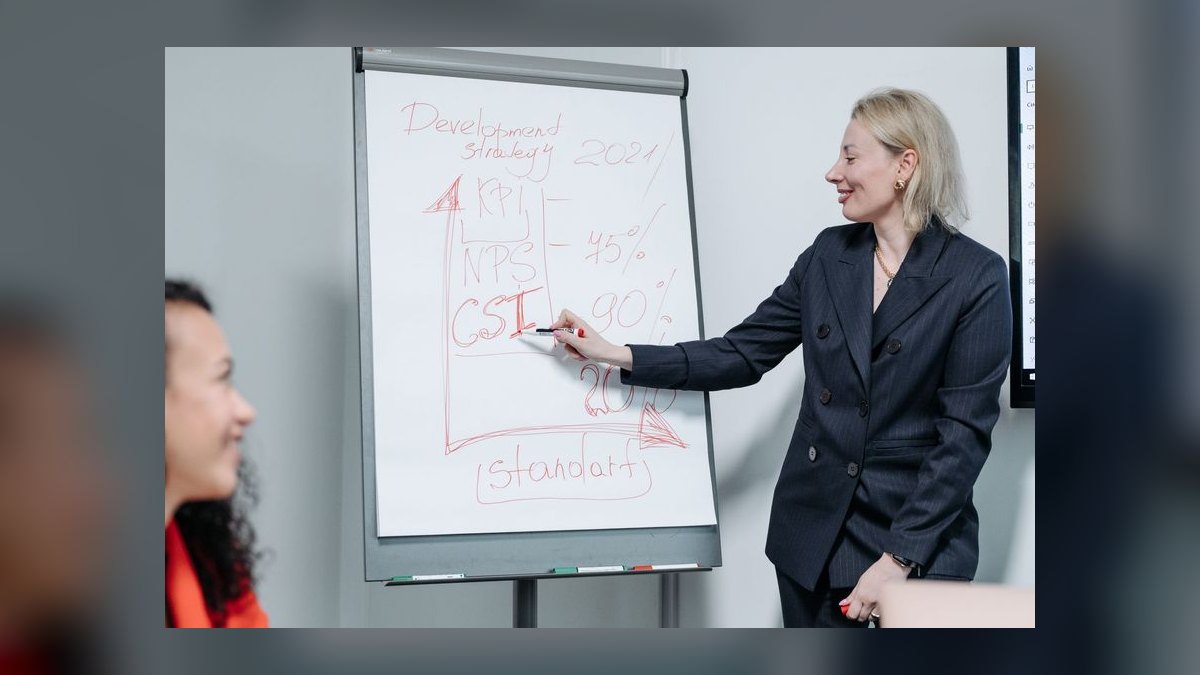
If there is no repeatable sales process, no CRM data worth analyzing, and fewer than two salespeople, a fractional CRO has nothing to instrument. Hire a hands-on sales leader or a first strong seller instead. If the CRM is a wasteland but the motion works, a RevOps contractor for six weeks to fix the foundation before the CRO starts is cheaper than paying an executive rate for data cleanup. If the sales team exceeds fifteen people and needs daily coaching, structure around a full-time VP of Sales with the fractional CRO as an advisor above them — and be explicit that the VP reports to the CRO during the engagement, agreed in writing before day one, because an ambiguous reporting line between a full-time VP and a fractional executive fails predictably and takes six months to fail.
During evaluation, the questions that actually discriminate: Which segment of clean energy have you personally carried a number in, and what was it? What did you inherit and what did the metrics look like ninety days later? Walk me through how you'd weight a utility pipeline where three deals are pre-interconnection. What did you get wrong in your last engagement? Ask for the specific numbers and check them — someone who has genuinely operated at scale will produce them without hedging, and someone who has only advised will pivot to methodology.
Then set a written 90-day gate with three criteria that don't require judgment to assess: the seven KPIs are defined, instrumented, and reviewed weekly without manual assembly; weighted pipeline coverage has moved measurably from its baseline in at least the short-cycle segments; and at least one material strategic change has been implemented rather than merely recommended — a pricing change, a segment exit, a territory redesign, a hire or a termination. If none of the three happened, the engagement is not working, and the appropriate response is to end it rather than extend it another quarter hoping.
Related questions
Should the fractional CRO own marketing KPIs like MQLs?
No. Volume metrics belong to marketing. The CRO should own a joint agreement on marketing-sourced qualified pipeline as a percentage of total, and hold marketing accountable to that number — but MQL and SQL counts are inputs the CRO consumes, not owns.
What replaces ARR at a pure project-based company?
Contracted value signed and year-one recognized revenue from new contracts, with repeat customer rate substituting for gross revenue retention and contribution margin per project replacing the LTV side of unit economics. Everything else in the set transfers unchanged.
How does the interconnection queue affect pipeline forecasting?
Queue position is often the single largest determinant of close probability and timing in utility-scale work, and it is outside anyone's control. Treat it as a required milestone field, weight pipeline against it, and never forecast a pre-queue deal into a specific quarter.
Can the same KPI set work at a hardware-heavy company?
Mostly. Add backlog and delivery lead time as owned metrics, because in hardware the constraint frequently shifts from demand to fulfillment, and a sales organization that keeps selling into a saturated delivery pipeline generates cancellations rather than revenue.
Who owns gross margin, the CRO or the CFO?
The CFO owns reported gross margin. The CRO owns margin at signature — the discount decisions and deal structures that determine it before finance ever sees the contract. Splitting it this way stops the two functions from arguing about a single number.
FAQ
How many KPIs should a fractional CRO own?
Five to seven. Fewer than five and important failure modes go unmonitored; more than eight and the weekly review becomes a reporting exercise instead of a decision meeting. The correct test is whether every metric on the list has a named action attached to it crossing a threshold. If a number moves and nobody knows what to do differently, it belongs in a monthly appendix, not the core set.
Should the fractional CRO own cash flow or bookings-to-cash timing?
No. Cash is the CEO's and CFO's domain. The CRO owns the commercial terms that shape it — deposit structures, milestone payment schedules, and payment terms at signature — and should report deal-level terms alongside value so finance can forecast. Making a fractional executive accountable for collections they cannot enforce produces friction without improving the outcome.
How long before KPI improvements show up?
Definitions and instrumentation land in 30 days. Pipeline coverage and velocity typically move within 60 to 90 days because they respond to process discipline. Cycle length and CAC take two to three full cycles to shift meaningfully, which in a utility-facing business can mean well over a year. Judge an engagement at 90 days on leading indicators; judging it on closed revenue that early measures pipeline built before the CRO arrived.
Does policy or incentive change break the KPI framework?
It changes the targets, not the framework. Tax credit structures, tariff decisions, and state-level program rules move demand and deal economics substantially, which is why the framework should include milestone-based weighting and quarterly target resets. A KPI set that assumes a stable policy environment will be wrong; one built to re-baseline handles it.
Can one fractional CRO cover multiple revenue motions at once?
Yes, up to a point. Two or three segments with a shared cadence is manageable at 8–12 days a month. Four distinct motions with genuinely different buyers, cycle lengths, and channel structures usually exceeds what a part-time executive can hold, and the honest recommendation is to pick the two that matter most and explicitly deprioritize the rest for a quarter.
What does a weekly revenue review actually contain?
Thirty minutes, fixed agenda: the seven KPIs with red/yellow/green status, the top ten open deals with next step and named risk, any deal whose close date slipped, and one named bottleneck for the week with an owner. Anything requiring longer discussion gets scheduled separately. Reviews that run an hour have become status meetings and stop producing decisions.
Sources
- Harvard Business Review — Sales topic
- U.S. Department of Energy — Solar Energy Technologies Office
- National Renewable Energy Laboratory (NREL)
- Federal Energy Regulatory Commission — Interconnection
- U.S. Energy Information Administration
- SaaStr — revenue and go-to-market metrics
- First Round Review
- Pavilion
- RevOps Co-op
- Bessemer Venture Partners — State of the Cloud
Related on PULSE
- What should an SMB company look for in a fractional CRO in 2027?
- Is there a fractional CRO available near me in Boise in 2027?
- Is there a fractional CRO available near me in Massachusetts in 2027?
- Is there a fractional Chief Revenue Officer available near me in Detroit in 2027?
- Who is the best fractional Chief Revenue Officer in Middletown in 2027?
- Is there a fractional CRO available near me in Pasadena in 2027?
This page will be disappearing soon. Save it to your device for $1 — or read it free while it is here.
@Kory-White- · if Venmo asks, the last 4 of my number are 2012
This page is gone.
This one is off the shelf now. $1 keeps it on your phone for good — the whole page, pictures and diagrams included.
 pulse-toolsWhere do I find a fractional VP of Sales in Phoenix in 2027?
 pulse-toolsShould I Hire a Fractional CRO If I Have No Sales Enablement Function in 2027?
 pulse-toolsWhere do I find a fractional VP of Sales in Richmond in 2027?
 pulse-toolsHow do I hire a fractional VP of Sales in Philadelphia in 2027?
 pulse-toolsHow do I hire a fractional VP of Sales for a fintech company in 2027?
 pulse-toolsHow do I hire a fractional VP of Sales for a logistics company in 2027?
 pulse-toolsHow do I hire a part-time CRO for a dev tools company in 2027?
 pulse-toolsWhat Are the Signs My Sales Team Needs a Fractional CRO in 2027?
 pulse-toolsHow do I hire a fractional VP of Sales in Colorado Springs in 2027?
 pulse-toolsHow do I hire a fractional VP of Sales for a clean energy company in 2027?