
Best Midwest Cities for Remote Workers in 2027
 Curated byKory White · Fractional CRO · Maryland
 PULSEKNOWLEDGE LIBRARY
Quality
Certified
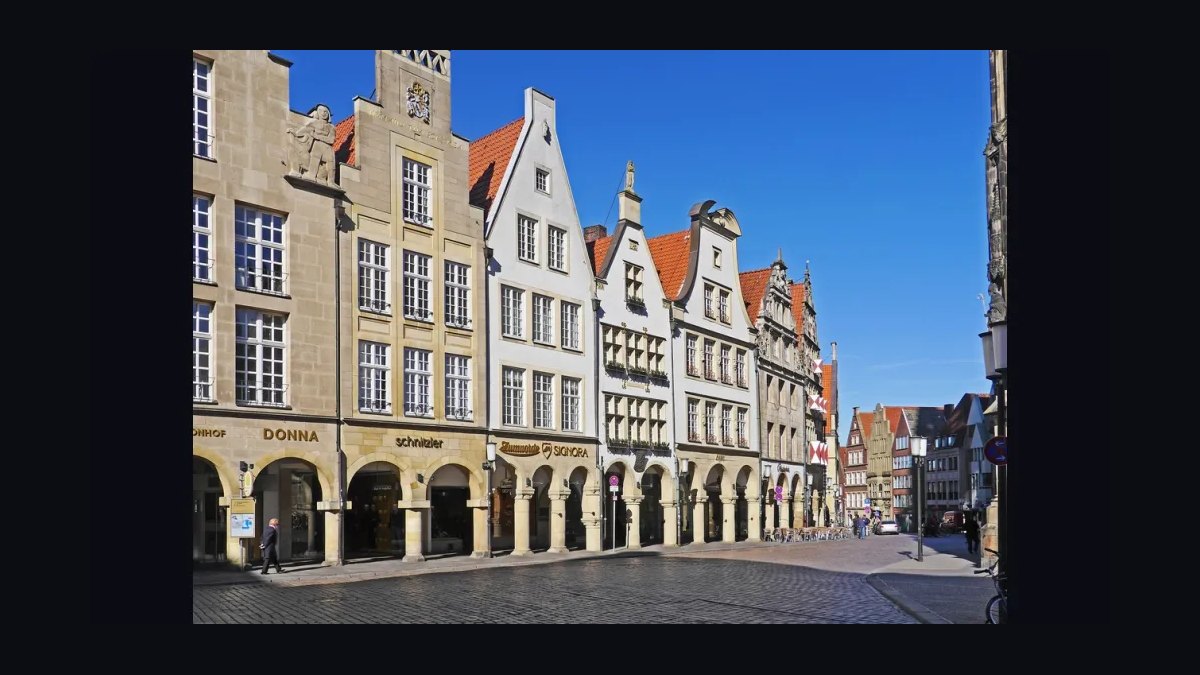
For remote workers in 2027, Chicago is the strongest all-around Midwest base — real transit, O'Hare's global reach, and rents well under coastal peers. Indianapolis is the best value: low rent plus Indiana's low flat income tax produce one of the highest savings rates of any genuine city in the region.
The two front-runners, compared head to head
Nearly every serious Midwest relocation search collapses into one of two shapes, and it helps to name them plainly before you start touring apartments. The first shape is the *amenity maximizer*: you are keeping a remote salary that was priced against a coastal market, and you want to spend the surplus on density — restaurants you did not have to drive to, a transit card instead of a car payment, a nonstop flight to almost anywhere for the two or three trips a year your employer still asks for. Chicago is the only Midwest city that fully satisfies that shape. The second is the *savings maximizer*: you want the same remote salary to buy a down payment in three years instead of eight, and you are willing to trade some density and some nonstop routes to get there. Indianapolis is the cleanest expression of that shape, with St. Louis and Columbus close behind on different axes.
The distinction matters because the two are not simply "expensive city" and "cheap city." They fail differently. Chicago's cost is concentrated almost entirely in rent and, if you own, property tax — Cook County property taxes are genuinely high, which is why the Chicago case is much stronger for renters than for buyers in the first few years. Everything else in Chicago is competitively priced or cheaper than you expect: groceries, a CTA pass, a neighborhood dinner, a gym. Indianapolis inverts this. Housing is cheap and Indiana's flat state income tax is among the lowest flat rates in the country, but you will almost certainly carry a car, and a car is a fixed monthly expense — payment, insurance, gas, parking, maintenance — that quietly eats a meaningful slice of the rent savings. Nobody puts that line item in the relocation spreadsheet, and it is the single most common reason a move that looked like a 40% cost cut lands closer to 25%.
Airport access is the other axis that separates them, and remote workers systematically underweight it until the first quarter where their company decides on an in-person offsite. O'Hare is a dual-hub airport with the kind of route map that means you rarely connect, domestically or internationally. Indianapolis International is a well-run, genuinely pleasant airport with good coverage of major domestic hubs, but a trip to a second-tier city or anywhere in Europe usually means a connection and a longer travel day. If your job is fully remote with one annual gathering, this is noise. If you are the kind of remote worker who is on a plane monthly — a solutions engineer, a regional account lead, a consultant with client sites — the hub premium is worth real dollars in recovered time, and Chicago and Minneapolis (a Delta hub through MSP) pull ahead of everything else in the region.

Then there is winter, which is not a tiebreaker between these two so much as a shared condition with different intensities. Chicago's lake-effect winters are legitimately hard, offset by a summer festival season that residents talk about the way other cities talk about their sports teams. Indianapolis is meaningfully milder but not mild. If cold is a genuine dealbreaker, neither city is the answer and you should be looking at the southern edge of the region — Cincinnati, St. Louis, Kansas City — where the winters are shorter and the cost structure still works.
How to decide between them
The decision is more tractable than it looks, because a small number of variables dominate and they can be evaluated in a fixed order. Start with whether you can live car-free, because that single answer moves more money than every other factor combined and it is binary — either your daily life fits inside a transit and walking radius or it does not. Chicago is the only Midwest city where car-free is a normal middle-class default rather than a lifestyle project; Minneapolis and Milwaukee are workable in the right neighborhoods with a bike and some tolerance; everywhere else on the list, plan on a car and budget for it honestly.
Second, check whether you own or rent, because that flips the tax math. A renter in Chicago sidesteps Cook County property taxes entirely and only sees Illinois's flat state income tax. A buyer absorbs them directly, and the annual bill on a modest single-family home can rival a month or two of rent. In Indianapolis, Columbus, or Kansas City, buying is where the value case gets strongest — the entry price for a starter home is low enough that a remote salary can carry a mortgage comfortably while still funding savings.
Third, verify the actual internet at the actual unit. This is the step people skip and then regret in week two. Metro-level fiber coverage means nothing if your specific building is served by one aging copper line. Kansas City's Google Fiber legacy and Chicago's dense multi-provider competition make gigabit common but not universal; ask the landlord for the provider name and the plan tier already installed, and if they cannot answer, call the provider with the exact street address before signing.
Fourth, match the local employer base to your field even though you are remote. This sounds contradictory, but remote jobs end. When yours does, the depth of the local market determines whether your next search is national-only or has a hometown fallback with in-person interviews and a shorter runway. Columbus has Intel's fab investment, JPMorgan Chase, and Nationwide. Minneapolis has Target, 3M, U.S. Bank, and Best Buy. Indianapolis has Eli Lilly, one of Salesforce's largest offices outside San Francisco, and a deep logistics base. St. Louis has a real geospatial and bioscience cluster around the Cortex Innovation District. Chicago has all of it, plus finance and consulting depth. A city that can employ you in person is insurance you are not paying a premium for.
Fifth and last, weigh the intangibles honestly, because they are the reason people leave a city that penciled out perfectly. Madison's isthmus setting and Saturday Capitol Square farmers market, Cincinnati's Over-the-Rhine restoration and its unexpectedly European hillside architecture, Grand Rapids's ArtPrize and the forty-minute drive to Lake Michigan beaches — these are not tiebreakers on a spreadsheet, but they are what makes a place stick after the novelty of cheap rent wears off in month eight.

The concrete numbers behind each option
Talking about Midwest affordability in the abstract produces the same mush every relocation article produces, so it is worth being precise about which numbers actually move and by how much, while being equally precise that specific rent and tax figures change every year and must be checked against current sources before you commit money to them.
Start with housing, the dominant line. The spread across this region is wide: Chicago sits at the top of the Midwest range for a one-bedroom in a desirable neighborhood, Minneapolis and Madison land in the middle, and St. Louis, Detroit, Indianapolis, Kansas City, and Cincinnati anchor the bottom with some of the cheapest genuine urban housing in the country. The practical consequence is that the gap between the most and least expensive city on this list is often larger than the entire rent budget of a worker in a low-cost market. Check Apartment List's national rent report or Zillow's rental data for the current month rather than trusting any figure — including a figure in an article dated 2027 — that you did not verify yourself.
Income tax is the second lever and the one most people get wrong, because they compare state headline rates and stop. What matters is the combination of state rate, local income tax, and structure. Indiana and Illinois both run flat state income taxes; Indiana's is one of the lowest flat rates nationally, while Illinois's flat rate is moderate. Ohio has been moving toward a flatter, lower structure. Minnesota runs a progressive system whose brackets can be favorable at moderate incomes and less so at high ones. The wrinkle that catches people: some Ohio and Michigan cities levy a *municipal* income tax on top of the state rate, which can add a percentage point or more and is often withheld based on where you work — a genuinely confusing question when "where you work" is your spare bedroom. If you are moving to an Ohio or Michigan metro, ask a local accountant how your employer should withhold before your first paycheck lands, not in April.
The third number is the one nobody budgets: total cost of car ownership. Insurance, fuel, parking, maintenance, and depreciation on a modest vehicle add up to a substantial recurring monthly cost — frequently in the same range as the rent difference between two Midwest cities. In Chicago, a car-free household converts that entire line into a transit pass and occasional rideshare, which is why Chicago's apparent rent premium is smaller in practice than it looks on a listings site. In Indianapolis or Kansas City you will pay it. Run both scenarios with real quotes for your driving record and ZIP code rather than a national average.
Fourth: property tax, if you buy. Illinois has among the higher effective property tax rates in the country and Cook County is at the sharper end of that; Indiana caps residential property tax at a comparatively low percentage of assessed value; Ohio and Missouri sit in between with substantial county-level variation. On a modest home, the annual difference between a high-tax and low-tax county in this region can exceed the entire annual savings from a slightly lower purchase price. Pull the actual county assessor record for the actual parcel — it is public, it takes five minutes, and it is the single highest-leverage number in a Midwest buy decision.
Fifth: utilities and the seasonal shape of them. Midwest utility costs run at or below national averages on an annual basis, but the distribution is lumpy. Heating bills in January and February in Minneapolis, Milwaukee, or Madison can be several times the shoulder-season baseline, and a poorly insulated century-old building — of which the Midwest has an enormous stock, much of it charming — turns that into a real budget event. Ask any prospective landlord for twelve months of actual utility history for the specific unit. A refusal is itself informative.

Sixth: coworking and workspace, which is a genuine remote-worker expense that relocation calculators ignore entirely. Downtown coworking memberships across the region generally run well below what the same tier costs in San Francisco or New York, and the supply is deep — Chicago's Fulton Market alone supports dozens of shared workspaces, and Indianapolis, Columbus, and Detroit have all seen substantial growth in affordable independent options. Many public library systems in these cities also offer bookable quiet rooms at no cost, which is a serious option for a worker who needs a call-safe space two days a week rather than a dedicated desk five.
Getting the move done: sequencing, upstream effects, and the parts that bite
The failure mode in a remote relocation is almost never picking the wrong city. It is executing the move in the wrong order and discovering a blocker after you have already signed something. The sequence below is ordered by reversibility — cheap, reversible checks first, expensive irreversible commitments last.

Before anything else, confirm your employer permits the state. This is the step that ends relocations. Many companies maintain an approved-states list driven by payroll registration, workers' compensation, and state unemployment insurance obligations; adding a new state costs the employer real administrative money, and a small company may simply decline. Get the answer in writing from HR or People Ops, and get it before you pay a security deposit. If your target state is not on the list, ask whether they will register — sometimes the answer is yes and it takes six weeks, which is a scheduling problem rather than a dealbreaker.
Second, resolve the tax-withholding question. For a fully remote worker, state income tax generally follows physical presence, but the exceptions are sharp: a handful of states apply "convenience of the employer" rules that can tax a remote worker based on the employer's location rather than the worker's, and reciprocity agreements between neighboring states change which return you file. Illinois has reciprocity arrangements with several neighbors; Ohio and Michigan layer municipal taxes on top. A single consultation with a CPA licensed in both your origin and destination state costs far less than a year of incorrect withholding and the penalty interest attached to it.
Third, do a scouting trip in the worst month. Visit Minneapolis in February, not in August. Everyone loves a Midwest city in September; the question is whether you can tolerate it in the second week of a gray, sub-freezing January stretch. Book an apartment rental in the specific neighborhood you are considering rather than a downtown hotel, work a normal week from it, and pay attention to the small frictions — how long the grocery run takes, whether the coffee shop is call-tolerant, whether your video calls hold up on the building's actual connection.

Fourth, take a short-term lease first. Three to six months in the neighborhood you think you want is the cheapest insurance in the entire process. It lets you discover that the walkable stretch of the neighborhood is actually four blocks long, or that the "quiet" street is a snow-route arterial, before you are locked into a year or holding a mortgage. The Midwest's rental markets are generally loose enough that short-term inventory exists, particularly in university-adjacent areas — Madison, Columbus, Ann Arbor, and Bloomington all have deep short-term supply driven by academic calendars.
Fifth, plan for the second-order effects on your work life, which people consistently underestimate. Time zones: most of this region is Central, and Columbus, Cincinnati, Detroit, and Grand Rapids are Eastern. If your team is on the West Coast, being on Eastern time means your 9 a.m. standup is their 6 a.m. and your afternoon is quiet — great for deep work, bad for spontaneous collaboration. If your team is European, Eastern time buys you two useful overlap hours that Central does not. This is a real quality-of-life variable and it costs nothing to get right.
Sixth, rebuild the social layer deliberately, because remote work removes the default mechanism that used to do it for you. An office supplies weak ties automatically; a spare bedroom supplies none. The Midwest is, by reputation and largely in practice, easier than coastal cities on this front — the run clubs, rec leagues, church communities, maker spaces, and neighborhood bars are real and reasonably welcoming. But you have to go. Coworking membership pays for itself here as a social product as much as a workspace one, and the cities with large young populations — Columbus, Madison, Minneapolis — make the first six months noticeably easier than a metro with an older median age.
Seventh, budget for the trip back. Whatever city you leave, you will fly back to it more than you expect for weddings, holidays, and aging parents. Price a representative round trip from your candidate cities before you decide. A city with a hub airport and a $250 fare beats a cheaper city with a $600 connecting itinerary if you make that trip six times a year — that is a four-figure annual swing that never appears in a cost-of-living index.
The wider field: seven more cities worth a serious look
The two-way Chicago-versus-Indianapolis frame is useful for structuring a decision, but it is not the whole region, and for many remote workers the right answer is a city neither of them.
Minneapolis is the strongest third option and arguably the best pure quality-of-life pick. The chain of lakes — Bde Maka Ska, Lake Harriet, Lake of the Isles — threaded with walking and biking trails makes a lunchtime break a genuine amenity rather than a walk around the block. The park system ranks near the top nationally, MSP is a Delta hub with wide domestic and international reach, and the downtown skyway network is a serious winter adaptation rather than a novelty. Minnesota's progressive income tax is the trade, and the winters are the real thing.

Columbus may be the single most balanced city on this list. Rent is affordable, Ohio State keeps the population young and the social scene deep, and the employer base is expanding meaningfully with Intel's semiconductor investment, JPMorgan Chase, and Nationwide. The Short North and German Village are walkable and dense; the terrain is flat enough that cycling is practical for most people. Ohio's income tax is low and trending flatter. For a remote worker who wants cheap without feeling like they gave something up, it is hard to beat.
Madison punches far above its size. Rent is moderate rather than cheap, but the isthmus between Lakes Mendota and Monona, the top-tier bike infrastructure, the University of Wisconsin's biotech and software gravity, and the Capitol Square farmers market produce a quality of life that larger cities do not match. It is small — that is the honest limitation, particularly on flights.
Kansas City delivers the best cost-to-amenity ratio in the region for many people. Rent is near the bottom of this list, the downtown revival is real and served by a free streetcar, and as Google Fiber's original launch market the competitive pressure on internet pricing and speed persists. Add barbecue, jazz heritage, championship-caliber pro sports, and the Crossroads arts district, and the value case is strong.

Cincinnati is the region's most underrated. P&G, Kroger, and Fifth Third anchor the economy, rent is very affordable, and Over-the-Rhine is among the best-restored historic districts in the United States. The hills and 19th-century architecture give parts of the city a texture that surprises people who arrive with low expectations.
St. Louis offers some of the cheapest urban housing anywhere, with real assets attached: Forest Park is larger than Central Park, the major museums and the zoo are free, the brick neighborhoods are architecturally distinctive, and the Cortex Innovation District plus a federal geospatial campus support a growing technical job base.
Milwaukee and Grand Rapids round it out. Milwaukee sits on Lake Michigan ninety minutes from Chicago, with a revitalized downtown, the Deer District, Summerfest, and a cost structure well below its bigger neighbor. Grand Rapids trades airport depth and nightlife for a walkable core, a design and furniture industry legacy in Steelcase and nearby Herman Miller, ArtPrize each fall, and Lake Michigan beaches forty minutes west.
Related questions
Is the Midwest actually cheaper once you account for a car?
Usually yes, but by less than advertised. Total car ownership costs frequently offset a third or more of the rent savings between a mid-cost and low-cost Midwest metro. The exception is Chicago, where car-free living is genuinely practical and converts that entire line item into a transit pass.
Which Midwest city has the best internet for video-heavy work?
Kansas City and Chicago are the safest bets — Kansas City for its Google Fiber legacy and the ongoing competitive pressure that created, Chicago for dense multi-provider fiber overlap. Columbus is strong too. Always verify symmetrical upload speeds at the exact unit address before signing.
Do I owe income tax in two states if I work remotely across state lines?
Sometimes. State income tax generally follows physical presence, but reciprocity agreements, "convenience of the employer" rules, and Ohio and Michigan municipal taxes complicate it. Consult a CPA licensed in both your origin and destination states before your first paycheck arrives.
Should I rent or buy as a remote worker in the Midwest?
Rent for the first six to twelve months regardless of intent. Once you are certain, buying is where the low-cost markets shine — but pull the county assessor record for the specific parcel first, because effective property tax rates vary enormously between neighboring counties.
What if my employer won't approve my target state?
Ask whether they will register — many will, and it typically takes weeks rather than being a hard no. If they decline, either pick an approved state or treat it as a job-search constraint. Never sign a lease before you have that answer in writing.
FAQ
What makes a Midwest city good for remote workers?
The strongest candidates balance affordability against real urban amenities: reasonable rent, a low or flat state income tax with no punishing local layer, reliable fiber internet with solid upload speeds, access to a hub airport, and neighborhoods walkable enough that you are not driving for every errand. A city that only delivers on price tends to lose people within two years.
Is Chicago really affordable for remote workers?
Relative to New York, San Francisco, Boston, or Seattle, yes — substantially. Relative to the rest of the Midwest, no. Chicago sits at the top of the regional rent range. The offsetting factor is that a car-free Chicago household eliminates an expense that every other city on this list requires, which narrows the real gap considerably for renters.
Why is Indianapolis considered the best value pick?
Two things compound: rent is near the bottom of the regional range, and Indiana's flat state income tax is one of the lowest flat rates in the country. Low housing cost plus low tax drag produces an unusually high savings rate on a remote salary, while Eli Lilly, a large Salesforce presence, and a deep logistics base give the local job market genuine depth.
How important is airport access for a remote worker?
More important than most people assume until their first mandatory offsite. If you fly monthly for client work or team gatherings, a hub — O'Hare in Chicago, MSP in Minneapolis — saves hours per trip and often hundreds of dollars per fare. If you fly twice a year, it barely registers and you should optimize for cost instead.
How bad are Midwest winters for someone who hasn't lived through one?
Genuinely hard in the northern tier — Minneapolis, Milwaukee, Madison, and Chicago all deliver multi-week stretches below freezing with limited daylight. The southern edge of the region (Cincinnati, St. Louis, Kansas City, Indianapolis) is meaningfully milder. The mitigation is infrastructure and habit: Minneapolis's skyways, Chicago's indoor culture, and an actual winter hobby matter more than raw temperature.
Are these cities safe for remote workers?
Safety in every US city is a neighborhood-level question, not a city-level one, and the Midwest is no different. Each city listed has areas with low crime and strong community character alongside areas with serious problems. Research the specific neighborhood, walk it at night during a scouting trip, and weight walkability and nearby amenities alongside crime statistics.
Sources
- https://www.census.gov/programs-surveys/metro-micro.html
- https://www.apartmentlist.com/research/national-rent-data
- https://www.bls.gov/cex/
- https://taxfoundation.org/data/all/state/state-income-tax-rates/
- https://broadbandmap.fcc.gov/
- https://www.bts.gov/
- https://www.zillow.com/research/data/
- https://www.usa.gov/state-taxes
- https://www.aaa.com/autorepair/articles/annual-cost-to-own-and-operate-a-vehicle
Related on PULSE
- Best US Cities for Outdoor-Loving Remote Workers in 2027
- Best European Cities for Remote Workers and Digital Nomads in 2027
- Best US Cities for Remote Workers in 2027
- Top 10 Best Towns for Remote Workers
- 10 Best Cities to Retire in the Midwest 2027 (Low Cost, Four Seasons, Strong Healthcare)
- Top 10 Best Towns to Live in the Midwest
This page will be disappearing soon. Save it to your device for $1 — or read it free while it is here.
@Kory-White- · if Venmo asks, the last 4 of my number are 2012
This page is gone.
This one is off the shelf now. $1 keeps it on your phone for good — the whole page, pictures and diagrams included.
 pulse-townsBest European Cities for Remote Workers and Digital Nomads in 2027
 pulse-townsBest US Cities for Remote Workers in 2027
 pulse-townsBest US Cities for Outdoor-Loving Remote Workers in 2027
 pulse-townsBest US Cities for Young Professionals With No State Income Tax in 2027
 pulse-townsTop 10 Best Cities for Families on the West Coast in 2027
 pulse-townsTop 10 Safest Mid-Size Cities in America in 2027
 pulse-towns10 Best Cities to Retire in the Midwest 2027 (Low Cost, Four Seasons, Strong Healthcare)
 pulse-townsBest West Coast US Cities for Tech Professionals in 2027
 pulse-townsBest Affordable Global Cities for Digital Nomads Outside Europe in 2027
 pulse-townsThe 10 Best Places to Raise a Family in the Northeast in 2027