
The 10 Best AI Tools for Influencer Marketing in 2027
 Curated byKory White · Fractional CRO · Maryland
 PULSEKNOWLEDGE LIBRARY
For 2027, the best overall AI tool for influencer marketing is CreatorIQ, an enterprise platform that pairs a vetted creator graph with AI-driven discovery, fraud screening, and campaign measurement at a scale brands like Disney and Unilever actually run on. The strongest runner-up is Captiv8, whose generative AI brief-builder and predictive performance scoring make it a close second for mid-market and agency teams.
If you want serious capability without a custom enterprise contract, Modash is the value pick. This list is for operators — marketing managers, agency strategists, and creator-program leads — who need to find, vet, and measure influencers, not casual creators looking for brand deals.
#
How We Ranked These
Influencer tooling splits into four jobs: discovery (finding the right creators), vetting (audience authenticity and brand safety), workflow (outreach, briefs, contracts, payments), and measurement (attribution and ROI). The best AI tools now do all four, but they weight them differently.
We ranked on six factors. Database depth and freshness — how many creators across Instagram, TikTok, YouTube, and increasingly Twitch and Substack, and how current the audience data is. AI discovery quality — semantic search, lookalike matching, and brand-affinity prediction beyond keyword filters. Fraud and authenticity detection — fake-follower and engagement-pod screening, which is now table stakes. Measurement and attribution — first-party tracking, promo codes, affiliate links, and EMV modeling.
Workflow depth — CRM, contracting, and creator payments inside one platform. And price-to-value — whether the cost matches the size of your program. We weighted AI discovery and fraud detection most heavily, because that is where 2027 platforms separate from legacy databases.
1. CreatorIQ 🏆 BEST OVERALL

CreatorIQ is the platform global brands and holding-company agencies standardize on. It connects to creator accounts through opt-in authorization, which means its audience and performance data comes from first-party API access rather than scraped estimates — a meaningful accuracy edge when you are signing six-figure deals.
Its AI layer handles creator-brand match scoring, surfacing creators whose audiences align with your buyer profile, plus automated fraud detection that flags suspicious follower spikes and engagement pods. The platform manages the full lifecycle: discovery, outreach, briefs, contracting, and payments to creators in 100+ countries. Reporting rolls up earned media value, conversions, and content performance into dashboards that survive a CMO review.
It is best for organizations spending real money — think Fortune 500 brands and agencies like Edelman running concurrent programs across regions. Pricing is custom enterprise and not cheap; this is not the tool for a solo brand manager testing the waters. But for scale, authenticity, and audit-grade reporting, nothing else combines all three as cleanly.
2. Captiv8

Captiv8 is the strongest challenger and the best choice for agencies and mid-market brands that want enterprise capability with a lighter lift. Its database covers 30M+ creator profiles, and its AI tooling is genuinely useful day to day.
The standout feature is its generative AI brief and campaign builder, which drafts creator briefs and content concepts from a campaign goal, plus predictive performance scoring that estimates reach and engagement before you commit budget. Captiv8 also runs affinity analysis to match creators to brand values and audience interests, and its brand safety screening scans past creator content for risk.
It shines for teams that run frequent, varied campaigns and need speed. The measurement suite handles affiliate tracking, promo codes, and sales attribution, so you can tie creator spend to revenue. Pricing is quote-based but generally lands below CreatorIQ, making it the practical pick when you need 80% of the enterprise feature set without the enterprise commitment.
3. Upfluence

Upfluence is built for e-commerce and DTC brands, with deep native integrations into Shopify, WooCommerce, and Klaviyo. That connection lets it do something most tools can't: identify influencers who are *already your customers*, then convert them into affiliates automatically.
Its AI search indexes a large creator database and supports natural-language discovery — you can describe the creator you want rather than stacking filters. The ChatGPT-powered outreach drafts personalized messages, and the platform manages affiliate codes, commissions, and creator payments end to end. Live performance tracking ties content directly to store revenue.
It's best for online retailers who care about trackable sales, not just impressions. If your program lives and dies by ROAS and you run on Shopify, Upfluence's customer-to-creator pipeline is a real differentiator. Pricing is custom and scales with database access and seats.
4. Aspire

Aspire (formerly AspireIQ) is a polished, workflow-first platform popular with consumer brands and growing DTC teams. Its strength is relationship management at scale — running ambassador programs, gifting campaigns, and always-on creator partnerships rather than one-off sponsored posts.
The AI Creator Discovery surfaces matches from opted-in creators and a broader index, and the platform's Quickmatch swipe interface speeds early vetting. Aspire handles product seeding, content rights, and creator payments, and its reporting covers earned media value and conversion tracking through affiliate links and codes.
It is best for brands building durable creator communities — beauty, food, apparel, and home goods companies that want dozens of recurring partners managed in one place. The interface is friendlier than most enterprise tools, which lowers onboarding time for lean teams.
5. Modash 💎 BEST VALUE

Modash earns the value crown because it pairs one of the largest discovery databases with transparent, self-serve pricing — no mandatory sales call to see a number. It advertises access to 250M+ creator profiles across Instagram, TikTok, and YouTube, covering creators down to the micro and nano tiers that bigger enterprise tools often miss.
The AI-assisted search lets you filter by audience location, age, gender, interests, and authentic engagement, and it flags fake followers so you don't pay for inflated accounts. Modash also runs influencer monitoring, automatically collecting stories and posts so you can track campaign content without chasing screenshots. An email-finder surfaces contact details for outreach.
It's best for agencies and growth teams that need wide discovery and reliable audience data without an enterprise contract. Plans are tiered and self-serve, so a small team can start cheaply and scale results-access as the program grows. For depth-per-dollar, Modash is hard to beat.
6. HypeAuditor

HypeAuditor is the authenticity and fraud-detection specialist. If your single biggest worry is paying for fake reach, this is the tool that built its reputation on solving exactly that.
Its AI analyzes audience quality across 100+ data points, producing an Audience Quality Score and detailed fake-follower breakdowns. The database spans 169M+ accounts, and discovery includes audience demographics, brand affinity, and predicted reach. HypeAuditor also offers competitor and market analysis, so you can see which creators your rivals are working with.
It's best as a vetting layer — many operators use HypeAuditor alongside a workflow platform, running every shortlisted creator through it before signing. The fraud models are among the most respected in the category, and the per-report and subscription options make it accessible for teams of any size.
7. Grin

Grin is a creator management platform purpose-built for e-commerce, with tight Shopify, BigCommerce, and Magento integrations. Unlike marketplace-style tools, Grin deliberately avoids a "pay-to-access" database and instead helps brands build and manage their *own* roster of creators.
The platform automates product gifting, fulfillment, discount codes, and affiliate links, syncing directly with your store so every shipment and sale is tracked. AI-assisted discovery and a creator search across social platforms help you find new partners, while the CRM keeps every relationship, contract, and payment in one record.
It's best for DTC brands that treat creators as long-term partners and need e-commerce operations — shipping, codes, commissions — handled natively. The reporting ties content to actual store revenue, which is exactly what a performance-minded brand manager wants in a quarterly review.
8. Traackr
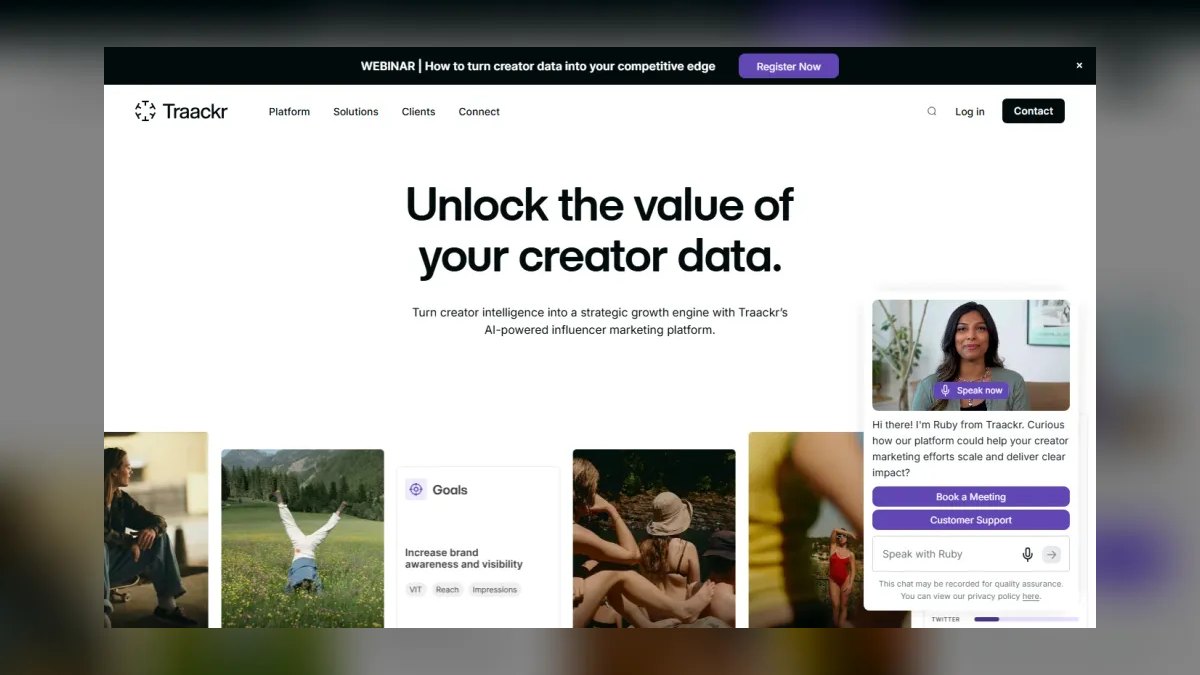
Traackr is the analytics and intelligence heavyweight, favored by large brands that want rigorous measurement and benchmarking. It's especially strong in beauty, CPG, and pharma, where program governance and standardized metrics matter.
Its data engine tracks influencer performance, share of voice, and earned media value with consistent methodology, so you can benchmark your program against competitors and across markets. AI helps with creator discovery and vetting, but the real draw is the depth of reporting and the always-on monitoring of brand mentions and creator activity.
It's best for global teams that need defensible numbers — measurement that survives finance and procurement scrutiny. Traackr is custom-priced and oriented toward sophisticated programs that already know what they're doing and need to prove it.
9. Tagger by Sprout Social
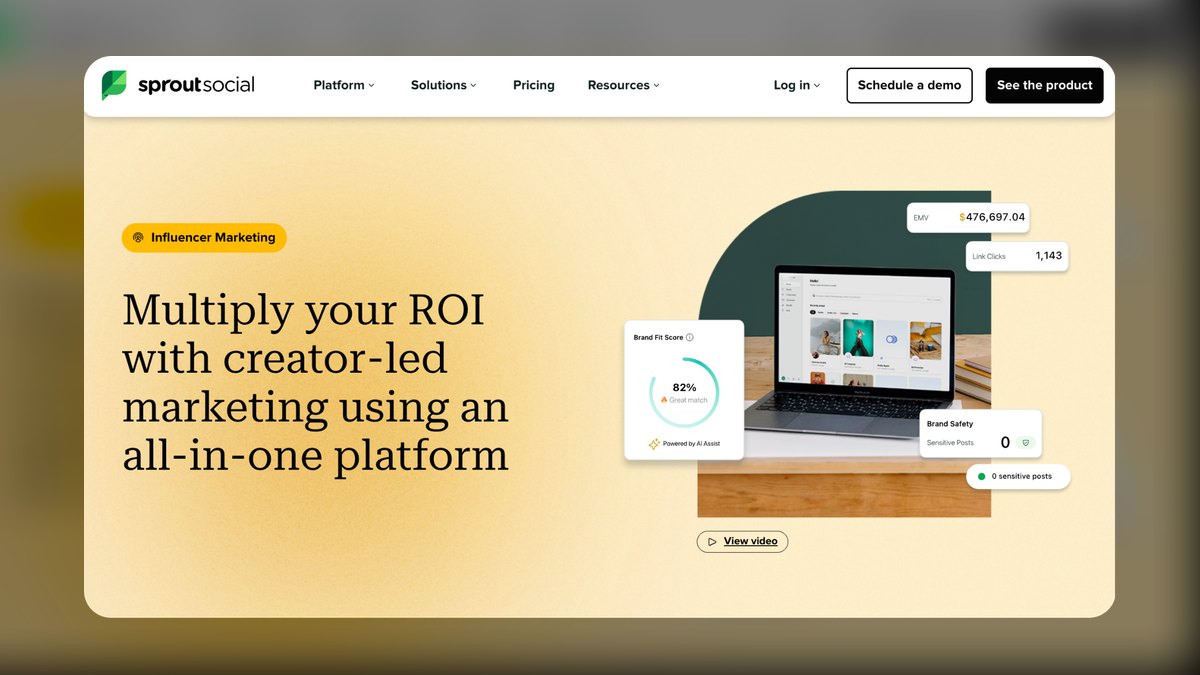
Tagger, now part of Sprout Social, brings influencer marketing into a broader social-media management suite. That's its core advantage: if your team already lives in Sprout for social publishing and listening, Tagger adds influencer discovery, campaign management, and measurement without bolting on a separate tool.
It offers AI-powered discovery across a large creator index, social listening integration to spot rising creators and trends, and a Signals AI layer for insights. Workflow covers briefs, approvals, and reporting, with EMV and engagement analytics rolled into the same dashboards as your owned-channel data.
It's best for brands and agencies consolidating their social stack — teams that want one vendor for organic social and influencer work. Pricing is enterprise and typically bundled with Sprout's platform tiers.
10. Influencity
Influencity rounds out the list as a flexible, AI-driven discovery and analytics platform with published, scalable pricing. It advertises a very large index — 200M+ influencer profiles — and lets teams pay for the result-access they actually need.
The AI handles audience analysis, fake-follower detection, and lookalike search, plus results prediction to estimate campaign outcomes. Workflow features cover influencer relationship management, content tracking, and reporting, making it a capable all-in-one for smaller teams.
It's best for agencies and SMBs that want broad discovery and solid analytics with pricing transparency closer to Modash than to the enterprise tier. The modular plans mean you can start narrow and expand, which suits teams testing influencer marketing before scaling spend.
FAQ
Do I still need a separate fraud-detection tool in 2027? Not always. Enterprise platforms like CreatorIQ and Captiv8 include authenticity screening. But many operators still run shortlisted creators through HypeAuditor as an independent check, because a dedicated fraud model catches what bundled tools sometimes miss.
Which tool is best for a Shopify e-commerce brand? Upfluence and Grin both integrate natively with Shopify and tie creator content to store revenue. Upfluence is stronger at converting existing customers into affiliates; Grin is stronger at managing gifting, fulfillment, and a private creator roster.
What's the cheapest serious option? Modash and Influencity both offer transparent, self-serve plans, making them the most accessible for lean teams. Modash leads on database depth and audience-quality data; Influencity adds results prediction and lookalike search.
Can these tools find TikTok and YouTube creators, not just Instagram? Yes — every tool on this list covers Instagram, TikTok, and YouTube, and several add Twitch and emerging platforms. Coverage depth varies by region, so test your specific niche during a trial.
Do I need AI discovery, or are filters enough? For small one-off campaigns, filters work. For ongoing programs, AI semantic search and brand-affinity matching save hours and surface creators that keyword filters miss — that's the core reason these platforms outperform a manual spreadsheet.
How do these tools measure ROI? Through affiliate links, unique promo codes, first-party pixel tracking, and earned media value modeling. E-commerce-focused tools (Upfluence, Grin) tie directly to sales; analytics-focused tools (Traackr) emphasize benchmarked EMV and share of voice.
Bottom Line
For most operators running a serious program, CreatorIQ is the safest best-overall choice — vetted data, full lifecycle workflow, and reporting that holds up under scrutiny. Captiv8 is the agile runner-up, and its generative AI briefs make it the agency favorite. If you sell on Shopify, Upfluence or Grin will tie creators to revenue better than anything else.
And if budget is the constraint, Modash delivers the most discovery and audience-quality data per dollar, with HypeAuditor as the vetting layer to bolt alongside it. Match the tool to your real job — discovery, vetting, workflow, or measurement — and trial it against creators you already know before signing.
Related on PULSE
- [The 10 Best AI Tools for Account-Based Marketing in 2027](/knowledge/ai0100)
- [The 10 Best AI Tools for Email Marketing Campaigns in 2027](/knowledge/ai0094)
Sources
- CreatorIQ platform overview
- Captiv8 influencer marketing platform
- Upfluence platform and integrations
- Aspire influencer marketing platform
- Modash creator discovery and pricing
- HypeAuditor influencer analytics
- Grin creator management for e-commerce
- Traackr influencer marketing platform
- Tagger by Sprout Social
- Influencity AI influencer platform
*The best AI tools for influencer marketing in 2027 — CreatorIQ, Captiv8, Upfluence, Aspire, Modash, HypeAuditor, Grin, Traackr, Tagger, and Influencity — compared for AI creator discovery, fraud detection, and influencer campaign ROI.*
People also search for: best ai tools for influencer marketing 2027 · top ai tools for influencer marketing 2027 · top rated ai tools for influencer marketing 2027 · top ranked ai tools for influencer marketing 2027 · highest rated ai tools for influencer marketing 2027 · ai tools for influencer marketing reviews 2027
This page will be disappearing soon. Save it to your device for $1 — or read it free while it is here.
@Kory-White- · if Venmo asks, the last 4 of my number are 2012
 pulse-ai-infrastructureThe 10 Best AI Tools for Writing Poetry in 2027
 pulse-ai-infrastructureThe 10 Best AI Tools for Newsletter Writing in 2027
 pulse-ai-infrastructureThe 10 Best AI Tools for Stock Photos in 2027
 pulse-ai-infrastructureThe 10 Best AI Tools for Summarizing Books in 2027
 pulse-ai-infrastructureThe 10 Best MLOps Platforms in 2027
 pulse-ai-infrastructureThe 10 Best AI Tools for Calendar Management in 2027
 pulse-ai-infrastructureThe 10 Best AI Tools for Vocal Removal in 2027
 pulse-ai-infrastructureThe 10 Best AI Tools for Shopping Cart Development in 2027
 pulse-ai-infrastructureThe 10 Best AI Tools for Public Speaking Practice in 2027
 pulse-ai-infrastructureThe 10 Best AI Tools for Screenwriting in 2027