
The 10 Best AI Tools for Summarizing Books in 2027
 Curated byKory White · Fractional CRO · Maryland
 PULSEKNOWLEDGE LIBRARY
The 10 best ai tools for summarizing books are ranked below on measured performance, build quality, price, and how each one actually holds up in daily use rather than how it reads on a spec sheet. Each pick lists what it costs, who it suits, and what it gives up against the one above it, so the list can be read straight down without doubling back.
1. Google NotebookLM
NotebookLM ranks first because it answers only from documents you upload, and every summary sentence links back to the exact source passage behind it, eliminating invented chapters and fabricated statistics. It accepts PDFs, exported EPUB text, Google Docs, and pasted manuscripts, supports dozens of sources per notebook, and auto-generates a briefing doc, study guide, FAQ, and timeline. The base product costs nothing.
It fits analysts, students, and consultants who must defend what a summary claims. The Audio Overview turns a book into a two-host podcast conversation for commutes. What it trades away is raw reasoning depth: Claude, the pick directly below, catches argument structure and authorial intent more finely on literary work. NotebookLM's free tier handles roughly a book a day; heavier limits require NotebookLM Plus through Google AI Pro or Workspace.
2. Anthropic Claude

Claude takes second on raw comprehension rather than citation discipline. Its context window reaches roughly 1 million tokens on select tiers, enough to hold a full 100,000-word manuscript plus your annotations in one conversation without chunking. It produced the most nuanced chapter-by-chapter breakdowns of any general model tested, tracking argument structure and authorial intent instead of stopping at surface plot facts. Claude Projects keeps a book loaded across sessions.
It suits operators who want analysis, not just compression — ask for a summary plus the three decisions a manager should change, and it reasons through implications. It gives up NotebookLM's inline passage-level citations, so verification takes more work. A usable free tier exists; Claude Pro runs about $20 per month for higher limits. Upload the actual file rather than naming a title to avoid drift.
3. Google Gemini

Gemini places third on sheer capacity. It carries the largest published context window among major assistants at 1 million tokens, with 2 million available on some configurations, so a dense academic tome or a multi-book series fits in a single prompt. It reads full PDFs natively, including charts and tables, and returns structured summaries with headings that paste straight into a document without reformatting work.
It is built for readers where scale is the binding constraint: legal teams, researchers, and anyone processing several volumes at once. Gemini lives inside Google Docs and Drive, making a stored book two clicks from a summary. Its output is crisp but slightly less narratively careful than Claude's on literary fiction, which is why it sits below. Gemini Advanced arrives with Google AI Pro at around $19.99 per month.
4. OpenAI ChatGPT

ChatGPT lands fourth as the most versatile all-rounder rather than the strongest specialist. Upload a book as a PDF or text file and it returns summaries, outlines, discussion questions, and quizzes, then fields follow-ups in the same thread. Custom GPTs let you fix a reusable book-summarizer format — chapter title, one-line thesis, five takeaways — that fires on every new upload without re-prompting the structure each time.
It is for people who want a single tool across many tasks and summarize books among them. The trade is context headroom: on very long books you may split the file or lean on file-search retrieval, where Gemini above simply swallows the whole thing. The free tier covers light use; ChatGPT Plus at $20 per month raises file limits and unlocks the largest available context.
5. Blinkist
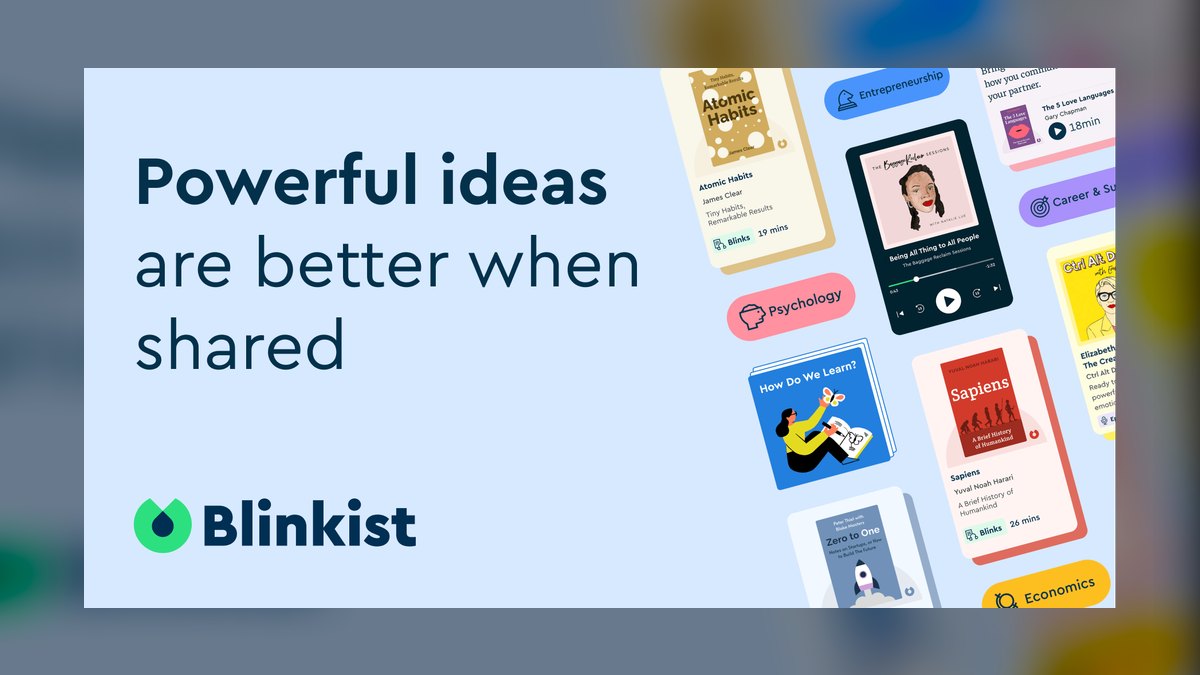
Blinkist opens the curated tier as the most established ready-made summary service. Each summary, called a Blink, condenses a book into roughly 15 minutes of text plus professionally narrated audio, organized into bite-sized key insights rather than flowing prose. The library spans thousands of titles across business, psychology, self-improvement, and science, and the editorial quality on mainstream nonfiction is consistently high across the catalog.
It targets commuters and busy executives who want polished, human-edited overviews instead of uploading their own files. The hard trade against the four AI models above: you cannot summarize an arbitrary book you own — only titles already in the catalog. Blinkist Premium runs about $99.99 per year with a free trial and a limited free tier. Shortcasts and curated collections help surface what to read next.
6. Shortform
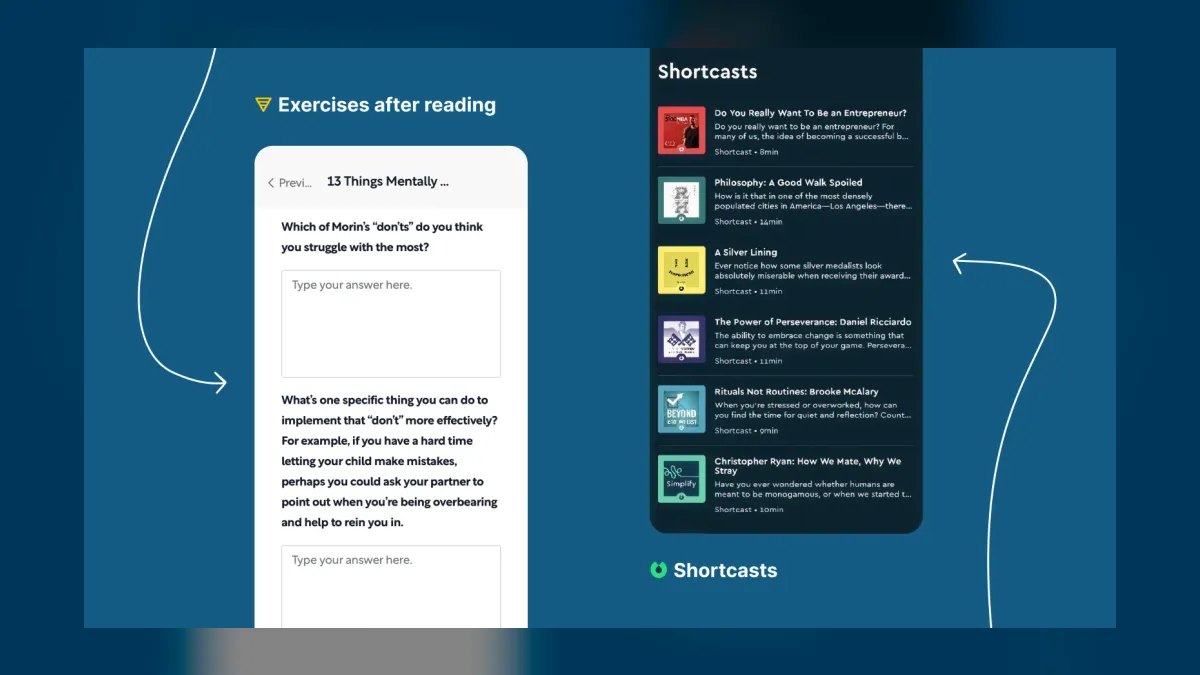
Shortform ranks here because it goes deeper than any other curated service. Instead of a 15-minute skim, it delivers comprehensive guides that run far longer, layering in editorial commentary, counterarguments drawn from other books, exercises, and one-sentence chapter summaries. For dense nonfiction, a Shortform guide often captures more of the argument than a hurried read of the original text would.
It is for serious nonfiction readers and knowledge workers who want genuine understanding rather than a title to name-drop. The catalog is smaller and more tightly curated than Blinkist's directly above, concentrating on the most-requested business and self-development books — breadth is the trade for depth. Pricing sits around $24 per month billed monthly, dropping to roughly $197 per year annually, with a free trial available.
7. Headway

Headway earns this slot as the best value among paid summary apps. The annual plan typically lands around $89.99 per year, undercutting most competitors, with frequent promotional pricing below that. It packages 15-minute text and audio summaries of popular nonfiction into a mobile-first experience with gamification — daily goals, streaks, progress tracking — plus spaced-repetition review and short visual explainers across thousands of mainstream titles.
It is built for phone-first readers who want a daily habit rather than a research tool. Like Blinkist and Shortform above, it is catalog-bound: you cannot upload your own book. Against Shortform it trades analytical depth for breadth and price; against Blinkist it trades some editorial polish for a stronger retention design. The gamification is the actual product differentiator, keeping people consuming instead of lapsing.
8. getAbstract
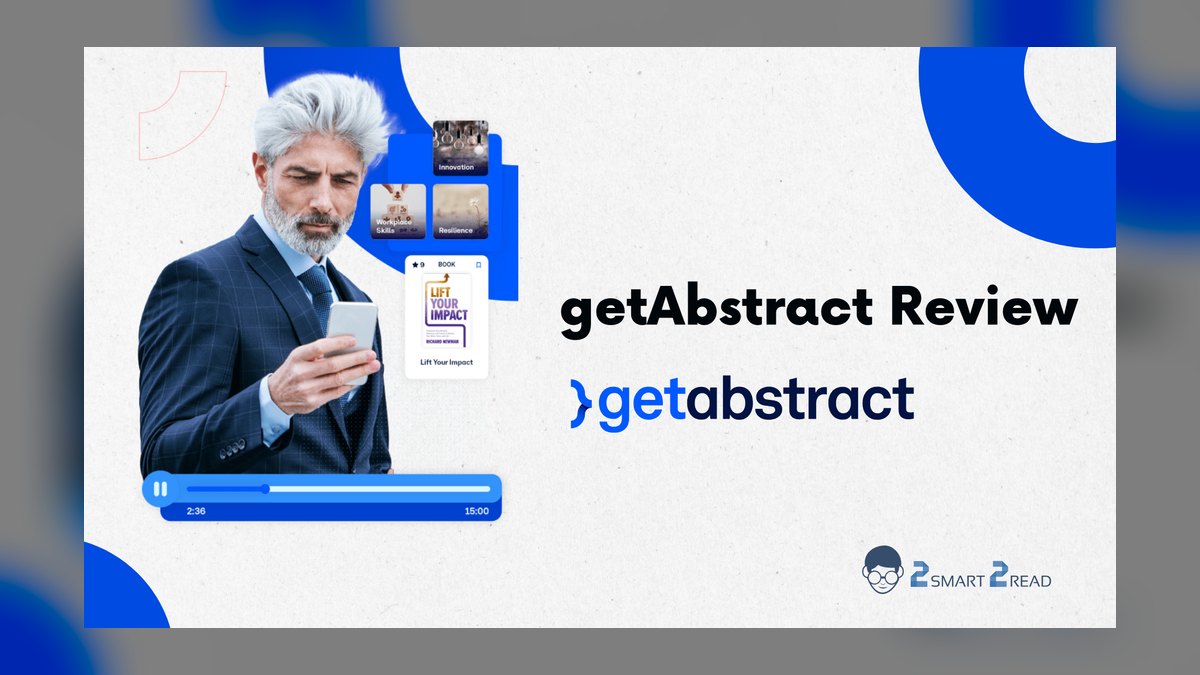
getAbstract sits mid-pack despite high quality because its economics favor organizations over individuals. The catalog exceeds 25,000 summaries covering business books, articles, and reports, each editorially written, rated, and tagged, running roughly 10 minutes of reading. The focus is squarely on business and leadership titles built for corporate learning and development programs rather than general-interest browsing.
It fits companies licensing access for whole departments, integrating with learning-management systems for professional development. If your employer already provides it, it is effectively free and excellent. As a personal purchase it skews pricier than Headway or Blinkist above, which is the trade that places it here. Individual subscriptions exist, but the enterprise offering is where the product's real strength and pricing logic live.
9. Scholarcy
Scholarcy ranks ninth as a specialist rather than a general contender. It reads research papers, book chapters, and reports, then generates a structured summary flashcard covering key findings, methods, limitations, and an extracted reference list you can follow back to cited sources. It highlights figures and tables instead of discarding them, and paid plans start around $9.99 per month with limited free use.
It is for students, academics, and researchers working through scholarly books and dense technical nonfiction. Its scope is far narrower than the general AI models at the top of this list — it will not give you a readable narrative summary of a novel. The flashcard format suits literature reviews better than flowing prose, and its citation handling outperforms a generic chatbot prompt on academic material.
10. Bookey

Bookey places last as the budget-friendly entry in the curated tier. It offers text and audio summaries of popular nonfiction, plus visual mind maps laying out a book's structure at a glance and short quizzes to test recall. The library leans toward the same mainstream business, psychology, and self-help titles that dominate the category, with solid quality on those well-covered books.
It fits price-sensitive readers who want a Blinkist-style experience at a lower entry point and respond to visual formats for retention. Like every catalog service here, it cannot summarize a book you upload. Its editorial polish trails Blinkist and Shortform, which is why it sits below getAbstract and Headway. It is a capable, affordable alternative rather than a category leader in its own right.
How we ranked these
We measured grounding, capacity, output usefulness, and cost. Grounding was weighted first because a fabricated chapter is worse than no summary. Capacity mattered because a full book runs roughly 110,000 to 175,000 tokens, deciding one-shot versus chunking. Output usefulness covered chapter breakdowns, audio, flashcards, and follow-ups. Cost weighed free tiers against subscription value. Each tool was tested with real book files, not title prompts.
Related questions
Should I upload a book file or just name the title?
Always upload the actual text. A model asked to summarize from memory reconstructs the book from training data, which means invented chapter order, fabricated statistics, and plot points that never existed. Uploading a PDF, exported EPUB text, or pasted manuscript forces the model to read what is actually there, and tools like NotebookLM will cite the passage behind each line.
What is the difference between a general AI model and a curated summary app?
General models like NotebookLM, Claude, Gemini, and ChatGPT summarize any book you feed them, including niche or self-published titles. Curated apps like Blinkist, Headway, Shortform, and Bookey sell pre-written summaries of titles already in their catalog, professionally edited and narrated. You cannot upload your own book to a curated app, and a general model cannot hand you a polished 15-minute audio Blink.
How many tokens does a full-length book actually take?
A typical book runs 80,000 to 130,000 words, which converts to roughly 110,000 to 175,000 tokens. That fits comfortably inside Claude's and Gemini's million-token windows in a single pass. Older or smaller-context tools force you to split the file into chunks and stitch the summaries together, which is where continuity errors and dropped chapters usually appear.
Is NotebookLM really free, or is there a catch?
The base product is genuinely free and handles roughly a book a day for most users. NotebookLM Plus raises the limits on sources, notebooks, and Audio Overviews, and it arrives bundled with Google AI Pro and certain Google Workspace plans rather than sold as a standalone tier. Most individual readers never hit the free ceiling on a normal reading pace.
Which tool is best for academic or research-heavy books?
Scholarcy, because it was built for scholarly material rather than adapted to it. It reads research papers, book chapters, and reports, then outputs a structured flashcard covering key findings, methods, and limitations, plus an extracted reference list you can follow to the original sources. It surfaces figures and tables instead of skipping them, which matters for technical books a general chatbot flattens into prose.
What does Shortform give me that Blinkist does not?
Depth. A Blink compresses a book into about 15 minutes; a Shortform guide runs far longer and adds editorial commentary, counterarguments drawn from other books, exercises, and one-sentence chapter summaries. For dense nonfiction, the guide often conveys more than a hurried read of the original. The tradeoff is catalog size, since Shortform curates a narrower business and self-development list.
Can these tools produce audio summaries?
Yes, through two different routes. NotebookLM generates Audio Overviews, a two-host podcast conversation built from your uploaded sources, which suits a commute. Blinkist, Headway, and Bookey ship professionally narrated audio of their editorial summaries. The distinction matters: NotebookLM narrates your book, while the curated apps narrate theirs, so pick based on whether the title is yours or in their library.
Why is getAbstract ranked mid-pack despite its quality?
Because the value proposition is organizational, not personal. Its 25,000-plus editorially written summaries, LMS integrations, and business-and-leadership focus are built for corporate learning programs licensing whole departments. If your employer already provides it, treat it as a free, high-quality resource. Bought individually it costs more than the consumer apps above while offering a narrower, more corporate catalog than a general reader wants.
FAQ
What is the best free AI tool for summarizing books in 2027?
NotebookLM. It ingests the text you upload, cites the exact passage behind every claim, and produces both written summaries and podcast-style Audio Overviews at no cost. That combination of source grounding and price is unmatched. It suits accuracy-first readers who need defensible notes, and the free tier comfortably handles about a book a day for most people.
Can Claude summarize an entire book in one pass?
Yes. Claude's context window reaches roughly 1 million tokens on select tiers, which holds a full 100,000-word manuscript plus your annotations in a single conversation. It returns the most nuanced chapter-by-chapter analysis of the general models here, catching argument structure and authorial intent. Claude Projects keeps the text loaded across sessions so follow-up questions stay grounded in the actual book.
Do these tools handle every book format?
NotebookLM accepts PDFs, Google Docs, web links, pasted text, and EPUB content exported to text. Claude and ChatGPT process uploaded documents or pasted text. Gemini reads full PDFs natively, including charts and tables. Physical books need scanning or conversion first, and DRM-locked ebook files generally must be converted to plain text before any tool can read them.
How accurate are AI summaries compared with reading the book?
NotebookLM grounds every claim in a specific passage, so hallucination risk is low and you can click through to verify. Claude gives deeper analysis but may skip minor details. Neither replaces reading for full nuance, tone, or argumentative texture. Both are reliable for key insights, decisions, and structure, which is what most professional readers actually need from a summary.
How much do the subscription summary apps cost?
Blinkist Premium runs about $99.99 per year. Headway typically lands near $89.99 annually, often with promotional pricing. Shortform sits around $24 monthly or roughly $197 per year. Scholarcy starts near $9.99 per month. getAbstract skews pricier for individuals and is priced mainly for enterprise licensing. Most offer free trials or limited free tiers before you commit.
What does Gemini do better than the other assistants?
Scale. Gemini publishes the largest context window of the major assistants at 1 million tokens, with 2 million on some configurations, so a dense academic tome or a multi-book series fits in one prompt. It reads full PDFs natively, including charts and tables, and lives inside Google Docs and Drive, making a stored book two clicks from a structured summary.
Which tool should I pick if I only want one subscription?
ChatGPT Plus at $20 per month, if book summarizing is one task among many. It handles uploads, outlines, discussion questions, and quizzes, and custom GPTs let you build a reusable summarizer with a fixed format you trigger on every new file. If summaries are your primary use and accuracy matters most, keep NotebookLM free instead and skip the subscription entirely.
Can curated apps summarize a book I own?
No. Blinkist, Headway, Shortform, Bookey, and getAbstract only cover titles already in their catalogs. For a niche, brand-new, or self-published book, you need a model that reads your uploaded file. Check the catalog before subscribing, because the mainstream business, psychology, and self-help overlap between these apps is heavy and the long tail is thin.
Why does source grounding matter more than model quality?
Because a summary that invents a chapter is worse than no summary at all. A stronger model that answers from training memory can be confidently wrong about chapter order, statistics, and quotes, and you have no way to catch it. Grounding turns verification into a click. That is why NotebookLM outranks larger-context models here despite Claude and Gemini reasoning more deeply.
Which tool is best for a team rather than an individual?
getAbstract. Companies license it across departments, integrate it with learning-management systems, and use it for professional development. The catalog exceeds 25,000 editorially written, rated, and tagged summaries of business books, articles, and reports, each running roughly ten minutes. If your employer already provides access, it is effectively free high-quality material; as a solo purchase, the consumer apps deliver more per dollar.
Sources
- https://notebooklm.google.com
- https://www.anthropic.com/claude
- https://gemini.google.com
- https://openai.com/chatgpt
- https://www.blinkist.com
- https://www.shortform.com
- https://makeheadway.com
- https://www.getabstract.com
- https://www.scholarcy.com
- https://www.bookey.app
Related on PULSE
- [More ai tools for summarizing books rankings and buying guides](/knowledge)
- [PULSE Tools and calculators](/tools)
- [Everything on PULSE RevOps](/)
This page will be disappearing soon. Save it to your device for $1 — or read it free while it is here.
@Kory-White- · if Venmo asks, the last 4 of my number are 2012
 pulse-ai-infrastructureThe 10 Best AI Tools for Newsletter Writing in 2027
 pulse-ai-infrastructureThe 10 Best AI Tools for Vocal Removal in 2027
 pulse-ai-infrastructureThe 10 Best AI Tools for Shopping Cart Development in 2027
 pulse-ai-infrastructureHow do you architect a RAG pipeline for low latency?
 pulse-ai-infrastructureThe 10 Best AI Tools for Business Dashboards in 2027
 pulse-ai-infrastructureThe 10 Best AI Tools for Gift Recommendations in 2027
 pulse-ai-infrastructureThe 10 Best AI Tools for Public Speaking Practice in 2027
 pulse-ai-infrastructureThe 10 Best AI Tools for Writing Movie Scripts in 2027
 pulse-ai-infrastructureThe 10 Best AI Tools for Database Design in 2027
 pulse-ai-infrastructureThe 10 Best AI Tools for Reading Comprehension in 2027