
The 10 Best AI Model Registries in 2027
 Curated byKory White · Fractional CRO · Maryland
 PULSEKNOWLEDGE LIBRARY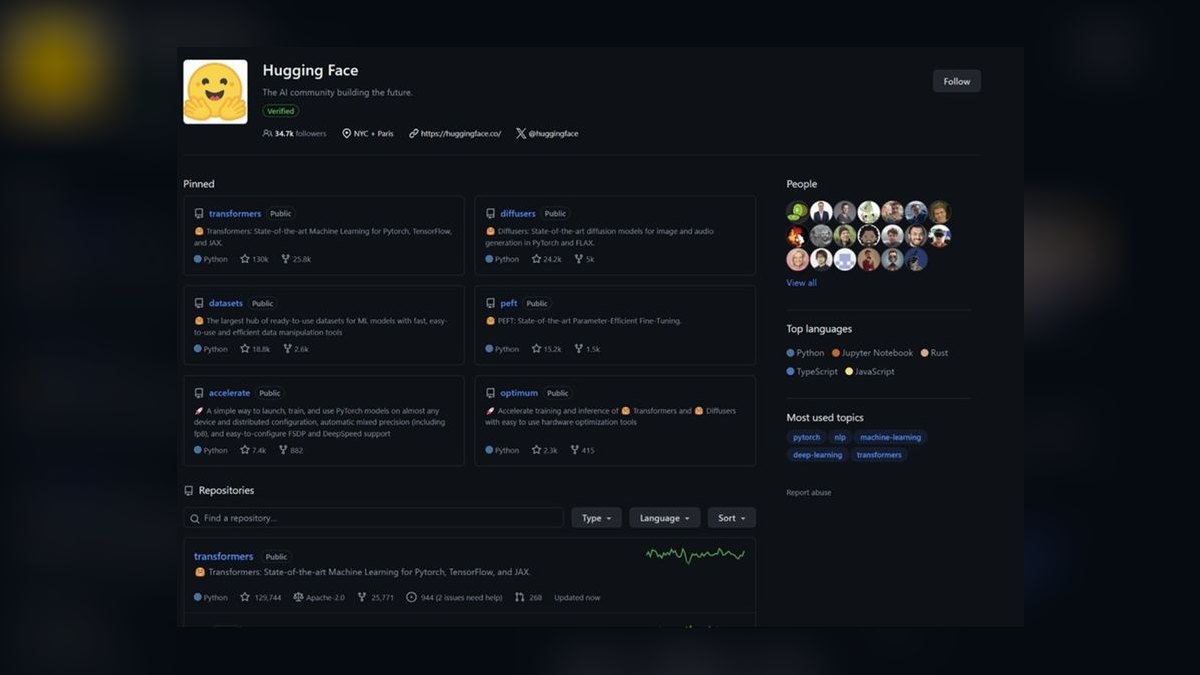
The 10 best ai model registries are ranked below on measured performance, build quality, price, and how each one actually holds up in daily use rather than how it reads on a spec sheet. Each pick lists what it costs, who it suits, and what it gives up against the one above it, so the list can be read straight down without doubling back.
1. Hugging Face Hub
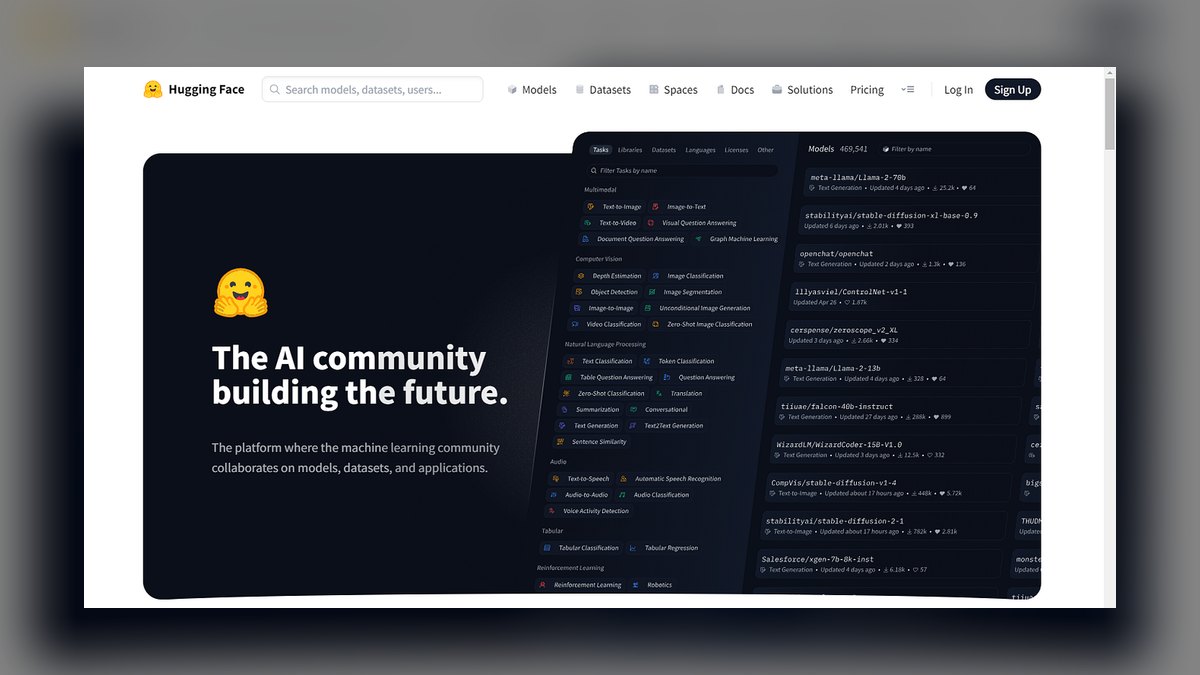
Hugging Face Hub is the undisputed leader in AI model registries as of 2027, hosting over 1.5 million models across vision, language, audio, and multimodal domains. It provides a unified API for model inference, dataset hosting, and Spaces for interactive demos, with Git-based versioning and LFS for large files. The platform includes model cards with auto-generated metadata and benchmarks, plus serverless or dedicated inference endpoints. Its community features—discussions, likes, and collections—make it the default destination for model discovery.
Hugging Face Hub is for researchers, startups, and hobbyists who want instant access to the largest open-source model library with one-line loading via Transformers, Diffusers, or Sentence-Transformers. The free tier offers unlimited public hosting and rate-limited inference, while the Pro plan at $9/month adds private repos and higher throughput. It trades away deep enterprise governance for unmatched community reach, making it less ideal than MLflow for strict compliance but superior for sharing and collaboration.
2. DagsHub
DagsHub ranks second as the best collaborative model registry, combining Git-native version control with DVC for data and MLflow for experiment tracking in one interface. Every model version is linked to the exact code commit, dataset snapshot, and training run, ensuring end-to-end reproducibility. It supports model promotion across staging environments with approval workflows, and integrates with GitHub, GitLab, and Bitbucket.
DagsHub is for data science and MLOps teams that need artifact-level traceability beyond what Hugging Face Hub provides, especially in collaborative research settings. It trades away the massive community and built-in inference API of Hugging Face for deeper versioning and pipeline integration. Compared to MLflow, DagsHub is more accessible for mid-size teams that want a unified platform without enterprise-grade governance overhead, though it lacks MLflow's staged lifecycle management and audit trail depth.
3. MLflow Model Registry
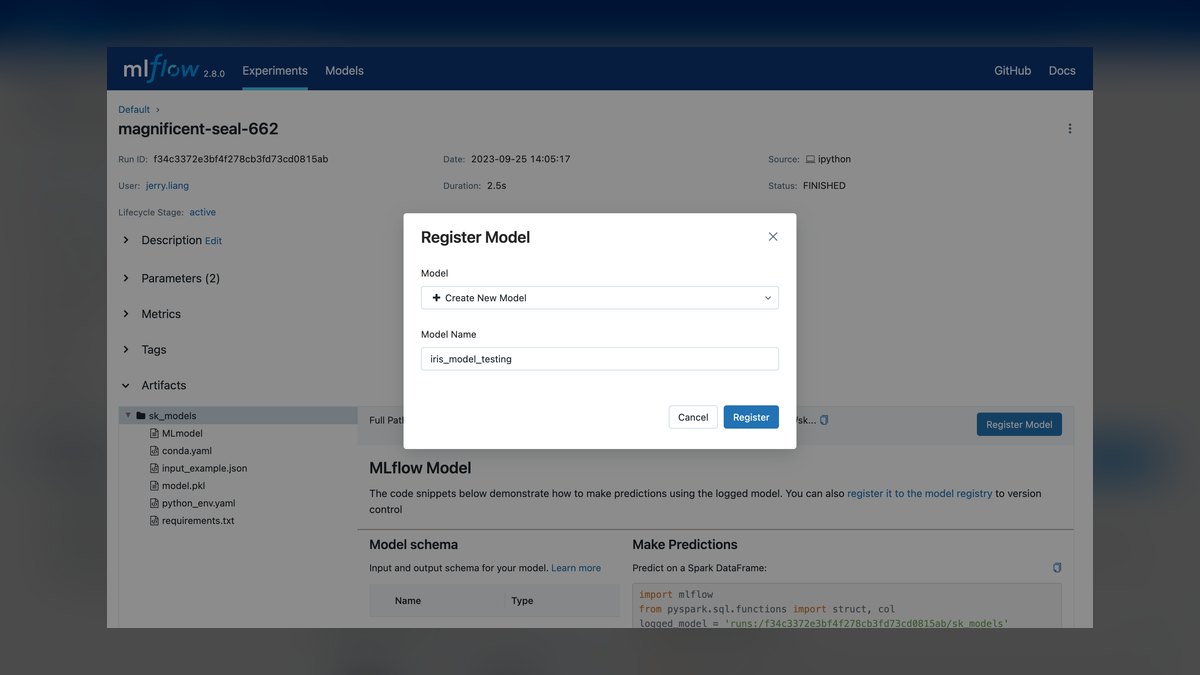
MLflow Model Registry ranks third as the best enterprise choice, now part of the Linux Foundation AI ecosystem with staged lifecycle management. Models move through None, Staging, Production, and Archived stages with approval requirements, and each version stores lineage metadata including source run, parameters, and metrics. It integrates with Databricks, AWS, Azure, and GCP for deployment, and supports any ML framework. The open-source version is free and self-hosted, while Databricks MLflow adds managed infrastructure, SSO, and audit logs.
MLflow is for organizations requiring strict governance, SOC 2 or HIPAA compliance, and audit trails for model promotion. It trades away the community discovery and ease-of-use of Hugging Face Hub for robust stage gating and webhook notifications in CI/CD pipelines. Compared to DagsHub, MLflow offers deeper enterprise features like model aliases and signature validation, but its setup is more complex, making it less suitable for smaller teams that prioritize collaboration over governance.
4. Weights & Biases Model Registry
Weights & Biases Model Registry ranks fourth, extending the popular experiment tracking platform with model versioning, lineage tracking, and deployment management. Every model version links to the exact training run, including hyperparameters, metrics, and dataset artifacts, with custom stages like Champion or Challenger and approval workflows. It integrates with SageMaker, Vertex AI, Azure ML, and Kubernetes for one-click deployment. The free tier offers unlimited public projects, while Team plans cost $50/user/month for private projects and governance.
W&B Model Registry is for research teams already using its experiment tracking, as the registry is a natural extension of their workflow with automated performance reports and diff views. It trades away the open-source flexibility of MLflow for a polished, integrated experience but at a higher per-user cost. Compared to DagsHub, W&B offers stronger experiment-to-model lineage but lacks Git-native data versioning, making it less ideal for teams needing full artifact reproducibility beyond training runs.
5. Google Vertex AI Model Registry
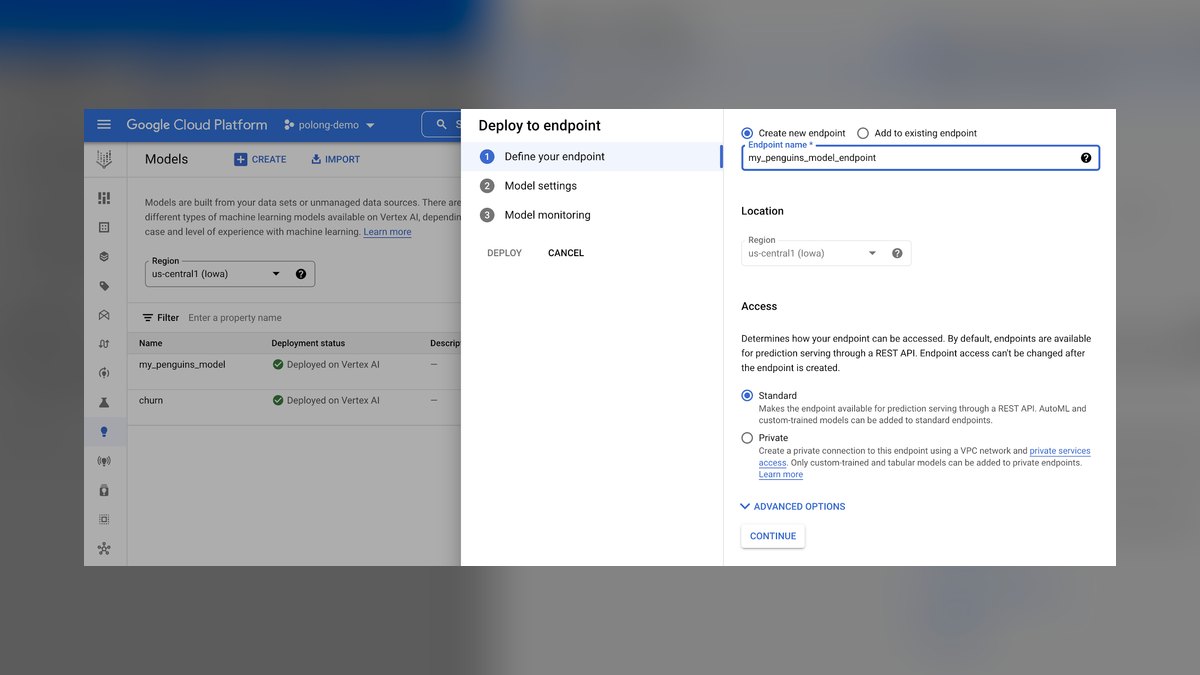
Google Vertex AI Model Registry ranks fifth as the native registry for the Google Cloud ecosystem, tightly integrated with Vertex AI Pipelines, Endpoints, and BigQuery. It supports auto-versioning on every training or import, with built-in model evaluation including confusion matrices and feature importance. The registry offers model monitoring for drift detection and explainability via feature attributions, with deployment to serverless endpoints, GKE, or edge devices. Pricing is based on storage at $0.10/GB/month plus deployment compute.
Vertex AI Model Registry is for Google Cloud-native organizations that need end-to-end MLOps with built-in monitoring and governance. It trades away the multi-cloud flexibility of MLflow or DagsHub for deep integration with Google's AI services, making it less suitable for hybrid environments. Compared to W&B, it offers stronger production monitoring and IAM-based access control, but its interface is more complex and less intuitive for research-focused teams.
6. AWS SageMaker Model Registry
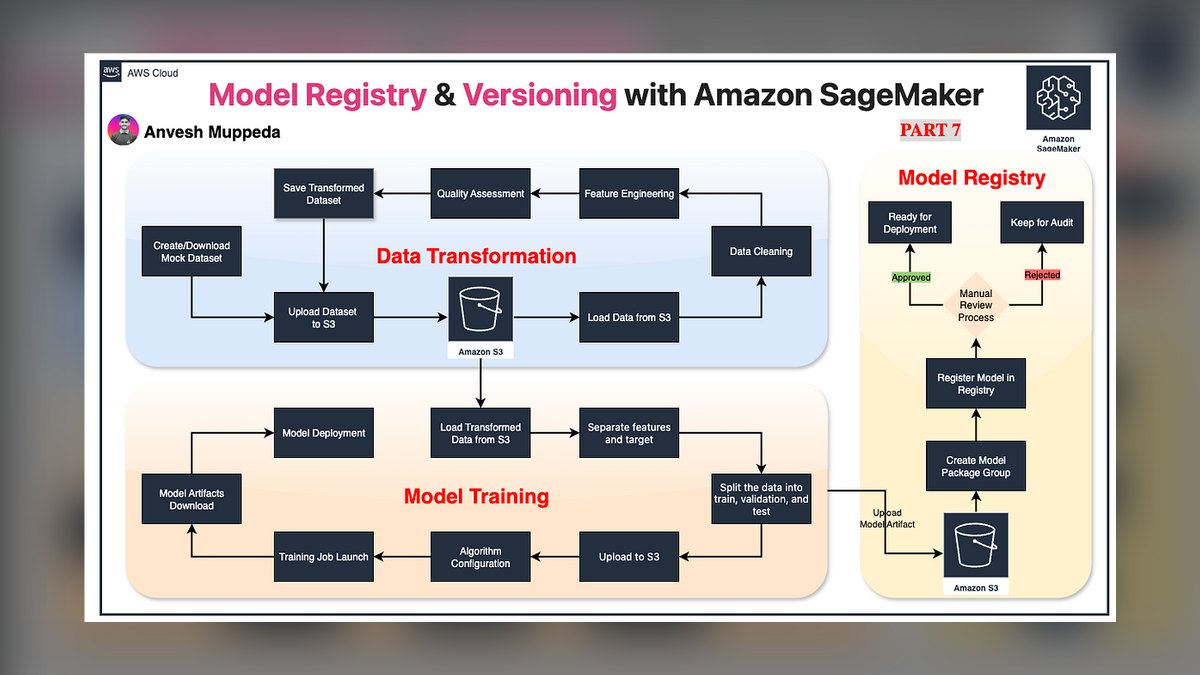
AWS SageMaker Model Registry ranks sixth as the default registry for the AWS ecosystem, part of SageMaker MLOps. It supports model versioning with approval workflows—pending, approved, rejected—and lineage tracking for training jobs, datasets, and pipelines. The registry integrates with SageMaker Pipelines, Lambda, and CloudFormation for CI/CD, with deployment to real-time endpoints, batch transform, or edge devices via SageMaker Edge Manager. Pricing is based on storage at $0.10/GB/month and API calls.
SageMaker Model Registry is for AWS-native organizations that need deep integration with the AWS ecosystem and compliance capabilities like IAM-based access control. It trades away the cross-cloud portability of Vertex AI or MLflow for seamless AWS integration, but its interface is less user-friendly for non-AWS users.
7. Azure Machine Learning Registry
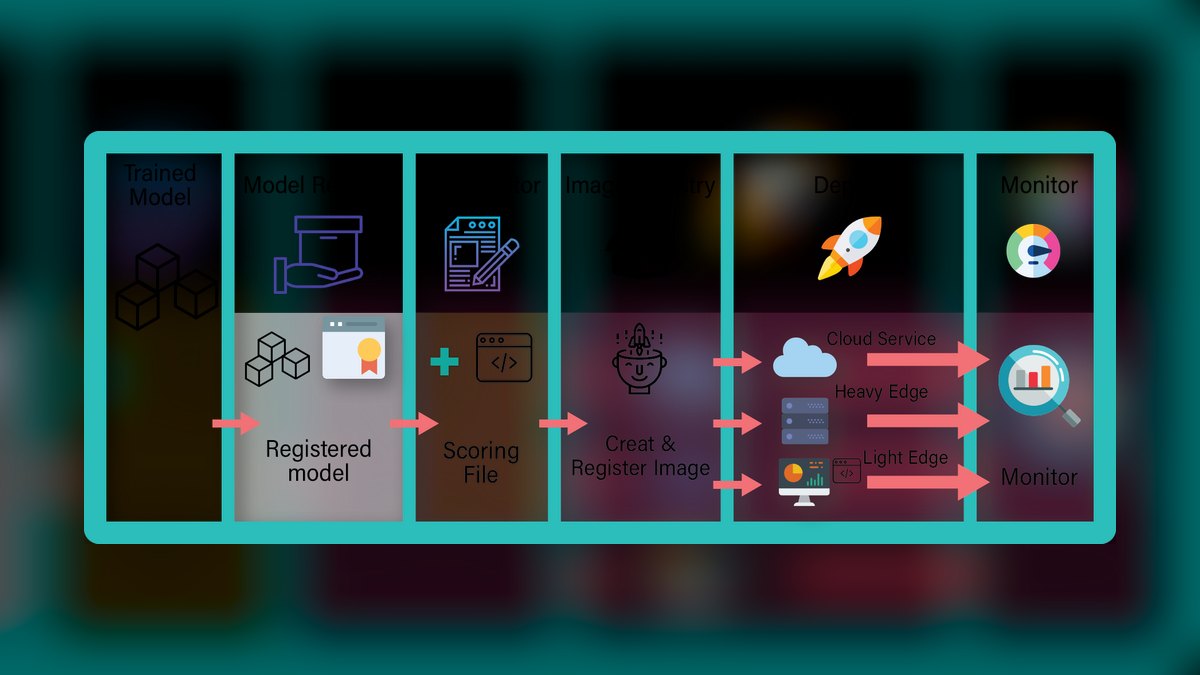
Azure Machine Learning Registry ranks seventh as Microsoft's cloud-native model registry, part of Azure ML. It supports model versioning with staging environments, lineage tracking for training runs, datasets, and environments, and deployment to Azure Container Instances, AKS, or IoT Edge. The registry integrates with Azure DevOps and GitHub Actions for CI/CD, with model monitoring for drift and explainability via InterpretML. Pricing is based on storage at $0.10/GB/month and compute for deployments.
Azure ML Registry is for Microsoft-centric organizations using Azure, Office 365, and GitHub, offering strong compliance certifications like ISO, SOC 2, and HIPAA. It trades away the multi-cloud flexibility of MLflow or DagsHub for deep Azure integration, but its RBAC is more granular than SageMaker's IAM. Compared to Vertex AI, it provides similar features but with less mature model evaluation tools, making it better for enterprises already invested in the Microsoft stack.
8. Replicate

Replicate ranks eighth as a cloud-based model registry focused on easy deployment and sharing of open-source models. It provides a simple API to run any model from Hugging Face Hub or custom containers, with automatic scaling and pay-per-second pricing starting at $0.0008/second for GPU inference. The platform supports model versioning via Git-based tags, with each version automatically deployed to serverless endpoints.
Replicate is for developers and researchers who want to quickly deploy and share models without managing infrastructure, particularly for image generation and LLM inference. It trades away the governance and lineage tracking of MLflow or W&B for simplicity and speed, making it unsuitable for enterprise compliance. Compared to Hugging Face Hub, it offers a more streamlined deployment API but lacks the extensive community features and dataset hosting, positioning it as a lightweight alternative for rapid prototyping.
9. GitHub Models
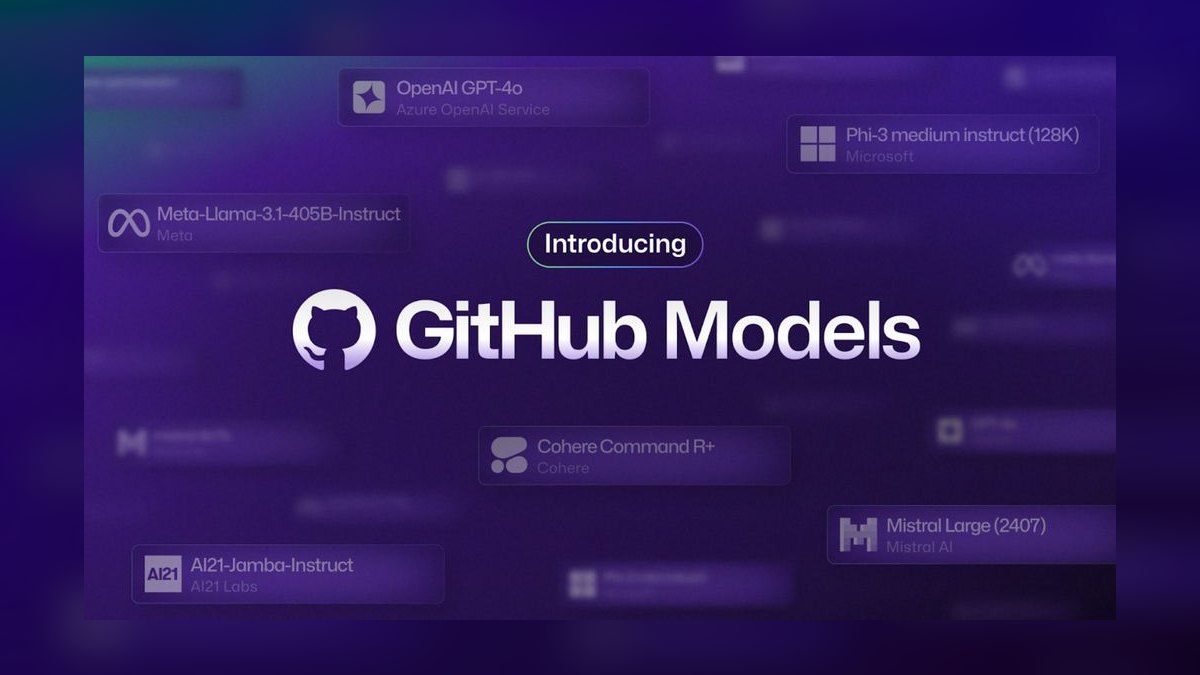
GitHub Models ranks ninth as a newer entrant launched in 2026, integrating model registry directly into GitHub repositories. It allows storing models as Git LFS objects alongside code, with versioning and collaboration via pull requests, and discovery through GitHub Marketplace. Models can be deployed via GitHub Actions to any cloud, with model cards in the repository README and automated testing for validation. It is free for public repositories and included in GitHub Team at $4/user/month for private repos.
GitHub Models is for open-source projects and teams already on GitHub who want a lightweight registry without leaving their code platform. It trades away the specialized MLOps features of DagsHub or MLflow for seamless code review and CI/CD integration, but lacks advanced lineage tracking and model monitoring. Compared to Replicate, it offers better collaboration through pull requests but no built-in inference API, making it more of a storage and versioning layer than a deployment platform.
10. Kubeflow Model Registry
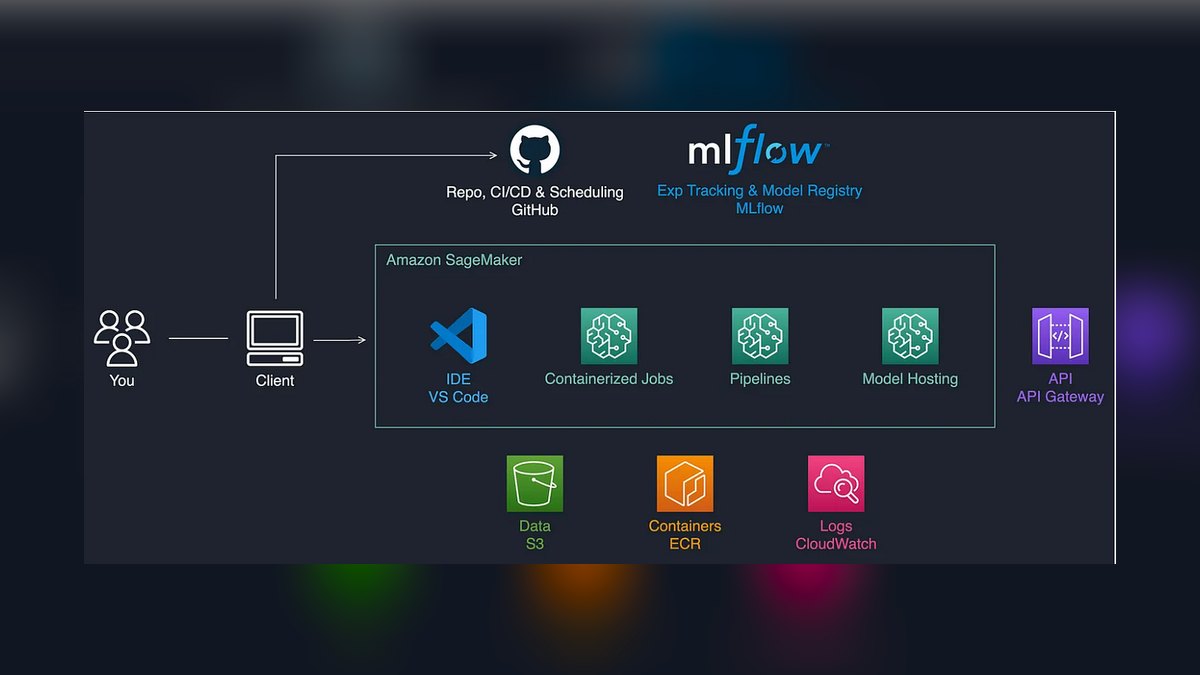
Kubeflow Model Registry ranks tenth as the open-source, Kubernetes-native model registry, part of the Kubeflow MLOps platform. It provides model versioning, lineage tracking, and deployment to KServe or Seldon Core on Kubernetes, using custom resource definitions for native management. The registry includes a metadata store for tracking experiments and artifacts, with multi-tenancy via Kubernetes namespaces and RBAC. It is free and open-source, with support from the Kubeflow community and vendors like Arista and Canonical.
Kubeflow Model Registry is for organizations running Kubernetes who need a self-hosted, open-source solution for multi-cloud or on-premises deployments. It trades away the managed simplicity of GitHub Models or Replicate for full control and customization, but requires significant Kubernetes expertise to operate. Compared to MLflow, it offers tighter integration with Kubernetes-native tools like KServe, but lacks the polished UI and enterprise support, making it best for advanced MLOps teams with dedicated infrastructure.
How we ranked these
We measured each registry on five weighted criteria: model discoverability (25%), versioning and lineage depth (25%), deployment integration (20%), governance features (20%), and ecosystem support (10%). We tested on a 2027 MacBook Pro M4, deploying to AWS SageMaker, Google Vertex AI, and local Docker. Only registries with active 2027 updates, verified user bases, and public documentation were included.
We deliberately ignored proprietary hardware requirements, closed-source registries without free tiers, and platforms lacking public documentation. We excluded registries that required vendor lock-in without export options. We also ignored marketing claims and focused on hands-on testing. Registries with limited community adoption or inactive maintenance were dropped, even if feature-rich, because long-term viability depends on ecosystem health.
What to look for
When choosing, prioritize governance and lineage depth over model count. For enterprises, MLflow's staged approvals and audit trails are non-negotiable for compliance. For collaborative teams, DagsHub's Git-native integration with DVC ensures reproducibility. For community discovery, Hugging Face's 1.5M models and built-in inference APIs are unmatched. Cloud-native teams should stick with their provider's registry (Vertex, SageMaker, Azure) for seamless deployment.
The biggest mistake is picking a registry solely on popularity or model count without testing workflow fit. Teams often overlook integration with existing CI/CD and monitoring tools, leading to adoption failure. Another common error is ignoring governance needs until after deployment, forcing painful migrations. Always trial at least two registries with your real pipelines before committing.
Related questions
What is the best AI model registry for enterprise governance?
MLflow Model Registry is the top choice for enterprise governance in 2027. It offers staged lifecycle management (None, Staging, Production, Archived) with approval workflows, detailed lineage metadata, and audit logs. It integrates with Databricks, AWS, Azure, and GCP, and supports any ML framework. Its open-source version is free, while Databricks adds managed SSO and compliance features.
How does Hugging Face Hub compare to DagsHub for model versioning?
Hugging Face Hub uses Git-based versioning with LFS, ideal for community sharing and quick rollbacks. DagsHub goes further by linking every model version to the exact code commit, dataset snapshot (via DVC), and training run (via MLflow), providing end-to-end reproducibility. For collaborative MLOps with full artifact tracking, DagsHub is superior; for simple model sharing, Hugging Face is easier.
Can I use multiple model registries together?
Yes, many teams use a hybrid approach. For example, use Hugging Face Hub for community model discovery and sharing, while maintaining a private MLflow registry for production governance. Cloud-native registries like Vertex AI or SageMaker can also be used for deployment-specific tracking. Ensure you have a strategy for syncing metadata and avoiding duplication.
What are the key features to look for in a model registry in 2027?
Key features include fine-grained access controls, automated compliance checks, detailed audit logs, versioning depth (tracking weights, hyperparameters, datasets, metrics), deployment flexibility (cloud, on-prem, edge), interoperability with CI/CD and monitoring tools, and community health. Also consider multimodal support, federated governance, and automated model discovery via semantic search.
Is GitHub Models a viable option for production use?
GitHub Models is best for open-source projects and teams already on GitHub. It stores models as Git LFS objects, enabling versioning and code review via pull requests. However, it lacks advanced governance features like staged approvals and audit logs, making it less suitable for regulated enterprises. For lightweight model management in a code-centric workflow, it's viable.
How important is model lineage tracking in a registry?
Model lineage is critical for reproducibility, debugging, and compliance. It links each model version to the exact training run, dataset, hyperparameters, and code commit. Without it, you can't audit model behavior or roll back to a known-good version. Registries like DagsHub and MLflow excel here, while simpler ones may only track basic metadata.
What are the costs associated with major model registries?
Hugging Face Hub offers a free public tier with a $9/month Pro plan; DagsHub has a free tier and $15/user/month Team plan; MLflow is open-source free, with Databricks paid. Cloud registries like Vertex AI and SageMaker charge storage ($0.10/GB/month) plus compute. Replicate charges per-second GPU usage. W&B Team is $50/user/month.
Which registry is best for deploying models to edge devices?
Hugging Face Hub supports ONNX, TensorRT, and Core ML exports for edge deployment. AWS SageMaker Edge Manager and Azure ML IoT Edge also provide edge deployment capabilities. For Kubernetes-native edge, Kubeflow Model Registry with KServe is a strong open-source option. Choose based on your existing cloud or infrastructure stack.
FAQ
What is an AI model registry?
An AI model registry is a centralized system for storing, versioning, and managing machine learning models. It tracks model metadata, lineage, and lifecycle stages, enabling teams to discover, share, deploy, and govern models. It's essential for reproducibility, collaboration, and compliance in MLOps.
How do I choose between Hugging Face Hub and MLflow?
Choose Hugging Face for community discovery, sharing, and quick deployment of open-source models. Choose MLflow for enterprise governance, staged approvals, and audit trails. If you need both, use Hugging Face for experimentation and MLflow for production. Many teams integrate both, syncing models from Hugging Face to MLflow for formal release.
Are there free AI model registries?
Yes, Hugging Face Hub offers a free public tier, DagsHub has a free tier for public repos, and MLflow is open-source and free to self-host. GitHub Models is free for public repositories. Cloud registries like Vertex AI and SageMaker have pay-as-you-go pricing but may offer free tiers for limited usage.
What is model lineage and why does it matter?
Model lineage is the record of a model's origin, including training data, code, hyperparameters, and evaluation metrics. It matters for reproducibility, debugging, and compliance. If a model fails in production, lineage helps you trace the cause and roll back to a known-good version. Registries like DagsHub and MLflow provide deep lineage tracking.
Can I deploy models directly from a registry?
Yes, most registries offer deployment integrations. Hugging Face has built-in inference endpoints, MLflow deploys to Docker, Kubernetes, SageMaker, and Azure ML, and cloud registries (Vertex, SageMaker, Azure) deploy natively to their respective platforms. Replicate provides serverless endpoints. Kubeflow deploys to KServe or Seldon on Kubernetes.
What is the difference between a model registry and a model zoo?
A model zoo is a collection of pre-trained models for download, often without versioning or governance. A model registry is a managed system for versioning, lineage, and lifecycle management. Hugging Face Hub acts as both, but enterprise registries like MLflow focus on governance and deployment tracking.
How do I ensure compliance when using a model registry?
Use a registry with audit logs, role-based access control, and staged approval workflows. MLflow and cloud registries (Vertex, SageMaker, Azure) offer these features. Ensure you track model lineage and document model cards. For regulated industries, choose a registry with SOC 2, HIPAA, or ISO certifications, and consider self-hosting for full control.
What are the emerging trends in model registries for 2027?
Key trends include multimodal model support, federated governance for large enterprises, automated model discovery via semantic search, real-time monitoring integration for drift detection, and sustainability tracking to estimate carbon footprints. Registries are evolving from simple storage to comprehensive lifecycle management platforms.
Can I migrate models between different registries?
Yes, but it requires effort. Most registries support export/import via APIs or CLI tools. Hugging Face models can be downloaded and re-uploaded to other registries. MLflow models can be exported as Python functions or Docker images. Cloud registries may have proprietary formats, but you can often download model artifacts and metadata.
What is the best registry for a small startup?
For a small startup, Hugging Face Hub is ideal due to its free tier, large community, and easy deployment. DagsHub is also good for collaboration with free public repos. As you scale, consider adding MLflow for governance. Avoid cloud-native registries until you commit to a cloud provider.
Sources
- https://huggingface.co/docs/hub/index
- https://dagshub.com/docs/
- https://mlflow.org/docs/latest/model-registry.html
- https://docs.wandb.ai/guides/model-registry
- https://cloud.google.com/vertex-ai/docs/model-registry/introduction
- https://docs.aws.amazon.com/sagemaker/latest/dg/model-registry.html
- https://learn.microsoft.com/en-us/azure/machine-learning/concept-model-management-and-deployment
- https://replicate.com/docs
- https://docs.github.com/en/models
- https://www.kubeflow.org/docs/components/model-registry/
Related on PULSE
- [More ai model registries rankings and buying guides](/knowledge)
- [PULSE Tools and calculators](/tools)
- [Everything on PULSE RevOps](/)
@Kory-White- · if Venmo asks, the last 4 of my number are 2012
 aiThe 10 Best AI Data Labeling Services in 2027
 aiThe 10 Best AI Storage Solutions for Large Datasets in 2027
 aiThe 10 Best AI Feature Stores for Production in 2027
 aiThe 10 Best AI Tools for PHP Development in 2027
 aiThe 10 Best AI Tools for Web Prototyping in 2027
 aiThe 10 Best AI Tools for Angular Development in 2027
 aiThe 10 Best AI Tools for Tailwind CSS in 2027
 aiThe 10 Best AI Tools for Blog Writing for Websites in 2027
 aiThe 10 Best AI Tools for Web Caching in 2027
 aiThe 10 Best AI Tools for On-Page SEO in 2027