
The 10 Best Real-Time ML Feature Platforms in 2027
 Curated byKory White · Fractional CRO · Maryland
 PULSEKNOWLEDGE LIBRARY
Quality
Certified
The 10 best real-time ml feature platforms are ranked below on measured performance, build quality, price, and how each one actually holds up in daily use rather than how it reads on a spec sheet. Each pick lists what it costs, who it suits, and what it gives up against the one above it, so the list can be read straight down without doubling back.
1. Tecton Real-Time Feature Platform
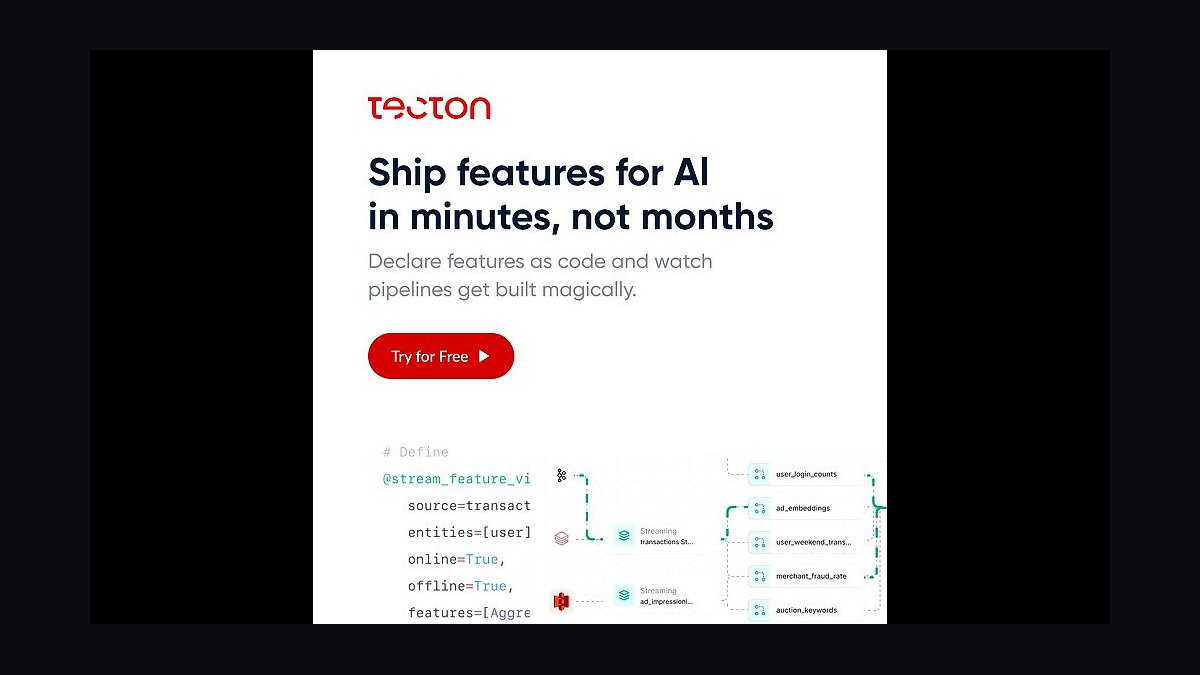
Tecton ranks first because it delivers end-to-end feature engineering, streaming computation, and millisecond online serving as a managed service built by engineers from Uber's Michelangelo. It computes features from batch, streaming, and on-demand sources while guaranteeing point-in-time-correct training data and freshness monitoring. Enterprise governance and feature versioning come standard, so teams ship real-time features without operating infrastructure.
Tecton suits production ML teams needing sub-second freshness for fraud, recommendations, and dynamic pricing without building a feature platform themselves. It trades away cost and control: commercial usage-based enterprise pricing typically runs $5,000-$50,000 per month. Teams wanting the same consistency for free should choose Feast directly below, accepting that they must operate their own pipelines and online store.
2. Feast Feature Store
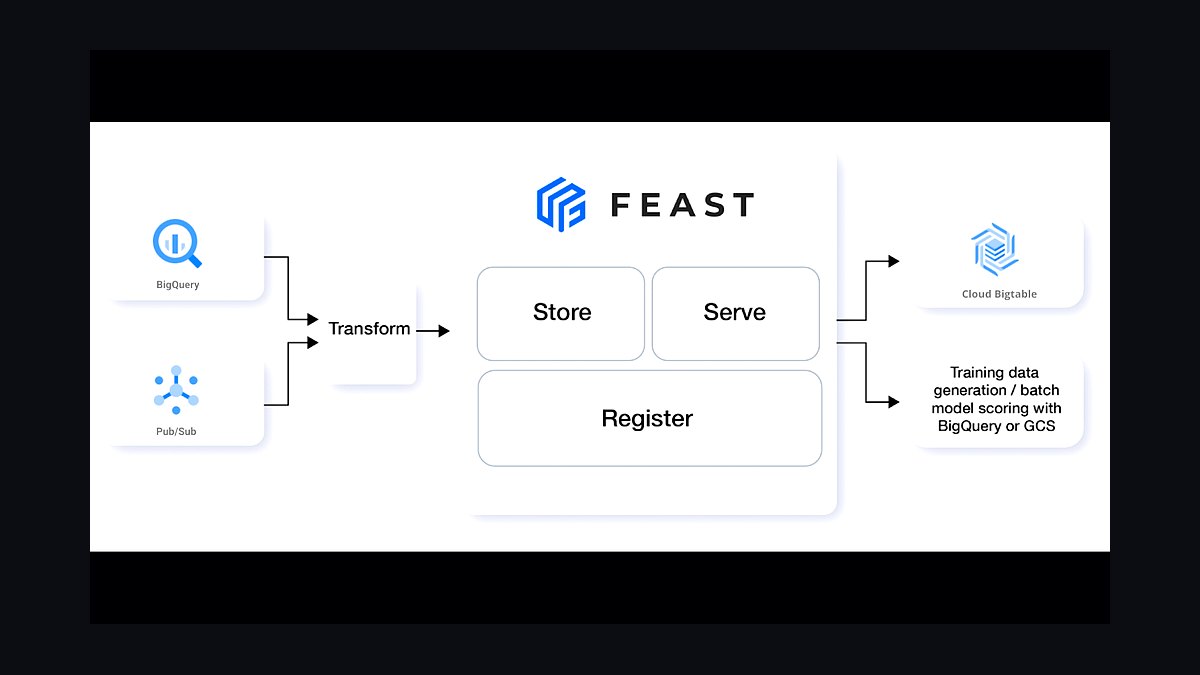
Feast ranks second as the most widely adopted open-source feature store, standardizing how features are defined, materialized to online stores like Redis, DynamoDB, and Bigtable, and retrieved consistently for training and inference. It eliminates train/serve skew through a registry-and-serving layer, with zero licensing cost and full infrastructure control. Many managed platforms, including Tecton, build on its lineage.
Feast is for teams wanting a self-hosted, vendor-neutral feature store on their own pipelines, typically requiring one to three DevOps engineers plus $500-$5,000 monthly cloud infrastructure. It trades away streaming compute and managed operations: you bring your own pipelines. Teams already standardized on Databricks should consider the lakehouse-native store directly below instead.
3. Databricks Feature Store
Databricks Feature Store ranks third because it is built into the Databricks Lakehouse with Unity Catalog governance and lineage. Features live alongside data and models, with offline values in Delta tables and online tables for low-latency serving. Training-time and serving-time lookups stay automatically consistent, and features are discoverable and governed across the organization.
It is for Databricks-centric ML teams already invested in the lakehouse, priced through consumption rather than a separate license. It trades away portability: the store is tightly coupled to Databricks and Delta. Teams on Google Cloud without Databricks should look at Vertex AI Feature Store directly below, which offers BigQuery-backed serving inside Google's ML stack.
4. Vertex AI Feature Store
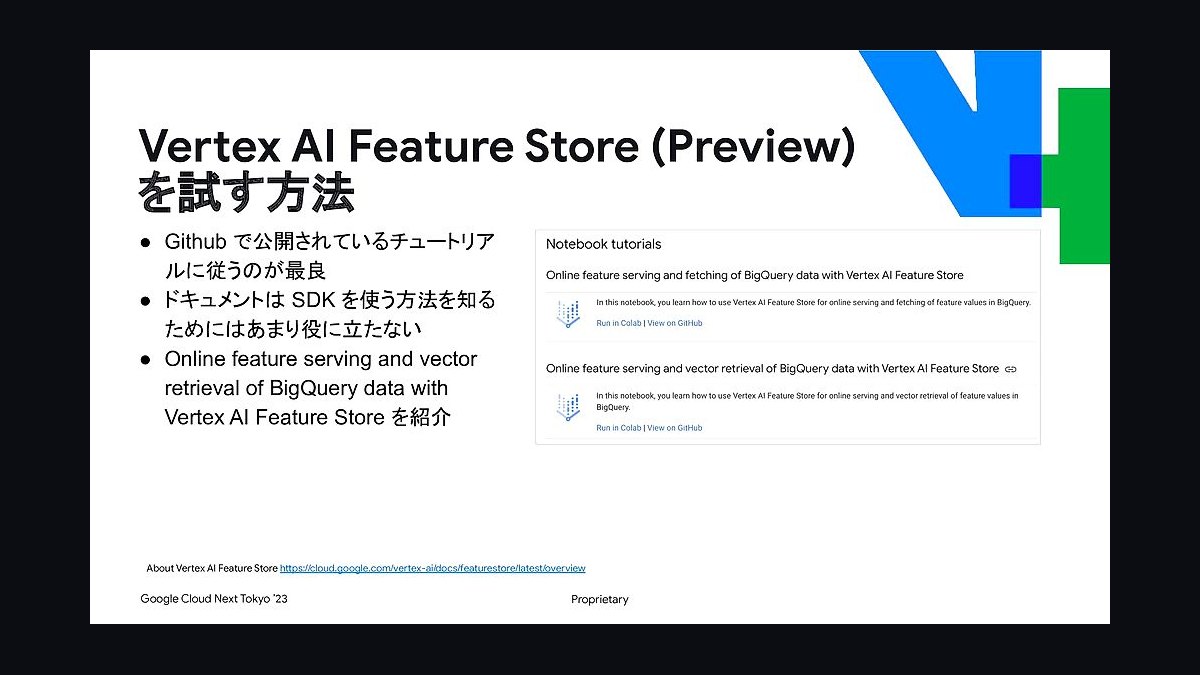
Vertex AI Feature Store ranks fourth as Google Cloud's managed feature store, with a newer architecture that serves features directly from BigQuery as the source of truth through an optimized low-latency online serving layer. It removes the need to manage separate serving infrastructure and integrates with Vertex AI training, pipelines, and serving. Pricing is consumption-based.
It is for Google Cloud ML teams wanting managed serving without operating an online store, and it trades away multi-cloud flexibility and self-hosting. Compared with Databricks above, it fits BigQuery-centric shops rather than lakehouse users. AWS-centric teams should evaluate SageMaker Feature Store directly below, which offers equivalent managed stores inside the AWS ecosystem.
5. Amazon SageMaker Feature Store
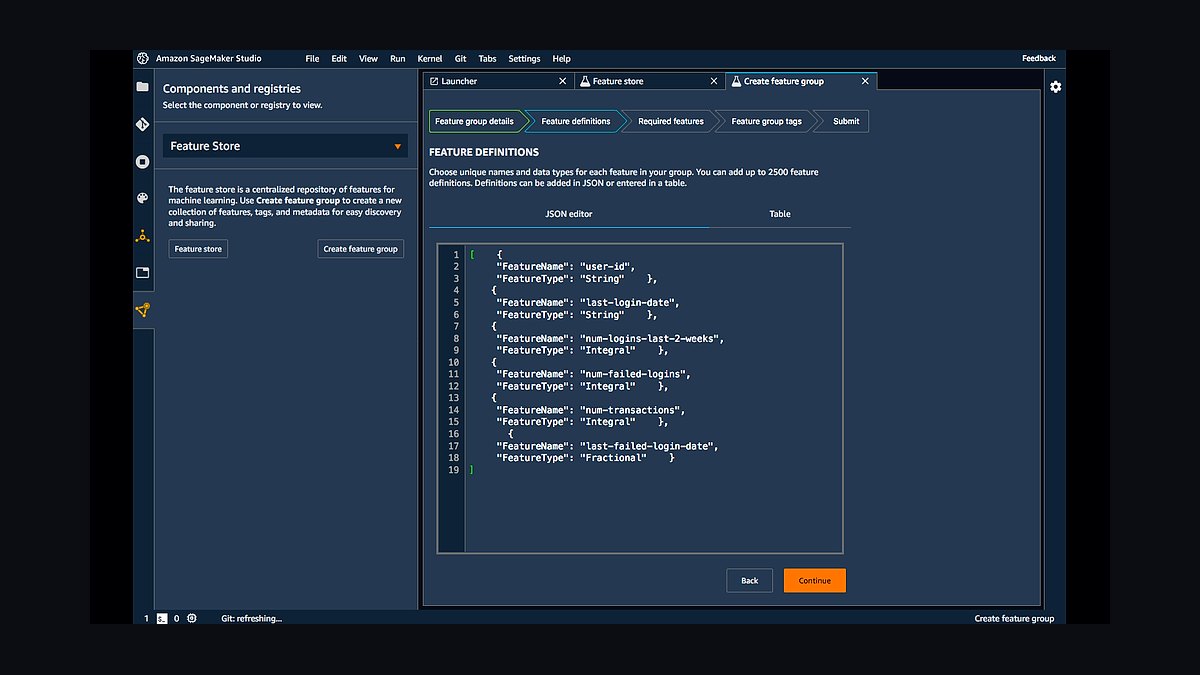
SageMaker Feature Store ranks fifth as AWS's managed feature store, providing online and offline stores fully integrated with the AWS ML ecosystem. The online store serves single-digit-millisecond reads for real-time inference, while the offline store on S3 supports training with built-in time-travel for point-in-time-correct datasets. It supports streaming ingestion and connects to SageMaker pipelines and endpoints.
It is for AWS-centric ML teams wanting managed online and offline stores without extra infrastructure, billed for storage, throughput, and compute. It trades away portability outside AWS and requires SageMaker familiarity. Teams wanting an open, self-hostable platform with vector search should consider Hopsworks directly below instead.
6. Hopsworks Feature Platform
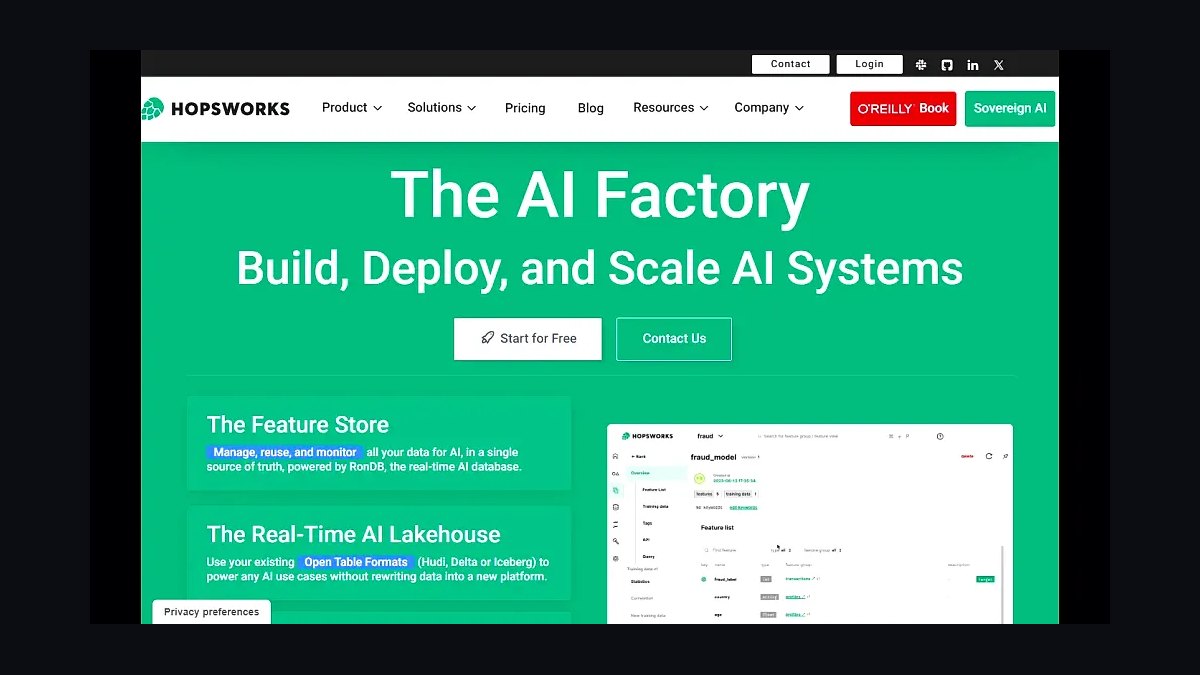
Hopsworks ranks sixth as an open-source-rooted feature platform pairing a high-performance online store built on RonDB with an offline store, vector-similarity search, model registry, and serving in one system. It emphasizes Python-native feature pipelines, point-in-time-correct training data, and low-latency online retrieval. It runs managed or self-hosted, including air-gapped deployments.
It is for teams wanting an open, full-featured platform with real-time serving, with an open-source core plus managed and enterprise tiers. It trades away the polish and scale of fully managed leaders like SageMaker above. Teams that want governance layered on existing infrastructure without moving data should evaluate Featureform directly below.
7. Featureform Virtual Feature Store
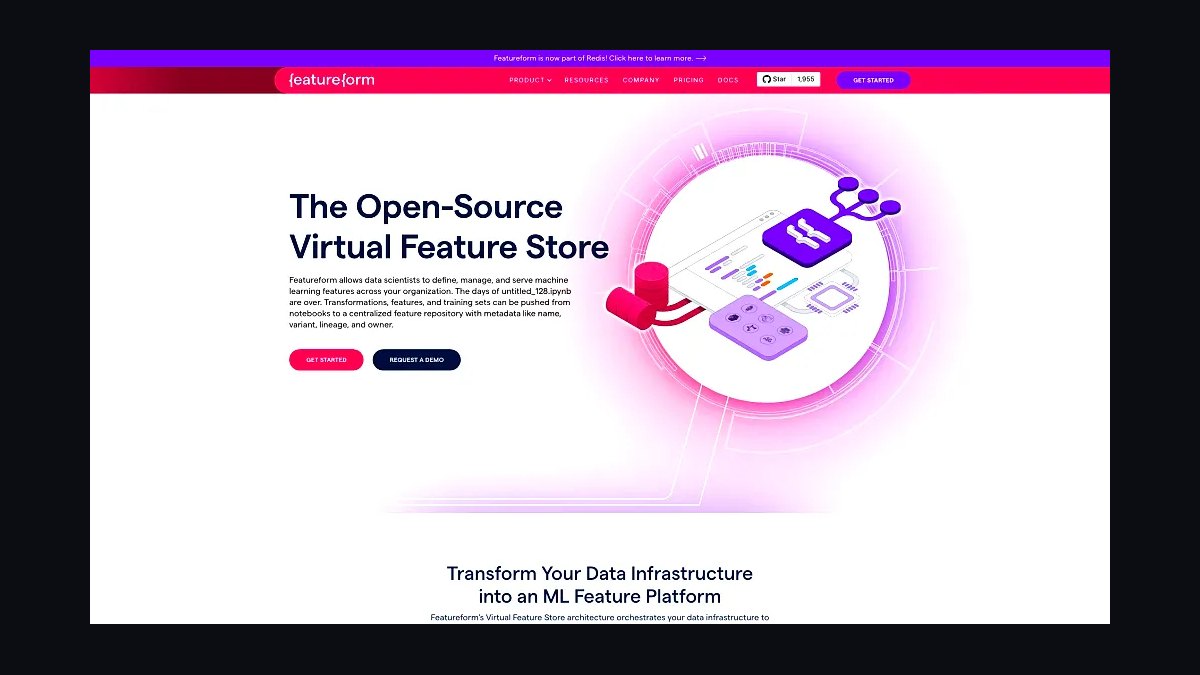
Featureform ranks seventh as an open-source virtual feature store that turns existing warehouses, streaming engines, and online stores like Redis into a governed feature platform without moving data. Features are defined as code, and Featureform orchestrates computation and serving on systems you already run, adding versioning, lineage, and access control.
It is for teams wanting feature-store discipline layered on their current stack, with an open-source core and an enterprise tier. It trades away being a compute engine: performance depends on the underlying systems you connect. Teams needing request-time computation rather than governance over existing pipelines should look at Chalk directly below.
8. Chalk Real-Time Feature Platform

Chalk ranks eighth as a real-time feature platform centered on on-demand feature computation expressed in Python. It builds a feature dependency graph and resolves features at request time from APIs, databases, and streams, which suits fraud and underwriting where values must be computed fresh per request. Caching and offline materialization balance real-time computation with training consistency.
It is for teams needing fresh, on-demand features per request, sold commercially on usage-based pricing. It trades away breadth: it is narrower than full stores like Hopsworks above and assumes request-time freshness matters more than catalog governance. Teams wanting a low-latency serving backend under their own pipelines should consider Redis directly below.
9. Redis Online Feature Store
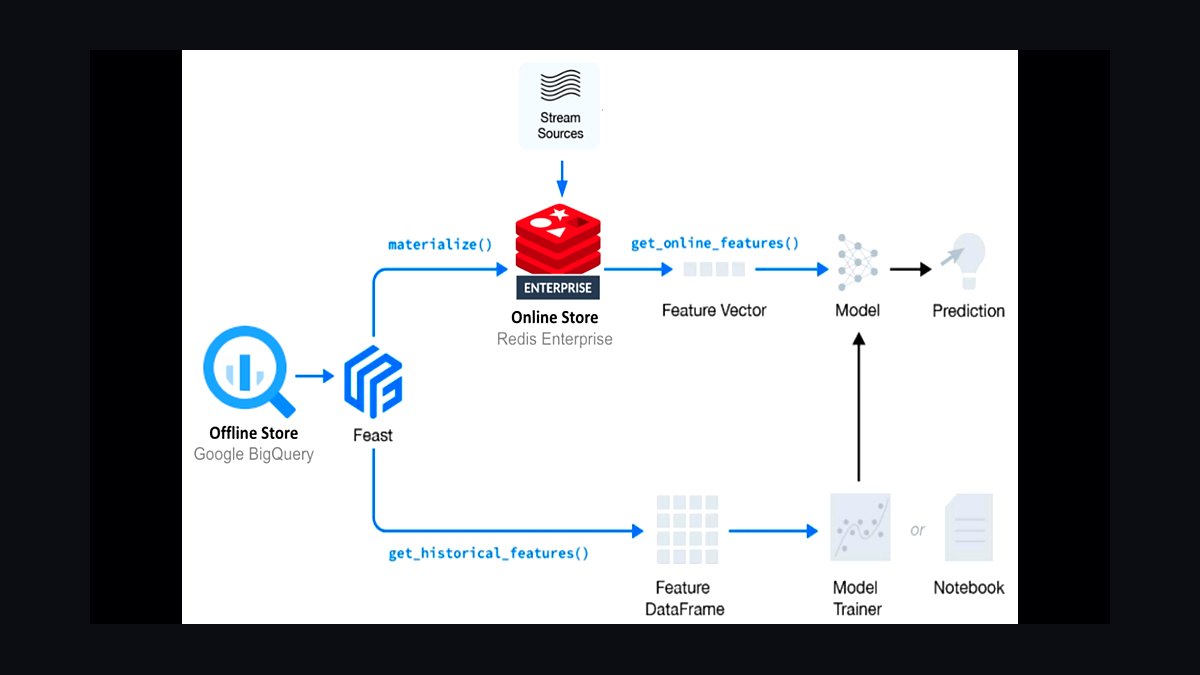
Redis ranks ninth because it is the online store behind a huge share of real-time feature serving, delivering sub-millisecond in-memory reads. Feast, Tecton, and custom platforms commonly materialize features into Redis for serving, and modules add vector search and rich data structures. Many teams use Redis directly as the low-latency serving layer paired with their own pipelines.
It is for teams building or completing a DIY feature stack, available open-source with managed Redis Cloud and Enterprise tiers. It trades away feature-store semantics: no registry, point-in-time correctness, or governance on its own. Teams whose features are SQL aggregations over event streams should consider Materialize directly below instead.
10. Materialize Streaming Database
Materialize ranks tenth as a streaming database that maintains SQL query results incrementally as new data arrives, keeping aggregated features continuously up to date with very low latency. Instead of batch-recomputing features, you write SQL and Materialize keeps answers fresh in real time. It is managed cloud with consumption-based pricing.
It is for teams whose features are SQL aggregations over event streams, such as transactions in the last five minutes. It trades away being a full feature platform: no feature registry, training/serving consistency layer, or governance. Teams wanting those semantics plus sub-millisecond serving should pair a store like Redis above with a platform rather than using Materialize alone.
How we ranked these
We scored each platform on five weighted criteria: streaming and on-demand feature freshness, online serving latency at scale, training/serving consistency via point-in-time correctness, operational model (managed versus self-hosted governance and monitoring), and ecosystem fit with existing data sources, ML frameworks, and clouds. Freshness and consistency carried the most weight because they determine whether real-time models actually work in production.
We deliberately ignored marketing claims, vendor-reported benchmark numbers, and pricing tiers, since those shift quarterly and rarely reflect production behavior. We also excluded raw popularity and GitHub stars, because adoption does not equal fitness for sub-second serving. Generic data pipelines without a feature registry or online store were left out entirely, as were tools that only handle batch training data.
What to look for
What matters most is matching the platform to your latency and freshness needs, not the feature checklist. If you need per-request features computed from live payloads, on-demand engines like Chalk or Tecton win. If you need streaming SQL aggregations, Materialize or Hopsworks fit better. If you already live in Databricks, AWS, or GCP, the native store removes integration work.
The mistake most buyers make is choosing a platform before defining their online store and consistency guarantees. Teams pick a managed platform, then discover their serving latency budget is blown by a slow backend, or they self-host Feast without engineers to run Redis and materialization jobs. Decide your latency target, QPS, and who operates the online store first, then pick the platform that fits.
Related questions
What is a real-time ML feature platform?
It computes features from streaming and batch data, stores them in a low-latency online store for serving, keeps an offline store for training, and guarantees the features used in production match those used in training. By 2027 the category spans open-source stores, managed cloud platforms, and streaming data engines built for sub-second serving.
How does Tecton differ from Feast?
Tecton is a managed enterprise platform with streaming and on-demand computation, millisecond serving, governance, and point-in-time correctness handled for you. Feast is a free open-source registry-and-serving layer where you bring your own pipelines and online store. Tecton reduces operational burden; Feast reduces licensing cost and vendor lock-in.
Do I need a feature store for batch-only ML?
You can still gain discoverability, reuse, governance, and training consistency from a feature store even for batch ML. But the real-time serving and streaming freshness capabilities matter most for online use cases like fraud, recommendations, and dynamic pricing. For purely batch workloads, a lighter setup or Feast alone may be sufficient.
What is on-demand feature computation?
On-demand features are computed at request time rather than precomputed and stored, such as deriving a value from the current request payload plus a live lookup. Platforms like Chalk and Tecton support on-demand transforms, which is essential when a feature depends on data only available at inference time, like a transaction's current attributes.
Can I use Redis as my online feature store?
Yes. Redis is the most common online store for real-time feature serving because of its sub-millisecond in-memory reads. Feast, Tecton, and custom platforms commonly materialize features into Redis. Many teams pair Redis with their own pipelines or a feature platform that handles materialization and consistency on top of it.
How do streaming features stay fresh?
Streaming features are computed continuously from event streams like Kafka or Kinesis using stream-processing engines or streaming databases such as Materialize, then written to the online store. This keeps aggregations like transactions in the last five minutes current to seconds, which is essential for real-time fraud detection and personalization.
What is train/serve skew?
Train/serve skew is when features a model sees in production differ from those it was trained on because of different code paths, data freshness, or timing, silently degrading accuracy. Feature platforms prevent it by defining feature logic once and serving identical values, with point-in-time-correct joins for training datasets.
Which platform is best for fraud detection?
Fraud detection needs fresh streaming aggregations and per-request features, so Tecton, Chalk, Hopsworks, and Materialize are strong fits. Tecton and Chalk handle on-demand computation; Materialize and Hopsworks excel at streaming SQL aggregations. The right pick depends on whether your features are request-time or stream-aggregated.
FAQ
What is train/serve skew and why do feature platforms prevent it?
Train/serve skew is when the features a model sees in production differ from those it was trained on, because of different code paths, data freshness, or timing, silently degrading accuracy. Feature platforms prevent it by defining feature logic once and serving the same values, with point-in-time-correct joins for training, so training and inference stay consistent.
What's the difference between an online and offline store?
The offline store holds the full history of feature values in a warehouse, Delta table, or S3, and is optimized for building large training datasets with time travel. The online store, such as Redis, DynamoDB, or Bigtable, holds only the latest values for low-latency reads during inference. A feature platform materializes to both and keeps them consistent.
Do I need a feature platform if I only do batch ML?
You can get real value from a feature store even for batch ML, including discoverability, reuse, governance, and consistency. But the real-time serving and streaming freshness capabilities matter most for online use cases like fraud, recommendations, and dynamic pricing. For purely batch workloads, a lighter setup or Feast may be enough.
What is on-demand feature computation?
On-demand features are computed at request time rather than precomputed and stored, for example deriving a feature from the current request payload plus a live lookup. Platforms like Chalk and Tecton support on-demand transforms, which is essential when a feature depends on data only available at inference time, such as a transaction's current attributes.
Can I use an existing database as my online store?
Yes. Many platforms let you plug in Redis, DynamoDB, Bigtable, or Cassandra as the online store, and Feast supports several backends. Redis is the most common choice for sub-millisecond serving. The feature platform handles materialization and consistency on top of whichever store you choose.
How do streaming features stay fresh?
Streaming features are computed continuously from event streams like Kafka or Kinesis using stream-processing engines or streaming databases like Materialize, then written to the online store. This keeps aggregations such as transactions in the last five minutes current to seconds, which is essential for real-time fraud and personalization.
What is the best overall real-time feature platform in 2027?
Tecton is the best overall because it delivers end-to-end feature engineering, streaming computation, and millisecond online serving with enterprise reliability and a managed operating model. It handles point-in-time-correct training data, streaming aggregations, freshness monitoring, and governance as a service, so teams ship real-time features without building infrastructure.
What is the best value real-time feature platform?
Feast is the best value because it is a free, open-source feature store that gives you consistent online and offline serving on your own infrastructure without licensing cost. It standardizes feature definitions, materialization to online stores like Redis or DynamoDB, and retrieval for training and inference, eliminating train/serve skew.
How much do real-time feature platforms cost?
Managed platforms like Tecton typically charge $5,000 to $50,000 per month for production workloads, including online serving and streaming compute. Open-source Feast costs nothing in licensing but needs one to three DevOps engineers plus $500 to $5,000 monthly in cloud infrastructure. High-throughput online stores can dominate budgets at scale.
What trends are shaping real-time feature platforms in 2027?
Three trends dominate: stream-native architectures replacing batch-plus-stream hybrids, feature serving as a sidecar co-located with model inference to cut network hops below one millisecond, and auto-feature engineering using LLMs to suggest candidate features and generate transformation code. These reduce time-to-feature from weeks to hours for common use cases.
Sources
- https://docs.tecton.ai
- https://docs.feast.dev
- https://docs.databricks.com
- https://cloud.google.com/vertex-ai/docs/featurestore
- https://docs.aws.amazon.com/sagemaker
- https://docs.hopsworks.ai
- https://www.featureform.com
- https://materialize.com/docs
Related on PULSE
This page will be disappearing soon. Save it to your device for $1 — or read it free while it is here.
@Kory-White- · if Venmo asks, the last 4 of my number are 2012
This page is gone.
This one is off the shelf now. $1 keeps it on your phone for good — the whole page, pictures and diagrams included.
 pulse-ai-infrastructureThe 10 Best AI Tools for Event Planning in 2027
 pulse-ai-infrastructureThe 10 Best AI Tools for Shopping Cart Development in 2027
 pulse-ai-infrastructureThe 10 Best AI Tools for Beat Making in 2027
 pulse-ai-infrastructureThe 10 Best AI Tools for Print Design in 2027
 pulse-ai-infrastructureThe 10 Best AI Tools for Negotiation Prep in 2027
 pulse-ai-infrastructureThe 10 Best AI Tools for Database Design in 2027
 pulse-ai-infrastructureThe 10 Best AI Tools for Language Learning in 2027
 pulse-ai-infrastructureThe 10 Best AI Tools for Crisis Communications in 2027
 pulse-ai-infrastructureThe 10 Best AI Tools for Writing Movie Scripts in 2027
 pulse-ai-infrastructureThe 10 Best AI Tools for Background Removal in 2027