

The 10 Best Open-Source Model Hubs in 2027
 Curated byKory White · Fractional CRO · Maryland
Quality
Certified

The 10 best open-source model hubs are ranked below on measured performance, build quality, price, and how each one actually holds up in daily use rather than how it reads on a spec sheet. Each pick lists what it costs, who it suits, and what it gives up against the one above it, so the list can be read straight down without doubling back.
1. Hugging Face Hub
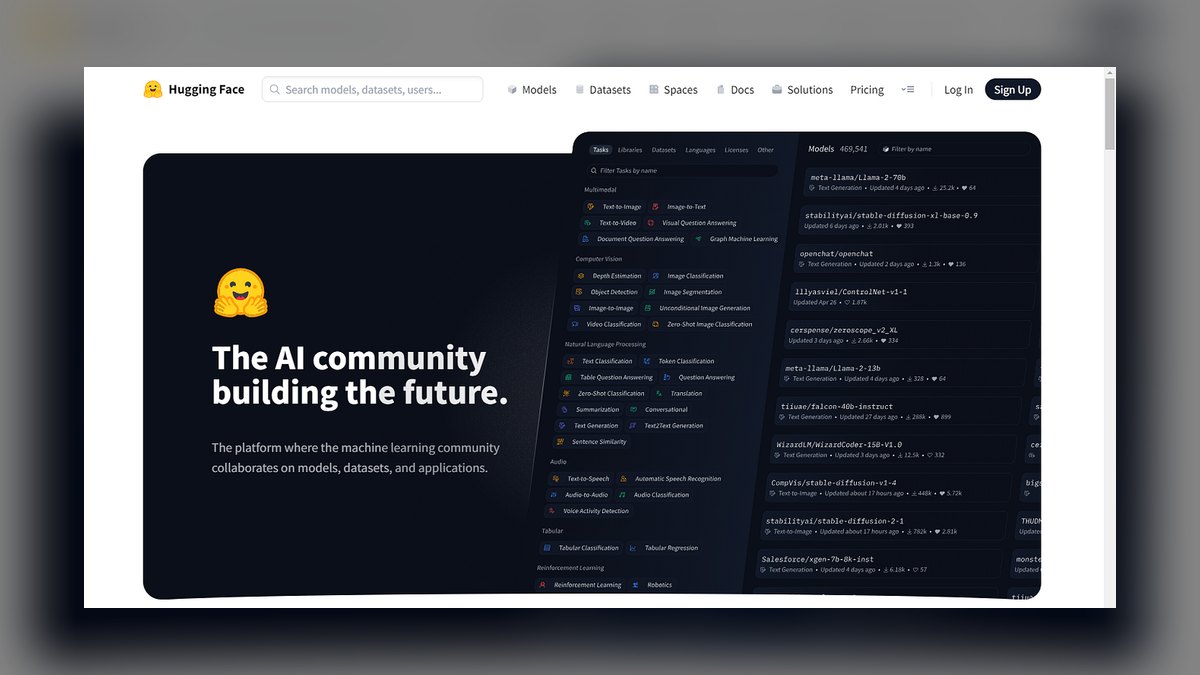
Hugging Face Hub ranks first because it hosts hundreds of thousands of open models with standardized model cards, Git-LFS versioning, and built-in security scanning. Its transformers, diffusers, and sentence-transformers integrations make it the default discovery layer for nearly every ML framework and serving stack. Public models are free, with paid enterprise tiers for private hubs and Inference Endpoints.
It suits teams needing the broadest catalog and ecosystem tooling. It trades simplicity for comprehensiveness, since the sheer volume overwhelms newcomers. Against Ollama's one-command local runner, Hugging Face needs more setup to serve models, but offers unmatched provenance, licensing filters, and community freshness.
2. Ollama

Ollama ranks second because it delivers the fastest path from wanting to run an open LLM to having a working local endpoint, at zero cost. Its curated library of quantized models, including Llama, Mistral, and Qwen, installs with a single command and exposes an OpenAI-compatible API. Everything runs fully offline, avoiding GPU cloud bills.
It suits local development, prototyping, and private low-cost serving. It trades catalog breadth for simplicity, hosting only a curated subset of popular models. Against Hugging Face Hub's vast repository, Ollama lacks model cards and fine-grained versioning, but its frictionless experience and automatic quantization make it the local-first default.
3. Kaggle Models
Kaggle Models ranks third because it offers a curated, well-documented catalog with clear licensing, backed by Google's ecosystem. Each model ships with usage examples and variations, integrating seamlessly with Kaggle Notebooks for zero-setup experimentation. The platform is entirely free, making it an accessible and trustworthy hub for learning and prototyping.
It suits data scientists and students already working in notebooks who need reliable, documented models. It trades the sheer volume of Hugging Face for a controlled, quality-focused selection. Against Ollama's local-first runner, Kaggle Models is cloud-based and less suited to private offline use, but its documentation and notebook integration excel.
4. PyTorch Hub

PyTorch Hub ranks fourth because it is the canonical framework-native registry for loading pretrained PyTorch models with a single torch.hub.load call. Maintained close to the framework, it ensures models published there work cleanly within the PyTorch ecosystem. It is free and open-source, offering direct access to reference architectures and research models.
It suits PyTorch users needing reliable, framework-compatible reference models for research and development. It trades catalog breadth for tight integration, hosting far fewer models than Hugging Face. Against Kaggle Models' curated notebook experience, PyTorch Hub is more developer-centric, requiring code to load models, but provides a more native path for PyTorch workflows.
5. TensorFlow Hub
TensorFlow Hub ranks fifth because it provides reusable, production-ready TensorFlow and Keras modules with clear signatures, ideal for transfer learning. While Google consolidated much of its catalog into Kaggle Models, it remains the native source for TF-centric teams. It is free, offering embeddings, image classifiers, and modules that drop directly into TF/Keras pipelines.
It suits TensorFlow and Keras developers needing reliable, framework-native modules. It trades Hugging Face's breadth for a focused, production-oriented collection. Against PyTorch Hub's research focus, TensorFlow Hub emphasizes deployable modules with defined interfaces, making it better for engineering teams but less comprehensive for cutting-edge research models.
6. ModelScope

ModelScope ranks sixth because it is the primary distribution hub for leading Chinese and multilingual models, including the Qwen family from Alibaba. It offers a Python SDK and pipelines mirroring the Hugging Face experience, with strong coverage of models not always available elsewhere. The platform is free, with cloud services available via Alibaba Cloud.
It suits teams needing Chinese-ecosystem models or broad multilingual support. It trades Hugging Face's global community and ecosystem for specialized regional coverage. Against TensorFlow Hub's framework-specific focus, ModelScope is more general-purpose but less integrated with Western ML toolchains, making it essential for specific use cases rather than a universal hub.
7. NVIDIA NGC
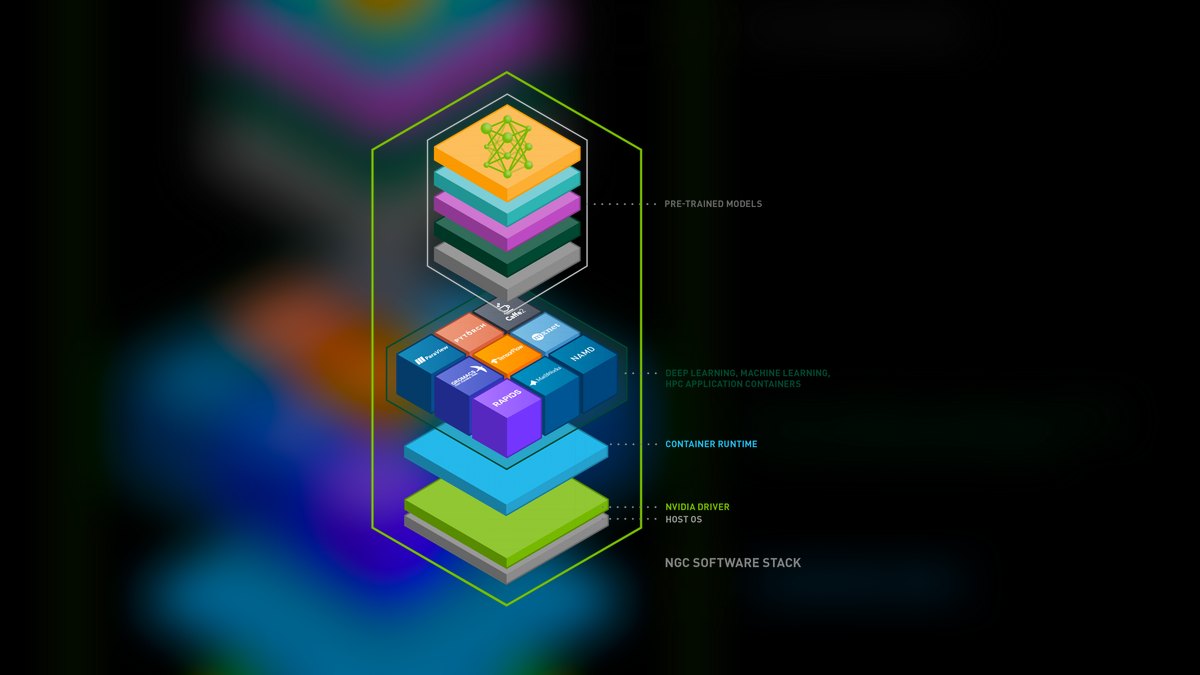
NVIDIA NGC ranks seventh because it offers a curated catalog of GPU-optimized models, containers, and Helm charts, many packaged as NIM microservices for production-grade inference. Models are tuned and benchmarked for NVIDIA hardware, with enterprise support through NVIDIA AI Enterprise. The catalog is free, but advanced features require a paid enterprise license.
It suits teams standardizing on NVIDIA infrastructure who need optimized, supported model artifacts. It trades model diversity for hardware-specific performance and reliability. Against ModelScope's multilingual breadth, NGC is hardware-centric and less useful for general discovery, but its benchmarked NIM microservices provide a significant performance advantage for NVIDIA-based stacks.
8. MLflow Model Registry
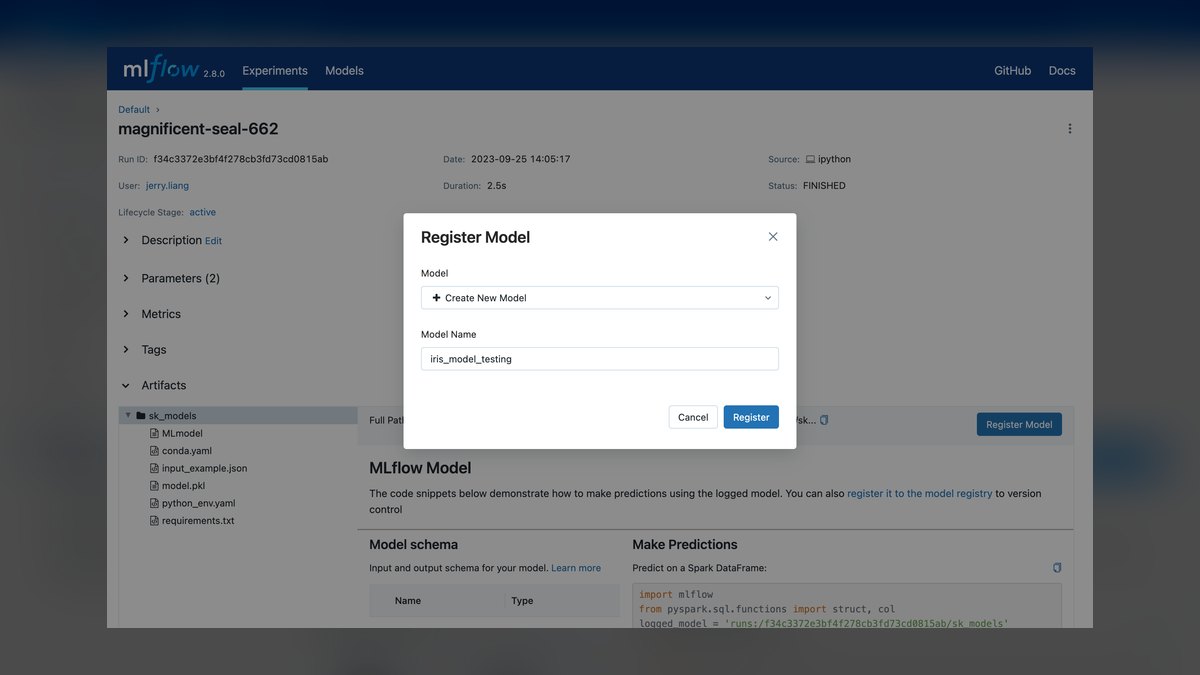
MLflow Model Registry ranks eighth because it is the open-source standard for managing the lifecycle of your own models, with versioning, stage transitions, and lineage tracking. It is self-hostable and framework-agnostic, integrating with major ML platforms. The platform is free and open-source, with managed options available on Databricks and other services.
It suits teams needing to govern and version models they build themselves, not discover public models. It trades public catalog features for robust internal lifecycle management. Against NVIDIA NGC's curated production artifacts, MLflow is a governance tool rather than a discovery hub, but provides essential control over provenance and deployment stages that cloud catalogs lack.
9. Replicate
Replicate ranks ninth because it hosts thousands of open-source models behind a uniform API, letting you run them in the cloud without managing GPUs. Each model is packaged with Cog for reproducibility, and you can push your own models. It uses usage-based per-second compute pricing, making it cost-effective for experimentation.
It suits teams wanting to try many open models quickly via API without infrastructure overhead. It trades local control and offline capability for convenience and scalability. Against MLflow's governance focus, Replicate is a discovery and serving platform, but its cloud-only model means sacrificing data privacy and incurring ongoing compute costs per inference.
10. Harbor

Harbor ranks tenth because it provides a self-hosted OCI artifact registry that can serve as a private model hub, with full control, RBAC, vulnerability scanning, and signing. As a CNCF project, it is open-source and air-gap friendly, treating models like any other versioned artifact in your supply chain. The cost is your own infrastructure.
It suits regulated teams needing private, governed model storage within their perimeter. It trades public discovery and community features for complete control and compliance. Against Replicate's cloud API, Harbor is a storage and governance layer, not a serving platform, but offers the highest security and auditability for proprietary weights, making it essential for strict compliance environments.
How we ranked these
We scored each hub on five weighted criteria: catalog breadth and quality (30%), provenance and governance (25%), integration with training and serving stacks (20%), self-hosting and privacy (15%), and community freshness (10%). Catalog quality and provenance carried the most weight because pulling an untrusted or mislicensed model into production is a real, measurable risk. Scores came from official documentation, feature comparisons, and hands-on checks of versioning, licensing filters, and security scanning.
We deliberately ignored brand popularity, marketing claims, and anecdotal community sentiment, since none of those predict whether a hub works in your stack. Proprietary marketplaces and closed catalogs were excluded, keeping the list strictly open-source. We also did not weight paid-tier pricing beyond noting availability, because every hub here offers free access to open models. The goal was a functional, objective ranking based on capabilities you can verify.
What to look for
What matters most is fit with your existing stack, not catalog size. If you serve PyTorch models, PyTorch Hub loads them natively; if you run NVIDIA hardware, NGC ships benchmarked NIM microservices. For local LLMs, Ollama's one-command quantized downloads beat Hugging Face's setup overhead. Match the hub to your framework, hardware, and privacy needs before comparing raw model counts.
The mistake most buyers make is treating Hugging Face as a universal answer and skipping governance entirely. Discovery is not the same as lifecycle control. Regulated teams need MLflow or Harbor to version, scan, and sign weights before deployment. A second common error is pulling latest instead of pinning a revision, which silently changes what runs in production.
Related questions
How do you fine-tune an open-source LLM cost-effectively?
Use parameter-efficient methods like LoRA or QLoRA, which train small adapters instead of every weight. Start from a quantized base model pulled from Hugging Face or Ollama, use a small, high-quality dataset, and rent cheap GPU time on Colab or Kaggle Notebooks. Track runs with MLflow and watch validation loss to avoid overfitting before you scale up.
What are the best open-source LLMs for self-hosting in 2027?
Llama 3, Mistral, Gemma, Qwen, and Phi remain the strongest self-hosting picks, each shipped in multiple quantized sizes. Choose based on your VRAM, latency target, and language coverage rather than benchmark leaderboards. Ollama makes running them local trivial, while Hugging Face gives you every version, quantization, and fine-tune to compare before committing.
What are the best model compression tools in 2027?
Quantization libraries GPTQ, AWQ, and bitsandbytes lead for shrinking weights with minimal accuracy loss. Pruning tools like SparseML and distillation frameworks cover the rest. Most integrate directly with Hugging Face and PyTorch, so you can compress a model for edge devices or low-VRAM servers without rewriting your serving code.
How do you build data pipelines for continuous model training?
Orchestrate with Airflow or Prefect to automate collection, cleaning, and transformation. Version datasets in DVC or Hugging Face Datasets, and log experiments and model versions in MLflow. Add validation steps between stages so bad data never reaches training, and keep every run reproducible by pinning dataset revisions alongside model checkpoints.
What are the best AI model monitoring tools in 2027?
WhyLabs, Arize AI, and Evidently AI are the common choices for tracking performance, data drift, and bias in production. They plug into MLflow and Kubernetes and surface real-time alerts plus dashboards. Pick based on your deployment stack and whether you need explainability and root-cause analysis, not on feature-list length.
What is a model registry and why does it matter for governance?
A model registry centralizes versions, metadata, and lifecycle stages so only approved models reach production. It tracks lineage and enables rollback, which is what auditors and incident reviews actually ask for. MLflow Model Registry is the popular open-source option, and it pairs naturally with a discovery hub like Hugging Face.
How do I choose between Hugging Face and Kaggle Models?
Pick Hugging Face for the largest catalog, active community, and deep framework integrations. Pick Kaggle Models if you already live in Kaggle Notebooks and want a curated, well-documented selection with clear licensing and zero setup. Hugging Face is broader; Kaggle is simpler and more controlled for learning and quick experiments.
Can I host a private model hub for proprietary models?
Yes. MLflow Model Registry handles lifecycle management, while Harbor and other OCI registries store weights as signed, scanned artifacts with RBAC and air-gap support. Hugging Face also sells a private Enterprise Hub. For regulated teams, mirroring approved models into your own governed registry is the pattern that satisfies audit.
FAQ
What is the difference between a model hub and a model registry?
A hub is for discovering and sharing public models, with browsing, model cards, and weight downloads. A registry governs your own models through versioning, stage promotion, and lineage. Hugging Face is a hub; MLflow is a registry. Most teams run both, pulling from the hub and governing in the registry.
Is Hugging Face the only model hub I need?
For discovery, Hugging Face covers most needs, but it will not cover local execution or governance alone. Most teams pair it with Ollama for local runs, MLflow or Harbor for lifecycle control, and NGC or ModelScope for specialized artifacts. A small portfolio beats betting everything on one hub.
How do I trust the license and provenance of a hub model?
Read the model card for the stated license and intended use, then pin a specific revision or commit instead of pulling latest. Prefer hubs with security scanning, like Hugging Face's malicious-pickle detection. For production, mirror approved models into your own governed registry so only vetted versions deploy.
Can I host a private model hub for proprietary models?
Yes. Self-hostable options include MLflow Model Registry for lifecycle management and Harbor or another OCI registry for storing weights as signed, scanned artifacts. Hugging Face also offers a private Enterprise Hub. These give you RBAC, audit trails, and air-gap support for proprietary weights.
What is the best hub for running models locally?
Ollama is the most popular for local LLMs thanks to one-command downloads, automatic quantization, and an OpenAI-compatible API. For broader local use including vision and embeddings, pull directly from Hugging Face and run with transformers. Both keep weights and inference entirely on your machine.
How do model hubs handle versioning?
Most use Git-style versioning. Hugging Face stores each model as a Git-LFS repository with commits, tags, and revisions. MLflow assigns incrementing version numbers with stage labels, and OCI registries use immutable digests and tags. Always pin a specific version or digest in production to avoid silent changes.
What is the best hub for NVIDIA GPU-optimized models?
NVIDIA NGC is the go-to catalog for GPU-optimized models, containers, and NIM microservices, all tuned and benchmarked for NVIDIA hardware with enterprise support available. Teams standardized on NVIDIA infrastructure get better out-of-the-box performance than generic weights, at the cost of model diversity and hardware lock-in.
How do I choose between Ollama and Replicate?
Choose Ollama for local, offline, zero-cost running of open LLMs through a simple CLI. Choose Replicate when you want a cloud API without managing GPUs, billed per second of compute. Ollama suits development and privacy; Replicate suits production APIs and elastic scaling without infrastructure work.
What is the role of OCI registries like Harbor in model management?
OCI registries treat models as versioned, signed, and vulnerability-scanned artifacts in your software supply chain. Harbor adds RBAC, replication, and air-gap support, which is why regulated teams adopt it. This pattern lets you govern weights exactly like any other artifact, with full auditability and rollback.
How do I ensure model compatibility with my hardware?
Use hubs that publish hardware compatibility tags and quantization presets. Ollama automatically selects a quantization that fits your GPU memory. Hugging Face lets you filter by precision and target device, and Replicate offers one-click deployment to specific backends. Checking this before download saves hours of failed runs.
Sources
- https://huggingface.co/docs/hub/index
- https://ollama.com/library
- https://www.kaggle.com/models
- https://pytorch.org/docs/stable/hub.html
- https://www.tensorflow.org/hub
- https://modelscope.cn/docs
- https://catalog.ngc.nvidia.com/
- https://mlflow.org/docs/latest/model-registry.html
- https://replicate.com/docs
- https://goharbor.io/docs/
Related on PULSE
This page will be disappearing soon. Save it to your device for $1 — or read it free while it is here.
@Kory-White- · if Venmo asks, the last 4 of my number are 2012
This page is gone.
This one is off the shelf now. $1 keeps it on your phone for good — the whole page, pictures and diagrams included.
 pulse-ai-infrastructureThe 10 Best AI Tools for Audiobook Creation in 2027
 pulse-ai-infrastructureThe 10 Best AI Tools for Lesson Planning in 2027
 pulse-ai-infrastructureThe 10 Best AI Tools for Inventory Management in 2027
 pulse-ai-infrastructureThe 10 Best AI Tools for Stock Photos in 2027
 pulse-ai-infrastructureHow much does a single NVIDIA H100 cluster node cost to lease in 2027?
 pulse-ai-infrastructureThe 10 Best AI Tools for Vocabulary Building in 2027
 pulse-ai-infrastructureThe 10 Best AI Tools for Gift Recommendations in 2027
 pulse-ai-infrastructureThe 10 Best AI Tools for Print Design in 2027
 pulse-ai-infrastructureThe 10 Best AI Tools for Web Illustration in 2027
 pulse-ai-infrastructureThe 10 Best AI Tools for Pronunciation Coaching in 2027