


The 10 Best AI Infra Cost Allocation Strategies for Multi-Team Usage in 2027
Quality
Certified
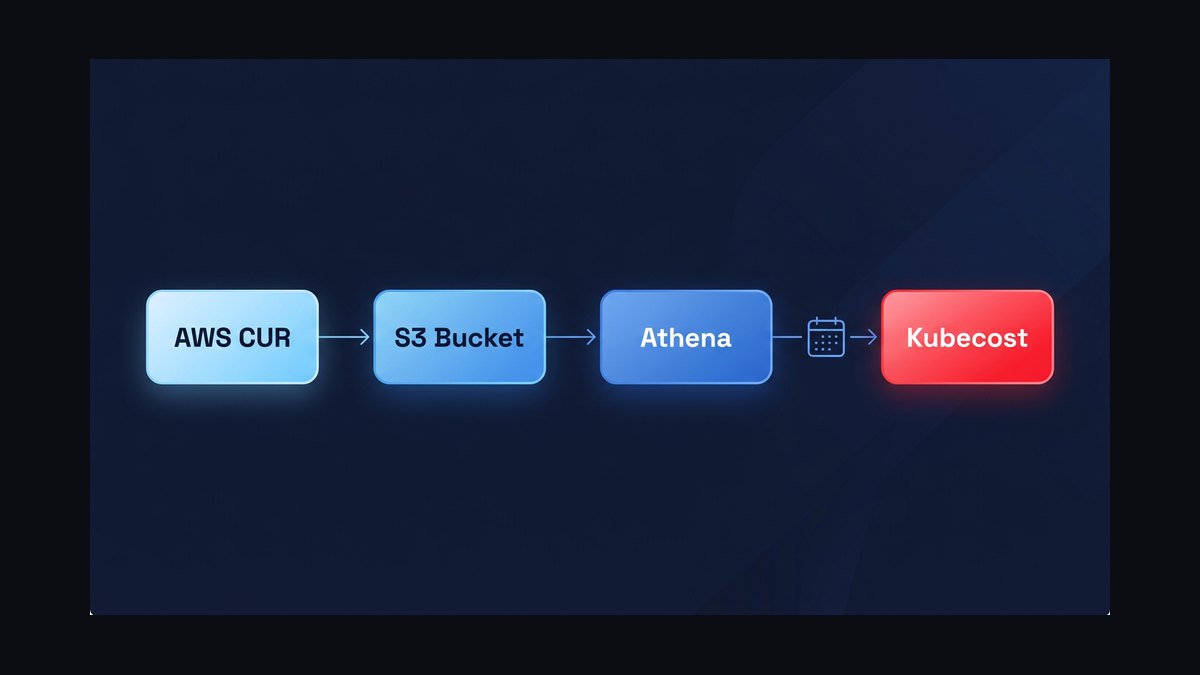
The 10 best ai infra cost allocation strategies for multi-team usage are ranked below on measured performance, build quality, price, and how each one actually holds up in daily use rather than how it reads on a spec sheet. Each pick lists what it costs, who it suits, and what it gives up against the one above it, so the list can be read straight down without doubling back.
1Kubecost Namespace Allocation
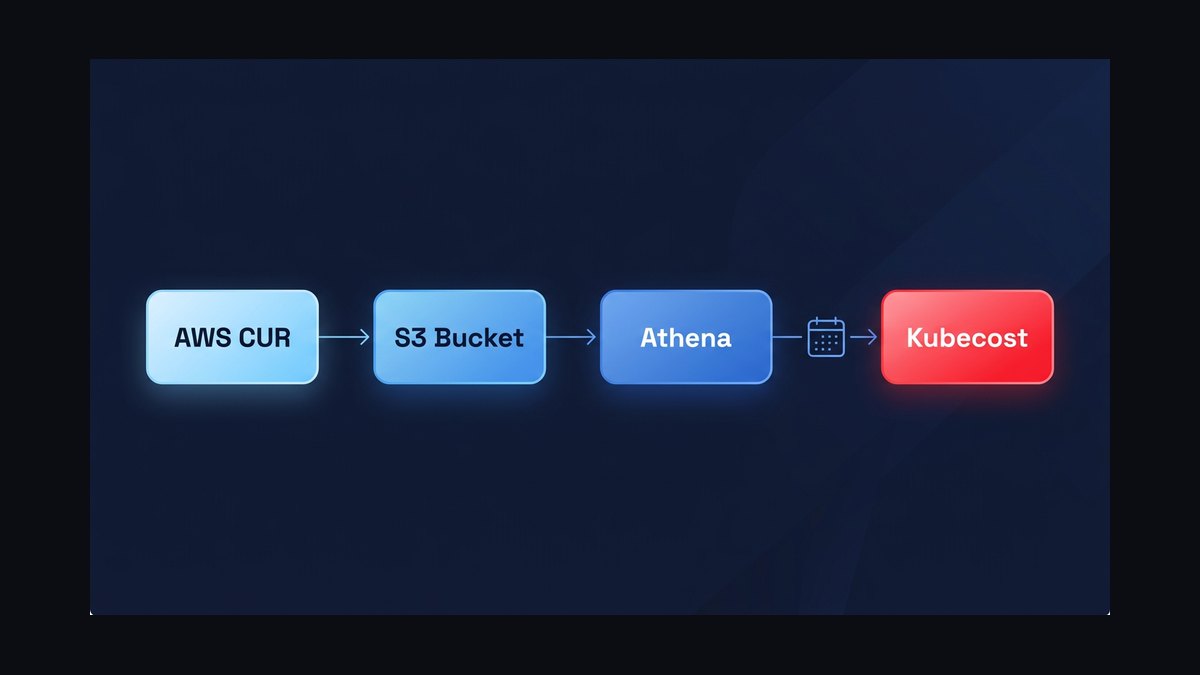
Ranks first because it maps compute and GPU spend to namespaces, labels, and deployments in real time, giving each team a line-item view of its own Kubernetes usage. Its allocation engine, open-sourced as OpenCost, breaks cost down by CPU, memory, GPU, and network egress at the pod level. IBM acquired Kubecost in 2024, extending the model into IBM cloud cost tooling.
Best for organizations already running AI workloads on Kubernetes across teams sharing a cluster. It trades simplicity for granularity: setup demands consistent labeling discipline and a running Prometheus stack. Against AWS Cost Categories below, it works at the workload level rather than billing-account level, so it is stronger for shared-cluster GPU chargeback than account-wide spend.
2AWS Cost Categories
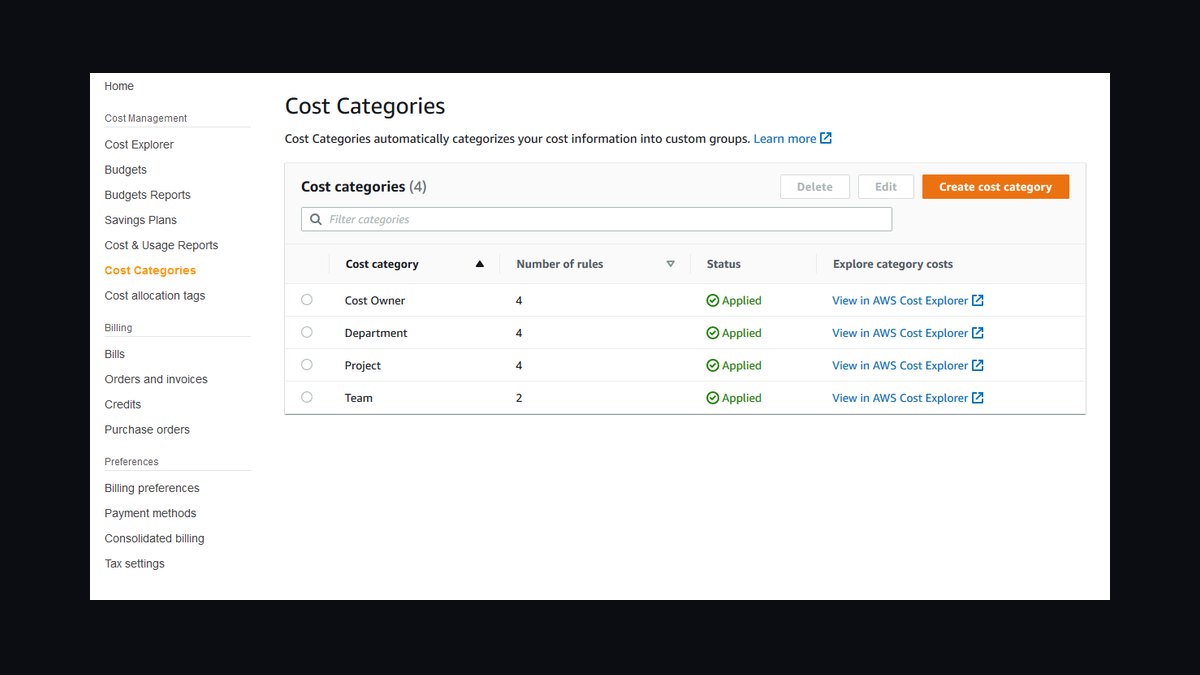
Ranks second because it allocates cost at the billing layer using rules built from linked accounts, tags, and services, without changing how workloads run. Cost Categories groups Cost and Usage Report line items into team or project buckets, refreshed daily inside AWS Cost Explorer. It covers SageMaker, Bedrock, and EC2 GPU instances alongside every other AWS service in one pass.
Fits teams whose AI infra already sits on separate AWS accounts or tagged resources, since rules only work as well as the underlying tags. It trades workload-level granularity for account-wide coverage; a shared GPU instance split across teams still needs manual proration. Unlike Kubecost above, it needs no cluster instrumentation, but sees only AWS spend, not on-prem or multi-cloud capacity.
3FinOps Foundation Framework
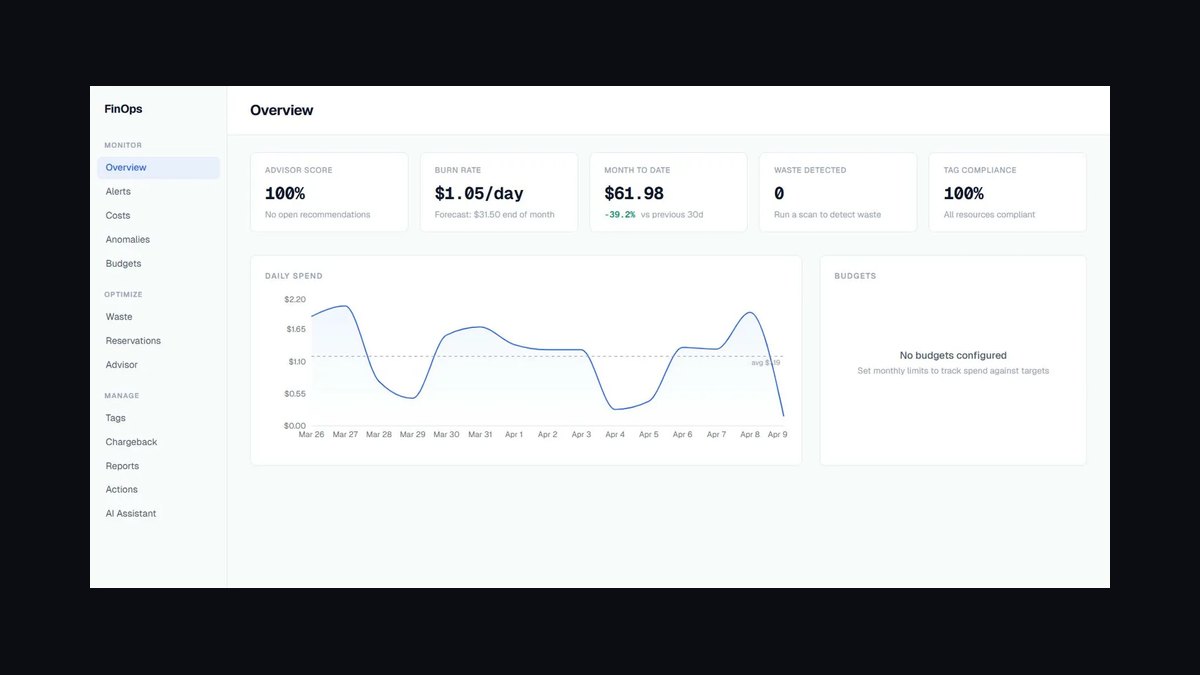
Ranks third because it is the only entry here that is a governance framework rather than a tool or dashboard, giving multi-team AI organizations a shared vocabulary and maturity model before any software gets chosen. The FinOps Foundation, part of the Linux Foundation, publishes Cost Allocation as a named capability in its FinOps Framework, the same body maintaining the FOCUS billing-data specification.
Useful for organizations standing up multi-team AI cost governance from scratch, especially ones needing executive buy-in before tool rollout. It trades immediate dashboards for process rigor; teams still need Kubecost or Cost Categories underneath to execute it. Compared with the tool-based entries around it, this is the layer that decides how allocation gets defined, not how it gets measured.
4Showback Reporting Model
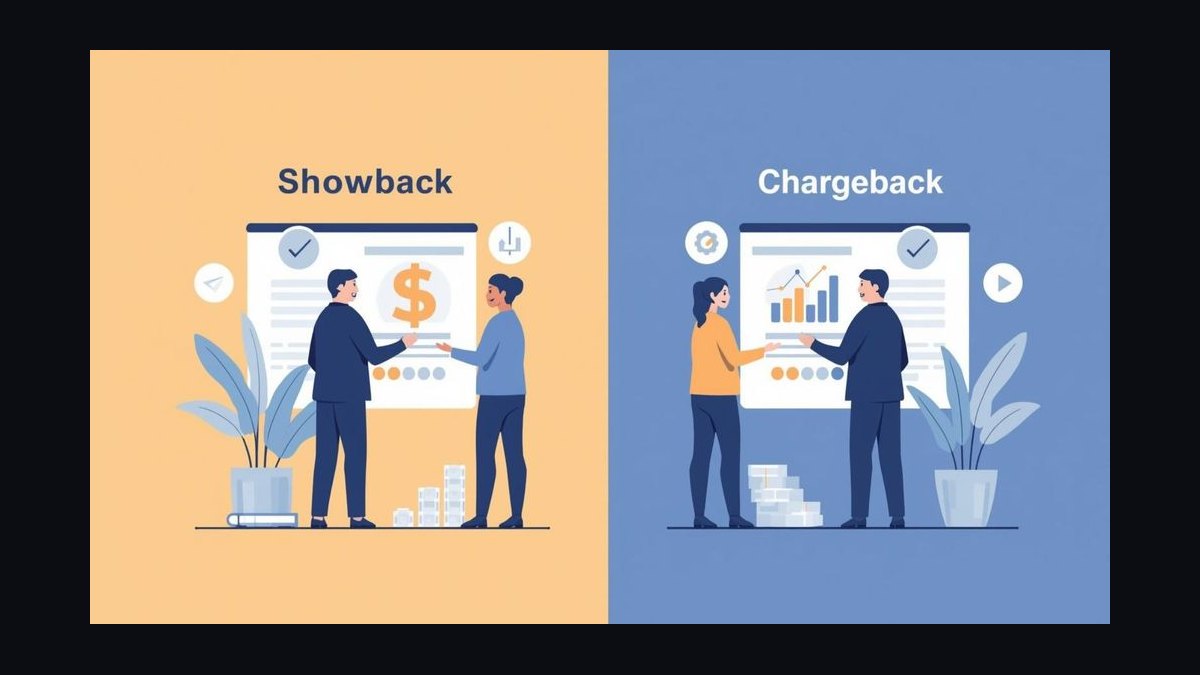
Ranks fourth because it allocates cost visibility without moving money, giving each AI team a regular report of the GPU-hours and storage it consumed relative to peers, without the friction of an internal billing dispute. It typically runs as a scheduled export from a cost tool into a shared dashboard, refreshed weekly or monthly. Because no budget is debited, adoption resistance across engineering teams is lower than chargeback.
Works best as a first step for organizations not yet ready to hold teams financially accountable for AI infra spend. It trades enforcement power for adoption speed; teams can still overspend since no budget line is actually charged. Compared with the Chargeback Model below, Showback is the lower-friction, lower-consequence version of the same underlying allocation data.
5Chargeback Model
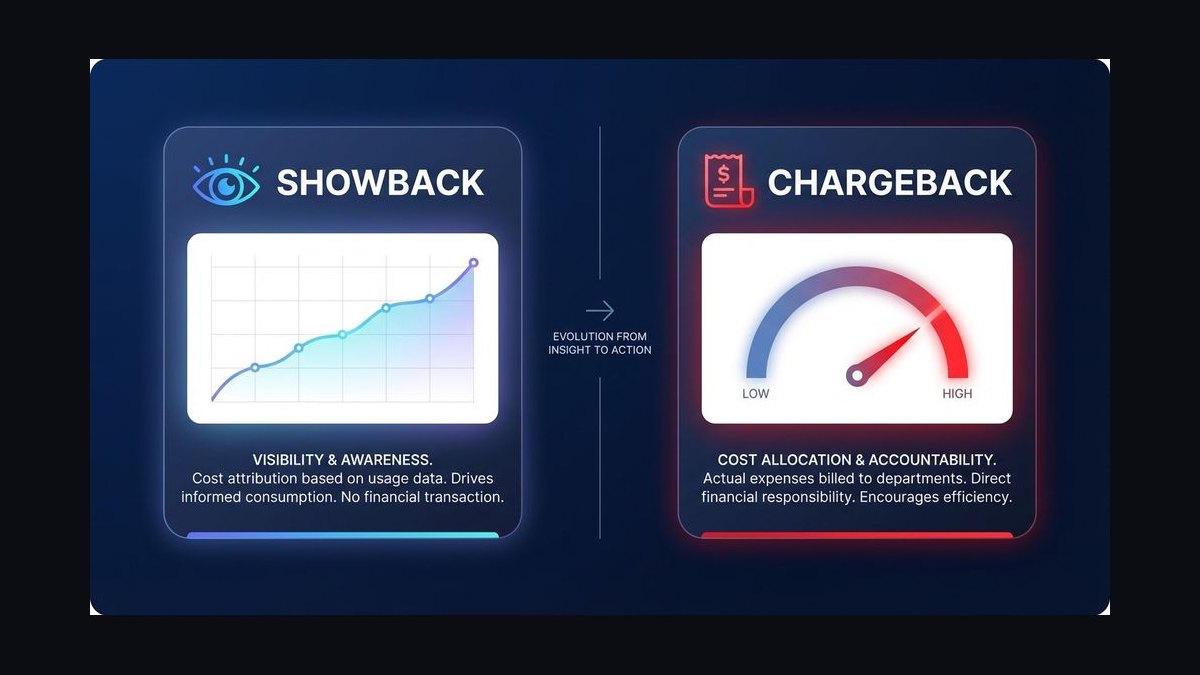
Ranks fifth because it converts allocation data into an actual internal invoice, debiting each team's budget for the GPU and storage it consumed, the strongest lever for controlling runaway AI training costs. It requires the same underlying allocation data as showback but adds an internal billing process, typically run monthly through finance systems. Teams that overrun quota see the cost reflected directly against their project budget.
Suited to organizations mature enough to have per-team budgets and finance buy-in, since disputes over shared or misattributed costs become higher-stakes than under showback. It trades adoption ease for accountability; engineering teams often resist a chargeback rollout that arrives without the reporting groundwork above it. It depends on accurate tagging or namespace allocation upstream, making it the natural next step after Showback.
6Tag-Based Cost Allocation
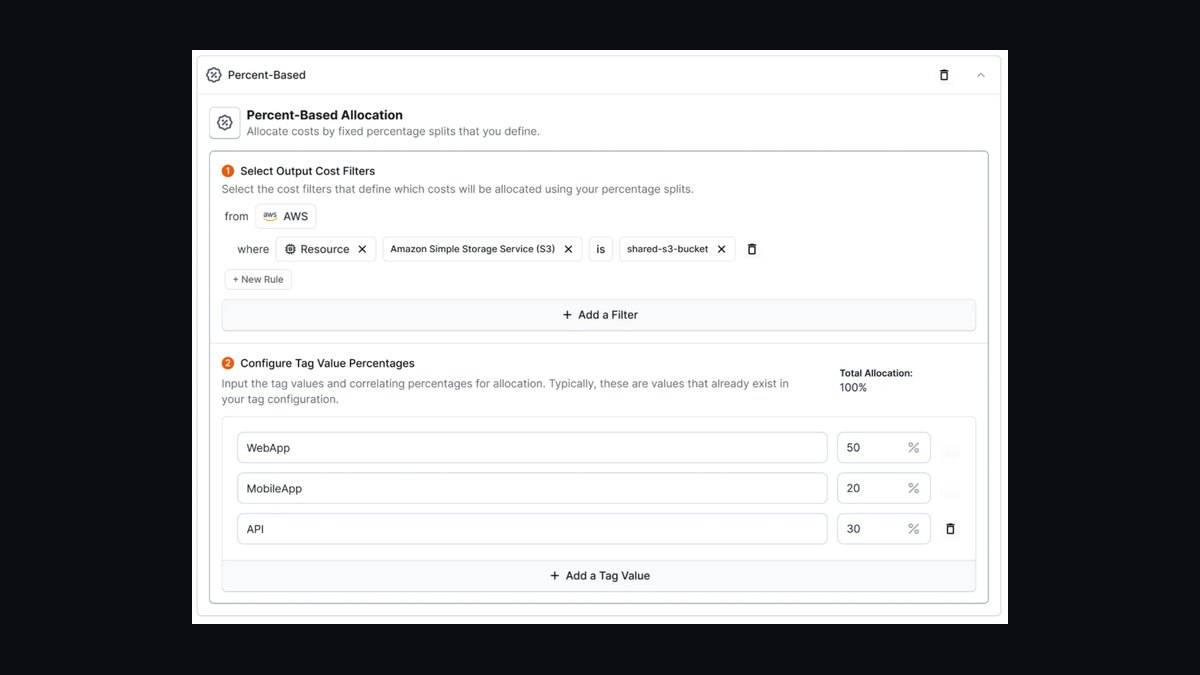
Ranks sixth because it is the most portable allocation method across cloud providers, attaching team, project, and environment labels directly to every GPU instance, storage bucket, and model endpoint at creation time. AWS, Azure, and GCP all ingest resource tags into their native cost and billing exports, so a single tagging taxonomy can feed multiple downstream tools. Consistency depends entirely on tagging being enforced at resource-creation time.
Good for multi-cloud AI shops that don't want to lock allocation logic into one vendor's console. It trades automation for manual discipline; untagged resources fall into an unallocated bucket that finance has to chase down separately. It underpins both AWS Cost Categories and Kubecost's label-based allocation above, making it foundational rather than a finished reporting layer on its own.
7GPU Quota-Based Allocation
Ranks seventh because it allocates cost by capping consumption up front rather than billing after the fact, assigning each team a fixed number of GPU-hours or device count through Kubernetes ResourceQuotas or a scheduler's fairshare accounting. This prevents any single team from consuming a shared GPU pool before others get access, which raw chargeback alone doesn't guarantee. It works at the scheduler level, before any billing export runs.
Most valuable for research and training clusters where GPU scarcity, not just cost, is the constraint teams fight over. It trades cost precision for access fairness; a quota tells a team how much it can use, not exactly what it cost. Compared with the Chargeback Model above, it prevents overconsumption proactively rather than reporting it after the invoice arrives.
8CloudZero Cost Allocation
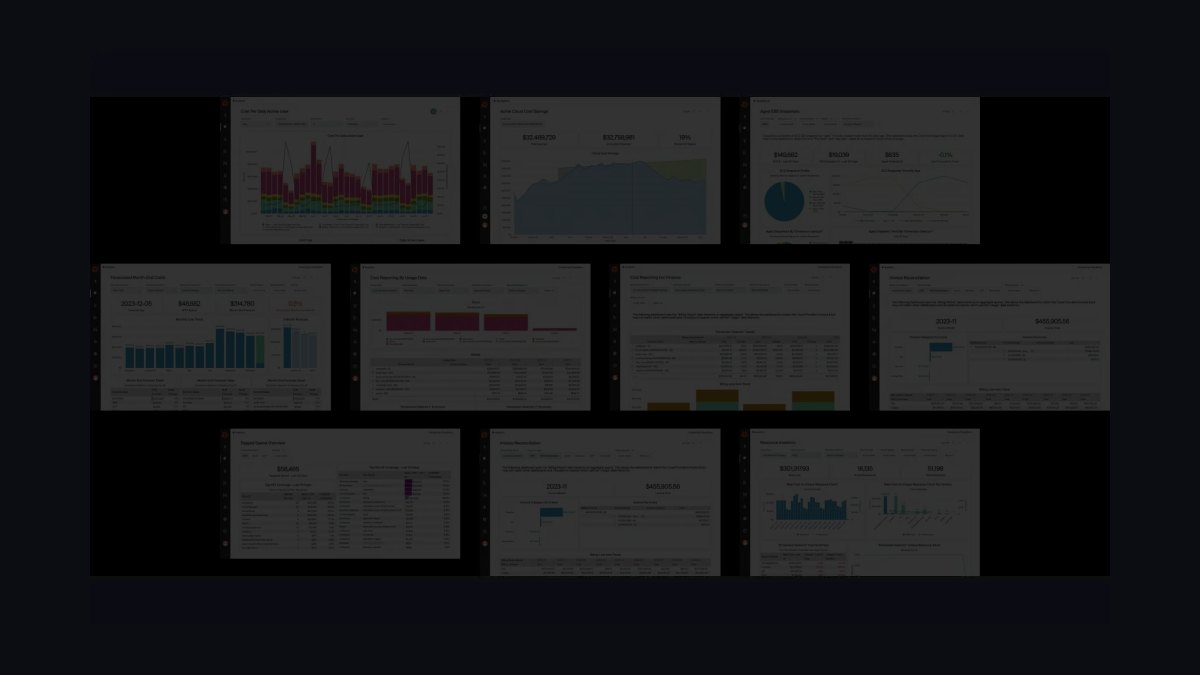
Ranks eighth because it centers allocation on cost-per-unit metrics, such as cost per model, per customer, or per inference call, rather than stopping at cost-per-team. CloudZero ingests billing data from AWS, GCP, and Azure alongside Kubernetes and Snowflake usage to build those unit economics automatically. It's a commercial platform, not a native cloud feature, so it sits on top of raw billing exports rather than replacing them.
Fits organizations that need to answer what an AI feature costs per customer, not just what a team spent overall. It trades the zero-cost simplicity of native tools like AWS Cost Categories for a paid platform and vendor onboarding. Compared with Tag-Based Allocation below it, CloudZero can operate even with imperfect tagging by correlating usage patterns instead.
9Databricks Cluster Tagging
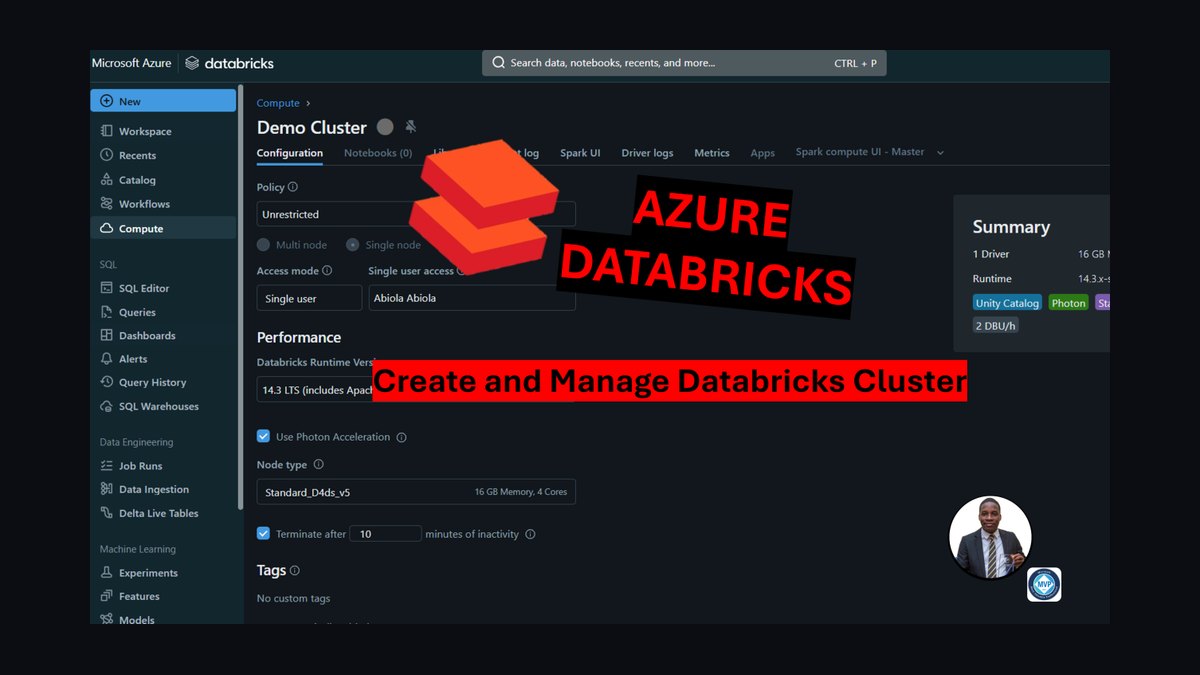
Ranks ninth because it allocates cost specifically at the compute-cluster level inside a single platform, letting teams attach custom tags to Databricks clusters, jobs, and SQL warehouses that flow through to the account's billing usage logs. This is narrower than the cloud-wide tools above it since it only covers Databricks-run workloads, not the underlying cloud provider's other GPU or storage spend. It's the standard method Databricks documents for its own chargeback.
Relevant only to organizations running AI and ML training or inference primarily on Databricks rather than raw Kubernetes or cloud-native GPU instances. It trades broad coverage for platform-specific precision; teams outside Databricks aren't captured at all. Compared with the general Tag-Based Allocation entry above, this is the platform-specific implementation of the same tagging idea, scoped to one vendor's compute layer.
10Shared Cost Pool Allocation
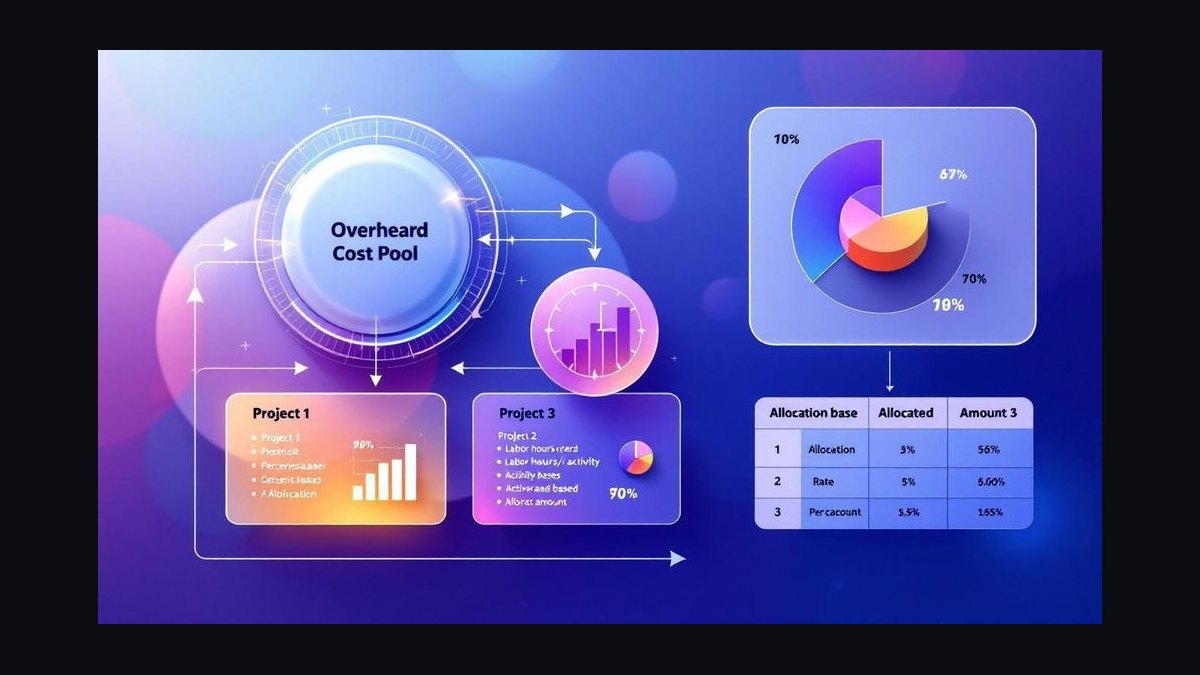
Ranks tenth because it solves the one problem none of the above fully address: infrastructure that genuinely serves every team at once, like a shared model-serving gateway, a common data lake, or a central MLOps platform, where per-team tagging or quotas don't cleanly apply. Costs are pooled and then split by a proxy metric such as request volume, headcount, or storage consumed. It's a fallback allocation method, not a primary one.
Necessary for the residual unallocated bucket that tag-based and namespace methods above always leave behind, but it's the least precise entry on this list since the split is a proxy, not a direct measurement. It trades accuracy for completeness; some shared cost has to land somewhere. Best paired with Showback or Chargeback above so the pooled portion doesn't quietly vanish from team-level reporting.
How we ranked these
We ranked each strategy on five weighted factors: attribution granularity (per-team, per-model, or per-token visibility into GPU and API spend), implementation complexity relative to existing FinOps tooling, support for shared multi-tenant clusters where workloads from several teams interleave on the same hardware, built-in incentives that push teams toward efficient prompt and batch design, and auditability for finance teams needing traceable quarterly cost reports.
We deliberately ignored raw cloud sticker prices, since they change monthly and vary by committed-use discount, along with on-prem GPU depreciation schedules and single-tenant setups where one team owns a dedicated cluster and allocation is trivial. Vendor-specific enterprise contract terms were excluded because most mid-market teams cannot access them, and general-purpose FinOps platforms not built for token- or GPU-hour-level AI workloads fell outside scope.
What to look for
What matters most is whether the allocation method survives real usage: can it attribute cost when three teams share one fine-tuned model endpoint, and does it update fast enough to catch a runaway fine-tuning job before month-end? Favor tools that tag at the API-key or namespace level natively, since retrofitting tags onto already-running inference services is where most rollouts stall and budgets quietly drift.
The most common mistake is optimizing for perfect precision before anyone adopts the system at all. Teams spend months building a chargeback model accurate to the token, then abandon it because engineers will not tag every call. Start with coarse showback by team and model family, prove it drives behavior change, then add granularity. Precision without adoption is a spreadsheet nobody trusts.
Related questions
What is the difference between showback and chargeback for AI infrastructure costs?
Showback reports each team's estimated AI spend without actually billing internal budgets, building awareness and behavior change without political friction. Chargeback moves real dollars between cost centers, which forces accuracy but often triggers disputes over shared resources like embeddings or a shared vector database. Most organizations start with showback for six to twelve months before layering chargeback on top.
How do you allocate cost for a shared fine-tuned model used by multiple teams?
Split cost by observed request volume and token throughput per team rather than a flat headcount split, since usage is rarely even. Log the API key or service account tied to each call, aggregate hourly, and reconcile against the GPU-hours billed by the provider. Flat splits under-charge heavy users and over-charge light ones, eroding trust fast.
Should idle GPU capacity be allocated to the teams that reserved it?
Yes, but flag it separately from active usage so idle cost does not get buried inside a team's real spend line. Many FinOps teams create a shared idle-capacity pool billed proportionally to reservation size, then push a monthly report showing each team's utilization rate. That visibility alone tends to shrink over-provisioning faster than any policy memo.
What tooling actually tracks per-team GPU-hour usage in Kubernetes clusters?
Kubecost and OpenCost are the most widely adopted open-source options, both reading Kubernetes labels and node pricing data to attribute cost per namespace or team. For managed AI platforms, AWS Cost Explorer with allocation tags, Azure Cost Management, and Google Cloud's BigQuery billing export cover the cloud-native GPU instance layer underneath the cluster.
How does per-token pricing complicate multi-team cost allocation compared to fixed infrastructure?
Per-token API costs from providers like OpenAI and Anthropic are already usage-metered, so allocation seems simpler: just tag each API key to a team or project. The complication is shared context, since a RAG pipeline that multiple teams query means token cost includes retrieval overhead that is not obviously any one team's to own.
What is a reasonable cadence for reviewing AI cost allocation across teams?
Weekly automated reports catch runaway jobs before they become a monthly surprise, but full allocation model reviews, checking whether the split methodology still matches how teams actually use shared infrastructure, should happen quarterly. Faster-moving orgs running frequent fine-tuning cycles often tighten that to monthly during periods of rapid model rollout.
Can cost allocation strategies actually change team behavior around AI usage?
Yes, visibility alone changes behavior faster than caps or quotas do. Teams that see their own token spend next to a peer team's, especially in a shared dashboard, tend to self-correct on wasteful patterns like unbounded context windows or unnecessary retries. Hard quotas work too but generate more support tickets and workarounds.
How do you handle cost allocation when teams share a single vector database or embedding store?
Allocate by query volume and storage footprint, meaning bytes indexed, rather than trying to split a shared database bill evenly. Most vector DB providers like Pinecone, Weaviate, and Qdrant expose per-namespace or per-index usage metrics that map directly to a team or project, making it one of the easier shared resources to attribute.
FAQ
What is AI infra cost allocation, and why does it matter for multi-team organizations?
It is the practice of attributing shared AI compute and API spend, including GPUs, fine-tuning jobs, and inference calls, to the teams that generate it instead of lumping it into one central IT line item. Without it, finance cannot tell which product or team is driving spend growth, and engineering has no incentive to optimize usage.
Is chargeback or showback the better starting point for a new AI platform team?
Showback almost always wins as the starting point because it builds trust and surfaces data quality issues before real money moves between budgets. Chargeback introduces political stakes that expose every gap in your attribution logic immediately, which is a hard way to discover your tagging is incomplete. Graduate to chargeback once showback numbers go unchallenged.
How granular should cost tagging be for AI workloads?
Team and model family is the minimum viable granularity; project or feature-level tagging adds real value but costs engineering time to maintain. Token- or request-level granularity is ideal for chargeback accuracy but rarely survives contact with fast-moving teams who will not consistently tag every call. Match granularity to how mature your FinOps culture actually is.
What is the biggest technical blocker to accurate AI cost allocation?
Shared infrastructure that multiple teams touch simultaneously, such as a shared inference gateway, a common embedding pipeline, or a single fine-tuned base model serving several product surfaces. These resources resist clean per-team attribution because the cost driver, a GPU-hour or a token, does not map to a single owner, forcing proxy metrics instead of exact costing.
Do cloud providers offer native tools for AI-specific cost allocation?
Partially. AWS, Azure, and Google Cloud all support cost allocation tags and billing exports that work for GPU instances and managed AI services, but none natively separate training from inference spend or map API-metered LLM costs from OpenAI or Anthropic into the same dashboard. Most teams stitch together cloud billing exports with a separate tool for API spend.
How do quotas compare to cost-based incentives for controlling multi-team AI spend?
Quotas cap the damage from a single runaway job but feel punitive and generate friction when a team genuinely needs a burst of capacity for a launch. Cost-based incentives, like a monthly budget dashboard tied to a team's own OKRs, tend to produce more durable behavior change because teams self-police instead of hitting a hard wall mid-project.
Should smaller teams be exempt from formal cost allocation?
No. Exempting small teams creates a blind spot that grows as the team scales, and retrofitting tagging onto a team that has already shipped dozens of untracked jobs is far harder than starting on day one. Apply the same lightweight showback tagging to every team from the start, even if the dollar amounts are small at first.
How often do AI cost allocation strategies need to be revisited as usage grows?
Revisit the methodology whenever a new shared resource enters the stack, such as a new shared model, a new RAG pipeline, or a new inference gateway, since each one breaks the existing attribution assumptions. Absent a structural change, a quarterly review is enough to catch drift between how the allocation model works and how teams actually use infrastructure.
What role does FinOps play specifically for AI/ML workloads versus general cloud FinOps?
General FinOps focuses on compute, storage, and network spend that maps cleanly to resources and owners. AI workloads add token-level metering, GPU-hour scarcity, and shared model endpoints that resist simple tagging, so AI FinOps needs proxy splits, quota fairness, and unit economics like cost per inference or per customer to stay meaningful.
Can you allocate AI costs accurately without perfect tagging?
Yes, within limits. Tools like CloudZero correlate usage patterns and billing line items to infer ownership even when tags are missing, and shared cost pools can absorb the residual unallocated bucket. Accuracy drops for genuinely shared resources, but a documented proxy split beats leaving spend unattributed and invisible to every team.
Sources
- https://www.finops.org/framework/capabilities/allocation/
- https://opencost.io/docs/
- https://www.kubecost.com/
- https://docs.aws.amazon.com/aws-cost-management/latest/UserGuide/cost-categories-creating.html
- https://focus.finops.org/
- https://docs.databricks.com/aws/en/admin/account-settings/usage-detail-tags
- https://cloud.google.com/billing/docs/how-to/export-data-bigquery
- https://learn.microsoft.com/en-us/azure/cost-management-billing/costs/group-filter
- https://kubernetes.io/docs/concepts/policy/resource-quotas/
- https://www.cloudzero.com/
Related on PULSE
This page will be disappearing soon. Save it to your device for $1 — or read it free while it is here.
@Kory-White- · if Venmo asks, the last 4 of my number are 2012
This page is gone.
This one is off the shelf now. $1 keeps it on your phone for good — the whole page, pictures and diagrams included.
 pulse-recentThe 10 Best AI Infra Cost per Token Benchmarks in 2027
 pulse-recentWhat is continuous batching and how much more throughput does it give an LLM server in 2027?
 pulse-recentThe 10 Best AI Infra Cost Estimators for Cloud GPU Workloads in 2027
 pulse-recentThe 10 Best AI Tools for Batch Inference at Scale in 2027
 pulse-recentThe 10 Best AI Tools for Cost Estimation in 2027
 pulse-recentThe 10 Best Sandboxed Code Execution Platforms for AI Agents in 2027
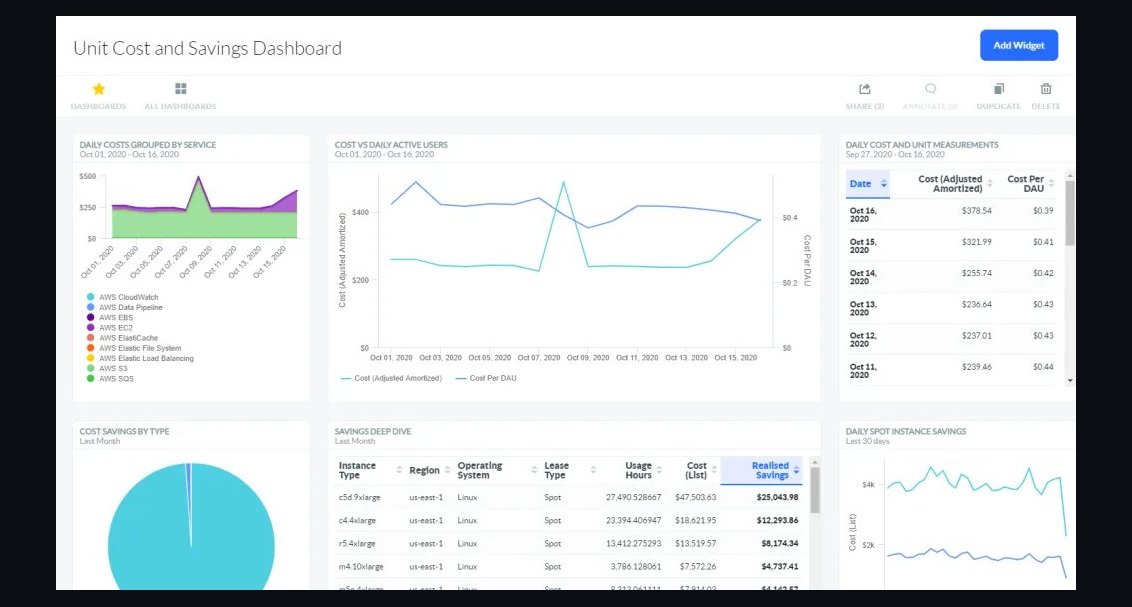 pulse-recentThe 10 Best AI Chargeback and Showback Tools for Internal Team Billing in 2027
 pulse-recentThe 10 Best AI Tools for Multi-Agent Orchestration in 2027
 pulse-recentThe 10 Best AI Infra Cost Benchmarking Tools in 2027
 pulse-recentThe 10 Best AI Tools for Reducing Cloud AI Spend in 2027