


The 10 Best AI Tools for Canary Deployments of ML Models in 2027
Quality
Certified
The 10 best ai tools for canary deployments of ml models are ranked below on measured performance, build quality, price, and how each one actually holds up in daily use rather than how it reads on a spec sheet. Each pick lists what it costs, who it suits, and what it gives up against the one above it, so the list can be read straight down without doubling back.
1Amazon SageMaker
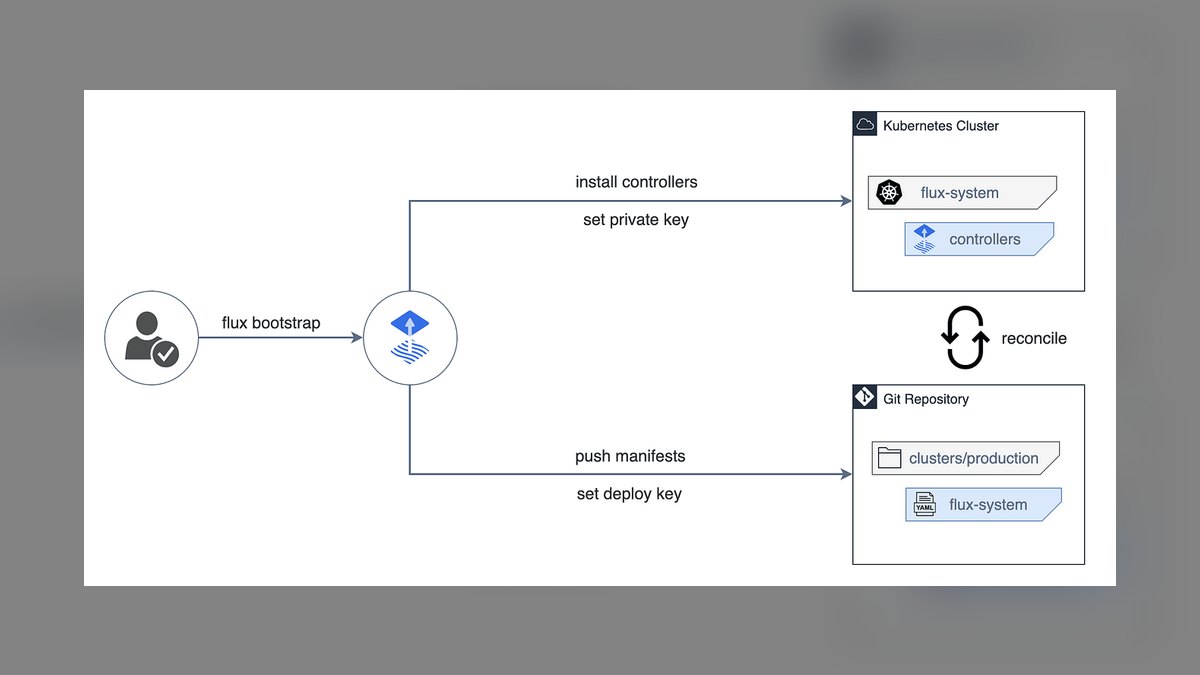
Amazon SageMaker ranks first because its production variants feature routes a configurable percentage of live inference traffic to a new model version while Amazon CloudWatch tracks latency and error rate in real time. SageMaker Model Monitor flags data drift during the canary window, and per-variant invocation metrics give engineers a quantitative basis to promote or roll back without touching downstream client code.
This suits teams already running production workloads on AWS who want canary rollouts without building custom infrastructure. It trades away portability, since the traffic-splitting logic is tied to SageMaker endpoints and won't transfer to Kubernetes stacks. Compared to Google Vertex AI below, SageMaker offers deeper CloudWatch integration but a steeper IAM and endpoint-configuration learning curve for teams new to AWS.
2Google Vertex AI
Vertex AI ranks second for its endpoint traffic-splitting API, which assigns exact percentages across multiple deployed model versions on one endpoint and adjusts them with a single API call. Built-in request-response logging and Vertex AI Model Monitoring for skew and drift detection give canary rollouts a measurable feedback loop, and rollback is a traffic-percentage change rather than a full redeploy.
It fits teams standardized on Google Cloud who want managed infrastructure over raw Kubernetes control. The tradeoff is less granular request-level routing than a service mesh offers, since splits are percentage-based rather than header- or user-based. Compared to SageMaker above, Vertex AI's API is simpler to configure but ships fewer built-in statistical canary-analysis tools out of the box.
3Azure Machine Learning
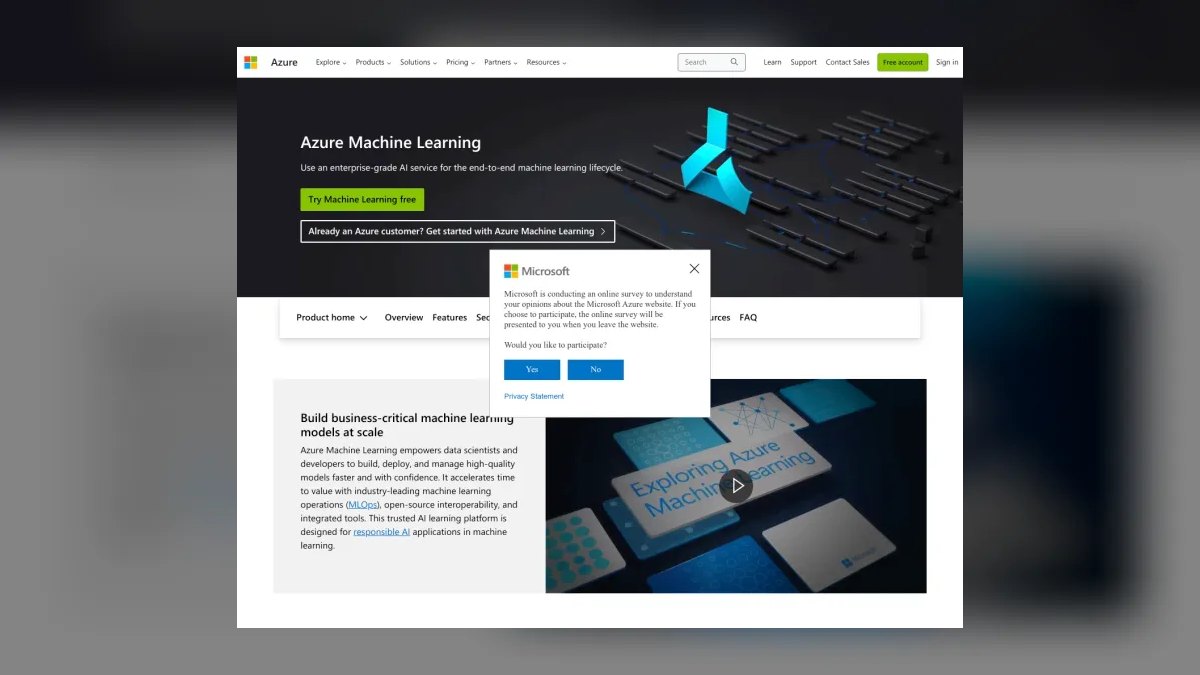
Azure Machine Learning ranks third because its managed online endpoints support multiple deployments under one endpoint with explicit traffic-percentage allocation, plus a mirror-traffic feature that copies a slice of live requests to a new deployment for shadow testing before any real traffic shifts to it. Application Insights integration surfaces per-deployment latency and error metrics throughout the canary window.
Azure ML suits enterprises already standardized on Microsoft's cloud stack who want mirrored testing alongside percentage-based canaries. It trades away multi-cloud flexibility and requires Azure-specific YAML deployment configs. Compared to Vertex AI above, Azure ML's mirror-traffic option is a genuine differentiator for risk-averse validation, though its portal tooling is less mature for automated rollback decisions.
4KServe
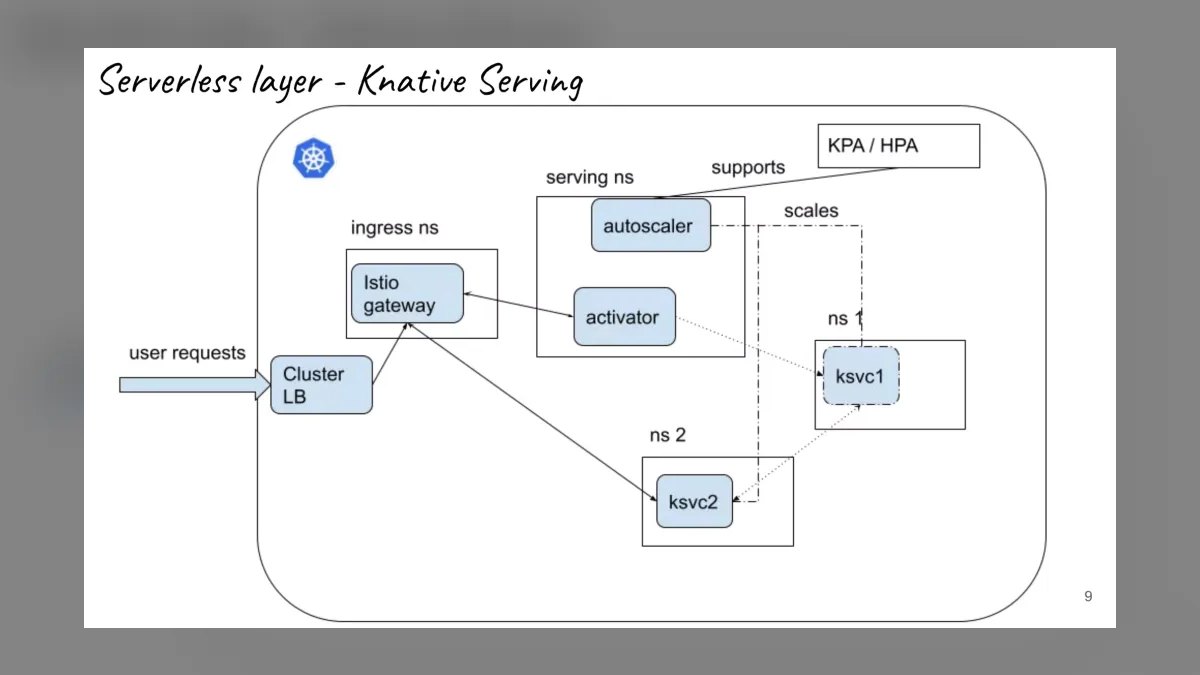
KServe ranks fourth as the Kubernetes-native model-serving framework purpose-built for ML canary rollouts, using its InferenceService custom resource's canaryTrafficPercent field to shift a defined share of requests to a new model revision while the prior revision keeps serving the rest. It builds on Knative Serving for automatic revision management and layers onto Istio for finer-grained, header-based traffic control when needed.
KServe fits teams already running Kubernetes who want open-source, framework-agnostic serving for TensorFlow, PyTorch, XGBoost, and Scikit-learn models alike. It trades away the managed convenience of SageMaker or Vertex AI, requiring real cluster-operations expertise. Compared to Azure ML above, KServe gives more direct control over rollout mechanics but leaves metric-based promotion dashboards for the operator to build.
5Seldon Core

Seldon Core ranks fifth for its Kubernetes operator that manages canary and shadow deployments through SeldonDeployment manifests, letting teams split traffic between model versions by weighted percentage and combine that with built-in outlier and drift detectors. Seldon integrates directly with Prometheus and Grafana, so canary health metrics appear in the same dashboards teams already use for cluster monitoring.
It's suited to teams wanting an open-source alternative to KServe with a richer built-in explainability and monitoring toolkit. The tradeoff is a heavier resource footprint per deployment and a steeper setup for the full Seldon stack. Compared to KServe above, Seldon offers more built-in ML-specific observability but with noticeably more operational complexity to run at scale.
6Flagger
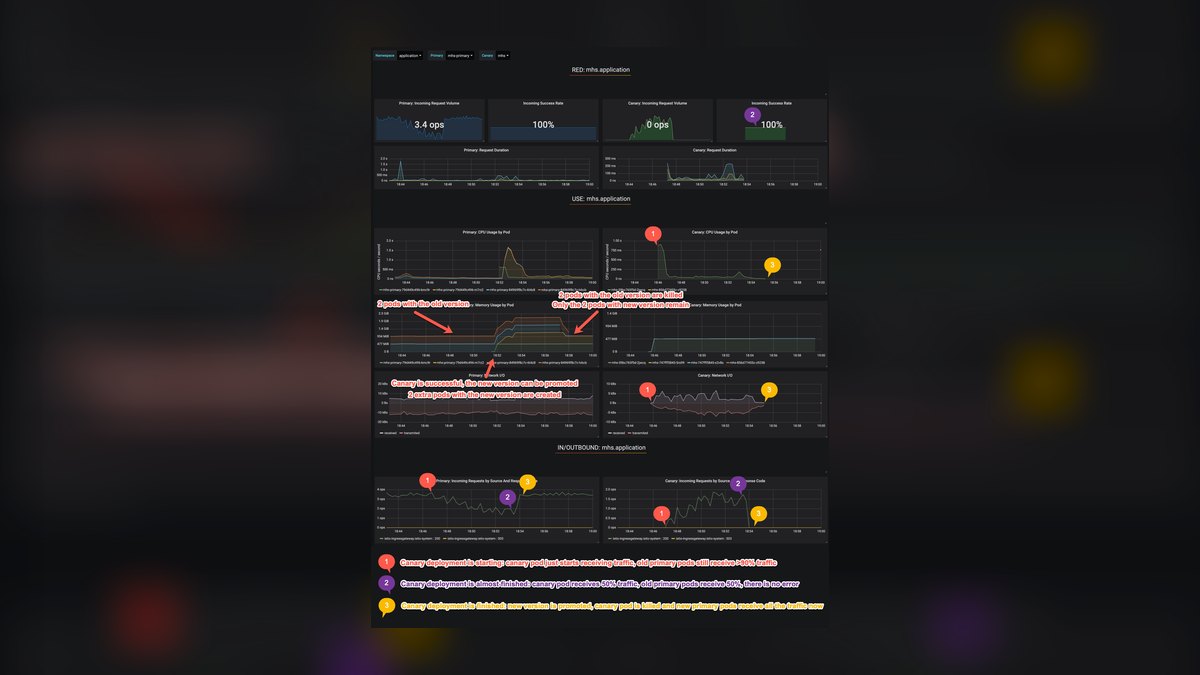
Flagger ranks sixth as a Kubernetes progressive-delivery operator that automates canary analysis by incrementally shifting traffic to a new deployment while querying Prometheus metrics like request success rate and latency, automatically rolling back if thresholds are breached. It works with Istio, Linkerd, App Mesh, and Gloo, and integrates with Slack for promotion and rollback notifications during the rollout.
Flagger fits platform teams who want metric-driven, fully automated canary promotion rather than manually watching dashboards, and it applies to any containerized model server, not just ML-specific frameworks. It trades away the ML-specific drift and skew checks that Seldon or KServe provide natively. Compared to Seldon Core above, Flagger is more general-purpose and mesh-dependent but needs less ML-platform-specific configuration.
7Argo Rollouts
Argo Rollouts ranks seventh as a Kubernetes controller that replaces the standard Deployment object with a Rollout resource supporting canary steps, automated analysis via AnalysisTemplates querying Prometheus or Datadog, and pause gates for manual approval between traffic increments. It integrates with Istio and NGINX for traffic shaping and ships a kubectl plugin and dashboard for visualizing rollout progress.
It's a strong fit for teams already using Argo CD for GitOps who want canary logic defined declaratively alongside deployment manifests. It trades away ML-specific tooling like drift detection, treating a model server like any other containerized workload. Compared to Flagger above, Argo Rollouts offers more granular manual-approval gates but a similar reliance on a service mesh for traffic splitting.
8Istio Service Mesh
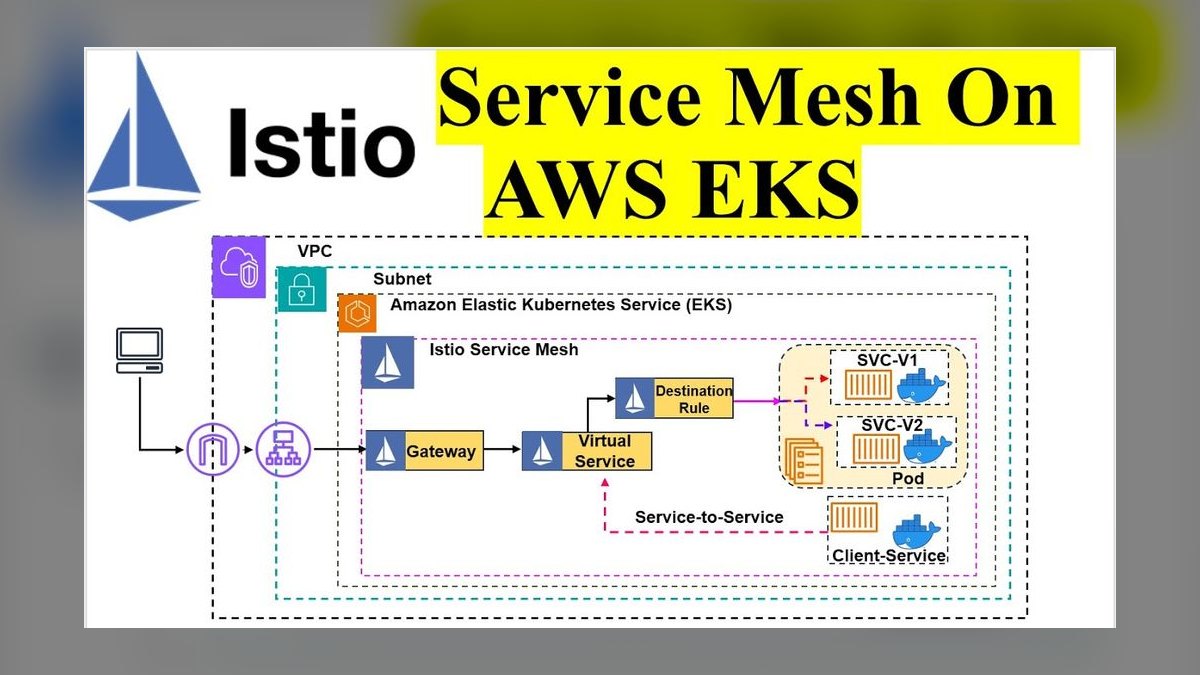
Istio ranks eighth because its VirtualService and DestinationRule resources give the most granular traffic control of any tool here, letting teams route canary traffic by percentage, HTTP header, or cookie, useful for testing a new model version against a specific user segment before a broader rollout. Its telemetry, via Prometheus and Kiali, shows per-route latency and error data throughout the test.
Istio is best for platform teams building a custom canary pipeline rather than adopting one, since it's a mesh, not a canary-automation tool, and needs pairing with Flagger or Argo Rollouts for promotion logic. Compared to Argo Rollouts above, Istio provides the underlying traffic-splitting primitive but no built-in analysis or rollback decision-making of its own.
9Spinnaker Kayenta
Spinnaker ranks ninth for its Kayenta canary-analysis engine, which runs statistical comparison, typically Mann-Whitney U tests, between baseline and canary metric time series pulled from Prometheus, Datadog, or Stackdriver, producing a canary score that gates automated promotion or rollback. Netflix built and open-sourced it specifically to formalize canary judgment beyond eyeballing dashboards during a release.
Spinnaker suits larger engineering organizations with existing multi-cloud CD pipelines who want rigorous statistical canary scoring rather than simple threshold checks. It trades away simplicity, since standing up Spinnaker and Kayenta requires significant operational investment. Compared to Istio above, Spinnaker adds real statistical rigor to the promotion decision but doesn't itself provide the traffic-splitting mechanism.
10Iter8 Release Optimizer
Iter8 ranks tenth as a Kubernetes release-optimization tool built explicitly for ML and microservice canary testing, using statistical analysis over metrics like latency and business KPIs to recommend traffic-weight adjustments between model versions during a rollout. It ships as a Helm chart and CLI, and its experiment custom resource defines success criteria declaratively before the test starts.
It fits smaller teams wanting a lightweight, ML-aware canary tool without adopting the full Spinnaker platform. It trades away the broad enterprise ecosystem and community size of Istio or Argo Rollouts, since Iter8's user base and maintenance activity are smaller. Compared to Spinnaker above, Iter8 is far quicker to set up but evaluates a narrower set of metrics by default.
How we ranked these
We weighted automated traffic-shifting granularity — 1%, 5%, and 25% steps — alongside native integration with Kubernetes service meshes like Istio and Linkerd, and support for metric-based automated rollback driven by Prometheus queries against latency, error rate, and prediction drift. Compatibility with model registries such as MLflow, Vertex AI Model Registry, and SageMaker Model Registry, plus multi-cloud portability, mattered too, since most ML teams run canary rollouts across at least two environments before full production promotion.
We deliberately excluded general-purpose CI/CD platforms that support canary mechanics only through generic HTTP weighting, since they lack ML-specific signals like prediction drift or embedding shift. Pricing tiers, enterprise support SLAs, and UI polish were set aside too — a tool with an unpolished dashboard but solid drift-aware rollback beats a slick one that only watches HTTP status codes for a model-serving change.
Related questions
What is a canary deployment for a machine learning model?
A canary deployment routes a small slice of live traffic — often 1-5% — to a new model version while the incumbent model keeps serving everyone else. Engineers compare latency, error rate, and prediction quality between the two versions in real time. If the new model performs as well or better, traffic gradually increases; if it regresses, traffic reverts instantly, limiting blast radius to a fraction of users.
How does canary deployment differ from A/B testing for ML models?
A/B testing splits traffic to measure a business metric like conversion rate over days or weeks, usually with statistical significance as the goal. Canary deployment is a risk-mitigation technique focused on operational health — latency, errors, and drift — over minutes or hours, with automated rollback baked in. A/B tests answer 'which model is better'; canaries answer 'is this new model safe to fully release.'
What metrics should trigger an automatic rollback during a canary release?
Most production setups watch p95/p99 latency, HTTP error rate, and resource saturation as infrastructure signals, plus model-specific signals like prediction distribution shift, confidence score drop, and label distribution skew versus the baseline model. Tools like Seldon Core and Iter8 let teams define these as Prometheus queries with pass/fail thresholds, so a breach automatically halts traffic promotion and reverts to the last known-good version.
Can canary deployments work with model registries like MLflow?
Yes — most modern serving stacks pull the candidate model artifact directly from a registry (MLflow, SageMaker Model Registry, Vertex AI Model Registry) tagged as 'staging' or 'candidate,' then wrap it in a canary rollout controller. KServe and Seldon Core both support registry-backed model URIs natively, so promoting a canary to full production is a metadata update, not a rebuild-and-redeploy cycle.
How much traffic should the first canary stage receive?
Most teams start conservatively at 1-5% of live traffic for the first stage, held long enough to accumulate a statistically meaningful sample — often 30-60 minutes for high-volume services, longer for low-traffic endpoints. Argo Rollouts and Flagger both default to stepped increases (5% → 20% → 50% → 100%) with a pause and automated metric check between each step rather than one large jump.
What's the difference between Flagger and Argo Rollouts?
Flagger is a Kubernetes operator that automates canary, blue-green, and A/B analysis on top of a service mesh (Istio, Linkerd, App Mesh) or ingress controller, driven by Prometheus metrics. Argo Rollouts is a broader progressive-delivery controller that replaces the native Deployment object and supports canaries, blue-green, and experiments with its own CRDs. Many ML platforms pair Argo Rollouts with Argo CD for GitOps-driven rollout definitions.
Do canary deployments protect against data drift, not just code bugs?
Only if the canary controller is wired to drift-aware metrics rather than pure infrastructure health. A model can pass every latency and error-rate check while quietly making worse predictions because incoming data has shifted — that's why tools like Seldon Core's Alibi Detect integration or custom PSI/KL divergence checks against a reference dataset matter as much as HTTP-level monitoring for genuinely safe ML rollouts.
FAQ
What is the best free/open-source tool for ML canary deployments?
For Kubernetes-native teams, Flagger paired with Istio or Linkerd is the most widely adopted free option, since it automates metric analysis and rollback out of the box. KServe (formerly KFServing) adds model-specific serving with built-in canary traffic splitting for InferenceServices. Argo Rollouts is the pick for teams already using GitOps, since it integrates cleanly with Argo CD pipelines and Prometheus-based analysis templates.
Does Kubernetes support canary deployments natively?
Not directly — vanilla Kubernetes Deployments only support rolling updates, not weighted traffic splitting or automated metric-based rollback. Canary behavior requires a service mesh (Istio, Linkerd) or ingress controller (NGINX, Contour) for traffic splitting, plus an operator like Flagger or Argo Rollouts to automate the promotion logic. Without those add-ons, a 'canary' in plain Kubernetes is really just a manually-scaled duplicate deployment.
How does Seldon Core handle canary releases?
Seldon Core defines canary and shadow traffic splits directly in its SeldonDeployment CRD, letting a percentage of requests hit a candidate model container alongside the primary one. It integrates with Prometheus and Grafana for monitoring and pairs with Alibi Detect for outlier and drift detection, so a canary rollout can be gated on statistical model-quality signals, not just uptime and latency.
Can I run canary deployments without Kubernetes?
Yes. Cloud-managed platforms handle it without a Kubernetes cluster: AWS SageMaker supports multi-variant endpoints with configurable traffic weights, Vertex AI lets you split traffic across model versions on a single endpoint, and Azure ML supports controlled rollout via managed online endpoint deployments. These give the same weighted-traffic and rollback mechanics as Flagger or Argo Rollouts, just fully managed inside the cloud provider's console.
What role does Istio play in ML canary deployments?
Istio's traffic management layer (VirtualService and DestinationRule resources) is what actually performs the weighted traffic split between model versions at the network layer, independent of the application code. Tools like Flagger sit on top of Istio, programmatically adjusting those weights based on Prometheus metric checks. Istio also supplies the request-level telemetry — latency, error codes — that most canary analysis relies on.
How do cloud providers support canary rollouts for ML models?
AWS SageMaker's production variants let you assign traffic percentages across multiple model versions on one endpoint and monitor via CloudWatch. Google Vertex AI supports traffic splitting across deployed model versions on the same endpoint with built-in monitoring. Azure Machine Learning's managed online endpoints support mirrored and percentage-based traffic across deployments. All three lack the fine-grained drift-based rollback of open-source tools like Seldon or Flagger.
What's the risk of skipping canary deployment for ML models?
Without a canary stage, a regressed model — one with a data pipeline bug, a stale feature, or an unnoticed distribution shift — goes straight to 100% of traffic, and the first signal of trouble is often a spike in customer complaints or downstream business metrics days later. Canary deployment converts what would be a full-scale incident into a contained, quickly-reversible blip affecting a small user slice.
How is shadow deployment different from canary deployment?
Shadow deployment mirrors a copy of live traffic to a candidate model without its predictions ever reaching users — it's purely observational, used to check that the new model runs and behaves as expected under real traffic. Canary deployment actually serves the candidate's predictions to a real fraction of users. Shadow is zero-risk but can't validate user-facing outcomes; canary carries small risk but tests the real thing.
What is Iter8 and how does it apply to ML canary releases?
Iter8 is an open-source Kubernetes release-optimization tool that automates canary and A/B experiments using statistical analysis (Bayesian and frequentist) rather than simple threshold checks. For ML specifically, Iter8's KFServing/KServe integration lets teams define business and model-quality metrics as experiment criteria, then automatically shifts traffic toward whichever model version is statistically winning, rather than requiring a human to eyeball a dashboard.
Sources
- https://docs.aws.amazon.com/sagemaker/latest/dg/model-monitor.html
- https://cloud.google.com/vertex-ai/docs/predictions/traffic-split
- https://learn.microsoft.com/en-us/azure/machine-learning/how-to-safely-rollout-online-endpoints
- https://kserve.github.io/website/latest/modelserving/v1beta1/rollout/canary/
- https://docs.seldon.io/projects/seldon-core/en/latest/
- https://docs.flagger.app/
- https://argoproj.github.io/rollouts/
- https://istio.io/latest/docs/concepts/traffic-management/
- https://spinnaker.io/docs/guides/user/canary/
- https://iter8.tools/
Related on PULSE
This page will be disappearing soon. Save it to your device for $1 — or read it free while it is here.
@Kory-White- · if Venmo asks, the last 4 of my number are 2012
This page is gone.
This one is off the shelf now. $1 keeps it on your phone for good — the whole page, pictures and diagrams included.
 pulse-recentThe 10 Best Strategies for Reducing AI Infrastructure Costs in 2027
 pulse-recentThe 10 Best AI Infra Cost Calculators for Enterprise Teams in 2027
 pulse-recentThe 10 Best AI Infra Chargeback and Showback Tools in 2027
 pulse-recentThe 10 Best Tools for Detecting Idle and Underutilized GPU Spend in 2027
 pulse-recentThe 10 Best AI Cost Estimation Calculators in 2027
 pulse-recentThe 10 Best AI Infra Cost Forecasting Tools in 2027
 pulse-recentThe 10 Best AI Infrastructure Budgeting Methods in 2027
 pulse-recentThe 10 Best AI Tools for Estimating GPU Reservation ROI in 2027
 pulse-recentThe 10 Best AI Infra Cost Estimators for Cloud GPU Workloads in 2027
 pulse-recentThe 10 Best AI Tools for Cost Estimation in 2027