


The 10 Best AI Tools for Open-Source Model License Compliance in 2027
Quality
Certified
The 10 best ai tools for open-source model license compliance are ranked below on measured performance, build quality, price, and how each one actually holds up in daily use rather than how it reads on a spec sheet. Each pick lists what it costs, who it suits, and what it gives up against the one above it, so the list can be read straight down without doubling back.
1FOSSA

FOSSA ranks first because it built its business specifically around continuous open-source license compliance, not security as an afterthought. Founded in 2011 and based in San Francisco, it performs snippet-level scanning that catches embedded or modified code most dependency scanners miss, then auto-generates SPDX and CycloneDX SBOMs. It integrates natively with GitHub Actions, GitLab CI, and Jenkins, flagging incompatible licenses like GPL-in-proprietary-code before a build ships.
FOSSA fits engineering teams that need policy enforcement gated directly into CI/CD rather than a periodic audit report. It trades away the deep vulnerability-remediation workflows that security-first platforms like Snyk emphasize, staying narrowly focused on license and SBOM accuracy. Compared to Black Duck below, FOSSA is lighter to deploy and cheaper for mid-size teams, though it covers a smaller proprietary vulnerability database.
2Black Duck
Black Duck ranks second on sheer scale: its KnowledgeBase catalogs millions of open-source components and their license terms, built from a business Synopsys acquired for roughly $565 million in 2017 and later spun back out as independent Black Duck Software in 2024. It performs binary and snippet analysis, catching OSS pulled into compiled artifacts that manifest-only scanners never see, then exports SPDX-compliant SBOMs for audit.
It suits large enterprises and regulated industries needing audit-grade evidence for M&A due diligence or government SBOM mandates, not fast-moving startups. The tradeoff is deployment weight and cost: Black Duck typically requires longer implementation cycles than FOSSA above. Compared to Mend below, it leans harder into forensic-depth binary scanning than automated dependency-update remediation, favoring thoroughness over speed of fix.
3Mend.io
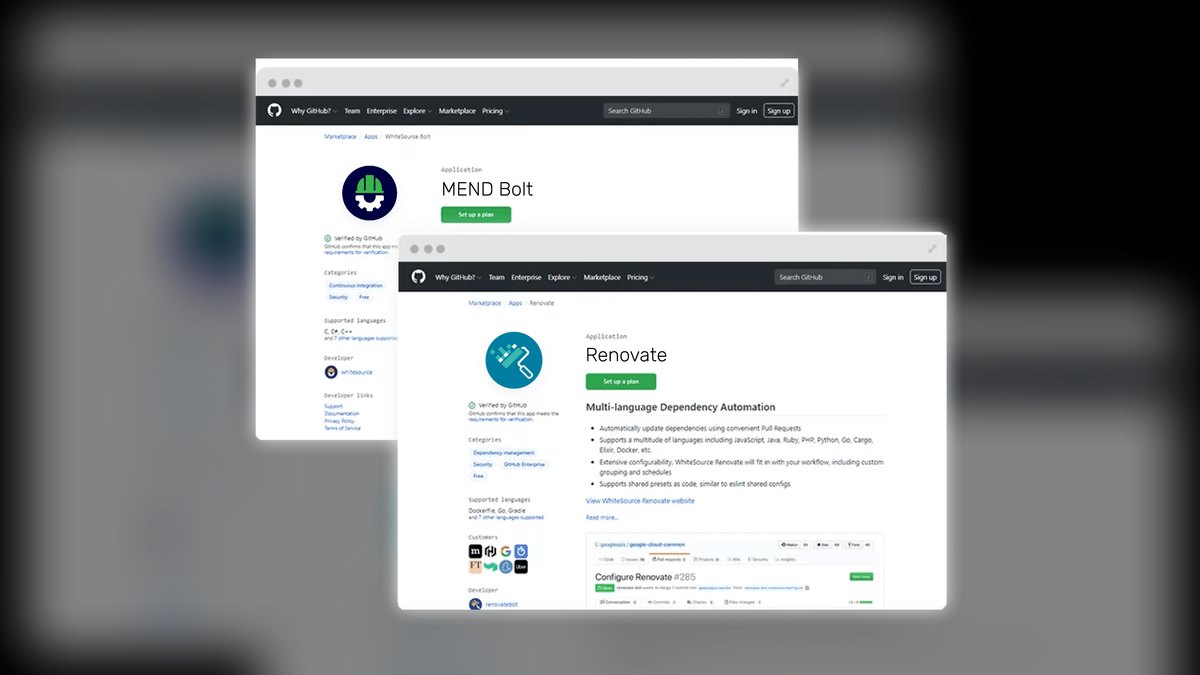
Mend.io ranks third for pairing license detection with automated remediation, not just reporting. Founded in 2011 as WhiteSource and rebranded to Mend in 2022, it scans dependency manifests and lockfiles across dozens of languages, then opens pull requests via Mend Renovate to swap a GPL-tainted package for a compatible alternative automatically. That auto-fix loop is its defining feature against pure-scan competitors.
It fits teams that want compliance violations closed automatically rather than merely flagged, especially JavaScript- and Java-heavy shops already using Renovate for dependency freshness. It trades away Black Duck's binary-level forensic scanning, working only from declared dependencies and lockfiles. Compared to Snyk below, Mend puts more weight on license policy engines and less on vulnerability exploit intelligence.
4Snyk
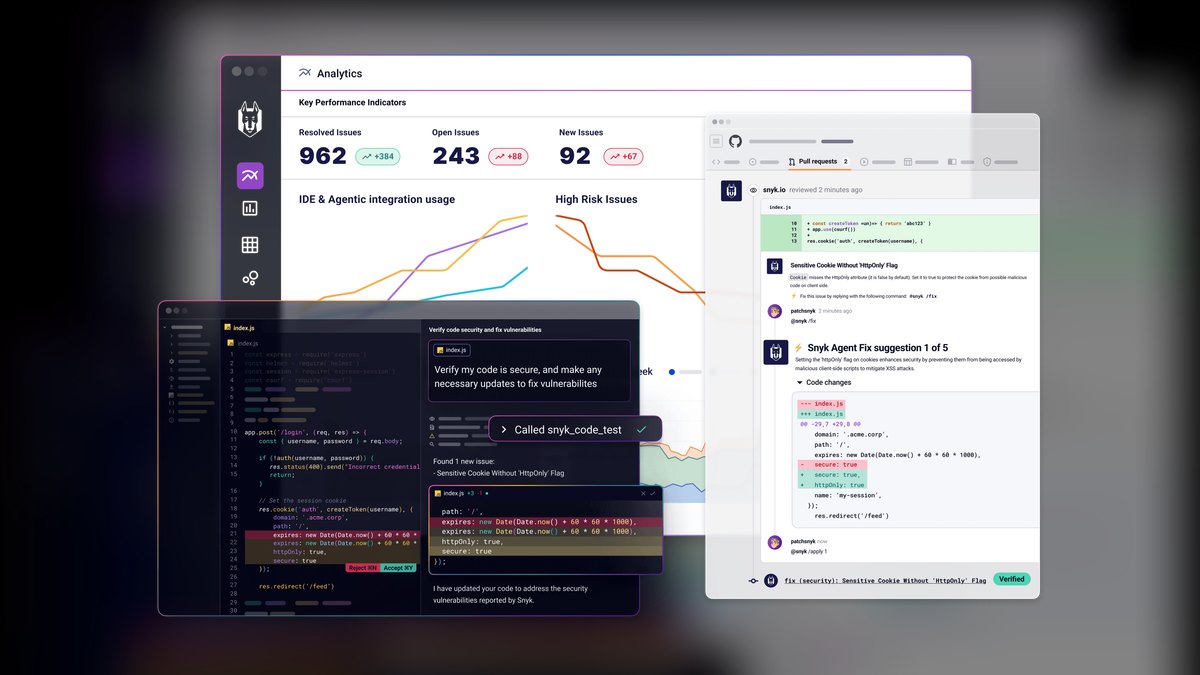
Snyk ranks fourth because license compliance rides alongside its stronger security scanning rather than standing as the primary product. Founded in 2015 and headquartered in London, Snyk Open Source checks dependency trees against a configurable license policy and flags copyleft licenses like AGPL inline in pull requests, using the same database that powers its vulnerability alerts. A generous free tier covers public repositories.
It suits developer teams that want license checks embedded in the same PR workflow as security patching, without buying a separate compliance product. The tradeoff is a thinner license-metadata library than dedicated players like FOSSA or Black Duck above, since license data is secondary to CVE data. Compared to Sonatype below, Snyk is developer-first and lighter-weight rather than governance-committee-oriented.
5Sonatype Nexus Lifecycle
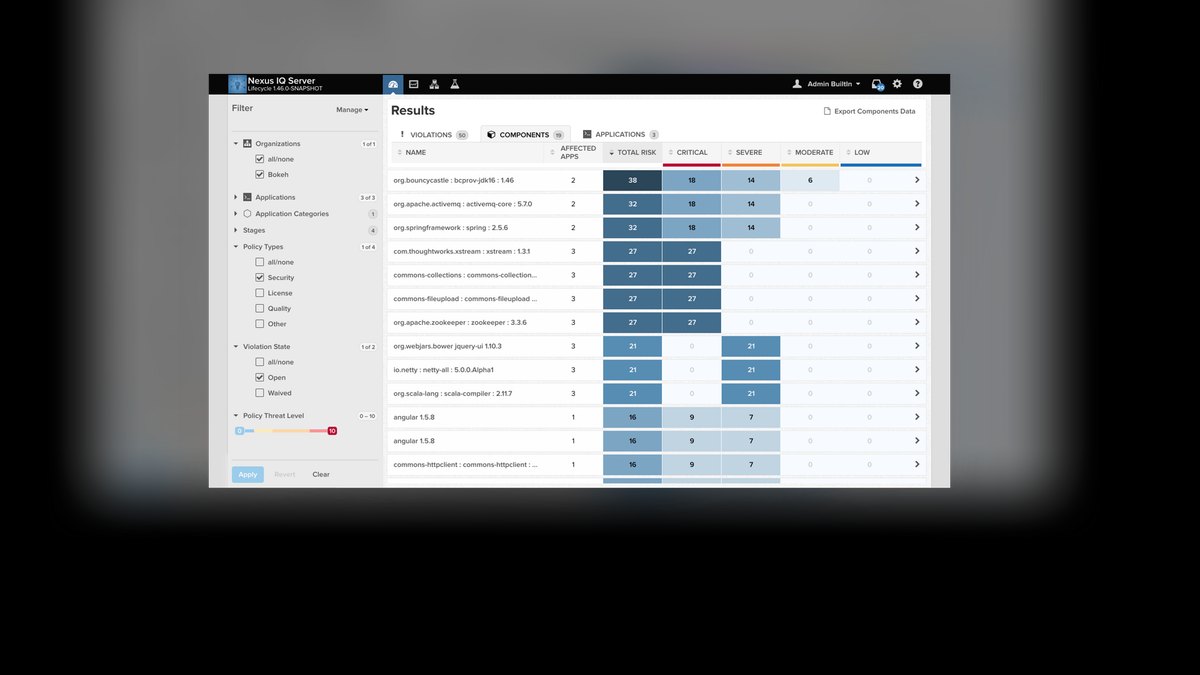
Sonatype ranks fifth on the strength of controlling the repository layer itself: it built Nexus Repository Manager, the artifact store many organizations already run, and Nexus Lifecycle (formerly IQ Server) enforces license policy at the moment a component is pulled into a build. Founded in 2008, it evaluates components against configurable policy gates before they ever reach a developer's local cache.
It fits organizations already standardized on Nexus Repository who want compliance enforced at the artifact-proxy layer rather than bolted onto CI later. The tradeoff is that its value drops sharply for teams not already using Nexus as their package manager. Compared to Tidelift below, Sonatype blocks noncompliant components pre-emptively rather than funding maintainers to keep packages compliant long-term.
6Tidelift
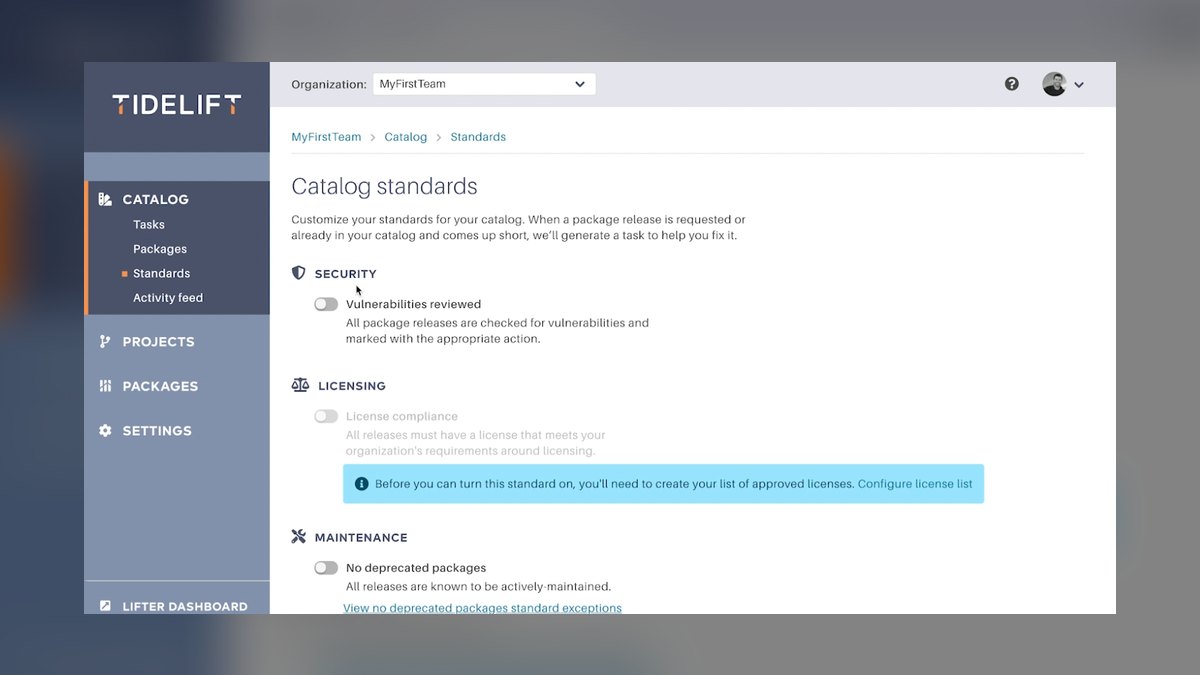
Tidelift ranks sixth for a genuinely different model: rather than scanning code, it pays open-source maintainers directly through its 'managed open source' subscriptions in exchange for license clarity, security response commitments, and maintenance guarantees. Founded in 2017, it covers major package ecosystems including npm, PyPI, and Maven, giving subscribers a contractual backstop when a dependency's license status is ambiguous or unmaintained.
It fits organizations more worried about maintainer abandonment and unclear licensing on niche packages than about scanning accuracy on well-known ones. The tradeoff is coverage breadth: Tidelift's guarantees only extend to packages its maintainer network has onboarded, unlike the universal scanning of ClearlyDefined below. Compared to Sonatype above, which blocks noncompliant components automatically at the build gate, Tidelift's guarantee is contractual and maintainer-backed rather than policy-engine enforcement.
7ClearlyDefined
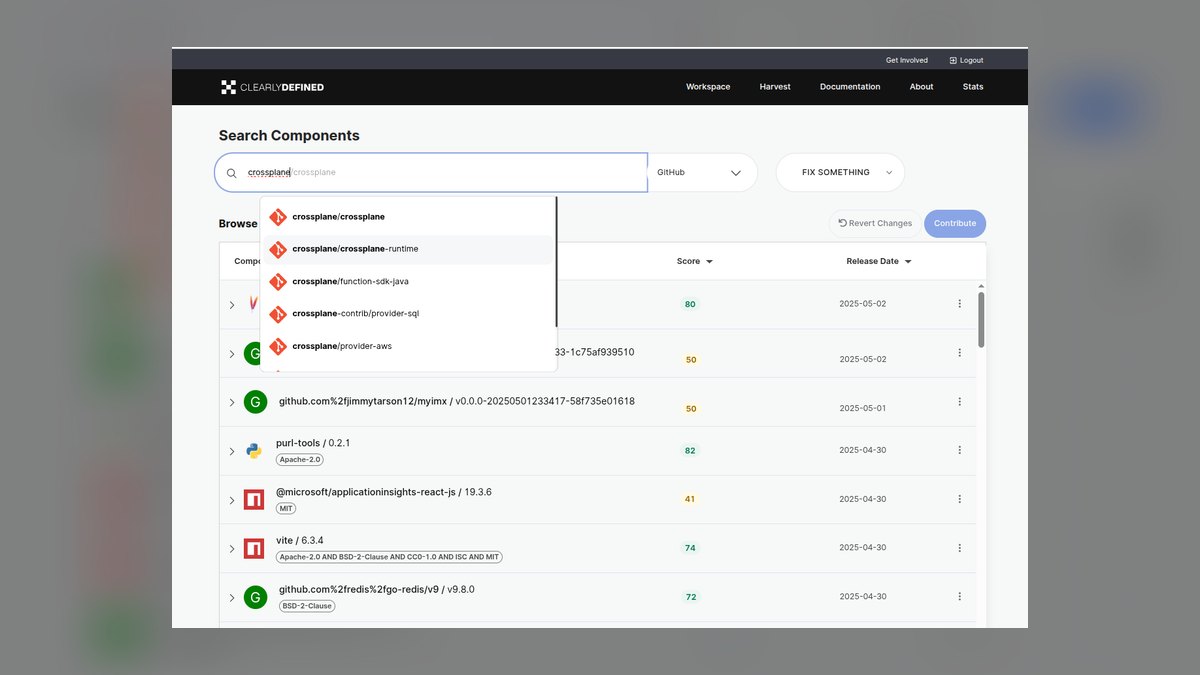
ClearlyDefined ranks seventh as the free, crowdsourced backbone many paid tools quietly build on: a Linux Foundation and OSI-backed project that curates license and copyright metadata for open-source packages through community review and harvested scanner output, including data from ScanCode below. It exposes that curated data via a public API that any compliance pipeline can query directly at no cost.
It fits teams and tool-builders who want authoritative, community-vetted license data without paying for a commercial platform, and organizations comfortable contributing corrections back. The tradeoff is that it is a data source, not an enforcement tool: it has no CI gating, policy engine, or SBOM generator of its own. Compared to FOSSology below, it aggregates multiple scanners' output rather than running one scan engine.
8OSS Review Toolkit (ORT)
OSS Review Toolkit ranks eighth for teams that want a fully open-source, self-hosted pipeline instead of a vendor platform. Originally built at HERE Technologies and now independently governed, ORT runs as a modular CLI, chaining analyzer, scanner, evaluator, and reporter stages together in CI to produce license findings and SPDX SBOMs without a subscription fee or external data-sharing requirement.
It fits engineering teams with the DevOps capacity to self-host and maintain a compliance pipeline, trading vendor support and polished dashboards for zero licensing cost and full control over sensitive scan data. Compared to FOSSology below, ORT is built for CI-native automation across an entire build graph rather than manual per-file scanning through a web interface, but it demands real integration engineering work upfront.
9FOSSology
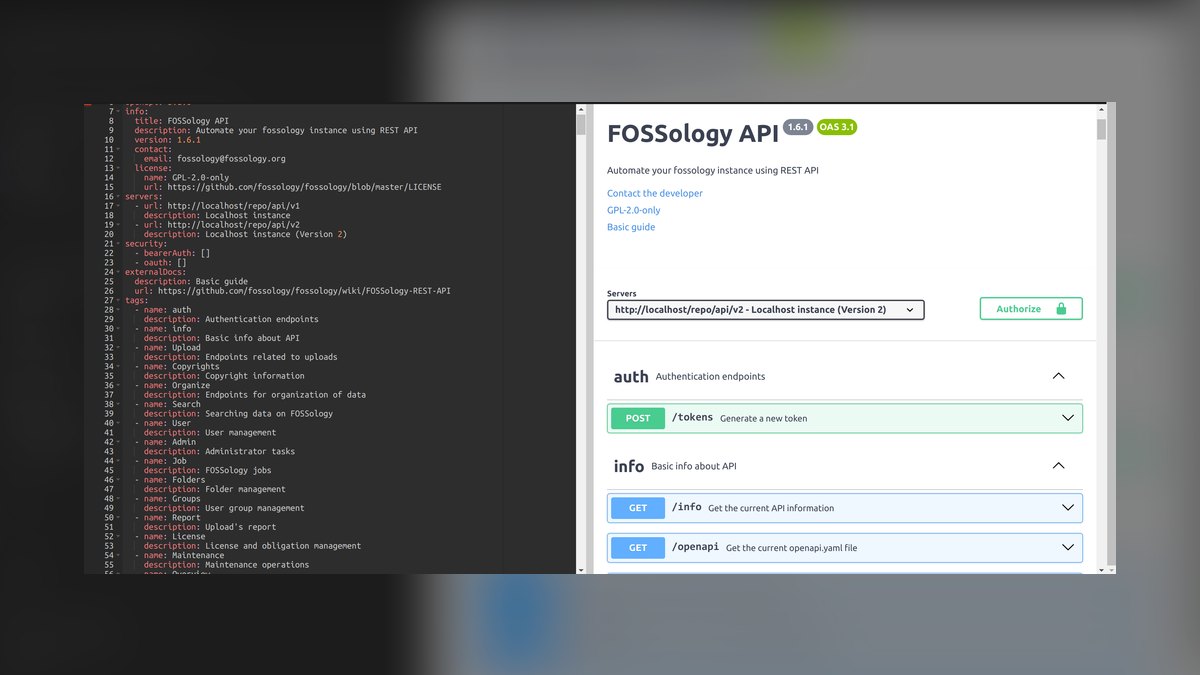
FOSSology ranks ninth as one of the longest-running open license-scanning tools still actively maintained: originated at HP Labs around 2007 and later donated to the Linux Foundation, it runs license and copyright detection through agents like Nomos and Monk, accessible through both a web UI and a command-line interface. It remains completely free and self-hosted, with no per-scan, per-seat, or subscription cost of any kind.
It fits organizations wanting a battle-tested, zero-cost scanner for internal audits rather than a polished commercial dashboard, particularly Linux Foundation-adjacent projects already comfortable with its tooling conventions. The tradeoff is a dated interface and manual setup burden compared to SaaS competitors like FOSSA above. Compared to ScanCode below, FOSSology emphasizes full case-management workflow, not just raw license detection.
10ScanCode Toolkit
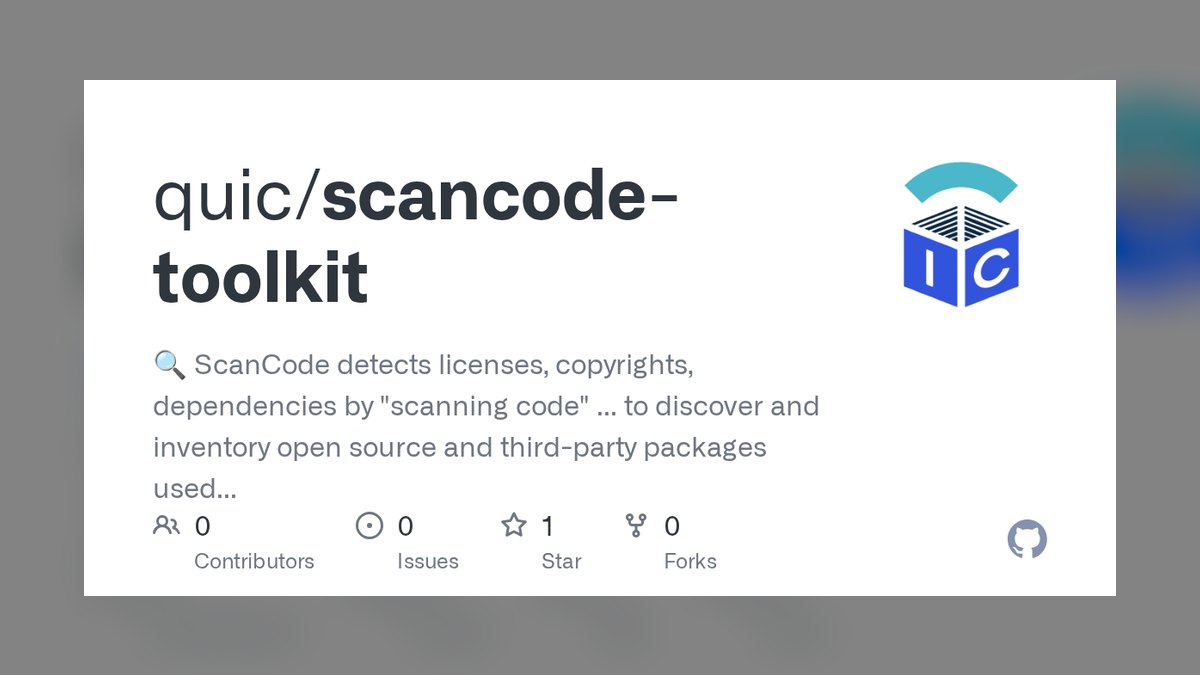
ScanCode Toolkit ranks tenth as the detection engine other tools embed rather than a standalone compliance platform: built by nexB Inc under the AboutCode.org umbrella, it matches code against the full SPDX license list and outputs structured JSON that ClearlyDefined above and several commercial scanners consume directly. It runs entirely locally as a command-line tool with no account or cloud dependency required.
It fits developers and tool-builders who want raw, scriptable license-detection output to wire into their own pipeline rather than a finished dashboard product. The tradeoff is that it ships no policy engine, SBOM workflow, or remediation feature: it only detects. Compared to OSS Review Toolkit above, ScanCode is a single-purpose detection library, not a full pipeline orchestrator.
How we ranked these
We evaluated each tool's accuracy detecting and classifying licenses across model weights, training datasets, and code dependencies, weighting non-standard AI licenses (OpenRAIL, Llama Community License, CreativeML) above generic OSS matching, since these carry usage restrictions ordinary scanners miss. We scored integration depth with Hugging Face Hub and MLflow, automated AI-BOM generation, obligation tracking for attribution and share-alike triggers, and CI/CD hooks.
We ignored general CVE/vulnerability scanning even when bundled into the same suite, since security scanning and license compliance are separate problems and treating them as one score would obscure both. Enterprise pricing beyond published starting tiers was excluded, since quotes vary by seat count and model volume. We also skipped niche package-manager support, since every listed tool already covers pip, npm, and Hugging Face Hub.
What to look for
What matters most is whether a tool actually parses AI-specific licenses correctly instead of flagging OpenRAIL, Llama's community license, or CreativeML as "unknown." Weights, code, and training data often carry three separate licenses in one repository, so a tool scanning only package manifests misses the model card entirely. Confirm the vendor's license database updates monthly, since new model licenses appear faster than most legal teams can review them manually.
The most common mistake is treating a green "permissive" badge as final clearance without reading the actual use-restriction clauses — Llama's monthly-active-user threshold and several RAIL variants' behavioral-use bans aren't things a scanner fully encodes. Automated tools narrow the review, they don't replace it. Budget a human legal pass for any model entering a commercial or high-risk product, regardless of the dashboard's verdict.
Related questions
What is the difference between an open-source license and an open-weight license for AI models?
Open-source licenses like MIT or Apache 2.0 grant unrestricted use, modification, and redistribution. Open-weight licenses such as Llama's or OpenRAIL attach usage restrictions — user caps, prohibited use cases, or specific attribution wording — that don't meet the Open Source Initiative's definition. Many "open" model releases are actually open-weight, which changes what a compliance tool needs to check beyond a standard license header.
Can I use Meta's Llama models in a commercial product?
Yes, under the Llama Community License, but only if your product had fewer than 700 million monthly active users at release; above that you need a separate license from Meta. The license also bans using Llama outputs to train competing models and requires attribution. Compliance tools should flag both the MAU clause and the training-restriction clause specifically.
Does Apache 2.0 or MIT apply to model weights the same way it applies to code?
Not automatically — many releases license the inference code under Apache 2.0 while the trained weights carry a separate, sometimes more restrictive license or none at all. Compliance tools need to scan the model card and README separately from the code's LICENSE file, since weight-specific terms rarely live in a standard license document.
What is an AI-BOM and how does it differ from a software SBOM?
An AI-BOM extends a standard software SBOM to catalog model weights, training datasets, and fine-tuning data alongside the license attached to each, not just code dependencies. It matters because a model's legal exposure often comes from training-data provenance or a weight-specific license, neither of which appears in a conventional package-manifest SBOM.
Are training datasets covered by the same license as the model built from them?
Rarely. A model can be Apache 2.0 licensed while trained on datasets under separate, sometimes incompatible terms — scraped web text, Common Crawl subsets, or licensed data with its own caveats. Dataset provenance is one of the hardest things for automated tools to verify, since most model cards don't list every training source in auditable detail.
What happens if I violate an OpenRAIL license's behavioral-use restrictions?
OpenRAIL licenses bake a use-based restriction list — banning things like generating disinformation or unlawful surveillance — directly into the license grant rather than a separate policy. Violating one of these clauses can void your license to the model entirely, unlike a typical copyright violation, which is why compliance tools flag behavioral clauses as a distinct risk category.
Do license compliance tools cover fine-tuned or derivative models?
Coverage varies widely — most tools track a base model's license but struggle to confirm whether a fine-tune inherits obligations like Llama's naming requirement for derivatives. Fine-tunes uploaded to Hugging Face often lose parent license metadata unless the uploader manually re-tags it, so audits should verify hub metadata by hand rather than trusting inheritance.
Is ScanCode Toolkit or FOSSology enough on its own for AI license compliance?
Both are strong at code-level license detection but predate AI-specific licenses, so neither natively distinguishes model weights from source code or flags RAIL-style use restrictions out of the box. They work well as one layer in a compliance stack paired with a model-card-aware tool, not as a standalone solution for model licensing.
FAQ
What is the OpenChain Project and how does it relate to AI license compliance?
OpenChain, a Linux Foundation project, sets the ISO/IEC 5230 standard for open-source compliance programs across the software supply chain, with working groups now addressing AI and model licensing. It's a process framework companies certify their practices against, not a scanning tool itself, and several vendors align their reports to its conformance checklist.
Which tools support Hugging Face Hub license metadata natively?
FOSSA, Mend, and ClearlyDefined all ingest Hugging Face Hub API metadata, including a model card's license field and tags, directly into scans. This matters because uploaders self-declare licenses on Hugging Face, which are frequently wrong or missing, so cross-checking the declared tag against actual license text catches more errors than trusting the tag alone.
How often do AI model licenses change after initial release?
More often than typical software licenses — Meta revised Llama's terms between versions, changing attribution wording and the MAU threshold, and several RAIL variants get community updates. A compliance tool needs monthly-or-better database refreshes and version-pinned tracking, since re-scanning a model months later can surface materially different terms.
What is the difference between OpenRAIL-M and OpenRAIL-D?
OpenRAIL-M applies to model weights and restricts use of the model's outputs, while OpenRAIL-D covers training datasets, restricting redistribution and derivative dataset use. A single project can carry both — model under -M, dataset under -D — so compliance tooling needs to track them as separate artifacts rather than a single blanket license.
Can a compliance tool automatically generate the attribution notices an open model's license requires?
Some do — FOSSA and Mend auto-generate NOTICE files listing required attributions based on detected dependencies, and a few AI-specific tools extend this to model cards. RAIL-style attribution rules, like Llama's exact "Built with Llama" branding requirement, are often still manual since they specify precise wording rather than a standard copyright notice format.
Does the Open Source Initiative recognize any current AI model licenses as open source?
As of 2026, the OSI has published its Open Source AI Definition, but most widely used model licenses, including Llama's and the RAIL family, still don't qualify because of use restrictions and incomplete training-data disclosure. Compliance tools therefore treat "open-weight" and "open-source" as distinct categories, not synonyms.
What license risks are unique to fine-tuning a model on proprietary company data?
Fine-tuning usually doesn't change the base model's license, but the resulting weights can become a derivative work under licenses like Llama's, carrying redistribution and naming obligations even for your fine-tuned version. If your proprietary training data has its own confidentiality terms, a compliance tool should also flag data-leakage risk in generated outputs.
Are there free or open-source tools for AI license compliance, or is this enterprise-only?
ClearlyDefined and OSS Review Toolkit are both free and open-source, and each has added model-and-dataset license handling as demand grew. They require more manual configuration than commercial platforms like FOSSA or Mend, which bundle managed license databases and dashboards, but they're a legitimate starting point before committing budget.
How do compliance tools handle models published with no license at all?
An unlicensed model on a public repository defaults to "all rights reserved" under copyright law, meaning technically no reuse is permitted regardless of how openly it was shared. Good compliance tools flag unlicensed models as high-risk rather than skipping them, since teams often wrongly assume public availability implies permission to use.
What's the fastest way to check a single model's license before adopting it?
Check the model card's license field on Hugging Face, then read the actual license file or linked terms rather than trusting the tag, since self-declared tags are frequently stale or wrong. For anything beyond a quick prototype, run it through at least one compliance scanner and cross-reference ClearlyDefined's aggregated data before production use.
Sources
- https://fossa.com
- https://www.mend.io
- https://oss-review-toolkit.org
- https://clearlydefined.io
- https://huggingface.co/docs/hub/model-cards
- https://opensource.org/ai/open-source-ai-definition
- https://www.linuxfoundation.org/projects/openchain
- https://www.llama.com/llama-downloads/
- https://huggingface.co/blog/open_rail
Related on PULSE
This page will be disappearing soon. Save it to your device for $1 — or read it free while it is here.
@Kory-White- · if Venmo asks, the last 4 of my number are 2012
This page is gone.
This one is off the shelf now. $1 keeps it on your phone for good — the whole page, pictures and diagrams included.
 pulse-recentThe 10 Best AI Tools for Hyperparameter Tuning in 2027
 pulse-recentThe 10 Best Chargeback and Showback Platforms for AI Compute Usage in 2027
 pulse-recentThe 10 Best AI Infra Budgeting Strategies for Startups in 2027
 pulse-recentThe 10 Best AI Infrastructure Pricing Models in 2027
 pulse-recentThe 10 Best AI Infra Cost Calculators for Enterprise Teams in 2027
 pulse-recentThe 10 Best AI Tools for Reserved Capacity Planning in 2027
 pulse-recentThe 10 Best AI Infra Cost Benchmarking Tools in 2027
 pulse-recentThe 10 Best AI Tools for Data Lineage Tracking in 2027
 pulse-recentThe 10 Best AI Tools for GPU Cluster Orchestration in 2027
 pulse-recentThe 10 Best AI Cost Management Platforms for Cloud Infrastructure in 2027