 Pulse Reviews and Analysis
How do you maintain stable salinity in a reef tank?
 Curated by Kory White · Fractional CRO, CRO Syndicate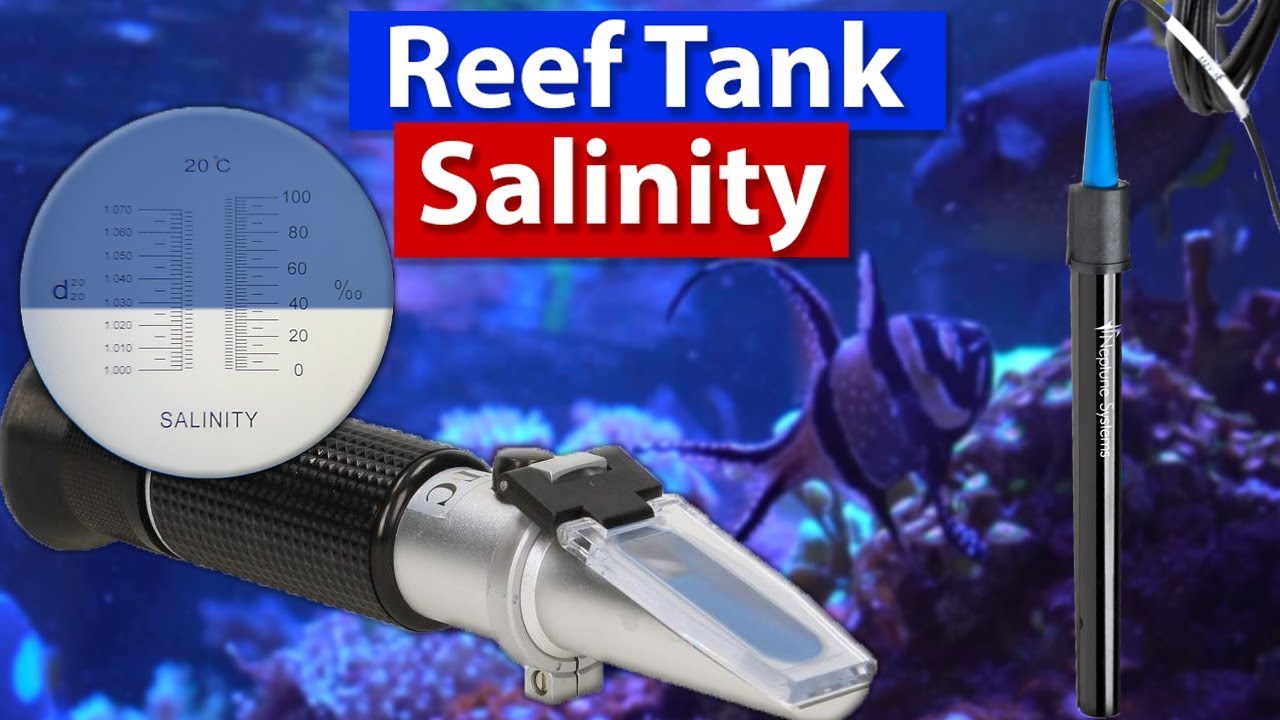
How do you maintain stable salinity in a reef tank?
Direct Answer
You maintain stable salinity in a reef tank by replacing evaporated water with fresh RO/DI water automatically — typically via an auto top-off (ATO) system — and by replacing only salt water during water changes. Salt does not evaporate, only water does, so as the tank evaporates the salinity rises; topping off with fresh water keeps it constant.
Target a specific gravity of about 1.025-1.026 (roughly 35 ppt), measure with a calibrated refractometer, and keep daily swings under about 0.001 specific gravity for healthy corals and invertebrates.
Why Salinity Drifts in the First Place
A reef tank loses water constantly to evaporation, especially with bright lighting, open tops, and air-driven skimmers and pumps. When water evaporates, the dissolved salt stays behind, so the remaining water becomes saltier and salinity climbs. Conversely, every time you add fresh water you dilute it back down.
Left unmanaged, a tank can swing from 1.026 down to 1.024 after a top-off and back up again over a day — a stressful roller-coaster for sensitive corals, clams, and invertebrates that cannot osmoregulate against rapid change. Stability matters more than hitting an exact number: a tank held steady at 1.025 is healthier than one bouncing between 1.024 and 1.027.
Use an Auto Top-Off System
The single most effective tool for stable salinity is an auto top-off (ATO). An ATO uses a sensor (float switch, optical, or both) to detect the water level in the sump and a small pump to add fresh RO/DI water from a reservoir whenever evaporation drops the level. Because it replaces water continuously in tiny amounts, salinity barely moves.
Always top off with pure fresh water, never salt water — adding salt water to compensate for evaporation drives salinity steadily upward. A good ATO has redundant sensors and a failsafe so a stuck float can't overflow or empty the reservoir into the tank.

Reach Kory White, Fractional CRO: 📅 Book a Quick Call · 💼 Kory on LinkedIn · 🏢 CRO Syndicate
Mix and Match Salt Water Correctly for Water Changes
When you do a water change, the replacement salt water must match the tank's salinity. Mix synthetic reef salt with RO/DI water in a dedicated container, run a powerhead and heater, and let it mix and aerate for several hours to a day so it fully dissolves and stabilizes. Measure the new batch with the same refractometer you use on the tank, and adjust to match before adding it.
Removing salty water and replacing it with water at the same salinity keeps the level constant; replacing it with under- or over-salted water shifts the whole tank. Pre-heating the new water to tank temperature also avoids a thermal shock.
Measure Accurately and Often
You cannot manage what you can't measure. A refractometer calibrated with 35 ppt calibration fluid (not just RO water) is the hobby standard for accuracy. Cheap floating hydrometers are imprecise and drift with temperature and bubbles.
Check salinity at least weekly, and calibrate the refractometer periodically. Read the tank, the new salt mix, and the ATO behavior together so you can spot drift early. If you see salinity creeping up over weeks, your top-off is lagging behind evaporation; if it's dropping, you may be overfilling or your ATO reservoir level is affecting the reading point.
Make Changes Slowly
If your salinity is off, correct it gradually. To lower salinity, remove some tank water and add fresh RO/DI in small steps over hours. To raise it, evaporate slowly or add small amounts of higher-salinity mixed water, again over hours, never in one large dose.
Aim to change salinity by no more than about 0.001 specific gravity per hour for established livestock. Sudden salinity shifts are a common cause of coral stress, polyp retraction, and invertebrate loss, so patience protects the tank.
Common Mistakes That Wreck Salinity Stability
Topping off with salt water instead of fresh, using an uncalibrated refractometer or a cheap hydrometer, letting the ATO reservoir run dry, and doing large water changes with mismatched salt mix are the usual culprits. Open-top tanks in dry, air-conditioned rooms evaporate fast and need a larger ATO reservoir.
Dosing certain additives or running a calcium reactor can also subtly affect readings over time, so re-check after any equipment change.
Frequently Asked Questions
What salinity should a reef tank be? Most reef keepers target a specific gravity of 1.025-1.026, equivalent to about 35 ppt or roughly the salinity of natural seawater. Fish-only tanks can run a bit lower (1.020-1.024), but corals and invertebrates do best at full natural-seawater salinity.
Why does my salinity keep rising? Rising salinity almost always means evaporation is outpacing your top-off. Either your ATO isn't keeping up, the reservoir ran dry, or you're manually topping off too infrequently. Salt stays behind as water evaporates, so add fresh water to bring it back down.
Do I top off with fresh or salt water? Always fresh RO/DI water for evaporation top-off, because only water evaporates and the salt remains. Use mixed salt water only for water changes, where you're replacing volume that contains salt.
How accurate are hydrometers versus refractometers? Refractometers are far more accurate and are the hobby standard, especially when calibrated with 35 ppt fluid. Swing-arm and floating hydrometers are cheaper but drift with temperature and trapped bubbles, often reading several points off.
How fast can I change salinity safely? Keep changes gradual — about 0.001 specific gravity per hour for established corals and invertebrates. A large, sudden swing stresses or kills sensitive livestock, so correct drift over hours, not minutes.
Does temperature affect salinity readings? Yes. Salinity readings are temperature-dependent, which is why automatic-temperature-compensated (ATC) refractometers are preferred and why you should calibrate at room temperature with proper fluid. Measure consistently to compare readings fairly.
Sources
- Bulk Reef Supply — Reef salinity and auto top-off guides: https://www.bulkreefsupply.com/
- Reef2Reef — Salinity, refractometer calibration, and ATO discussions: https://www.reef2reef.com/
- Tropic Marin — Reef salt and salinity reference: https://www.tropic-marin.com/
- Neptune Systems — Auto top-off (ATK) documentation: https://www.neptunesystems.com/
- Red Sea — Reef salt and water parameter guidance: https://www.redseafish.com/
- Marine Depot / hobby reference — Maintaining reef salinity: https://www.marinedepot.com/