
What Does Fire Sprinkler and Suppression Work Cost in a Buildout?
 Curated byKory White · Fractional CRO · Maryland
 PULSEKNOWLEDGE LIBRARY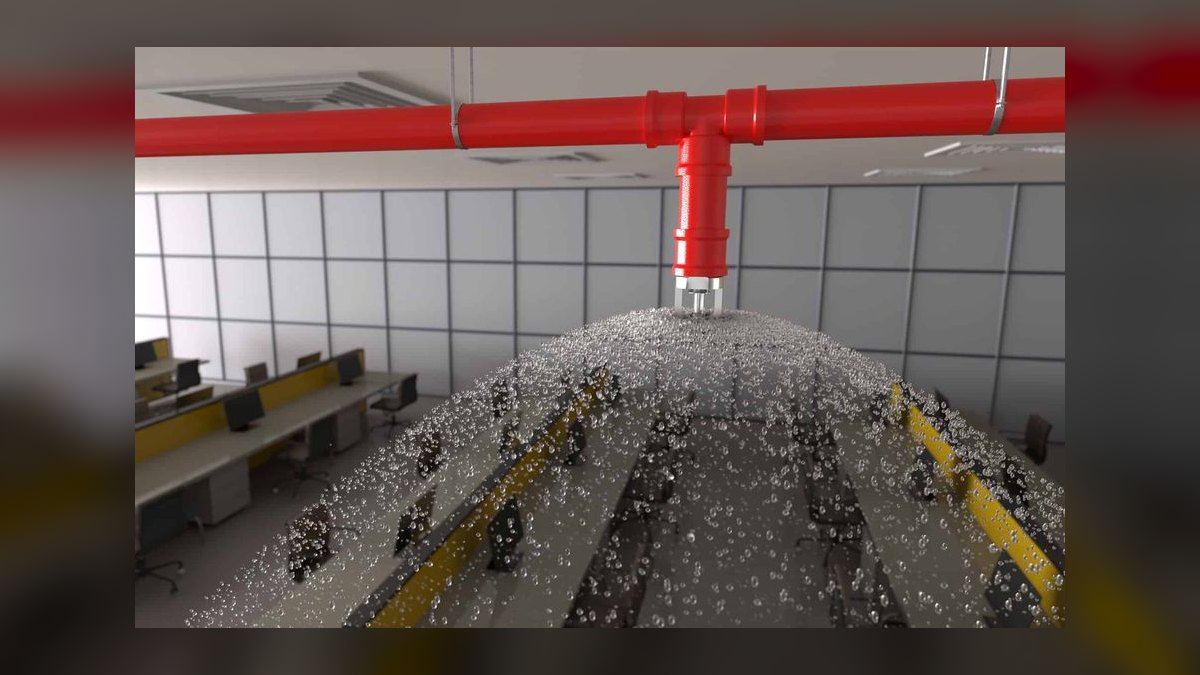
Fire sprinkler work in a buildout typically runs $3–$8 per square foot to modify an existing sprinklered space (relocating heads, re-certifying) and $5–$12 per square foot for a brand-new system, plus a riser, backflow preventer, and alarm tie-in. On 5,000 sq ft that's roughly $15,000–$60,000. Confirm who pays before signing.
What actually drives the sprinkler number
Three scenarios carry very different price tags, and pinning down which one you're in is the first job. An existing system with a minor tenant modification — moving a handful of heads to line up with new walls and the ceiling grid — runs $3–$5 per square foot, because the riser, water supply, and monitoring are already installed and paid for. You're only touching branch lines. An existing system needing major reconfiguration — a new ceiling layout, added rooms, or an occupancy change that shifts your hazard class — runs $5–$8 per square foot, since you're adding heads, redoing hydraulic calculations, and re-certifying the whole design. A full new install in a previously unsprinklered building is the expensive case at $5–$12 per square foot, plus a riser, a backflow preventer ($3,000–$10,000), an alarm tie-in, and potentially a fire pump.
The single biggest lever is hazard classification. NFPA 13 sorts occupancies into Light Hazard (offices, most professional space), Ordinary Hazard (retail, restaurants, most commercial), and Extra Hazard (woodworking, flammable liquids, high-heat industrial). Each step up demands more heads, larger pipe, and more water at the design density. If your intended use bumps the building from Light to Ordinary or Extra hazard, you can trigger a full hydraulic redesign — bigger mains, tighter head spacing, and a recalculated water demand — that was never in the base building's original design. Practitioners get burned here because they price the space on its current classification, not the one their actual use will require. A yoga studio going into a former office is fine; a light-manufacturing tenant taking the same shell is a different system entirely.
The second wildcard is water supply. Every hazard class has a required flow-and-pressure combination the system must deliver at the most remote sprinkler head. If the municipal main can't supply it, you need a fire pump and possibly a storage tank — $30,000 to $150,000 or more. The only way to know before you're committed is a flow test on the existing supply, which any competent fire-protection contractor can arrange in a day or two. Do it during due diligence, not after signing, because inadequate water pressure is the most common reason a "cheap" tenant sprinkler modification quietly turns into a six-figure infrastructure project.
The ceiling, the pipe, and the access nobody quotes
The per-square-foot ranges are honest benchmarks, but the real invoice swings on three physical variables the initial estimate rarely spells out.
Ceiling type sets your baseline. Drop ceilings with acoustic tile are the cheapest to work in — roughly $3–$5 per sq ft to relocate heads — because tiles pop out and the pipe above is fully accessible to the fitter. Hard lids (drywall) add $1–$3 per sq ft for cutting, patching, and repainting after the pipe work is done, and that finish trade is often a separate line you have to coordinate. Exposed open-plenum ceilings can actually shave $0.50–$1 per sq ft since there's no ceiling to disturb, but the aesthetic often forces custom head finishes or pendant drops at $50–$150 per head, which quietly erases the savings on a dense layout.
Pipe material matters more than most tenants realize. Schedule 40 black steel is the commercial standard at $2–$4 per linear foot installed. CPVC — listed for many light-hazard occupancies like offices — runs 30–50% cheaper in both material and labor, around $1.50–$2.50 per linear foot, and installs faster because it solvent-welds instead of threading, but it can't sit within roughly 10 feet of a heat source or in return-air plenums without special listing. Galvanized pipe for corrosive or wet environments (commercial kitchens, natatoriums, parking decks) runs $4–$7 per linear foot. On a 5,000 sq ft job, the steel-versus-CPVC decision alone can move the total by $5,000–$10,000, so it's worth asking the contractor which the design assumes.
Access is the hidden cost killer. A fourth-floor buildout with no freight elevator means pipe and fittings get hand-carried up the stairs, adding $500–$2,000 in labor. Tight corridors, occupied neighboring suites, or after-hours work mandates — routine in medical and financial tenancies where you can't shut down the floor — can push labor rates up 20–50%. A clean, unobstructed job might run 3–5 days on site; a constrained one stretches to 7–10, and every extra day is billed at trade rates. Ask early whether the work has to happen nights or weekends, because that assumption alone can reshape the bid.
Special suppression — when sprinklers aren't the whole answer
Standard wet-pipe sprinklers cover the majority of a buildout, but specific hazards demand dedicated special suppression that operates alongside or instead of them. These systems exist because plain water either can't stop the fire or would destroy what it's protecting, and they're almost always quoted separately from the sprinkler contract.
Commercial kitchen hood suppression (wet chemical, often specified generically as an Ansul-type system) is mandatory over Type I cooking hoods under NFPA 96. A single-hood system covering one appliance line — nozzles, fusible links, manual pull station, gas shutoff — runs $1,200–$2,500 installed, with each additional appliance adding $300–$800. A full restaurant kitchen with three or four hoods and eight to ten appliances lands around $6,000–$15,000, plus $200–$500 for the required semi-annual inspection and periodic recharge.
Clean-agent systems (FM-200, Novec 1230, or inert gases like IG-55) protect server rooms, electrical closets, and archives where water damage is unacceptable. Priced by protected area at roughly $8–$15 per sq ft, a 200 sq ft server room lands near $1,600–$3,000 for the system hardware itself — but the agent is expensive at $50–$200 per pound, and the room needs sealed integrity (rated doors, dampers, gaskets, a passing door-fan test) that can add $2,000–$5,000 in construction. Larger data suites easily reach $15,000–$60,000+ once you count detection, panels, and cylinder banks.
Pre-action systems suit museums, data centers, and cold storage. They require two independent triggers — smoke detection plus a fused sprinkler head — before water is admitted to the pipe, preventing an accidental discharge over irreplaceable contents. At $6–$12 per sq ft, they cost roughly double a standard wet-pipe system because of the detection panel, solenoid valves, and double-interlock piping. Warehouse and rack storage brings its own upgrades: in-rack heads and ESFR (early suppression, fast response) systems raise both cost and water demand, and ESFR in particular often drives the fire-pump decision on its own.
The fire alarm nobody budgets for
Sprinklers and fire alarm are separate systems, separate contractors, and separate permits, and the alarm is the line item tenants forget until the fire marshal refuses to sign off. A new or expanded addressable fire alarm system — pull stations, smoke and heat detectors, horn/strobes, the control panel, and monitoring — runs $2–$6 per square foot. On a 5,000 sq ft space that's $10,000–$30,000 landing entirely outside the number the sprinkler fitter quoted, and it's a genuinely common surprise.
The tie-in to the building's central panel and 24/7 central-station monitoring are ongoing costs of roughly $300–$1,200 per year. Crucially, alarm coverage is driven by occupant load and room count under NFPA 72: if your fit-out subdivides an open floor into offices, conference rooms, and corridors, detector and notification coverage must expand to match the new layout, and the code official will not issue a certificate of occupancy until it does. Strobe placement rules alone can force devices into every room and restroom. Budget the alarm as its own trade with its own permit from the start, or it becomes the surprise that stalls your opening date after everything else is finished.
Engineering, permits, and inspections
The cost that most surprises tenants isn't hardware — it's engineering and permitting, which typically adds 15–25% on top of the fire-protection subtotal. A licensed fire-protection engineer must review the layout and produce stamped shop drawings showing head locations, pipe sizing, hydraulic calculations, and a water-supply analysis. Expect $1,500–$5,000 for a small buildout under 5,000 sq ft and $5,000–$15,000 for larger or more complex space. This is non-negotiable; no jurisdiction lets you install a system off napkin sketches.
Permit fees vary by jurisdiction: budget $200–$1,500 for the sprinkler permit and another $300–$800 for the fire alarm permit when it's tied in. Many cities also levy a plan-review fee of 0.5–2% of the sprinkler portion's construction value. None of this is optional or negotiable — it's the price of a legal, insurable system, and skipping it just means a red-tagged job later.
Testing and inspection close out the work. The final acceptance test — a flow test, alarm test, and two-hour hydrostatic pressure test — is usually inside the contractor's price, but a third-party or fire-marshal inspection may run $500–$2,000 if it isn't bundled. After occupancy, annual inspection and testing runs $300–$800 for a small single-zone system and $1,500–$3,000 for multi-zone or special-suppression setups. These recurring numbers matter because they often become CAM pass-throughs you'll want to cap in the lease before they compound.
Make the landlord pay — and don't get screwed
Fire protection is the murkiest cost-allocation fight in any buildout, and it's won in the lease, not on the jobsite. The governing principle: an upgrade required because the building itself was non-compliant or under-protected is base-building (landlord), while changes driven by your specific floor plan are tenant. Get that distinction written down so a landlord can't dump a base-building deficiency onto your TI budget after you've committed.
Before signing, demand a fire-protection condition report disclosing whether the space is sprinklered, the existing hazard design density, the water flow-test results, the riser and backflow condition, and the current alarm coverage. A space that secretly needs a new riser, backflow, or fire pump can hide $50,000–$150,000 — find it during due diligence, not during construction. Push new systems and water-supply fixes to base building: a new sprinkler system, a fire pump, a backflow preventer, and the base alarm panel are permanent infrastructure that benefit every future tenant, so the landlord should deliver them outright or amortize the cost into rent at 6–9% rather than expecting cash up front.
Make your TI allowance (commonly $40–$90 per square foot) explicitly cover fire-protection modifications, and have the landlord fund and amortize any overage. Turn adequate water flow and pressure into a landlord representation in the lease, so a deficiency that forces a fire pump becomes their cost, not your surprise. Cap controllable CAM at 3–5%, exclude capital fire-system replacements, and reserve an audit right so monitoring and inspection charges can't balloon over the term. Finally, strike or cap the restoration clause — don't agree to demo sprinkler heads, alarm devices, or suppression you installed, since they make the space safer for the next tenant; an uncapped restoration obligation can cost $10,000–$30,000 on exit.
A realistic fire-protection budget
For a 5,000 sq ft restaurant fit-out in an already-sprinklered building, a working budget looks like this: sprinkler head relocation and coverage at $20,000–$40,000; fire alarm expansion at $12,000–$30,000; wet-chemical kitchen suppression at $4,000–$10,000; backflow and riser modifications, if needed, at $3,000–$15,000; and permits, hydraulic calculations, and inspections at $5,000–$15,000. That totals roughly $44,000–$110,000 when the base system already exists — a wide band that mostly tracks how much of the layout changes and how many appliances the kitchen carries.
If the building was unsprinklered, add $25,000–$60,000 for the new system and $30,000–$100,000+ for a fire pump when water supply is inadequate. That swing — potentially doubling or tripling the whole fire budget — is exactly why the condition report and the base-building negotiation come first, before you've signed anything you can't walk back. Price the space for the system it actually needs, not the one on the listing sheet.
Related questions
Is fire sprinkler work always the tenant's responsibility?
No. Work required because the building itself was non-compliant or under-protected is base-building and belongs to the landlord. Only modifications driven by your specific layout — moving heads to match new walls — are genuinely tenant costs. Negotiate the distinction into the lease before signing.
Do I need a fire pump for my buildout?
Only if the municipal water supply can't deliver the flow and pressure your hazard class requires at the most remote head. A flow test during due diligence tells you. When needed, a pump and any storage tank add $30,000–$150,000+, so confirm before signing.
How long does fire protection add to a construction schedule?
The physical sprinkler work on a 5,000 sq ft space is typically 2–5 days, but stamped engineering, permitting, and final inspection commonly add 2–4 weeks. Fire alarm runs on its own permit and timeline, so coordinate both trades early to avoid stalling your certificate of occupancy.
What's the difference between sprinklers and special suppression?
Sprinklers are the general water-based system covering the whole space. Special suppression — kitchen wet-chemical, clean-agent gas, pre-action — protects specific hazards where water is insufficient or destructive. They're separate systems with separate costs, and one space can require several at once.
FAQ
How much does fire sprinkler work cost per square foot in a buildout?
For a tenant fit-out modifying an existing system, expect $3–$8 per square foot to relocate heads, add coverage, and re-certify. A brand-new system in an unsprinklered building runs $5–$12 per square foot plus a riser, backflow preventer, and alarm tie-in.
What factors most affect the total cost of sprinkler modifications?
The largest drivers are hazard classification, whether the water supply is adequate, ceiling type (drop tile versus drywall versus exposed), pipe material, and access constraints. Number of heads relocated, permit fees, and required engineering stamps round out the variance between a low and high quote.
Does the cost include suppression systems like kitchen hoods or clean agents?
No — those are separate. A commercial kitchen wet-chemical hood system typically adds $6,000–$15,000 for a full kitchen, and a clean-agent system for a server room runs $1,600 up to $60,000+ depending on room size and agent type. Budget each independently.
Will the landlord cover any of the sprinkler and alarm costs?
Often, yes — for anything required to bring the base building up to code, plus your TI allowance. New systems, fire pumps, backflow preventers, and the base alarm panel should be pushed to base building or amortized into rent. Layout-driven head moves usually stay tenant.
What hidden costs should I watch for?
Inadequate water pressure forcing a fire pump, a needed new riser or backflow, fire alarm expansion, standpipe modifications, engineering and permit fees at 15–25% of the total, and after-hours labor premiums. Always get a line-item quote covering permits, testing, and engineering stamps.
What ongoing costs come after installation?
Central-station monitoring runs $300–$1,200 per year, and annual inspection and testing runs $300–$800 for a small system, rising to $1,500–$3,000 for multi-zone or special-suppression setups. Kitchen hood systems need a separate periodic inspection and recharge at $200–$500.
Sources
- NFPA 13, Standard for the Installation of Sprinkler Systems
- NFPA 72, National Fire Alarm and Signaling Code
- NFPA 96, Ventilation Control and Fire Protection of Commercial Cooking Operations
- NFPA 2001, Standard on Clean Agent Fire Extinguishing Systems
- U.S. Fire Administration — Codes and Standards Resources
- CBRE — Insights and Research
- Cushman & Wakefield — Insights and Research
- BOMA International — Standards and Resources
Related on PULSE
- [How Do I Terminate a Lease After a Fire or Casualty?](/knowledge/bo0123)
- [How Do I Read a Landlord Work Letter So I Don't Get Screwed?](/knowledge/bo0160)
- [Base Building vs Tenant Work: What Am I Actually On the Hook For?](/knowledge/bo0159)
- [What Does ADA Restroom and Path-of-Travel Work Cost in a Buildout?](/knowledge/bo0156)
This page will be disappearing soon. Save it to your device for $1 — or read it free while it is here.
@Kory-White- · if Venmo asks, the last 4 of my number are 2012
 buildoutsHow Do I Budget a Coffee Roastery Buildout?
 buildoutsHow Do I Budget a Light Manufacturing Buildout?
 buildoutsHow Do I Budget an Escape Room Buildout?
 buildoutsHow Do I Budget a Coffee Shop or Cafe Buildout?
 buildoutsHow Do I Budget a Brewery or Taproom Buildout?
 buildoutsHow Do I Budget a Pet Grooming Buildout?
 buildoutsHow Do I Budget a Florist Shop With a Walk-In Cooler Buildout?
 buildoutsHow Do I Lock in a Lease Renewal 12 Months Before Expiration?
 buildoutsHow Do I Negotiate the Landlord's Construction-Management Fee Down?
 buildoutsDo I Need a Grease Interceptor, and What Does It Cost?