


Can I sublease a space mid-buildout and recover my construction costs in 2027?
Quality
Certified

Sometimes. Recovery depends on your master lease permitting a sublease or assignment, the buildout stage, and market demand. A finished, generic space subleased at a premium can recoup most tenant-improvement costs; an unfinished or specialized one rarely does. Negotiate sublease rights and a recapture-buyout clause before signing, never after construction starts.
The lease clauses that decide whether recovery is even possible
Your ability to sublease mid-buildout and claw back construction spend is written into the master lease long before a single stud goes up. Three provisions do the heavy lifting. The first is the assignment and sublease clause. The worst version gives the landlord an absolute, sole-discretion veto over any transfer; the version you want says consent "shall not be unreasonably withheld, conditioned, or delayed," ideally with a defined turnaround of 10 to 15 business days. A silent or landlord-favorable clause means your subtenant can walk while you wait weeks for an answer.
The second is the recapture clause, and it is the single provision most likely to wipe out your recovery. Recapture lets the landlord respond to your sublease request by simply terminating your lease for that space and re-leasing it directly — often straight to the very subtenant you found. When that happens you lose the rent stream that was going to amortize your improvements, and you typically lose the improvements themselves, which have become part of the real property. If you cannot strike recapture entirely, negotiate a recapture buyout: if the landlord takes the space back, they must reimburse your unamortized tenant-improvement (TI) balance.

The third is a cost-recovery or profit-sharing provision. Many leases require that any "profit" on a sublease — rent collected above your base rent — be split with the landlord, commonly 50/50, sometimes 100% to the landlord. That clause can convert your recovery premium into the landlord's windfall. Push for language that excludes your documented TI costs, brokerage commissions, and free-rent concessions from the profit calculation, so the split only applies to true profit after you have been made whole. Have a commercial real estate attorney redline all three before signing; fixing them mid-construction is nearly impossible because you have lost all leverage.
How far along the buildout is changes everything
The physical stage of construction on the day you decide to exit dictates how much you can realistically recover, and the relationship is not linear. If you move before construction starts, you have the most flexibility and the least sunk cost. You can assign the lease and hand the untouched TI allowance to the incoming tenant, who builds to their own spec. You recover little or nothing in cash because you have spent little, but you also shed future liability cleanly — often the best outcome available.

If you exit mid-construction, after demolition, framing, and mechanical-electrical-plumbing rough-in but before finishes, you are in the weakest position. A prospective subtenant walks a space full of exposed studs, open ceilings, and unfinished systems and sees risk, not value. They cannot occupy it, they cannot easily judge quality, and they know you are motivated. Expect to absorb a meaningful share of what you have spent — commonly in the range of 30% to 50% of out-of-pocket costs — through discounted rent, a completion credit, or agreeing to finish the work on your dime.
If you exit after substantial completion — floors down, lights on, HVAC balanced, a certificate of occupancy in hand — you are selling a finished, usable product. Now you can market at or near market rent and structure a premium that recaptures TI over the remaining term. The decisive variable is how generic the space is. A neutral open plan with standard finishes, a reception area, and a few conference rooms appeals to the widest subtenant pool. A specialized buildout — a wet lab, a commercial kitchen, a raised-floor data hall, a medical suite with lead-lined walls — narrows your audience to near zero and is very hard to recover on, because the next tenant would have to demolish work you paid for.
The practical lesson: if a sublease is even a possibility, steer the design toward flexible, market-standard finishes and defer the most bespoke, tenant-specific work as long as you can. Every dollar you sink into something only you would want is a dollar you are least likely to see again.
Building a cost-recovery model you can actually defend

Before you name a number to any broker or subtenant, build a model that separates recoverable investment from sunk cost, because those are not the same thing. Start with total construction cost, splitting hard costs (demolition, framing, drywall, MEP, flooring, finishes, fixtures) from soft costs (architecture and engineering fees, permits, project management, expediting). Add both to get your gross spend.
Now subtract the landlord's TI allowance. That money was never yours to recover — it was the landlord's contribution, and it stays with the space. If the landlord funded $50 per square foot on a 12,000-square-foot suite, that is $600,000 you do not need to claw back. What remains after subtracting the allowance is your out-of-pocket investment, and that is the figure your recovery strategy targets.
Next, calculate the unamortized balance using straight-line amortization over the lease term. Suppose your out-of-pocket investment is $200,000 on a five-year (60-month) lease. You are amortizing roughly $40,000 per year, about $3,333 per month. If you sublease at the 18-month mark, you have consumed $60,000 of value and carry an unamortized balance of $140,000 across the 42 months remaining. To recover that, your sublease rent must cover your base obligation plus an incremental $40,000 per year — on 12,000 square feet, that is a premium of roughly $3.33 per square foot per year the market must be willing to bear. If comparable subleases are asking below that, the gap is your write-down.

Then subtract the transaction costs that eat into net recovery. Brokerage commissions on a sublease commonly run 4% to 6% of total sublease rent and are usually paid up front by you as the sublandlord. Legal fees for drafting and negotiating the sublease, landlord consent, and any subordination agreements add several thousand dollars more. Free-rent concessions you offer to close the deal are real dollars too. Layer all of it into the model. Realistically, plan for 60% to 90% recovery of out-of-pocket cost when the space is generic, finished, and the sublease market is tight, and 20% to 50% when the buildout is specialized, unfinished, or the market is soft. A model that ignores commissions and concessions will overstate recovery and lead you to reject an offer you should have taken.
Beating the landlord's recapture right
Recapture deserves its own strategy because it is where most mid-buildout recovery dies. When a landlord exercises recapture, they terminate your lease for the space, take back the improvements, and re-lease directly — capturing your subtenant and your finish work while cutting you out of the rent stream that was supposed to make you whole. Assume the clause exists until you have read the lease and confirmed otherwise.
Your first move, ideally made before signing, is a recapture buyout: if the landlord recaptures, they must pay your unamortized TI balance, and sometimes a moving or relocation allowance. Framed correctly, this is a fair trade — the landlord gets a creditworthy replacement tenant and full control of the space, and you get your unrecovered investment back rather than forfeiting it. Many landlords will accept some version of this because it costs them nothing if they choose not to recapture.

A second tactic is a right of first refusal on the sublease terms rather than an unconditional recapture. Under this structure the landlord may only recapture if they match your proposed sublease economics, including compensating you for TI. That removes their incentive to recapture purely to harvest your improvements. A third, more aggressive option is to structure occupancy as a license or management arrangement rather than a formal sublease, which in some jurisdictions and lease texts does not trigger the recapture clause — but this is fact-specific and legally risky, so it only works with counsel and a careful read of both the lease and local law. If a landlord insists on unconditional recapture with no buyout, treat mid-buildout subleasing as a genuine gamble and price that risk into every downstream decision.
Marketing an unfinished or half-finished space
Selling space that is not done requires a different pitch than a turnkey sublease, and honesty is both the ethical and the practical choice because any serious subtenant will run a title search and a physical inspection. Lead with the concrete advantages: a below-market base rent because you are motivated, the ability to customize the remaining buildout to their own needs, and — critically — access to the landlord's TI allowance you have already negotiated, which spares them a fight they would otherwise have to have from scratch. A generous, partly unused allowance is often your strongest selling point.
Assemble a marketing package that removes uncertainty rather than hiding it. Include current floor plans with the buildout stage clearly marked, a budget breakdown of what has been spent and what remains, the exact TI allowance terms and any unused balance, permit status (pulled permits are a real time-saver and a selling point), and a landlord consent letter or at least confirmation that a sublease is permitted. Disclose any contractor or mechanic's liens proactively; a surprise lien discovered late will kill a deal and your credibility at once.
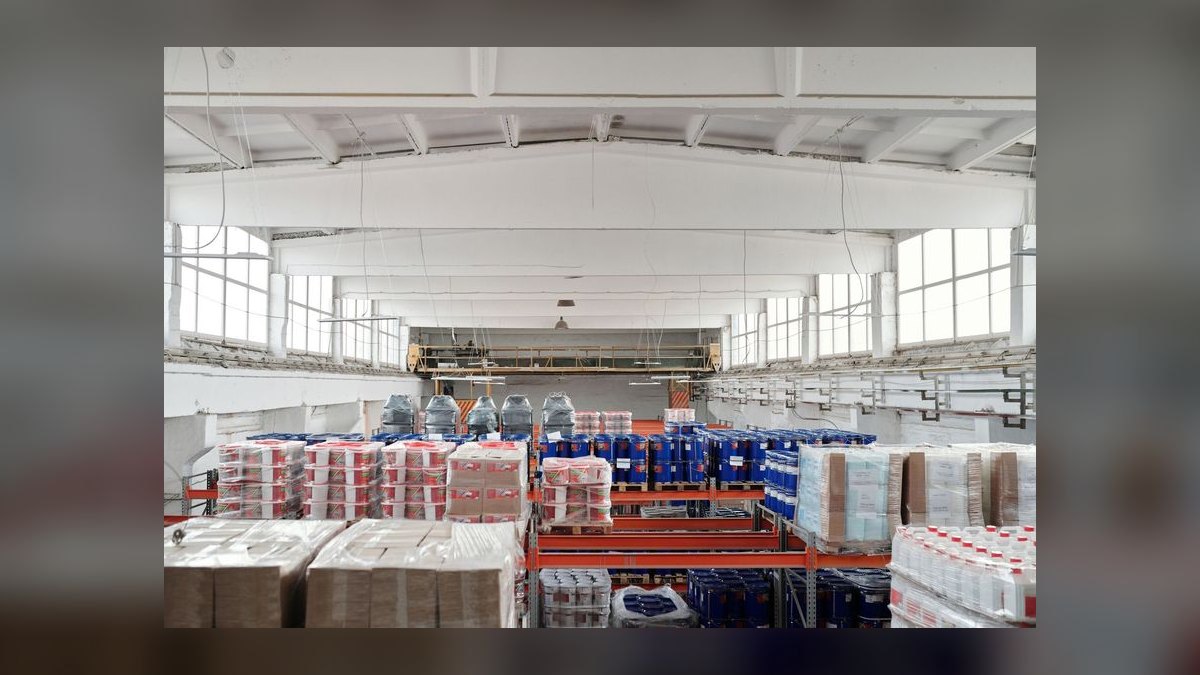
Target the subtenants for whom "unfinished but fast" is a feature: startups scaling quickly, companies in an expansion crunch, pop-ups, or firms whose own lease is expiring and who cannot wait out a ground-up buildout. Your space, precisely because it is partway done with permits in hand, can be delivered faster than a raw shell. Engage a broker who specializes in sublease and short-term product; they maintain lists of exactly these tenants. To close, consider a targeted rent abatement for the first few months to offset the subtenant's completion costs, or a completion credit capped at a set dollar figure. The goal throughout is to make the subtenant feel they are getting a deal, not inheriting your problem.
The tax treatment that quietly changes your net recovery
Subleasing mid-buildout carries tax consequences that can meaningfully change what you actually keep, so model the after-tax result, not just the gross. Generally, your construction costs are capital improvements that you depreciate over a statutory recovery period rather than deducting immediately. If the sublease effectively ends your economic interest in improvements you have not fully depreciated, you may be able to recognize the remaining undepreciated balance, but the mechanics depend on how the transaction is structured and on your specific facts.

The character of what you receive matters too. Rent you collect above your base obligation is generally ordinary income, taxed at your marginal rate, whereas a payment structured as reimbursement for your unamortized improvement cost may be treated differently. There is also the question of the TI allowance itself: depending on how it was documented and whether it was spent on qualifying improvements, an allowance can carry its own income-recognition consequences. Because outcomes hinge on documentation and current tax rules, the practical move is to bring a tax professional in before you sign the sublease, not after — the difference between a well-structured and a poorly structured deal can be the difference between a clean recovery and an unexpected tax bill. If you previously performed a cost-segregation study, revisit it, since accelerated depreciation already taken changes your remaining basis and therefore the size of any loss or gain on exit.
Related questions
Is an assignment better than a sublease for recovering costs?
Often, yes. An assignment transfers your entire lease to a new tenant, and you can negotiate a lump-sum buyout in which the assignee pays for your TI investment directly. Assignments sometimes face fewer landlord restrictions and remove your ongoing liability, whereas a sublease keeps you on the hook to the landlord.
What happens to the landlord's TI allowance if I sublease?
The allowance stays with the space because the landlord funded improvements to their own property. Your subtenant benefits from the work, and you do not repay the funded portion. Any unused allowance generally reverts to the landlord unless your lease says otherwise, so confirm the exact terms.
Can I sublease only part of the space mid-buildout?
Yes, partial subleases are common but more complex. You remain liable for the whole premises, and you typically must physically demise the subleased area — separate walls, entrances, HVAC zones, and sometimes metering — which adds cost and time. Factor that expense into your recovery math before committing.
Do I have to tell my landlord I'm subleasing during construction?

Almost always. Standard leases require written notice and usually landlord consent for any sublease or assignment. Proceeding without required consent can be a lease default that lets the landlord terminate and keep your improvements, so follow the notice and approval process exactly as written.
What if the subtenant stops paying rent?
Under a sublease you remain primarily liable to the landlord for all rent and obligations under the master lease. If the subtenant defaults, you must cover the shortfall or face eviction and loss of your improvements. Require a security deposit and, where possible, a guaranty to reduce that exposure.
FAQ
What if my lease flatly prohibits subleasing? Then you cannot sublease without the landlord's written consent, and if the clause is absolute they can refuse for any reason. Your realistic path is negotiating a lease amendment, which usually costs you something — a consent fee, a rent bump, or a share of sublease profit.
Can I recover costs through a lease buyout instead of subleasing? Yes. Some landlords will pay you a negotiated lump sum to surrender the lease and space, especially in a rising market where they can re-lease at a higher rate. A buyout can recover part of your unamortized TI and eliminate your future liability in one clean transaction.

How is my recoverable amount actually calculated? Take total construction cost, subtract the landlord's TI allowance to get your out-of-pocket investment, then amortize that straight-line over the lease term to find the unamortized balance at your exit date. Subtract broker commissions, legal fees, and any concessions to reach realistic net recovery.
Does the buildout stage really change recovery that much? Yes, dramatically. A pre-construction assignment recovers little cash but sheds liability; a mid-construction exit on an unfinished space commonly recovers only 30% to 50%; a substantially complete, generic space can recover 60% to 90% through a rent premium. Specialized finishes push recovery toward zero at any stage.
Will the landlord's recapture right block my recovery? It can. Recapture lets the landlord terminate your lease and re-lease directly, capturing your subtenant and improvements. Protect yourself with a recapture buyout requiring the landlord to pay your unamortized TI, or a right of first refusal that forces them to match your terms.
Are there tax consequences to subleasing mid-buildout? Yes. Construction costs are generally capitalized and depreciated, above-base sublease rent is typically ordinary income, and the TI allowance can carry its own treatment. Outcomes depend on your facts and current rules, so consult a tax professional before signing rather than after.
Sources
- https://www.irs.gov/publications/p946 — IRS Publication 946, How to Depreciate Property
- https://www.nar.realtor/commercial — National Association of Realtors, commercial real estate resources
- https://www.boma.org — Building Owners and Managers Association, lease and operations standards
- https://www.naiop.org — NAIOP, Commercial Real Estate Development Association
- https://www.aia.org/resources/6076-contract-documents — American Institute of Architects, construction contract documents
- https://www.law.cornell.edu/wex/sublease — Cornell Legal Information Institute, sublease overview
- https://www.iccsafe.org — International Code Council, building codes and permitting
- https://www.sba.gov/business-guide/manage-your-business/buy-lease-commercial-space — U.S. Small Business Administration, leasing commercial space
Related on PULSE
- How Do I Sublease Excess Office Space I'm Not Using?
- How Do I Sublease My Space to Cut My Rent?
- Can I require the landlord to escrow my TI allowance before construction begins?
- What's the best way to handle conflict with the landlord's project manager during construction?
- What happens if the landlord's construction inspects my buildout and finds violations?
- How do I know if my construction allowance actually covers the full buildout scope?
This page will be disappearing soon. Save it to your device for $1 — or read it free while it is here.
@Kory-White- · if Venmo asks, the last 4 of my number are 2012
This page is gone.
This one is off the shelf now. $1 keeps it on your phone for good — the whole page, pictures and diagrams included.
 pulse-buildoutsIs Buildouts worth it in 2027?
 boHow do I get the landlord to fund my data and power floor boxes in 2027?
 boCan I get the landlord to reimburse my moving and storage costs during the buildout in 2027
 boCan I get a landlord contribution for my move costs after the buildout finishes in 2027
 boCan I require the landlord to pre-approve my architect before signing the lease in 2027
 boHow do I terminate a lease early if the landlord fails to deliver the buildout as promised in 2027?
 boHow do I negotiate a lease that allows me to recoup buildout value upon sublease in 2027
 boHow do I handle a landlord who refuses to allow weekend or night construction in 2027?
 boHow do I negotiate a cap on my out-of-pocket costs for the buildout in 2027?
 pulse-buildoutsTop 10 best Buildouts options in 2027