
Best Volvo Models in 2027
 Curated byKory White · Fractional CRO · Maryland
 PULSEKNOWLEDGE LIBRARY
The best Volvo in 2027 is the EX90, a three-row electric flagship with roughly 300 miles of range, seven seats, and the brand's most advanced safety hardware, starting near $80,000. The EX30 is the best value at about $36,000, and the plug-in hybrid XC60 near $48,000 remains the most broadly recommendable choice.
The outcome you should expect from a 2027 Volvo
Buying a Volvo in 2027 is not the same transaction it was five years ago, and the outcome you should expect has shifted accordingly. The brand has moved from a gas lineup with a few electrified options to an electrified lineup with a few gas holdouts. That reshapes what you actually get: quieter cabins, lower running costs, more software surface area, and a slightly different service relationship with the dealer.
Concretely, expect three things. First, powertrain choice now drives price more than trim level does. An EX30 at roughly $36,000 and an EX90 at roughly $80,000 are separated by more than $40,000, and almost all of that gap is battery size, motor count, and platform, not leather grade. Within a single model, the plug-in hybrid T8 versions of the XC60 and XC90 sit $8,000 to $12,000 above the mild-hybrid B5 and B6 versions, and that premium buys roughly 30 to 35 miles of electric-only range plus a combined output near 455 horsepower.
Second, expect the interior experience to be more uniform across the range than the price suggests. Volvo has standardized on a Google-based infotainment system with built-in Maps, Assistant, and Play Store access across nearly every model. An EX30 owner and an EX90 owner navigate the same menus. That is a genuine benefit if you dislike learning a new system with every car, and a genuine frustration if you dislike touchscreen-first controls, because the EX30 in particular consolidates almost every function — including mirror adjustment and defrost — into the single central display.

Third, expect safety to be the least variable attribute in the lineup. Volvo has historically posted strong results in IIHS and Euro NCAP testing across body styles, and the 2027 range continues to ship a comprehensive driver-assistance suite as standard rather than as a package. The EX90 adds a roof-mounted lidar sensor feeding its assistance system, which is the most visible hardware differentiator, but a base XC40 is not a materially less safe car than a loaded EX90 in ordinary crash terms.
What you should *not* expect is a bargain. Volvo prices against BMW, Audi, and Mercedes rather than against Toyota and Honda, and while the brand often undercuts a like-for-like German rival by a few thousand dollars, the gap is measured in single-digit percentages, not in segments. The EX30 is the one genuine outlier — it undercuts most premium EVs by a meaningful margin — and it does so by being physically small, not by being cheap to build.
What drives the outcome: powertrain, size, and charging access
The single largest determinant of whether you are happy with a 2027 Volvo is not which badge you pick — it is whether your charging situation matches the powertrain you buy. Everything else is downstream of that.

Consider the arithmetic. A full EV like the EX40, rated at an EPA-estimated 290-plus miles, is superb if you park in a garage with a Level 2 charger and wake up to a full battery every day. The same car is merely adequate if you street-park in an apartment district and rely on public DC fast charging, where you will pay a per-kWh rate that can approach or exceed the cost-per-mile of gasoline, and where the 10-to-80-percent charge window takes roughly half an hour on a good station. The car did not change. The infrastructure did.
The plug-in hybrids invert this calculation. An XC60 T8 with roughly 35 miles of electric range covers the median American daily commute entirely on electricity, then reverts to a conventional gas powertrain for the twice-yearly road trip. If you charge it nightly, you approach EV running costs on most days. If you never plug it in, you are hauling a battery pack around as dead weight and getting worse fuel economy than the mild-hybrid B5 would have delivered — a well-documented failure mode among plug-in hybrid owners who bought for the tax treatment rather than the use case.
Size drives the second-order effects. The EX30 is genuinely small — closer to a subcompact crossover than to the XC40 — which makes it excellent in dense cities and cramped in a family of four with luggage. The EX90 and XC90 are three-row vehicles where the third row is usable for children and short adults on short trips, as is true of nearly every mid-size three-row SUV. If you need a third row that adults tolerate for hours, the honest answer is a minivan or a full-size SUV, neither of which Volvo sells.
The other driver worth naming is depreciation exposure, which behaves differently across the two halves of the lineup. Electric vehicles as a class have shown steeper early depreciation than comparable combustion vehicles, driven by rapid model refreshes, battery-technology improvement, and shifting incentive structures. That does not make an EV a bad purchase; it makes a *lease* a structurally more defensible way to buy one, because the residual risk sits with the lessor rather than with you. Conversely, the gas and mild-hybrid XC40, XC60, and the Cross Country wagons behave like conventional luxury vehicles on the used market — predictable, well-understood, and less exposed to a technology cliff.

Benchmarks and realistic ranges across the lineup
Here is what the 2027 range actually delivers, model by model, in terms a buyer can act on.
EX90 — the electric flagship. Roughly a 111-kWh battery producing an EPA-estimated 300-plus miles of range, with the dual-motor Twin Performance configuration making around 510 horsepower. Seating for up to seven across three rows. DC fast charging from 10 to 80 percent in approximately 30 minutes. Starting price near $80,000. Cross-shop the BMW iX and Mercedes EQS SUV; the Volvo's argument is restraint and family usability rather than outright drama.
EX30 — the value pick. The single-motor extended-range configuration is EPA-estimated at 250-plus miles; the dual-motor Performance version reaches 60 mph in roughly 3.4 seconds, which is genuinely quick for anything near its price. Minimalist cabin built around one central touchscreen, with recycled materials used extensively. Starting around $36,000. Its natural comparisons are small electric crossovers from Mini and Kia rather than anything German.

EX40 and EC40 — the compact electric pair. Formerly the XC40 Recharge and C40 Recharge. Single-motor versions rated near 290 miles; twin-motor all-wheel-drive versions producing around 402 horsepower. The EX40 starts around $54,000, the coupe-roofed EC40 around $56,000. The EC40 trades some rear headroom and cargo height for a sportier profile; mechanically they are the same car. Choose on shape, not on spec.
XC60 — the volume seller. Mild-hybrid B5 at about 247 horsepower, or plug-in hybrid T8 at a combined 455 horsepower with roughly 35 miles of electric-only range. Starting around $48,000. Competes with the BMW X3 and Audi Q5. This is the model most buyers should shortlist first, because it is the least compromised across every dimension a mainstream buyer cares about.
XC90 — the hybrid three-row. Plug-in hybrid T8 at a combined 455 horsepower with roughly 32 miles of electric range, plus a mild-hybrid alternative. Seats up to seven. Starting around $60,000. Competes with the Audi Q7 and BMW X5. This is the answer for a family that wants three rows and is not ready to depend on charging.
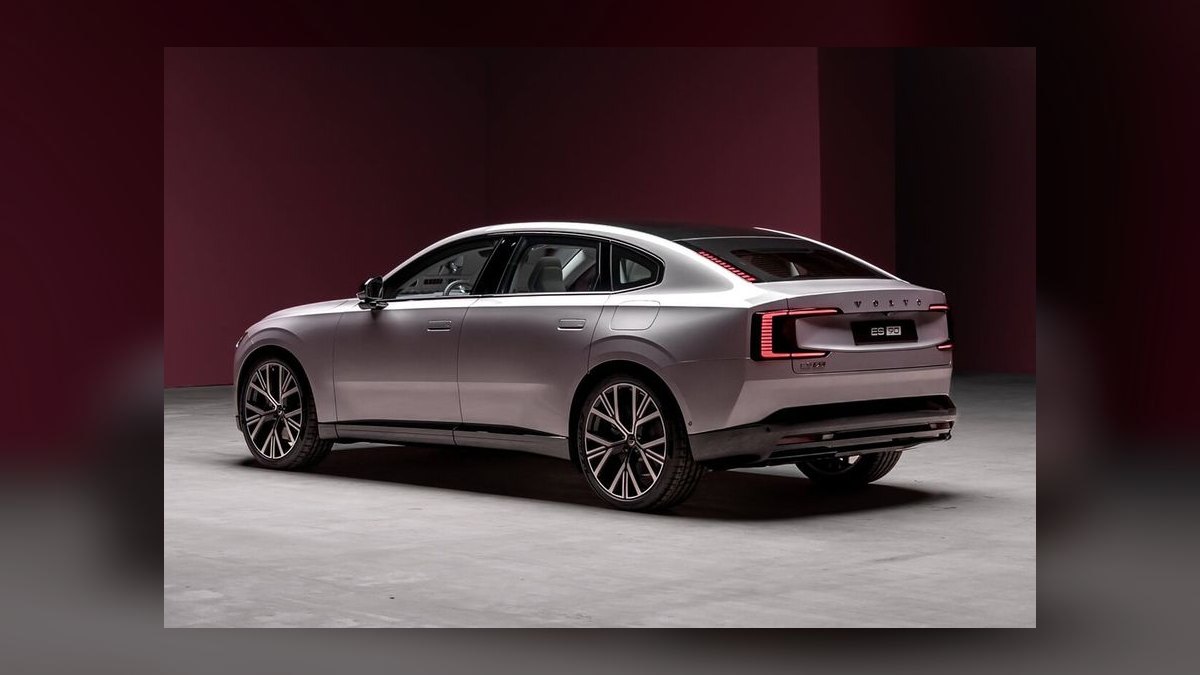
XC40 — the affordable gas entry. Mild-hybrid B4 at about 194 horsepower, B5 at about 247 horsepower, eight-speed automatic, available all-wheel drive. Starting around $40,000. It is small, easy to park, and the cheapest way into the brand with a combustion engine.
S60 — the sedan. Mild-hybrid B5 at about 247 horsepower or plug-in hybrid T8 at a combined 455 horsepower. Starting around $43,000. Competes with the BMW 3 Series and Audi A4, and undercuts both on price while trading some steering feel for ride comfort.
V60 Cross Country and V90 Cross Country — the wagons. The V60 CC uses the S60 platform with raised ride height, body cladding, and standard all-wheel drive, paired to the B5 mild-hybrid at about 247 horsepower, starting around $49,000. The V90 CC steps up to a B6 mild-hybrid at about 295 horsepower with substantially more rear-seat and cargo space, starting around $63,000. Both are low-volume, frequently order-only propositions.

A few calibration notes on those numbers. EPA range figures are laboratory results, not promises. Real-world range commonly runs 10 to 20 percent below the sticker in cold weather, at sustained highway speeds above 70 mph, or with a roof box installed — and all three at once can cost more than that. Budget for the EX90's 300 miles to behave like 240 to 260 on a January interstate run. Horsepower figures for plug-in hybrids are combined outputs, available only when the battery has meaningful charge; a depleted T8 is noticeably slower than the brochure figure. And starting prices exclude destination, options, and dealer adjustment; the practical transaction price on a mid-trim XC60 typically lands several thousand dollars above the advertised base.
Risks, edge cases, and failure modes
The most common way a Volvo purchase goes wrong in 2027 is a charging mismatch — buying a full EV without home charging, or buying a plug-in hybrid and never plugging it in. Both are self-inflicted and both are avoidable with an honest audit of where the car sleeps. Before signing, answer one question: can you install a 240-volt outlet where you park, and what will the electrician charge? If the answer is "no" or "several thousand dollars and a landlord conversation," bias toward the mild-hybrid models.
The second failure mode is software immaturity on early-production electric models. New EV platforms across the industry — not Volvo alone — have shipped with infotainment bugs, over-the-air update dependencies, and driver-assistance features that arrive after delivery rather than at delivery. The practical mitigations are ordinary: prefer the second or third model year of a given platform if you are risk-averse, read owner forums for the specific build month you are considering, and treat any feature promised as a future OTA update as marketing rather than as equipment you have paid for.

A third, quieter risk is touchscreen-consolidated controls. The EX30 in particular routes functions that used to be physical — mirrors, climate detail, some lighting — through the central display. Some drivers adapt in a week. Others find it a permanent daily irritation. This is not a spec-sheet issue; it is only discoverable on a long test drive, ideally at night and in the rain, which is exactly when the ergonomics matter most.
Fourth: the third row reality check. Both the EX90 and the XC90 seat seven on paper. In practice the third row in a mid-size SUV suits children and short trips. Families who regularly carry six or seven people for hours are better served elsewhere, and discovering that three months after purchase is an expensive lesson.
Fifth: wagon and sedan availability. The V60 Cross Country, V90 Cross Country, and S60 are low-volume products in North America. Expect thin dealer inventory, limited color and option combinations on the lot, and a factory order with a multi-month wait if you want a specific build. If you are a wagon devotee, this is a planning problem rather than a dealbreaker — but plan for it.

Sixth: incentive volatility. Electric-vehicle purchase incentives at the federal, state, and utility level change on political timelines, not on shopping timelines, and eligibility often turns on assembly location, battery sourcing, MSRP caps, and buyer income. Never let a projected incentive be the deciding factor between two vehicles. Verify current eligibility on the official government sources at the moment of purchase, and treat any credit as a discount you receive rather than one you have counted on.
Finally, an edge case worth naming: towing and roof loads punish EVs disproportionately. An electric SUV towing near its rated capacity or carrying a loaded roof box can lose a large fraction of its range — a far steeper penalty, proportionally, than a comparable gas vehicle suffers in fuel economy. If you tow a boat or a small camper more than occasionally, a plug-in hybrid XC90 or a mild-hybrid model is the more honest choice, regardless of how appealing the EX90's specification looks on paper.
A practical plan for choosing and buying
Work the decision in stages rather than starting at the dealership. The order matters, because each stage eliminates options and narrows the test-drive list to something manageable.
Stage one — audit the use case. Write down your actual daily mileage for the last two weeks, not your estimate. Note the longest trip you take more than twice a year. Count the number of people you carry on a typical week versus a peak week. Confirm whether you can charge at home, at work, or neither. This takes twenty minutes and eliminates roughly half the lineup immediately.

Stage two — pick the powertrain before the model. If home charging is available and your longest routine trip is inside 250 miles, you are shopping the EX-series. If charging is unavailable but your daily mileage is low and you want efficiency, you are shopping the T8 plug-in hybrids. If neither applies, you are shopping the mild-hybrid B4, B5, and B6 models. Do not shop across all three groups simultaneously; the comparison becomes incoherent.
Stage three — pick the body and size. Within your powertrain group, choose on seats, cargo, and footprint. Two rows and a tight parking situation points to EX30 or XC40. Two rows and more space points to EX40, EC40, or XC60. Three rows points to EX90 or XC90. A preference for driving dynamics over ride height points to S60 or the Cross Country wagons.
Stage four — cross-shop deliberately. Drive the Volvo against exactly one credible rival, back to back on the same day if possible: EX90 against the BMW iX, XC60 against the Audi Q5 or BMW X3, S60 against the 3 Series, EX30 against a small electric crossover from Mini or Kia. Same-day comparison is far more informative than two drives a week apart, because your memory of steering weight and seat comfort decays fast.
Stage five — model the total cost, not the payment. Build a five-year picture: purchase price plus destination, financing or lease cost, insurance quote (get an actual quote — EV insurance premiums are frequently higher than buyers expect), electricity or fuel at your local rate, scheduled maintenance, and a realistic residual. An EX30 with a low purchase price and cheap home charging can beat an XC40 on total cost even if the monthly payment looks similar. Conversely, a plug-in hybrid that never gets plugged in loses on every line.
Stage six — decide lease versus buy on residual risk. Given how quickly electric-vehicle technology and pricing have moved, leasing a full EV shifts residual-value risk onto the lessor, which is worth real money in a fast-moving segment. Buying makes more sense on the mild-hybrid and plug-in hybrid models, whose used-market behavior is well understood.
One adjacent note that pays off later: the same framework applies when you shop the *used* Volvo market. The model-year rankings for the XC60, XC90, XC40, S60, and V60 turn on the same variables — powertrain generation, infotainment platform, and whether a given year sat early or late in its production run. A buyer who understands why the 2027 lineup is arranged the way it is will read a used listing far more accurately.
Related questions
Which Volvo has the longest electric range in 2027?
The EX90 leads the lineup at an EPA-estimated 300-plus miles from roughly a 111-kWh battery. The EX40 and EC40 follow near 290 miles, and the extended-range EX30 is rated at 250-plus miles. Real-world figures typically run 10 to 20 percent lower in cold weather or at sustained highway speeds.
Is the XC60 or the XC90 the better family Volvo?
The XC60 if you have two rows' worth of people; the XC90 if you genuinely need a third row. The XC60 is easier to park, cheaper by roughly $12,000, and drives more nimbly. The XC90's third row suits children on shorter trips rather than adults on long ones.
Does Volvo still sell wagons in the US in 2027?
Yes, as the V60 Cross Country and the larger V90 Cross Country — both raised, clad, all-wheel-drive estates rather than low-slung wagons. They are low-volume products, so dealer inventory is thin and a factory order with a wait is common if you want a specific configuration.
Should I buy the EX30 or wait for a bigger Volvo EV?
If your driving is urban and your household is small, the EX30 at roughly $36,000 is the strongest value in the range. If you regularly carry four adults with luggage or tow anything, step up to the EX40 or EX90 — the EX30's compact footprint is a real constraint, not a marketing distinction.
How does Volvo pricing compare to BMW and Audi?
Volvo generally undercuts a like-for-like German rival by a few thousand dollars rather than by a segment. The gap is widest at the EX30's entry point, where it substantially undercuts most premium electric crossovers, and narrowest at the EX90, which prices squarely against the BMW iX and Mercedes EQS SUV.
FAQ
Are all Volvo models fully electric in 2027?
No. The 2027 lineup mixes fully electric models — the EX90, EX30, EX40, and EC40 — with plug-in hybrid and mild-hybrid versions of the XC90, XC60, XC40, S60, and the Cross Country wagons. The brand has stated an electric direction, but buyers without charging access still have combustion and plug-in hybrid options across most body styles.
How much real-world range does the EX90 actually deliver?
The EPA estimate is 300-plus miles depending on configuration. In practice, expect 10 to 20 percent less in cold weather, at sustained speeds above 70 mph, or with a loaded roof box — so plan around 240 to 260 miles on a winter highway run. Fast charging from 10 to 80 percent takes roughly half an hour on a capable DC station.
Is the EX30 a genuine value or just a small car with a low price?
Both, honestly. At roughly $36,000 it undercuts most premium electric crossovers by a meaningful margin while delivering Volvo's safety suite, the same Google-based infotainment as the flagship, and — in dual-motor Performance form — a sub-3.5-second sprint to 60 mph. The trade-off is real interior space and a touchscreen-consolidated control layout that not every driver adapts to.
Which plug-in hybrid Volvo makes the most sense?
The XC60 T8, starting around $48,000. Its roughly 35 miles of electric range covers a typical daily commute, the combined 455-horsepower output is more than adequate, and it is the most broadly usable size in the lineup. The XC90 T8 near $60,000 makes the same case for buyers who need a third row.
Are 2027 Volvos reliable?
Volvo has generally landed in the average to above-average band, with variation by model and model year. Electric powertrains have fewer wear items than combustion ones, which helps, but new EV platforms across the industry have shipped with software and infotainment issues in their first production year. Checking a specific model year's record before buying is worthwhile.
Should I lease or buy a Volvo EV?
Leasing is the more defensible structure for a full EV, because electric-vehicle residual values have moved quickly and the lessor absorbs that risk. Buying makes more sense for the mild-hybrid and plug-in hybrid models, whose used-market behavior is predictable. Verify any purchase incentive's current eligibility at the moment of signing rather than assuming it applies.
Sources
- https://www.volvocars.com/us/
- https://www.fueleconomy.gov/
- https://www.caranddriver.com/volvo
- https://www.motortrend.com/cars/volvo/
- https://www.edmunds.com/volvo/
- https://www.kbb.com/volvo/
- https://www.iihs.org/ratings
- https://www.consumerreports.org/cars/volvo/
- https://www.euroncap.com/en
Related on PULSE
- [Best Volvo XC90 Model Years (Ranked)](/knowledge/ca0657)
- [Best Volvo XC60 Model Years (Ranked)](/knowledge/ca0658)
- [Best Volvo XC40 Model Years (Ranked)](/knowledge/ca0659)
- [Best Volvo S60 Model Years (Ranked)](/knowledge/ca0660)
- [Best Volvo V60 Model Years (Ranked)](/knowledge/ca0661)
- [Best Acura Models in 2027](/knowledge/ca0377)
This page will be disappearing soon. Save it to your device for $1 — or read it free while it is here.
@Kory-White- · if Venmo asks, the last 4 of my number are 2012
 pulse-carsBest Ford EcoSport Model Years (Ranked) in 2027
 pulse-carsBest Used Off-Road SUVs Under $30,000 in 2027 (Ranked)
 pulse-carsTop 10 Mid-Size Sedans 2027 — Best Overall + Best Value
 pulse-carsTop 10 Hot Hatchbacks 2027 — Best Overall + Best Value
 pulse-carsBest Used Wagons Under $40,000 in 2027 (Ranked)
 pulse-carsBest Nissan Titan Model Years (Ranked) in 2027
 pulse-carsBest Chevrolet Equinox Model Years (Ranked) in 2027
 pulse-carsTop 10 Luxury Sedans in 2027
 pulse-carsTop 10 SUVs 2010 — Best Overall + Best Value
 pulse-carsTop 10 Hybrid Trucks 2027 — Best Overall + Best Value