


Top 10 Soundbars — Best Overall + Best Value in 2027
Quality
Certified

The 10 best soundbars are ranked below on measured performance, build quality, price, and how each one actually holds up in daily use rather than how it reads on a spec sheet. Each pick lists what it costs, who it suits, and what it gives up against the one above it, so the list can be read straight down without doubling back.
1Samsung HW-Q990D
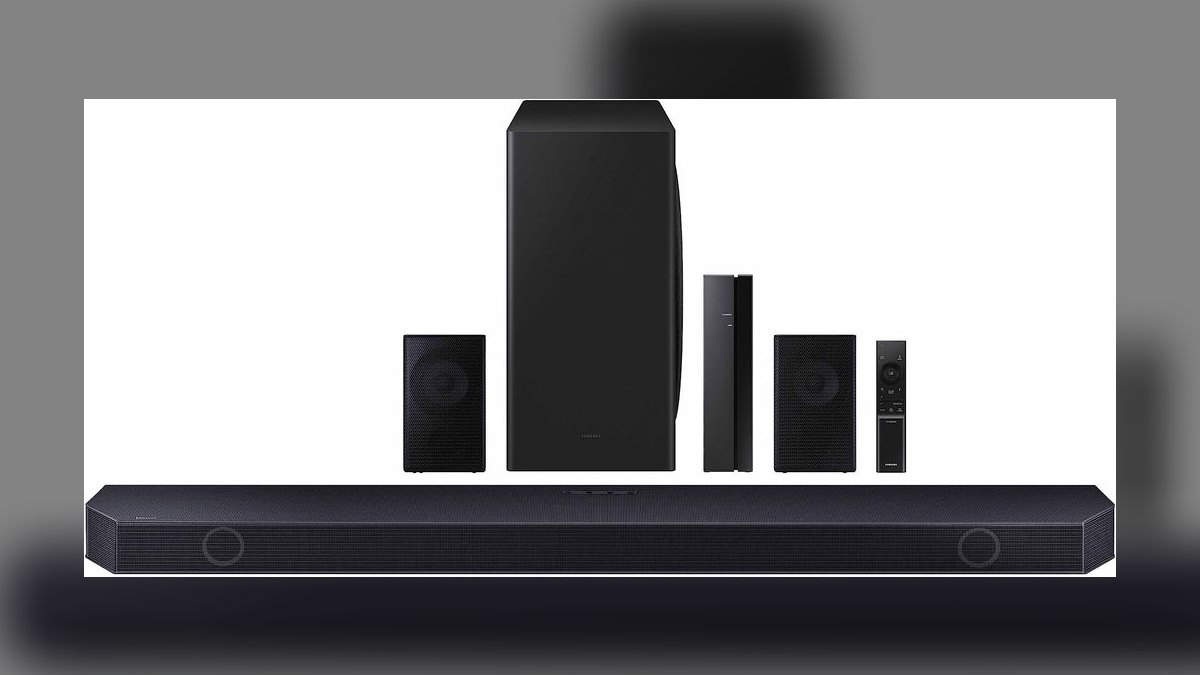
It ranks first because no other single SKU ships a true 11.1.4-channel Atmos system in one box — bar, wireless subwoofer with an 8-inch downfiring driver, and wireless rears that carry their own height drivers. Decoding covers Dolby Atmos, DTS:X, and IMAX Enhanced. SpaceFit Sound Pro calibrates through microphones built into the bar. HDMI 2.1 passthrough runs 4K/120Hz with VRR and ALLM at $1,699.
This is for buyers with a large living room who want the finished cinema rig today rather than a modular path. It trades away tidiness: rears need wall power, and the SmartThings app is fiddly during initial pairing. Against the Sonos Arc Ultra one rank below, the Samsung wins on real channels and console passthrough while conceding app polish and the clean single-bar footprint that suits smaller rooms.
2Sonos Arc Ultra

Second place reflects the best one-piece Atmos performance available at $999. Fourteen drivers include the Sound Motion woofer, which produces usable low end without a separate subwoofer box. Trueplay room calibration now runs on Android as well as iOS. Speech Enhancement offers adjustable levels and delivered the cleanest dialogue Soundguys has measured from a standalone bar, and eARC carries full Atmos TrueHD from disc.
Buy this if one bar under the TV is the whole requirement and clarity matters more than channel count. The trade is connectivity: a single eARC input, no HDMI passthrough, so a PS5 must route through the TV. Compared with the Samsung above, you give up real rears and height drivers but gain a cleaner upgrade path — add a Sub 4 and Era 300s later.
3Bose Smart Ultra Soundbar
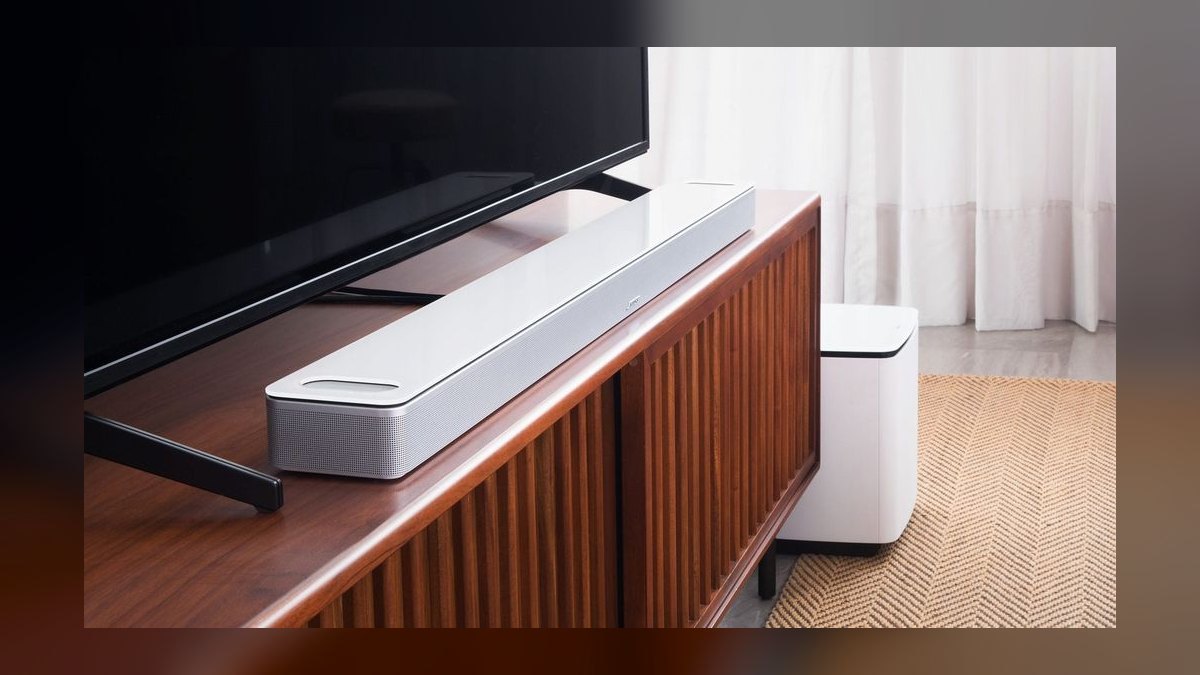
Third because it delivers the most natural voice reproduction in the category, driven by PhaseGuide array technology and A.I. Dialogue Mode. The bar alone runs $999; adding the Bass Module 900 and Surround Speakers builds a wireless 5.1.2 system for roughly $2,000. eARC handles Atmos cleanly. AirPlay 2, Chromecast built-in, and Spotify Connect are native, and the Bose app is the most reliable companion software of this group.
This suits dialogue-heavy drama viewers and anyone who has lost patience with buggy audio apps. It trades away height impact — Atmos overhead effects are subtler than the Samsung's real upfiring drivers. Against the Sonos Arc Ultra directly above, Bose matches the price and beats it on app reliability and streaming protocol coverage, while Sonos edges ahead on measured dialogue clarity and bass from a single chassis.
4Sony BRAVIA Theater Bar 9
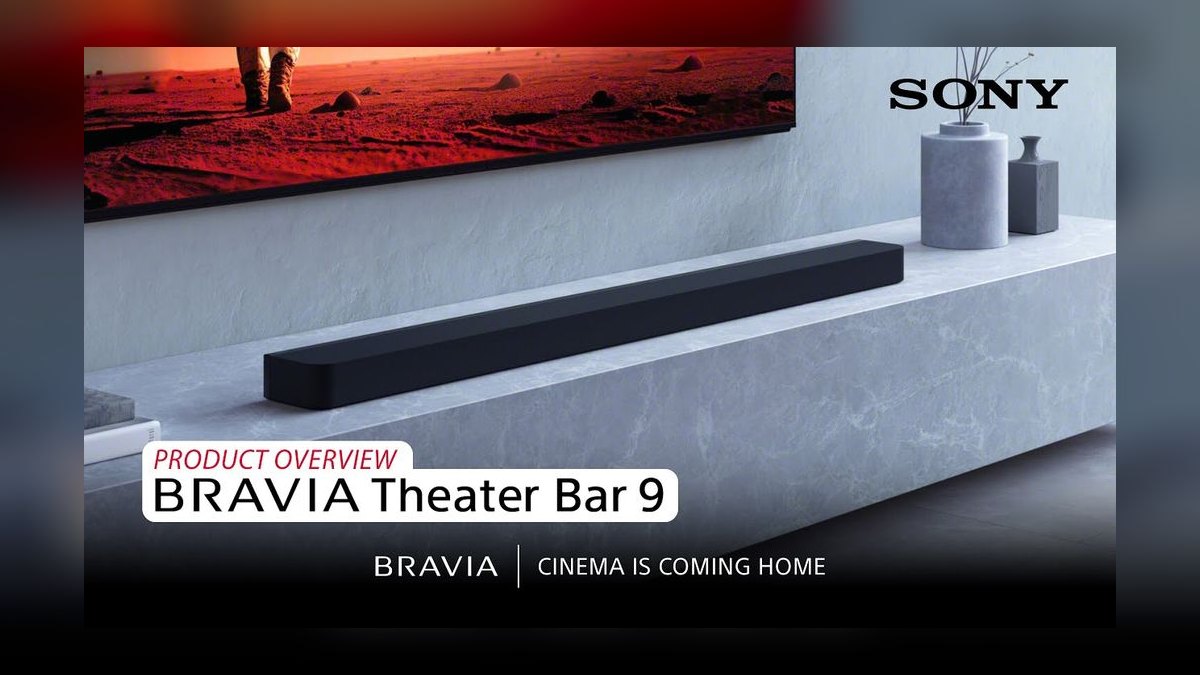
Fourth on the strength of Acoustic Center Sync: paired with a recent BRAVIA OLED, the panel's screen-actuator system becomes the center channel, placing dialogue at the image instead of below it. This 7.1.2 bar costs $1,399, decodes Dolby Atmos, DTS:X, and IMAX Enhanced, and runs 360 Spatial Sound Mapping for music. HDMI 2.1 passthrough carries 4K/120Hz for PS5 owners.
It makes sense almost exclusively for Sony BRAVIA OLED owners, since the headline feature is inert otherwise. No sub or rears are included — adding the SA-SW5 and SA-RS5 pushes the total past $2,500. Against the Samsung at the top of the list, you pay more for less in the box and gain dialogue placement no competitor replicates on a Sony panel.
5LG S95TR
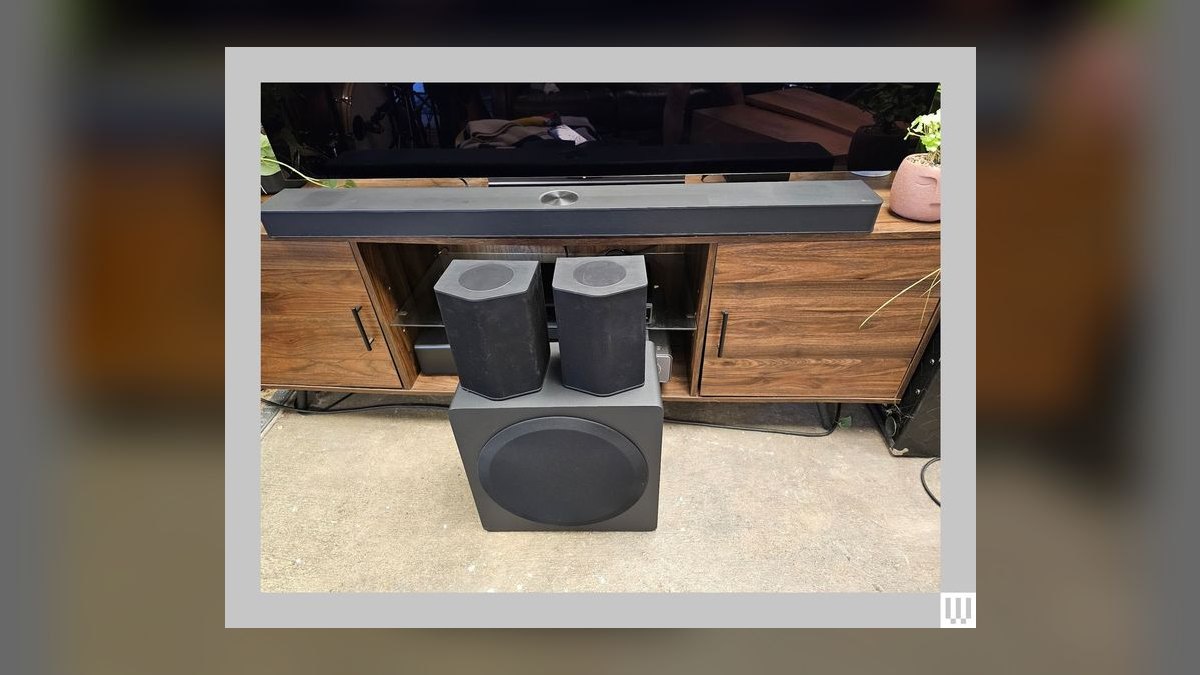
Fifth because it puts the most height channels per dollar in a room: a complete 9.1.5-channel system at $1,499 with upfiring drivers in both the bar and the wireless rears, placing a height speaker in all four corners. RTINGS measured the most accurate overhead imaging of any soundbar under $1,500. Wireless sub and rears are included, AI Room Calibration runs through built-in microphones, and eARC carries Atmos TrueHD.
This fits LG OLED owners who want WOW Orchestra pairing so the TV speakers add information rather than mute. It trades away two things the Samsung provides: HDMI passthrough is absent, so consoles connect to the TV, and app support lags Sonos and Bose noticeably. The channel count is higher than the Sony above, but the Sony offers passthrough and panel-center dialogue.
6Vizio M-Series Elevate 5.1.2

Sixth overall and the Best Value pick because $499 buys a genuine 5.1.2 system — wireless subwoofer, dedicated wireless rears, and motorized upfiring height drivers that rotate forward for music and tilt up for Atmos films. It decodes both Dolby Atmos and DTS:X, supports eARC, and ships with a setup microphone for room calibration. Wirecutter has held it as the budget pick across its product cycle.
This is the first-time Atmos buyer's system, delivering real surround for under a third of the Samsung's price. Build quality is honest plastic and the app is functional rather than Sonos-grade. Against the LG S95TR above, you lose four height channels, calibration sophistication, and finish quality, but keep the fundamentals that matter most: discrete rears, a real sub, and true upfiring height.
7Sonos Beam (Gen 2)
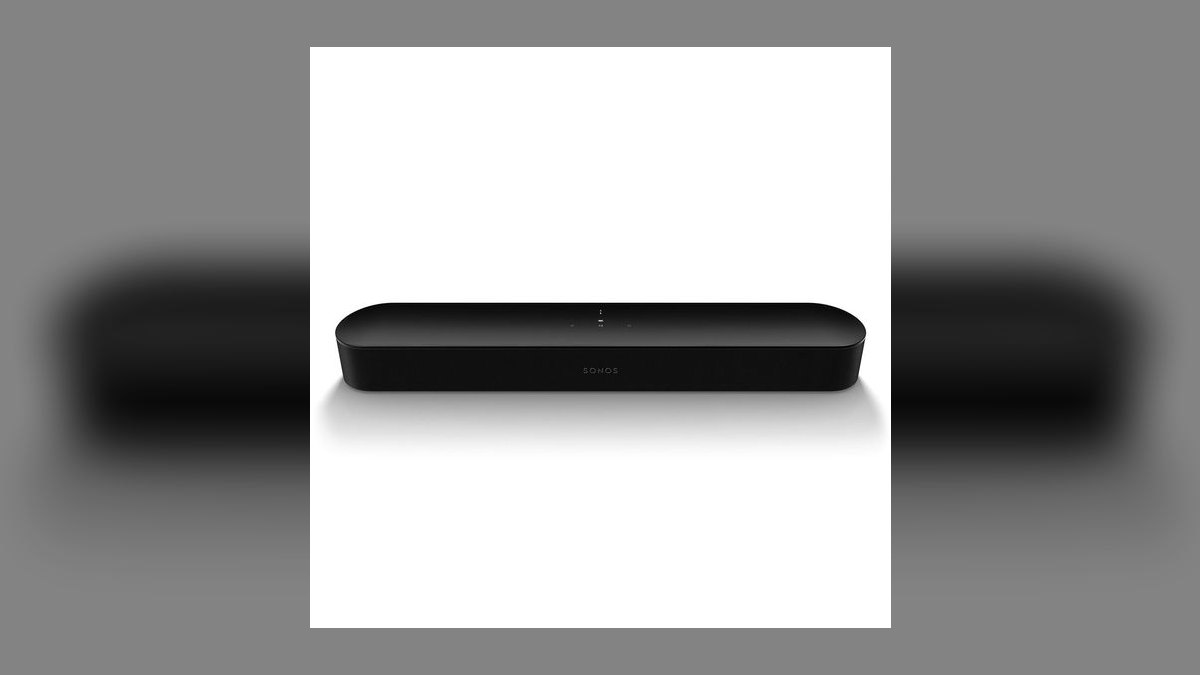
Seventh because it brings Sonos performance to rooms the Arc Ultra would overwhelm: a 24-inch chassis that fits under a 50-inch TV, a five-driver array producing virtualized 5.1.2, and the same Trueplay calibration as the flagship at $499. Wirecutter recommends it for apartments, dens, and bedrooms. A Sub Mini or pair of Era 100s can be added later through the Sonos app.
Small-room buyers already inside the Sonos ecosystem are the audience. Two real trades: Atmos arrives via DD+ only, with no TrueHD decoding over its single HDMI input, and height is virtualized with no upfiring drivers. At the same $499 as the Vizio above, the Beam gives up a sub, rears, and real height channels in exchange for multi-room integration and a far smaller footprint.
8Klipsch Flexus Core 200
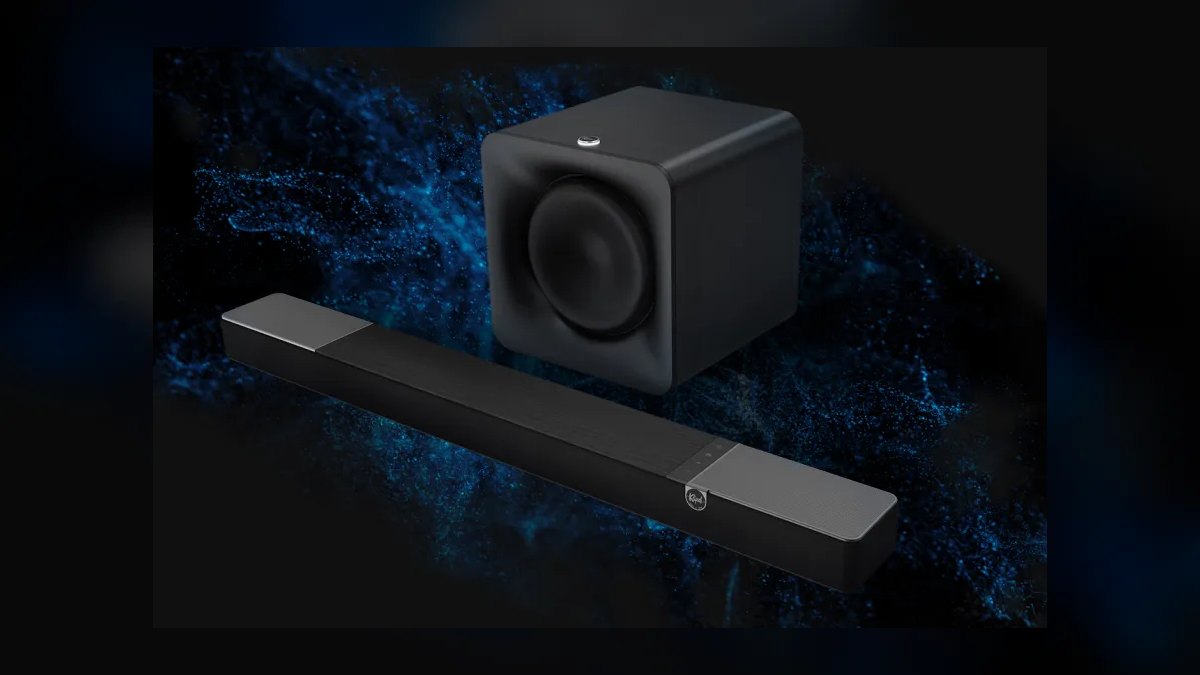
Eighth for a feature almost nothing at this price carries: Dirac Live room correction, normally reserved for $2,000-plus AV receivers, in a $599 bar. The 3.1.2 standalone chassis houses built-in subwoofers, decodes Dolby Atmos and DTS:X over eARC, and uses Klipsch horn-loaded tweeters for the brand's characteristic detail. The Flexus Sub 100 and Flexus Surround 100 rears scale it to 5.1.2 later.
This is for listeners who already like the Klipsch signature and want measurement-based correction on a budget. The trade is tonal: the sound is bright, which fatigues some ears over long sessions. Against the Sonos Beam above, it costs $100 more and offers genuine height drivers plus better correction, but gives up the multi-room ecosystem and compact size.
9Polk Audio Signa S4
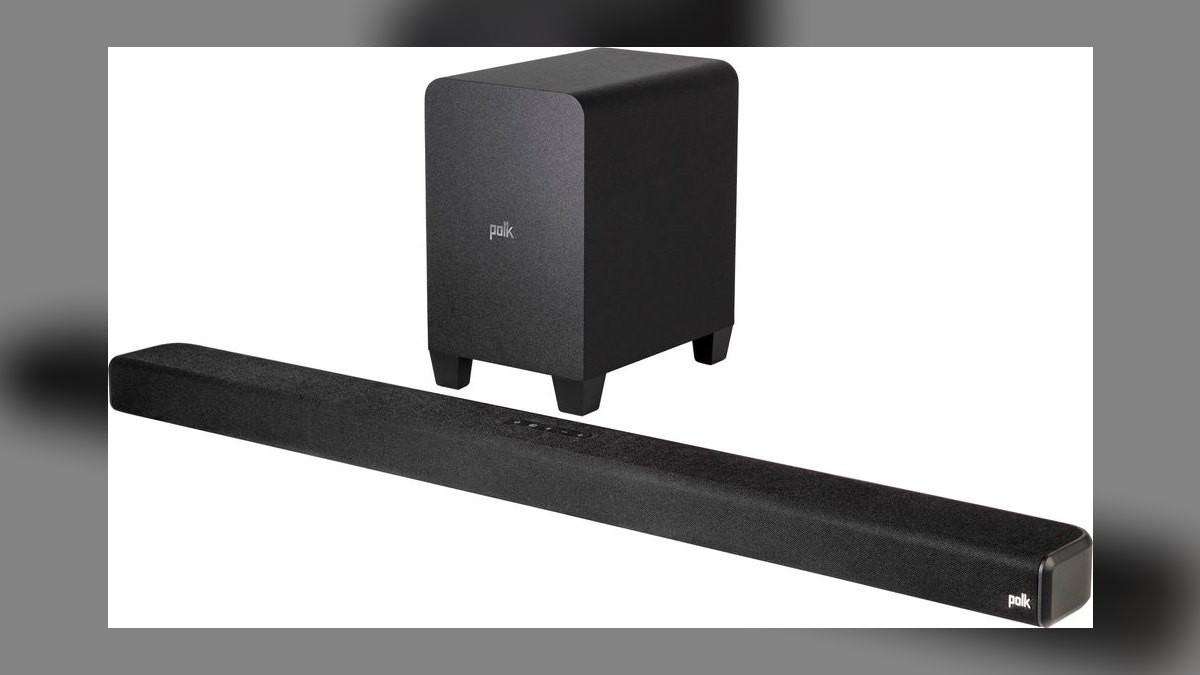
Ninth because it is the cheapest 3.1.2 Dolby Atmos bar from a brand-name US manufacturer that still includes a wireless subwoofer, at $299. Two upfiring height drivers handle Atmos passably for the money, VoiceAdjust pulls dialogue forward, eARC carries audio cleanly, and Bluetooth streaming works without app friction. It has been the Wirecutter budget Atmos pick through this product cycle.
Strict sub-$300 budgets are the use case, particularly for a secondary room. It omits DTS:X decoding entirely and has no HDMI passthrough, so 4K/120Hz console signals must route to the TV first. Against the Klipsch above, you save $300 and gain a discrete wireless sub, but lose Dirac Live correction, DTS:X, and the horn tweeter detail that defines that pick.
10Yamaha SR-B40A
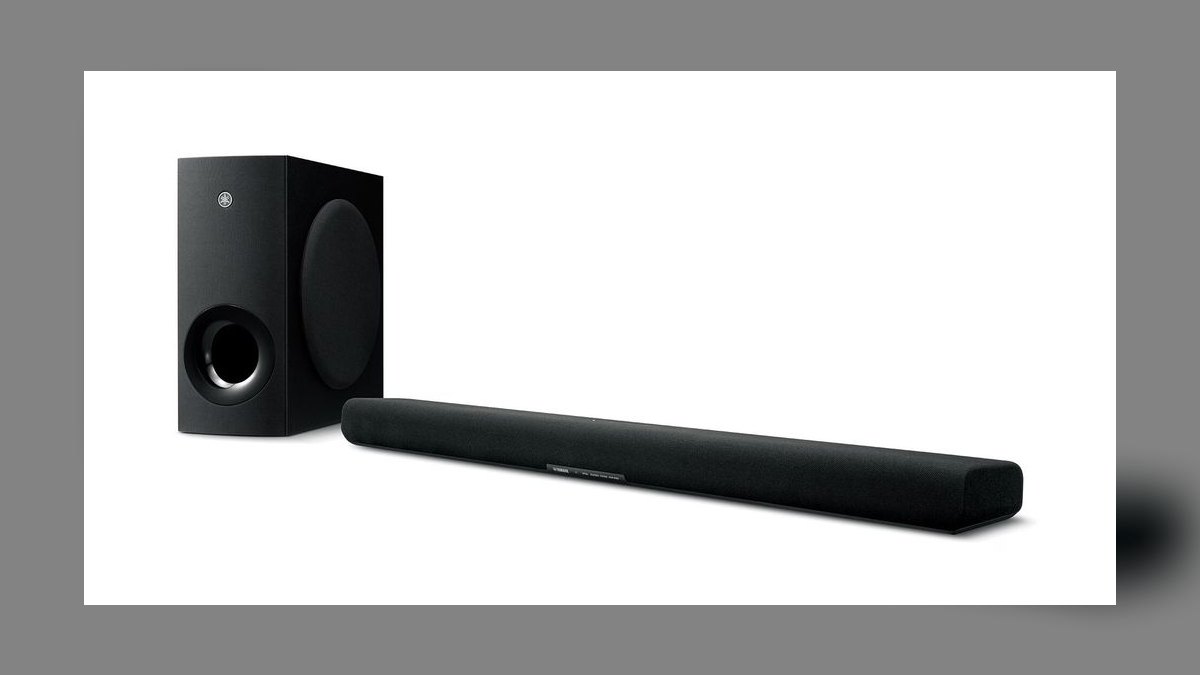
Tenth because it solves a specific spatial problem: dual subwoofers are built into the chassis, so there is no separate sub box competing for floor space, and the bar still produces enough low end for a room around 12 by 15 feet. It costs $399, decodes Dolby Atmos and DTS:X, and includes Clear Voice dialogue processing plus Bluetooth, optical, and HDMI eARC inputs.
Renters and small-apartment dwellers are the audience, which is why CNET has recommended it for exactly that group. The trade is bass extension, which a sealed in-bar woofer cannot match against a discrete wireless subwoofer. Against the Polk Signa S4 above, it costs $100 more and drops the external sub, but adds DTS:X decoding and a genuinely one-piece install.
How we ranked these
Rankings weighted movie sound quality at 30%, music and dialogue at 20%, channel configuration and Atmos implementation at 15%, price-to-performance at 15%, connectivity at 10%, and room calibration plus app quality at 10%. Real channels counted more than virtualized ones. Measured data came from RTINGS, professional reviews from HDTVTest, and roundups at Wirecutter, CNET, Soundguys, and Tom's Guide, cross-checked against long-running AVForums and AVS Forum owner threads.
Deliberately ignored: peak channel count as a standalone bragging number, since a well-tuned 5.1.2 beats a sloppy 9.1.5 in-room. Bluetooth codec support was set aside because serious listening runs over eARC, not wireless. Proprietary TV-pairing modes like Q-Symphony and WOW Orchestra were noted but not scored, since they only pay off for owners of that exact brand's television.
What to look for
Start with your TV, not the bar. eARC is the floor in 2027 — plain ARC caps out at compressed Dolby Digital Plus and strips the TrueHD Atmos track off your Blu-rays. Then decide whether you want real upfiring height drivers or virtualization, and whether you need HDMI 2.1 passthrough. Only the Samsung Q990D and Sony Theater Bar 9 here pass 4K/120Hz with VRR for a PS5 or Series X.
The common mistake is chasing channel count and skipping room calibration. A calibrated mid-tier bar outperforms an uncalibrated flagship in a real room every time — SpaceFit, Trueplay, Dirac Live, and LG's AI Room Calibration all measurably help. Second mistake: assuming wireless rears are truly wireless. They still need wall power, so check outlet placement before buying a system that ships with them.
Related questions
What is the best soundbar overall in 2027?
The Samsung HW-Q990D at $1,699. It ships as a true 11.1.4-channel system — bar, wireless subwoofer, and wireless rears with their own height drivers, all in one SKU. It decodes Dolby Atmos, DTS:X, and IMAX Enhanced, runs SpaceFit Sound Pro calibration, and passes HDMI 2.1 video at 4K/120Hz with VRR and ALLM. No other mainstream all-in-one matches that package.
What is the best value soundbar in 2027?
The Vizio M-Series Elevate 5.1.2 at roughly $499. It is a genuine 5.1.2 system with motorized upfiring height drivers that rotate forward for music and tilt up for movies, plus a wireless sub and dedicated wireless rears. It decodes both Dolby Atmos and DTS:X and includes a setup mic for calibration. Build is plain plastic, but nothing near the price matches it.
Which soundbar has the best dialogue clarity?
Two picks split it. The Bose Smart Ultra pairs PhaseGuide array technology with A.I. Dialogue Mode and is the consistent Wirecutter and CNET choice for voice-focused listeners. The Sonos Arc Ultra counters with adjustable Speech Enhancement — the best dialogue clarity Soundguys has measured from a standalone bar. Polk's VoiceAdjust and Yamaha's Clear Voice cover the budget tier.
Which soundbars support HDMI 2.1 passthrough at 4K/120Hz?
Only two on this list do real full-bandwidth HDMI 2.1 passthrough: the Samsung HW-Q990D and the Sony BRAVIA Theater Bar 9. Both carry 4K/120Hz with VRR and ALLM, so a PS5 or Xbox Series X can run through the bar without dropping frame rate. Everything else here is eARC-only, which means the console plugs into the TV instead.
What is the best soundbar for a small room or apartment?
The Sonos Beam Gen 2 at $499. Its 24-inch chassis disappears under a 50-inch TV while still delivering virtualized 5.1.2 and the same Trueplay calibration as the Arc Ultra. If you would rather avoid a separate sub box entirely, the Yamaha SR-B40A at $399 packs dual subwoofers into the bar itself — a CNET favorite for renters.
Which soundbar is best for LG OLED owners?
The LG S95TR at $1,499. It is a complete 9.1.5-channel system with a wireless sub and wireless rears that carry their own up-firing drivers, putting a height channel in all four corners. RTINGS measured the most accurate overhead imaging of any bar under $1,500. WOW Orchestra lets a compatible LG OLED add its speakers instead of muting them.
Do any soundbars include Dirac Live room correction?
The Klipsch Flexus Core 200 at $599 does, which is genuinely unusual — Dirac Live normally appears on AV receivers costing $2,000 and up. The Core 200 is a 3.1.2 bar with built-in subwoofers, horn-loaded tweeters, eARC, and both Atmos and DTS:X decoding. You can scale it to 5.1.2 later with the Flexus Sub 100 and Surround 100 rears.
What is the cheapest soundbar with real Dolby Atmos height drivers?
The Polk Audio Signa S4 at $299. It is a 3.1.2 bar with two genuine upfiring height drivers and a wireless subwoofer included — the cheapest brand-name US package that combines both. VoiceAdjust pulls dialogue forward, and eARC handles audio cleanly. Trade-offs are no DTS:X decoding and no HDMI passthrough, but it stays the Wirecutter budget Atmos pick.
FAQ
Do I need a soundbar with Dolby Atmos in 2027?
If you stream movies, yes. Most major releases on Disney+, Apple TV+, Max, and Netflix ship with Atmos mixes, and a bar without Atmos decoding flattens those to stereo or 5.1. You lose the overhead layer entirely. Even a modest 3.1.2 bar with real upfiring drivers, like the $299 Polk Signa S4, recovers a meaningful part of that height information.
What is the difference between Dolby Atmos and DTS:X?
Both are object-based surround formats that place sounds in three-dimensional space rather than fixed channels. Atmos dominates streaming and disc releases; DTS:X shows up on some 4K UHD Blu-rays and select streaming titles. On this list the Samsung Q990D, LG S95TR, Vizio M-Series Elevate, Klipsch Flexus Core 200, and Yamaha SR-B40A all decode both natively.
Is a soundbar enough, or do I need a real AV receiver?
For roughly 90% of living rooms a flagship system like the Samsung HW-Q990D or LG S95TR lands within about 10% of a discrete AVR-driven 5.1.2 setup, at a fraction of the install complexity. If you want true 7.2.4 with custom speaker placement, in-wall runs, and full control over crossovers, a receiver and separate speakers remain the right call.
Can I add a subwoofer or rear speakers to a soundbar later?
Only if the bar is designed for it. Sonos supports it across the Arc Ultra and Beam Gen 2 via Sub Mini, Sub 4, and Era 100/300 rears. Bose scales with the Bass Module 900 and Surround Speakers, Sony with the SA-SW5 sub and SA-RS5 rears, and Klipsch with the Flexus Sub 100 and Surround 100. Others are fixed.
What is the difference between HDMI ARC and eARC?
eARC carries far more bandwidth. It passes full uncompressed Dolby Atmos TrueHD from Blu-ray, while plain ARC tops out at compressed Dolby Digital Plus. For any soundbar bought in 2027, eARC is the floor. If your television is more than about five years old, confirm it has an eARC-labeled HDMI port before spending on a flagship bar you cannot fully feed.
Are upfiring height drivers better than virtualized Atmos?
Yes, noticeably. Real upfiring drivers bounce sound off the ceiling to create genuine overhead placement — Samsung, Vizio, LG, and Polk all use them here. Virtualized height, as in the Sonos Beam Gen 2, uses psychoacoustic processing and produces a flatter effect. Bars with Atmos-enabled rears, like the Q990D and S95TR, put height information in every corner.
Are wireless rear speakers actually wireless?
Only the audio signal is. Wireless rears still need mains power, so each one has to sit near a wall outlet. Buyers routinely discover this after unboxing and end up running an extension cord across the room. Check outlet placement behind your seating position before committing to any system that ships with rears, including the Samsung Q990D and LG S95TR.
How much does room calibration actually matter?
More than most spec-sheet features. Samsung's SpaceFit, Sonos Trueplay, Klipsch's Dirac Live, and LG's AI Room Calibration all measurably improve in-room frequency response by compensating for reflections and boundary effects. A calibrated mid-tier bar beats an uncalibrated flagship in practice, so treat calibration as a buying criterion rather than a bonus feature you might run once.
Does a soundbar need to match my TV brand?
Not usually, but there is upside if it does. Samsung Q-Symphony, LG WOW Orchestra, and Sony Acoustic Center Sync all let a compatible television contribute its speakers rather than muting them. Sony's version goes furthest — a recent BRAVIA OLED becomes the center channel through its screen actuators. If you own none of those TVs, ignore the feature entirely.
Which soundbar works best without a separate subwoofer box?
The Yamaha SR-B40A at $399 builds dual subwoofers into a single-piece chassis and delivers enough low end for a room around 12 by 15 feet. The Klipsch Flexus Core 200 also carries built-in subs. Sonos takes a third route: the Arc Ultra's Sound Motion woofer produces real bass from the bar alone, with a Sub optional later.
Sources
- https://www.rtings.com/soundbar/reviews/best/by-usage/home-theater
- https://www.nytimes.com/wirecutter/reviews/best-soundbar/
- https://www.cnet.com/tech/home-entertainment/best-soundbar/
- https://www.tomsguide.com/best-picks/best-soundbars
- https://www.soundguys.com/best-soundbars-90563/
- https://www.whathifi.com/best-buys/best-soundbars
- https://www.avsforum.com/forums/soundbars.213/
- https://www.dolby.com/technologies/dolby-atmos/
- https://www.samsung.com/us/audio-devices/soundbar/q-series-11-1-4-ch-wireless-dolby-atmos-soundbar-rear-speakers-w-q-symphony-hw-q990d-sku-hw-q990d-za/
- https://www.sonos.com/en-us/shop/arc-ultra
Related on PULSE
This page will be disappearing soon. Save it to your device for $1 — or read it free while it is here.
@Kory-White- · if Venmo asks, the last 4 of my number are 2012
This page is gone.
This one is off the shelf now. $1 keeps it on your phone for good — the whole page, pictures and diagrams included.
 pulse-reviewsTop 10 Wireless Earbuds for Quick Sales Calls in 2027
 pulse-reviewsTop 10 Tablet Styluses — Best Overall + Best Value in 2027
 pulse-reviewsTop 10 Car Backup Cameras — Best Overall + Best Value in 2027
 pulse-reviewsTop 10 Heat-Pump Dryers — Best Overall + Best Value in 2027
 pulse-reviewsTop 10 Electric Spice Grinders — Best Overall + Best Value in 2027
 pulse-reviewsTop 10 DDR5 RAM Kits — Best Overall + Best Value in 2027
 pulse-reviewsTop 10 RV Surge Protectors — Best Overall + Best Value in 2027
 pulse-reviewsTop 10 Battery Chainsaws — Best Overall + Best Value in 2027
 pulse-reviewsTop 10 Noise-Cancelling Headphones for Sales Reps on Phone Calls in 2027
 pulse-reviewsTop 10 Cable Management Boxes for Sales Home Office in 2027