


Top 10 Bookshelf Speakers — Best Overall + Best Value in 2027
Quality
Certified
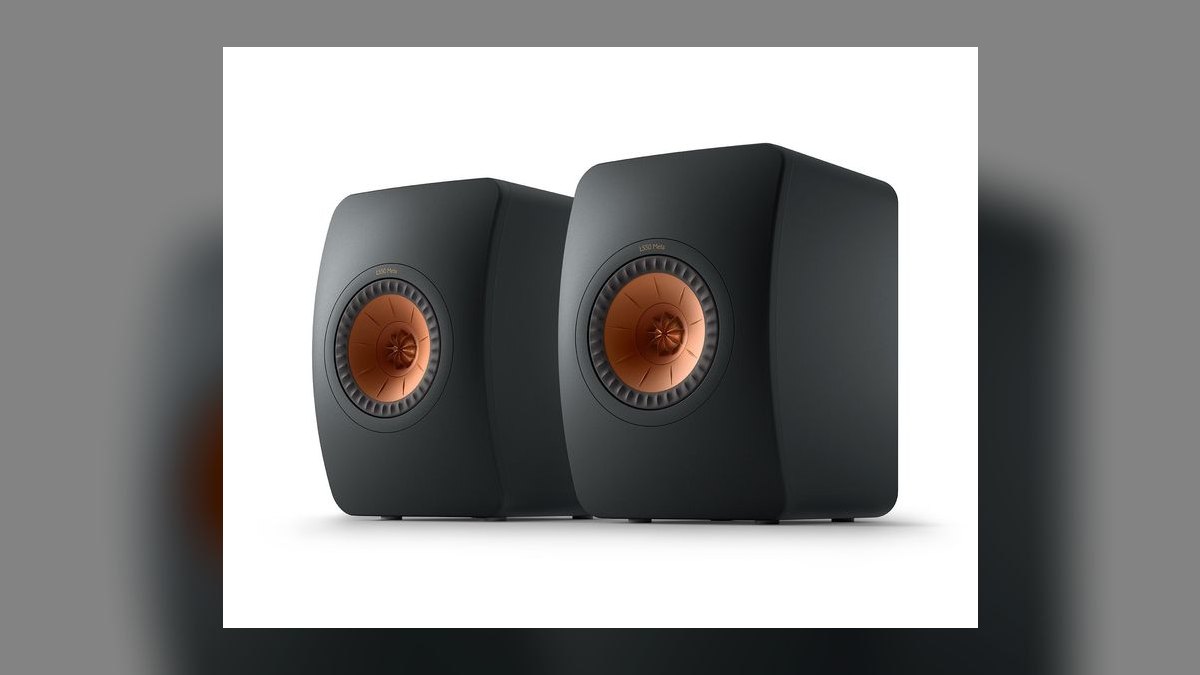
The 10 best bookshelf speakers are ranked below on measured performance, build quality, price, and how each one actually holds up in daily use rather than how it reads on a spec sheet. Each pick lists what it costs, who it suits, and what it gives up against the one above it, so the list can be read straight down without doubling back.
1KEF LS50 Meta
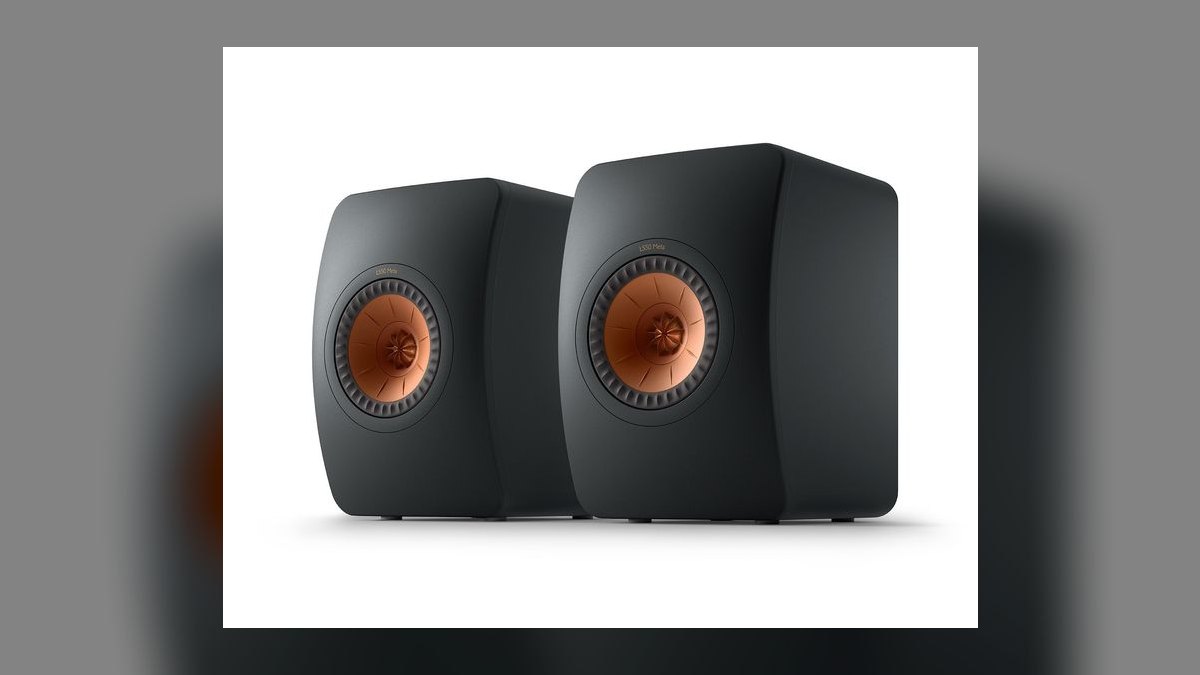
The KEF LS50 Meta ranks first because nothing near $1,599 per pair images this precisely. Its 12th-generation Uni-Q driver seats a 1-inch aluminum dome tweeter inside a 5.25-inch magnesium-aluminum woofer, so mids and highs leave from one point in space. Metamaterial Absorption Technology kills roughly 99% of rear-firing tweeter energy.
This is for near-field listening and small two-channel rooms where imaging matters more than raw output. It trades away bass extension and amplifier ease: 85 dB sensitivity with a 3.5-ohm minimum wants 80+ watts into 4 ohms, and it stops near 79 Hz. The ELAC DBR62 below digs to 44 Hz for $900 less, but it cannot place instruments in space the way the coincident Uni-Q does.
2ELAC Debut Reference DBR62
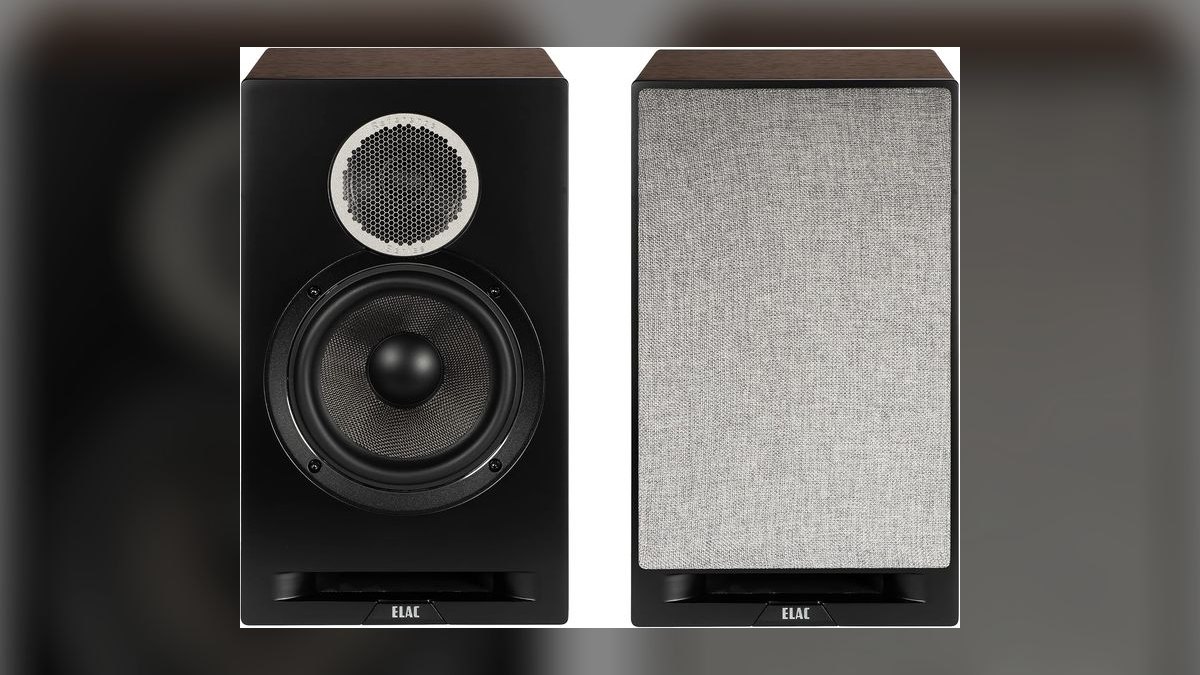
Second place goes to the ELAC Debut Reference DBR62 at $699 per pair for bass extension no rival at the price matches. Andrew Jones pairs a 6.5-inch aramid-fiber woofer with a 1-inch cloth-dome tweeter, rated 44 Hz to 35 kHz at 86 dB sensitivity into 6 ohms. The front port solves the near-wall placement problem most bookshelves create. Cabinets measure 14.6 x 8.1 x 9.7 inches in Black Walnut or White Oak vinyl wrap.
Buy these if you want full-range warmth without adding a subwoofer or a big amplifier. The plastic binding posts feel cheap against an otherwise convincing cabinet, and the tonality is warmer and less analytical than the KEF above. Compared to the LS50 Meta it gives up imaging precision and finish quality, but returns roughly 35 Hz of extra low end and drops the price by more than half.
3Wharfedale Diamond 12.1
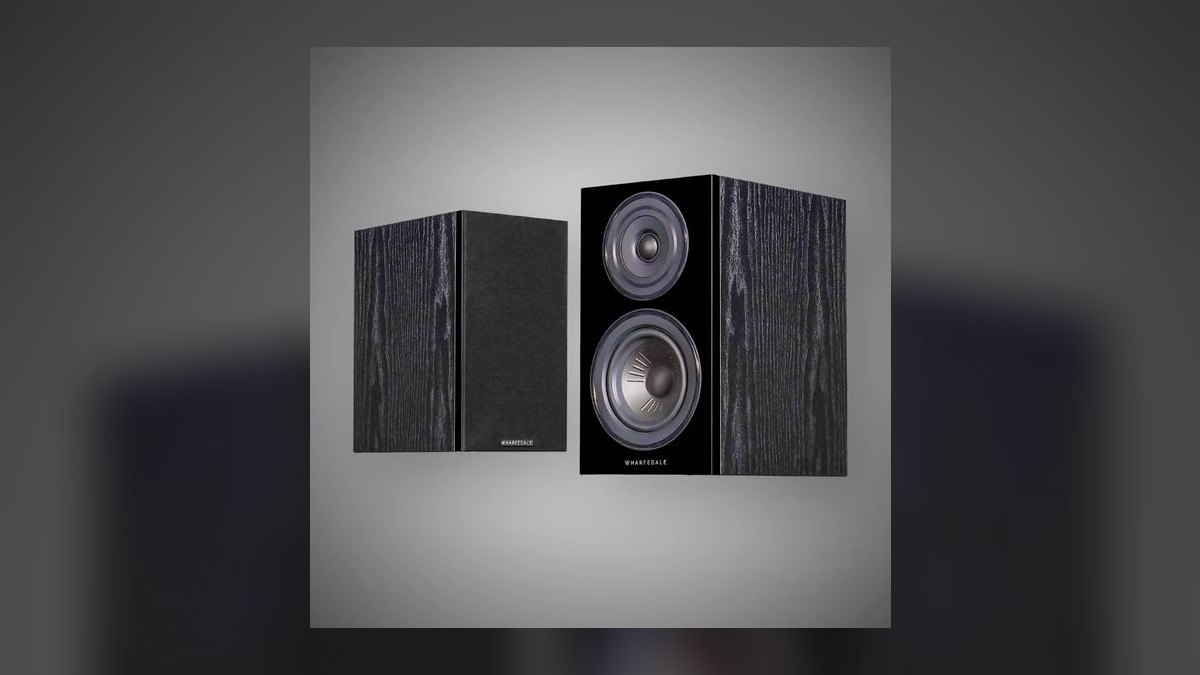
The Wharfedale Diamond 12.1 ranks third at $499 per pair because no other speaker here is this forgiving with bright or badly mastered recordings. A 5-inch woven-Kevlar woofer meets a 1-inch soft-dome tweeter in a slot-loaded rear-ported cabinet, rated 55 Hz to 20 kHz at 87 dB sensitivity into a friendly 8-ohm load. A 30-watt tube integrated drives them comfortably.
These suit vinyl-first systems and listeners who favor jazz, vocals, and acoustic material over volume. The trade is slam: 55 Hz is the floor and rock or EDM lacks the punch the Klipsch delivers. Against the ELAC DBR62 above, the Wharfedale costs $200 less and is easier to amplify, but gives up real bass extension and outright detail retrieval.
4Polk Reserve R200
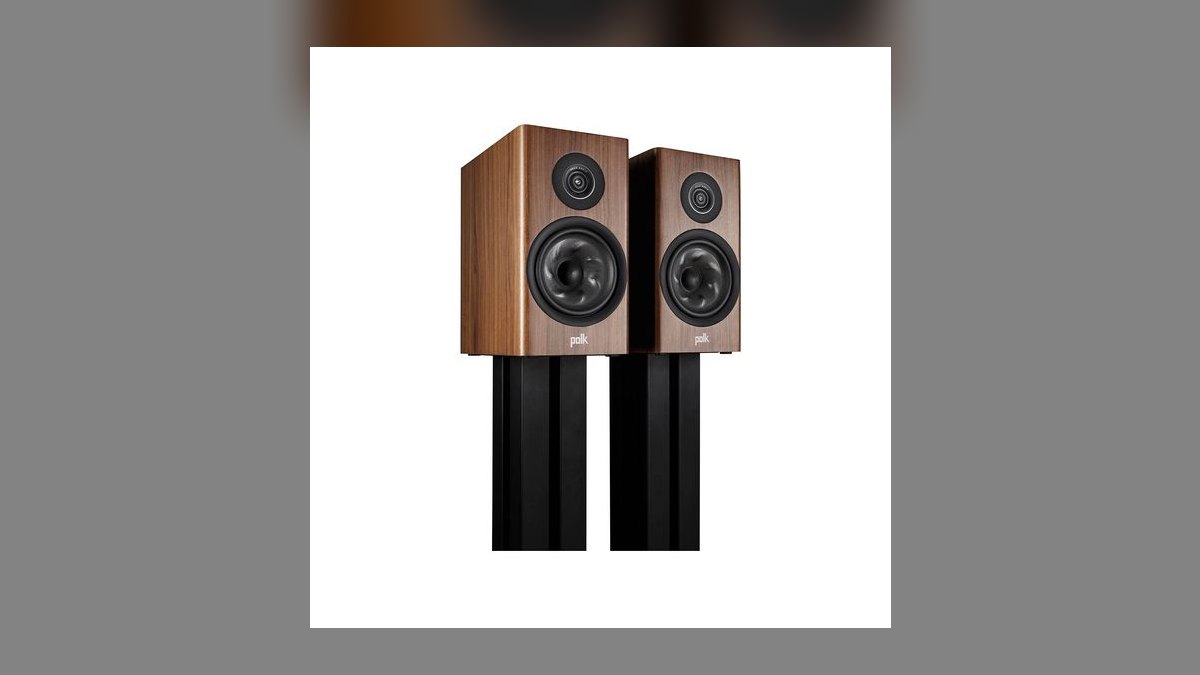
The Polk Reserve R200 ranks fourth at $999 per pair because it is the most complete home-theater front pair under $1,000. The Pinnacle ring radiator tweeter borrows from Polk's flagship Legend series, and the 6.5-inch Turbine Cone woofer resists breakup at high SPLs. Rated 39 Hz to 39 kHz at 86 dB sensitivity, 8 ohms nominal with a 4-ohm minimum. The rear Power Port with diffuser smooths airflow noise across 15.5 x 8.3 x 12.4 inch cabinets.
This targets 5.1 or 5.1.2 builds where the fronts also handle music duty. Off-axis dispersion stays wide, which matters for couches wider than the speaker spacing. The Pinnacle tweeter runs slightly forward on poor recordings. Against the Wharfedale above it doubles the price and demands more amplifier, but returns 39 Hz extension and dynamic headroom the Diamond cannot approach.
5Klipsch RP-600M II
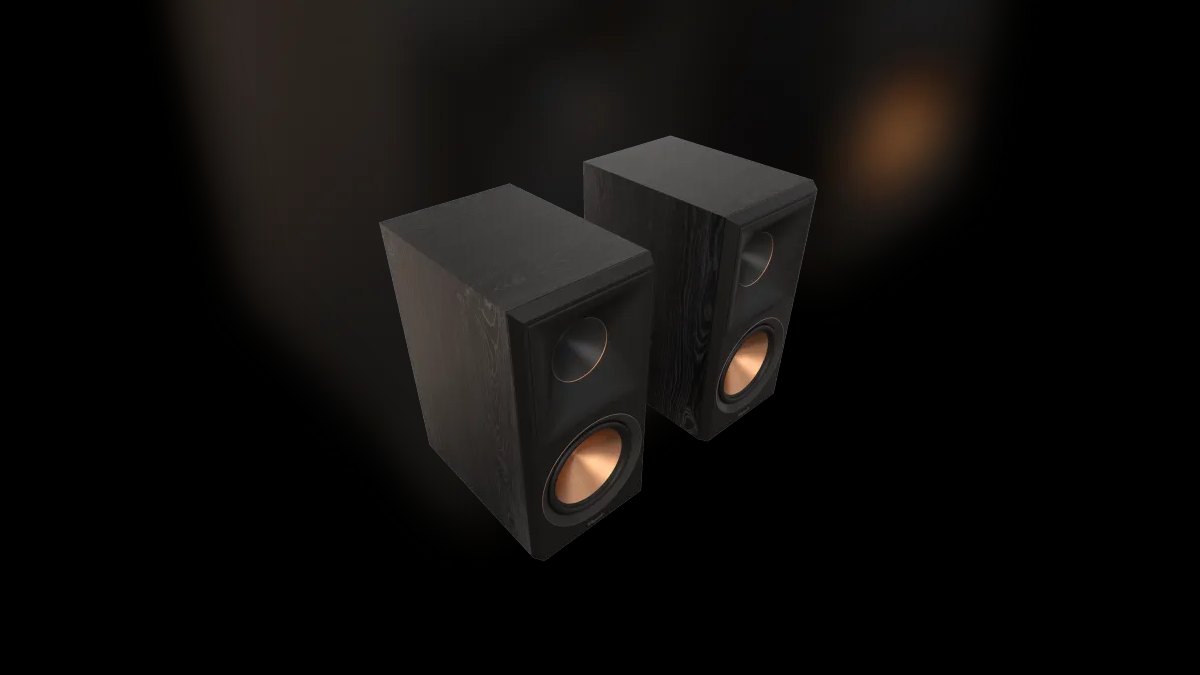
The Klipsch RP-600M II ranks fifth at $849 per pair on sensitivity alone: 96 dB is best-in-class here by six decibels. A 6.5-inch Cerametallic woofer pairs with a 1-inch titanium LTS tweeter on a Tractrix horn, rated 45 Hz to 25 kHz into 8 ohms. A 10-watt amplifier reaches satisfying levels; a 50-watt receiver produces genuine volume. The rear Tractrix port contour reduces port noise at high output.
These are for EDM, rock, and movie nights in rooms where dynamics beat neutrality. The horn-loaded tweeter is bright and will not forgive an already-bright amplifier or harsh source material. Compared to the Polk R200 above, the Klipsch costs $150 less and drives from almost anything, but the Polk holds a flatter, less fatiguing balance for long listening sessions.
6Q Acoustics 3030i
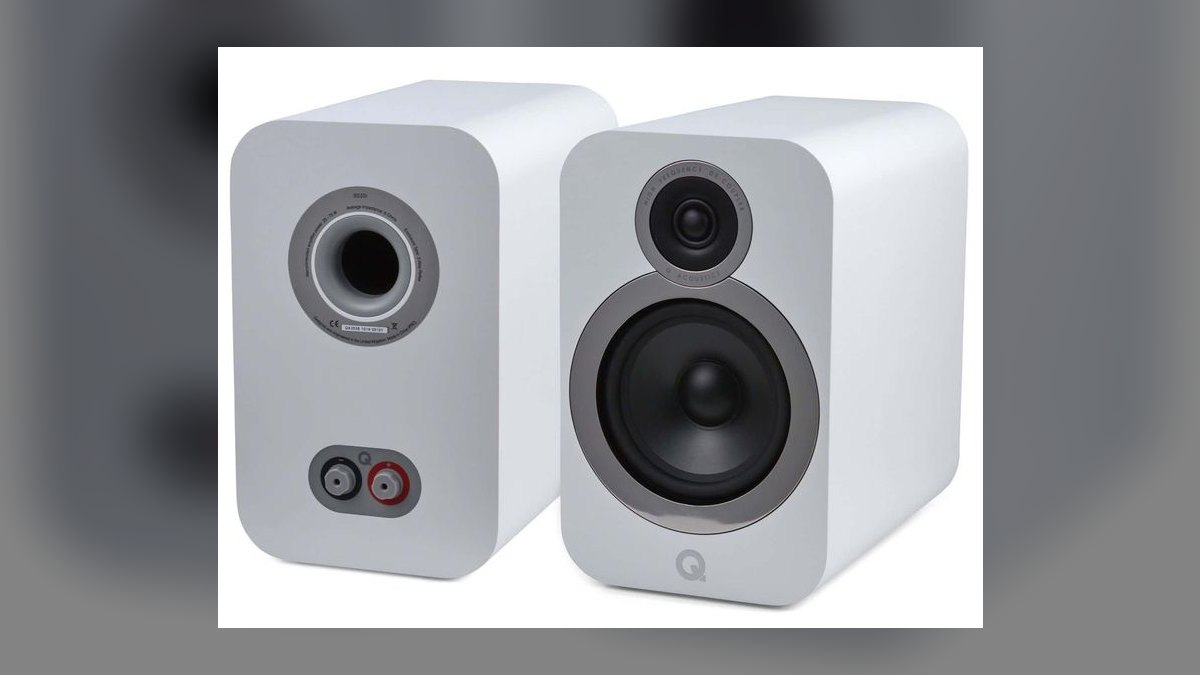
The Q Acoustics 3030i ranks sixth overall but offers the best price-to-performance ratio in this guide at $499 per pair. A 6.5-inch coated-paper woofer sits below a decoupled 0.9-inch microfiber dome tweeter in a Helmholtz Pressure Equalizer-braced cabinet stiffer than many $1,500 designs. Rated 46 Hz to 30 kHz at 88 dB sensitivity into 6 ohms. Cabinets measure 12.6 x 7.7 x 11 inches in Carbon Black, English Walnut, Graphite Grey, or Arctic White.
This is the default recommendation for anyone building a first serious two-channel system on a fixed budget. It needs stands — the cabinet colors audibly when shelf-mounted directly — and the rear port wants six inches of clearance. Against the Wharfedale at the same $499, the 3030i is markedly more neutral and wider-staging, but less forgiving of harsh recordings.
7ELAC Debut 2.0 B6.2
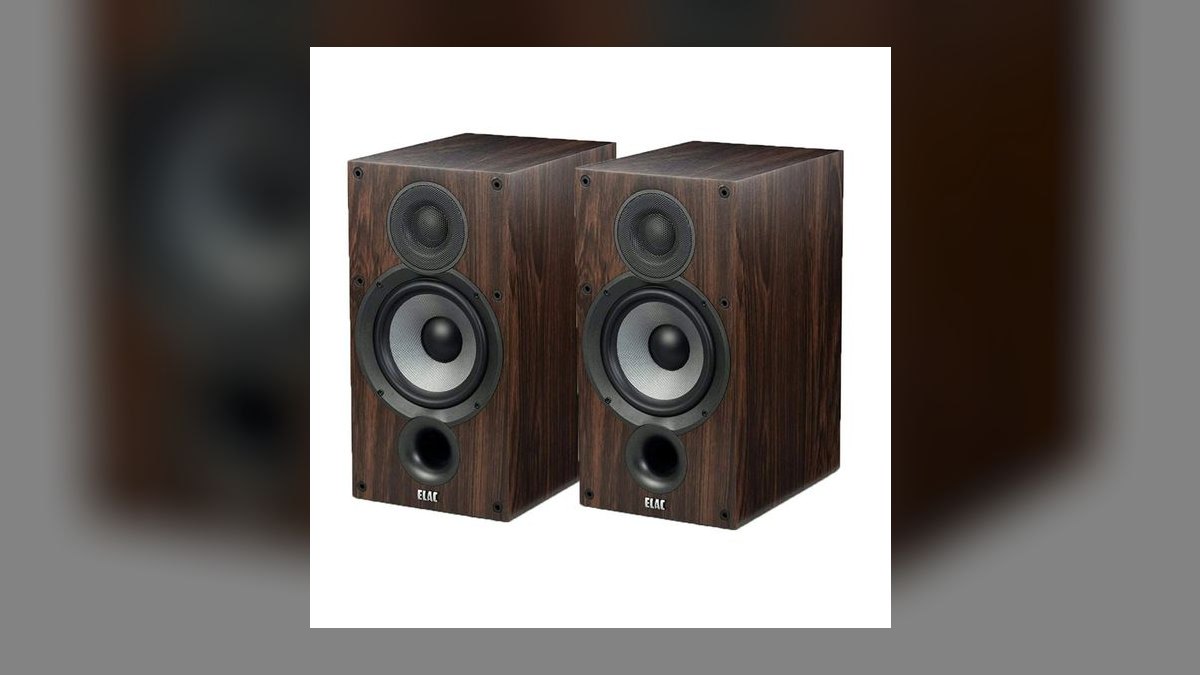
The ELAC Debut 2.0 B6.2 ranks seventh at $349 per pair because it is the cheapest speaker here that still measures and sounds like real hi-fi. The 6.5-inch aramid-fiber woofer and 1-inch cloth-dome tweeter with wide-dispersion waveguide are rated 44 Hz to 35 kHz at 87 dB sensitivity into 6 ohms — the same low-end figure as the pricier DBR62. Front porting allows flush bookshelf placement without bass bloat.
Buy these when the budget is genuinely tight but an amplifier already exists. The textured black vinyl wrap is the only finish and looks plain beside the DBR62's walnut and oak options. Against that DBR62 at rank two, the B6.2 gives up refinement, driver quality, and cosmetics for a $350 saving while keeping the same shelf-friendly front port.
8Bowers & Wilkins 606 S3
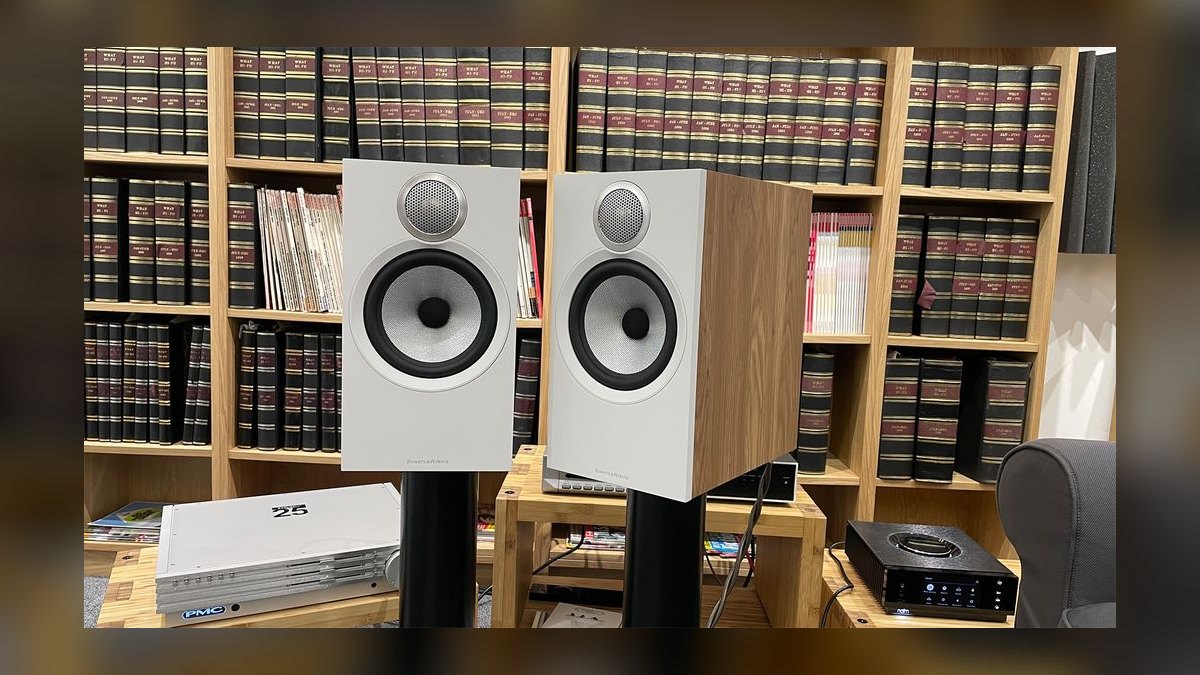
The Bowers & Wilkins 606 S3 ranks eighth at $1,099 per pair — real detail retrieval and premium build, held back by bass that stops at 52 Hz. The 6.5-inch Continuum cone descends from B&W's 800 Series, paired with a 1-inch decoupled Titanium Double Dome tweeter. Rated 52 Hz to 28 kHz at 88 dB sensitivity, 8 ohms nominal with a 3.7-ohm minimum. The dimpled Flowport reduces turbulence across 13.4 x 7.5 x 11.9 inch cabinets.
These suit listeners who want the B&W house sound and resale value at the lowest entry price. Below 60 Hz output falls off, so home-theater use effectively requires a subwoofer. Against the Polk R200 at rank four, the B&W costs $100 more and digs 13 Hz less deep, but retrieves fine detail and carries build quality the Polk does not match.
9Triangle Borea BR03
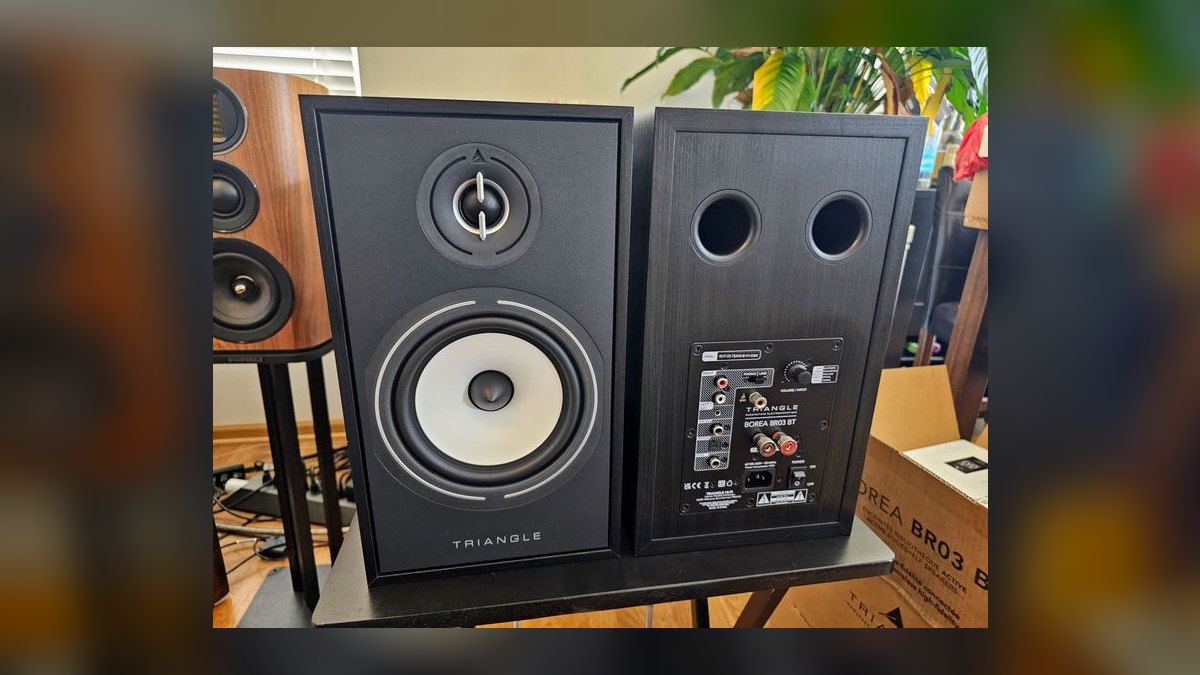
The Triangle Borea BR03 ranks ninth at $599 per pair for transient speed rather than weight. The French-built BR03 uses a 6.5-inch natural-cellulose-pulp woofer and a 1-inch silk-dome tweeter in a rear-ported cabinet tuned for fast attack. Rated 46 Hz to 22 kHz at 90 dB sensitivity into 8 ohms, making it the second-most efficient speaker on this list.
This is the pick for classical, jazz, plucked strings, and brass, where leading-edge definition carries the music. Bass rolls off steeply below 60 Hz, so rock and film soundtracks want a subwoofer. Against the B&W 606 S3 above, the Triangle saves $500 and drives far more easily, but concedes cabinet finish, brand resale value, and ultimate treble refinement.
10Edifier R1700BTs
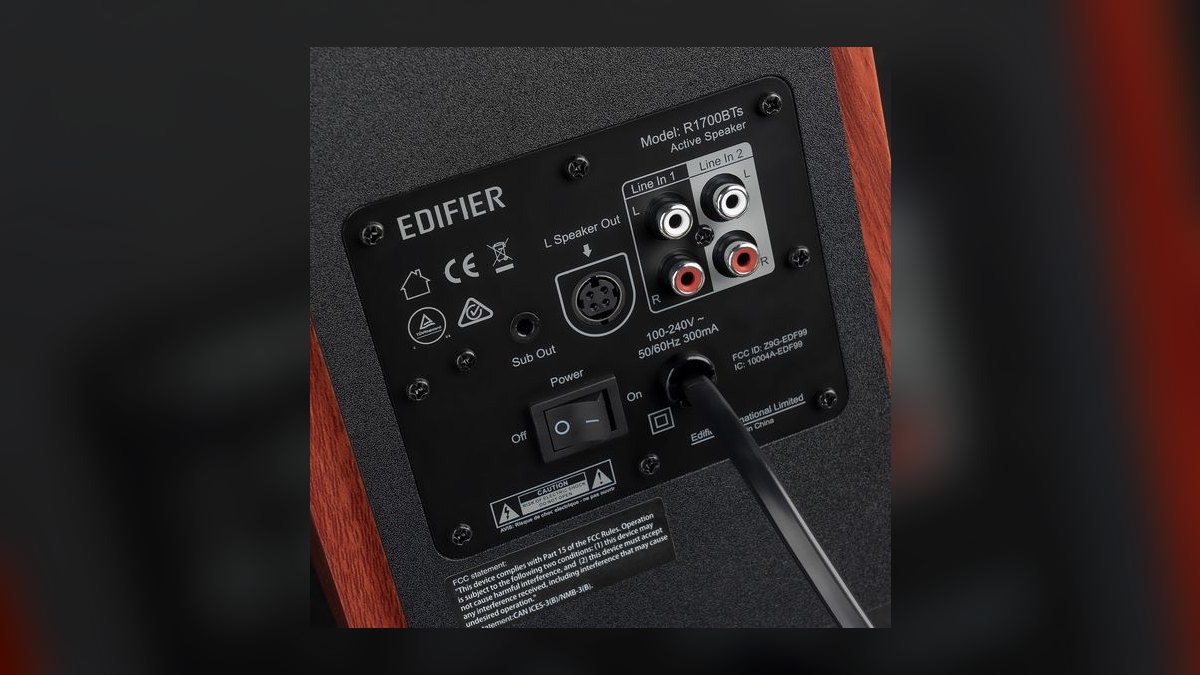
The Edifier R1700BTs ranks tenth at $199 per pair as the only active speaker here — no separate amplifier required. Built-in amplification supplies 33 watts per channel, with Bluetooth 5.0, dual RCA inputs, and a subwoofer pre-out. Drivers are a 4-inch fiberglass woofer and a 19mm silk-dome tweeter, rated 60 Hz to 20 kHz. Side-mounted bass and treble dials allow room tuning.
This is for desktop use or a first-time buyer who owns no electronics at all. Sonically it is not in the same class as the passive pairs above — 60 Hz is the floor and resolution is modest. Against the ELAC B6.2 at rank seven, the Edifier costs $150 less and needs nothing else, but the ELAC plus any used integrated amplifier will outperform it comfortably.
How we ranked these
We measured frequency response flatness, off-axis dispersion, sensitivity in dB at 1 watt per meter, bass extension relative to cabinet volume, build quality, and value per dollar. Sound quality carried 35%, value 20%, build and amplifier friendliness 15% each, versatility the remainder. Data came from Stereophile bench measurements, Erin's Audio Corner Klippel NFS spinoramas, What Hi-Fi group tests, Audioholics lab notes, and Crutchfield spec sheets.
We deliberately ignored manufacturer frequency-response claims stated without a decibel tolerance, since a 44 Hz figure at an unspecified rolloff means nothing. We ignored break-in mythology, cable and stand upsells, and brand loyalty arguments. We also skipped subjective single-listener impressions that no measurement supports, and any speaker whose current 2027 retail stock differs from the revision reviewers actually tested.
What to look for
Sensitivity and impedance together decide whether your amp is enough. An 85 dB speaker dipping to 3.5 ohms, like the KEF LS50 Meta, wants 80-plus watts into 4 ohms; the 96 dB Klipsch RP-600M II sounds alive on ten watts. Port location decides placement: front-ported models like the ELAC Debut 2.0 B6.2 sit flush to a wall, while rear-ported cabinets need eight to twelve inches of clearance.
The common mistake is buying more speaker than the amplifier and room can support, then blaming the speaker for sounding thin. The second mistake is putting bookshelf speakers on an actual bookshelf. The Q Acoustics 3030i cabinet vibrates against shelf wood and loses its imaging; stands cost less than the upgrade buyers reach for instead, and tweeter-at-ear-height matters more than driver material.
Related questions
Do bookshelf speakers need stands?
Most benefit substantially. A shelf couples the cabinet to the furniture, adding resonance and smearing imaging, and it usually puts the tweeter well below ear height. The Q Acoustics 3030i is explicitly stand-hungry. Front-ported designs like the ELAC Debut 2.0 B6.2 tolerate shelf placement better because they do not need rear clearance, but they still image better on stands.
How much amplifier power do bookshelf speakers actually need?
It depends on sensitivity, not cabinet size. The Klipsch RP-600M II at 96 dB reaches satisfying levels on ten watts. The KEF LS50 Meta at 85 dB with a 3.5-ohm minimum wants 80 or more watts into 4 ohms before it opens up. As a rule, anything below 86 dB sensitivity will sound thin on a receiver under 50 watts per channel.
Are passive or active bookshelf speakers better?
Passive speakers separate the amplifier from the cabinet, so you upgrade either half independently and the speaker outlives the electronics by decades. Active models like the Edifier R1700BTs put a 33-watt-per-channel amp and Bluetooth inside, which removes a purchase and a cable run. Passive wins on ultimate sound and longevity; active wins on cost, simplicity, and desktop convenience.
Do I need a subwoofer with bookshelf speakers?
For music, often no. The ELAC Debut Reference DBR62 reaches 44 Hz and the Polk Reserve R200 claims 39 Hz, which covers most acoustic and vocal material. For movies and electronic music, yes, because the LFE channel lives below 40 Hz. Lighter-bottomed models like the Bowers & Wilkins 606 S3, light below 60 Hz, benefit most from a sub.
What does a coaxial or point-source driver actually change?
In a conventional two-way, the tweeter and woofer sit inches apart, so their arrival times differ slightly and the crossover region shifts as you move. KEF's Uni-Q places the tweeter inside the woofer cone, so both radiate from one point. The audible result is a stable image that does not collapse when you stand up or slide down the couch.
Does driver material change how a speaker sounds?
It correlates with character more than it determines it. Aluminum and magnesium cones, as in the LS50 Meta, tend toward detailed and slightly cool. Paper and cellulose, like the Triangle Borea BR03, read warmer. Kevlar and aramid sit between. Crossover design and cabinet bracing matter more, which is why two aluminum-cone speakers can sound nothing alike.
How far from the wall should bookshelf speakers sit?
Rear-ported cabinets, including the KEF LS50 Meta and Q Acoustics 3030i, want eight to twelve inches of clearance or the port output reinforces upper bass into boominess. Front-ported designs such as the ELAC Debut 2.0 B6.2 and Debut Reference DBR62 work flush to a wall. Toe the pair in slightly so the axes cross just behind your listening position.
Is a bright tweeter a defect or a preference?
A preference, until it fatigues you. The Klipsch horn-loaded titanium tweeter and Polk's Pinnacle ring radiator both lean forward, which reads as detailed on good recordings and harsh on compressed ones. If your source material is streaming pop or your room is full of glass and hardwood, the Wharfedale Diamond 12.1 soft dome is the safer buy.
FAQ
What is the best bookshelf speaker in 2027?
The KEF LS50 Meta at $1,599 per pair. Its 12th-generation Uni-Q coincident driver and Metamaterial Absorption Technology, which absorbs 99% of rear-firing tweeter energy, produce imaging precision nothing under $2,000 matches. It runs 79 Hz to 28 kHz at -6 dB with 85 dB sensitivity and an 8-ohm nominal load that dips to 3.5 ohms, so budget for a capable amplifier.
What is the best value bookshelf speaker?
The Q Acoustics 3030i at $499 per pair. Its 6.5-inch coated-paper woofer, decoupled 0.9-inch microfiber dome tweeter, and Helmholtz Pressure Equalizer bracing produce a neutrality and soundstage width that competes above $1,000. Sensitivity is 88 dB into 6 ohms, so a modest integrated drives it. Budget for stands, because the cabinet needs decoupling from furniture to perform.
Do I need an amplifier for these bookshelf speakers?
Yes for nine of the ten. Every model here except the Edifier R1700BTs is passive, requiring a stereo integrated amplifier or AV receiver. The Edifier carries a built-in 33-watt-per-channel amplifier with Bluetooth 5.0, dual RCA inputs, and a subwoofer pre-out, so it plugs straight into a source. That makes it the only option if you do not own and do not want an amplifier.
Which bookshelf speaker is best for home theater?
The Polk Reserve R200 at $999 per pair for a balanced front pair, thanks to 39 Hz extension, strong off-axis dispersion for wide seating, and Dolby Atmos compatibility. If your priority is action-movie slam, the Klipsch RP-600M II at $849 and 96 dB sensitivity hits harder off any receiver. Pair either with a matching center channel and a subwoofer.
What is the best bookshelf speaker under $500?
Two, depending on taste. The Q Acoustics 3030i at $499 is the neutral, wide-soundstage choice. The Wharfedale Diamond 12.1, also $499, is warmer and more forgiving with bright recordings, and its 87 dB sensitivity into 8 ohms suits tube amps and vinyl rigs. Under $400, the ELAC Debut 2.0 B6.2 at $349 still reaches 44 Hz.
Are bookshelf speakers good for vinyl?
Yes, provided your amplifier has a phono stage or you add an external phono preamp between turntable and amp. The Wharfedale Diamond 12.1 suits vinyl particularly well because its warm voicing and easy 8-ohm, 87 dB load work with low-power tube integrateds. Place the speakers away from the turntable or on separate furniture so cabinet vibration does not reach the stylus.
How long do bookshelf speakers last?
Passive designs commonly run 15 to 25 years or longer because they contain no electronics beyond a crossover; the usual failure is a perished foam surround, which is repairable. Active models like the Edifier R1700BTs typically last 8 to 12 years, since the internal amplifier, Bluetooth radio, and capacitors age out well before the drivers do.
What room size suits bookshelf speakers?
Roughly 12 by 12 up to 16 by 20 feet is the comfortable range for a 5.25- to 6.5-inch woofer. Beyond that, add a subwoofer or step to floorstanders rather than pushing a small cabinet into distortion. In near-field desktop use under six feet, the KEF LS50 Meta excels because its point-source driver keeps imaging coherent at close range.
Which speaker here is easiest to drive?
The Klipsch RP-600M II by a wide margin at 96 dB sensitivity into 8 ohms, which is roughly eight times more efficient than the 85 dB KEF LS50 Meta. The Triangle Borea BR03 at 90 dB and Wharfedale Diamond 12.1 at 87 dB are also friendly to low-power tube and vintage amplifiers. Avoid the LS50 Meta on anything under 80 watts.
Can I mix different speaker brands in one system?
For left and right in a stereo pair, never; they must be an identical matched pair or imaging collapses. Across a home theater, the front three channels should share a brand and tweeter family so voices pan smoothly, which is why Polk and Klipsch sell matching centers. Surrounds and subwoofers can differ without an audible penalty.
Sources
- https://www.stereophile.com/content/kef-ls50-meta-loudspeaker-measurements
- https://www.whathifi.com/reviews/q-acoustics-3030i
- https://www.audioholics.com/bookshelf-speaker-reviews/polk-reserve-r200
- https://www.erinsaudiocorner.com/loudspeakers/kef_ls50_meta/
- https://www.crutchfield.com/p_713RP600M2/Klipsch-RP-600M-II.html
- https://www.theabsolutesound.com/articles/elac-debut-reference-dbr62-loudspeaker/
- https://www.bowerswilkins.com/en-us/product/loudspeakers/600-series/606-s3/
- https://us.kef.com/products/ls50-meta
- https://www.elac.com/product/debut-2-0-b6-2/
- https://www.wharfedale.co.uk/diamond-12-1/
Related on PULSE
This page will be disappearing soon. Save it to your device for $1 — or read it free while it is here.
@Kory-White- · if Venmo asks, the last 4 of my number are 2012
This page is gone.
This one is off the shelf now. $1 keeps it on your phone for good — the whole page, pictures and diagrams included.
 pulse-reviewsTop 10 Car Phone Mounts for Field Sales Reps in 2027
 pulse-reviewsTop 10 Car Backup Cameras — Best Overall + Best Value in 2027
 pulse-reviewsTop 10 Smart Mirrors — Best Overall + Best Value in 2027
 pulse-reviewsTop 10 DDR5 RAM Kits — Best Overall + Best Value in 2027
 pulse-reviewsTop 10 Radar Detectors — Best Overall + Best Value in 2027
 pulse-reviewsTop 10 Red Light Therapy Devices — Best Overall + Best Value in 2027
 pulse-reviewsTop 10 Wireless Earbuds for Quick Sales Calls in 2027
 pulse-reviewsTop 10 Spot Welders — Best Overall + Best Value in 2027
 pulse-reviewsTop 10 TDS Water Testers — Best Overall + Best Value in 2027
 pulse-reviewsTop 10 85-Inch TVs — Best Overall + Best Value in 2027