


Top 10 Conference Speakerphones for Sales Team Calls in 2027
Quality
Certified
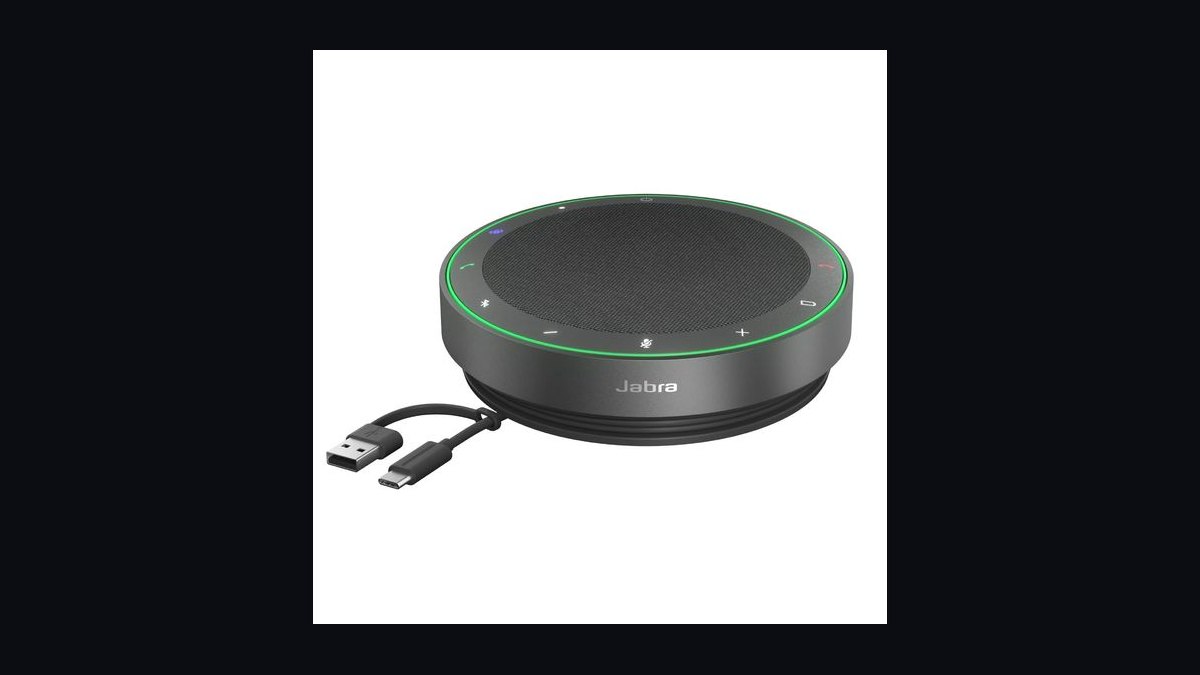
The 10 best conference speakerphones for sales team calls are ranked below on measured performance, build quality, price, and how each one actually holds up in daily use rather than how it reads on a spec sheet. Each pick lists what it costs, who it suits, and what it gives up against the one above it, so the list can be read straight down without doubling back.
1Jabra Speak2 75
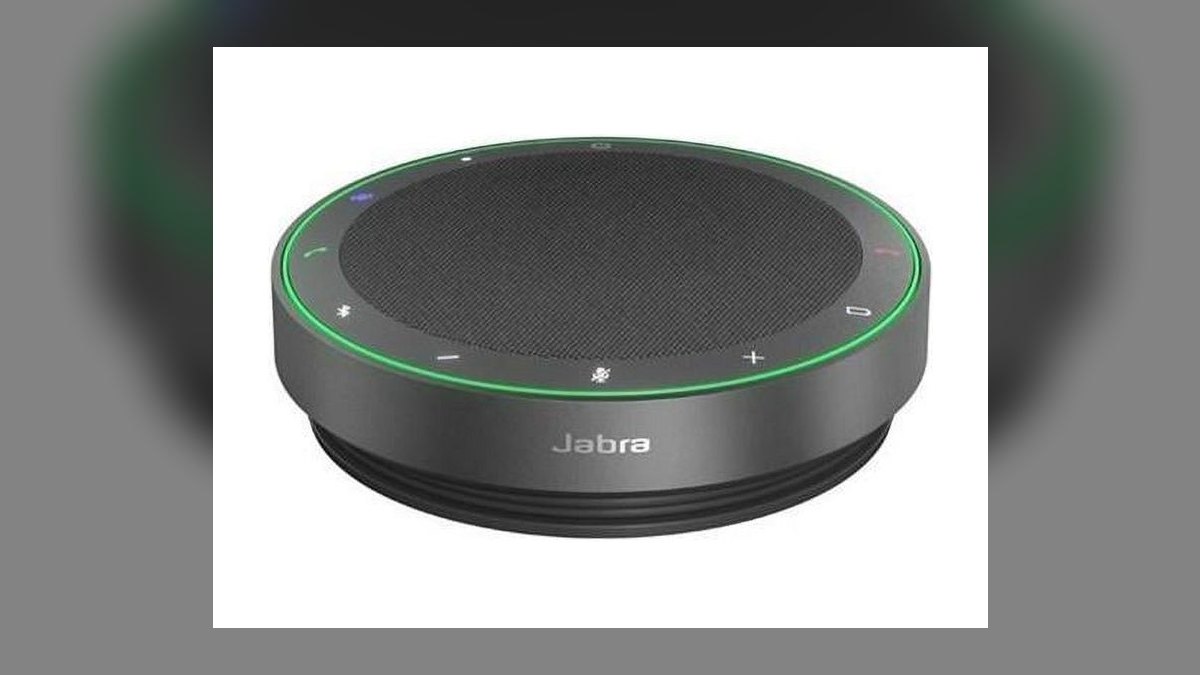
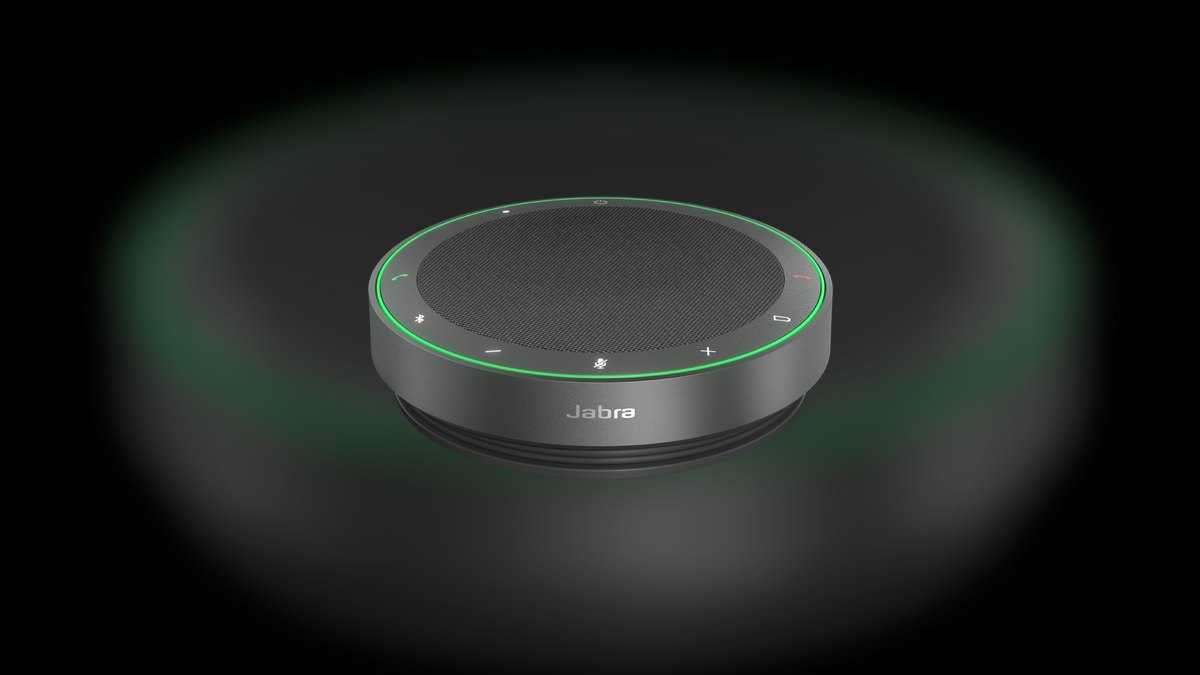
The Speak2 75 ranks first because it is the only speakerphone near $349 that combines super-wideband 50 Hz–20 kHz audio, four noise-cancelling beamforming microphones, and a 32-hour talk-time battery in one carry-pouch chassis. The 65mm full-range driver hits 85 dB max SPL, and voice-level normalization keeps a quiet prospect audible without the rep riding gain.
This is the pick for outside AEs and sales leaders who alternate between hotel desks, home offices, and HQ huddle rooms. It trades room coverage for portability — 360° pickup runs to roughly eight feet, so a twelve-person war room needs a Poly Sync 60 instead. Against the Poly Sync 40+ below it, the Jabra wins on wideband fidelity and two extra hours of battery, but gives up Poly Lens fleet telemetry.
2Poly Sync 40+
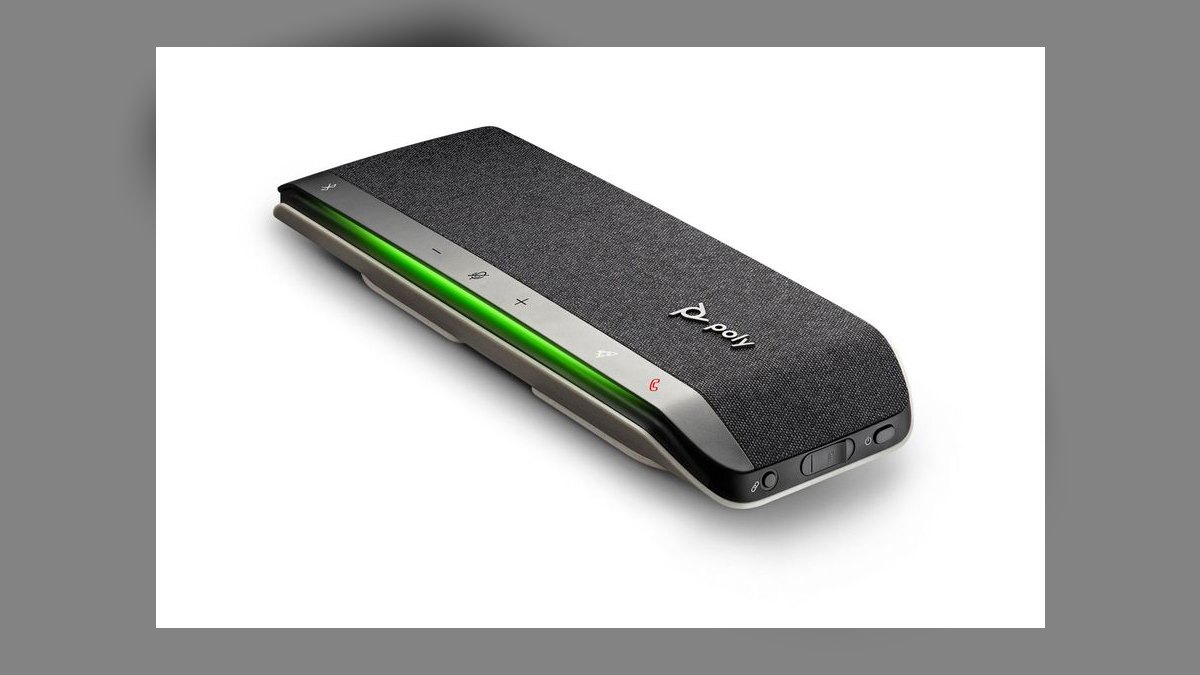
The Sync 40+ lands second at $279 because it matches the top pick on portability and beats it on IT manageability, without quite equalling its audio. Three directional microphones with Poly's Acoustic Fence beam shaping cover about a seven-foot radius, and a 20 W amp pushes 82 dB SPL. Battery runs 30 hours. The bundled BT600 dongle handles Bluetooth 5.1 with two-device multipoint, and certification spans Teams, Zoom, Meet, Avaya, and Cisco Webex.
Buy this if your sales org already runs an HP/Poly headset fleet and IT wants one vendor for firmware, support, and Poly Lens telemetry with hot-desk profiles. You give up the Speak2 75's super-wideband range and its fourth microphone. For a 200-seat floor, remote firmware push and device analytics usually outweigh that fidelity gap; for a solo traveling rep, they do not.
3Anker PowerConf S3
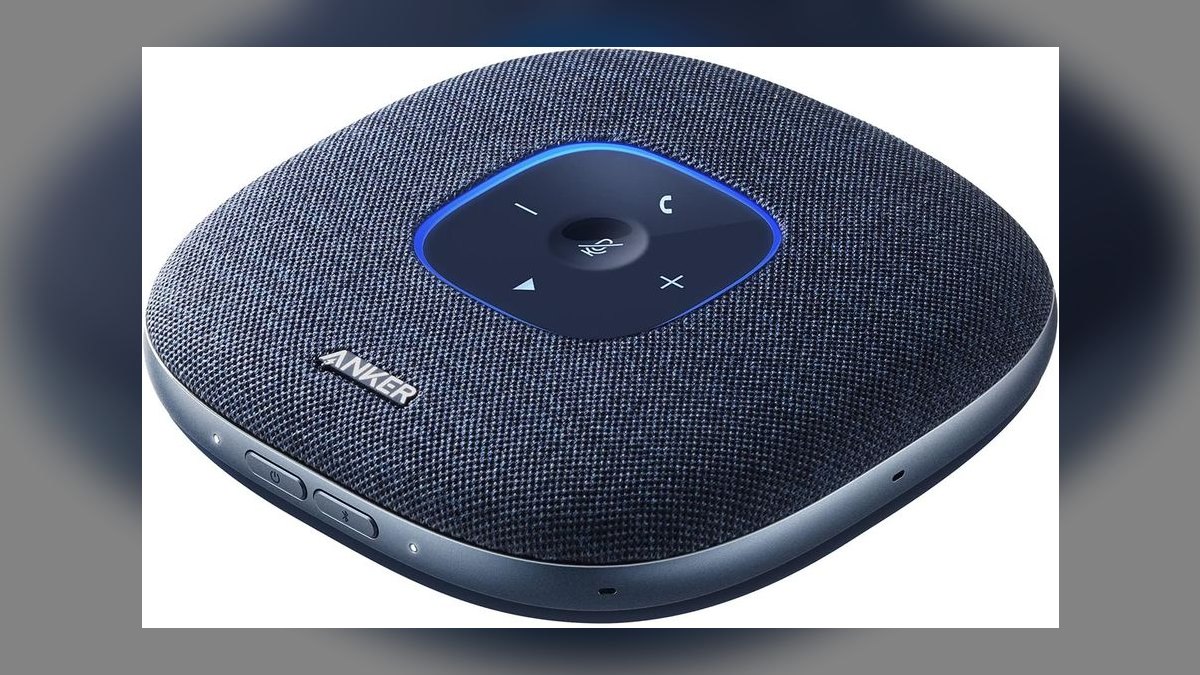
The PowerConf S3 takes third on unit economics no competitor near $129 approaches: six microphones with AI-enhanced 360° pickup across an eight-foot radius, 24 hours of talk time, and USB-C plus Bluetooth 5.3. A 2.5 W full-range driver is voice-tuned rather than music-tuned. Certification covers Zoom, Google Meet, Webex, and standard-tier Microsoft Teams. Twenty units outfit an entire SDR floor for under $2,600.
This is for BDR and SDR pods, high-volume cold-call bullpens, and home-office AEs buying on a personal stipend. What you trade is fidelity — the small driver and standard-tier Teams certification sit well below the Speak2 75's wideband audio and one-touch join. If your stack is Teams-first, the S3-MS variant at $149 is the correct order. The AnkerWork app handles EQ and voice tuning.
4Jabra Speak2 55
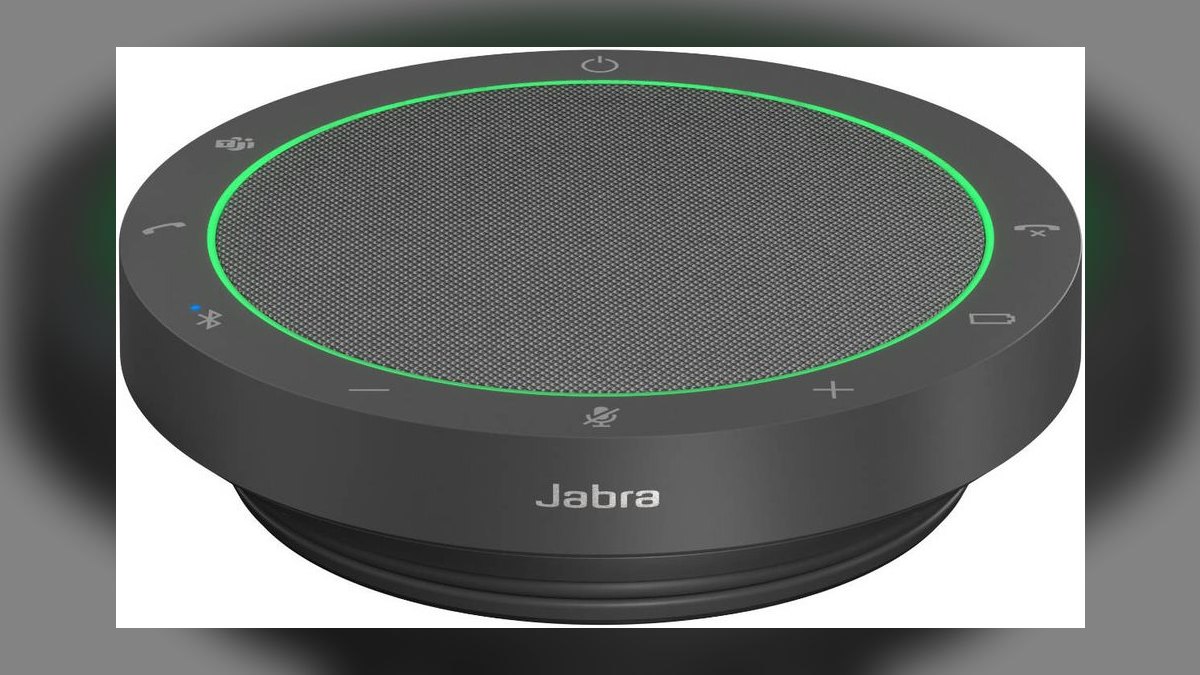
The Speak2 55 ranks fourth on price-to-fidelity in the sub-$250 bracket. It runs the same Speak2 acoustic platform as the $349 model in a smaller chassis: four beamforming full-duplex microphones and a 50mm driver covering wideband 100 Hz–7.5 kHz. At $229 it inherits Jabra's voice-normalization tech, which lifts quiet prospects without gain-riding.
Spec this for inside-sales AEs at a fixed desk and two-to-three person huddle rooms, especially where sales ops wants fleet consistency with the 75 in field roles. The trades are real: 12 hours of battery against 32, and 7.5 kHz ceiling against 20 kHz. Desk-bound reps rarely notice either; a rep living out of a backpack will.
5Poly Sync 60
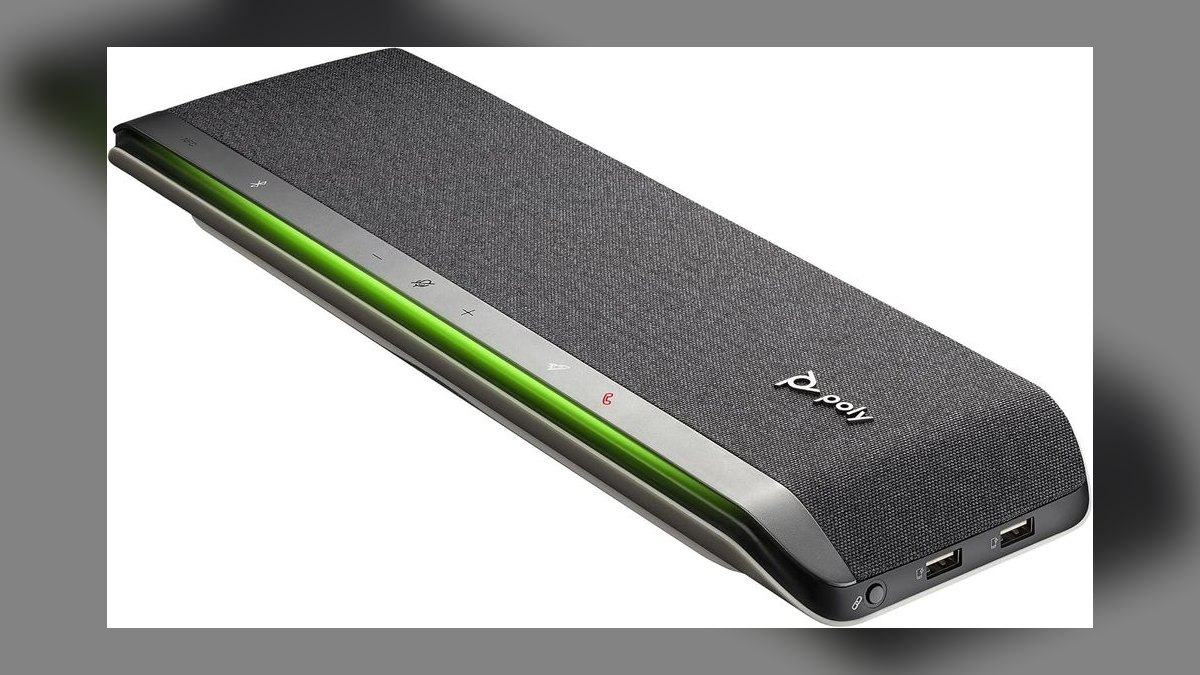
The Sync 60 ranks fifth on mid-room economics — one $549 unit covers a ten-to-twelve person space that once required a $2,000-plus ceiling-mic install. Six steerable beamforming microphones with NoiseBlockAI reach roughly 20 feet, and a stereo full-range speaker pair delivers 90 dB SPL. Cable daisy-chain links two units for a 20-person room. It is certified for Microsoft Teams Rooms, Zoom Rooms, and Google Meet hardware, with Poly Lens cloud firmware control.
This belongs in sales leadership conference rooms, EBC suites, and sales-engineering demo theaters where prospects join in person and remote on the same call. It is AC-powered, so there is no battery and no backpack use. Against the Speak2 55 above it, the Sync 60 buys triple the pickup radius and stereo output for more than double the price — pointless at a single desk.
6Yamaha YVC-1000
The YVC-1000 earns sixth on acoustic engineering rather than price: at $1,049 its modular design splits speaker, control unit, and microphones so mics sit on the table while the speaker wall-mounts, eliminating the proximity feedback that limits all-in-one units. Two tabletop mics ship in the box and expand to five, each covering a 20-foot radius. The 10 W wall speaker runs 150 Hz–20 kHz, and Yamaha's adaptive echo cancellation is the category reference.
This is for enterprise sales-engineering teams, investor-day rooms, and 20-to-25 seat training rooms where audio quality carries the brand impression. It trades away plug-and-play entirely — USB, Bluetooth, 3.5mm, RCA, and HDMI passthrough mean an install, not an unbox. The Poly Sync 60 above it costs half as much and sets up in a minute; the Yamaha wins any blind listening comparison between them.
7Yealink CP900
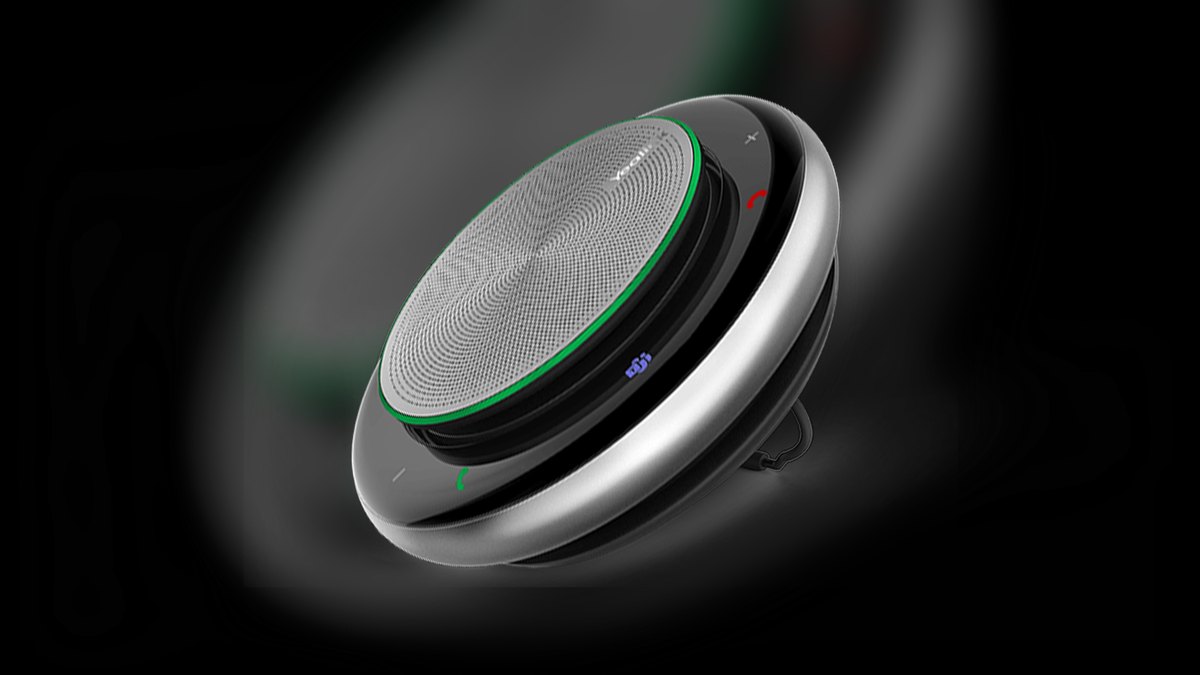
The CP900 ranks seventh as a $259 unit with feature parity against pricier portables. Three microphones give 360° pickup out to about 6.5 feet, Yealink's Noise Proof DSP handles background suppression, and a full-duplex speaker reaches 86 dB SPL. Battery runs 12 hours. Connectivity is USB-A plus Bluetooth through the BT50 dongle with NFC pairing, and it carries Microsoft Teams certification with a hardware Teams button, plus Zoom and Skype for Business.
The case for it is ecosystem, not raw specs: sales floors already standardized on Yealink desk phones or MVC video bars get the Yealink Device Management Platform covering everything, and a Yealink VAR can stack channel discounts. Outside that fleet, the Speak2 55 costs $30 less with a fourth mic and wider frequency response. The 6.5-foot pickup is the tightest radius on this list.
8EPOS Expand 80T
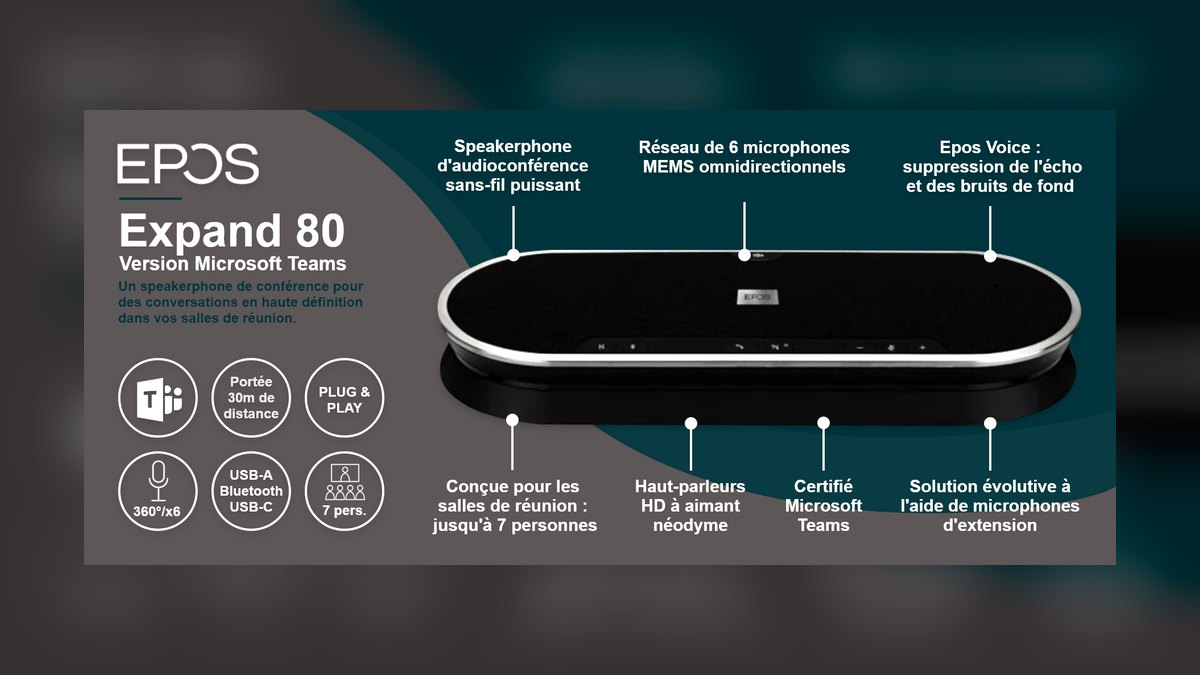
The Expand 80T ranks eighth on tuning quality at $799 — its Sennheiser voice engineering wins blind A/B comparisons against everything here except the Yamaha. Six voice-capture microphones reach roughly 16 feet and expand with two EXPAND 80 Mic add-ons; dual full-range drivers deliver 80 dB SPL. USB-A/C and dongle-based Bluetooth connect, and daisy-chaining scales past 16 people without an integrator. It is Microsoft Teams certified, plus Zoom, Webex, and Skype for Business.
Buy it for executive briefing rooms, CEO-to-CEO renewal calls, and board updates where audio quality is the brand impression. The price is the trade — $250 more than a Poly Sync 60 for similar room coverage, justified only when the calls are C-suite-facing. The Yamaha above costs $250 more again and still beats it acoustically, but requires an install the EPOS does not.
9AnkerWork PowerConf S500

The S500 ranks ninth on price-to-room-certification: at $299 it is the cheapest unit here carrying both Zoom Rooms and Google Meet hardware certification. Four beamforming microphones run VoiceRadar 2.0 AI noise cancellation, and a custom OmniSound driver hits 95 dB SPL — the loudest output on this list. USB-C and Bluetooth 5.0 connect, the AnkerWork app handles tuning, and a 5 W wireless charging pad sits on the top surface.
This is the upgrade path for SMB sales floors outgrowing the $129 PowerConf S3 and for Zoom-standardized teams that want room certification without Poly money. Teams support is standard tier only, so Teams-first shops should look elsewhere. Against the Sync 40+ at $279, the Anker wins on room certification and loses on enterprise device management. The charging pad genuinely helps reps who keep a phone out for SMS prospecting.
10Logitech P710e
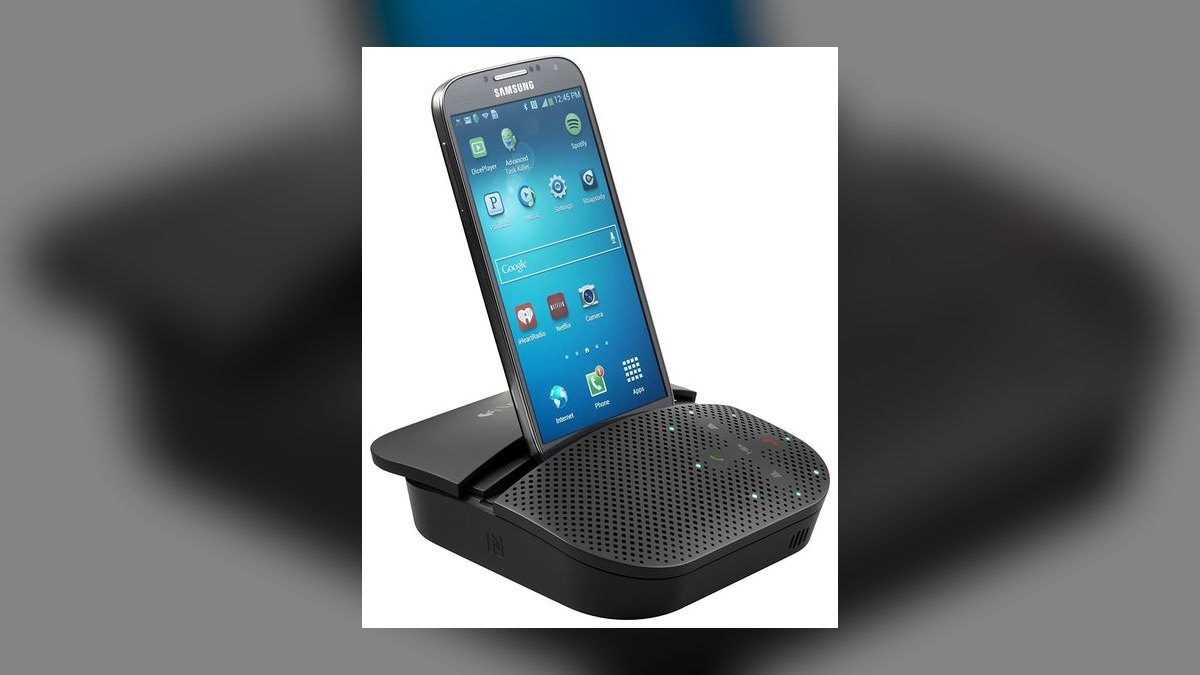
The P710e ranks tenth on friction rather than specs — at $199 it is the lowest-effort USB and Bluetooth combo here, with zero driver install on Windows, Mac, or Linux. It has been in production roughly eight years and still ships. An omnidirectional mic array with DSP echo cancellation feeds a full-duplex speaker at 86 dB SPL, battery runs 15 hours, and USB-A, Bluetooth, and NFC all connect. The integrated smartphone cradle remains unique in this category.
Stock this as the loaner unit IT hands a traveling rep, or as a branch-office conference kit where setup time beats fidelity. It is outclassed on mic count and wideband response by every unit above it, including the $129 PowerConf S3, which has six mics and nine more hours of battery. Choose the Logitech when the person using it will not read a manual.
How we ranked these
We weighted four things: microphone array design and measured pickup radius, speaker bandwidth, battery endurance under continuous talk time, and formal certification for Microsoft Teams, Zoom, and Google Meet. Fleet manageability counted too — Poly Lens, Jabra Direct, and Yealink's device platform matter once a sales org passes roughly fifty seats. Price was scored against room size, not treated as a standalone virtue.
We ignored aesthetic design, status lighting, and app-based EQ presets — none of them change whether a prospect hears you. Amazon star ratings were excluded because consumer speaker reviews and conference-room reviews get averaged together. We also skipped units with no published pickup radius or SPL figure, and any model whose Teams certification had lapsed to the older, unsupported firmware tier.
What to look for
Match the room and the power model before the brand. A rep who alternates hotel desk, home office, and HQ needs battery and multipoint Bluetooth: the Speak2 75 or PowerConf S3. A ten-person war room needs steerable beamforming and daisy-chain: the Sync 60. A twenty-seat training room needs separated mics and speaker, which only the YVC-1000 delivers here. Certification tier matters more than raw mic count.
The common mistake is buying one premium unit for a shared room and letting reps borrow it. Pickup radius is fixed physics — an eight-foot array in a fourteen-foot room drops the far end of the table. Buy cheap per-seat units for individual reps and one correctly sized room unit, rather than a single expensive compromise. The second mistake is skipping the bundled dongle and pairing over native laptop Bluetooth.
Related questions
Does a better speakerphone actually change sales outcomes?
Not directly, but audio failure costs you the moments that decide deals. Echo and clipping hit hardest during objection handling and pricing discussion, when the prospect is already skeptical. A rep who repeats himself twice per call loses momentum and burns discovery time. The measurable return is fewer reschedules and cleaner call recordings for coaching, not a magic lift in close rate.
Should SDRs use a speakerphone or a headset?
Headsets win for high-volume outbound: better mouth-to-mic distance, no room reflections, and no risk of a neighboring rep's pitch bleeding into the call. Speakerphones make sense for SDRs when two people share a call — a manager coaching live, or a handoff to an AE. Many pods buy both and let reps switch by call type.
How many units does a twenty-rep sales floor need?
Fewer than most buyers assume. If reps sit in an open bullpen wearing headsets, you need speakerphones only for shared rooms: typically two huddle rooms and one demo room. Budget one PowerConf S3 or Speak2 55 per traveling AE, one Sync 60 for the war room, and keep a Logitech P710e as a loaner for visitors.
What does beamforming actually do on a sales call?
A beamforming array uses several microphones and timing differences to figure out which direction speech is arriving from, then steers sensitivity toward it and suppresses everything else. On a sales floor that means the rep three desks over does not end up in your prospect's ear. Steerable arrays like the Sync 60's follow whoever is talking as the room changes.
Do I need the bundled USB dongle if my laptop already has Bluetooth?
Yes, for anything that matters. Laptop Bluetooth radios share bandwidth with mice, keyboards, and headphones, and many negotiate down to the narrowband hands-free profile, which sounds like a phone call from 2005. Jabra's Link 380 and Poly's BT600 hold the wideband profile and pair instantly. Keep the dongle taped to the unit so it does not vanish.
How long should a conference speakerphone last before replacement?
Plan on four to six years for the hardware and about three for the battery in portable units. The realistic trigger for replacement is certification, not failure — platform vendors periodically retire older firmware tiers, and a unit that drops off the certified list loses one-touch join. Check the vendor's certified-devices page annually before renewing a fleet standard.
Can one unit cover both a huddle room and a demo theater?
No, and trying is the most common waste in this category. Pickup radius does not scale with volume — turning up the speaker makes the far end louder without making the far end of the table audible. A six-person unit in a fourteen-person room leaves half the participants sounding distant. Buy per room, or buy a daisy-chain-capable unit and add the second node.
FAQ
What is the single most important spec for sales calls?
Microphone pickup radius matched to your actual room, followed by beamforming. Six to ten feet covers a small huddle room; anything larger needs expansion mics or a daisy-chained second unit. Speaker wattage sells units but rarely fixes the real complaint, which is the far end struggling to hear people seated away from the device.
Do I need a battery-powered model for remote work?
If you move between hotel desks, client sites, and HQ, yes — twenty-four to thirty-two hours of talk time covers a full travel week without hunting for outlets. For a fixed desk or a dedicated conference room, AC power is better: no charge cycle to manage, no battery degradation at year three, and usually a larger driver and mic array.
Does platform certification really matter?
Certification buys you one-touch join, hardware mute that syncs with the software mute state, and a supported firmware path. Non-certified units still carry audio fine, but reps end up muted in software while unmuted on the device, which produces the most common awkward moment on any sales call. Verify the certification tier, since standard and premium differ.
How many people can a single speakerphone cover?
Four to six microphones handle four to six people in a quiet room. Six-mic steerable arrays like the Sync 60 stretch to ten or twelve. Past that you want expansion microphones or a modular system that separates the mics from the speaker. Room noise cuts these numbers roughly in half, so measure your actual space rather than the spec sheet.
Is Bluetooth or USB better for important calls?
USB for anything you would not want to reschedule — renewals, executive briefings, live demos. It is a dedicated wired path with no interference and no pairing state to lose. Bluetooth is right for mobility, and a proper wideband dongle closes most of the quality gap. Many teams standardize on USB at the desk and Bluetooth on the road.
What is a realistic budget in 2027?
For individual reps, $129 to $349 buys everything that matters: multi-mic arrays, all-day battery, and tri-platform certification. Shared rooms run $549 to $1,049 depending on seat count. The bracket to avoid is $60 to $100 — those units use single omnidirectional mics with weak echo cancellation and produce the clipping that makes prospects ask you to repeat yourself.
Do expansion microphones actually help?
Yes, more than a bigger all-in-one does. Adding a second tabletop mic moves the pickup point closer to distant seats, which is a physics fix rather than a processing fix. The YVC-1000 scales to five mics and the EPOS Expand 80T takes two add-ons. Expansion is also cheaper than replacing a room system when headcount grows.
Does daisy-chaining two units hurt audio quality?
Properly implemented, no — the units negotiate which array is active and share a single echo-cancellation domain, so you get wider coverage without doubling the room reflections. Problems appear when people chain units the vendor never designed for it, or run them on separate USB inputs, which creates two audio paths and audible feedback between them.
Is separating the speaker from the microphones worth the install work?
In rooms above about fifteen people, yes. All-in-one units place the driver inches from the mic array, so echo cancellation has to work continuously and full-duplex performance suffers when both ends talk. The YVC-1000 puts the speaker on a wall and the mics on the table, which is why it stays the reference for large rooms despite the setup cost.
Sources
- https://www.jabra.com/business/speakerphones/jabra-speak-series/jabra-speak2-75
- https://www.poly.com/us/en/products/phones/sync/sync-40
- https://us.ankerwork.com/products/a3302
- https://www.yealink.com/en/product-detail/speakerphone-cp900
- https://www.eposaudio.com/en/us/speakerphones
- https://usa.yamaha.com/products/unified_communications/speakerphones/yvc-330/index.html
- https://www.dxomark.com/speakerphones-see-which-ones-performed-best-in-our-tests/
- https://learn.microsoft.com/en-us/microsoftteams/devices/usb-devices
- https://www.amazon.com/Logitech-P710e-Mobile-Conferencing-Speakerphone/dp/B00G57DFDG
Related on PULSE
This page will be disappearing soon. Save it to your device for $1 — or read it free while it is here.
@Kory-White- · if Venmo asks, the last 4 of my number are 2012
This page is gone.
This one is off the shelf now. $1 keeps it on your phone for good — the whole page, pictures and diagrams included.
 pulse-reviewsTop 10 DDR5 RAM Kits — Best Overall + Best Value in 2027
 pulse-reviewsTop 10 YouTube Lighting Kits — Best Overall + Best Value in 2027
 pulse-reviewsTop 10 Car Phone Mounts for Field Sales Reps in 2027
 pulse-reviewsTop 10 Multimeters — Best Overall + Best Value in 2027
 pulse-reviewsTop 10 Drone Batteries — Best Overall + Best Value in 2027
 pulse-reviewsTop 10 Document Cameras for Remote Demo Recording in 2027
 pulse-reviewsTop 10 USB-C Hubs for Sales Travel in 2027
 pulse-reviewsTop 10 1080p External Webcams for Sales Reps in 2027
 pulse-reviewsTop 10 Cordless Brad Nailers — Best Overall + Best Value in 2027
 pulse-reviewsTop 10 Rugged Phones — Best Overall + Best Value in 2027