


Top 10 Portable Espresso Makers for Sales Travel in 2027
Quality
Certified
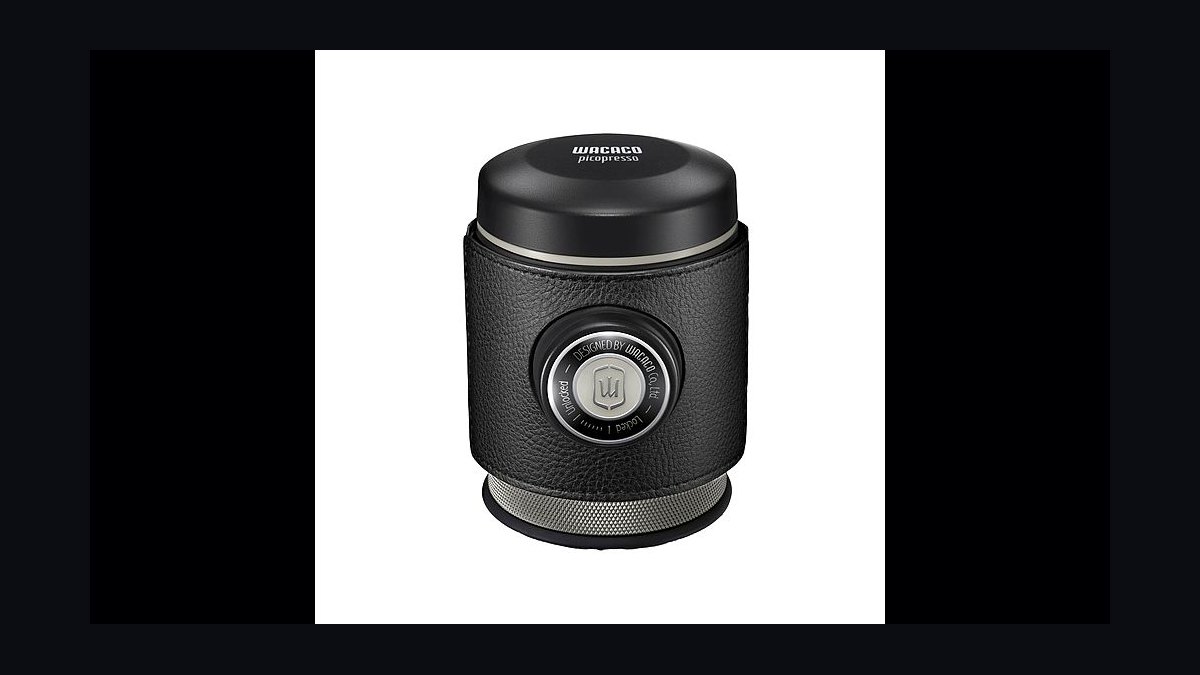
The 10 best portable espresso makers for sales travel are ranked below on measured performance, build quality, price, and how each one actually holds up in daily use rather than how it reads on a spec sheet. Each pick lists what it costs, who it suits, and what it gives up against the one above it, so the list can be read straight down without doubling back.
1Wacaco Picopresso
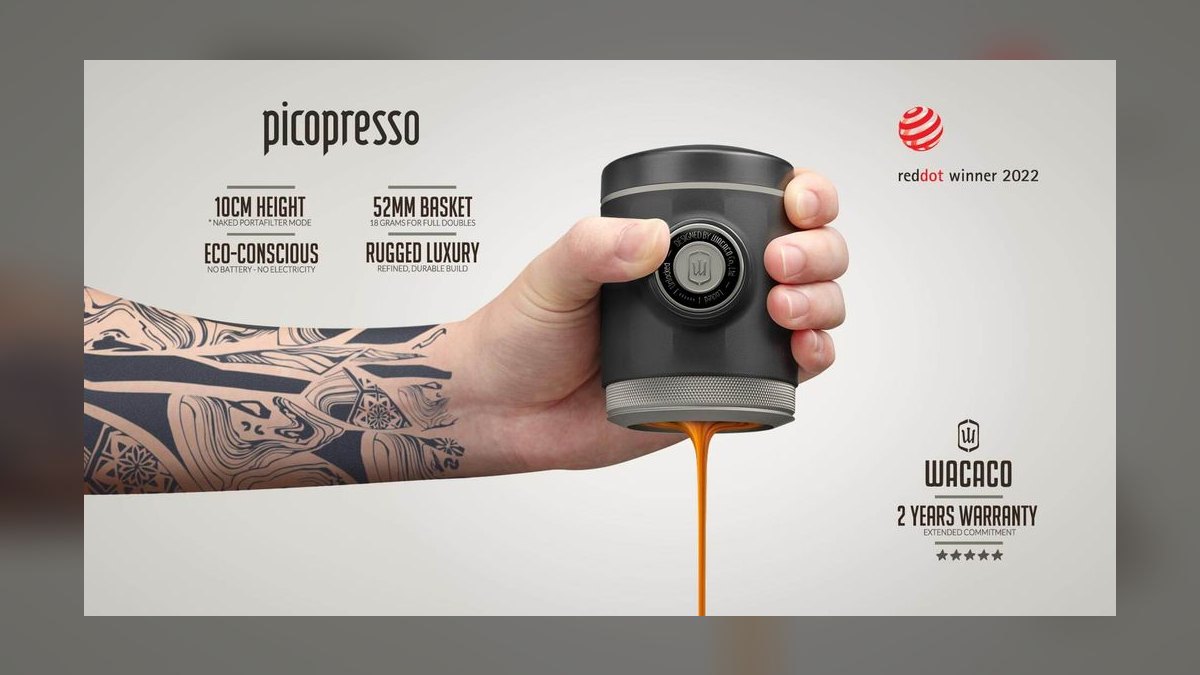
The Picopresso ranks first because it is the only hand-pumped maker here that pulls a genuine 18g double shot through a 49mm bottomless portafilter. It weighs 350g, measures 4.2 x 4.0 x 3.0 inches, and peaks at 18 bar with no battery or heating element inside. The 80ml chamber takes hot water you supply. Price is $129.90 with a carry case, scoop, funnel, and cleaning brush included.
This is for outside reps who order doubles at home and refuse hotel-lobby drip. The trade is real: you must source hot water yourself, and the 49mm basket demands a fine, even grind that a cheap travel grinder will not produce. Against the Nanopresso directly below it, the Picopresso costs roughly double and asks more of your technique, but the crema and shot volume are not close.
2Wacaco Nanopresso
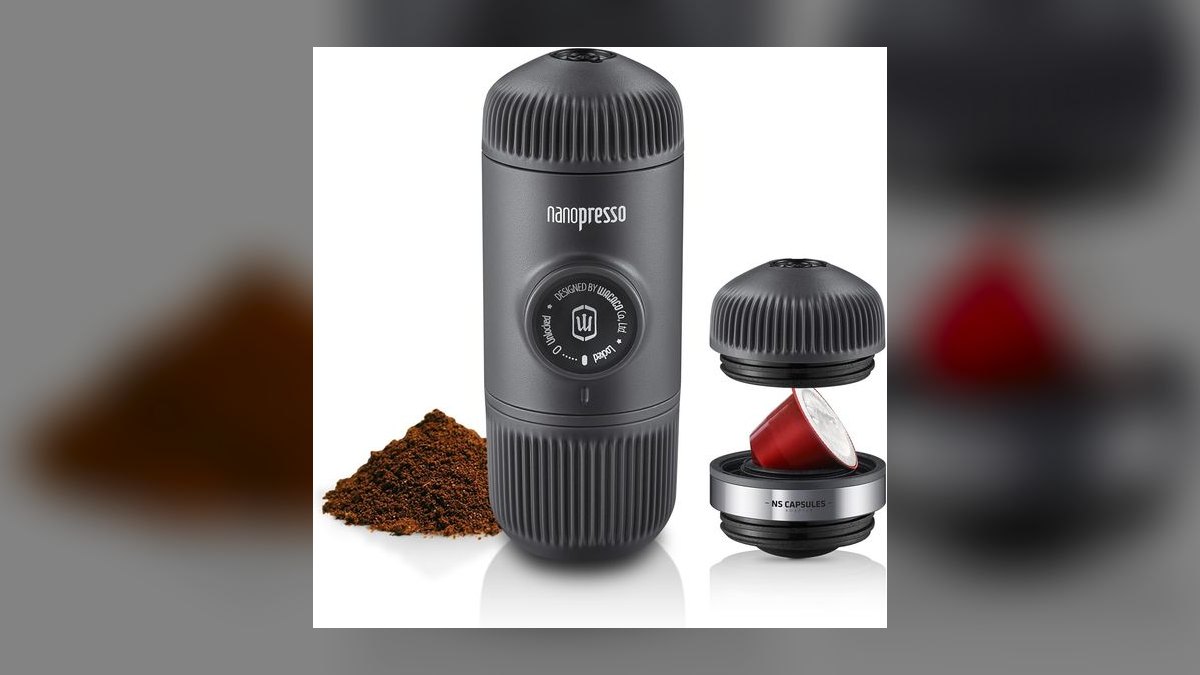
The Nanopresso holds second on price and ecosystem rather than raw shot quality. At $69.90 it delivers up to 18 bar from the same patented pump family, weighs 336g, and runs 6.14 inches long with an 80ml water chamber. The stock basket doses 8g for a single shot; the $24.90 Barista Kit raises that to 18g. The body is food-grade polycarbonate over 304 stainless.
Buy this if you have never owned a portable and want the safest bet under $80. What you give up is the Picopresso's bottomless 49mm basket and its out-of-box double-shot capability, so an honest comparison costs $94.80 once you add the Barista Kit. In exchange, replacement seals, NS capsule adapters, and spare parts are stocked at nearly every specialty roaster.
3OutIn Nano
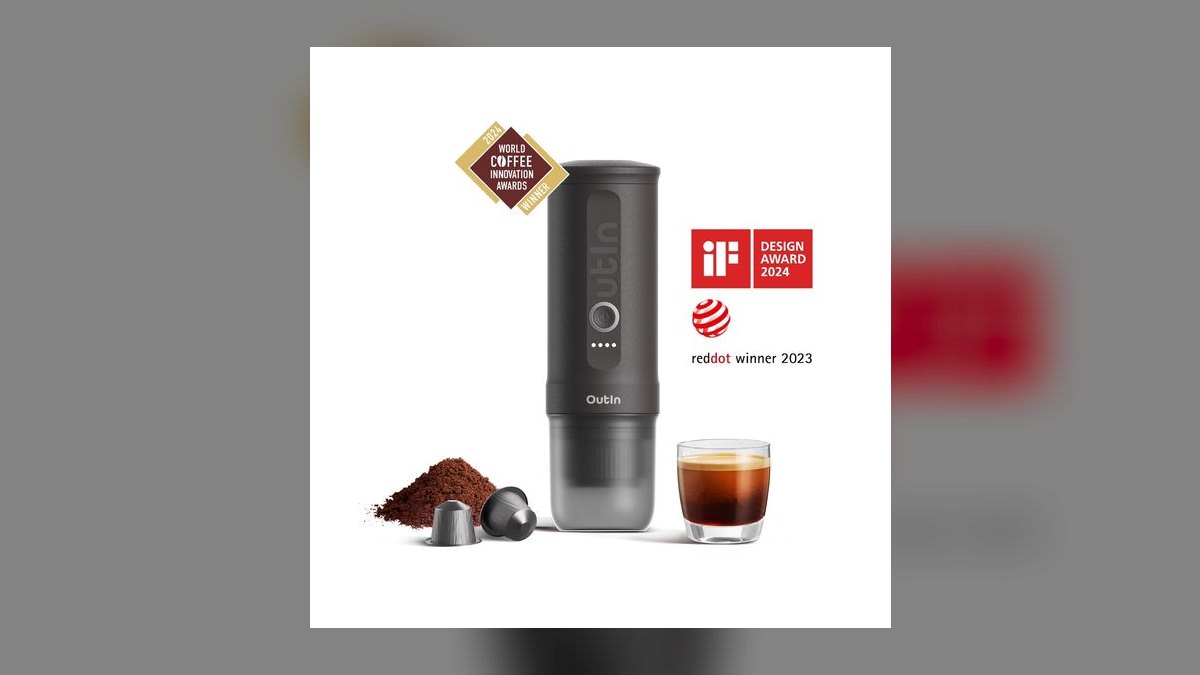
The OutIn Nano earns third as the battery maker that finally works, self-heating cold water to extraction in three to four minutes with no external kettle. Its electric pump hits 20 bar, one button press pulls a 50ml shot, and the USB-C rechargeable lithium-ion cell manages roughly three shots per charge. It weighs 670g and accepts both ground coffee and NS capsules. Price is $149.99.
This suits frequent fliers and account executives working out of rental cars, where hot water is the actual bottleneck. It costs $20 more than the Picopresso above it, weighs nearly twice as much, and its lithium cell puts it under standard carry-on battery rules rather than the no-questions status of a pure pump. Testers at Coffeeness and Coffee Chronicler rate its crema above the Nanopresso's.
4Flair 2GO
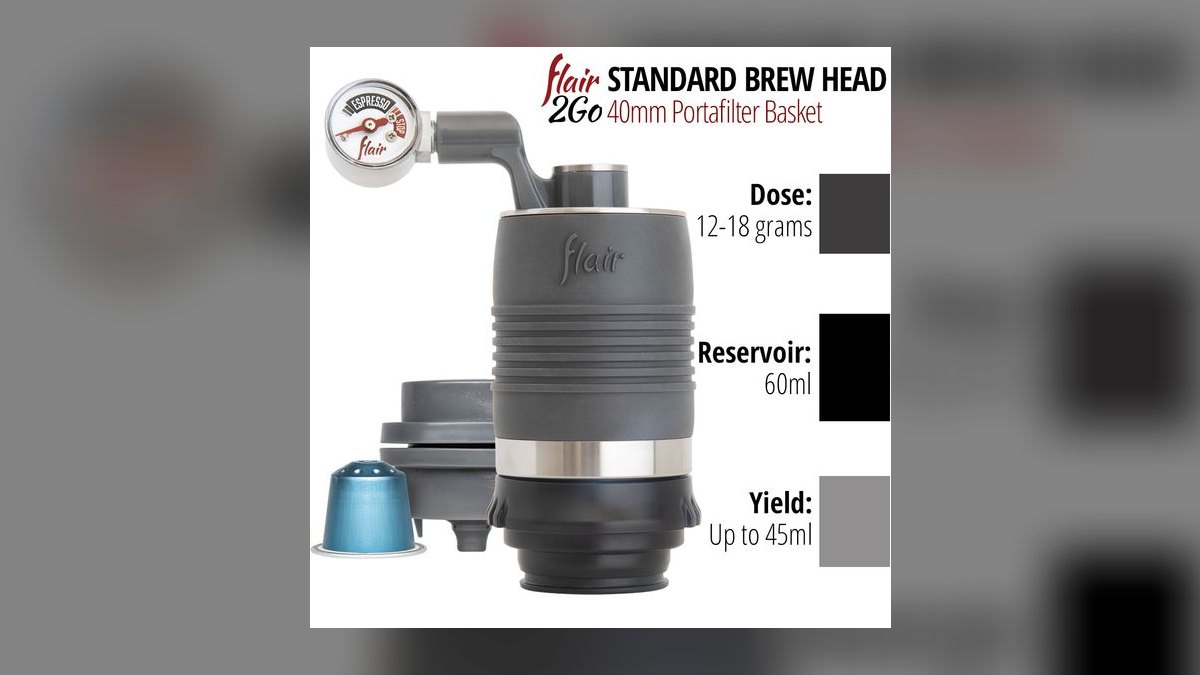
The Flair 2GO ranks fourth because it delivers a true 9-bar lever pull with a built-in pressure gauge, so you can actually see the extraction instead of guessing at it. You press down with body weight rather than pumping. The 14g basket hits a proper espresso ratio, the stainless plunger rides in an aluminum body, and the whole thing folds into a hard case at 900g. Price is $119.00.
This is for home-barista hobbyists who dial in shots and want that discipline on the road. It is the heaviest manual pick here and needs a flat, stable surface plus your own hot water, which rules out pulling a shot on your lap. Compared with the OutIn Nano above, it is slower and fussier, but nothing electric matches the repeatability of a gauge-verified 9-bar pull.
5Wacaco Minipresso GR
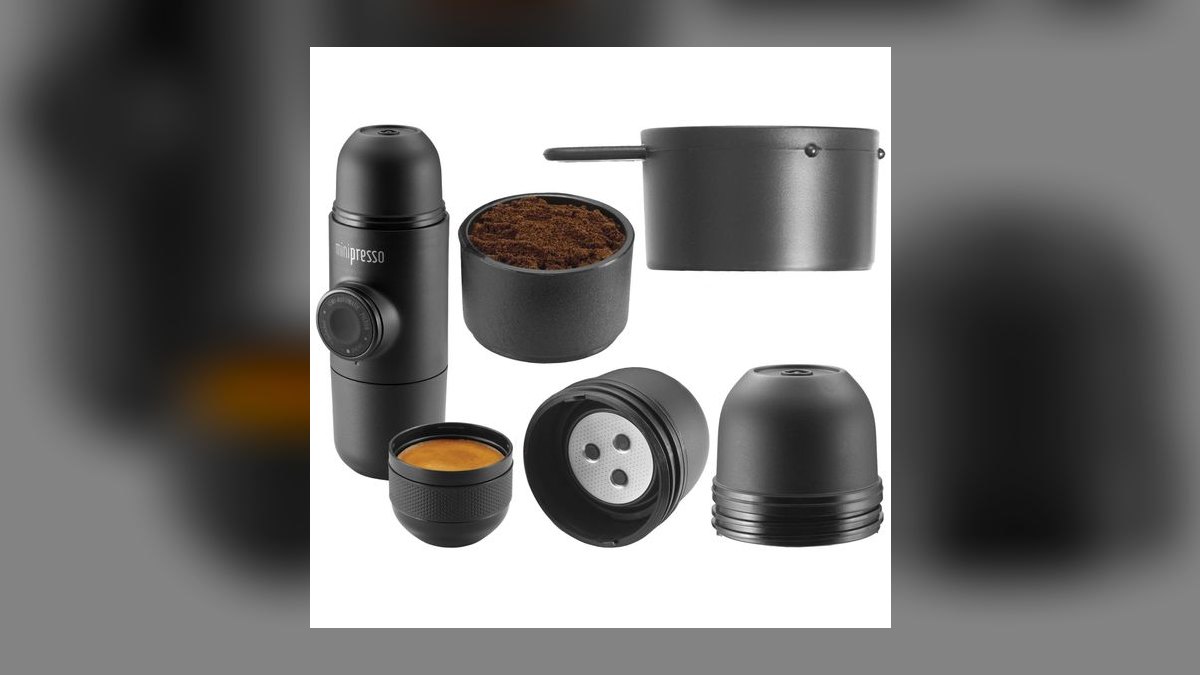
The Minipresso GR takes fifth as the best-value entry: $59.90 is the cheapest legitimate espresso pressure in this list. The hand pump reaches 8 bar, the basket doses 7-8g for a single shot, and the chamber holds 70ml of water you heat yourself. It weighs 360g. The build combines PBT, polypropylene, stainless, and silicone into something that survives being thrown in a bag daily.
This fits junior SDRs and anyone capped at a sub-$70 budget who still wants visible crema in a hotel room. You surrender the double-shot capability of the Picopresso and run 8 bar against the Nanopresso's 18, so shots are lighter-bodied. For one morning cup, that gap matters less than the $70 you keep versus the Picopresso.
6Handpresso Wild Hybrid
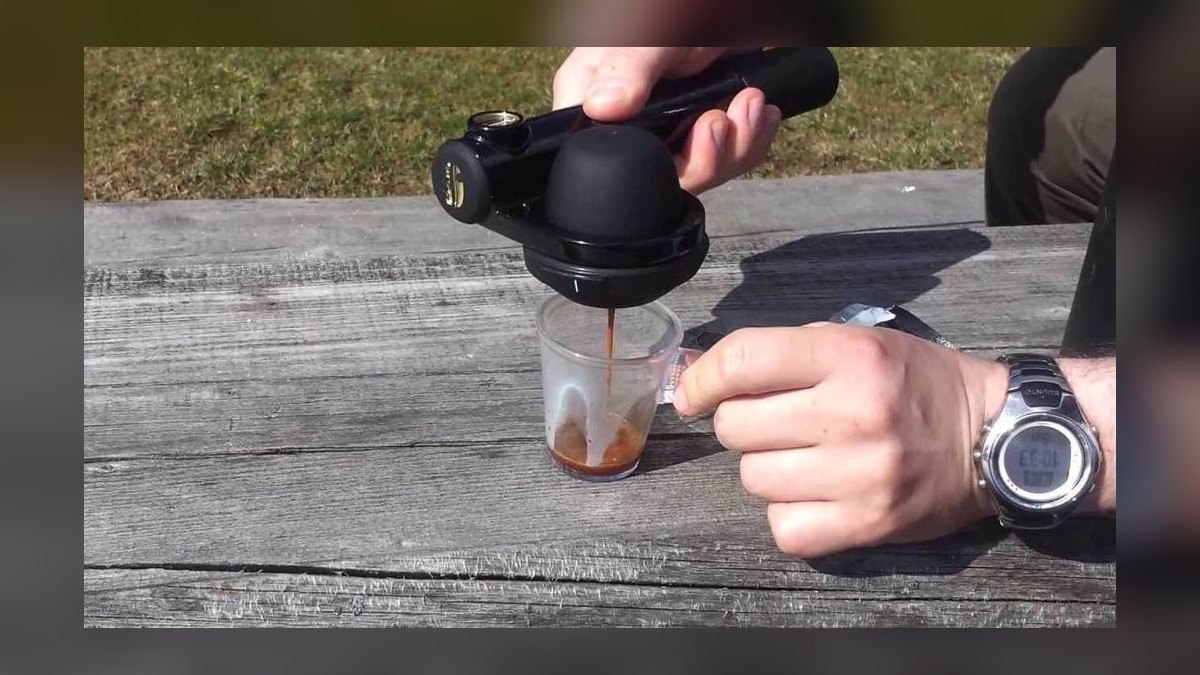
The Handpresso Wild Hybrid lands sixth on format flexibility and durability rather than shot ceiling. Its bicycle-pump-style integrated pump reaches 16 bar, and the hybrid basket takes either 7g of ground coffee or a single ESE pod with no kit swap. The chamber holds 50ml and the unit weighs roughly 480g. The French design predates most of this category and the copies that followed it.
This is for reps already buying Illy, Lavazza, or Kimbo ESE pods who want pre-measured dosing on weekday mornings and ground coffee on weekends. The industrial design is dated and the 50ml chamber is the smallest among the pump models here. Against the Minipresso GR above it, you pay $59.10 more for pod compatibility and a heavier, more rigid body.
7Leverpresso V4
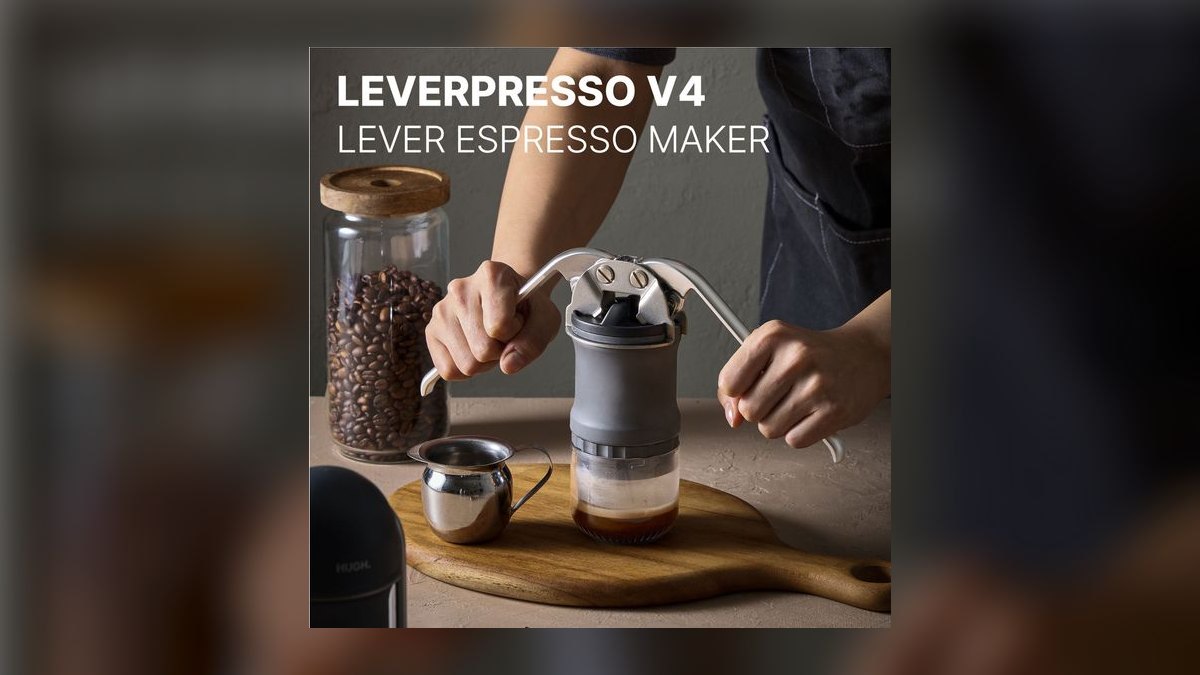
The Leverpresso V4 ranks seventh for putting an 18g basket and a consistent 9-bar lever under $100, at $89.00. The pulling motion is horizontal, which is easier on the wrist than a vertical press, and the 120ml water chamber is the largest here. It weighs under 1.5 pounds and combines BPA-free plastic with stainless and aluminum components.
This is for lever-extraction fans who cannot justify the Flair 2GO's $119.00. The trade is structural: the build is lighter-duty than Flair's and there is no pressure gauge, so you are pulling by feel with no feedback loop. That is exactly the feature that put the 2GO three places higher. For a rep who wants true double shots on a budget, the 18g basket is rare at this price.
8Staresso Mirage SP-300
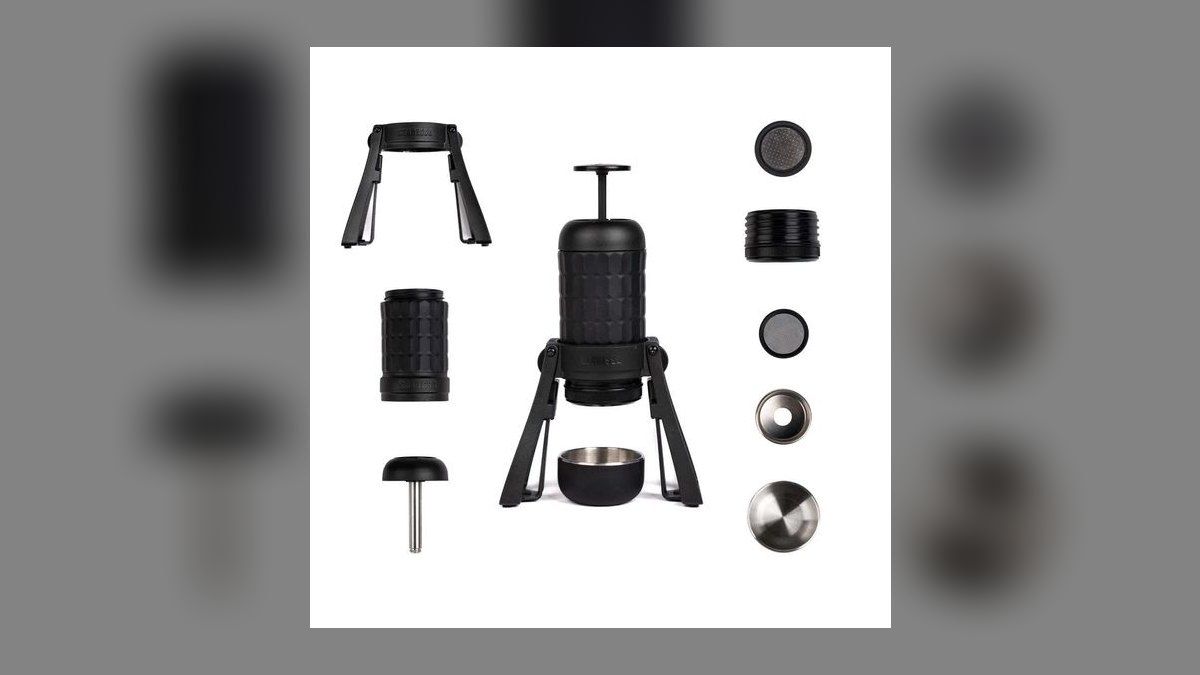
The Staresso Mirage sits eighth on breadth, not refinement: it is the only pick that handles ground coffee, Nespresso, and Dolce Gusto capsules in one body. The hand pump is rated to 20 bar, the unit holds 80ml of water with a 60ml shot glass, and it includes a built-in milk-frother chamber. It weighs roughly 500g. Price is $79.99.
This makes sense for reps whose territory crosses capsule ecosystems, US Nespresso one week and EU Dolce Gusto the next. The pump feel is noticeably less refined than Wacaco's, and long-term gasket durability is the common complaint. Versus the Leverpresso V4 above, you lose the 18g basket and lever consistency but gain three brewing formats and frothing in the same $80 footprint.
9Cafflano Kompresso
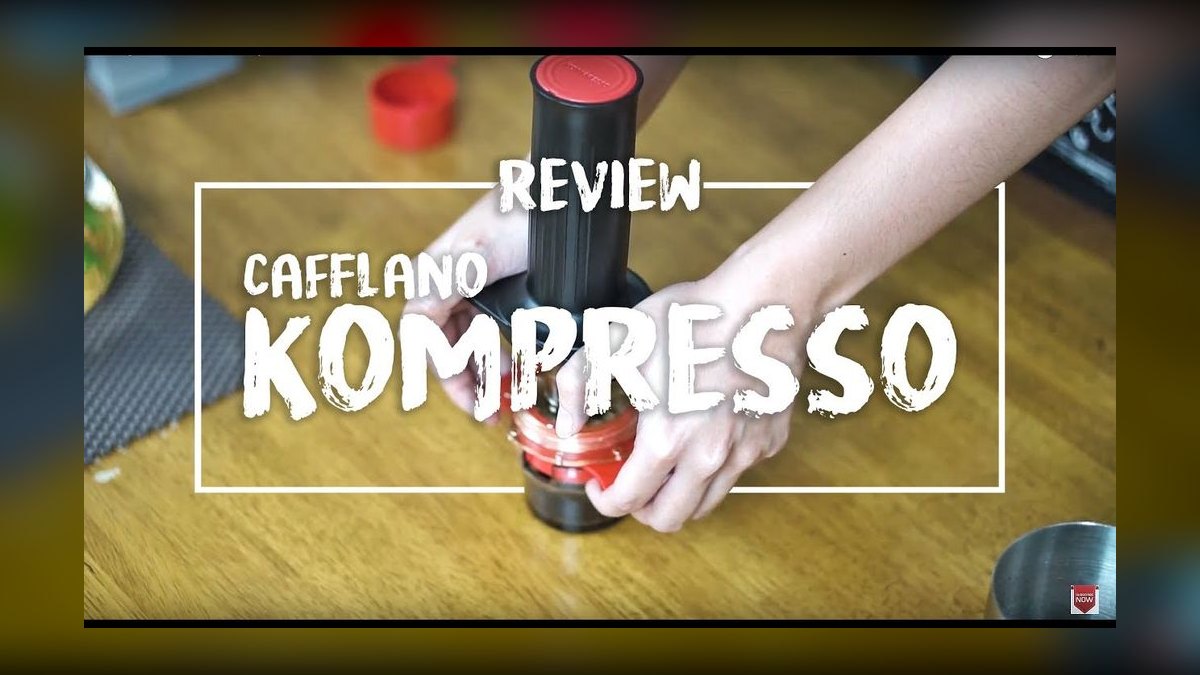
The Cafflano Kompresso ranks ninth on weight alone: under 200g makes it the lightest maker on this list by a wide margin. It uses hydraulic compression rather than a pump, so you press the top down with both hands to reach 9-plus bar. The body measures 17cm by 10cm, combines food-grade plastic with stainless, and produces a 50ml shot. Price is $79.99.
This is for reps flying personal-item-only or carrying gear between client sites on foot. The trade is control: the hydraulic pressure curve is harder to modulate than a pump stroke or a lever, so shot-to-shot consistency lags everything above it. Against the Staresso Mirage, you drop 300g and every capsule format, keeping only ground coffee and the smallest possible packed volume.
10Conqueco Portable Espresso Maker
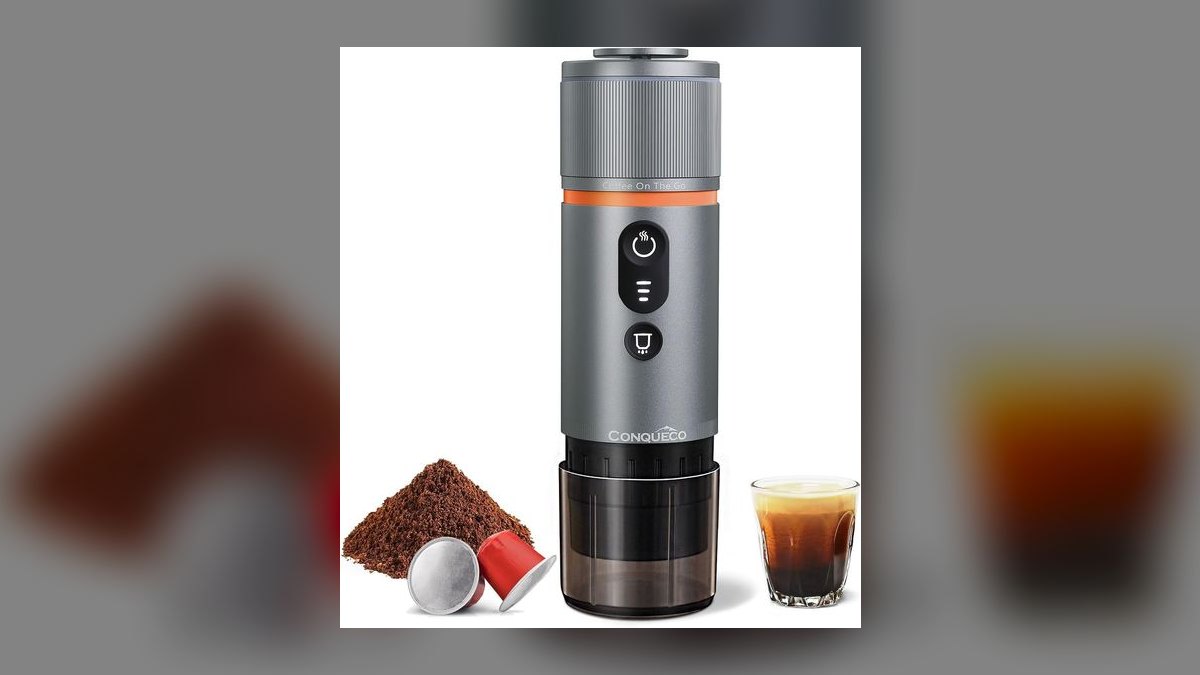
The Conqueco ranks tenth as the budget battery option, $99.00 against the OutIn Nano's $149.99. Its electric pump is rated to 15 bar, the built-in heating element takes cold water to a shot in about five minutes, and the lithium-ion cell manages two to three shots per charge. It weighs roughly 750g and accepts ground coffee or NS capsules. It is the heaviest unit here.
This is for road warriors who need push-button operation and cannot spend $150. The trade shows up over time: user reports put its gasket and pump life roughly 18 months behind OutIn's, and 15 bar with five-minute heating trails the Nano's 20 bar and three-to-four-minute cycle. If automation is non-negotiable and $100 is the ceiling, it is the only real answer.
How we ranked these
Ranking weighed four measurable things: extraction pressure verified against each maker's own spec (8 to 20 bar), basket dose in grams since 18g means a real double and 7g does not, packed weight and dimensions against a laptop-bag pocket, and heat dependency — whether you must source hot water or the unit boils it. Price-per-shot-quality broke ties.
Published head-to-head results from Tom's Guide, TechRadar, Coffee Chronicler, and Coffeeness carried weight where hands-on testing overlapped.
Deliberately ignored: color options, capsule brand loyalty, and marketing claims about "cafe-quality" that no gauge backs up. Also set aside grinder pairing, because a rep with a hand grinder and a rep buying pre-ground both need the same machine. Battery capacity beyond roughly three shots per charge was dropped — nobody pulls four shots between gates. Warranty length was ignored too; seals are consumables on every model here, replaced yearly regardless of coverage.
What to look for
The real decision is heat source, not pressure. Manual makers — Picopresso, Minipresso GR, Flair 2GO, Leverpresso — require you to already have water near 200°F, which means a hotel kettle, a lobby urn, or a gas-station hot-water tap. Battery units like the OutIn Nano and Conqueco carry their own element and add three to five minutes plus a charging obligation. Answer that question first and half the list disappears.
The common mistake is buying on bar rating. Twenty bar peak on a hand pump is a momentary spike, not sustained extraction pressure, and it tells you nothing about shot quality. The 9-bar lever machines with gauges pull better coffee than 18-bar pump specs suggest. The second mistake is ignoring dose: a 7g basket physically cannot produce the double shot most espresso drinkers actually want.
Related questions
Do I need a burr grinder to get good shots from a portable espresso maker?
Effectively yes. Portable makers depend on a fine, even grind to build pressure against the puck. Pre-ground supermarket coffee is usually too coarse, which lets water channel through and produces thin, sour output. A hand grinder like the 1Zpresso or Timemore adds roughly 400g to your bag but does more for shot quality than upgrading from a Minipresso to a Picopresso.
What water temperature should I use with a manual portable espresso maker?
Aim for 195 to 205°F at the moment of extraction. Hotel kettles boil at 212°F, so pour and wait roughly thirty seconds before filling the chamber — the plastic body pulls heat out fast. Water that is too cool produces sour, thin shots with pale crema. Preheating the chamber with a rinse of hot water noticeably improves the first pull of the day.
Are NS capsules worth using instead of ground coffee on the road?
Capsules trade shot quality for zero cleanup and no grinder. For a rep with eleven minutes between meetings, that trade is often correct. The Nanopresso, OutIn Nano, Staresso Mirage, and Conqueco all accept them. Expect noticeably less crema body than freshly ground coffee, and factor roughly seventy cents per shot versus about thirty for ground beans.
How does a portable espresso maker compare to instant espresso packets?
Instant espresso costs nothing to carry and takes twenty seconds, but it is brewed and dried coffee — there is no pressure extraction and therefore no genuine crema. A portable maker delivers actual emulsified oils and body. The honest comparison: instant beats hotel lobby drip, and a Picopresso shot beats instant by roughly the same margin again.
Can I use a portable espresso maker in a rental car while driving?
No, and no manufacturer suggests it. Manual pump and lever units need two hands and steady body weight. Battery units need three to five minutes of stationary heating and a stable surface for a hot 50ml shot. Pull into the lot before the meeting, brew on the hood or console, then drive. Spilled 200°F water in a moving vehicle is a genuine hazard.
What replacement parts should I carry for a portable espresso maker?
Carry a spare piston seal and O-ring set — these are the parts that fail, usually after twelve to eighteen months of daily use, and Wacaco sells them for under fifteen dollars. Also pack the cleaning brush. On battery models, carry the USB-C cable separately from your laptop cable, because a dead OutIn is just a heavy paperweight until it charges.
Is the Picopresso Barista Kit or the Nanopresso Barista Kit worth buying?
The Picopresso already ships with its 18g bottomless basket, so no upgrade applies. The Nanopresso Barista Kit at $24.90 raises its dose from 8g to 18g and adds a larger water tank, which effectively converts a single-shot machine into a double. If you order doubles at home, budget for the kit up front — $69.90 plus $24.90 lands close to Picopresso money anyway.
How do portable espresso makers handle hard hotel tap water?
Poorly over time. Mineral scale builds in the water chamber and around the piston seal, stiffening the pump and dulling the shot. Manual makers are easier to descale because you can disassemble and soak the parts in citric acid. Battery units with sealed heating elements scale internally and are the more likely long-term casualty. Use bottled or filtered water when it is available.
FAQ
Can I bring a portable espresso maker through TSA in my carry-on?
Yes. Manual models like the Picopresso, Minipresso GR, and Flair 2GO contain no batteries or heating elements and pass without comment. Battery models such as the OutIn Nano and Conqueco are permitted under standard lithium-ion rules — under 100Wh and in your carry-on, never checked. Empty the water chamber before screening so it does not read as a liquid.
How long does it take to make espresso with a portable maker?
Manual pump models take two to four minutes if you already have hot water, most of that being dosing and tamping rather than pumping. Battery self-heating units like the OutIn Nano need three to four minutes to bring cold water to extraction temperature, then pull the shot in under thirty seconds. Manual is faster when a kettle is nearby, slower when it is not.
Do portable espresso makers really produce crema like a full-sized machine?
The good ones do. The Picopresso, Flair 2GO, and Leverpresso V4 build genuine, lasting crema when fed fresh grounds and water near 200°F. The limiting factor is the grind, not the machine. Single-shot 7g units like the Minipresso GR produce visible crema but thinner and shorter-lived than a countertop machine's, simply because there is less coffee involved.
What's the best portable espresso maker for someone who travels by car?
For car-bound reps the OutIn Nano at $149.99 is the strongest pick, because it self-heats and you will not have a hotel kettle in a parking lot. If you would rather avoid batteries, the Flair 2GO at $119 delivers true 9-bar lever pulls and survives a trunk, but you must bring hot water in a thermos to use it.
How do I clean a portable espresso maker on the road?
Manual models break into four or five parts that rinse clean under a hot tap; skip soap for daily use since it lingers in the silicone. Knock the puck out, rinse the basket, wipe the piston, air-dry. Battery units have removable tanks and sealed brew paths. Deep-clean with a citric acid soak every few weeks at home to clear oils and scale.
Will a portable espresso maker last for years of frequent travel?
Manual pump and lever makers routinely last five to ten years because there is nothing electronic to fail — the seals are the only wear item, replaced yearly for under fifteen dollars. Battery models realistically run three to five years before the lithium cell degrades enough to matter. Conqueco's pump and gasket life trails OutIn's by roughly eighteen months in user reports.
Is 18 bar of pressure better than 9 bar for espresso?
No. Nine bars is the accepted target for espresso extraction; the 18 and 20 bar figures on pump models are momentary peak ratings, not sustained brewing pressure. Lever makers with gauges, like the Flair 2GO, let you hold an actual 9 bars through the pull. Treat high bar numbers as marketing rather than a quality signal when comparing these units.
What's the difference between the Picopresso and the Nanopresso?
The Picopresso at $129.90 uses a 49mm bottomless portafilter with an 18g basket, producing a true double shot with cafe-grade crema. The Nanopresso at $69.90 doses 8g for a single shot, though the $24.90 Barista Kit raises it to 18g. Both weigh roughly 340 to 350g and hold 80ml of water. Picopresso wins on shot quality, Nanopresso on price and parts availability.
Which portable espresso maker is lightest for carry-on-only travel?
The Cafflano Kompresso at $79.99 comes in under 200g, the lightest on this list, using hydraulic two-handed compression rather than a pump. The Nanopresso at 336g and Picopresso at 350g are the next tier and still pocket into a laptop sleeve. Battery units are the heavy end — the OutIn Nano is 670g and the Conqueco around 750g.
Do I need a scale to dial in shots with a portable maker?
A pocket scale helps more than most accessories, because these baskets are unforgiving about dose. An 18g basket underfilled to 15g leaves headspace and channels; overfilled, it will not seat. A $15 jeweler's scale weighing to 0.1g fits in the same pouch as the maker. After a week you can eyeball it, but calibrate first.
Sources
- https://www.wacaco.com/products/picopresso
- https://www.wacaco.com/products/nanopresso
- https://www.wacaco.com/products/minipresso-gr
- https://flairespresso.com/product/flair-go/
- https://www.tomsguide.com/home/coffee-makers/wacaco-picopresso-review
- https://www.techradar.com/reviews/wacaco-picopress
- https://coffeechronicler.com/gear/espresso-machines/best-portable/
- https://www.coffeeness.de/en/wacaco-nanopresso-review/
- https://www.homegrounds.co/best-portable-espresso-maker/
- https://www.tsa.gov/travel/security-screening/whatcanibring/items/coffee-maker
Related on PULSE
This page will be disappearing soon. Save it to your device for $1 — or read it free while it is here.
@Kory-White- · if Venmo asks, the last 4 of my number are 2012
This page is gone.
This one is off the shelf now. $1 keeps it on your phone for good — the whole page, pictures and diagrams included.
 pulse-reviewsTop 10 Bluetooth Transmitters for TV — Best Overall + Best Value in 2027
 pulse-reviewsTop 10 Shop Vacuums — Best Overall + Best Value in 2027
 pulse-reviewsTop 10 Drone Cases — Best Overall + Best Value in 2027
 pulse-reviewsTop 10 Smart Notebooks — Best Overall + Best Value in 2027
 pulse-reviewsTop 10 1080p External Webcams for Sales Reps in 2027
 pulse-reviewsTop 10 Backpack Leaf Blowers — Best Overall + Best Value in 2027
 pulse-reviewsTop 10 Noise-Cancelling Headphones — Best Overall + Best Value in 2027
 pulse-reviewsTop 10 DDR5 RAM Kits — Best Overall + Best Value in 2027
 pulse-reviewsTop 10 Blue Light Glasses for Sales Reps in 2027
 pulse-reviewsTop 10 Laptop Stands for Remote AEs in 2027