


Top 10 LED Grow Lights — Best Overall + Best Value in 2027
Quality
Certified
The 10 best led grow lights are ranked below on measured performance, build quality, price, and how each one actually holds up in daily use rather than how it reads on a spec sheet. Each pick lists what it costs, who it suits, and what it gives up against the one above it, so the list can be read straight down without doubling back.
1AC Infinity Ionframe EVO8

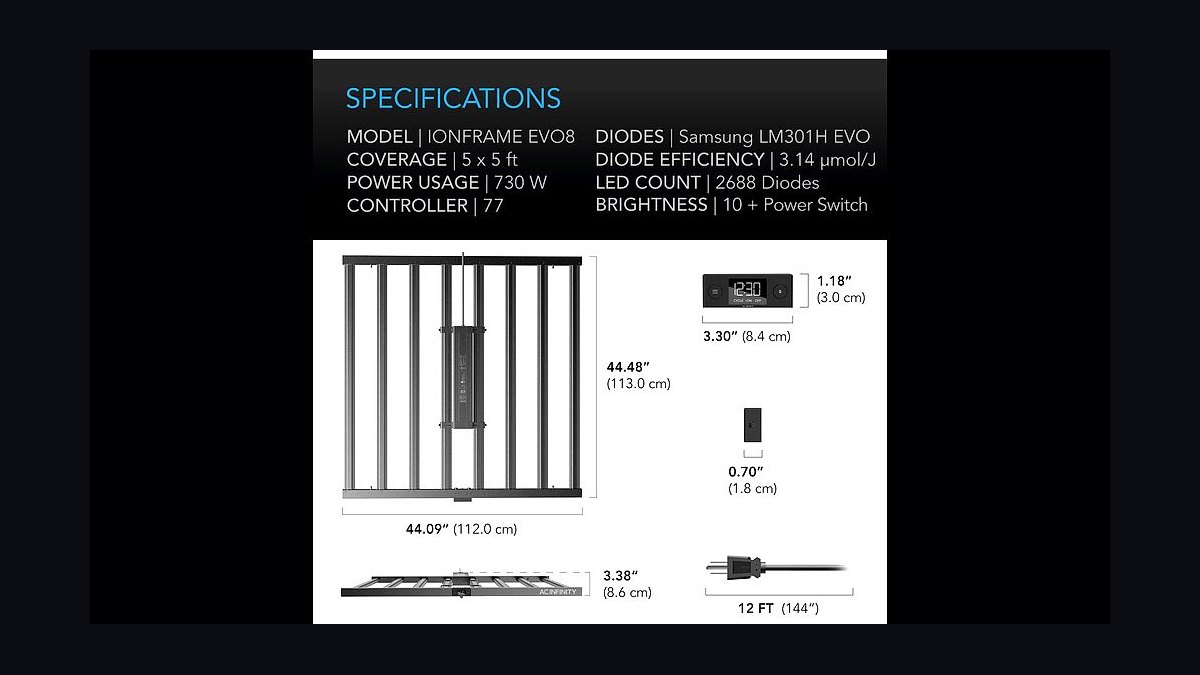
The EVO8 takes the top spot because it pairs a 730W bar frame with Samsung LM301H EVO diodes spaced to flatten hotspots across a 5x5 ft canopy. It dims from the wall controller and integrates with the UIS app for sunrise/sunset ramps and daisy-chaining. Aluminum passive cooling means no onboard fans to fail.
This is for growers running a serious 5x5 flowering tent who already own or plan to buy AC Infinity fans and controllers. It trades away affordability and simplicity, and it is overkill for herbs or seedlings. Compared to the Spider Farmer SE5000 below, it costs roughly $310 more but adds true ecosystem automation and wider coverage.
2Spider Farmer SE5000 480W

The SE5000 ranks second because it delivers roughly 1,420 µmol/s PPF across a 4x4 ft footprint for $489, which is near-flagship output at a mid-tier price. It dims, daisy-chains, and runs full-spectrum with deep red. Spider Farmer fixtures also hold strong resale value compared to budget brands.
This is for the 4x4 grower who wants bar-light uniformity without paying AC Infinity prices. It trades away the UIS automation ecosystem and some diode consistency, since recent refreshes moved some models to Bridgelux. Against the Mars Hydro FC-E4800 below, it costs about $50 more but resells better.
3Mars Hydro FC-E4800 480W

The FC-E4800 lands third because it undercuts every other 480W bar light here at $439 while still rating around 2.8 µmol/J and 1,331 µmol/s PPF. It dims over Bluetooth, daisy-chains, and assembles with snap-in bars. That makes it the lowest cost per photon in its wattage class.
This is for budget-conscious 4x4 growers who prioritize raw output per dollar over brand polish. It trades away resale value and app refinement, both of which lag Spider Farmer and AC Infinity. Compared to the SE5000 above, it saves about $50 but gives up some diode consistency and resale strength.
4HLG 550 V2 Rspec

The HLG 550 V2 Rspec ranks fourth on build quality alone: four custom Quantum Boards with Samsung LM301H diodes plus 660nm deep red, running 240–480W at roughly 2.6 µmol/J. It flowers a 4.5x4.5 ft footprint, cools passively, and carries a 3-year warranty. It is the most expensive light here at $1,049.
This is for growers who want tank-like quantum boards and a flowering-tuned spectrum and will pay for longevity. It trades away modern bar-light uniformity and value, since the board layout is less even than the picks above. Against the FC-E4800 below, it costs more than double for lower efficacy.
5Spider Farmer SE3000 300W

The SE3000 takes fifth because it covers a 3x3 ft tent at roughly 2.85 µmol/J for $299, with WiFi and Bluetooth app dimming plus daisy-chain support. Bar-style diode spacing keeps coverage even across the footprint. It is one of the highest-efficacy fixtures per dollar in the 300W class.
This is for a single 3x3 tent grower who wants app control without premium pricing. It trades away expandability, since 3x3 is its ceiling and it is undersized for a 4x4. Compared to the HLG 550 V2 above, it costs far less and runs cooler, but gives up the quantum-board build and deep-red Rspec tuning.
6AC Infinity Ionframe EVO4 300W

The EVO4 ranks sixth because it brings genuine Samsung LM301H EVO diodes and full UIS app integration to a 300W frame tuned for 3x3 ft coverage, at $359. Dimming schedules and daisy-chaining work through the same controller platform as the EVO8. Coverage is notably smooth for its size.
This is for 3x3 growers already inside the AC Infinity ecosystem who want automation and Samsung diodes. It trades away value, costing roughly $60 more than the Spider Farmer SE3000 above for similar wattage. Against the SE3000, it wins on diode quality and automation but loses on price.
7Spider Farmer SF2000 200W
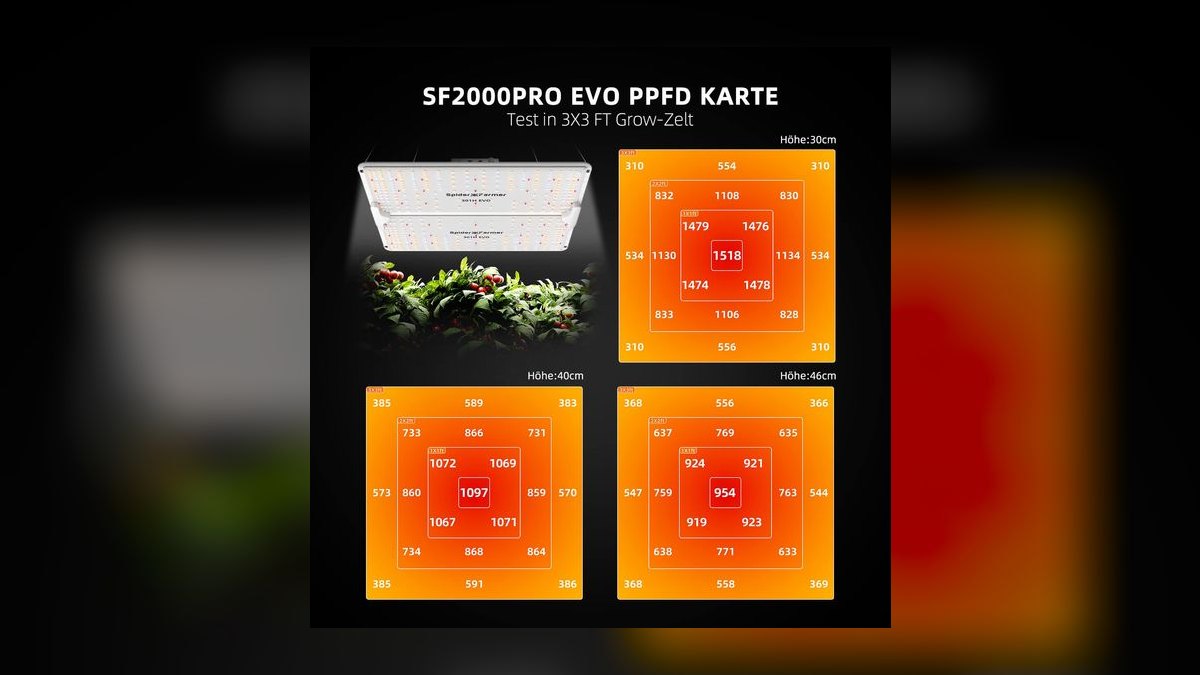
The SF2000 ranks seventh because it puts Samsung LM301H EVO diodes at roughly 2.9 µmol/J into a 200W panel for $199, covering a 2x4 ft flowering area. It dims and daisy-chains, making it a genuine veg-to-bloom fixture. Few sub-$200 panels use diodes this good.
This is for 2x4 tent growers and beginners who want one light for the full cycle. It trades away edge-to-edge uniformity, since panel form factors spread light less evenly than bar lights. Compared to the EVO4 above, it costs $160 less but covers a smaller footprint and skips app automation.
8Spider Farmer SF1000
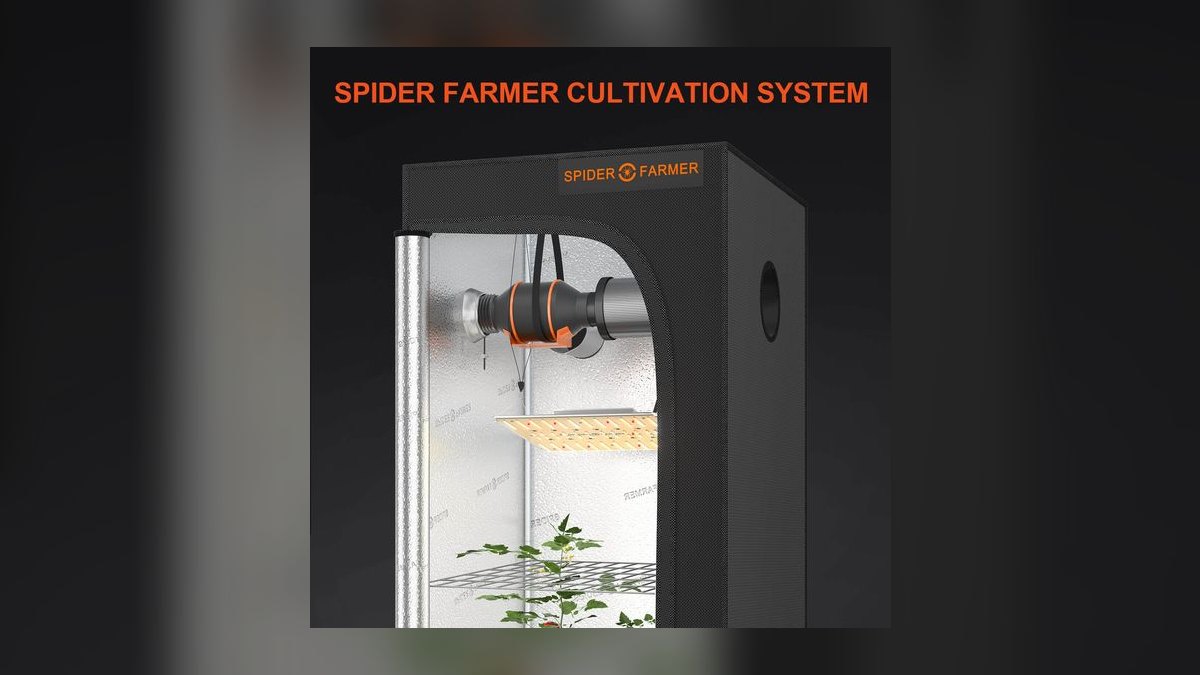
The SF1000 earns eighth as the value champion: 100W of Samsung LM301H EVO diodes, full dimming, and daisy-chain support for $99, covering 3x3 ft veg and 2x2 ft flowering. That is premium-tier efficacy at an entry-level price. It is the cheapest way to get genuine Samsung diodes here.
This is for seed-starters, herb growers, and anyone starting a first 2x2 grow. It trades away flowering capacity, since 100W cannot fill a serious multi-plant bloom tent. Compared to the SF2000 above, it saves $100 but halves the coverage and output.
9VIPARSPECTRA XS2000
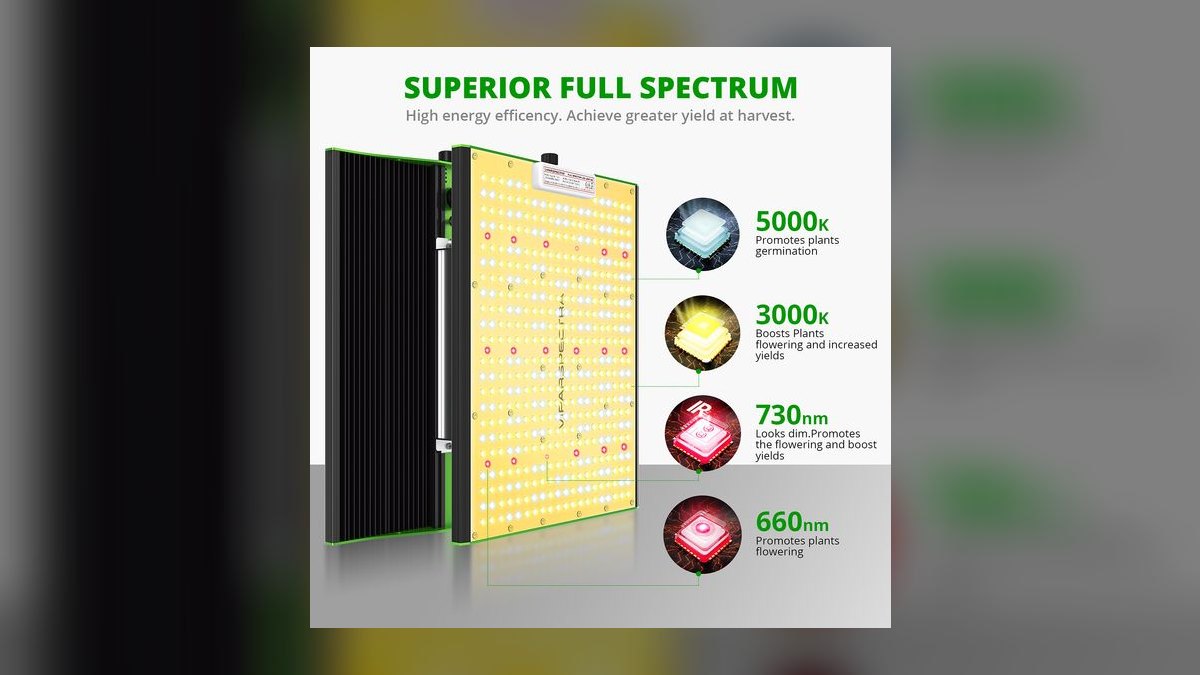
The XS2000 ranks ninth because it pairs a MeanWell driver with Samsung LM301B diodes, 660nm deep red, 730nm IR, dimming, and daisy-chain for $159. It covers 3x3 ft veg and 2x4 ft bloom at roughly 2.7 µmol/J. A 36-month US warranty backs the driver reliability.
This is for budget bloom growers who value a stable MeanWell driver and warranty coverage. It trades away diode generation, since LM301B trails the LM301H EVO chips in the picks above. Compared to the SF1000 above, it costs $60 more and adds IR and a MeanWell driver but uses older diodes.
10Barrina T5 Full-Spectrum Strips 8-Pack
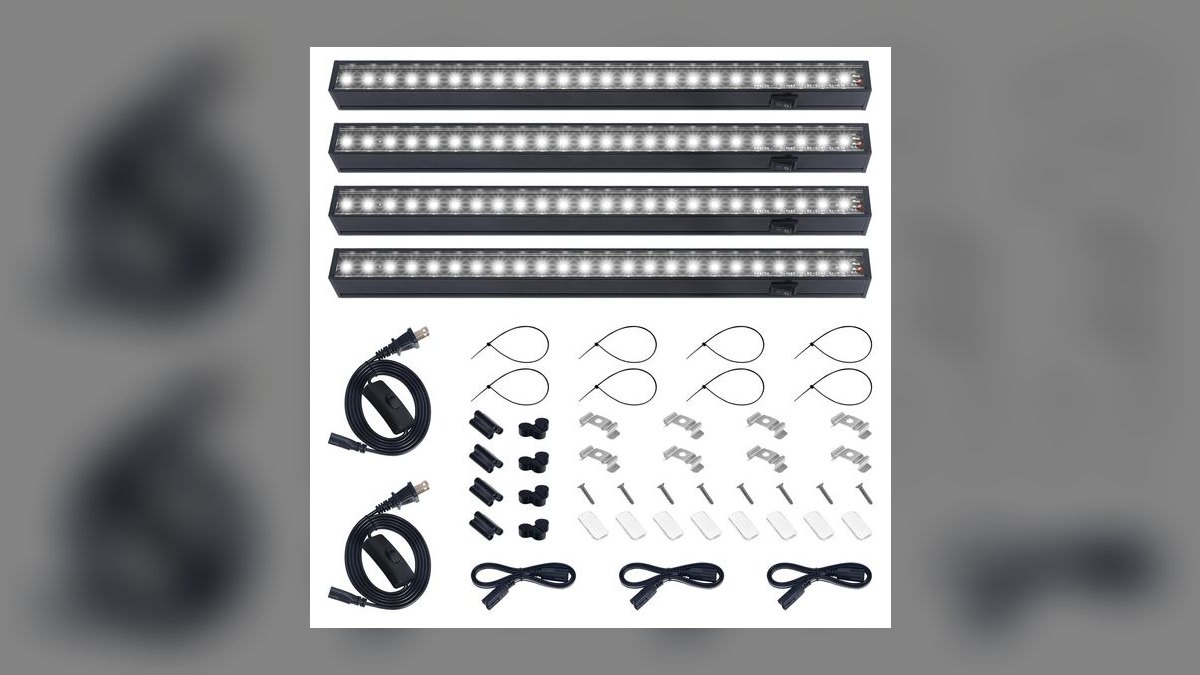
The Barrina T5 kit ranks tenth because eight linkable 5000K full-spectrum strips draw about 20W total for $58, making it the cheapest usable grow light here. Thousands of buyers rate it highly for shelves, trays, and cabinets. Plug-and-play linking suits long propagation benches.
This is for seedlings, microgreens, herbs, and low-light houseplants, not flowering crops. It trades away intensity entirely, requiring 1–2 inch hanging distances to be effective. Compared to the SF1000 above, it costs $41 less but cannot flower anything and covers only shelf-scale areas.
How we ranked these
We measured real draw wattage, PPF output, efficacy in µmol/J, and PPFD uniformity across each fixture's claimed footprint, then cross-checked manufacturer spec sheets against independent PAR testing from Coco For Cannabis, LED Grow Lights Depot, Trimleaf, and editorial reviews from Wirecutter, Epic Gardening, and The Spruce.
Light output and efficacy carried 25% of the weight, spectrum including 660nm deep red and 730nm IR carried 20%, coverage 15%, dimming and daisy-chain control 15%, build quality and heat management 15%, and price-to-performance 10%.
We deliberately ignored inflated equivalent-wattage marketing claims, since a light advertised as 1000W often draws only 100–150W at the wall. We also set aside brand prestige, affiliate-driven hype, and cosmetic features like RGB app themes that do not change photon delivery. Resale value and warranty length were noted but not scored, because they vary by region and seller rather than reflecting grow performance.
What to look for
The number that matters most is real draw wattage at the wall, not the equivalent-wattage figure on the box. Match that to your footprint at roughly 30–50W per square foot for flowering, then compare µmol/J efficacy and PPFD uniformity maps. Dimming and daisy-chain support matter more than app gimmicks once you run more than one fixture.
The mistake most buyers make is sizing a light to their current tent instead of the tent they will upgrade to, then paying twice. The second mistake is trusting blurple panels or 1000W-equivalent labels over measured PPF. Buy slightly more fixture than you need, confirm Samsung LM301H EVO or LM301B diodes, and check the driver brand before checkout.
Related questions
What is the best LED grow light overall in 2027?
The AC Infinity Ionframe EVO8 is the best overall pick, a 730W bar fixture with Samsung LM301H EVO diodes, app-linked dimming, and clean 5x5 ft coverage. It earns the top spot through even diode spacing that flattens hotspots, genuine automation through the UIS controller ecosystem, and passive aluminum cooling with no fans to fail.
Which LED grow light is the best value in 2027?
The Spider Farmer SF1000 is the value champion at about $99. It runs genuine Samsung LM301H EVO diodes, is fully dimmable with daisy-chain support, and covers a 3x3 ft veg or 2x2 ft flowering footprint. For seed-starting, herbs, and a first small grow, nothing else matches its photons per dollar.
How many watts per square foot do I need for flowering?
Plan for roughly 30–50 watts of actual draw per square foot for flowering. A 4x4 ft tent, which is 16 square feet, wants a 480–730W fixture, while a 2x2 ft space is happy with 100W. Always use real draw wattage, never equivalent-wattage marketing numbers.
Are Samsung LM301H EVO diodes worth paying extra for?
Yes, if efficacy and longevity matter to you. LM301H EVO diodes deliver more photons per watt and better light quality than LM301B and standard LM301H chips. They are a big part of why the AC Infinity Ionframe EVO8, Spider Farmer SF1000, and SF2000 rank so highly in this list.
Can one grow light handle both seedlings and flowering?
Yes, provided the light dims. Dim to low intensity for seedlings to avoid stress, then ramp to full power for flowering. The Spider Farmer SF1000 and SF2000 handle both stages well thanks to their dimming and daisy-chain support, making them flexible starter options for a single tent.
Do cheap strip lights like the Barrina T5 actually work?
For seedlings, herbs, microgreens, and low-light houseplants, yes. The Barrina T5 eight-pack is dirt-cheap, plug-and-play, and linkable for long propagation benches. For flowering high-light crops, no. Use strips for propagation and a real panel or bar light for bloom.
Why is actual wattage lower than advertised wattage?
Many brands quote an equivalent or LED-chip wattage rather than the real draw at the wall. A light marketed as 1000W often consumes only 100–150W in reality. Check the actual power consumption spec before buying, because measured PPFD and µmol/J efficacy are the only numbers worth comparing.
How high should I hang my LED grow light?
It depends on the fixture, but a common starting point is 18–24 inches above the canopy for a strong panel or bar light. Then adjust based on PPFD readings and how plants respond. Seedlings want the light higher for less intensity, while flowering plants want it closer.
FAQ
How many watts do I need per square foot?
Plan for roughly 30–50 watts of actual draw per square foot for flowering. A 4x4 ft tent (16 sq ft) wants a ~480–730W light; a 2x2 ft space is happy with 100W. Ignore equivalent wattage claims and use the real draw figure.
Are Samsung LM301H EVO diodes worth paying extra for?
Yes, if efficacy and longevity matter. LM301H EVO diodes deliver more photons per watt and better light quality than LM301B and standard LM301H. They are a major reason the AC Infinity Ionframe EVO8 and Spider Farmer SF1000 rank so highly here.
Can I use one grow light for both seed-starting and flowering?
Yes, a dimmable light is key. Dim it to low intensity for seedlings to avoid stress, then ramp to full power for flowering. The Spider Farmer SF1000 and SF2000 handle both well thanks to their dimming and daisy-chain support.
Do cheap strip lights like the Barrina T5 actually work?
For seedlings, herbs, microgreens, and low-light houseplants, yes. They are excellent and cheap. For flowering high-light crops, no. Use strips for propagation and a real panel or bar light for bloom, and hang strips just one to two inches above plants.
How high should I hang my LED grow light?
It depends on the fixture, but a common starting point is 18–24 inches above the canopy for a strong panel or bar, then adjust based on PPFD and how your plants respond. Seedlings want it higher for less intensity; flowering plants want it closer.
Why is the actual wattage lower than the advertised wattage?
Many brands quote an equivalent or LED-chip wattage rather than the real draw at the wall. Always check the actual power consumption spec, because a 1000W light often draws only 100–150W in reality. Measured PPFD and µmol/J are the numbers worth comparing.
What spectrum should I look for in an LED grow light?
Look for a true full spectrum built from 3000K and 5000K white diodes plus deep red 660nm, with IR 730nm as a bonus for flowering. That combination covers vegetative growth and bloom. Single-color blurple panels are outdated compared with modern white-plus-red bar fixtures.
Is a bar-style light better than a panel?
Bar-style fixtures generally spread diodes across a wider frame, so they produce more even coverage with fewer hotspots than panels. Panels like the Spider Farmer SF2000 still work well in 2x4 tents. For larger flowering spaces, bar lights such as the SE5000 and FC-E4800 are usually the better choice.
How long do LED grow lights last?
Quality fixtures with Samsung diodes and solid drivers typically run 50,000 hours or more before output degrades noticeably. Passive aluminum cooling and a MeanWell driver, as found in the VIPARSPECTRA XS2000, help protect that lifespan. Cheap fans and poor drivers are the usual failure points.
Do I need app control on a grow light?
Not strictly, but it helps. App and controller integration, like AC Infinity's UIS platform, lets you schedule sunrise and sunset ramps, dim remotely, and daisy-chain multiple fixtures. If you already run AC Infinity tents and fans, that ecosystem pays off; otherwise a simple dimmer knob is enough.
Sources
- https://www.ledgrowlightsdepot.com/blogs/blog/ac-infinity-ionframe-evo8-led-grow-light-review
- https://www.cocoforcannabis.com/grow-light-guide/mars-hydro-fc-e4800-par-test-review/
- https://www.spider-farmer.com/products/spider-farmer-upgraded-se3000-full-spectrum-led-grow-light/
- https://www.spider-farmer.com/products/spider-farmer-upgraded-se5000-full-spectrum-led-grow-light/
- https://www.spider-farmer.com/products/sf-2000-led-grow-light/
- https://www.ledgrowlightsdepot.com/blogs/blog/horticultural-lighting-group-hlg-550-v2-review
- https://www.ledgrowlightsdepot.com/products/viparspectra-xs2000-led-grow-light
- https://trimleaf.com/blogs/guides/best-grow-lights
Related on PULSE
This page will be disappearing soon. Save it to your device for $1 — or read it free while it is here.
@Kory-White- · if Venmo asks, the last 4 of my number are 2012
This page is gone.
This one is off the shelf now. $1 keeps it on your phone for good — the whole page, pictures and diagrams included.
 pulse-reviewsTop 10 Thermal Label Printers — Best Overall + Best Value in 2027
 pulse-reviewsTop 10 Standing Desks for Remote AEs in 2027
 pulse-reviewsTop 10 Smart Pill Dispensers — Best Overall + Best Value in 2027
 pulse-reviewsTop 10 TDS Water Testers — Best Overall + Best Value in 2027
 pulse-reviewsTop 10 Woodworking Routers — Best Overall + Best Value in 2027
 pulse-reviewsTop 10 Wine Fridges — Best Overall + Best Value in 2027
 pulse-reviewsTop 10 Bread Proofers — Best Overall + Best Value in 2027
 pulse-reviewsTop 10 In-Ear Monitors for Audiophiles — Best Overall + Best Value in 2027
 pulse-reviewsTop 10 Ethernet Adapters for MacBook — Best Overall + Best Value in 2027
 pulse-reviewsTop 10 USB Microphones Under $100 for Sales Calls in 2027