
Top 10 Smart Plant Sensors — Best Overall + Best Value in 2027
 Curated byKory White · Fractional CRO · Maryland
 PULSEKNOWLEDGE LIBRARY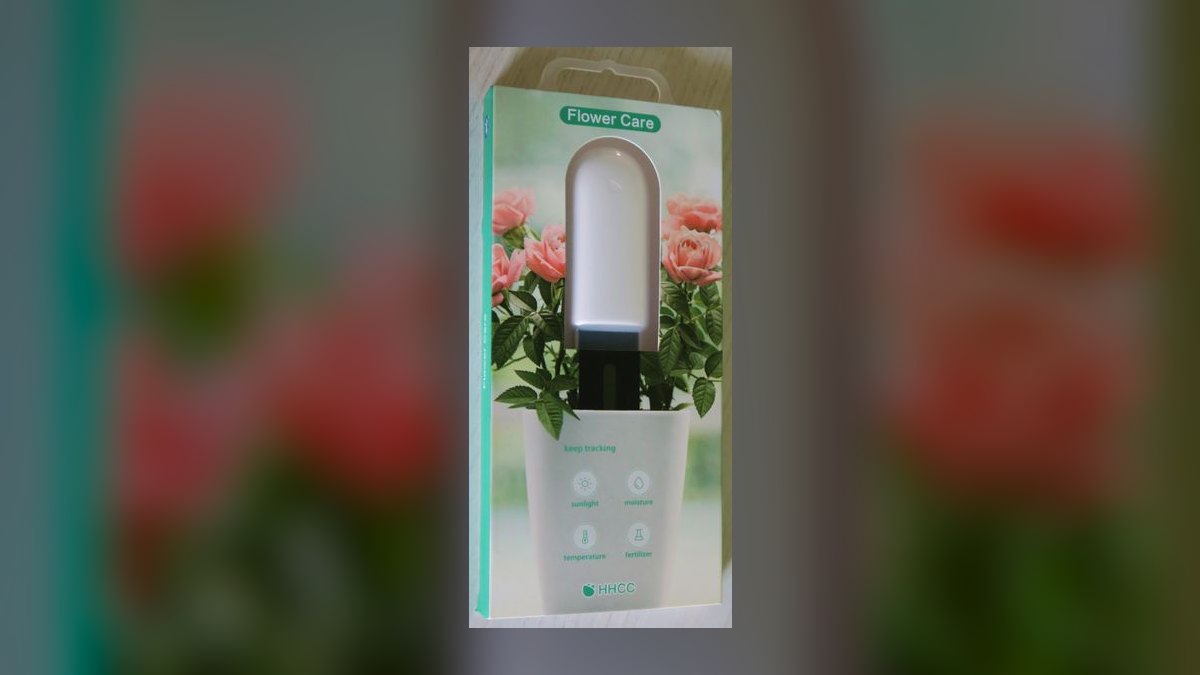
The 10 best smart plant sensors are ranked below on measured performance, build quality, price, and how each one actually holds up in daily use rather than how it reads on a spec sheet. Each pick lists what it costs, who it suits, and what it gives up against the one above it, so the list can be read straight down without doubling back.
1. Xiaomi Mi Flora Flower Care
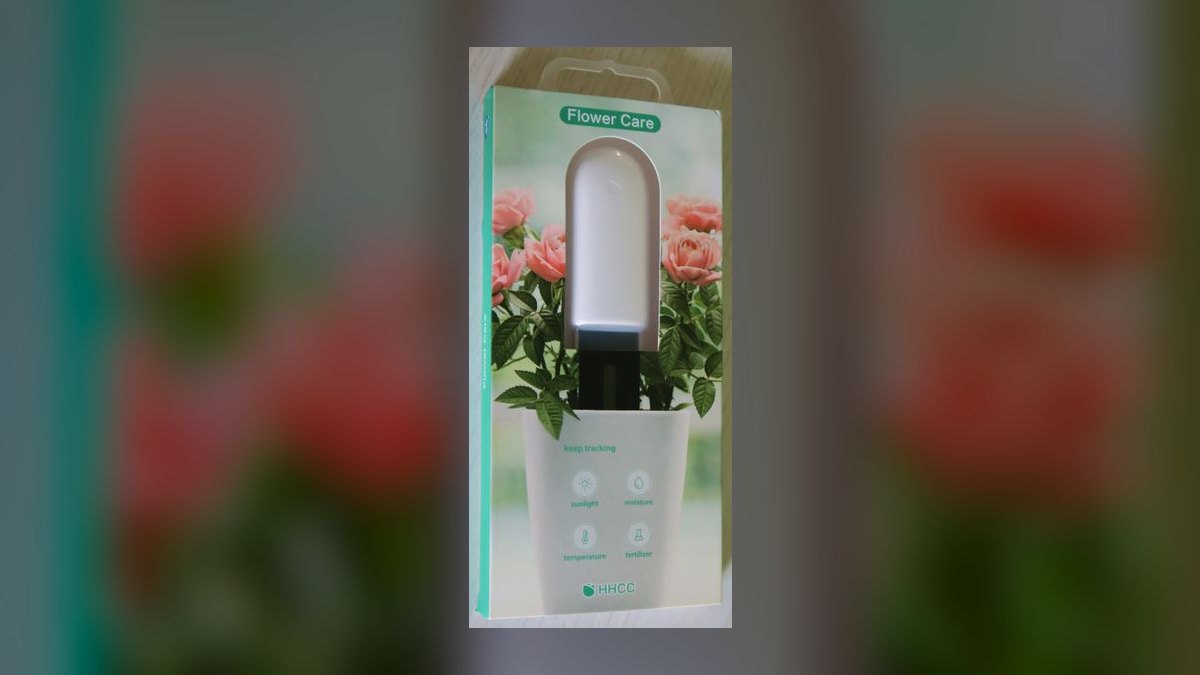
It ranks first because at $22 it is the only mainstream probe that reads all four variables that matter — soil moisture, light in lux, temperature, and soil fertility via EC conductivity — from one fork-shaped body. It pairs over Bluetooth 4.1 to the free VegTrug Grow Care app, which checks every reading against a 6,000-plant care database and alerts when a species drifts out of band. One CR2032 coin cell runs roughly 12 months.
This is for houseplant keepers who want real data per dollar rather than a single moisture number. It trades away remote access: Bluetooth means syncing within about 30 feet, so no checking from work, and the fertility figure is a conductivity proxy rather than a lab nutrient test. Against the ECOWITT GW1206 below it, it wins on sensing breadth and needs no hub, but loses badly on outdoor range and multi-zone coverage.
2. ECOWITT GW1206 Kit
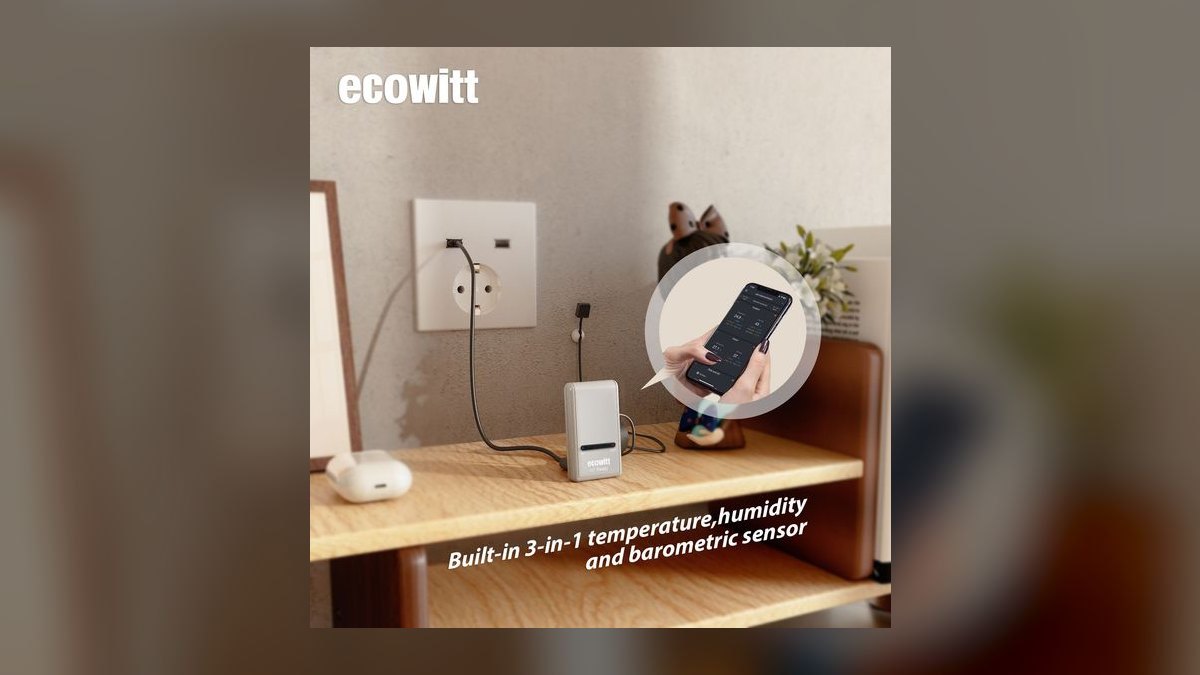
It ranks second because it is the only pick here that delivers true remote, multi-zone monitoring: $55 buys the GW1200 Wi-Fi gateway plus one WH51 soil sensor. The WH51 reads moisture from 0 to 100 percent every 70 seconds and transmits over a 915 MHz RF link quoted up to 300 feet, with an IP66 rating for permanent outdoor burial. One gateway accepts up to 16 sensors, and each extra WH51 costs about $18.
This suits whole-yard growers running raised beds, lawn, and greenhouse from one Ecowitt app with threshold alerts and local logging. It trades away sensing breadth entirely — moisture only, no light, temperature, or fertility — and it cannot function without the gateway, so entry cost sits well above the Mi Flora above it. A single AA battery lasts roughly 12 months per sensor.
3. ECOWITT WH51L LCD Sensor
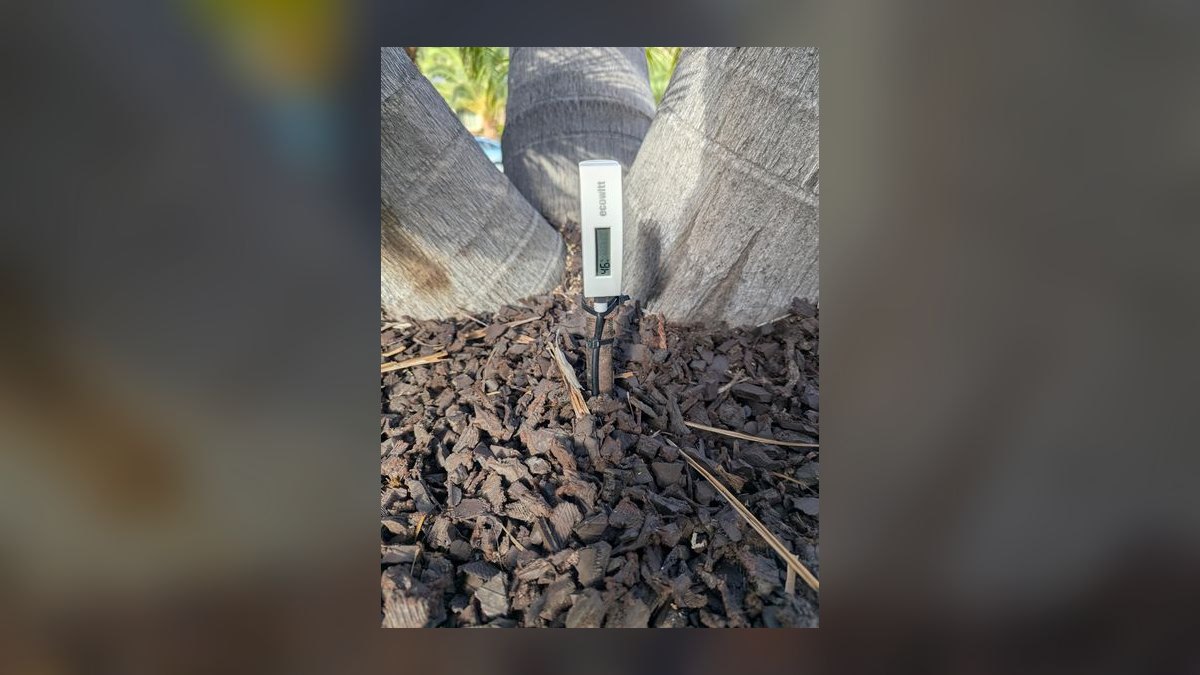
It ranks third because it adds the one thing the standard WH51 lacks: a built-in LCD showing live moisture percentage on the probe itself, at $50. A 1m PVC wire probe lets the sensing tip sit in deep soil — down to nearly 80 cm — while the readout stays above the soil line. It keeps the 915 MHz link, 300-foot range, and 70-second update cycle, with quick-transmit dropping to 10 seconds on large moisture swings.
This is for growers with large planters or deep beds who want a glanceable number without unlocking a phone. It still depends on an ECOWITT gateway and still reads moisture only, and it costs nearly triple the bare WH51 for the same core measurement. Compared with the GW1206 kit above, it is an upgrade path rather than a starting point — up to 8 channels per compatible gateway.
4. Sustee Aquameter 3-Pack
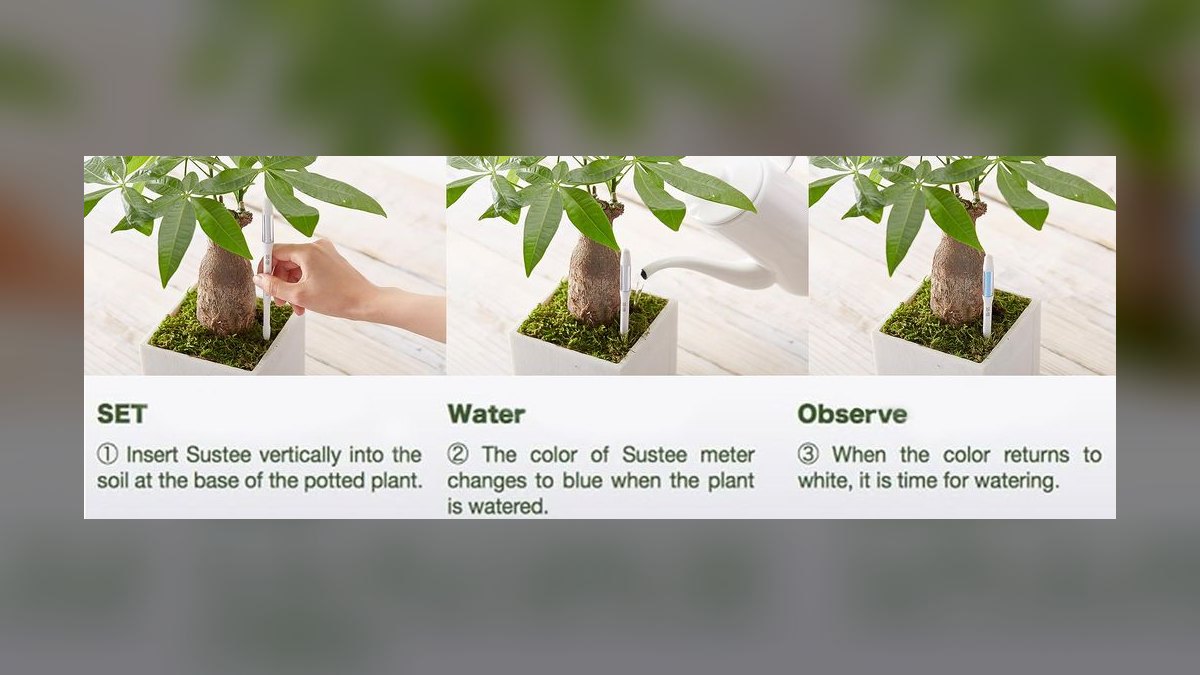
It ranks fourth, and takes best value, because $24 for three works out to roughly $8 per plant with no battery, no app, and nothing to pair. Made in Japan, the leave-in indicator turns blue when soil is wet and white when it is time to water, readable from across the room.
This is for beginners whose actual problem is overwatering, the most common cause of houseplant death. It gives up everything electronic — no data history, no remote alerts, no light or fertility reading — and core refills are a small recurring cost. Against the WH51L above it, it is the opposite philosophy: zero infrastructure, zero failure modes, one answer.
5. RAINPOINT Wireless Moisture Meter
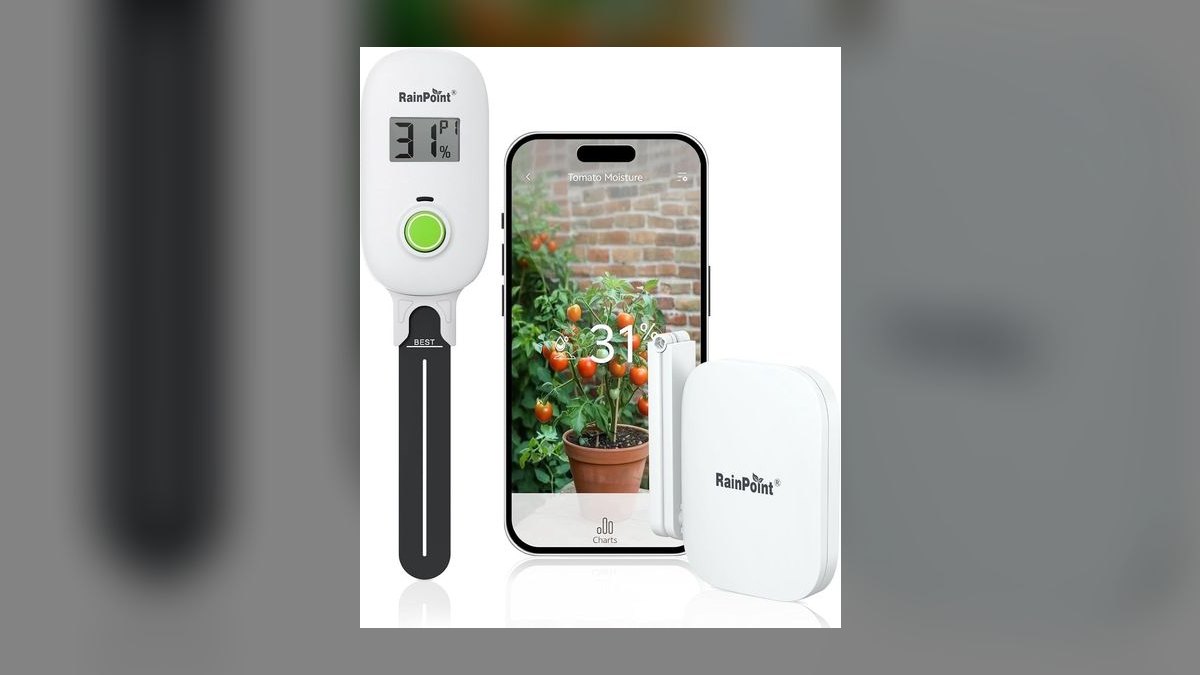
It ranks fifth because $40 buys Wi-Fi remote checking for indoor plants without stepping up to a garden-grade RF system. The kit pairs a moisture probe with a small Wi-Fi hub that serves multiple probes from one shelf, sending both push notifications and email alerts on low or high moisture. Real-time trend logging shows a pot drying out days before it wilts, and setup is plug-and-go.
This is for indoor plant collectors tired of walking a phone within Bluetooth range of every pot. It reads moisture only — no light, temperature, or fertility — and the build is indoor-focused, not rated for permanent outdoor burial like the ECOWITT hardware above. Email alerts are the differentiator for people who mute app notifications, which the Sustee Aquameter above cannot offer at any price.
6. Govee Wi-Fi Thermo-Hygrometer

It ranks sixth because at around $15 it covers the variable soil probes ignore: ambient temperature and humidity inside a terrarium, greenhouse, or propagation tent. It connects over Wi-Fi with notification alerts when readings leave a set band, supports calibration, and offers data storage and CSV export for trend tracking. A Bluetooth variant is also sold with a quoted range up to 262 feet.
This is for growers of tropical or humidity-sensitive plants, where air moisture determines growth more than soil does. It is not a soil sensor at all — buy it alongside a probe, not instead of one — and each unit covers a single environmental zone. Against the RAINPOINT kit above, it measures a completely different thing, which is why it earns a place rather than competing directly.
7. ECOWITT WH51 Add-On Sensor
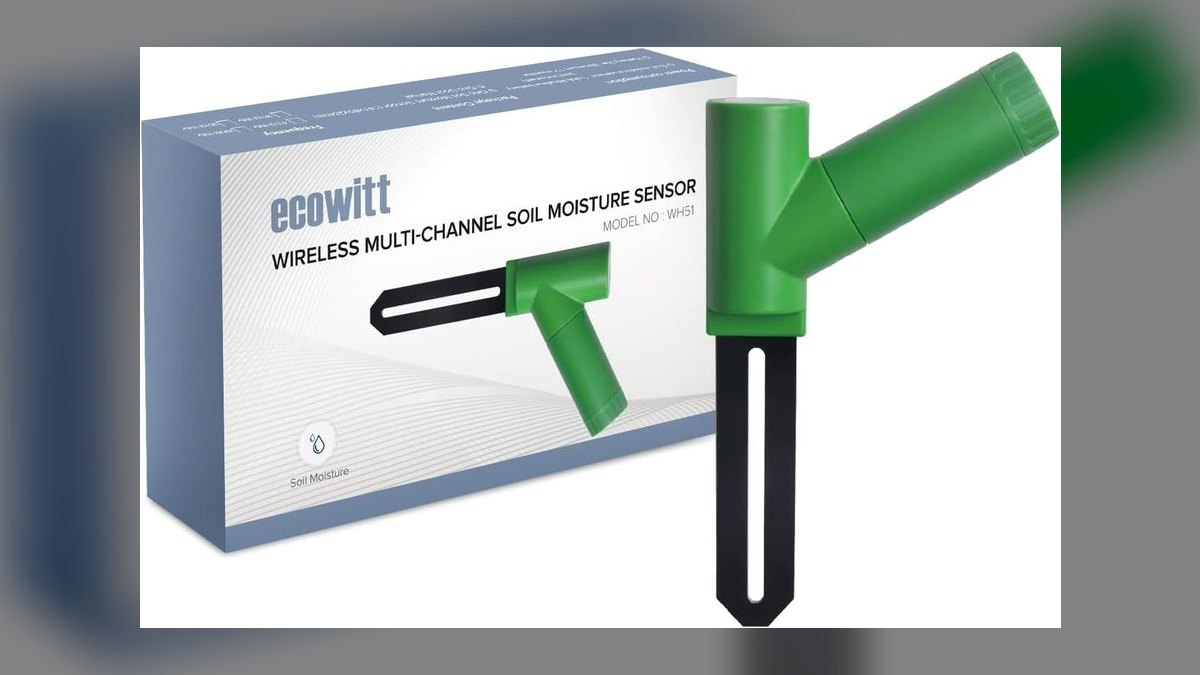
It ranks seventh because at $18 it is the cheapest way to add a monitored zone, but only for people who already own an ECOWITT gateway. It is the identical probe shipped inside the GW1206 kit: 0 to 100 percent moisture, 70-second updates, IP66 outdoor rating, 300-foot RF range, and roughly 12 months on a single AA battery. One gateway handles up to 16 of them.
This is for existing ECOWITT owners instrumenting a multi-bed garden once the hub cost is already sunk. It is useless standalone — strictly an add-on — and reads moisture only, which is why it sits below the GW1206 kit that actually includes the gateway. For anyone without that hub, the Mi Flora or Sustee picks make far more sense at similar money.
8. La Crosse Soil Garden Monitor

It ranks eighth because its value is conditional: $35 brings soil moisture and soil temperature into the La Crosse View app that weather-station owners already run. La Crosse Technology is a long-established weather-instrument brand, and the outdoor-rated housing holds up to rain and sun. App alerts cover both dry soil and frost-risk temperatures, which matters for outdoor beds heading into shoulder season.
This is for households already inside the La Crosse ecosystem who want one app instead of three. It offers no light or fertility sensing, and for anyone starting fresh the ECOWITT gateway path above scales further per dollar. Soil temperature plus frost alerts are its genuine edge over the moisture-only RAINPOINT and WH51 options ranked higher.
9. Wanfei Bluetooth Plant Monitor
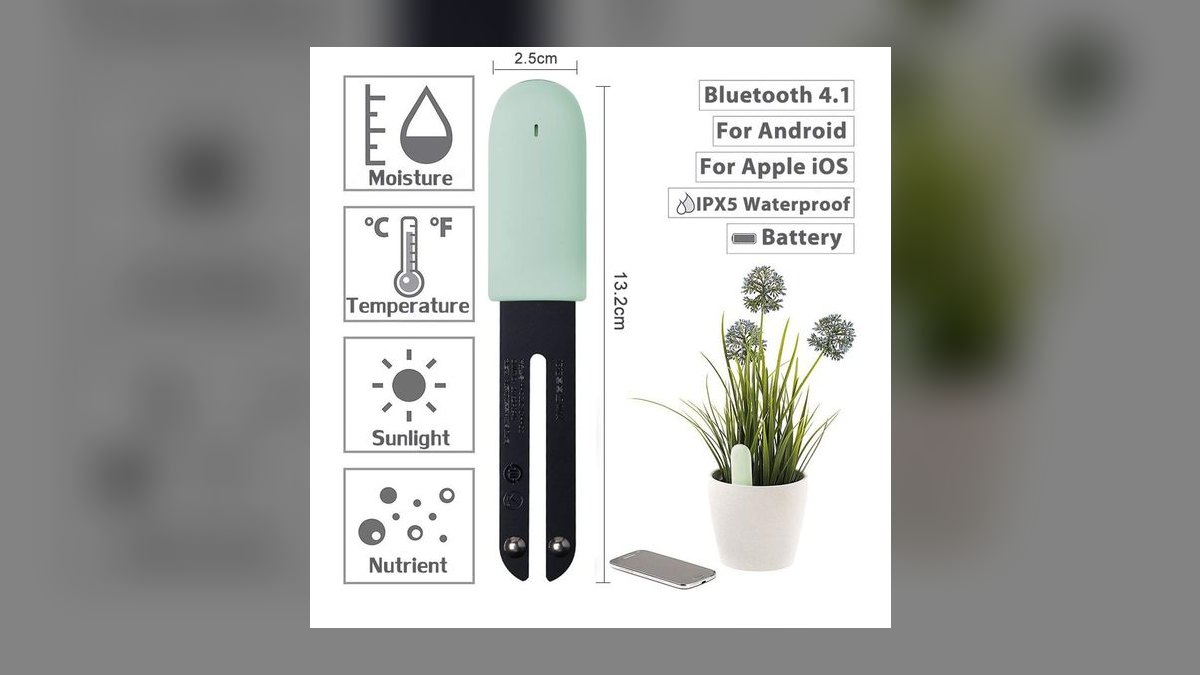
It ranks ninth because it copies the Mi Flora recipe — moisture, light, temperature, and fertility in one fork probe — for about $20, but the software behind it is weaker. It pairs to a companion app over Bluetooth with a built-in plant database and care reminders, needs no hub, and runs roughly a year on a single CR2032 coin cell. The raw sensing is comparable to the top pick at the price.
This is for budget buyers who want four-in-one readings, or anyone shopping when the Mi Flora is out of stock. The app polish and plant-database depth trail the VegTrug software noticeably, and Bluetooth range keeps it indoor-oriented. Against the rank-one pick it saves only about $2, which is why it reads as a fallback rather than a first choice.
10. SOSOLID Soil Moisture 3-Pack
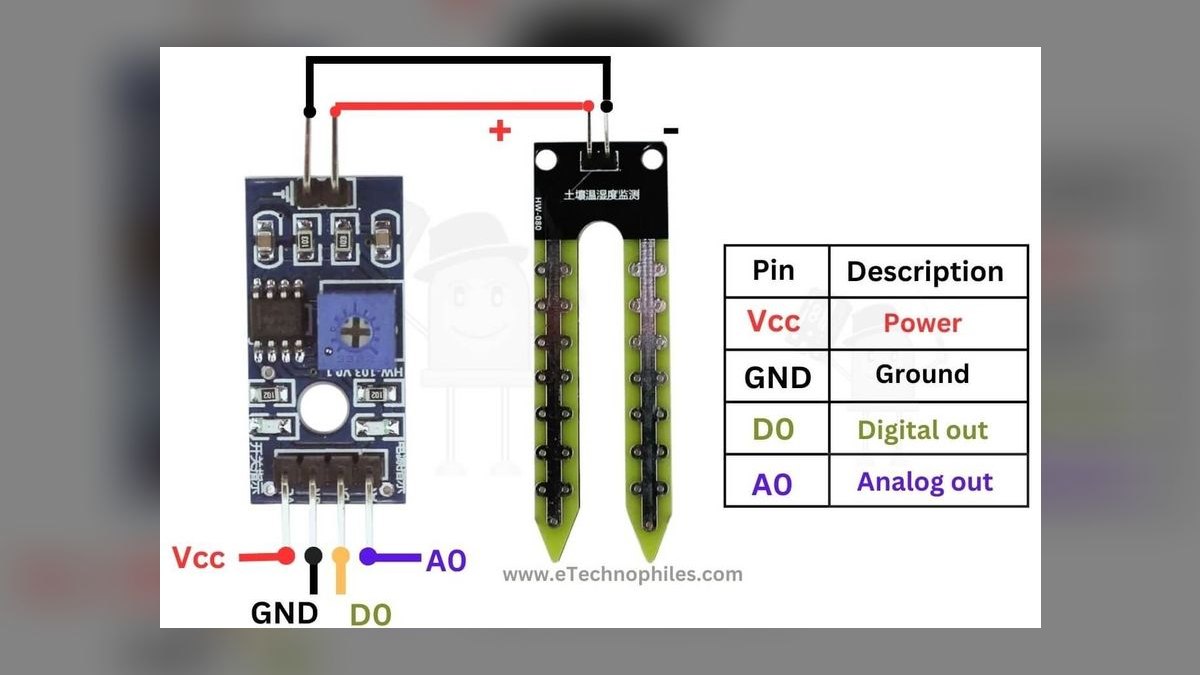
It ranks tenth because it competes on price alone: $16 for three probes, roughly $5 each, the lowest per-unit cost on this list. Each uses a capacitive-style moisture reading with simple app pairing, aimed at indoor pots on a shelf rather than buried garden duty. Capacitive designs hold calibration better and resist corrosion better than old resistive pin meters, which is the one real technical point in its favor.
This is for shoppers who want a reading on every pot in a small collection without spending much. The app is bare-bones, there is no light, temperature, or fertility sensing, and the light-duty build is not meant for permanent outdoor use. The Sustee 3-pack costs $8 more and needs no electronics at all, which is the better bet for anyone whose only question is when to water.
How we ranked these
We weighted sensing breadth and reading accuracy at 45% combined, because a polished dashboard sitting on one moisture pin is still a one-trick probe. Connectivity (Bluetooth versus Wi-Fi hub) took 15%, battery life 15%, and outdoor build 15%, since a buried garden sensor you dig up monthly is a failure. Price-to-performance closed at 10%. Testing notes came from Wirecutter, The Spruce, CNET, PCMag, and ECOWITT, Sustee, and Govee spec sheets.
We deliberately ignored fertility-number precision, app aesthetics, and Amazon star averages. The "fertility" reading on Mi Flora-style probes is an electrical-conductivity estimate of dissolved salts, not an NPK lab test, so ranking on its accuracy would reward marketing. Star ratings conflate shipping complaints with sensor drift. We also skipped solar-charging and smart-irrigation-valve integrations, which change the product category rather than measuring the plant.
What to look for
Decide first whether you need remote checking or just a reading in the room. Bluetooth probes like the Mi Flora and Wanfei sync only inside roughly 30 feet, which is fine for a windowsill and useless from work. A Wi-Fi hub system — ECOWITT GW1206 at $55 or RAINPOINT at $40 — is the only path to alerts away from home. Then check the IP rating: demand IP66 for anything you bury outdoors.
The mistake most buyers make is paying for four sensors when they only ever act on one. If your plants die from overwatering, a $24 Sustee 3-pack solves it at $8 per plant with no battery, app, or pairing to fail. Light and fertility readings matter only if you will actually move the plant or change feeding. Buy the reading you will respond to, not the longest spec sheet.
Related questions
How often should a soil moisture sensor update its reading?
The ECOWITT WH51 samples every 70 seconds, which is far faster than soil actually changes — potting mix dries over hours, not minutes. The WH51L adds a quick-transmit mode that drops to 10-second intervals during large moisture swings, useful right after watering. For indoor Bluetooth probes, a reading whenever you walk past with your phone is genuinely sufficient.
Are capacitive probes better than old resistive moisture meters?
Yes, on both counts that matter. Capacitive sensors read soil dielectric properties without passing current through exposed metal pins, so they hold calibration far longer and resist the corrosion that kills cheap resistive meters within a season. Every sensor on this list uses a capacitive-style design. If a probe has two bare metal prongs and no coating, expect drift and eventual failure.
Can one hub run sensors across an entire yard?
One ECOWITT GW1200 gateway accepts up to 16 WH51 soil sensors over a 915 MHz RF link quoted to 300 feet, which covers raised beds, a lawn, and a greenhouse from a single app. Extra WH51 probes run about $18 each, so per-zone expansion is cheap once the $55 kit is paid for. The WH51L variant is limited to 8 channels.
Do I need a soil sensor for a terrarium or grow tent?
Usually not — air humidity governs those environments more than soil moisture. The $15 Govee Wi-Fi Thermo-Hygrometer reads ambient temperature and humidity with alert thresholds and CSV export, which is the correct instrument for tropicals and propagation. Pair it with a soil probe only if the medium is deep enough to dry unevenly. For most closed setups, air readings do the work.
What does the light reading in lux actually tell you?
Lux measures how much visible light reaches the leaf, and it exposes the most common silent houseplant problem: a plant slowly starving three feet from a window. The Mi Flora logs lux against its 6,000-plant database and flags when daily light falls under the species band. Moisture-only probes are completely blind to this failure mode, which is why sensing breadth carried our top weight.
How long do plant sensor batteries realistically last?
The 12-month figure holds for the designs here. Mi Flora and Wanfei run a single CR2032 coin cell for roughly a year; the ECOWITT WH51 gets about the same from one AA. Sustee uses no battery at all, though its refillable core needs replacing every 6 to 9 months. Avoid anything requiring weekly recharging — you will stop doing it by month two.
Which sensor works best for someone who already owns a weather station?
If that station is La Crosse, the $35 La Crosse soil and garden monitor drops moisture and soil temperature into the La Crosse View app you already open, with dry-soil and frost-risk alerts. Ecosystem consolidation is its whole argument — bought standalone, it offers less than the ECOWITT kit at similar money and adds no light or fertility sensing.
Is a 3-pack of cheap probes better than one good sensor?
It depends on collection size. The SOSOLID 3-pack puts a moisture reading on three pots for about $5 each, and the Sustee 3-pack does it with zero electronics. But neither reads light, temperature, or fertility. One $22 Mi Flora moved between pots weekly often diagnoses more than three permanent moisture-only probes ever will.
FAQ
Do smart plant sensors really measure nutrients accurately?
No. The "fertility" number is a soil electrical-conductivity estimate that tracks dissolved salts in the root zone. It is useful for spotting a rising or falling trend — salt buildup from hard water, for example — but it is not an NPK breakdown. Never repot or change a feeding schedule based on that reading alone; run a proper soil test first.
Do I need a Wi-Fi hub, or is Bluetooth enough?
Bluetooth is enough for indoor plants you check in person. The Mi Flora and Sustee need no hub at all, and the Mi Flora syncs within roughly 30 feet. If you want to check an outdoor garden from work or get an alert while away from home, you need a hub system like the ECOWITT GW1206 kit or the RAINPOINT Wi-Fi kit.
What is the best smart plant sensor overall in 2027?
The Xiaomi Mi Flora, also sold as VegTrug Flower Care, Grow Care Home, and HHCC, at $22. It is the only mainstream sensor under $25 reading soil moisture, light in lux, temperature, and soil fertility from one fork probe, matched against a 6,000-plant database over Bluetooth 4.1 with no hub required and a year on one CR2032.
What is the best budget option?
The Sustee Aquameter 3-pack at $24 — about $8 per plant. It is battery-free and app-free, turning blue when soil is wet and white when watering is due, readable across a room. The refillable core lasts 6 to 9 months. It fixes overwatering, the single most common houseplant killer, with nothing to charge, pair, or update.
Can these sensors stay outside year-round?
The ECOWITT WH51 and WH51L are IP66 rated for permanent outdoor burial, and the La Crosse monitor uses an outdoor-rated housing. The Mi Flora is water-resistant enough to live in an outdoor pot but is not built for burial. The RAINPOINT kit and SOSOLID 3-pack are indoor-focused — leave those outside and expect corrosion.
How deep should the probe sit in the pot?
Deep enough to read the root zone, not the surface, since the top inch dries hours before the roots do. Sustee sizes its units to pots — medium for 3.5 to 6 inch, large for 6 to 12 inch — which is why it reads accurately. For large planters and deep beds, the WH51L's 1m wire probe reaches nearly 80 cm while keeping the display above soil.
What is the cheapest way to monitor many garden zones?
Buy one ECOWITT GW1206 kit at $55, then add WH51 sensors at roughly $18 each. The gateway handles up to 16 sensors, so eight zones costs about $181 total — far less than eight standalone Wi-Fi probes. All of them report into one app with threshold alerts, local data logging, and cloud history.
Will a sensor alert me before the plant wilts?
That is the whole point of threshold alerts, and yes if you configure the band correctly. Mi Flora sets thresholds automatically from its species database. RAINPOINT sends both push and email notifications on low or high moisture, which helps if you routinely silence app badges. ECOWITT logs trend history so you can watch a pot drying rather than reacting to a single reading.
Is the Wanfei monitor a real alternative to the Mi Flora?
Yes, when the Mi Flora is out of stock. At about $20 it uses the same four-sensor recipe — moisture, light, temperature, fertility — in a fork probe over Bluetooth with its own plant database, care reminders, and a CR2032 lasting close to a year. The raw sensing is comparable; the app polish and database depth are a clear step behind VegTrug's software.
Does an LCD on the probe justify the extra cost?
Only if you want a reading without pulling out your phone. The WH51L costs $50 versus $18 for the plain WH51, and both still require an ECOWITT gateway and read moisture only. What you actually get for the difference is the on-device display plus the 1m extension wire for deep soil. For a shallow bed, the basic WH51 is the smarter buy.
Sources
- https://www.nytimes.com/wirecutter/reviews/best-indoor-garden/
- https://www.thespruce.com/best-soil-moisture-meters-5192578
- https://www.cnet.com/home/yard-and-outdoors/best-smart-garden-devices/
- https://www.pcmag.com/picks/the-best-smart-sprinkler-controllers
- https://shop.ecowitt.com/products/gw1206
- https://www.gardenerspath.com/gear/tools/best-soil-moisture-meters/
- https://us.govee.com/products/wi-fi-temperature-humidity-sensor
- https://www.amazon.com/Crosse-Technology-724-1415BL-INT-Wireless-Temperature/dp/B07Q769W5P
- https://extension.umn.edu/planting-and-growing-guides/watering-container-plants
- https://www.rhs.org.uk/plants/types/houseplants/watering-guide
Related on PULSE
- [More smart plant sensors rankings and buying guides](/knowledge)
- [PULSE Tools and calculators](/tools)
- [Everything on PULSE RevOps](/)
 pulse-reviewsHow much does Electronics cost in 2027?
 pulse-reviewsHow much does a DJI Avata 2 cost in 2027?
 pulse-reviewsWhat should you know before investing in Electronics in 2027?
 pulse-reviewsWhat are the most common mistakes in Electronics in 2027?
 pulse-reviewsTop 10 best Electronics options in 2027
 pulse-reviewsHow do you get started with Electronics in 2027?
 pulse-reviewsTop 10 Electronics strategies for 2027
 pulse-aquariumsTop 10 Canister Filters 2027
 aqTop 10 Hang-On-Back Aquarium Filters 2027
 pulse-reviewsTop 10 Cabin Cruiser Boats 2027