
Top 10 Wood Moisture Meters — Best Overall + Best Value in 2027
 Curated byKory White · Fractional CRO · Maryland
 PULSEKNOWLEDGE LIBRARY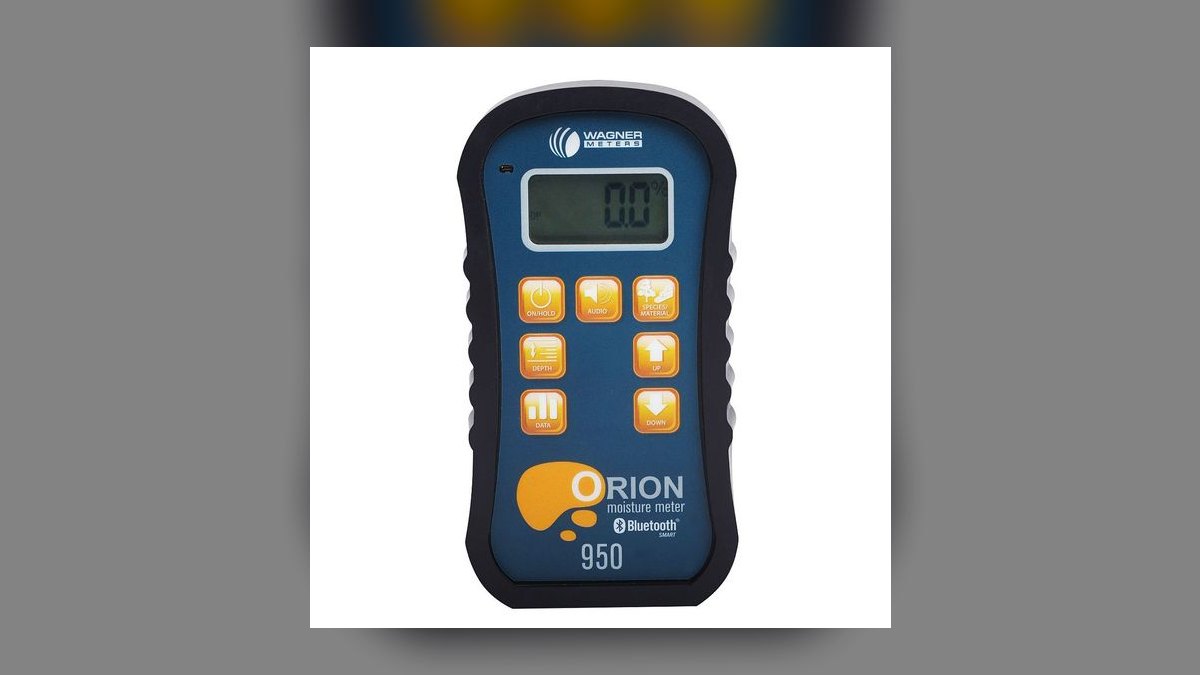
The 10 best wood moisture meters are ranked below on measured performance, build quality, price, and how each one actually holds up in daily use rather than how it reads on a spec sheet. Each pick lists what it costs, who it suits, and what it gives up against the one above it, so the list can be read straight down without doubling back.
1. Wagner Meters Orion 950 Smart
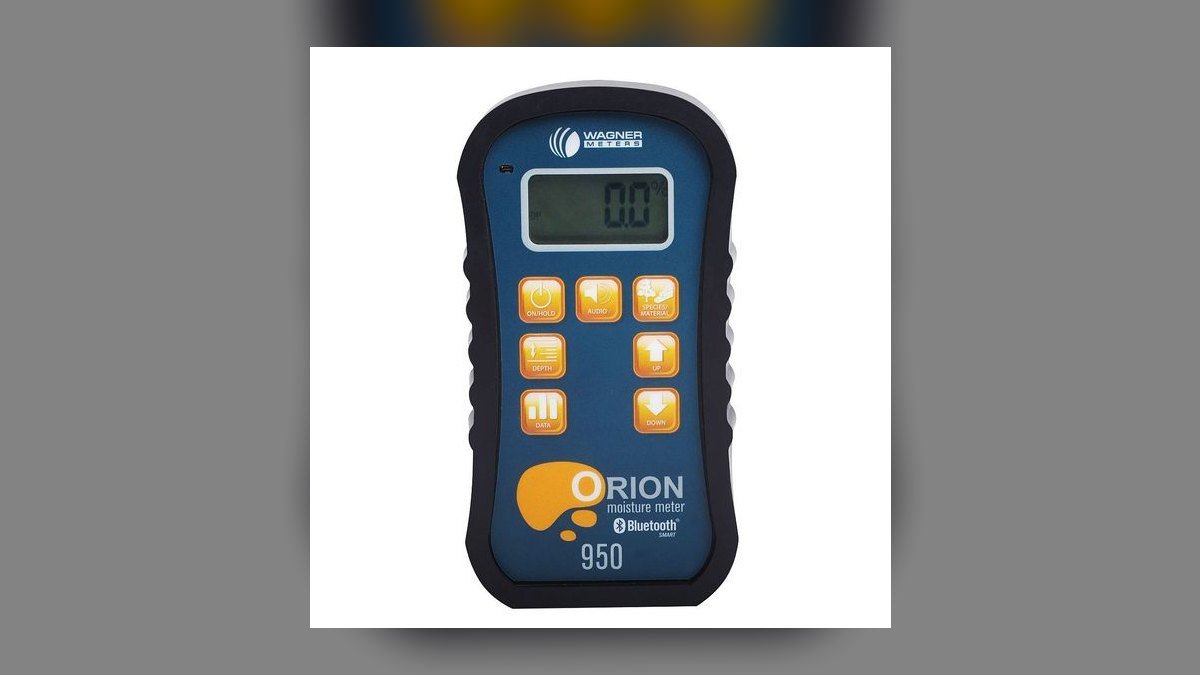
It ranks first because it is the only meter here with true in-field calibration, verified in about thirty seconds with the included On-Demand Calibrator. The pinless IntelliSense sensor reads 4.0 to 32.0 percent moisture content at 0.1 percent resolution and scans two depths, 1/4 inch shallow and 3/4 inch deep. A built-in equilibrium-moisture-content, relative-humidity, temperature and dew-point calculator plus Bluetooth logging round out the $645 package.
This is for flooring pros, home inspectors, and woodworkers whose reputation rides on the number. It trades away affordability outright: $645 is roughly thirteen times the Klein ET140 and over three times the Lignomat mini-Ligno DX/C. Against the Orion 930 below it, the only real additions are Bluetooth logging and the onboard RH/EMC calculation, which cost about $120 more. For occasional firewood checks it is plainly overkill.
2. Lignomat mini-Ligno DX/C
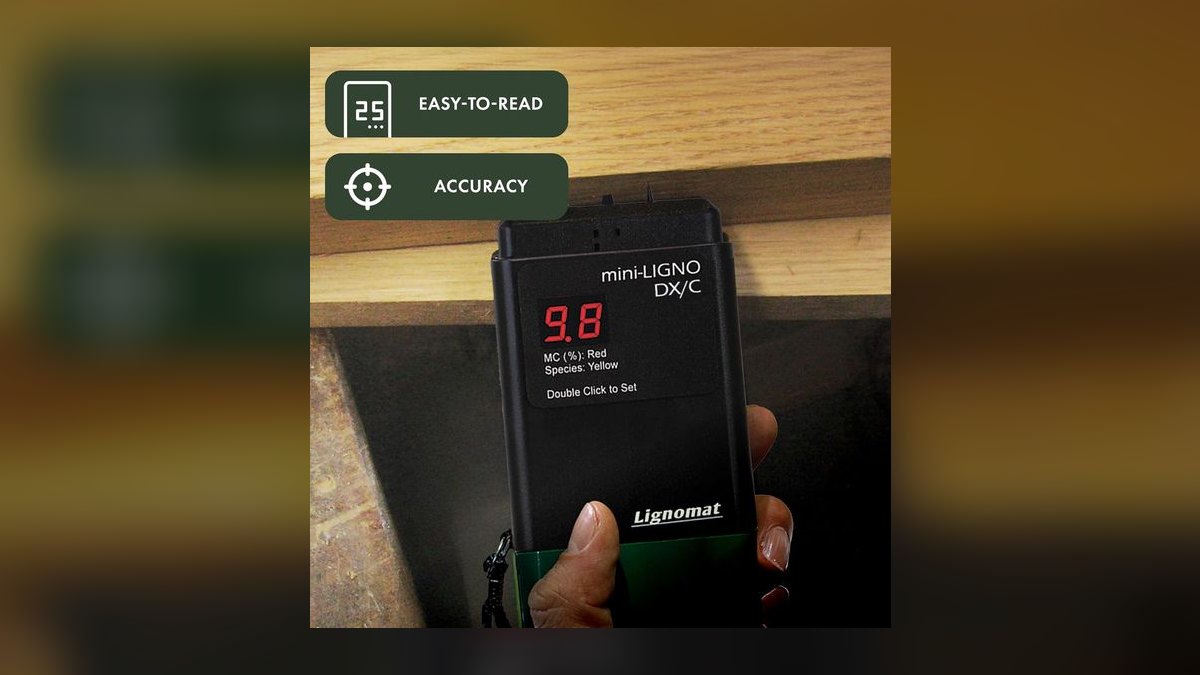
It earns second on correction depth: the species table covers dozens of domestic and tropical woods plus bamboo, laminates, panel products, drywall, and a concrete reference scale. This $190 pin meter reads roughly 5 to 65 percent moisture content depending on species setting, with 0.1 percent resolution below 10 percent. Two pin lengths ship in the box, 3/16 inch and 7/16 inch, and hammer-probe pins reach several inches into thick stock.
Furniture makers and kiln operators are the real audience, because pins contact wood fibers directly instead of guessing at surface density the way pinless sensors do. The cost is cosmetic: every reading leaves small holes, so it is wrong for finished surfaces. The readout is dated with no backlight. Against the Wagner Orion 950 above, it gives up non-marring scanning and field calibration but costs $455 less.
3. Klein Tools ET140
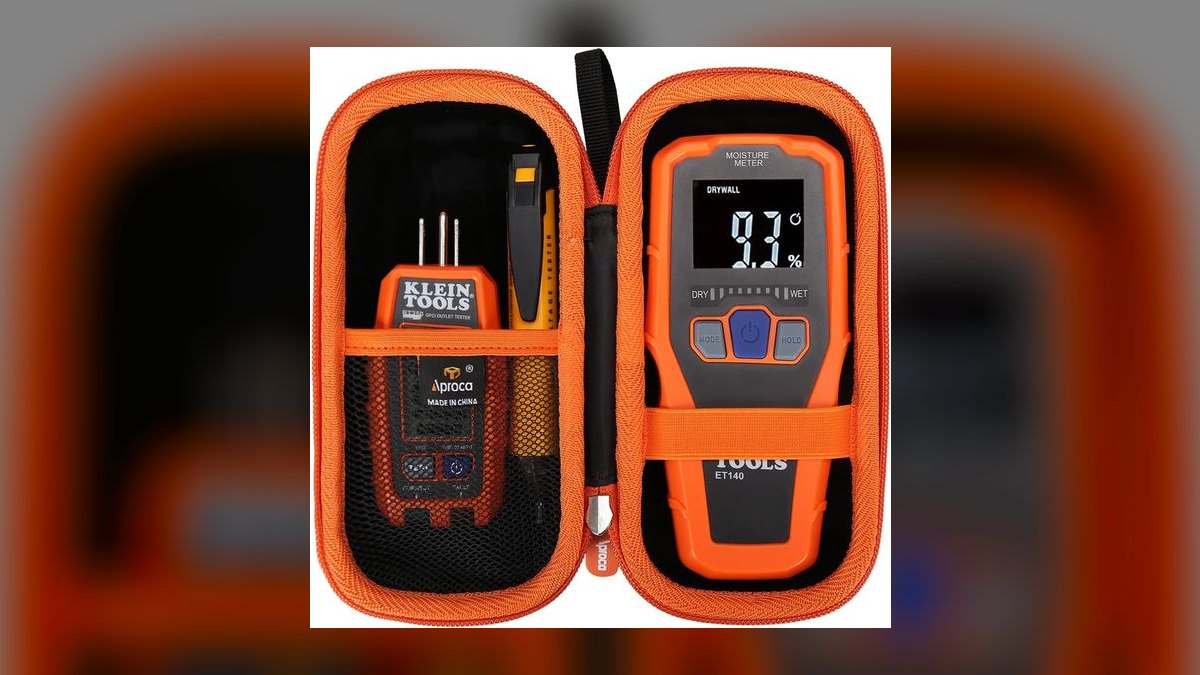
At $50 it delivers roughly eighty to ninety percent of the practical job for a tenth of the money, which is why it takes third. An electromagnetic-field sensor reads up to 3/4 inch deep without piercing anything, and one button switches among hardwood, softwood, drywall, and masonry modes. The reverse-contrast display drives nine LED bar segments plus audible tones, so sweeping a wall lets you hear where moisture spikes.
Electricians, DIYers, and inspectors wanting non-marring checks on a budget are the target. It trades away precision: the output is a relative bar reading, not a species-corrected percentage, and there is no calibration block to verify against. Compared with the Lignomat above, it cannot certify a number for glue-up or flooring installation, but it finds wet spots behind finished drywall that a pin meter would scar.
4. Calculated Industries 7445 Duo Pro
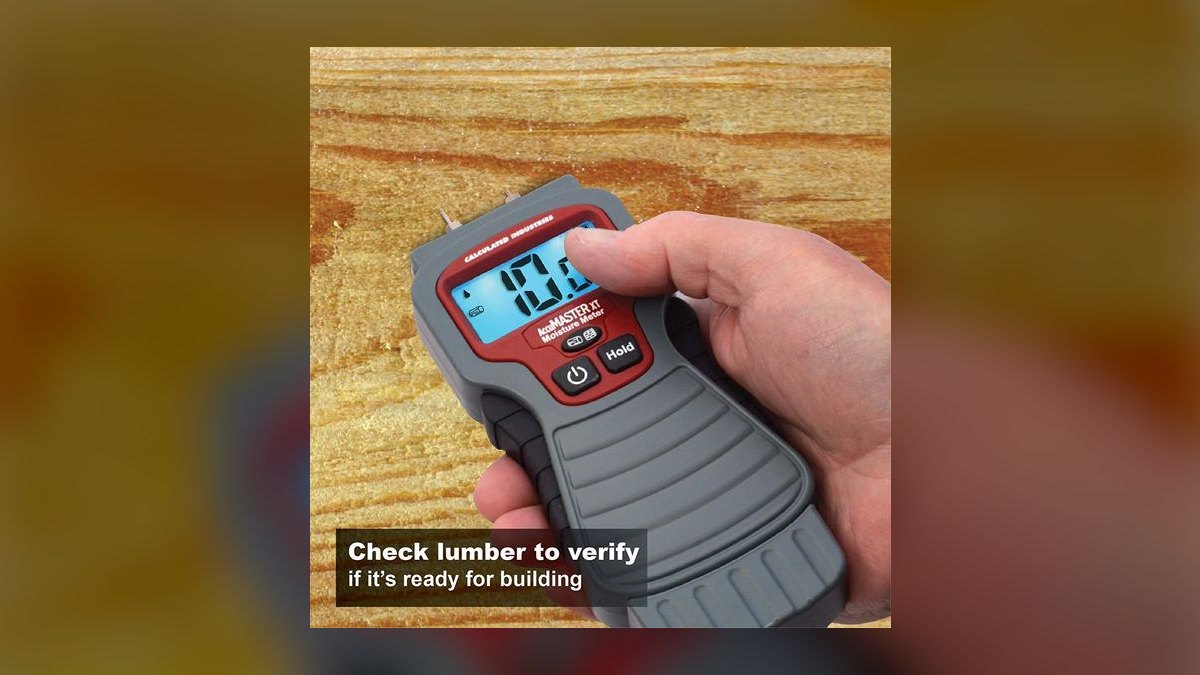
Fourth place goes to the only true dual-mode tool on the list: a pinless pad scans about 3/4 inch deep for non-marring sweeps, and a spring-loaded pin head confirms hot spots by contact. At $80 it reads wood plus drywall, plaster, brick, and concrete, with color LED zones alongside a numeric readout. The intended workflow is practical — sweep a wall pinless, then drive pins exactly where the bar graph spikes.
Generalists, inspectors, and remodelers who do not want to carry two meters get the most from it. It trades away refinement: species correction is coarse next to the Lignomat, and the pin caps and battery door feel light-duty. Against the Klein ET140 above, it adds pin contact readings and a numeric display for $30 more, but neither mode reaches reference-grade accuracy.
5. Wagner Meters Orion 930 Dual Depth
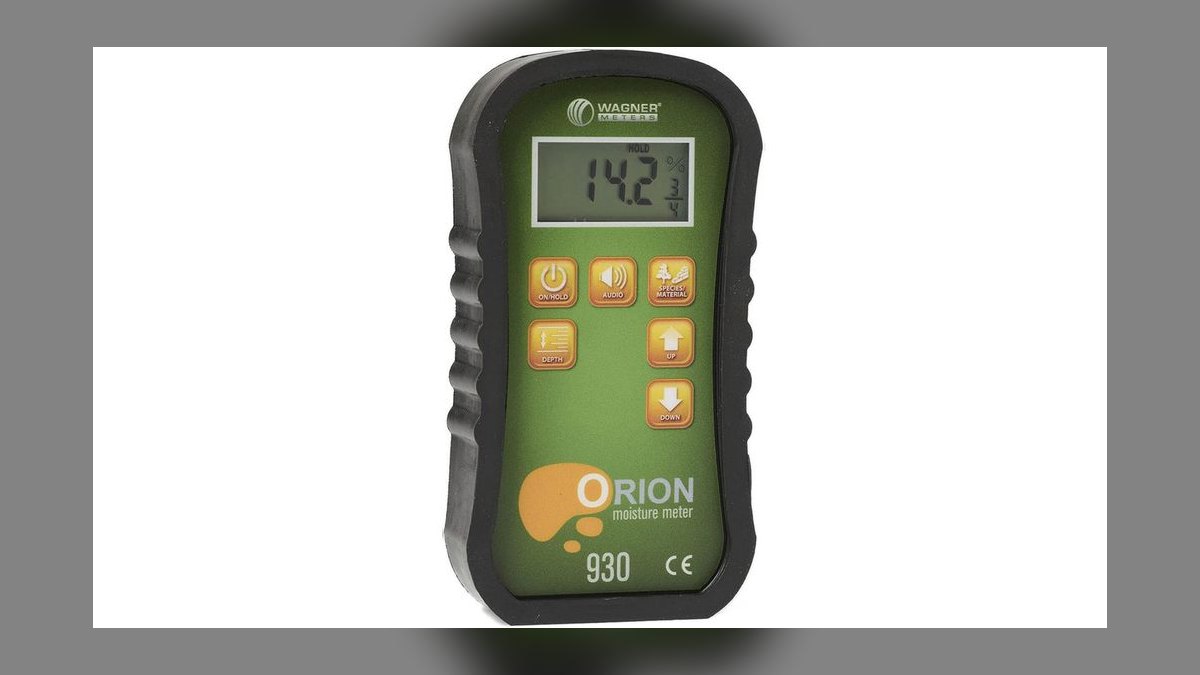
It sits fifth because it keeps Wagner's core accuracy for $525 while dropping the features most owners never use. The pinless sensor scans the same two depths as the 950 — 1/4 inch shallow and 3/4 inch deep — and it still ships with the On-Demand Calibrator, the field-verifiable calibration check almost no competitor offers. A backlit display and the full species-setting table make subfloor and finish-flooring checks fast and repeatable.
Flooring crews who work off the screen rather than a phone app are the buyers here. It trades away Bluetooth logging and the onboard RH, EMC, and dew-point calculation the 950 carries. That saves $120 against the top pick while preserving dual-depth scanning and calibration. Against the $80 Duo Pro above it, the gap is verified accuracy, not features — and it is a steep price for casual users.
6. General Tools MMD4E
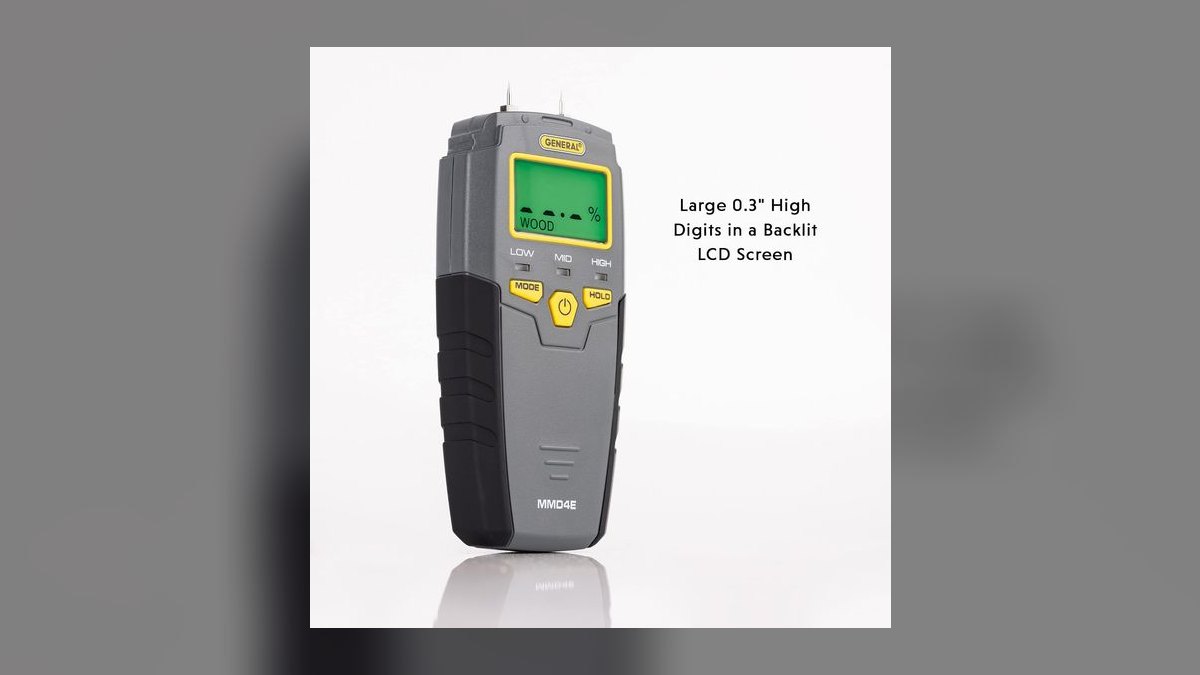
Sixth reflects consistent, no-nonsense pin performance at $40. It reads roughly 5 to 50 percent moisture content on a backlit LCD with color-coded high, medium, and low alerts plus an audible tone. It is the meter that shows up in countless firewood and leak-detection videos precisely because it is cheap, simple, and reasonably repeatable on a relative basis. One-handed pin readings make quick spot checks easy.
DIYers checking firewood, leaks, and rough lumber are the honest audience. It trades away species correction almost entirely, so the number works as a comparison between two boards rather than a lab figure, and the pins mark finished surfaces. Against the Klein ET140 above, it costs $10 less and gives a numeric contact reading, but it cannot scan a wall without leaving holes behind.
7. General Tools MM8
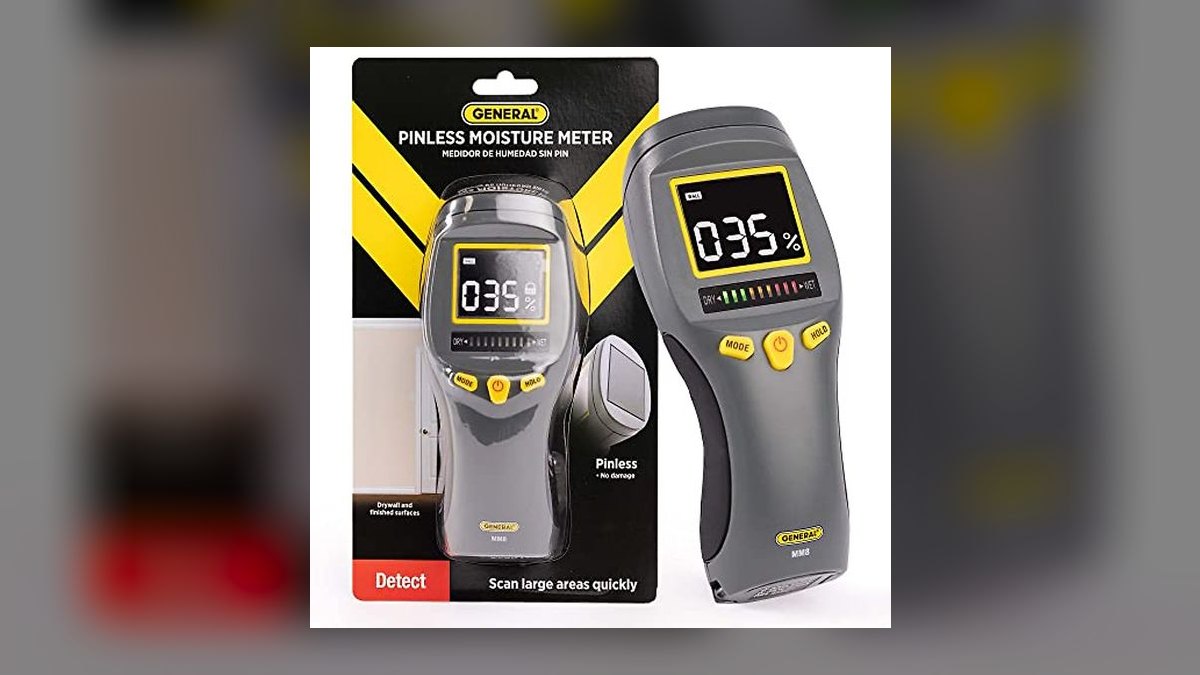
Seventh place comes down to non-marring scanning at $45. This pinless meter drives a tri-color bar graph on a white-on-black screen, reading beneath drywall, subfloor, or paneling without breaking the surface. The green, yellow, and red verdict is deliberately simple, aimed at homeowners who want a fast answer about a damp spot rather than a certified percentage. It works as an inexpensive no-pinhole companion to a cheap pin meter.
Homeowners and handypeople wanting cheap scanning are who it fits. It trades away both precision and reach: the output is relative rather than species-corrected, and effective depth is shallow compared with the 3/4 inch Wagner and Klein sensors. Against the MMD4E above it, you gain the ability to check finished surfaces and lose the numeric contact reading, for $5 more.
8. Calculated Industries 7440 AccuMASTER XT
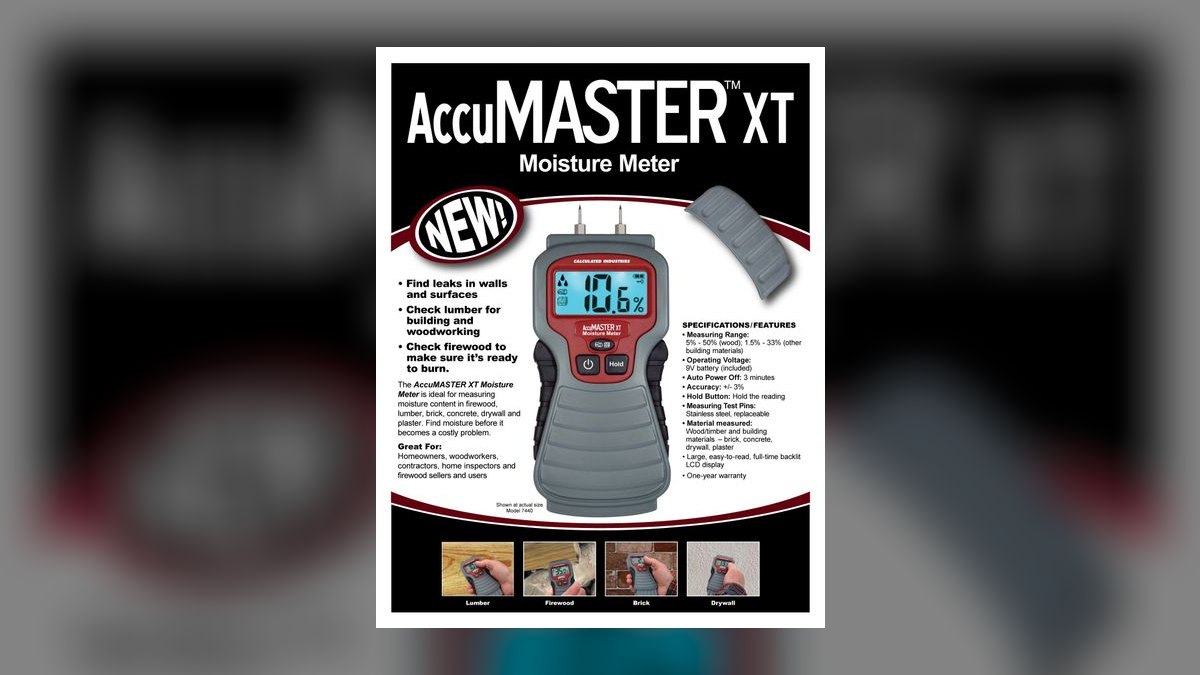
It lands eighth for a genuinely useful design choice at $52: separate scales for wood versus building materials, so the number carries context instead of running everything through one generic range. This pin meter targets firewood, lumber, brick, concrete, drywall, and plaster, with a backlit LCD and audible moisture alerts. Restoration techs use it to spot-check studs, framing, and masonry during dry-out, where pinholes are irrelevant.
Restoration and remodeling crews on construction-grade materials are the fit. It trades away fine-woodworking usefulness — it is not species-correct — and it offers pin contact only, with no scanning mode for finished surfaces. Against the MM8 above it, you gain building-material scales and depth-specific contact readings for $7 more, but you give up the ability to check a finished panel without marking it.
9. Dr.meter MD918
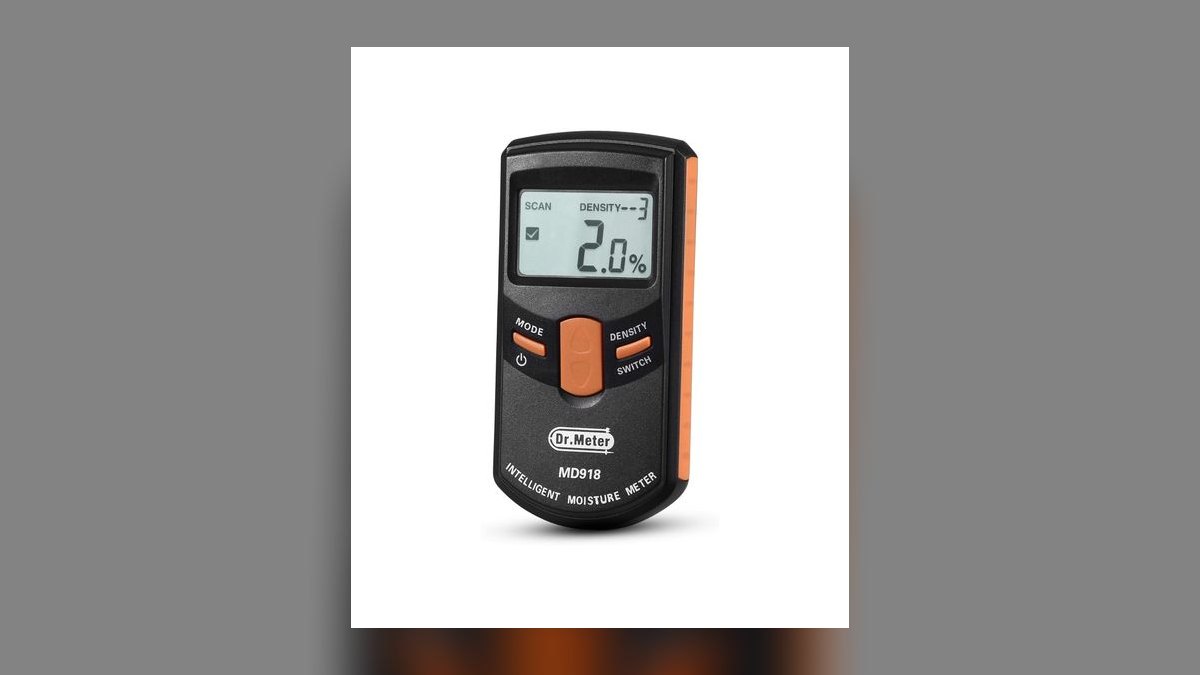
Ninth is about one specific advantage at $57: pinless scanning at a hobbyist price, with a backlit display showing a simple percentage and bar readout. Because it never pierces the surface, it suits checking guitar tops, turning blanks, and finished panels where a pin meter would leave visible damage. It is light enough to pocket and simple enough that a first-time user gets a usable answer immediately.
Hobbyist woodworkers and DIYers who care about finish quality are the buyers. It trades away accuracy and reach: correction is limited and consumer grade, and scan depth is shallow versus professional pinless tools, so important readings should be cross-checked against a known-dry reference board. Against the AccuMASTER XT above it, it costs $5 more, drops the building-material scales, and gains non-marring operation.
10. Tavool MT270
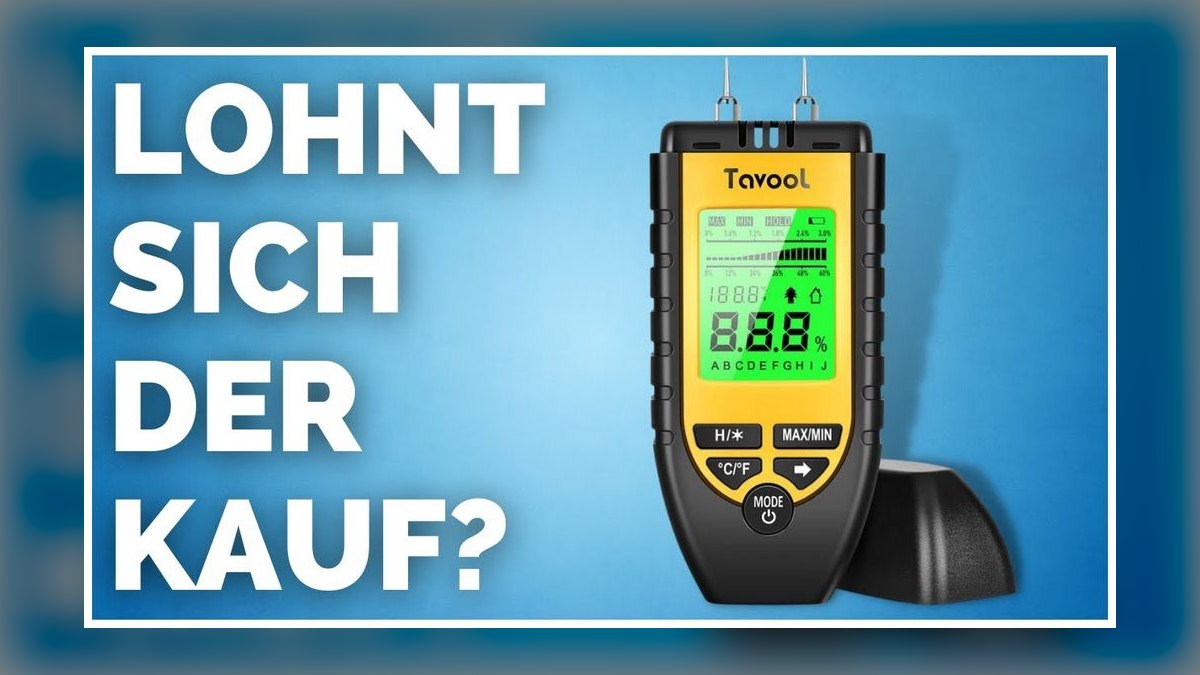
It ranks tenth because $25 is the lowest credible price on this list and the performance matches. This entry-level pin meter reads roughly 2 to 60 percent across wood and building-material scales, with a backlit screen and high, medium, and low color alerts. It answers the two basic questions most buyers actually have: whether firewood is seasoned, and whether a board is too wet to finish today.
First-time buyers, firewood burners, and anyone wanting a glovebox backup are the audience. It trades away species correction and repeatable precision entirely, and the pins mark surfaces and dull with use, so plan on replacing them. Against the Dr.meter MD918 above it, you save $32 and give up non-marring scanning — making it a starter or spare rather than a shop reference tool.
How we ranked these
We weighted accuracy and species or material correction at thirty percent, pin versus pinless behavior at twenty, range and measurement modes at fifteen, build quality and verifiable calibration at fifteen, display and ease of use at ten, and price-to-performance at ten. Specs came from Wagner Meters, Lignomat, General Tools, Klein Tools, and Calculated Industries, cross-checked against field impressions from Pro Tool Reviews, Family Handyman, Wood Magazine, and This Old House.
We ignored Amazon star ratings, which cluster near five stars across every price tier and separate nothing. We ignored Bluetooth, app logging, and case contents, because a phone connection does not make a sensor more accurate. We ignored claimed depth numbers unmatched by a published range, and we dropped meters that only show a relative bar with no species or material correction, no matter how cheap they looked.
What to look for
Decide first whether you read finished surfaces or rough ones. Finished floors, panels, and instrument tops rule out pins, which pushes you to the Klein ET140 at fifty dollars or a Wagner Orion at five hundred plus. Rough framing, firewood, and dry-out work make pinholes irrelevant, so a forty-dollar General MMD4E or the fifty-two-dollar AccuMASTER XT is enough meter for the job.
The common mistake is buying a percentage readout and treating it as truth. Cheap meters report a relative scale calibrated to one reference density, so an oak reading and a pine reading at the same number are not the same wood. Either buy species correction, as Lignomat and Wagner offer, or use your cheap meter only to compare two spots on the same material.
Related questions
What moisture content should wood be before I build with it?
Interior furniture and cabinetry generally want six to eight percent in most of the country, with humid coastal shops running slightly higher. Flooring is typically installed between six and nine percent after acclimation. Framing lumber is usually fine under nineteen percent. The real target is equilibrium with the room the piece will live in, not a universal number.
Is a pinless meter actually accurate on hardwood?
Pinless sensors read the average density of the field they penetrate, so species density directly skews the number. A meter with a species-setting table, like the Wagner Orion 950 or Orion 930, corrects for that and stays reliable. A meter with only hardwood and softwood modes, like the Klein ET140, gets you close enough to locate wet areas but not to certify a floor.
Why do my pin and pinless meters disagree on the same board?
They measure different things. Pins read electrical resistance between two points at a specific depth, so a wet surface or a dry shell skews them. Pinless meters average density across a quarter to three quarters of an inch. On a board drying unevenly, both readings are correct for their own depth. That is exactly why the Calculated Industries Duo Pro carries both.
How do I check whether firewood is seasoned?
Split a piece and press the pins into the freshly exposed face, not the weathered outside. Seasoned firewood reads roughly twenty percent or lower; freshly cut wood often reads forty percent or more. A twenty-five-dollar Tavool MT270 or a forty-dollar General MMD4E does this job perfectly, since pinholes in firewood are meaningless.
Do I need field calibration on a moisture meter?
Only if a wrong number costs money. Pin meters drift very little because resistance physics does not change. Pinless sensors can drift with temperature and age, which is why Wagner ships the On-Demand Calibrator with the Orion 930 and 950. If you certify flooring installations or sign inspection reports, that thirty-second check is the feature you are actually paying for.
Can a moisture meter find a leak inside a wall?
It can find where moisture is, which usually points toward the source. Sweep the pinless mode across drywall and watch for the bar graph or tone climbing, then confirm the hot spot with pins if pinholes are acceptable. The Klein ET140 and the Duo Pro are both good at this. Neither one sees plumbing, so you still have to interpret the pattern.
Does temperature change a moisture reading?
Yes, meaningfully. Resistance-type pin meters read higher on warm wood and lower on cold wood, and most published accuracy specs assume roughly seventy degrees Fahrenheit. Better meters offer a temperature correction or an onboard sensor. If you pull lumber from a cold garage, let it warm to shop temperature before you trust the number, or apply the manufacturer's correction chart.
Are the pins on a cheap meter replaceable?
On most of them, yes. Pins on the General MMD4E, AccuMASTER XT, and Tavool MT270 unscrew and replace for a few dollars. Dull or corroded pins make poor fiber contact and read low, which is the most common cause of a cheap meter suddenly reading wrong. Replace them annually if you use the meter regularly.
FAQ
Which wood moisture meter is best overall in 2027?
The Wagner Meters Orion 950 Smart at $645. It is pinless, reads four to thirty-two percent with 0.1 percent resolution, scans at both a quarter-inch and three-quarter-inch depth, and is one of very few meters you can genuinely calibrate in the field. Add the EMC and relative-humidity calculator, Bluetooth logging, and a seven-year warranty, and it is the reading you can defend.
What is the best value wood moisture meter?
The Klein Tools ET140 at $50. It scans up to three quarters of an inch deep without leaving a mark, offers hardwood, softwood, drywall, and masonry modes, and drives a nine-segment bar display with audible tones. It reports a relative reading rather than a species-corrected percentage, but for locating moisture it delivers most of the useful capability for a tenth of the money.
Should I buy a pin or a pinless moisture meter?
Pinless if you work on finished wood, floors, or anything where holes matter. Pin if you need a depth-specific reading, work on rough lumber, or check firewood and framing. Pin meters also handle thick stock better, since hammer probes on a Lignomat mini-Ligno DX/C can reach several inches in for a true core number.
How deep can a pinless moisture meter read?
Consumer pinless meters generally scan a quarter inch to three quarters of an inch below the surface. The Wagner Orion models scan both a shallow quarter inch and a deep three quarters of an inch, letting you compare the two and see whether a board is drying unevenly. Anything deeper than that requires a pin meter with long hammer-probe pins.
What does species correction actually do?
Wood density varies enormously between balsa and ipe, and both resistance and electromagnetic sensors respond to density as well as water. Species correction applies the right conversion so the displayed percentage means the same thing across woods. The Lignomat mini-Ligno DX/C carries settings for dozens of domestic and tropical species; a twenty-five-dollar meter carries none.
Is the Wagner Orion 930 worth buying instead of the 950?
Yes, if you will never use the smart features. The 930 at $525 keeps the dual-depth pinless sensor, the species table, the backlit display, and the On-Demand Calibrator that makes Wagner trustworthy. You give up Bluetooth logging and the onboard relative-humidity and equilibrium-moisture-content calculator, and you save well over a hundred dollars.
Can I use these meters on concrete or drywall?
Several of them, yes, but treat the readings as relative. The Klein ET140 has drywall and masonry modes, the Calculated Industries Duo Pro and 7440 AccuMASTER XT both split wood and building-material scales, and the Lignomat includes a concrete reference. For certified concrete slab testing before flooring, ASTM specifies in-slab relative-humidity probes instead.
How accurate are cheap moisture meters really?
On the same material, comparing two spots, they are useful and consistent. As absolute percentages they can be off by several points, especially across species or at temperature extremes. That is the honest limit of a twenty-five to fifty-dollar tool: it tells you wetter or drier reliably, and it tells you the exact number only approximately.
Do I need a meter with Bluetooth and app logging?
Only if you document readings for clients, insurers, or warranty claims. Bluetooth changes nothing about sensor quality; a logged reading is exactly as accurate as the one on the screen. Buy sensor quality and species correction first. If you are a restoration tech building moisture logs for a claim, the logging on the Orion 950 pays for itself.
How should I store and maintain a moisture meter?
Pull the battery if it will sit for months, since a leaking cell ruins the board. Keep pins clean and replace them when dull or corroded. Store pinless meters away from extreme heat, which accelerates sensor drift. Verify against a calibration block if your meter has one, and otherwise spot-check against a board of known, stable moisture content.
Sources
- https://www.fpl.fs.usda.gov/documnts/fplgtr/fpl_gtr190.pdf
- https://www.wagnermeters.com/moisture-meters/
- https://www.kleintools.com/catalog/environmental-testers/pinless-moisture-meter
- https://www.lignomat.com/
- https://www.protoolreviews.com/best-moisture-meter/
- https://www.familyhandyman.com/list/best-moisture-meters/
- https://www.bobvila.com/articles/best-moisture-meter/
- https://www.thisoldhouse.com/tools/reviews/best-moisture-meters
- https://www.woodmagazine.com/
- https://www.calculated.com/
Related on PULSE
- [More wood moisture meters rankings and buying guides](/knowledge)
- [PULSE Tools and calculators](/tools)
- [Everything on PULSE RevOps](/)
 pulse-reviewsHow much does Electronics cost in 2027?
 pulse-reviewsHow much does a DJI Avata 2 cost in 2027?
 pulse-reviewsWhat should you know before investing in Electronics in 2027?
 pulse-reviewsWhat are the most common mistakes in Electronics in 2027?
 pulse-reviewsTop 10 best Electronics options in 2027
 pulse-reviewsHow do you get started with Electronics in 2027?
 pulse-reviewsTop 10 Electronics strategies for 2027
 pulse-aquariumsTop 10 Canister Filters 2027
 aqTop 10 Hang-On-Back Aquarium Filters 2027
 pulse-reviewsTop 10 Cabin Cruiser Boats 2027