


Should I open or buy a Red Lobster franchise in 2027?
Quality
Certified
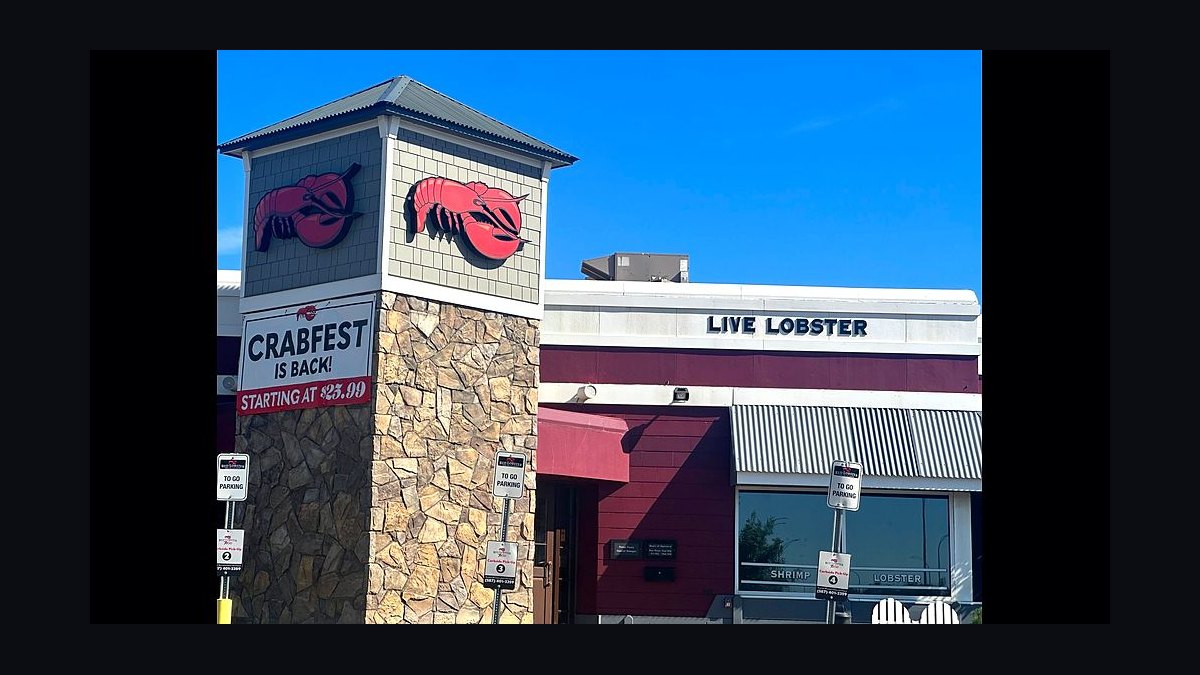
No — Red Lobster does not franchise in the United States, and international franchising is only available to established multi-unit operators with $3M+ in liquid capital. The chain is entirely company-owned following its 2024 bankruptcy restructuring under RL Investor Holdings LLC (Fortress Investment Group). The only franchise pathway is through international development agreements, currently active in Mexico (operated by Restaurantes Unidos Restaunsa S.A.) and Thailand/Japan (operated by Red Lobster Retail Asia Co., Ltd.). For US-based investors, there is no legal path to ownership. For qualified international operators, expect a 12-18 month negotiation process, $3M-$5M liquid capital requirement, and multi-unit commitment (minimum 5 units over 7 years).
The Real Numbers
Red Lobster does not publish a US Franchise Disclosure Document (FDD) because it does not offer US franchises. The following data is drawn from international development disclosures, post-bankruptcy court filings (US Bankruptcy Court Middle District of Florida, Case No. 24-02486), and industry benchmarks.
| Cost Line Item | Estimated Range (International Unit) |
|---|---|
| Initial franchise/territory fee | $50,000 - $100,000 per unit |
| Real estate/leasehold acquisition | $400,000 - $1,200,000 |
| Build-out (8,000-10,000 sq ft) | $1,500,000 - $3,500,000 |
| Kitchen + lobster tank equipment | $400,000 - $850,000 |
| Furniture, fixtures, signage | $250,000 - $500,000 |
| Opening inventory | $75,000 - $150,000 |
| Pre-opening training/travel | $50,000 - $125,000 |
| Working capital (6 months) | $400,000 - $900,000 |
| Total Initial Investment | $3,125,000 - $7,325,000 |
| Royalty rate | 5% of gross sales |
| Marketing contribution | 3-4% of gross sales |
| Liquid capital required | $3,000,000 - $5,000,000 |
| Net worth required | $10,000,000 - $15,000,000 |
Revenue context: Red Lobster's US system-wide average unit volume was approximately $3.4 million in fiscal 2023 before bankruptcy. International units typically generate $2.5M-$4.5M annually. Restaurant Business Top 500 ranked Red Lobster 41st in casual dining in 2025.
EBITDA margin: Full-service seafood casual dining typically operates at 8-12% restaurant-level EBITDA according to industry benchmarks. Post-bankruptcy projections filed with the US Bankruptcy Court show adjusted EBITDA growing 43% from FY2025 to FY2027, with net income turning positive at $2.1 million in FY2026.
Payback period: 5-7 years for international units; not applicable for US investors.
Who Wins With This Business
You win if you are an established international restaurant operator with 10+ existing units under a Western casual-dining brand (Olive Garden, Applebee's, Chili's, Outback) in Latin America, Southeast Asia, or the Middle East. The Mexico operator (Restaunsa) demonstrates the successful model: multi-decade operator, dollar-denominated balance sheet, vertically integrated cold-chain logistics, and existing supplier relationships with Maine Coast or Clearwater Seafoods.
You win if you have $10M+ in deployable capital and view this as a multi-unit territory play rather than a single-store bet. Per-unit economics only work when amortizing corporate overhead (regional QA, training, supply chain) across 5+ locations.
You win if you control real estate in a Tier-1 international shopping district with 6,000+ daily foot traffic and median household income above $45K USD-equivalent. The Red Lobster format requires high-density, mid-income suburban or destination-retail anchors.
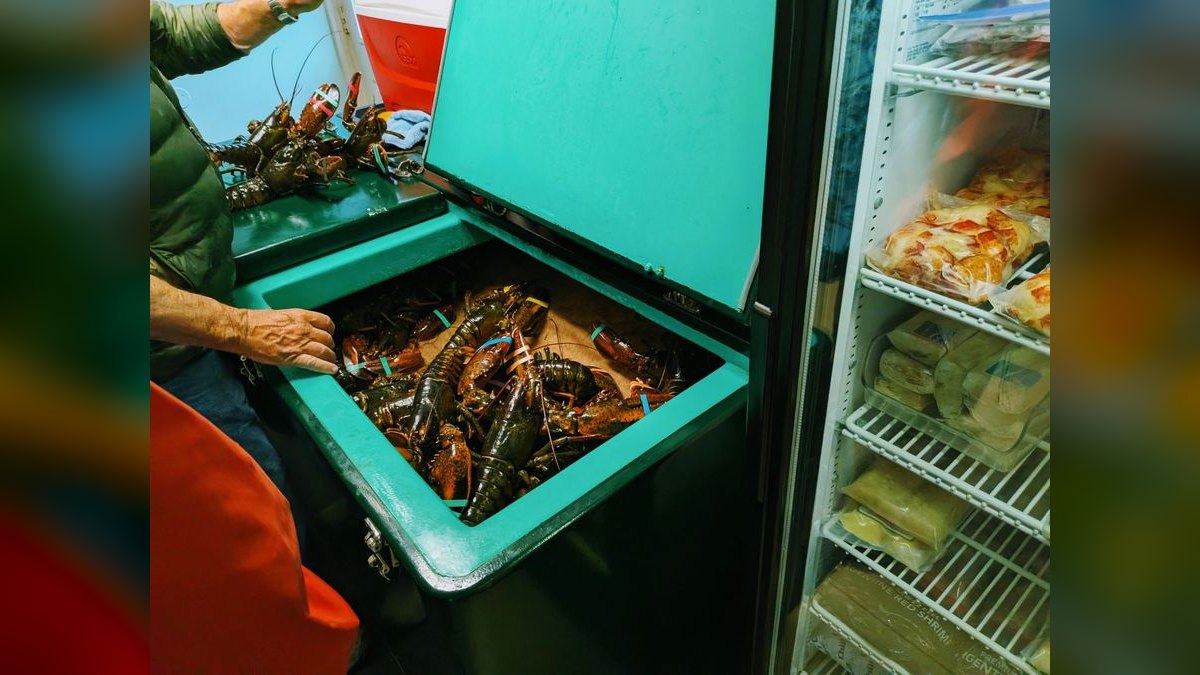
You win if you have direct seafood supply relationships. Red Lobster's Maine-lobster-by-mail wholesale economics were a bankruptcy trigger; international operators with local sourcing alternatives (Spanish lobster in Mexico, rock lobster in Thailand) preserve 8-10 margin points.
Who Loses With This Business
You lose if you are a US-based investor. There is no US franchise offer, no master-franchise route, and no resale market for existing Red Lobster units because they are all corporate-owned. Any "Red Lobster franchise" listing on aggregator sites contains stale data from old Darden disclosures. Do not wire money to any party claiming to sell a US Red Lobster franchise.
You lose if you are under-capitalized. International Red Lobster build-outs run $3M-$7M per unit with 18-month construction timelines in markets where construction cost inflation runs 8-12% annually. Cost overruns of 20-30% are standard.
You lose if you cannot operate at corporate level. Red Lobster's parent runs brand standards audits, mystery-shop programs, and supply-chain compliance reviews at corporate intensity. The Endless Shrimp 2023 promotion ($11 million loss in a single quarter) proved that even the corporate parent struggles with promo pricing discipline.
You lose if you bet on the value-seeking customer. That demographic — deal-driven, low-frequency casual diners — is most squeezed by 2027 inflation and most disloyal. Post-bankruptcy Red Lobster is repositioning upmarket under CEO Damola Adamolekun (appointed October 2024), which dilutes the unit-level volume the old model depended on.
2027 Market Conditions
The post-bankruptcy Red Lobster is a 545-unit chain across 44 US states and 4 Canadian provinces, plus a handful of international franchised units. CEO Damola Adamolekun's turnaround strategy — reported by Restaurant Business Online and Restaurant Dive — calls for menu simplification, price-point laddering, kitchen labor reduction via automation, and selective international franchise expansion.
Seafood casual dining is contracting. Industry reports project -1.8% annualized revenue decline for the US seafood restaurant industry through 2030, driven by input cost volatility (Maine lobster spot prices ranged $7-$28/lb in 2024-2026), GLP-1 weight-loss drug adoption suppressing restaurant frequency, and generational shift toward fast-casual seafood concepts.
Capital markets are closed to new full-service seafood concepts. Restaurant Finance Monitor's 2027 lender survey shows SBA 7(a) underwriting for casual seafood at the lowest approval rate in 12 years (38% vs. 71% for QSR). The Fortress-owned Red Lobster raised $60 million in DIP financing in May 2024 from its own lender syndicate because no third-party capital was available.
The international franchise window is open but selective. Red Lobster's international team is actively recruiting operators in Saudi Arabia, UAE, India, Brazil, and the Philippines per its official international franchise landing page. No US, EU, or Canadian expansion is offered.
The 90-Day Decision Tree
- Day 1-15: Confirm your geography. If you are a US resident with US capital, stop here. There is no US franchise. Pivot to Alternative Plays. If you are an international operator, proceed.
- Day 16-30: Verify liquid capital. Pull a personal financial statement and business balance sheet. You need $3M minimum liquid and $10M minimum net worth. If below these floors, stop — the per-unit math does not work.
- Day 31-45: Build the market case. Commission a 3-city feasibility study in your target country: site selection, demographic overlay, competitive seafood landscape, local cold-chain logistics, and 5-year unit-economic model at $3M AUV / 9% EBITDA.
- Day 46-60: Approach Red Lobster's international team. Submit through redlobster.com/international-franchises with a multi-unit proposal (minimum 5 units over 7 years). Expect a non-disclosure agreement and 45-day initial qualification screen.
- Day 61-75: Engage franchise counsel. Retain a franchise attorney admitted in both your jurisdiction and Florida (Red Lobster HQ in Orlando). Budget $75K-$150K in legal fees for the master development agreement.
- Day 76-90: Run the kill criteria. If unit-economic model returns below 18% IRR, cancel. If local supply chain cannot deliver 1A live Maine lobster within 48 hours of dock, cancel. If brand permits cannot be secured in your country, cancel. Walking away on Day 90 is the correct outcome 70% of the time.
Alternative Plays
Buy a regional seafood chain in distress. Bonefish Grill (Bloomin' Brands), Joe's Crab Shack, and Landry's Crab Shack operators all show acquisition multiples of 4-6x EBITDA in the 2027 market — well below the 8-10x Fortress paid for Red Lobster. Restaurant Finance Monitor publishes deal flow monthly.
Open an independent seafood concept. A 6,000 sq ft local seafood house costs $800K-$1.5M all-in versus $3M+ for a Red Lobster international unit. The independent margin profile is identical (8-12% EBITDA) but avoids the 5% royalty + 3% marketing fund — that's 800 basis points of margin you keep.
Pivot to fast-casual seafood. Cousins Maine Lobster franchises food trucks at $185K-$365K initial investment with $500K-$900K AUV per unit. Slapfish opens brick-and-mortar at $650K-$1.1M. Both offer US franchises with active FDDs. Margins are stronger because no servers, no liquor, no tank-maintenance overhead.
Buy Darden stock. Darden Restaurants (NYSE: DRI) sold Red Lobster to Golden Gate Capital in 2014 and has compounded earnings at 11% CAGR since. A $3M passive investment in DRI matches the risk-adjusted return of operating a single international Red Lobster unit, with zero operational risk and full liquidity.
Wait for the Fortress exit. Private equity holding periods run 5-7 years. Fortress will likely sell Red Lobster between 2029-2031, possibly to a strategic acquirer or second PE buyer. The new owner may re-open US franchising as a capital-light expansion path. Setting a 2030 calendar reminder costs nothing.
FAQ
Is it possible to open a Red Lobster franchise in the United States in 2027? No. Red Lobster does not franchise in the U.S. and has been entirely company-owned since before its 2024 bankruptcy restructuring. All domestic locations are owned and operated by RL Investor Holdings LLC.
How much money do I need to get an international Red Lobster franchise?
International development agreements typically require liquid net worth between $3 million and $5 million, plus a multi-unit commitment. Total investment for a single international location ranges from $2 million to $4 million.
Can I buy an existing Red Lobster restaurant from a current owner? No. Red Lobster does not sell existing locations to individual buyers. All U.S. restaurants are company-owned, and international units are operated by master franchisees.
How long does it take to negotiate an international franchise agreement? The process usually takes 12 to 18 months from initial inquiry to signing, including financial vetting, site selection, legal review, and approval from both Red Lobster's corporate team and the local master franchisee.
What is the realistic cash flow for a new international Red Lobster in the first year? Year-1 cash flow is typically negative, ranging from -$400,000 to -$800,000, due to startup costs, staffing, and initial marketing. Breakeven is generally not expected until Year 3 to Year 5.
Are there any other ways to get involved with Red Lobster without owning a franchise?
You could consider a management role at a company-owned location or a corporate position, but these do not offer ownership. There are no licensing or partnership opportunities for individuals outside the existing international master franchisees.
Bottom Line
Red Lobster is not a buyable franchise for US investors in 2027 — full stop. The brand is corporate-owned, post-bankruptcy, and selectively expanding internationally under Fortress Investment Group. If you are an established international operator with $3M+ liquid capital, 5-unit multi-unit appetite, and local seafood supply chain control, the international development pathway is real and Year-5 unit economics can clear 15-18% IRR. For every other investor profile, the correct answer is to pivot — to Cousins Maine Lobster (active US franchise), an independent seafood concept (better margin, no royalty), distressed regional chain M&A (4-6x EBITDA), or passive Darden equity (matched risk-adjusted return, zero ops). Do not wire money to any party claiming to sell a US Red Lobster franchise — none exist.
Sources
- Red Lobster International Franchises — Official international franchise development page
- Bloomberg Law - Red Lobster Bankruptcy Exit — September 5, 2024
- US Bankruptcy Court Middle District of Florida — Red Lobster Management LLC Chapter 11 Plan of Reorganization, Case No. 24-02486
- Restaurant Dive - Red Lobster Post-Bankruptcy Financials — Post-bankruptcy projected financials
- Restaurant Business Online - Red Lobster Top 500 — Top 500 Chains 2025 ranking
- IBISWorld Industry Report 72211b — Seafood Restaurants in the US (2027 edition)
- The American Prospect - The Raiding of Red Lobster — Endless Shrimp and supply chain analysis (May 22, 2024)
- Restaurant Finance Monitor — 2027 SBA 7(a) Restaurant Lender Survey
- National Restaurant Association — 2027 State of the Restaurant Industry Report
- Fortress Investment Group — RL Investor Holdings press release archive (2024-2026)
Related on PULSE
This page will be disappearing soon. Save it to your device for $1 — or read it free while it is here.
@Kory-White- · if Venmo asks, the last 4 of my number are 2012
This page is gone.
This one is off the shelf now. $1 keeps it on your phone for good — the whole page, pictures and diagrams included.
 franchiseShould I open or buy a Bruster's Real Ice Cream franchise in 2027?
 franchiseShould I open or buy a Mac Tools franchise in 2027?
 franchiseShould I open or buy a Cook Out franchise in 2027?
 franchiseShould I open or buy a Subway franchise in 2027?
 franchiseShould I open or buy a Stanley Steemer franchise in 2027?
 franchiseShould I open or buy a McAlister's Deli franchise in 2027?
 franchiseShould I open or buy a Cold Stone Creamery franchise in 2027?
 franchiseShould I open or buy a Papa John's franchise in 2027?
 franchiseShould I open or buy an Anytime Fitness franchise in 2027?
 franchiseShould I open or buy a Culver's franchise in 2027?