


Should I open or buy a KFC franchise or open an independent sandwich shop in 2027?
Quality
Certified
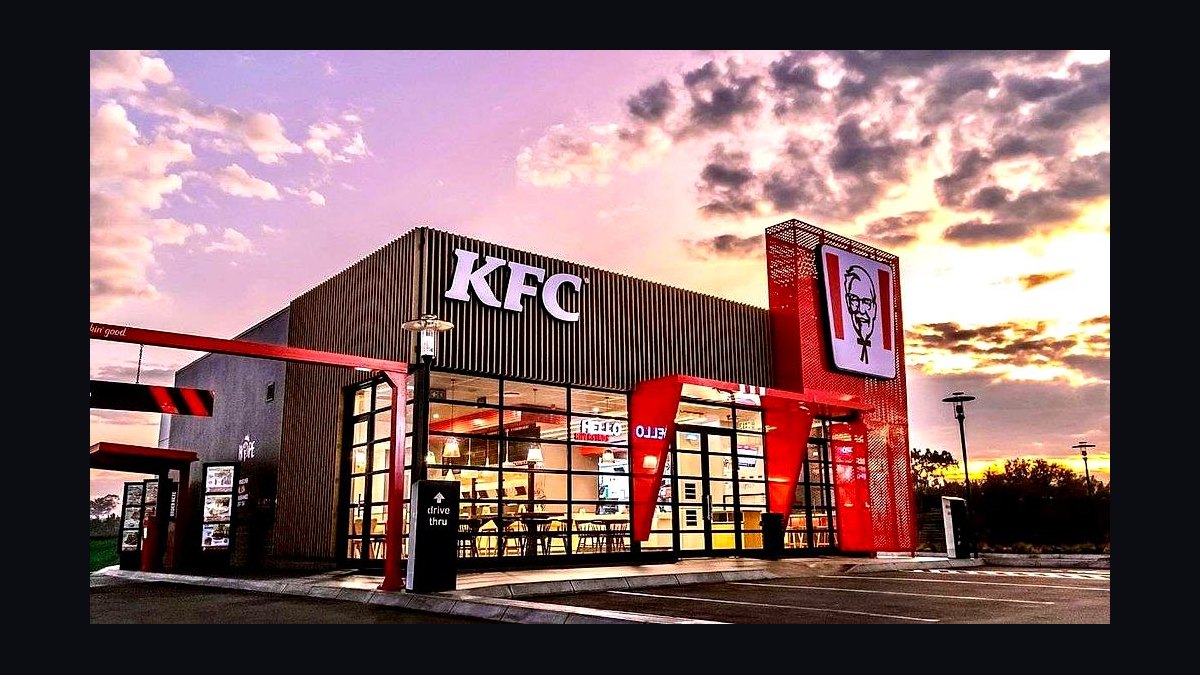
For most first-time owners in 2027, an independent sandwich shop is the lower-risk, lower-capital path to open, while a KFC franchise suits someone with $1.5M+ in liquid capital who wants a proven system over full creative control. Choose the franchise for brand demand and support; choose independent for lower buy-in, flexibility, and higher long-term margin ownership.
The two options compared
Buying into KFC and opening an independent sandwich shop sit at opposite ends of the same spectrum: bought infrastructure versus built infrastructure. A KFC franchise is a license to operate a proven, nationally advertised brand under Yum! Brands' operating system. You are not inventing a menu, a supply chain, a point-of-sale workflow, or a marketing calendar — all of that arrives pre-built, audited, and enforced through the franchise agreement. In exchange, you give up a meaningful share of control and a recurring percentage of revenue for the life of the agreement, typically running 10-20 years with renewal options.
An independent sandwich shop is the inverse. You choose the name, the menu, the pricing, the supplier relationships, the interior design, and the hours. Nothing is dictated by a franchise disclosure document (FDD), and there is no royalty check to write every week. That freedom is also the risk: every mistake a franchisor would have already caught — a bad lease clause, an undersized walk-in cooler, a menu that's too broad to execute fast — is yours to discover the hard way. There is no field consultant who flies in when your food cost creeps past target, no national ad fund building awareness on your behalf, and no brand recognition that gets a new customer through the door on day one.
The practical dividing line is capital and temperament. Franchise ownership rewards operators who are comfortable being excellent executors inside someone else's playbook — people who want a business, not necessarily a creative outlet, and who have (or can raise) real institutional-scale capital. Independent ownership rewards operators who want to build a concept from the ground up, who have deep local-market knowledge or a genuinely differentiated food idea, and who are willing to trade brand-driven traffic for full control of the P&L. Neither path is inherently "safer" in the way people assume — franchise systems fail too, and independents that nail a strong location and a tight menu can outperform a mediocre franchise unit. What changes is where the risk sits: in a franchise, execution risk is lower but financial and contractual leverage is higher; in an independent, financial exposure per dollar invested is lower but market and brand-building risk falls entirely on the owner.
There's also a hybrid consideration worth naming directly: some operators buy an existing, established KFC location from a current franchisee (a resale) rather than opening a new build, and some build a sandwich concept that later licenses itself out. But for a first-time buyer weighing "open a KFC" against "open independent" in 2027, the comparison above — bought system versus built system — is the real decision, and everything else is a variant of it.
How to decide between them

The decision tree should start with capital, then move to control preference, then to time horizon, because those three filters eliminate one path for most people before "which is better" even becomes relevant. If you don't have access to roughly $1.5 million in investable capital (cash plus financing capacity) and a net worth well above that, a new-build KFC franchise is not currently reachable regardless of preference — Yum! Brands' franchisee qualification standards exist specifically to filter for that. If that's your situation, the independent sandwich shop, a smaller franchise brand, or an existing-location resale become the realistic set.
If capital isn't the constraint, the next filter is control. Ask directly: do you want to run somebody else's system precisely, or do you want the freedom to change the menu next quarter because a supplier price spiked or a trend shifted? Franchise agreements restrict menu changes, remodel timing, supplier choices, and even signage — deviation can trigger default notices. If that constraint would frustrate you operationally, independent ownership is the better psychological fit even if the franchise is financially accessible.
The third filter is time horizon and exit strategy. Franchise units are easier to value and sell because there's a comparable-sales market (other KFC units transact regularly, and brokers specialize in this). Independent restaurants are harder to price at exit because buyers are underwriting your personal brand and operations, not a transferable system — though a strong independent concept can also be franchised out later, turning the exit into a licensing opportunity instead of a single-unit sale.
Run this filter honestly before falling in love with either idea. Founders frequently self-select into the franchise because it feels "safer," then discover mid-process that the control restrictions are intolerable to them — or self-select into independent because it feels cheaper, without realizing the marketing lift required to open without brand recognition is a second full-time job.
Concrete numbers behind each option
A new-build KFC franchise has historically required an initial franchise fee in the neighborhood of $45,000 per restaurant, with total initial investment for a new, freestanding restaurant with drive-thru commonly cited in the $1.5 million to $3 million range once land or long-term lease, construction, equipment, signage, initial inventory, and opening costs are included — existing-building conversions or smaller footprints can land toward the lower end, and ground-up builds in expensive markets push toward or past the top. On top of that build cost, ongoing fees typically run a royalty around 5% of gross sales plus an advertising/ad-fund contribution that has historically also been roughly 4-5% of gross sales, so franchisees commonly budget roughly 9-10% of top-line revenue flowing back to the franchisor system before local marketing, occupancy, labor, or food cost are even paid. Yum! Brands' franchisee qualification standards for KFC have generally called for a minimum liquid capital requirement in the high six figures to low seven figures and a net worth requirement well above that — figures that shift over time, so any serious applicant needs to pull the current Franchise Disclosure Document (FDD) Item 7 (estimated initial investment) and Item 19 (financial performance, where provided) rather than relying on secondhand numbers.

An independent sandwich shop scales dramatically lower. A modest quick-service sandwich concept — think 1,200-2,000 square feet, limited seating, a straightforward build-out rather than a full commercial kitchen — can often be opened in the rough range of $150,000 to $400,000 depending on market, whether you're taking over a prior restaurant space (which saves heavily on grease-trap, hood, and plumbing work) versus a cold shell, and how much equipment you buy new versus used. There's no franchise fee and no ongoing royalty, so 100% of gross margin above operating cost stays with the owner. The trade-off shows up in customer acquisition cost: a new independent typically has to spend disproportionately on local marketing, signage, delivery-app placement, and promotional pricing in year one to build the awareness a franchise brand already has walking in the door, and that soft cost rarely shows up in a simple build-out budget.
Financing also differs structurally. Established QSR franchise brands, including KFC, are more likely to be approved for SBA 7(a) financing and conventional bank debt because lenders can underwrite against the brand's system-wide unit economics and a documented track record. Independent concepts, lacking that comparable data, more often rely on SBA loans underwritten primarily against the owner's personal financials and collateral, plus higher reliance on personal savings, friends-and-family capital, or equipment financing/leasing to bridge the gap — meaning the "lower total cost" of independent ownership doesn't always translate to "easier to finance."
Implementation details and sequencing
The sequencing differs meaningfully once you commit to a path, and getting the order wrong is one of the most common ways either type of opening stalls out. For the KFC franchise route, the process generally starts with an initial inquiry and financial qualification screen, followed by receipt and mandatory review of the FDD (in the U.S., franchisors must give prospective franchisees at least 14 calendar days to review the FDD before signing or paying), site selection and franchisor approval of that site (territory rights and site criteria are non-negotiable line items), then simultaneous tracks of construction/build-out, staff hiring, and required franchisor training — KFC and most major QSR brands run new franchisees through a structured training program before they're permitted to open. Only after training completion and a final brand-standards inspection does the location get cleared to open.

For the independent sandwich shop, the sequencing is self-directed and therefore riskier to sequence wrong: concept and menu development first (ideally validated with a pop-up, ghost-kitchen test, or farmers-market run before signing a lease), then site selection and lease negotiation — critically, negotiate contingencies for permitting and health-department approval before signing, since restaurant build-outs routinely stall on plumbing, ventilation, or grease-trap requirements that a landlord's shell didn't anticipate. Health permits, a food-service license, and often a separate certificate of occupancy must be secured before any customer-facing open date, and equipment lead times (hoods, walk-ins, POS hardware) commonly run 8-16 weeks, so ordering early in the sequence — not after the lease is signed — protects the opening date. Menu engineering and vendor/supplier contracts come next, followed by staff hiring and a soft-open period to shake out kitchen line timing before a full public launch.
In both paths, the single most common failure point is underestimating the gap between "construction complete" and "open" — permitting delays, equipment lead times, and staff training all eat weeks that founders rarely budget for, and both a franchise and an independent sandwich shop that rush this window tend to open understaffed and undertrained, damaging early reviews right when first impressions matter most.
Related questions
How much cash do I actually need to qualify for a KFC franchise?

Yum! Brands has generally required liquid capital in the high six to low seven figures and a substantially higher net worth; the current exact figures live in the FDD's Item 7, which you should request directly before assuming any number.
Can I convert an existing restaurant building into a sandwich shop to save money?
Yes — reusing an existing commercial kitchen space with hood, grease trap, and plumbing already in place typically saves tens of thousands of dollars versus a cold-shell build-out, and shortens permitting timelines significantly.
Is a smaller, cheaper franchise brand a middle path between these two options?
Yes — sub-$500,000 franchise concepts exist across sandwich, coffee, and fast-casual categories and offer brand support at a fraction of KFC's capital requirement, worth evaluating before ruling franchising out entirely on cost grounds.
What happens if I want to change the menu after opening?
Under a KFC franchise, menu items are set by the franchisor and cannot be changed unilaterally; as an independent owner, you can adjust pricing, ingredients, or the full menu at any time, though frequent changes carry their own operational cost.
FAQ
Is it cheaper to open an independent sandwich shop than to buy a KFC franchise? Generally yes on the initial investment — an independent quick-service sandwich concept can often open in the $150,000-$400,000 range, versus roughly $1.5 million to $3 million for a new-build KFC once franchise fee, construction, and equipment are included.
Does a KFC franchise come with guaranteed profitability?
No franchise guarantees profit. The FDD's Item 19, when a franchisor chooses to provide it, may show historical unit-level financial performance for existing restaurants, but past system averages don't guarantee any individual location's results, and franchisees still bear full financial risk for their unit.
Can I negotiate the royalty or ad-fund percentage with KFC? Royalty and ad-fund percentages are set contractually across the franchise system and are not typically negotiable on a per-franchisee basis; they're published in the FDD and apply uniformly to protect consistency across the brand.
Do independent restaurants have a higher failure rate than franchises? Independent restaurants generally face a steeper early-years survival curve than established franchise systems because they lack brand recognition, a tested playbook, and franchisor field support, though a strong independent concept with a validated menu and a good location can outperform a poorly run franchise unit.
How long does it typically take to open either type of restaurant from signing to launch? Both paths commonly run 6-18 months from initial commitment to opening day, driven mainly by permitting, construction, and equipment lead times rather than by the franchise-versus-independent decision itself.
Should I open a franchise resale (an existing KFC unit) instead of building new? Buying an existing, operating KFC location from a current franchisee (where permitted by the franchisor) can lower upfront capital versus a ground-up build and provides an established sales history, making it worth comparing against both a new-build franchise and an independent sandwich shop before deciding.
Sources
- https://www.ftc.gov/business-guidance/resources/franchise-rule-compliance-guide
- https://www.franchise.org
- https://www.sba.gov/business-guide/plan-your-business/franchise-businesses
- https://www.yum.com
- https://www.restaurantbusinessonline.com
- https://www.qsrmagazine.com
- https://www.entrepreneur.com/franchises
- https://www.franchisedirect.com
Related on PULSE
- How much does it really cost to build out a first restaurant location in 2027?
- What does a Franchise Disclosure Document actually obligate you to?
- SBA 7(a) loans for restaurants: what lenders actually underwrite
- How to validate a food concept before signing a commercial lease
- Franchise resale vs. new-build: which unit economics favor you?
- What royalty and ad-fund fees really cost a franchisee over 10 years
This page will be disappearing soon. Save it to your device for $1 — or read it free while it is here.
@Kory-White- · if Venmo asks, the last 4 of my number are 2012
This page is gone.
This one is off the shelf now. $1 keeps it on your phone for good — the whole page, pictures and diagrams included.
 franchiseShould I open or buy a Culver's franchise in 2027?
 franchiseShould I open or buy a Roto-Rooter franchise in 2027?
 franchiseShould I open or buy a Rita's Italian Ice franchise in 2027?
 franchiseShould I open or buy a Whataburger franchise in 2027?
 franchiseShould I open or buy a Pizza Hut franchise in 2027?
 franchiseShould I open or buy a Dunkin' franchise in 2027?
 franchiseShould I open or buy a Take 5 Oil Change franchise in 2027?
 franchiseShould I open or buy an F45 Training franchise in 2027?
 franchiseShould I open or buy a Mac Tools franchise in 2027?
 franchiseShould I open or buy a Hand and Stone Massage franchise in 2027?